Whilst in Glasgow recently, it was a sad sight to walk along Renfield Street and see the hollowed out shell of The Glasgow School of Art. Even in it’s fire-damaged condition, Charles Rennie Mackintosh’s architectural masterpiece remains identifiable as one of the great buildings of the world.
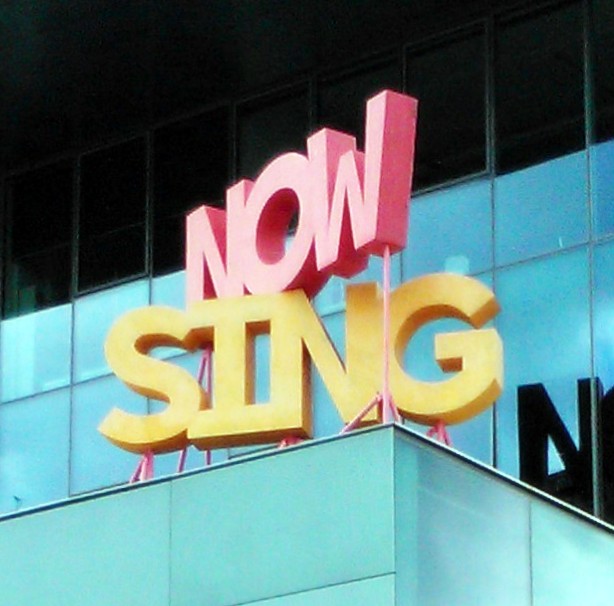
On the other side of the street, a shiny new neighbour, the Reid Building, hunches over its ailing, elderly companion. A reflective sympathy of glass, metal and concrete. On the balcony, Michael Stumpf’s installation, speaking to the moment:
As an invocation, it’s a good one:
NOW SING
.
As twilight descends, and the sounds of Sauchiehall Street murmur below, we can imagine the Reid Building and all people passing, singing soft lullabies. Songs to comfort. Songs to bring back light and air to soot-blackened lungs. Songs to soothe the city fabric.
So no fire damaged pictures of The Mackintosh Building. It’s presence will always be there: to heal, challenge and sustain the human imagination, whatever its material state.
(and soothe the city fabric)
Now playing: Richard Youngs – ‘The Future is So Different Today’ from Summer Through My Mind
Recently, we have been visiting the area around the coastal town of Leven. A fairly long piece is slowly coming to fruition. Until then, here is a short post.
≈
Walk up Durie Street in Leven and listen out for the bees singing. Perhaps, the sound of the skep is more of a muted murmur now, but raise your eyes from street level and you may hear them.
The first hive is above what is now the town library. Our industrious and co-operative little bees swarm around their skep as they have done since 1887.
This symbolic image on a former building of the Leven Reform Co-operative Society reminds us of the Rochdale Pioneers. In 1844, with an economy in decline, wage reductions and strikes, a group of unemployed weavers met at the Socialist Institute to debate the philosophies of Robert Owen and Chartism. Whilst there are many examples of co-operative societies existing before 1844, The Rochdale Pioneers formulated a set of guiding principles, upon which, an expansive version of co-operation was founded. Looking at these principles today, it is notable how well these stand up as a set of co-operative ideals:
1. Democratic control, one member one vote and equality of the sexes.
2. Open membership.
3. A fixed rate of interest payable on investment.
4. Pure, unadulterated goods with full weights and measures given.
5. No credit.
6. Profits to be divided pro-rata on the amount of purchase made (the dividend or divi).
7. A fixed percentage of profits to be devoted to educational purposes.
8. Political and religious neutrality.
The Rochdale Society of Equitable Pioneers raised money from 28 original subscribers to establish a shop at 31 Toad Lane, Rochdale which was equipped and stocked with basic goods and produce. The Pioneers chose the beehive as a symbol of co-operation and unity and the original stone skep stood on top of the, now demolished, central store at 45-51 Toad Lane, Rochdale. The skep now sits preserved and incorporated into the outside wall of the Rochdale Pioneers museum.
(c) The Rochdale Pioneers Museum
Within ten years of the Pioneers founding efforts the co-operative movement in Britain had grown to nearly 1,000 co-operatives with many adopting the symbol of the beehive.
≈
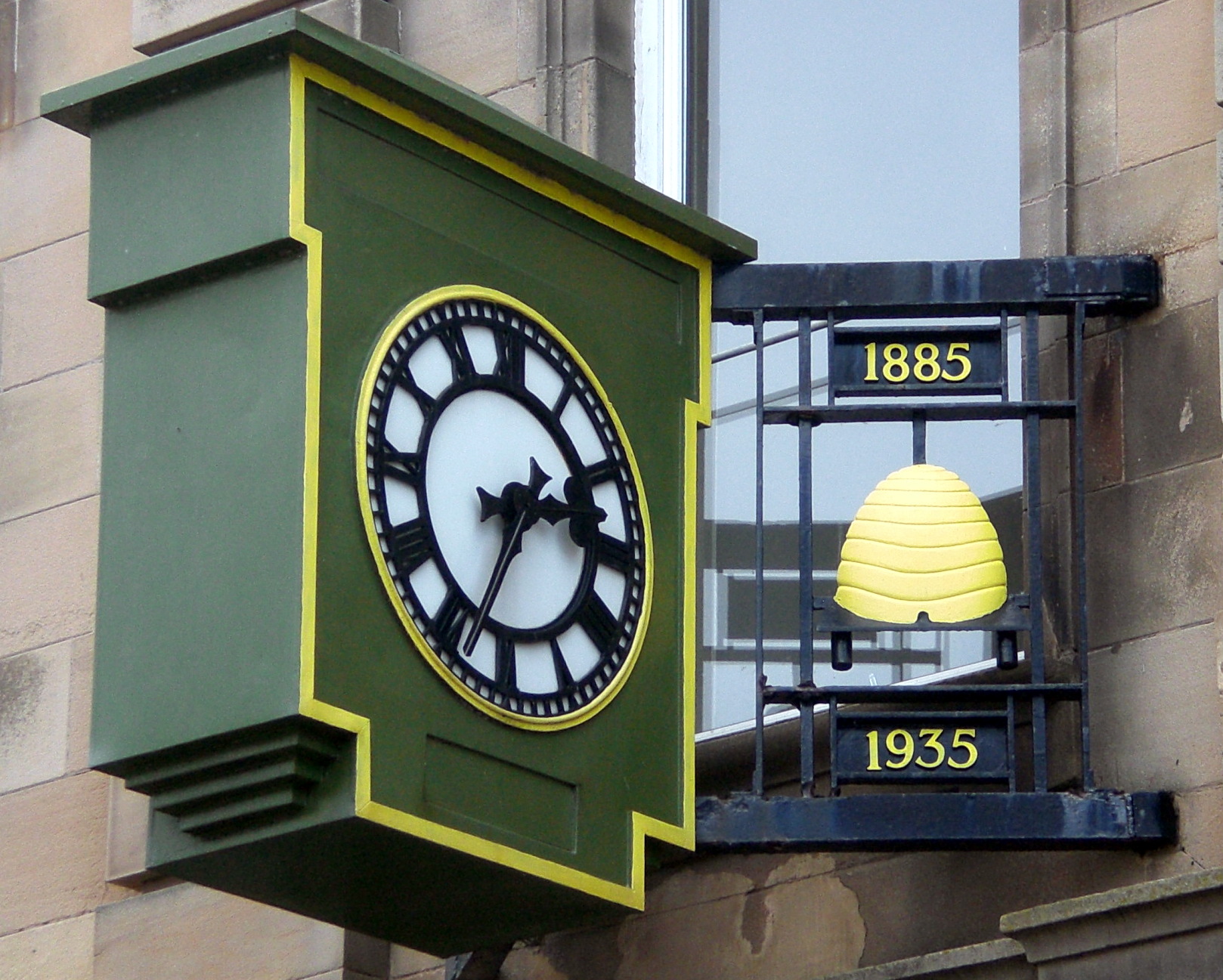
We are back in Leven. Follow the echoes and walk further up Durie Street. On the clock of the former Co-operative department store, a golden skep, clotting the fingers of weak, ebbing sunlight:
Stand. Raise your head and look to the sky. Follow the thread of sibilant hum to the very top of the building. A change of tone – to low dissonant drone. A sign that the bees are, once again, getting ready to swarm:
Underneath the skep
intimations of new life
still sounding – echoes
of the Pioneers.
≈
Now Playing: Earth – The Bees Made Honey In The Lion’s Skull
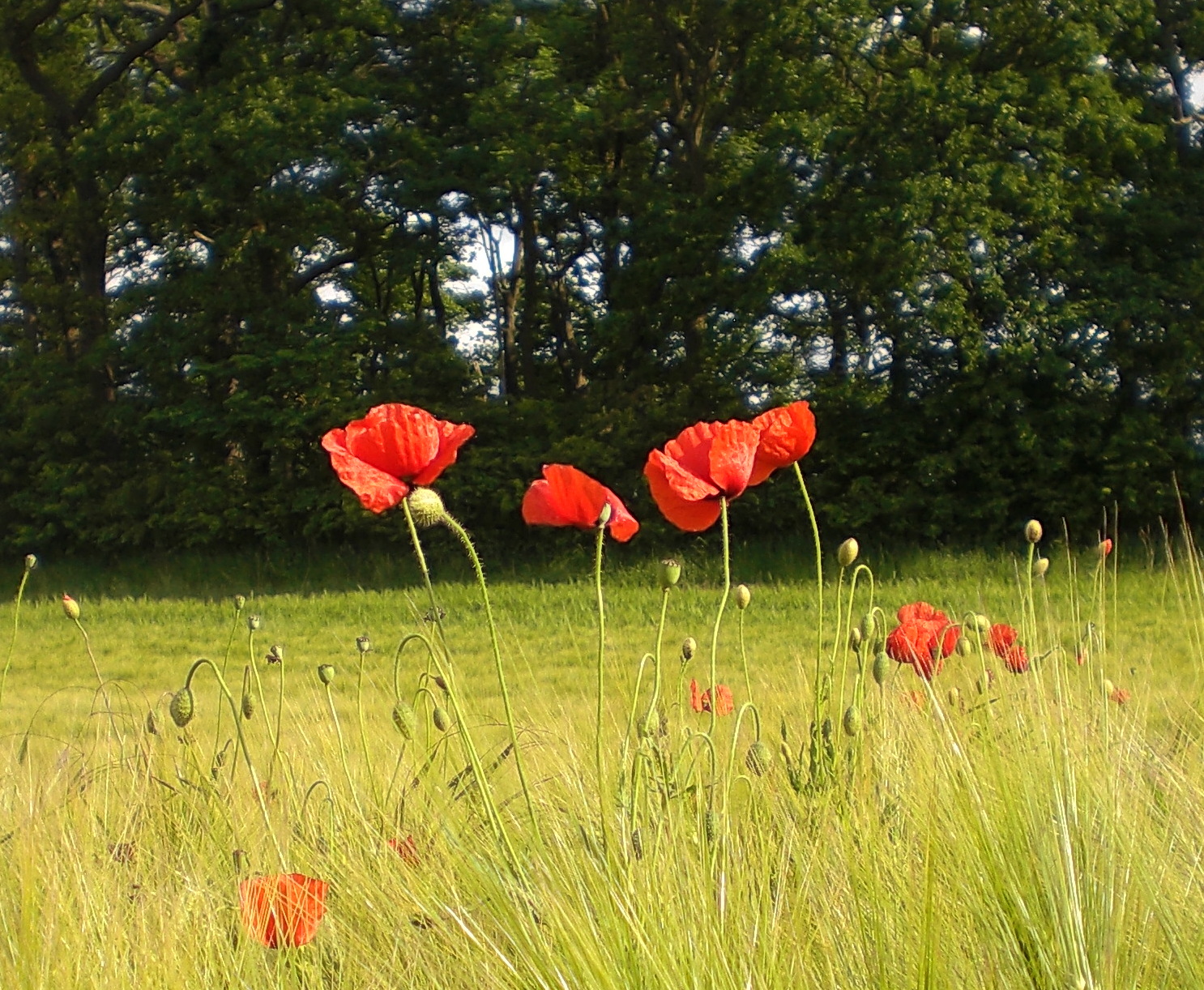
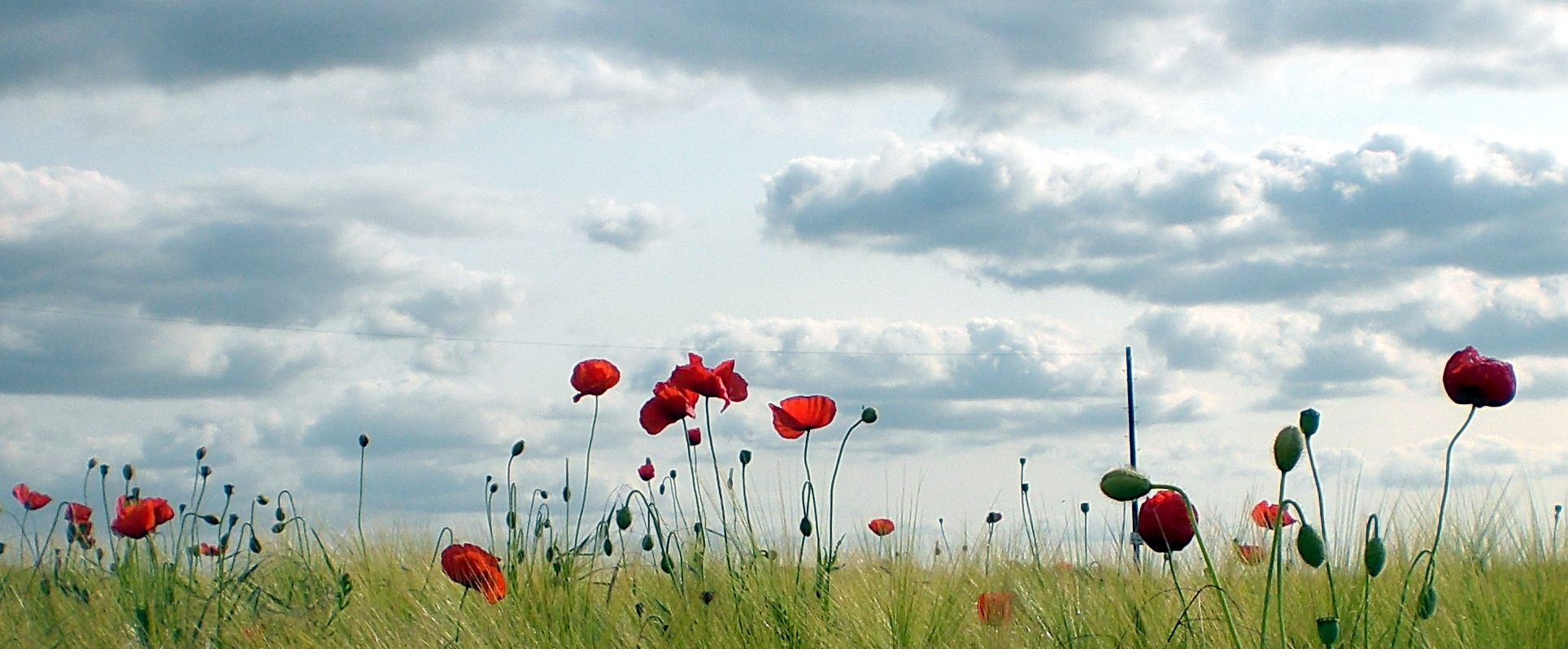
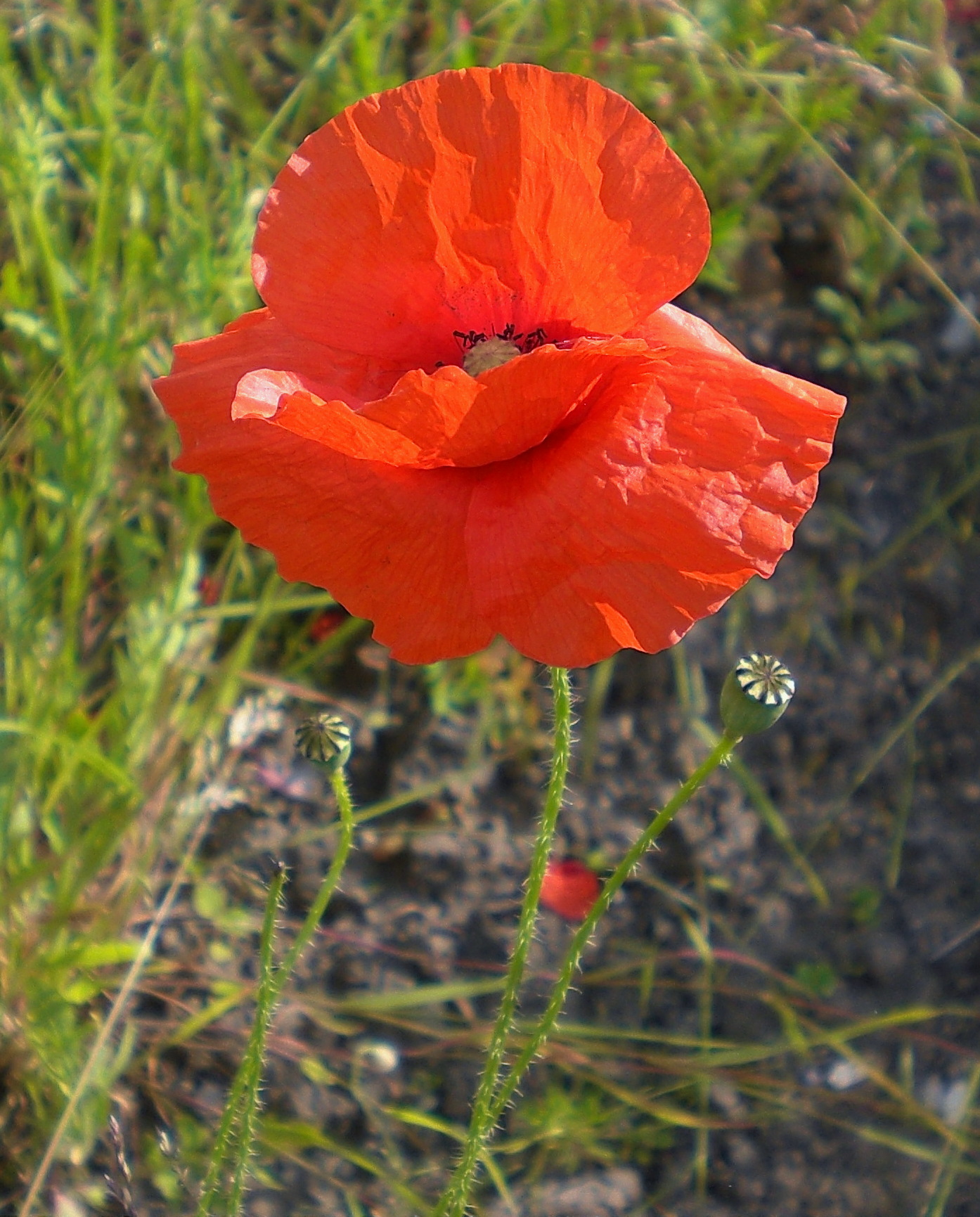
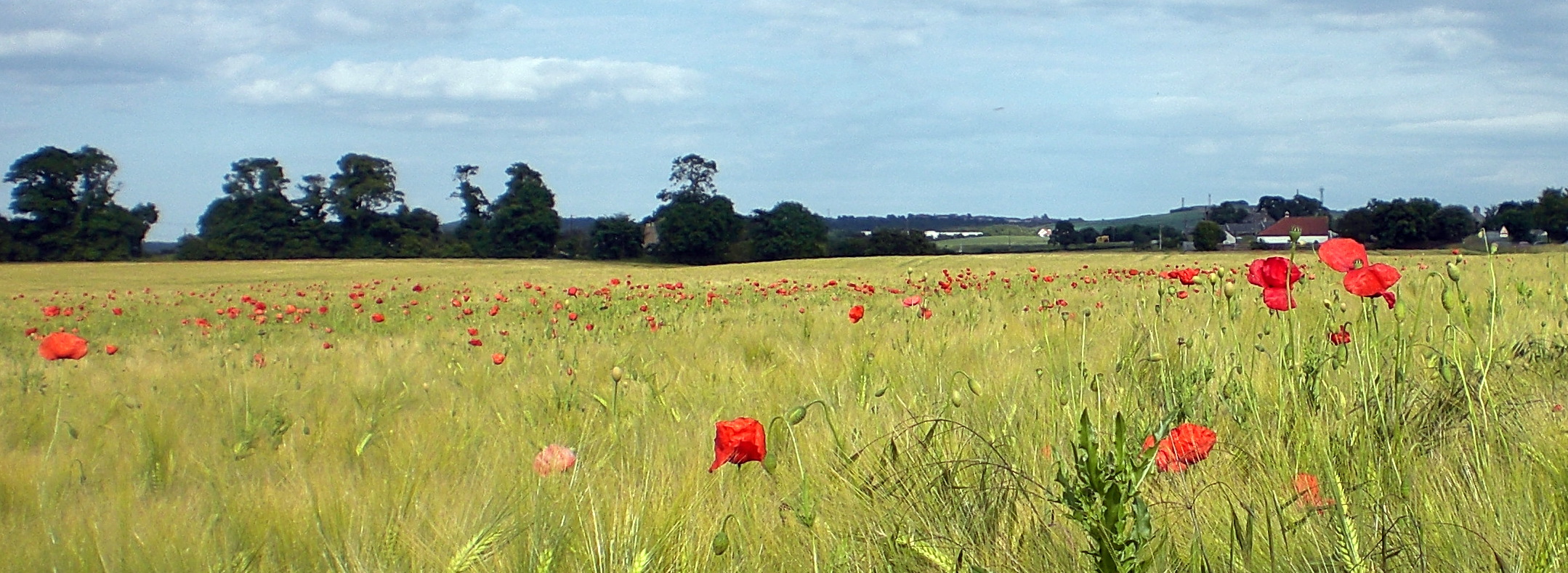
That we find a crystal or a poppy beautiful means that we are less alone, that we are more deeply inserted into existence than the course of a single life would lead us to believe.
John Berger – The White Bird
Homer mentions poppies in the Iliad, comparing the head of a dying warrior to that of a hanging poppy flower.
The god Morpheus made crowns out of the poppy flowers and gave them to those he wanted to put to sleep. Poppy flowers were used to decorate the temple.
The Greeks have a legend that explains how the poppy came to be called the Corn Poppy. The poppy was created by the god of sleep, Somnus. Ceres, the goddess of grain, was having difficulty falling asleep. She was exhausted from searching for her lost daughter; still she couldn’t fall asleep and had no energy to help the corn grow. Somnus cooked up a concoction and got her to take it and soon she was sleeping. Rested and relaxed Ceres could then turn her attention to the corn which began to grow. Ever since that time the people believed that poppies growing around cornfields ensure a bountiful harvest. And so was born the Corn Rose, or as we call it today the Corn Poppy.
Adapted from The Modern Herbal
But the Poppy is painted glass; it never glows so brightly as when the sun shines through it. Wherever it is seen-against the light or with the light – always, it is a flame, and warms the wind like a blown ruby.
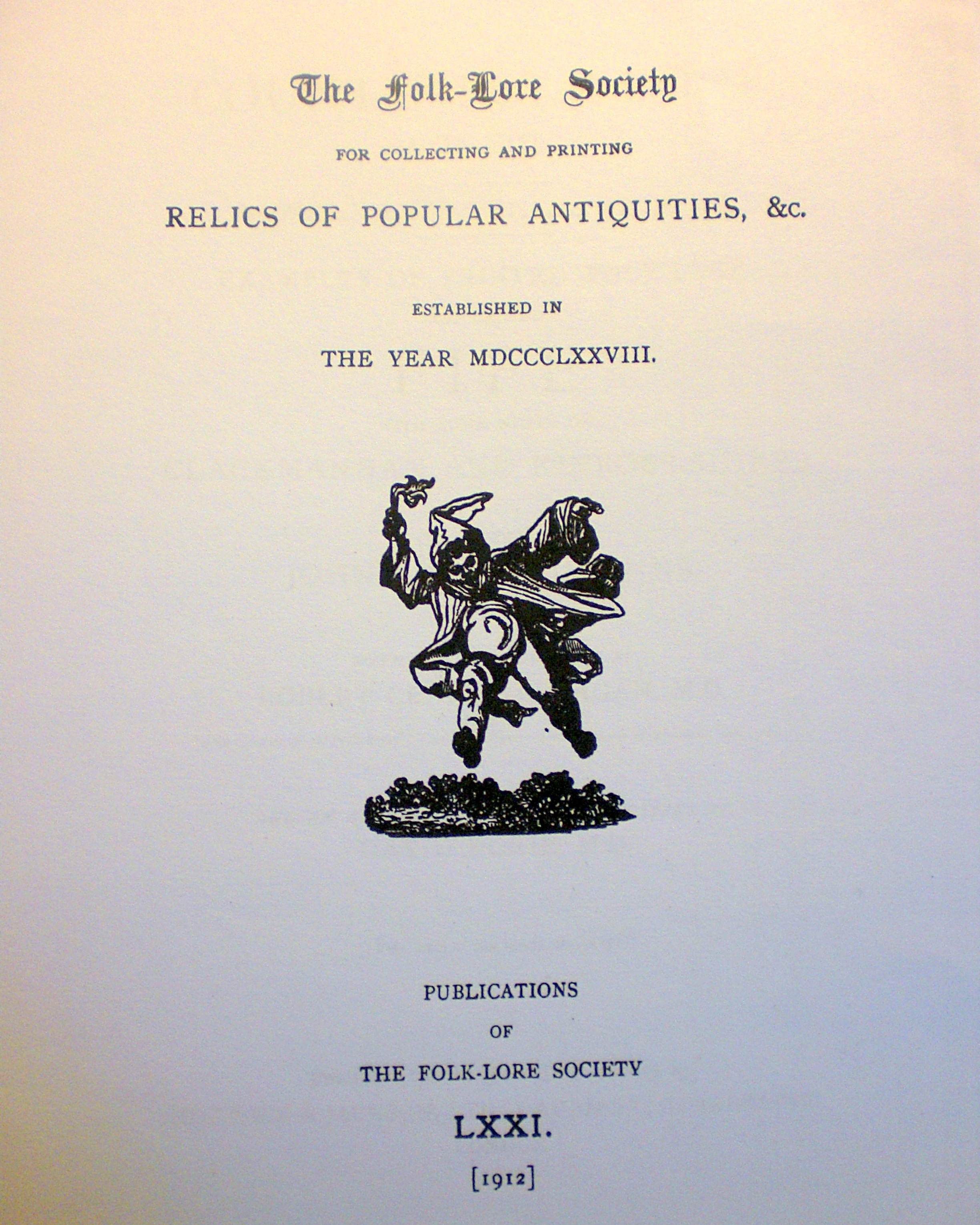
Publications of The Folk-Lore Society LXXI. (Detail)
Cures for Whooping Cough:
(1) Passing the child under the belly of a donkey;
(2) Carrying the child until you meet a rider on a white (or a piebald) horse, and asking his advice: what he advises has to be done;
(3) Taking the child to a lime-kiln;
(4) Taking the child to a gas-works. During an outbreak of whooping-cough in 1891, the children of the man in charge of, and living at, a gas works did not take the complaint. As a matter of fact, the air in and near a gas-works contains pyridin, which acts as an antiseptic and a germicide;
(5) Treating the child with roasted mouse-dust;
(6) Getting bread and milk from a woman whose married surname was the same as her maiden one;
(7) Giving the patient a sudden start.
Breathing the smell of freshly dug earth was held to be good for whooping-cough, and also for those who had been poisoned with bad air. A hole was dug in the ground and the patient “breathed the air off it.” A “divot” of turf was sometimes, in the old days, cut and placed on the pillow.
How to get rid of Warts:
(1) Rubbing with a slug and impaling the slug on a thorn. As the slug decays the warts go;
(2) Rubbing with a piece of stolen meat, as the meat decays the warts go;
(3) Tying as many knots on a piece of string as there are warts, and burying the string. As the string decays the warts go;
(4) Take a piece of straw and cut it into as many pieces as there are warts, either bury them or strew them to the winds;
(5) Dip the warts into the water-tub where the smith cools the red-hot horse-shoes in the smithy;
(6) Dip the warts in pig’s blood when the pig is killed.
Piles are treated by:
(i) sitting over a pail containing smouldering burnt leather;
(2) the application of used axle-grease.
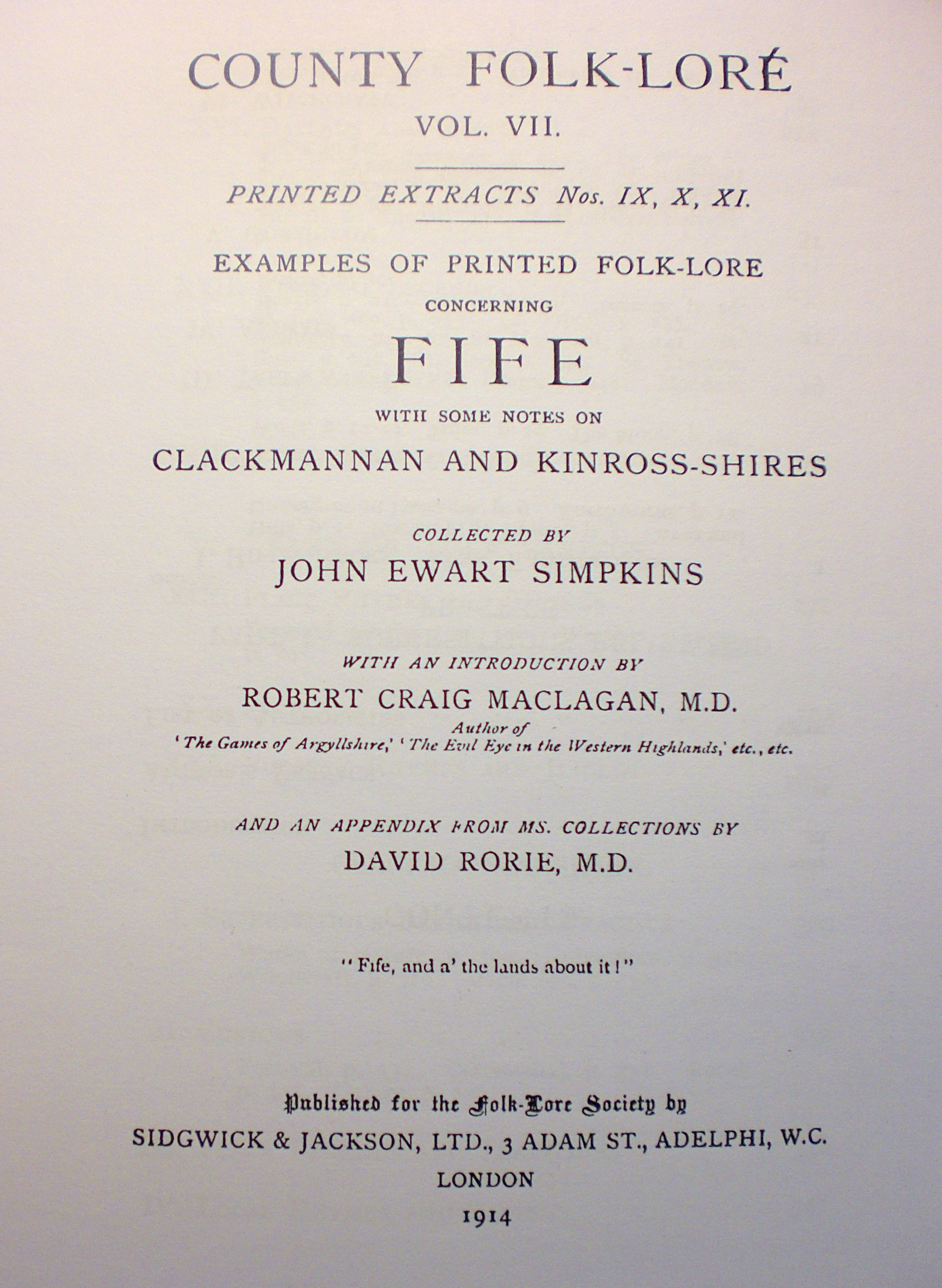
All of the above from County Folk-Lore Vol VII. Examples of Printed Folk-Lore concerning Fife with some notes on Clackmannan and Kinross-Shires collected by John Ewart Simpkins (London: Sidgwick & Jackson for the Folk-Lore Society, 1914).
Now Playing: The Owl Service and Alison O’Donnell – The Fabric of Folk











 Murdo Eason - From Hill to Sea