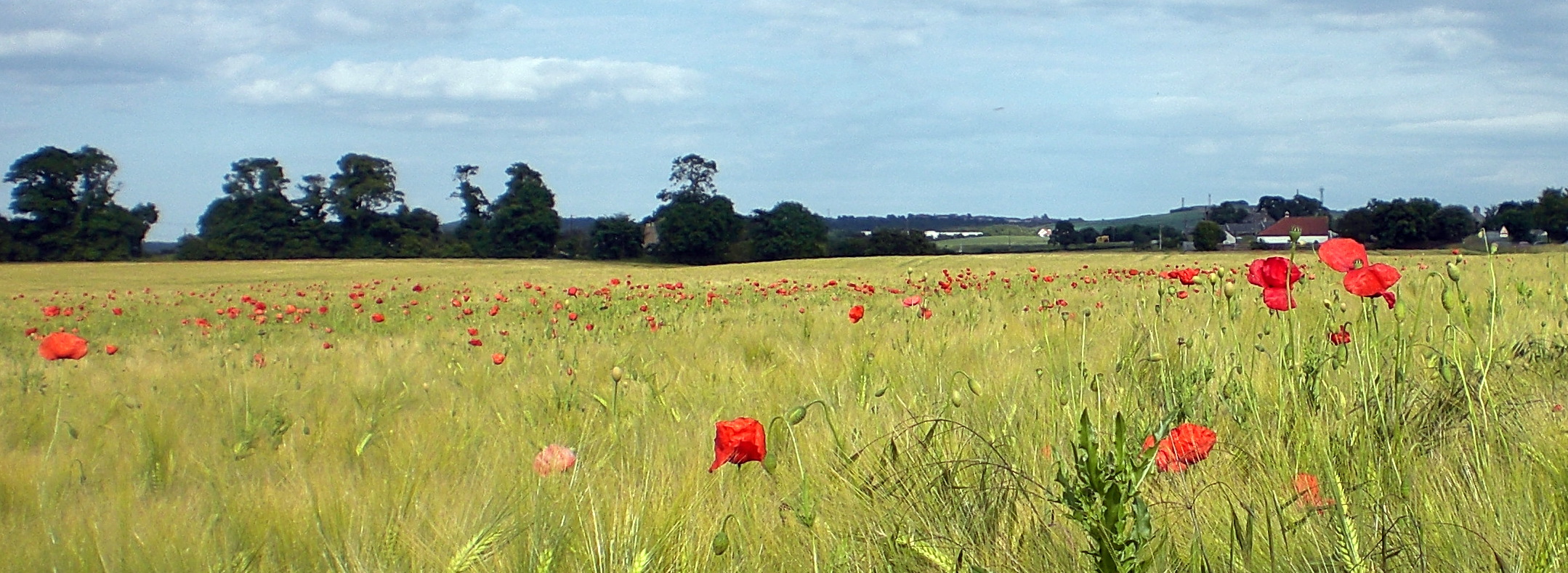
That we find a crystal or a poppy beautiful means that we are less alone, that we are more deeply inserted into existence than the course of a single life would lead us to believe.
John Berger – The White Bird
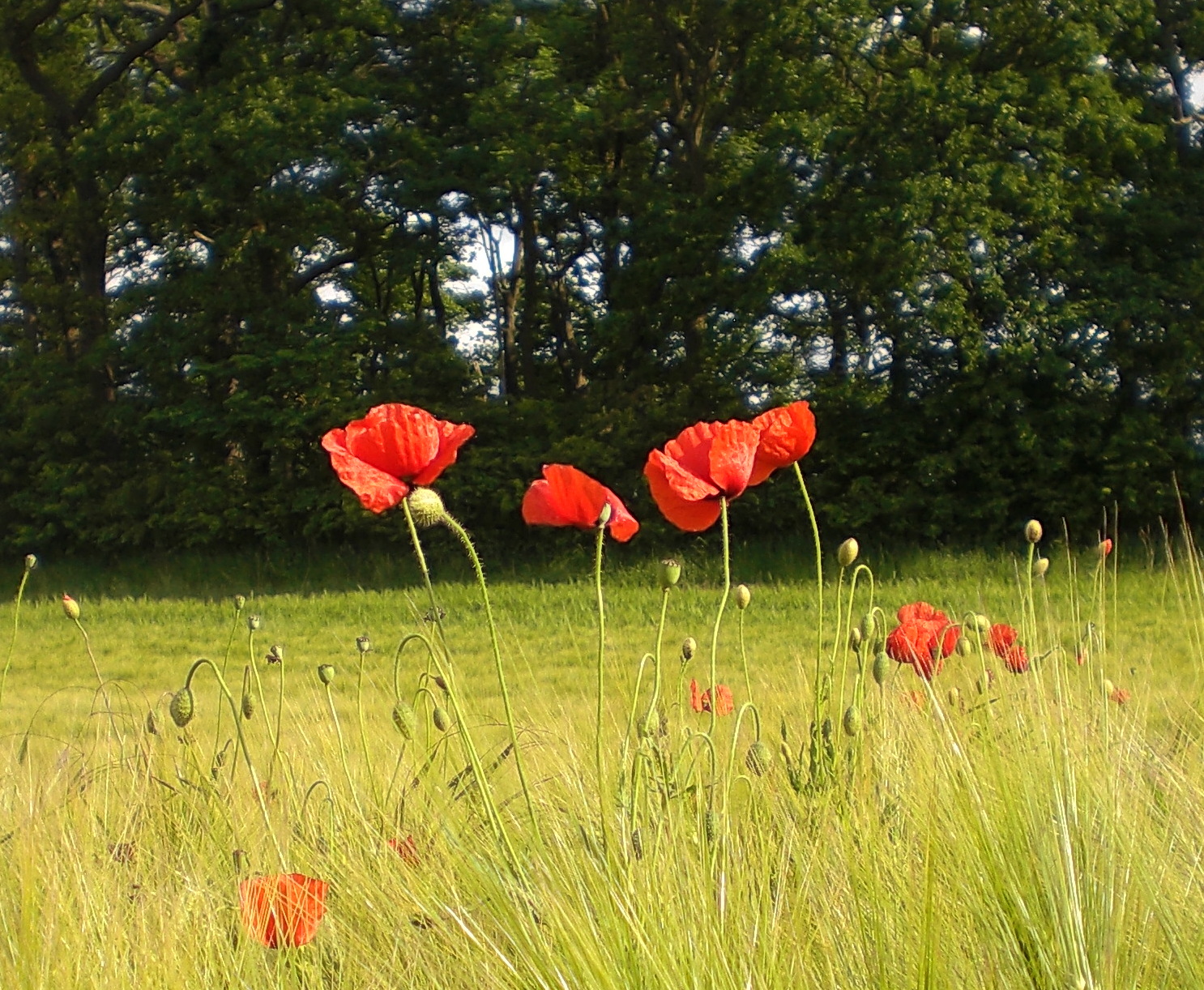
Homer mentions poppies in the Iliad, comparing the head of a dying warrior to that of a hanging poppy flower.
The god Morpheus made crowns out of the poppy flowers and gave them to those he wanted to put to sleep. Poppy flowers were used to decorate the temple.
The Greeks have a legend that explains how the poppy came to be called the Corn Poppy. The poppy was created by the god of sleep, Somnus. Ceres, the goddess of grain, was having difficulty falling asleep. She was exhausted from searching for her lost daughter; still she couldn’t fall asleep and had no energy to help the corn grow. Somnus cooked up a concoction and got her to take it and soon she was sleeping. Rested and relaxed Ceres could then turn her attention to the corn which began to grow. Ever since that time the people believed that poppies growing around cornfields ensure a bountiful harvest. And so was born the Corn Rose, or as we call it today the Corn Poppy.
Adapted from The Modern Herbal
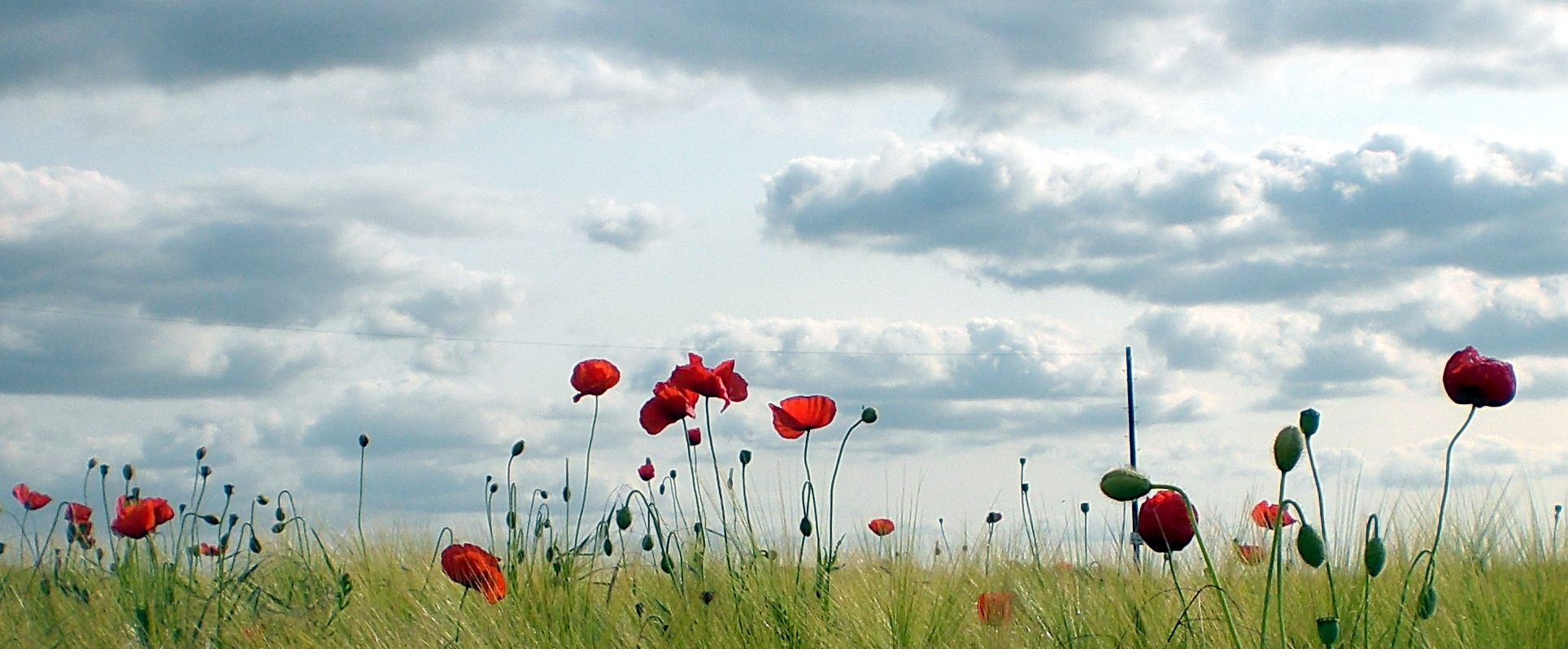
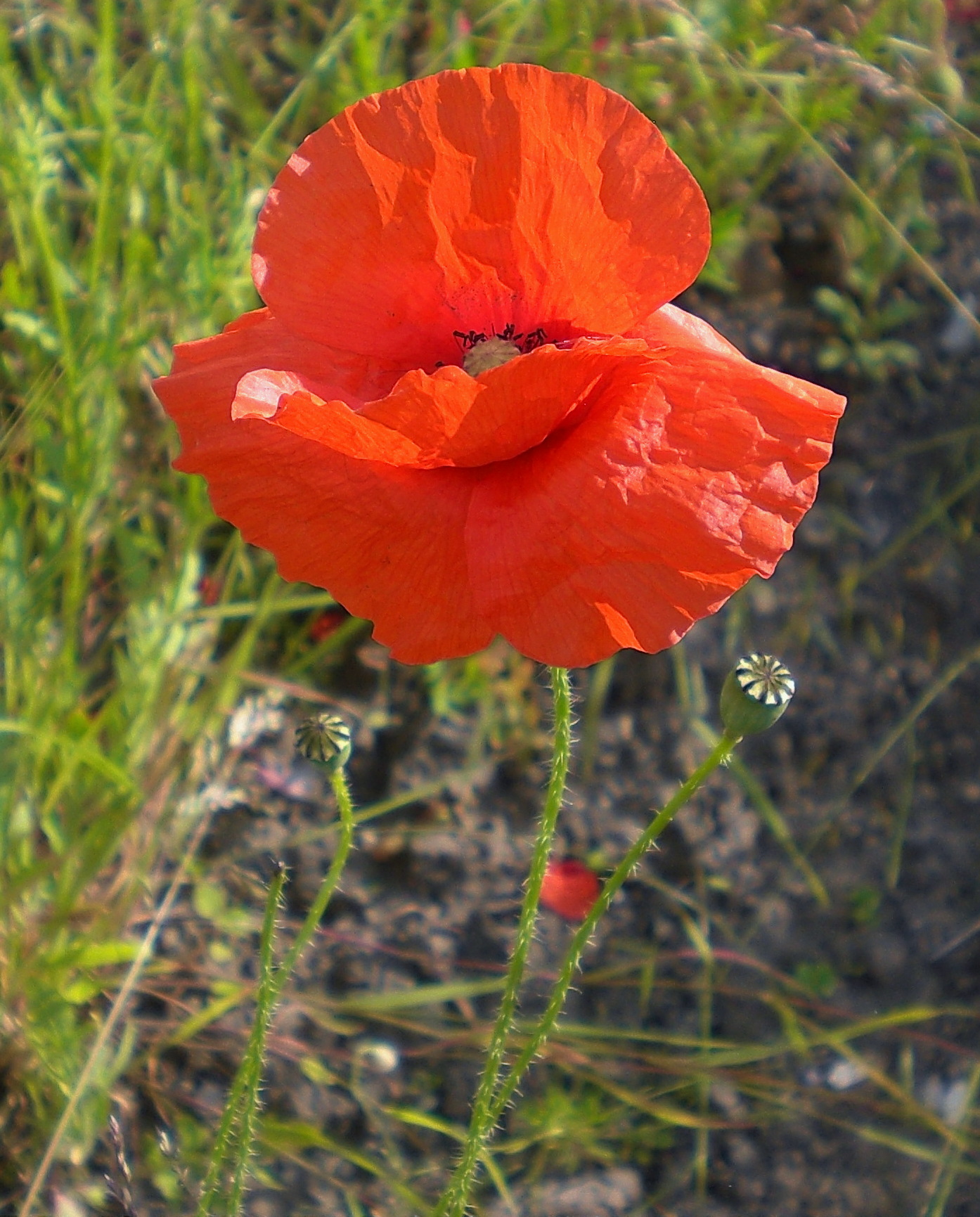
But the Poppy is painted glass; it never glows so brightly as when the sun shines through it. Wherever it is seen-against the light or with the light – always, it is a flame, and warms the wind like a blown ruby.
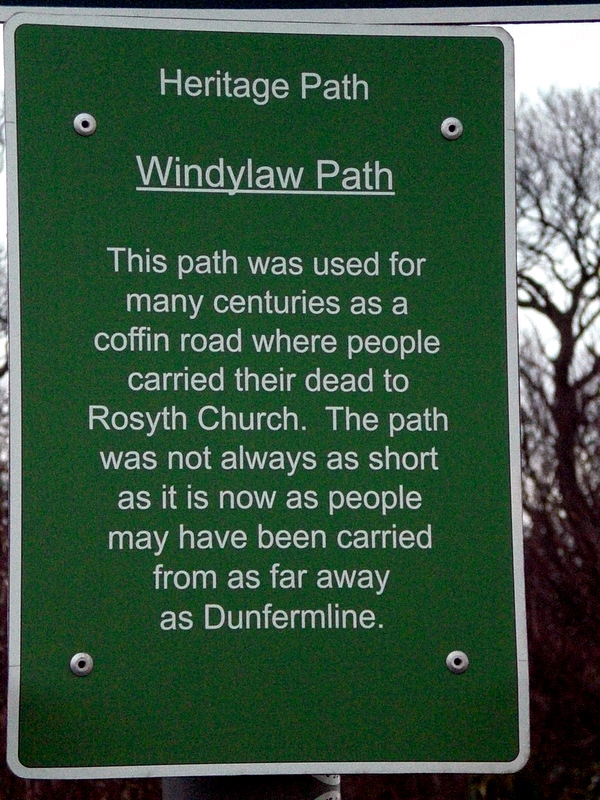
We approach the village from the North by the coffin road known as Windylaw. A sign indicates that this path was used for many centuries by people to carry their dead to Rosyth Church. Sometimes they would come from as far away as Dunfermline.
…
The ground is sodden underfoot and standing still you can feel the ticklish trickle of rivulets, running around your boots off the slight incline. This is the first day of reasonable weather for weeks and it feels good to stand under the mottled blue canopy and listen to the murmur of the flowing field.
L
i
s
t
e
n
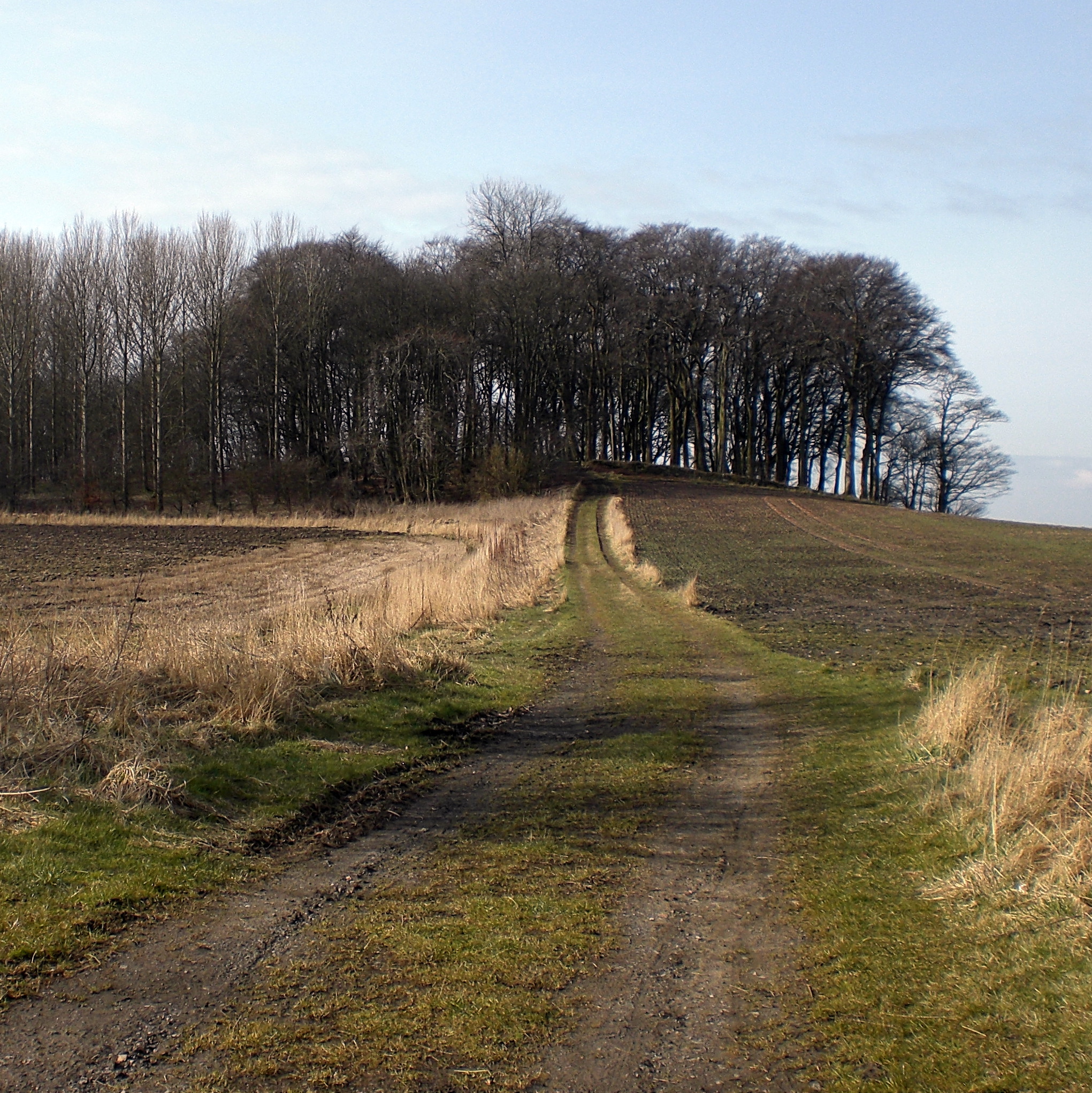
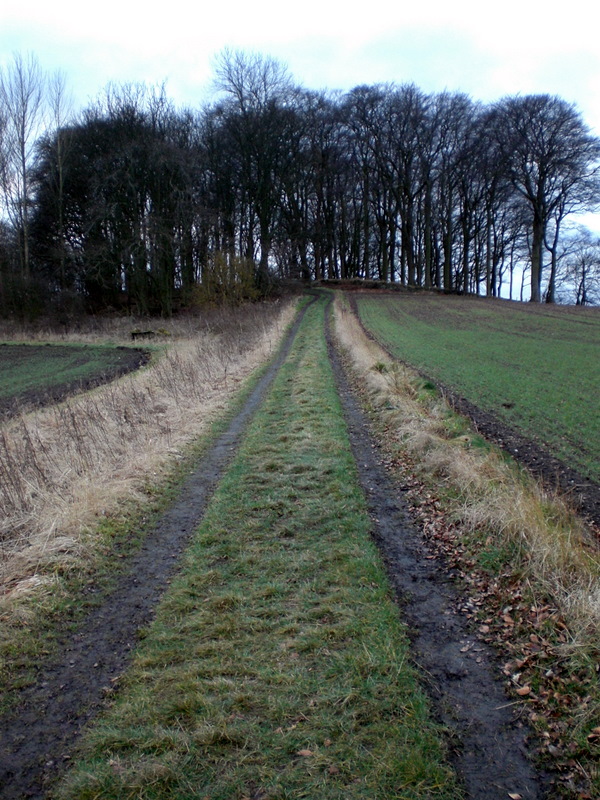
Windylaw meanders up towards a small copse of trees. We are greeted by the guardian of the forest, a snuffling, wood-hedgehog type apparition which looks like it could have come straight out of Pogles Wood.
A woodpecker industriously loops its rrrrrat-a-tat-tat rhythm but remains unseen. We stand still and stare but there is no dart of kinetic red against gray bark. Instead, one particular tree conjures up a Medusa like quality. The branches appear to move, twisting and writhing like a cauldron of snakes.
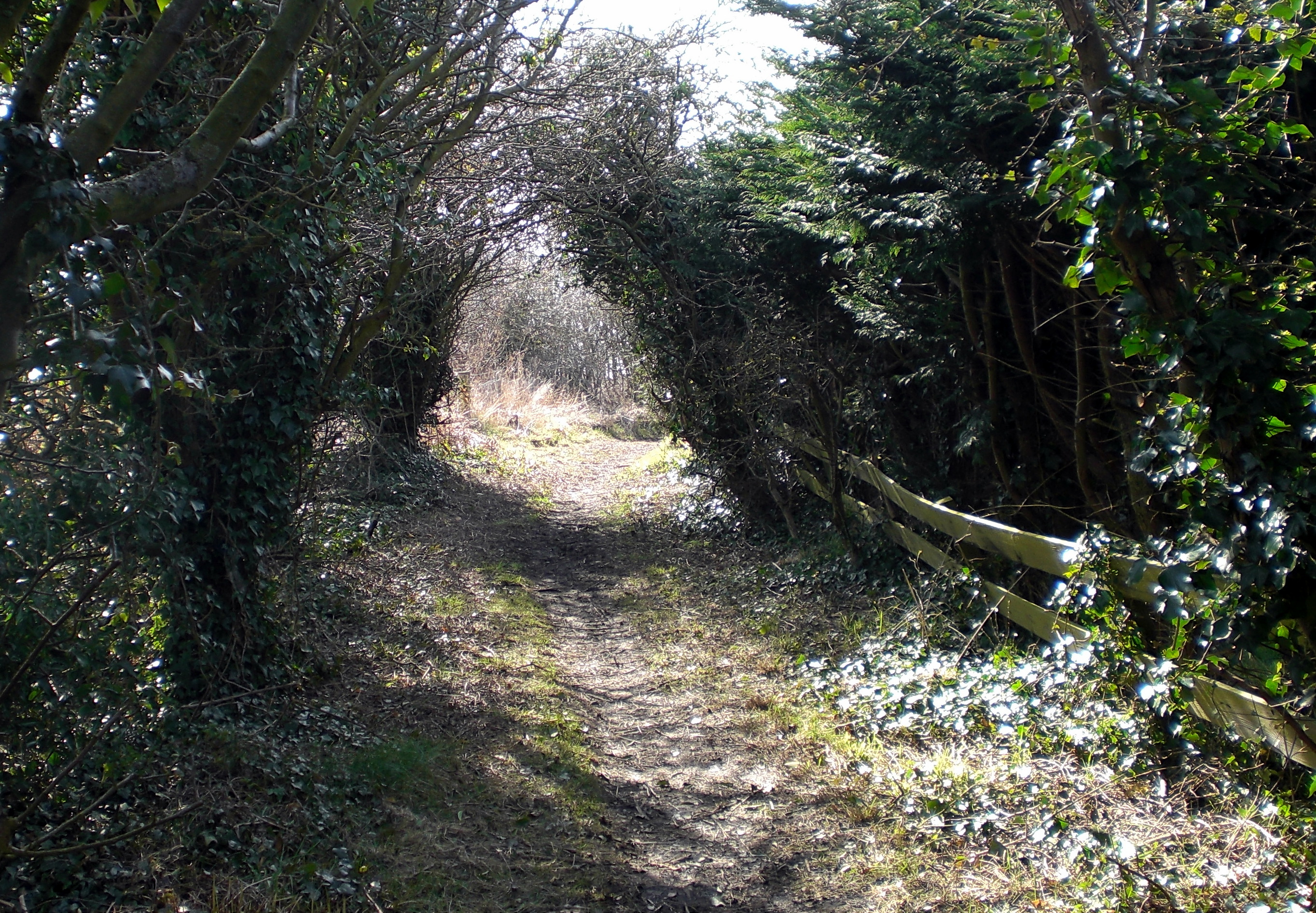
Windylaw meanders through the trees and we walk alongside all of the ghosts who have tramped this path over centuries.
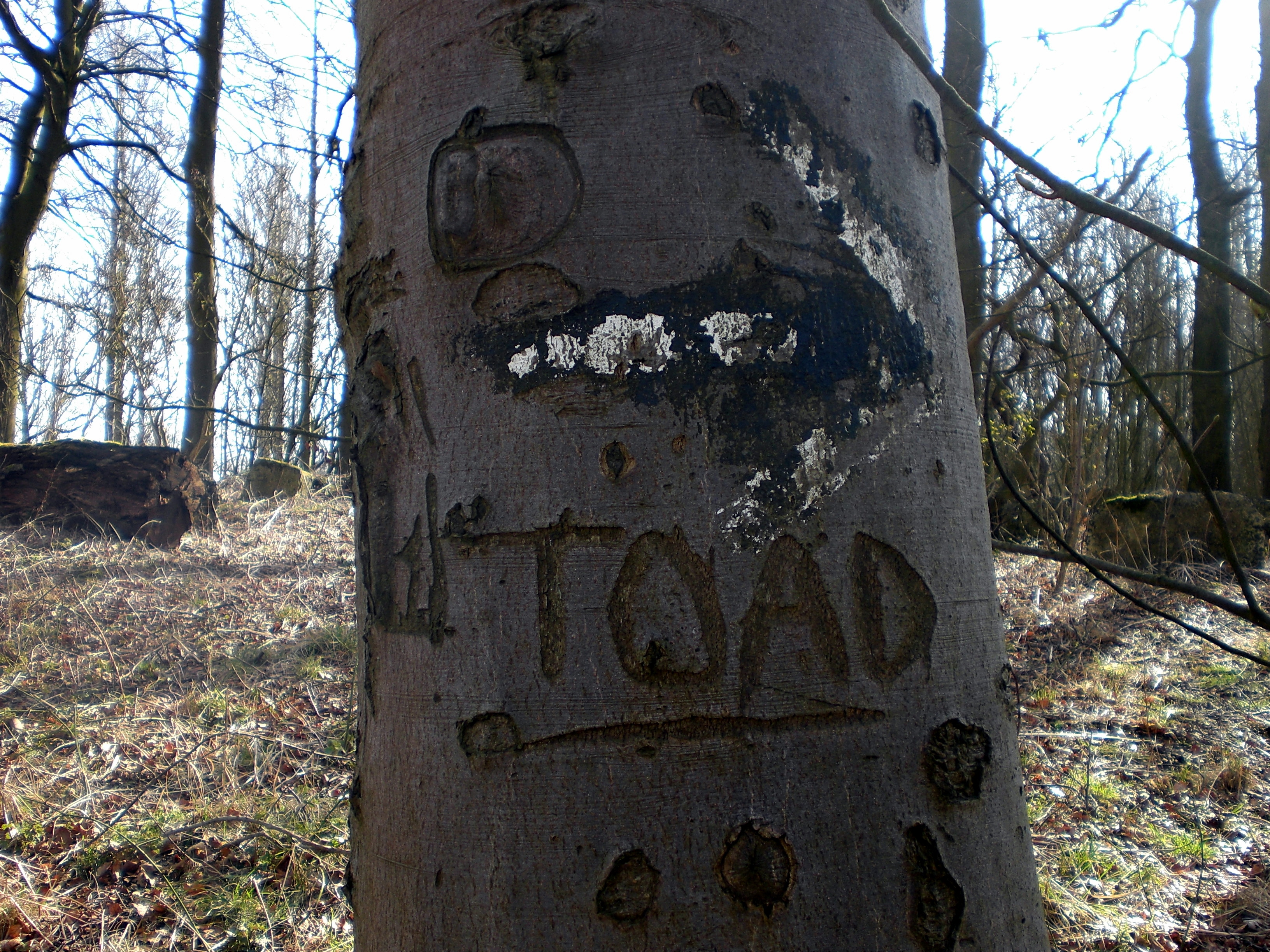
How many stopped to make their mark such as Toad has done here?
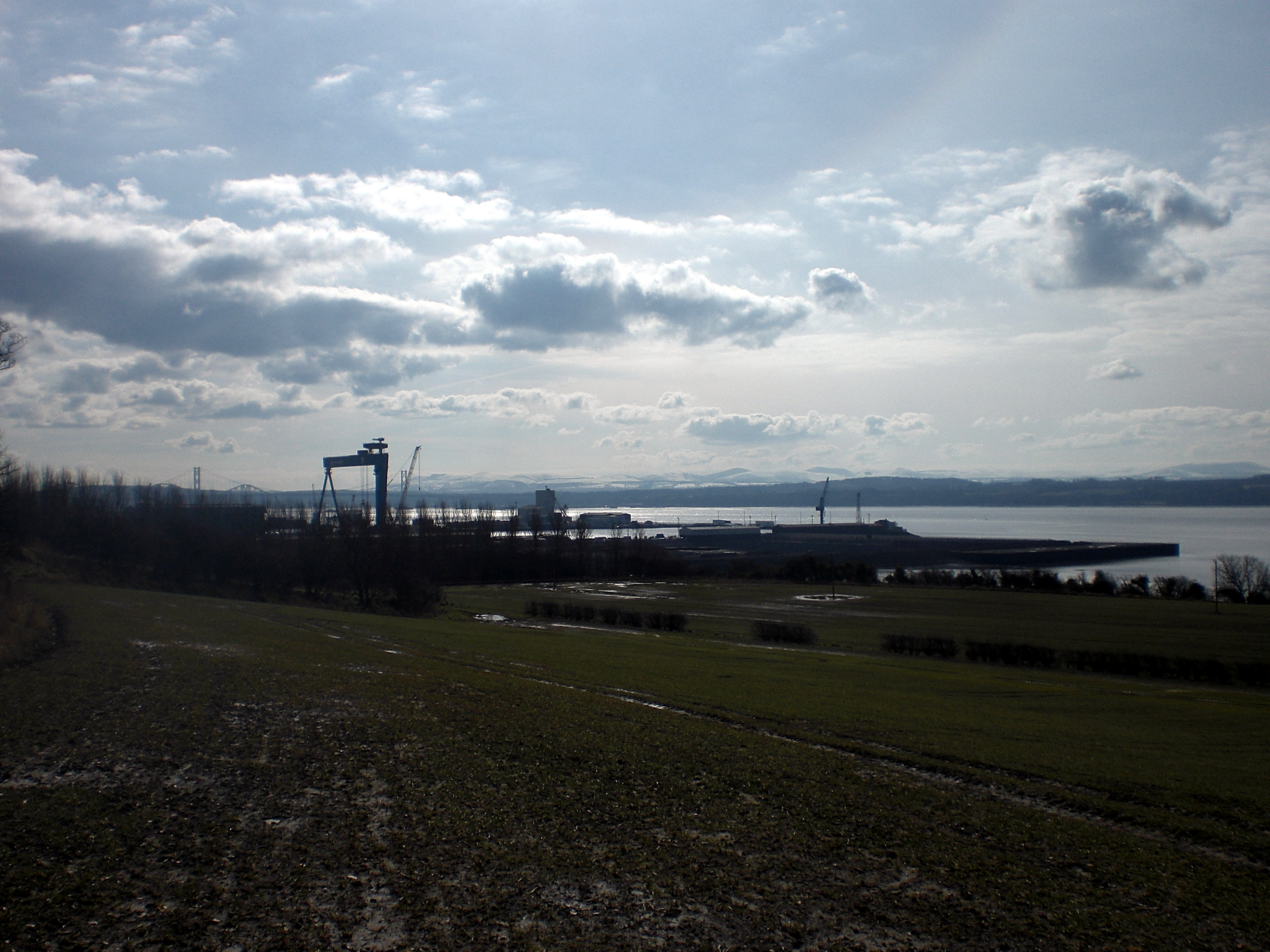
Once over the ridge of hill, we start to descend towards the shoreline and the village of Limekilns which we can see off to the right. We leave the path briefly to take in the vista over the Forth Estuary.
In many ways a picturesque enough view. Over the farmers fields to the river Forth and beyond to West Lothian. However, no view is ever as ‘innocent’ as it seems so let us tilt our heads a little bit further to the left and to the right. Let us ponder on what we can see…
…
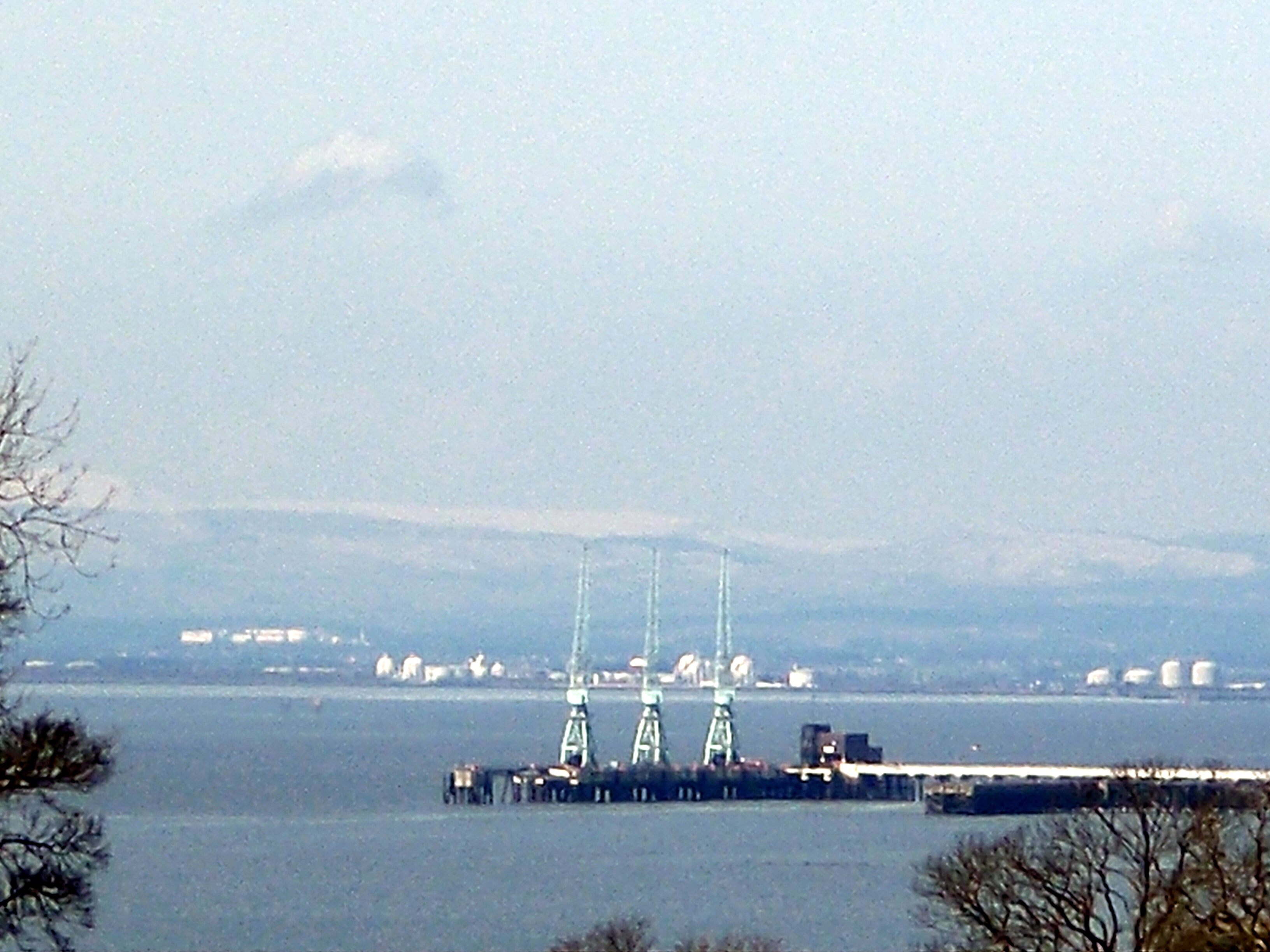
Firstly off to the left, lies Rosyth Dockyard:
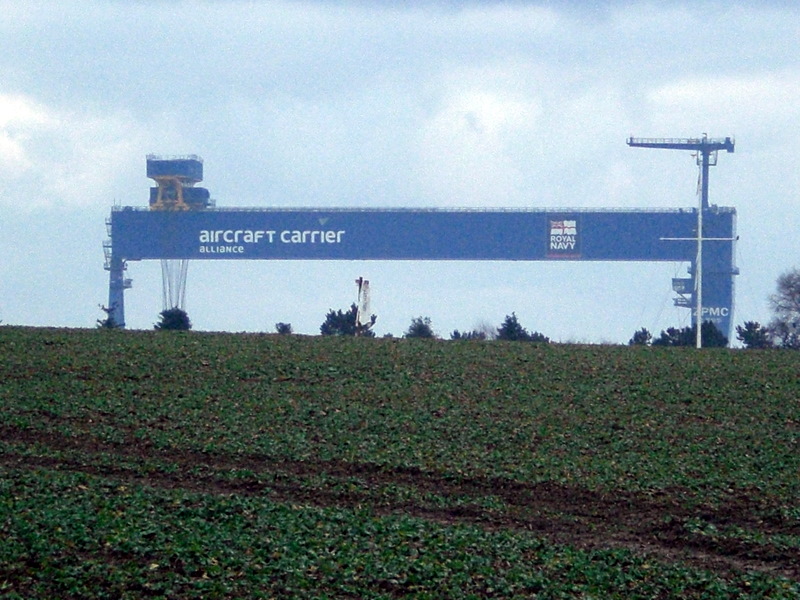
The picture is not great but you can clearly see Goliath’s looming presence of whom we have written before:
“Goliath is the largest crane installed in the UK and part of the most expensive project in British naval history with two aircraft carriers presently being constructed at £3 billion a pop. We have already been told that once constructed, one will be mothballed immediately and the other will have no planes to fly from it. Try explaining this logic to a five year old. The carriers are to be named HMS Queen Elizabeth and HMS Prince of Wales. The sheer folly, financial carnage and symbolism of this whole escapade is such that it almost fries our collective brain into meltdown. However, very soon we are all whistling and singing Elvis Costello’s Shipbuilding – the Robert Wyatt version naturally – so we can hum the piano solo with our kazoos. This has the desired effect, tames the beast and calm descends. As we walk further along the road, we can gain a better vantage point to look down over the dockyard and see the true scale of Goliath. Our fear turns to pity as we realise that all we are looking at is simply a dumb, beast of burden, a heavy lifter, on which has been foisted the indignity of jingoistic colours, the White Ensign flag and the reek of failed empire. Also lurking down there, somewhere in the bowels are seven decommissioned nuclear submarines, still radioactive and we are reminded of some possibly apocryphal tales of technicians metal-capped boots glowing green in the dark. Isn’t it amazing what can be buried in the edgelands.”
On the same day as our walk (31st March 2013), a number of articles appear in the press to indicate that Rosyth Dockyard has been chosen for a pilot project to break up some of the nuclear submarines, prompting fears it could become a dumping ground for radioactive waste. (Ignoring the somewhat obvious fact that it already is). The one fairly fundamental snag in this proposal is that no site or facility has yet been identified to store radioactive material safely. (It is going to be there for a long, long time). I suspect that our inventory of Empire and hubristic bravado – HMS Dreadnought, HMS Churchill, HMS Resolution, HMS Repulse, HMS Renown, HMS Revenge and HMS Swiftsure may continue to sit and rust for many years to come, hopefully with the nuclear reactors remaining intact.
You can also just make out the Forth Bridges, beyond the dockyard, in the above photographs. The iconic red diamonds of the Victorian rail bridge and the twin suspension towers of the not inelegant road bridge. Construction work is now well underway for a third bridge to join them. It would appear that the existing road bridge has literally become a piece of auto-destructive art. Road vehicle usage, far in excess of what was originally envisaged has reduced the life of the suspension cables and consequently the bridge. (although there is some debate about this). The result will be a new road bridge with an increased capacity to continue to satiate our desire for car travel. Build it and it and it will be filled is the usual outcome of transport policy so perhaps we stand as witnesses to the birth of yet another piece of auto destructive art.
As is becoming evident, the Forth is still very much a working river and from our viewpoint it would not be unusual to see a container ship – the new packhorse of global capitalism – chugging up the central channel to Grangemouth container port to drop off its wares. Alternatively, it could be a British warship off for some ‘munitions and maintenance support’ at Crombie Pier which is part of the sealed off Crombie Munitions Depot.
.
This is very close to Crombie Point where Jules Verne and Aristide Hignard disembarked from an Edinburgh steamer in 1859 to continue their travels through Fife and Scotland. This journey inspired Verne’s novel The Green Ray.
‘Le Rayon Vert’
And beyond Crombie Pier lies the Grangemouth petrochemical plant, Scotland’s only oil refinery. An industrial city of chimneys and cooling towers, belching steam, and when darkness falls, shooting dramatic flares into the sky against a wash of sodium hue.
Chances are that all the cars sitting nose to tail on the Forth Bridges will ultimately get their petrol from here. Just another nodal point in the network of global petrochem dollars.
OK surely that’s it. But no. Strain your eyes to the far right and another iconic sight can be zoomed into view. The chimney of the coal powered Longannet Power Station. I’m sure it keeps our lights on but is regularly towards the top of the charts in any survey of ‘most polluting power stations’ in the UK and Europe.
Longannet Power Station – Zoom
Anyway this digression is just an illustration of how a landscape view is never neutral. On one level, yes this is a beautiful landscape. However, this is also a landscape inextricably linked into the ebb and flow of the global capitalist economy or on a more pessimistic note is there any more perfect spot to catalogue and observe the agents and consequences of what George Monbiot calls the Age of Entropy. (Thanks to Liminal City for alerting us to this). At the very least, the psychogeographer can reverse the panoptical gaze of the modern political machine. Standing here we can use landscape as a mirror to reflect back. We can see the war machines, the entropic processors of fossil fuels, how the local is connected to the global. On this spot we can be the watchers. We can see what you are up to and imagine and enact alternative possibilities. (Such as going for a walk!).
…
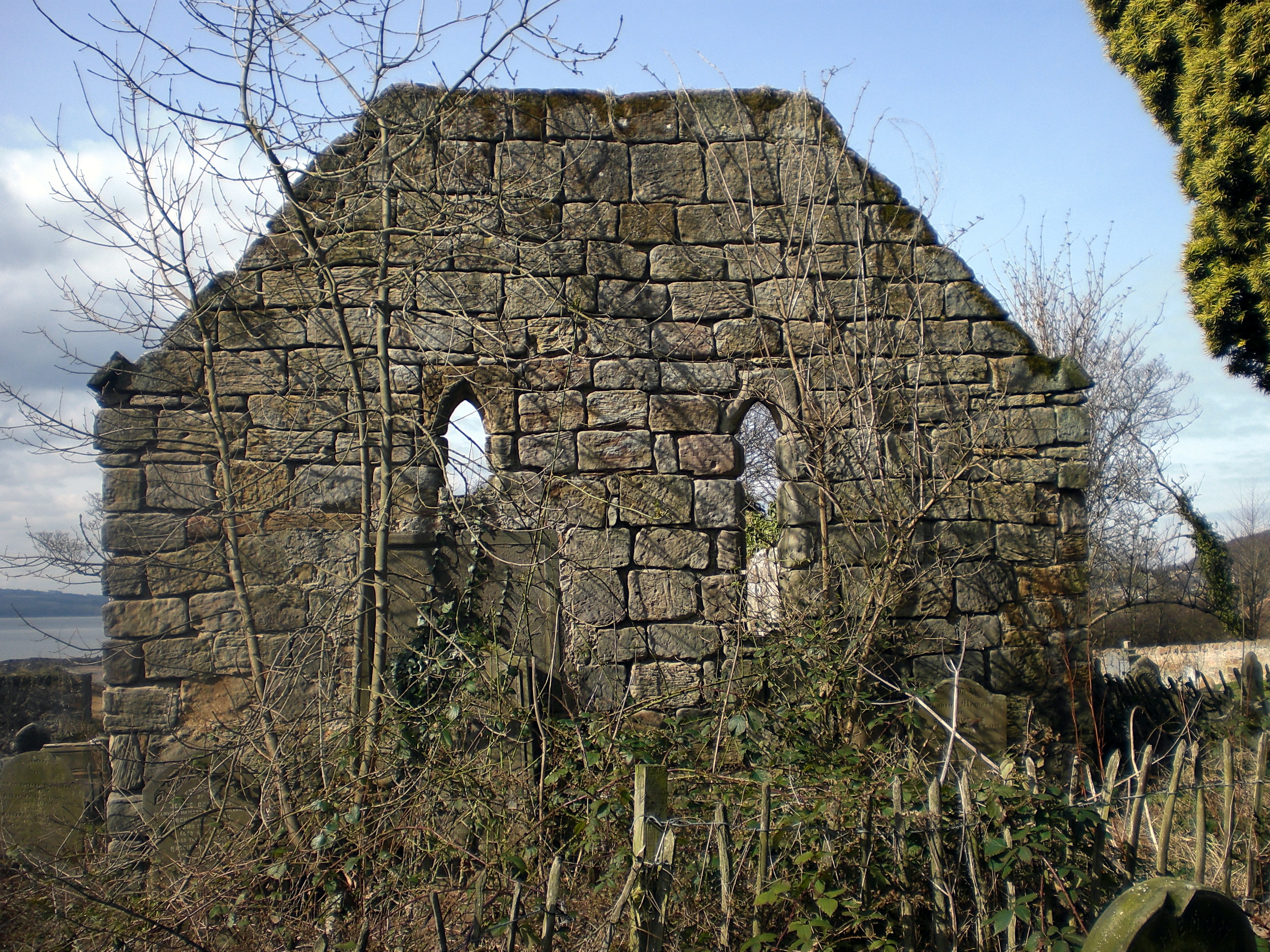
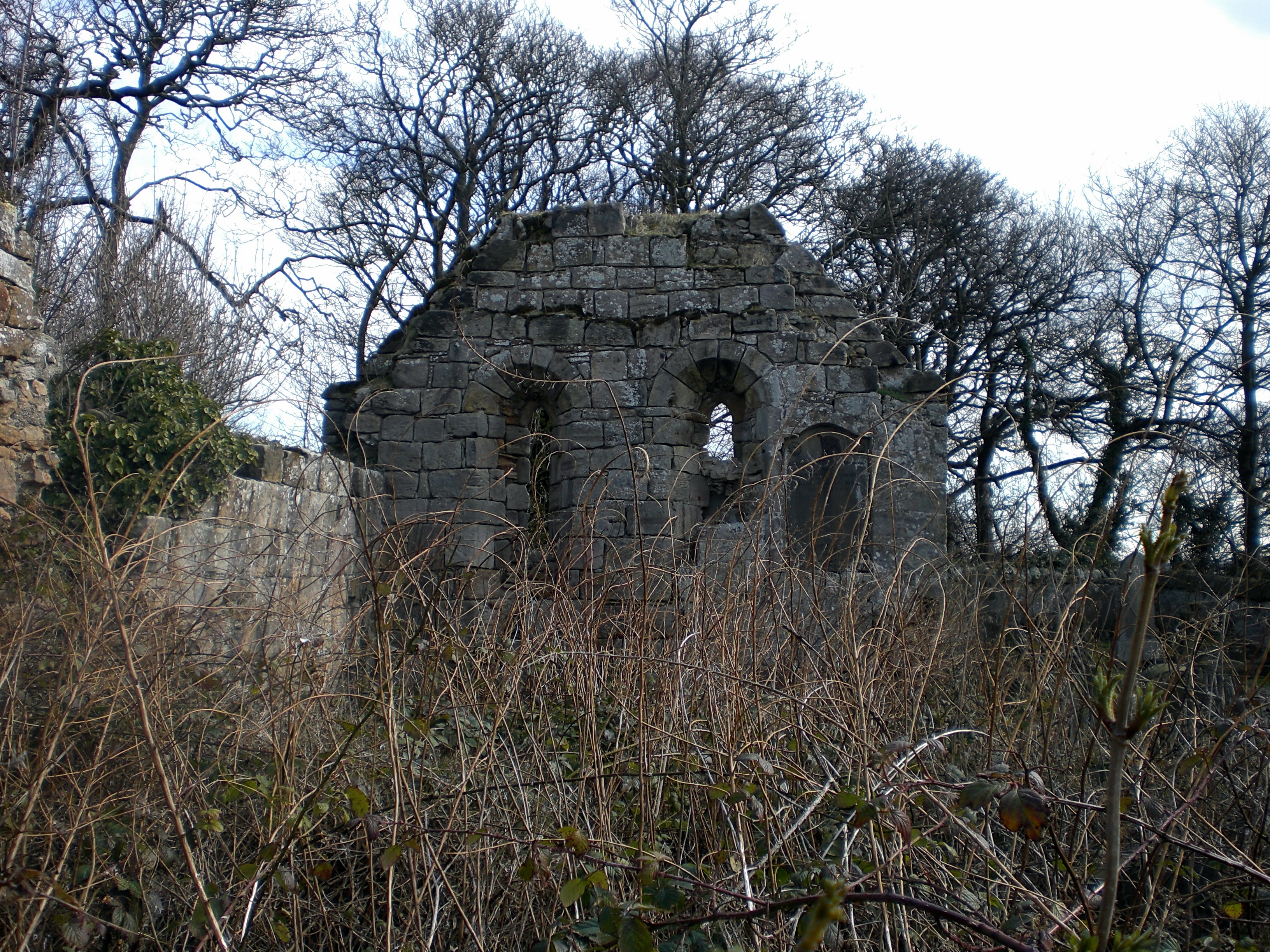
We continue our descent down Windylaw which edges the perimeter of the newer built part of Limekilns. A desire path breaks off to the left and we soon find ourselves at the rear of the old ruined Rosyth Church. Records indicate that the church dates back to the 12th century when it is mentioned in the charter sent to the monks of Inchcolm Abbey in 1123. The church ceased to be used as a place of worship sometime between 1630 and 1648. You can clearly appreciate why the coffin road evolved. Even today, the only access to this spot is by walking or possibly by boat. Whilst doing a bit of research, a curious entry in the RCHMS archive records catches the eye. In 1998 a “stray human mandible was found on a grassy area just south of Rosyth Old Kirk burial ground by Mr Walmsley of Inverkeithing. The very weathered and friable bone belonged to a child aged 6-9 years.”
there is none more lonely and eerie than Rosyth, at anyrate at the close of a winter day, when a rising wind is soughing through the bare branches, and the sea is beginning to moan and tramp to and fro over rock and shingle.
John Geddie, The Fringes of Fife, (1894)
Unlike Geddie, we find the church reflecting sunlight on a bright, still morning with just the slightest intimation of Spring in the air. Little of the original structure remains. Only the East gable and part of the North wall. A mort house still stands, built at a later date, to no-doubt frustrate the profitable enterprise of the resurrectionists (body snatchers) who are known to have prowled the coastal graveyards, often arriving by boat.
East Gable -OuterEast Gable Inner – from West
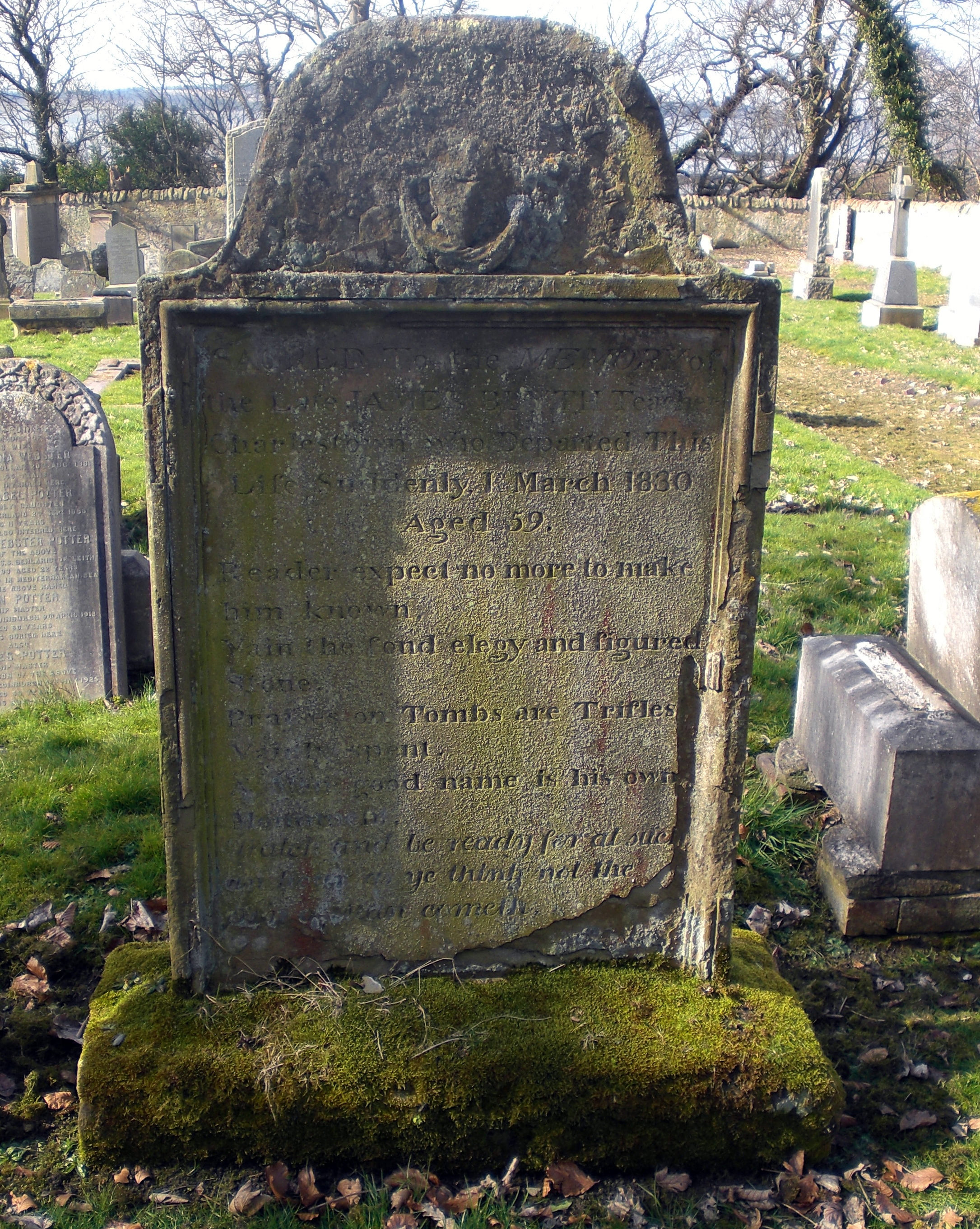
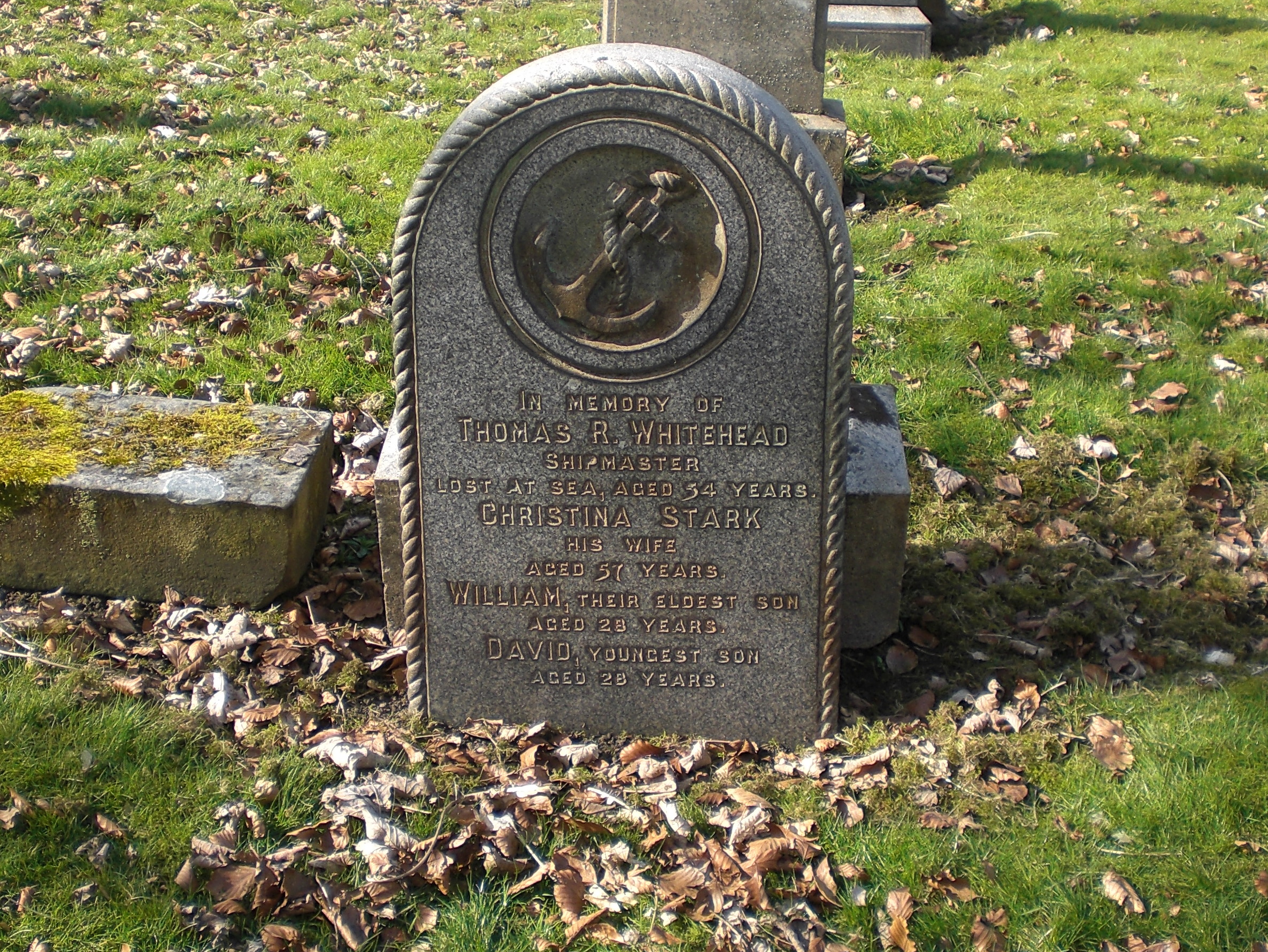
The churchyard, as in all churchyards, is full of stories. Manicured fragments of past lives lived. How much of a person can be captured when reduced to a few lines of inscription on a gravestone? In many cases, the weather and the passage of time work to gradually efface even this small act of material remembrance. Chiseled stone is returned to smoothness as the distant past becomes literally more difficult to read yielding up only broken fragments and guesses.
FracturedFragments & GuessesRobert Wood and Mary HarrisonTombs are TriflesLost at Sea
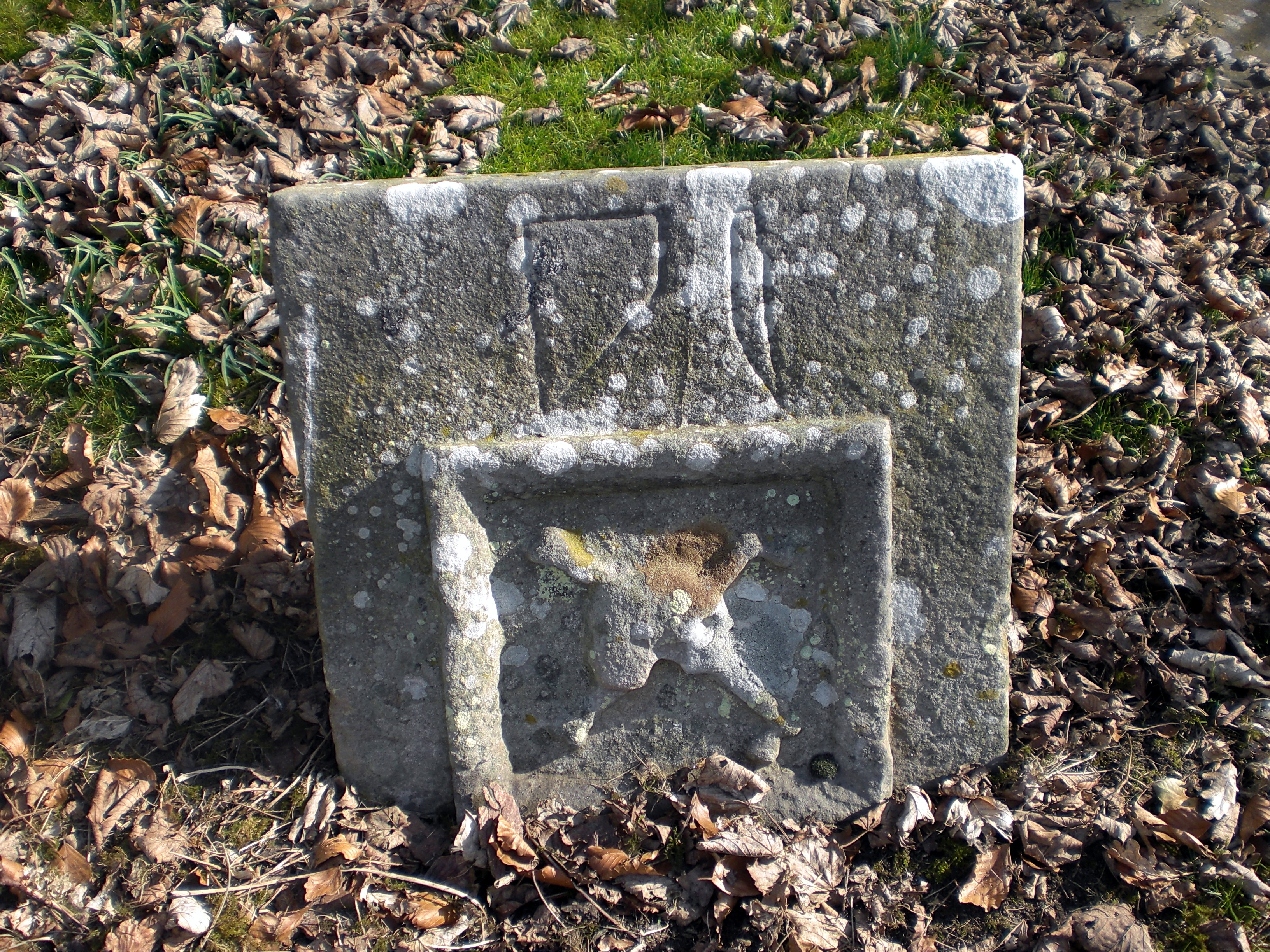
This gravestone below is particularly rich in symbolism: the trumpet blowing Angel of the Resurrection; the memento mori skull as a representation of death and the hourglass denoting the passing of time.
Angel of Resurrection, skull & hourglass
This stone was erected in the year of the French Revolution:
1789
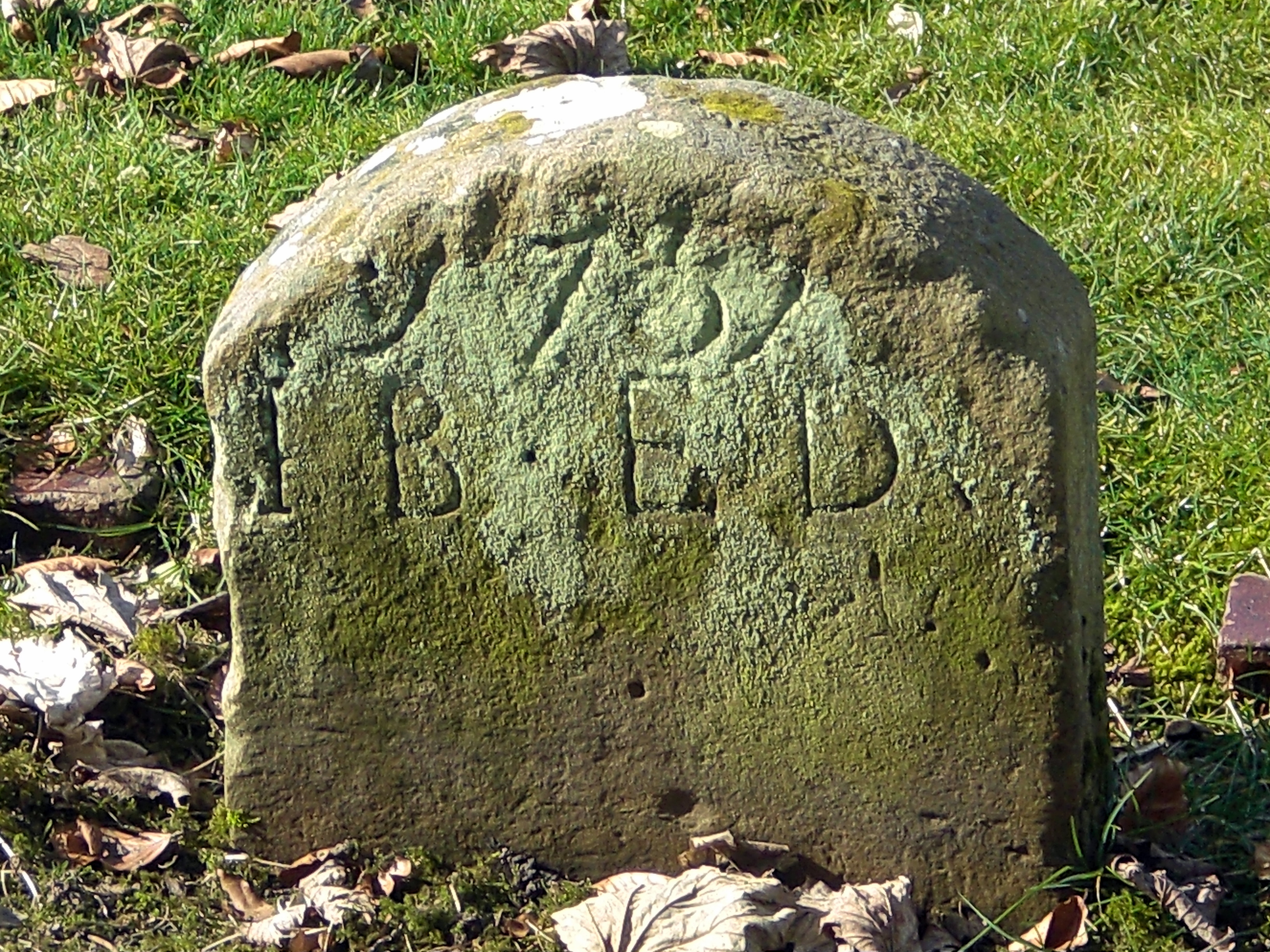
We were really intrigued with this one. The reversed numeral “7” in particular. Also the fact that four sets of initials are on the gravestone?
Nowadays, the quiet graveyard appears to be a haven for bird life. During our visit, blackbirds scurried amongst the leaves whilst a robin dotted around the gravestones following us.
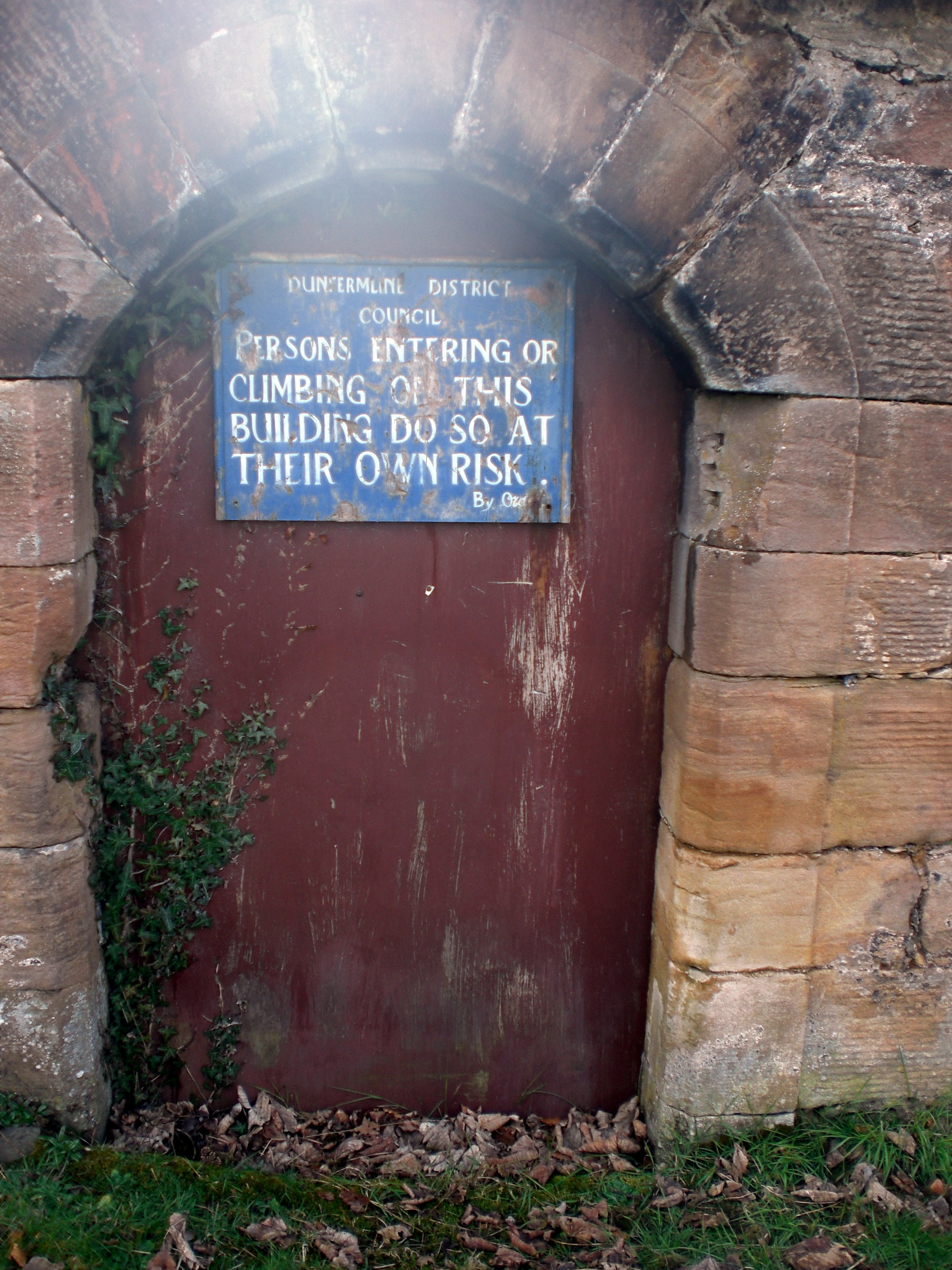
One last photo before we leave and its only later that we notice the ghostly halo around the door frame. Saturated light I’m sure but who knows?
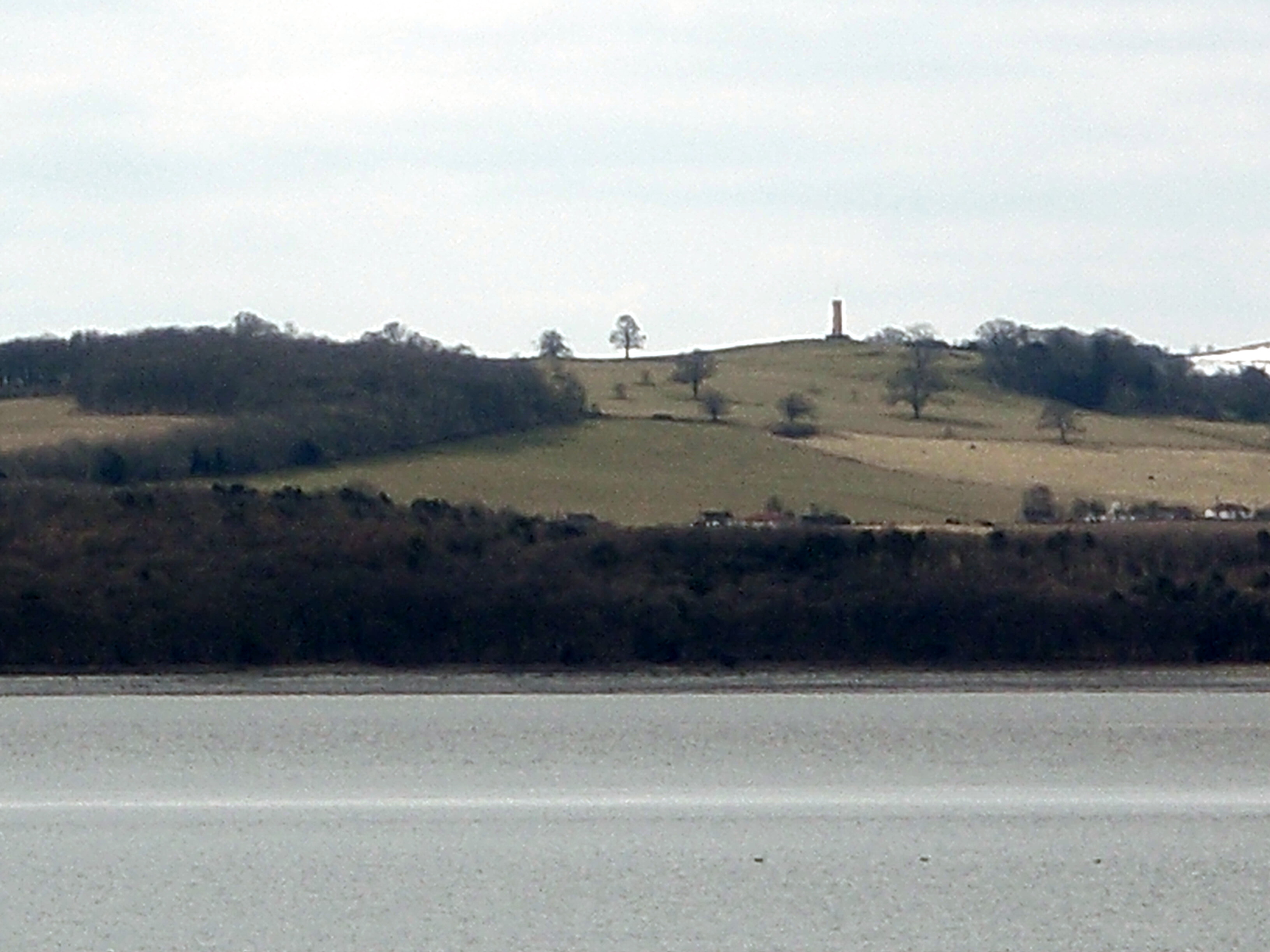
On leaving the the graveyard, we head right which leads to a pleasant shoreline walk along to Limekilns. Looking over the water there is even a hint of Glastonbury Tor over in West Lothian. It’s the tower folly of The House of the Binns, Tam Dalyell’s family home. It’s a short walk to Limekilns and as we approach we are reminded of David Balfour and Alan Breck who visit the village in Robert Louis Stevenson’s Kidnapped:
“about ten in the morning, mighty hungry and tired, came to the little clachan of Limekilns. This is a place that sits near in by the water-side, and looks across the Hope to the town of the Queensferry.”
(Kidnapped, Chapter XXVI, End of the Flight: We Pass the Forth).
We will write-up what we found in Limekilns and Charlestown another day.
Now Playing: Current 93 – Baalstorm, Sing Omega
References:
Alan Reid, Limekilns and Charlestown: A Historical Sketch and Descriptive Sketch of a Notable Fifeshire Neuk, (Dunfermline: A. Romanes, 1903).
I rediscovered this photograph recently which was taken a couple of years ago at Machrie Moor on the Isle of Arran. We were on holiday and I went out at around 6.00am to go for a walk before the family were up. It’s about 2.5km to the stones from the closest road, which is long enough to immerse yourself in the feeling of the place. The photograph is of the main grouping of stones which stand amongst a ritual landscape consisting of seven stone circles, several chambered cairns and hut circles. A highly evocative liminal landscape to wander alone in the thin morning light wrapped in light drizzle. Whilst written at a different time of the day, I cannot better the feeling described by John McArthur in The Antiquities of Arran (1861):
We have never witnessed a wilder and more grandly solemn scene than these old circles on the Mauchrie Moor, looming in shadowy indistinctiveness of an autumn moonlight…as we wandered amongst the old ruins, the weirdly stirring legends of the past haunted our mind, til the wreaths of mist seemed to float about like shadowy phantoms and the circling monoliths and hoary cromlech appeared to rise from the heath, like ghosts of the heroes of old, bending around the grave of their buried chief.
On my way back to the road, I’m reflecting on the tales of local folklore and particularly the stories of the bocans (malign spirits) which are said to inhabit the area. I’m rolling some sheep trintle in my hand – those soft wisps of wool which get snagged on fences or whin. It was as quiet as a remote landscape could be. Only the occasional bird call, a tuft of wind, the soft fizz of drizzle. Amongst all the greens and browns, I’m distracted by an impressive growth of witches butter, that bright yellow, almost golden fungus and head over for a closer look. I’m just about to step over a large tuft of moor grass, when, as is their wont, a pheasant takes wing from almost underneath my foot, squawking like a banshee. As the bird ascends in that awkward, unbalanced, flapping squall a tail feather whirligigs down from the sky which I manage to catch just before it hits the ground.
A gift from the moor dwellers to soothe my pounding heart.
Pheasant Feather/Sheep Trintle Cloud
Now playing: Eliane Radigue – Koumé, the third part of Trilogie de la Mort.
We are in dangerous territory, walking westward out of the town of Rosyth, along the A985, one of ‘Britain’s killer roads’. This arterial incision into the connective tissue of the Rosyth edgelands is to fully engage with the disruptive polarities emanating from two monolithic structures, which have recently appeared on either side of the road. There is a real sense that the landscape, skyscape and mindscape have all been irretrievably altered. Whether this is benign or malevolent who can say? It is this that we must investigate and address head-on with our dérive. Establish relations, resist, remap, and reclaim as necessary.
As we set off, along the ridgeline of the A985, there is an undercurrent of fear that a vortex of radiant, colliding energies may threaten to rip us, stalking walkers, apart or even lure us into the path of oncoming traffic on the killer road. This is a risk that we are prepared for and must take.
♦
The first stretch of road between two roundabouts is almost classic edgeland topography. On the right hand side, the small favela of allotments, with waves of canes, poles, pallet fencing and water butts; shanty sheds and corrugated iron knitted together with plastic pipework. There is a disordered/orderliness about the place; a charivari of utility and resourceful exchange, which resists the carefully manicured garden porn displayed in garden centres and lifestyle magazines. You can tell that this is land that is worked, loved and loves back.
On the other side of the road, past the football pitch, stands the ‘old Lexmark building’, supposedly the location of ‘the factory’ in Gregory Burke’s play Gagarin Way. We have investigated this building before and continue to monitor its energy levels , but no sign of the smoked salmon fishes as yet.
As we traverse over the second roundabout, there are clear intimations that the interzone between the town and edgelands has been breached. For the car driver, flooring it off the roundabout and opening up to the straight road ahead it’s as if the gravitational pull of the town loses its grip, supplanted by a carnivalesque impulse to wind down the window and toss the debris of consumer society into the hedgecomb of trees and shrubs edging the road. Here lies a graveyard of inert excess, an inventory of impulse purchases; eating and drinking on the hoof and a veritable time capsule of the non-biodegradable floatsam of consumer culture. Like true twitchers, we must record our spoils:
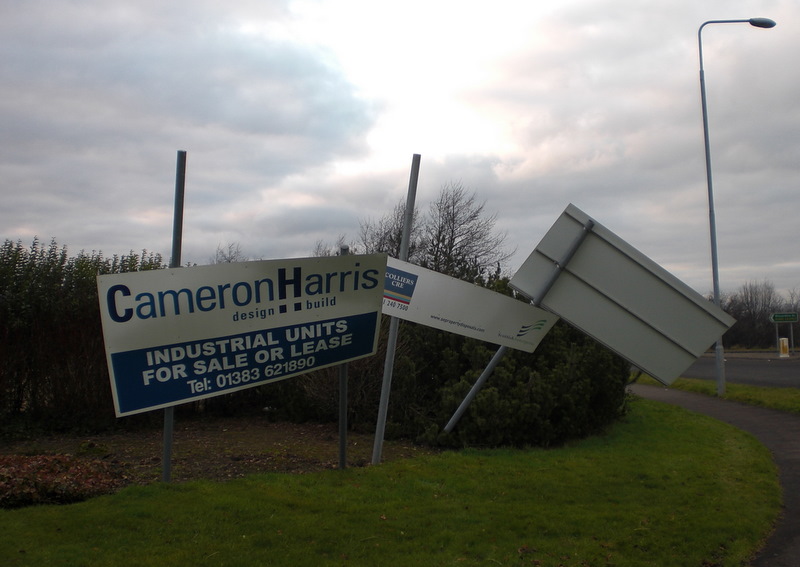
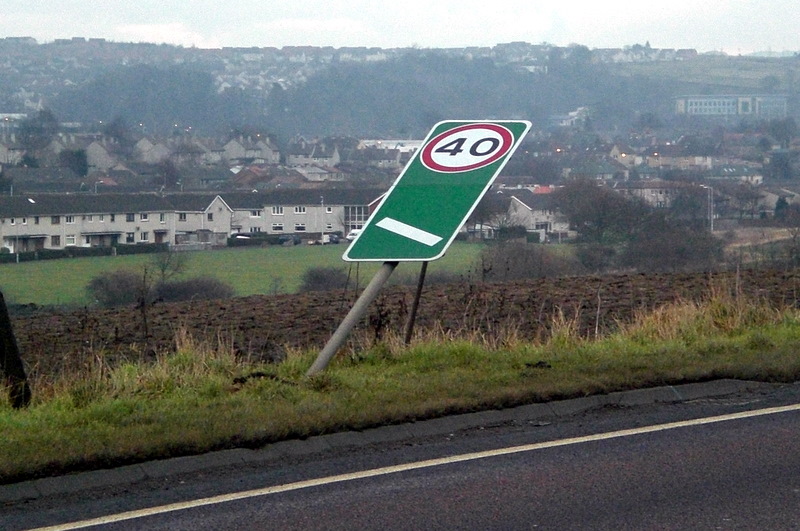
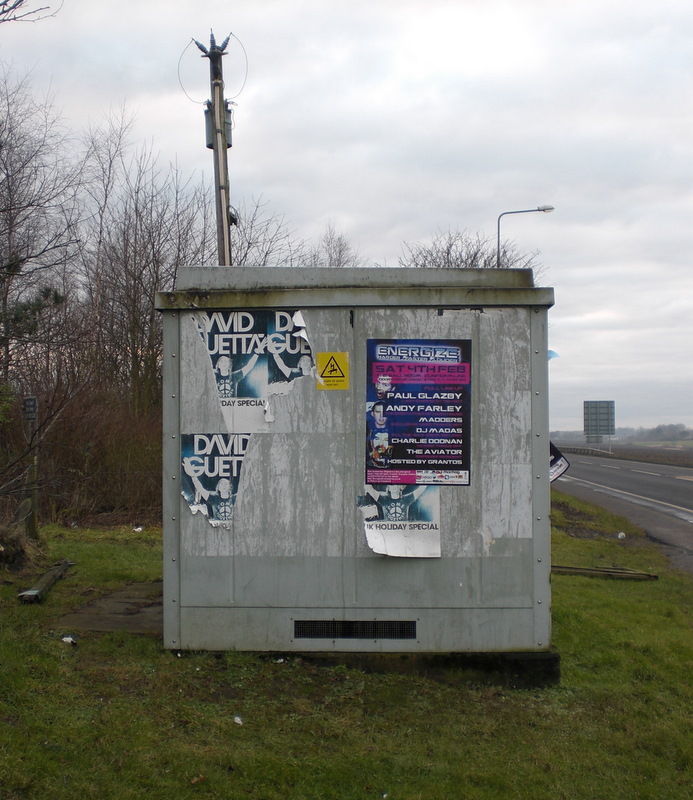
We are also struck by how the edgelands are places where things are simply forgotten about. Advertising signs from a more benign economic environment offering ‘Industrial Units for Sale or Lease’ are falling down and are never replaced; road signs tilt at 45 degrees; posters on substations intimate long forgotten concerts and doors on the mysterious roadside bunkers have all disappeared.
We are now out in the true edgelands, hugging the ribbon of verge by the side of the road as every vehicle utterly tanks it past us. We are pebbledashed by huge swathes of road spray and the draught, from the huge artic lorries that pass, threatens to pull us foot-powered perambulators into the middle of road. However, the objects of our effort and attention can now be clearly seen on either side of the road. We can feel their energies drilling into us and can only marvel at the scale of their transforming presence on this stretch of the edgelands. As long as we can stay vigilant and remain on the ribbon verge, we can resist the siren call urging us into the killer road.
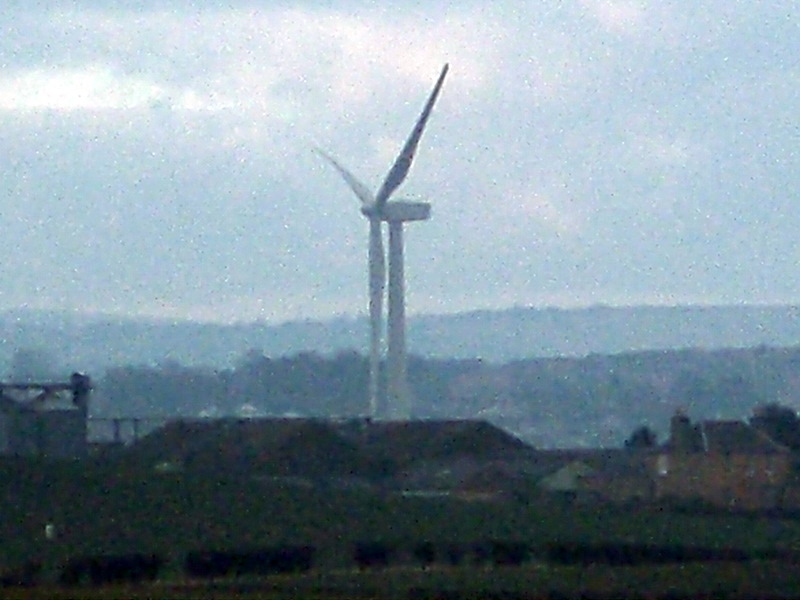
Over to the right, in the middle distance, is a 100 metre column, on top of which sits a rotating turbine with three, colossal, scythe -like blades. This somehow reminds us of the free gifts of plastic spinners that you used to get sellotaped to the front cover of children’s comics like The Beano and The Dandy. Thus we have a name for our monster – Spinner – a vital part of the engagement and neutralisation process. Spinner is of such a scale that it doesn’t look quite real. It’s as if it is projecting some perspective morphing force field which shrinks or obliterates the elements within the landscape which offer any indication of human scale.
Spinner belongs to FMC Technologies, a Houston, Texas headquartered business, which manufactures subsea systems for the oil and gas and renewables industry. The 1.5MW turbine is projected to supply up to 40% of their energy needs at their Dunfermline facility and was financed by Triodos, the ethical bank. We stand and watch the strange poetry of the rotating blades dancing with the wind, quite hypnotic and completely silent from our vantage point. There is some some sense of good energy radiating from this structure and there is a fluidity and engagement with the elements. Spinner could probably only be a product of the edgelands. A place where a turbine of this size can be erected then lost and forgotten, despite it’s landscape transforming qualities.
If Spinner has a slightly ethereal, alchemical quality, transforming wind into electricity, over to our left is a structure that looks as if it is marauding up towards the ridge, like a mechanised robotic toy about to attack. This is the aptly named Goliath crane recently transported from China’s Shanghai Zhenhua Port Machinery Co Ltd, where it was manufactured. Goliath is the largest crane installed in the UK and across its 120m beam is the clearly visible signage:
aircraft carrier alliance
Goliath sits in Rosyth Dockyard which lies over the hill down on the Forth. In effect, we are only seeing the top of the crane which at 90m high almost rivals Spinner in height. Goliath is part of the most expensive project in British naval history with two aircraft carriers presently being constructed at £3 billion a pop. We have already been told that once constructed, one will be mothballed immediately and the other will have no planes to fly from it. Try explaining this logic to a five year old. The carriers are to be named HMS Queen Elizabeth and HMS Prince of Wales. The sheer folly, financial carnage and symbolism of this whole escapade is such that it almost fries our collective brain into meltdown. However, very soon we are all whistling and singing Elvis Costello’s Shipbuilding – the Robert Wyatt version naturally – so we can hum the piano solo with our kazoos. This has the desired effect, tames the beast and calm descends. As we walk further along the road, we can gain a better vantage point to look down over the dockyard and see the true scale of Goliath. Our fear turns to pity as we realise that all we are looking at is simply a dumb, beast of burden, a heavy lifter, on which has been foisted the indignity of jingoistic colours, the White Ensign flag and the reek of failed empire. Also lurking down there, somewhere in the bowels are seven decommissioned nuclear submarines, still radioactive and we are reminded of some possibly apocryphal tales of technicians metal-capped boots glowing green in the dark. Isn’t it amazing what can be buried in the edgelands.
Back on the A985 and another juggernaut threatens to drag us into the road as we alight on Windylaw Path which leads down to the villages of Limekilns and Charlestown. We’ve had enough of the road but happy to have got the measure of Spinner and Goliath. Our dérive receptors are once again activated when we read that Windylaw Path is a coffin road.
Who could resist that and was Limekilns not mentioned in Stevenson’s Kidnapped?
As we head up the coffin road, a buzzard soars overhead…
In a previous post, I wrote of being haunted by the cup and ring symbol. In this wired, digital world, these cross-cultural, cross-geographic ciphers are all around us. Infiltrating our consciousness and yet remaining elusive and enigmatic. Tune in and they will reveal themselves in many unexpected places – from iPods to the X Factor, to packets of washing up powder.
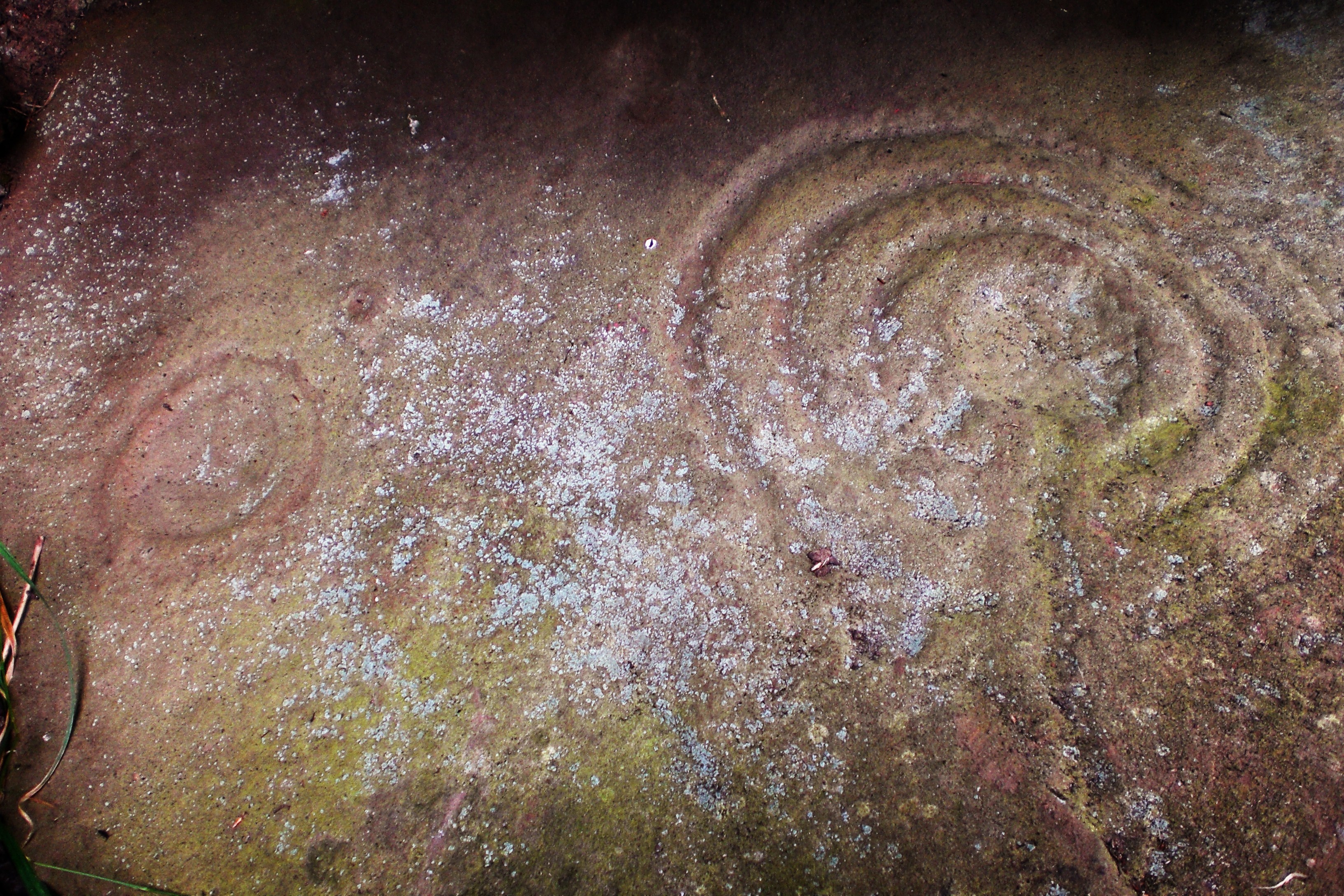
How exciting to discover that some well-preserved marks exist on the north side of The Binn (Hill), the volcanic plug that overlooks Burntisland. It’s unlikely that you would stumble across them without having been tipped a nod as to where they are – they have protected themselves well for over 4000 years.
Lets just say that when you find them, the setting makes perfect sense. Vistas out over the Forth, high ground but sheltered. The heavens and stars open above. A place to capture energies of earth, wood, wind and sun; a place to inscribe these enigmas upon stone. Make a mark. An image of transmission; of energy radiating outwards, of ripples on the surface of consciousness being picked up by the tuned in antenna. Perhaps our ancient forebears were also receptive to this idea, way before the discovery of radio waves begat such an adaptable and iconic image.
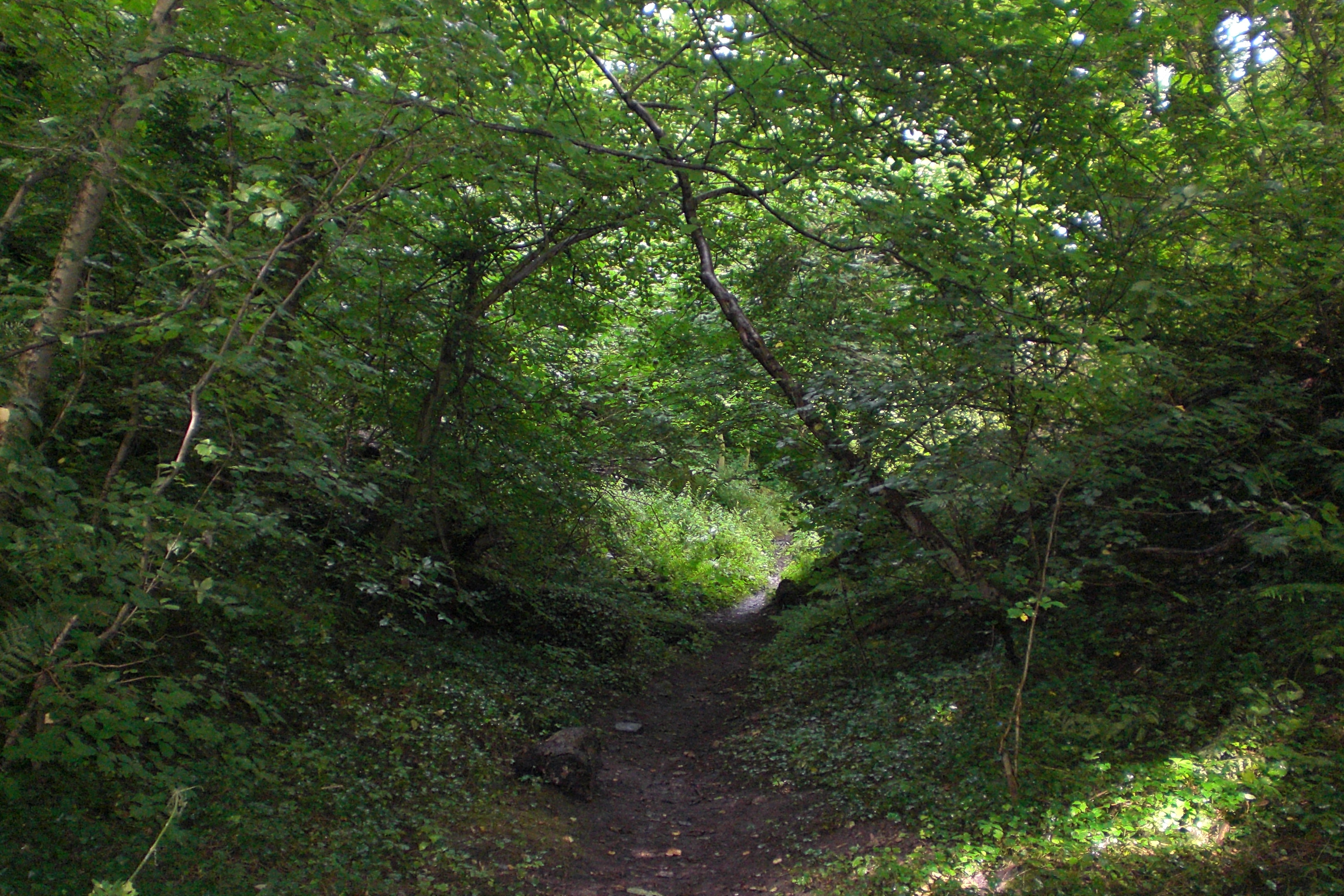
It’s a pleasant walk to the stones. Up through a sheltered path, heady aromas of rain drenched wood bark, soft underfoot. Off to the left the sound of falling water. At the end of the path a steep scramble and over the stile. A pause for breath and across the butterfly strewn meadow, until you pick up the path that heads up to the summit of the Binn. A couple of ducks, glide aimlessly amongst the reeds in the pond on the left. Dragonflies hover like winged shards of stained glass and suddenly they are gone as if dissolved in sunlight. As you commence the climb up the Binn, the rocks are up on the right hand side. A scramble over some rough ground and fallen trees and once you are in the vicinity, you will feel the pull of the rocks and there they are.
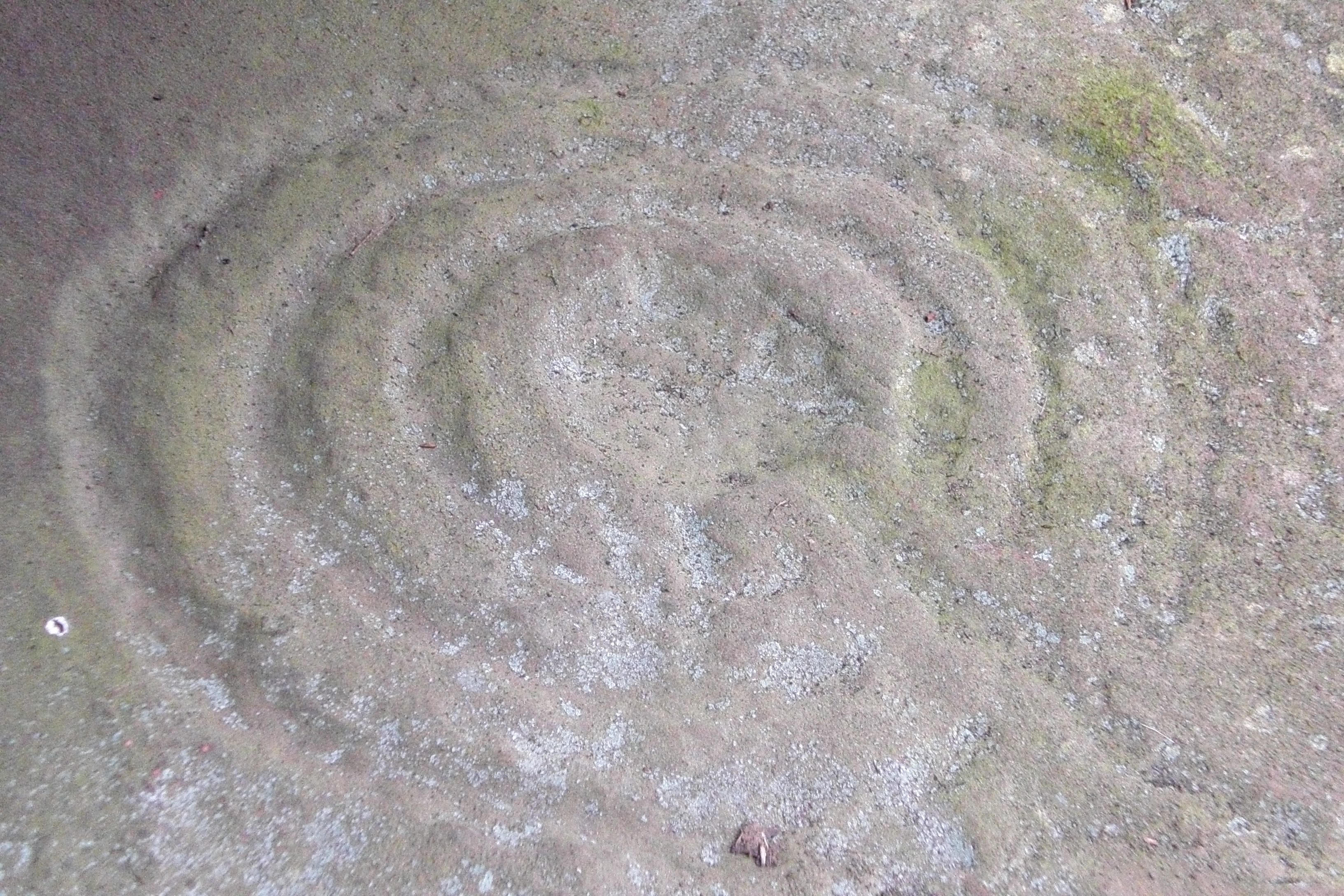
There are two key marks. One is a fully complete cup and ring, perfectly preserved. Another smaller one has been started but remains unfinished. I wonder why? It’s a blast to close your eyes and think that around 4,000 years ago someone had taken the time – many many hours – to carve these marks into this rock. This rock here – now! We can still only guess why and perhaps it is better that way. Do we want to know that it may have only been for some dull utilitarian purpose? No! Here it remains today something quite beautiful and powerful, expressive human poetry. Materially tangible but elusive and meaning slips away, like grains of sand through the fingers, if we try to wring out its mystery in theories and guesswork.
Carrying on up to the summit of the Binn. There is a ‘top of the world’ sensation. Burntisland lies, directly below. Once home to Mary Somerville, pioneering mathematician and astronomer and the Reverend Thomas Chalmers, radical, social reformer and founder of the Free Church of Scotland. Once described by Patrick Geddes as ‘an anarchist economist beside whom Kropotkin and Reclus are mere amateurs’.
Glinters of sunlight on the Forth to East and West as the wind whips up a frenzy of pebbledash rain. We are forced to take cover in a small natural alcove on the hillside. Sheltering from the elements, thinking of pioneering radicals just as our stone carving friends would have done 4,000 years ago.
During the summer a visitation to one of the richest sites of ancient psychogeographic energy – Kilmartin Glen.
In particular the cup and ring marks at Auchnabreck, led to a fascination with this symbol that transcends cultures and geographies and yet refuses to yield up any verifiable meaning. Theories abound: possibly aesthetic, ceremonial, territorial or route markers are common propositions.
I stare at my iPod and the podcasting symbol. Whilst ostensibly a human form/antenna enveloped in concentric circles, it is clearly identifiable as a cup and ring symbol.
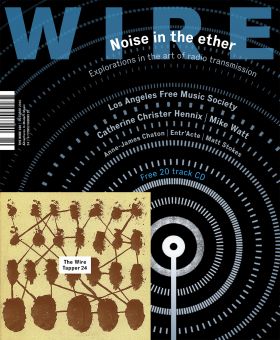
The latest edition of the marvellous music magazine The Wire pops through the letterbox. Cup and ring imagery radiates from the cover. ‘Noise in the ether: explorations in the art of radio transmission’. Dialed in, tuned in, picking up the signal.
Last night, Flower and Dancer are watching The X Factor. Before each contestant performs, they are enveloped in cup and ring digital effects. Channeling their karaoke talents into the receptive cerebrum of popular culture.
In all of these images I like the idea of transmission; of energy radiating outwards, of ripples on the surface of consciousness being picked up by the tuned in antenna. Perhaps our ancient forebears were also receptive to this idea, way before the discovery of radio waves begat such an adaptable and iconic image. These ancient rock carvings continue to transmit their own seductive energy and whilst the signal to noise ratio is weak, the dials are picking up the broadcast. Even the popular culture charms of the X Factor are not immune.
And what of these ancient symbols within the Fife landscape? I was delighted to find out about some perfectly preserved examples on Binn Hill at Burntisland. A field trip for the collective beckons.























 Murdo Eason - From Hill to Sea