
score of silence

with grace notes
≈≈≈
Now playing: Eva-Maria Houben – Piano Music (performed by R. Andrew Lee).
Murdo Eason - From Hill to Sea
walking / writing / between world and word
score of silence
with grace notes
≈≈≈
Now playing: Eva-Maria Houben – Piano Music (performed by R. Andrew Lee).

the mist
the call
the fall
the mist …
=========
Later
(with headphones)
=========
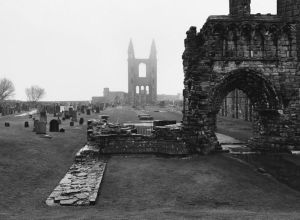
The missed call
The Fall
the mist …
(Blindness, Peel Session)
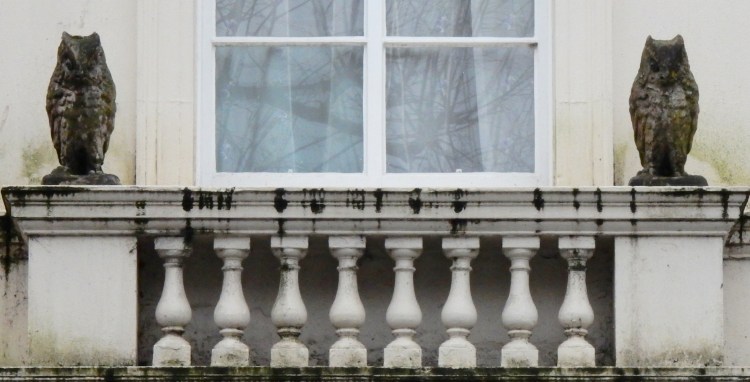
Twa Ools / Trees

Call of the rain-smeared cobbles
(Rose Lane)
Nocturne
≈
St Andrews, March 2017
.
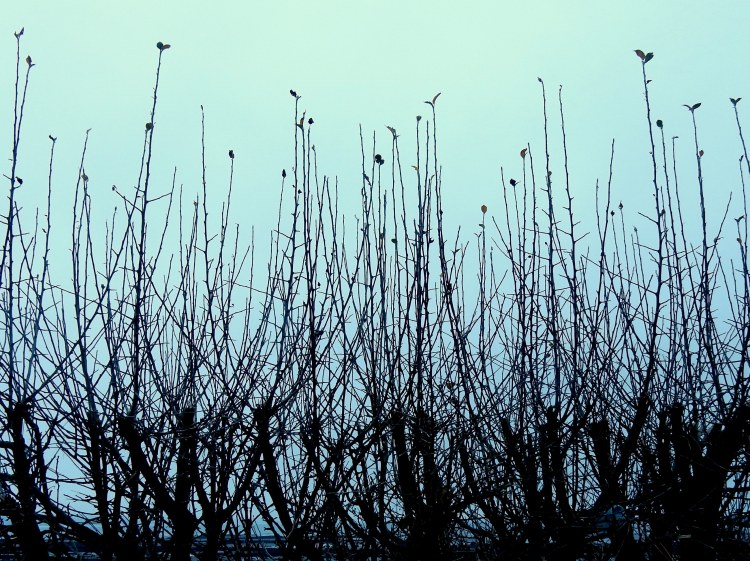
Ink etched blue silence. Cold harbour spires, sketched over cubist sails. Thorn pinned birds still tethered. Wings opening, sensing the sky
…
.

The ruined pier at Crombie Point. (January, 2017).
Jules Verne travelled to Scotland for the first time in 1859. He arrived at Crombie Point on 30th August, following a three-day exploration of Edinburgh.
Verne along with his traveling companion and old school friend, Aristide Hignard, had boarded the steamship The Prince of Wales at Granton Harbour earlier in the morning. The ship sailed up the Firth of Forth passing Aberdour, Queensferry, Rosyth, Blackness Castle and Charlestown with Verne recounting tales of historical events associated with the coastal landmarks. Approaching Crombie Point, the weather turned violently against them with high winds and waves proving too strong for the steamship to moor at the pier. Verne and Hignard managed to transfer into a smaller sail boat to reach the landing stage safely but very wet. They were met by the Reverend William Smith, from Oakley, who ushered them into the nearby Black Anchor Tavern to dry out and take a whisky.
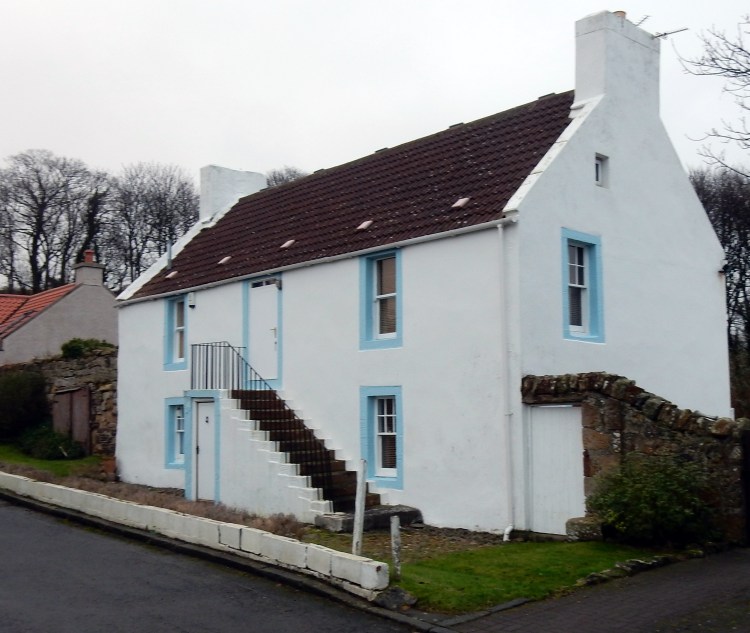
What was once the Black Anchor Tavern, Crombie Point. Now a private house. (January, 2017).
…

Beyond the door-less door. An invitation to enter. What lies beyond the threshold, the scattering of leaves and crouched shadows?
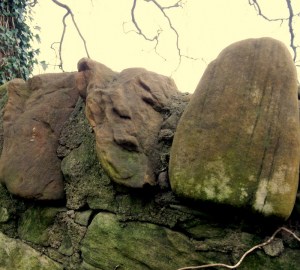
On the ancient whispering walls, the faces start to appear. Language of the stones, silent tongues ….
And on this short stretch of coastal path, the receding tide and dying light coats Torry Bay in an emulsion of gun-metal grey. A vista of colour bleached beauty with a tangible undertow of concealed violence bleeding over the mudflats.

In the middle of Torry Bay you will see witches rock. This rock was used to tie-up and restrain anyone suspected of witchcraft. Here the witches were judged and simultaneously sentenced as the tide rose. If they drowned, they were absolved of being a witch, but if they survived they were deemed to be to be a witch and burned at the stake.
(adapted from heritage interpretation boards located on Torry Bay)
More on the dark history of this short stretch of Fife coastline emerged from the Tales for Travellers Project which we recently participated in:
On Torry Bay the sky appears to expand to a grey cloak as we experience a brief rain shower. It’s a suitable backdrop for Kate Walker to tell us of the dark history of witch hunting along this coast in the seventeenth century. Zealous, self-appointed witch-finders, usually being local clergymen searching for those who had ‘danced with the devil’. They used an armoury of pseudo-scientific techniques to prey on poor, elderly, and vulnerable women, with their use of witch pricking and searching for the devil’s mark. The familiar power structures embedded in organised religion and misogyny. Kate recounted the tragic story of local woman Lilias Adie, buried face down in the mud on the beach, between the high tide and low tide marks as it was outside consecrated ground. Buried neither on land or at sea, huge stone slabs were placed on top of her; a folk remedy for revenants who were suspected of returning from the grave to torment the living.
≈≈≈
Now playing: Ensemble of Irreproducible Outcomes – ‘Trio and Sine Waves (With Wind, Snow, And Birds)’ from Memory and Weather.
Reference:
Ian Thompson, Jules Verne’s Scotland: In Fact and Fiction, (Edinburgh: Luath Press, 2011).
.
Unseen
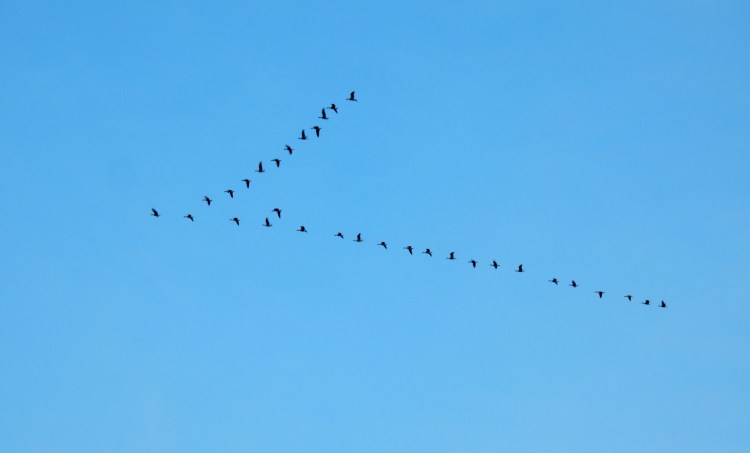
On the move overhead in the dark, a skein of geese trace elemental songlines. An arc of ancient language: shared, precise, yet never disclosed
.

.
Untranslatable articulations. Dreamtime tracks. Already distant, almost gone. A fading away towards some idea of silence.
≈
At around, 23.04 – 23.05, Saturday 18th February 2017.

.
A short history of breathing
≈

.
A short history of writing
(scratch wall)
≈
.
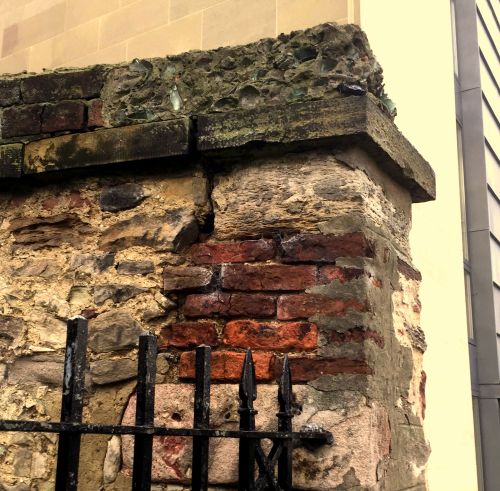
A short history of building
…
stone
brick
mortar (concrete)
iron
glass
plastic
…
≈
Now playing: Claire M Singer – Solas
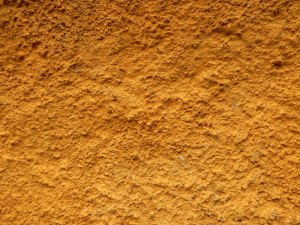
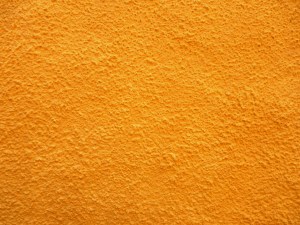

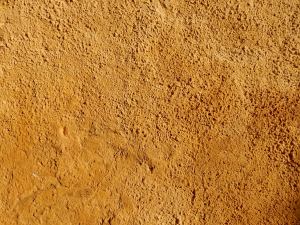
To begin the journey, we congregate almost four hundred years after Jonson. In front of the Palace walls, a set of variations in muted ochre, the orange pantile roof catches weak strands of sunlight on this September morning …
≈≈≈
Tales for Travellers and Travellers Tales … walking in the footsteps of Ben Jonson
It was a delight to be part of this wonderful project where we took Ben Jonson out for a walk in September.
Rebecca Crowther has documented the activities of all who took part in a new website which records our nine mile social walk from Culross to Dunfermline. Here you’ll find some background to the project, photographs, a short video, sound recordings of our interactive stops along the way and our own contribution from Murdo Eason.
Some extracts below:
still
s
i
t
t
i
n
g
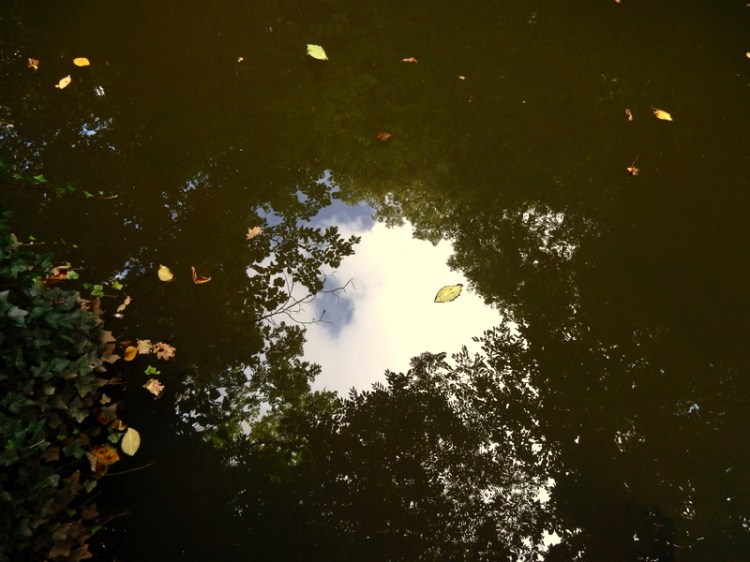
In a quiet place
I watch the sky
fall to earth.
.
A few leaves
cast adrift, circle
as clouds and trees
slip silently below
the skin of water
≈≈≈
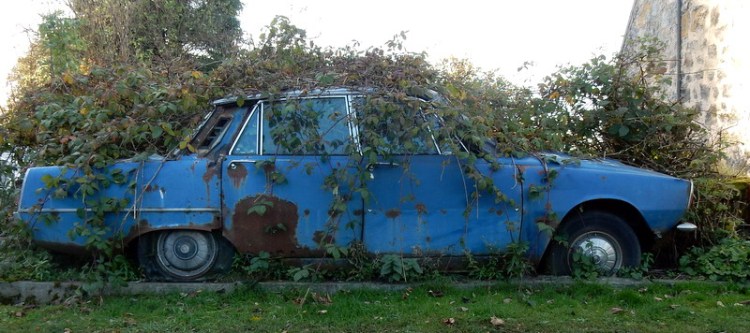
The sock & coulter symbol of the plough. A farmer’s life, turning soil, slowly returning to the land

You can find it all here:
Tales for Travellers and Travellers Tales … walking in the footsteps of Ben Jonson

We could eat this sky.
Stretch up, scoop out
handfuls; smear our faces
and taste the fanfare
of sunset.
II
Out of red earth
lines of olive trees, vines
and quarried stone.

Centuries of building,
dwelling, tending
the land, goats
and cattle.
Another cyprus tree – rooted
in tangled narratives
of departure
vivid light
and shadow play.
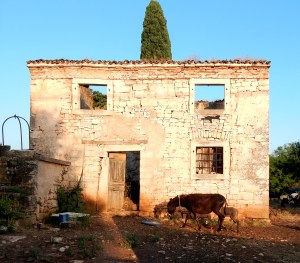


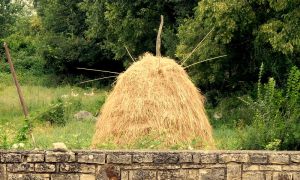
No neatly packaged hay bales in the uncanny rural. Creatures of twilight, sit hunched in the corner of smallholdings, backs turned. In fading light, walking past these halo-skewered field dwellers: was that a lengthening shadow? a sigh? a suggestion of movement?
IV
They would appear in the adjoining field at around 7.00pm each evening. A symphony of bells heralding their arrival. We never did see where they came from. They would feast in the field for around half an hour, a clanking cacophony of movement. Occasionally, one would come over to eye us up, usually the smallest with the highest pitched bell. Curious young eyes stared us out. Yet, these eyes tapped into something much older. Some fundamental rhythm of the land. Jaws rotating in perpetual motion and then, as they do, leaping into the air as if the earth had administered an electric shock to their hooves. A display of exuberance and delight in contrast to the slow, deliberate movements of the herd elders. They kept their heads down, chewing, chewing, chewing. After a cycle of time, which we were not party to, the deepest, most sonorous bell started to sound out a rhythm. The largest goat of the herd was calling time and starting to amble away. Gradually, the other goats began to follow, bells around their necks congealing into a moving mass of sound. A few short explosive trills as the stragglers ran to catch them up. We watched as the herd turned a corner and listened as the bells faded into the distance.
V
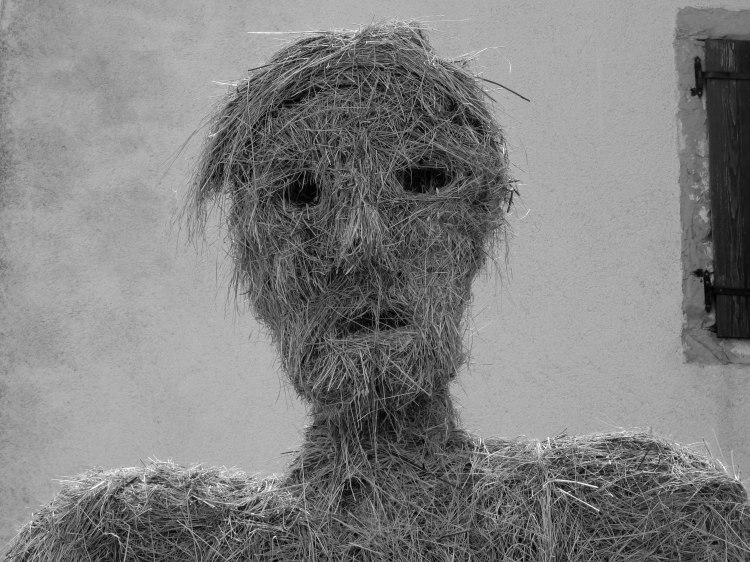
A visit to the small hilltop town of Motovun and very surprised to meet this straw giant and his dancing acolytes. Staring us out with his silent gaze, he must have been over twenty feet tall, At his feet, some folk ritual or dance taking place, arms thrown open to embrace the sun. Something of the Wicker Man about it all.

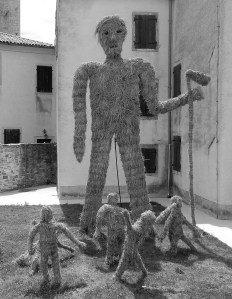
As far as I could find out, his name is Veli Jože, a giant who lived (lives?) in a local truffle-rich forest. Local stories suggest that he has been known to enter the town and physically shake the church tower to sound the bell.
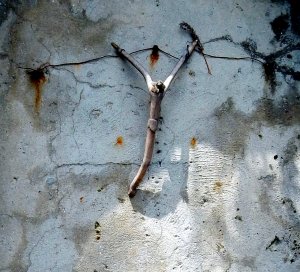
To reach Motovun, it is a steep walk up the hillside to reach the town perched on top. Whilst not religious, was touched by the care and beauty displayed in the construction of this minimal roadside shrine.

Motovun sits is on a hill in the Mirna valley and evidence of human settlement dates back to prehistoric times when it would have been surrounded by water. The river Mirna is Istria’s longest river and legend has it that Jason and the Argonauts fled down the estuary after having captured the Golden Fleece.
.
VI
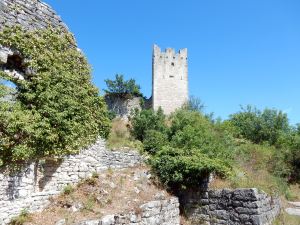

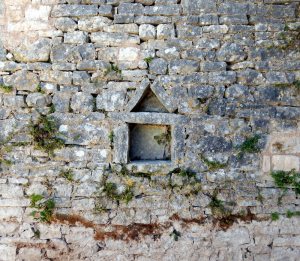
Another hill-top town, this time with a twist. Dvigrad is a relatively well-preserved mediaeval ghost town in the Draga valley. The population was initially decimated by the Black Death in the 16th century and finally abandoned completely in the early 1700s. As the town was unoccupied, it was spared from the destructive ravages of war which were a constant feature on the Istrian peninsula. Today, the town gates still exist, and it is possible to walk around the town walls. The defence tower still rises to cut the blue sky and interior room structures of the 200 odds houses are clearly visible.
.
VII

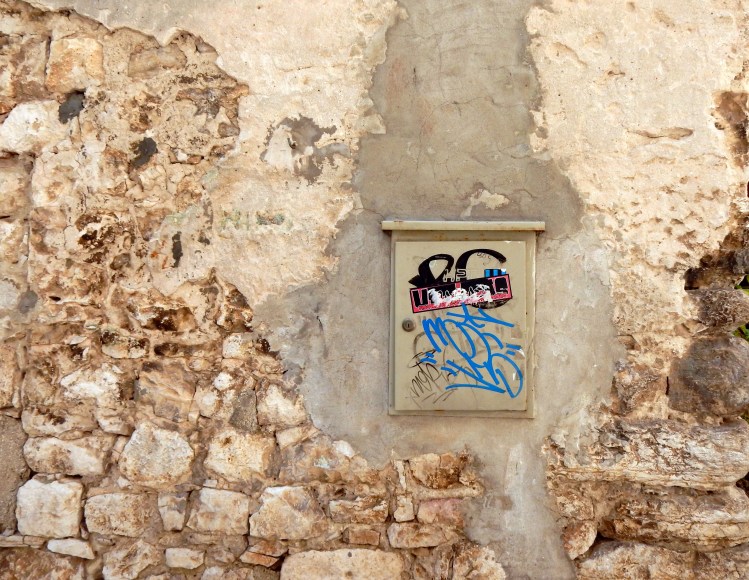
Aura of the town walls: return of the gaze:
To perceive the aura of an object, we look at, means to invest it with the ability to look at us in return … when this expectation is met … there is an experience of the aura to the fullest extent.
Walter Benjamin


.
VIII
Amongst the networks of rural paths and tracks.
Always the walls:
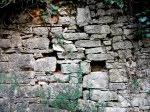


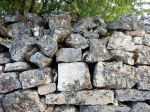
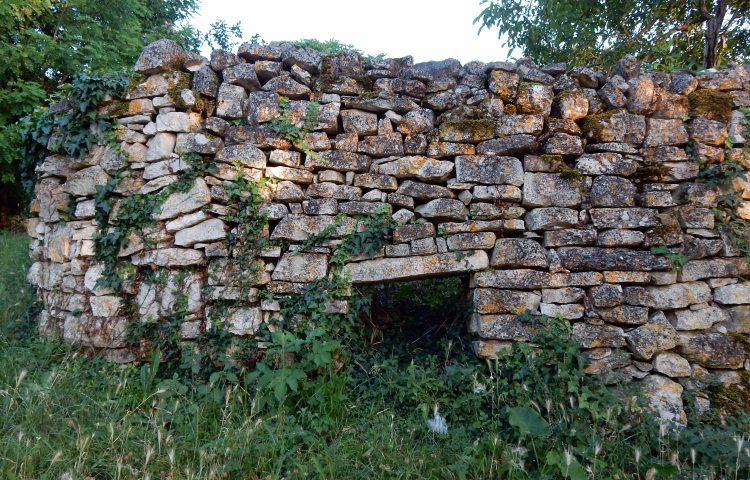
Stacked
Held
Holding
.
IX
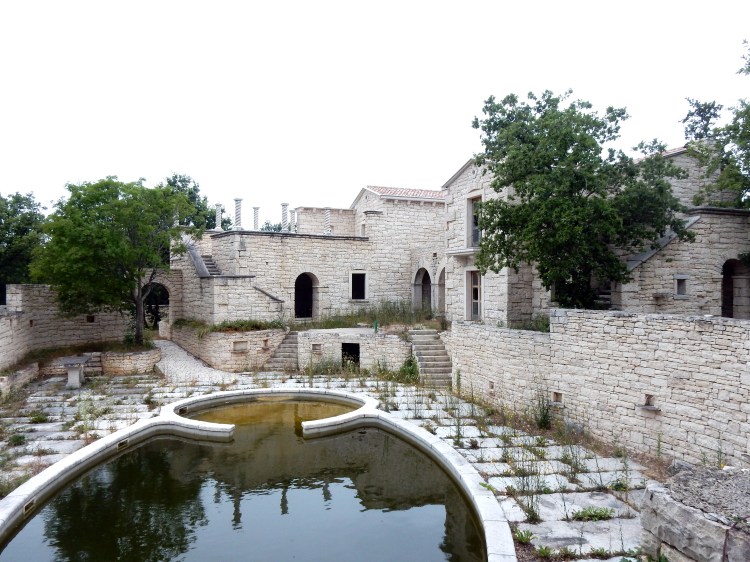
Entropic Futures.
An alien structure in the rural landscape:
the new, never having ever been.
We were staying on the Istrian peninsula in what could best be described as an agricultural hamlet, mostly comprised of smallholdings and cottage style dwellings. These were all constructed in a similar style with what looked like local quarried stone. A network of paths and tracks connected up to other nearby hamlets which were also of a similar architectural style. When we stumbled across the half completed building above, it looked as alien to its surroundings as finding a mountain bothy in the middle of Las Vegas.
The scale of the building was completely out of proportion to anything else locally. The pick and mix collision of architectural styles created a bizarre postmodern mash-up with a tear shaped swimming pool or fish pond, bizarre minaret style columns half-built on the roof and Italian style interiors. What was clear, was that the building was the new that had never been. We wandered around the half completed rooms, bare wires hanging out of walls, yet opulent installed marble bathrooms. Work had clearly stopped some time ago with the extensive grounds already starting to be reclaimed by nature. It was as if we had walked into the film set of a Ballard adaptation, where the crew had disappeared.
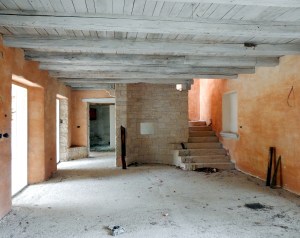
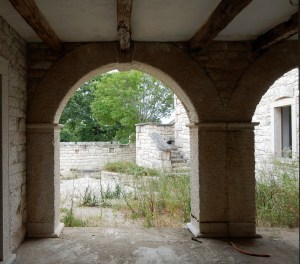
Of course we had to construct some sort of narrative as to what had happened here. Ms A came up with the one that we settled on. The remote location, stilted opulence and rather garish tastes indicated that this could have been a low-key hideaway for some gangster or Mafiosi. Work on the property was well underway when they were either rubbed out, banged up, or cleaned out of money, leaving this rural fun palace to slowly begin to merge back into the Croatian countryside. The new that had never been.
.
X
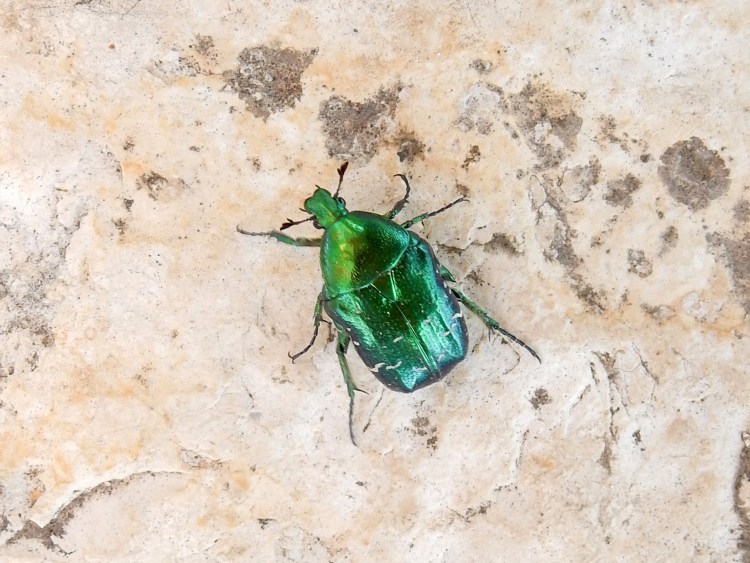
Walking a line
an iridescent alchemist
pulls the sun
across the sky
.
XI

XII
That night, an absence of city light and gravity. We fell from earth, lost our breath, immersed in that plunge pool of dark sky. We learned to gather stars, eat planets for sustenance, grab comet tails to move. The dawn light made us heavy again. We fell back.
≈≈≈
Now playing: Maja S. K. Ratkje – Crepuscular Hour
Blue
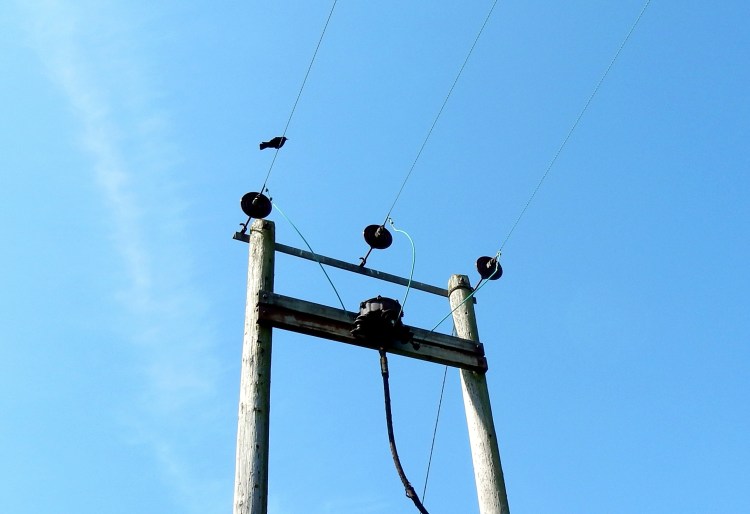
Blackbird
Raga
Sky
Transmission
≈
White
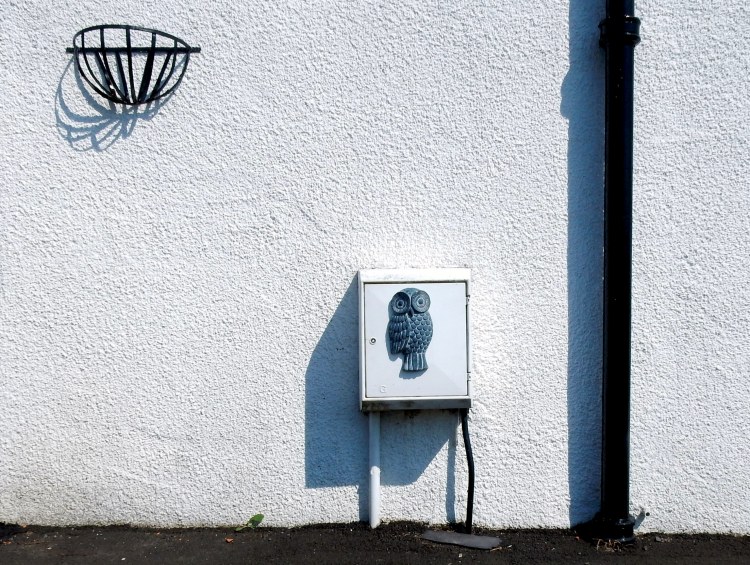
The blind owl
sees no shadows
but feels the sun
≈
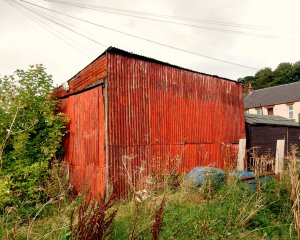
Red
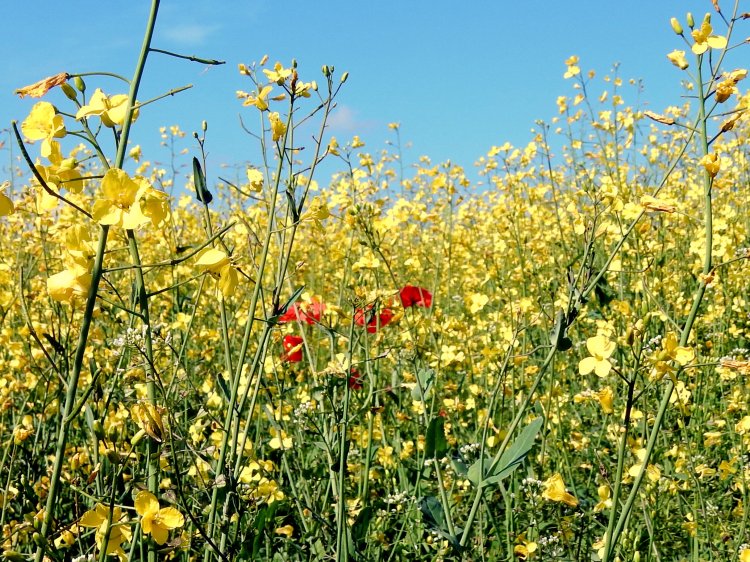
Sounding
the sun-bleached
colour-field.
A chorus
of fire music.
≈
Now playing: Alice Coltrane – Saved from the Fire: The Ashram Tapes of Alice Coltrane, Mix for RBMA Radio by Frosty
From a walk to Dunfermline via Pattiesmuir, under a baking sun, 18th June 2016.
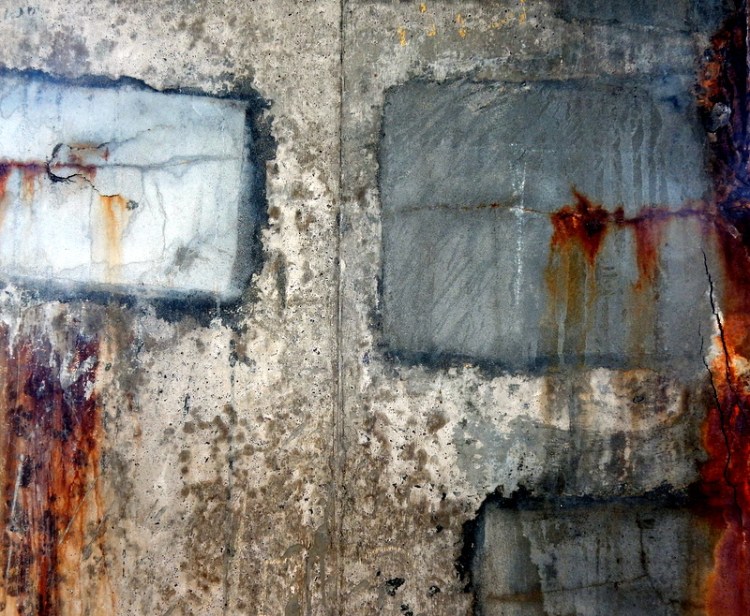
These images were ‘found’ beneath a section of the M90 Motorway; an elevated brutalist behemoth straddling ancient agricultural land, north-east of Rosyth. The sheer mass of concrete overhead creates an almost cave like sensation when standing directly underneath. Folded into artificial darkness, violent white light spills around the concrete edifice, flooding the hinterland of perception. Looking out from the cocoon of the dark belly, steel giants stalk the landscape. Above, the dull thud-thud of unseen vehicles passing.

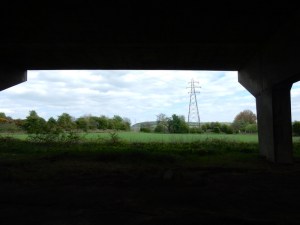
Imaginary maps of this hidden microclimate are revealed in the concrete structures and the very land itself.
Compared to the verdant vegetation in the surrounding fields, the dry earth fractures into mesmerising worlds of ambiguous scale.

Concrete surfaces leach vivid patinas of oxidising colour.
Time, heat, moisture and the elements create an ongoing cartography of chance.

River deltas, mountain ranges, lagoons, beaches, sandbanks.
Topographies of texture and shade, revealed in light.

Encounter with the red-billed shaman.
A gull-like creature invites us to contemplate
the white void of falling water.
Head bowed, long neck. Wise knowing eye.
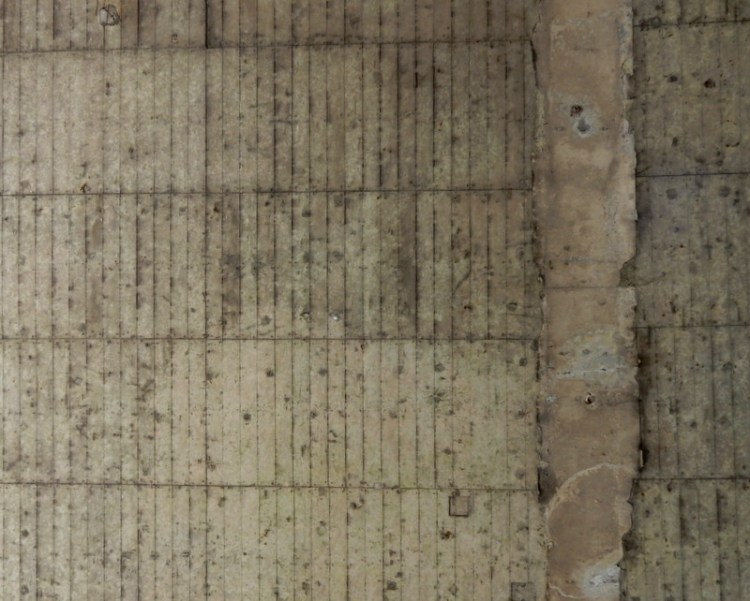
When looking up, feels like looking down.
For an instant, on the roof, a city underneath the gaze of a drone.

Aura of the walls.
Frescoes painted by gravity.
The staining sound of concrete stigmata:
drip
drip
drip

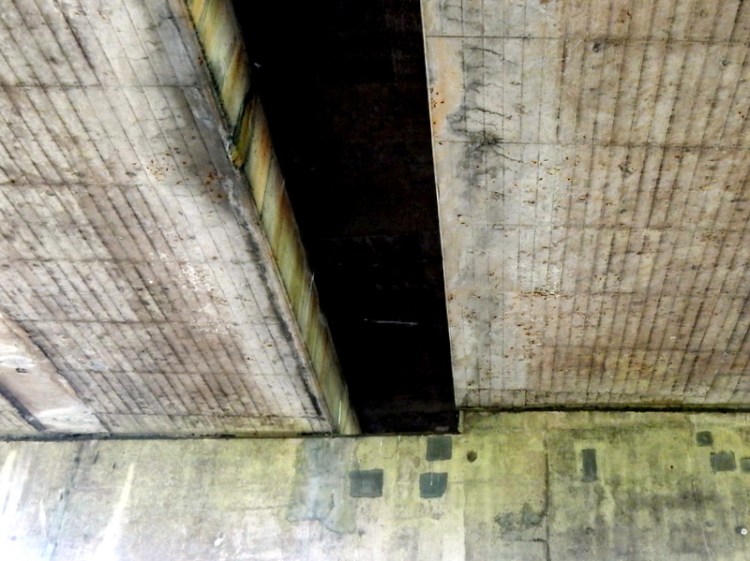
This is not an easy place to access on foot, although it is visible from the trains that pass along the Fife Circle railway line. The concrete supports are usually covered with graffiti but some recent activity has painted over all of this with white geometric shapes. It is unclear whether this is some clean up intervention by the authorities, or a Year Zero initiative from the graffiti community themselves.


Strangely, from across the tracks, tags still shout out for attention.
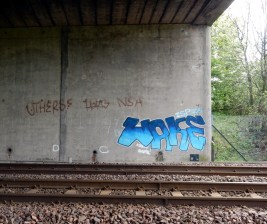

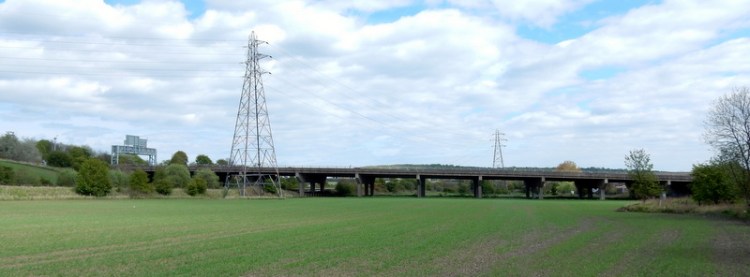
Emerging from the darkness, maps and imaginary worlds dissolve in sunlight as we head back west.
Across the fields, the lumbering concrete, traverses north and south.
The giant steel stilt-walkers are heading east.
≈≈≈
The original intention was to incorporate this material into another post that is presently being written on quite a different theme. As this particular encounter was the result of a serendipitous detour we have chosen to post it separately.
An earlier post, underneath a different section of the M90, can be found here.
Now playing: Kayo Dot – Dowsing Anemone with Copper Tongue.
.

.
.
.
the curve
…..and call of
……….the coastline
.

.
a cellular circle
……….an expanding
…………………….world
.
Now playing: The Incredible String Band – ‘A Very Cellular Song’ from The Hangman’s Beautiful Daughter.
 Murdo Eason - From Hill to Sea