Whilst in Glasgow recently, it was a sad sight to walk along Renfield Street and see the hollowed out shell of The Glasgow School of Art. Even in it’s fire-damaged condition, Charles Rennie Mackintosh’s architectural masterpiece remains identifiable as one of the great buildings of the world.
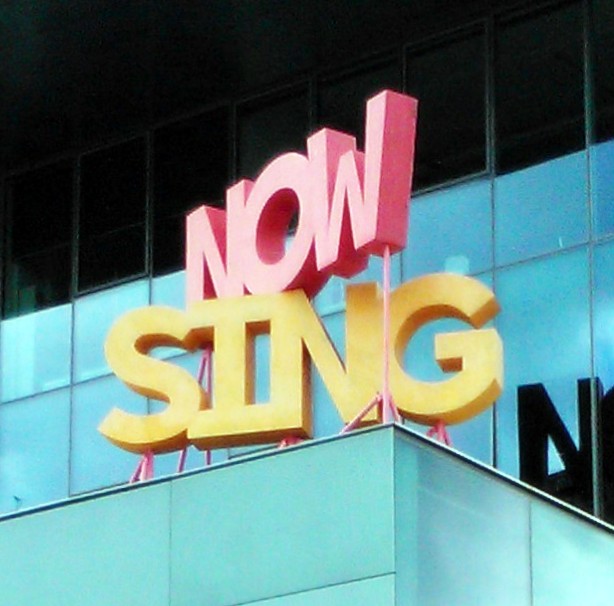
On the other side of the street, a shiny new neighbour, the Reid Building, hunches over its ailing, elderly companion. A reflective sympathy of glass, metal and concrete. On the balcony, Michael Stumpf’s installation, speaking to the moment:
As an invocation, it’s a good one:
NOW SING
.
As twilight descends, and the sounds of Sauchiehall Street murmur below, we can imagine the Reid Building and all people passing, singing soft lullabies. Songs to comfort. Songs to bring back light and air to soot-blackened lungs. Songs to soothe the city fabric.
So no fire damaged pictures of The Mackintosh Building. It’s presence will always be there: to heal, challenge and sustain the human imagination, whatever its material state.
(and soothe the city fabric)
Now playing: Richard Youngs – ‘The Future is So Different Today’ from Summer Through My Mind
21 June 2014. Walking along an overgrown railway track near Crombie in Fife. As ‘night’ approaches, darkness fails to smother the light. Even the Giant Hogweed (?) appears to embrace the sky.
Now playing: Loren Mazzacane & Suzanne Langille – Come Night
In Guy Debord’s autobiography, Panegyric, he describes having spent the greater part of his life in Paris, specifically within the triangle defined by the intersections of rue Saint-Jacques and rue Royer-Collard; rue Saint-Martin and rue Greneta; and rue du Bac and rue de Commailles.
Never or hardly ever, would I have left this area which suited me perfectly.
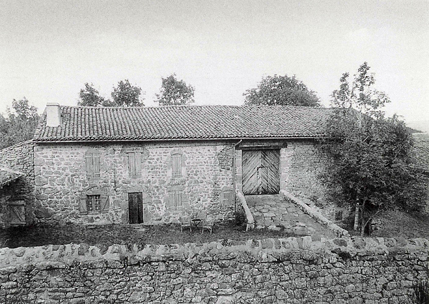
However, for the last 20 years of his life, Debord spent increasing amounts of time in an isolated house at Champot Haut, situated in Bellevue-la-Montagne, a commune (population c. 500) in the Haute-Loire département of theAuvergne. From 1975 onwards, Debord spent most summers and a few winters there with his second wife Alice Becker-Ho.
The idea of Debord as a Landscape writer is not one that would immediately spring to mind, yet over a few pages in Panegyric, Debord paints a lyrical elegy to the natural world and landscape of Champot.
.
Inaccessible • isolated • surrounded by woods
I have even stayed in an inaccessible house surrounded by woods, far from any village, in an extremely barren, exhausted mountainous region, deep in a deserted Auvergne. I spent several winters there.
snow • drifts • logs • fire
Snow would fall for days on end. The wind piled it up in drifts. Barriers kept it off the road. Despite the surrounding walls, snow accumulated in the courtyard. Logs were piled high on the fire.
at night • an opening to the Milky Way • stars so close
The house seemed to open directly onto the Milky Way. At night, the stars, so close, would shine brilliantly one moment, and the next be extinguished by the passing mist…
a land of storms • horizon flashes • under siege
It was a land of storms. They would approach silently at first, announced by the brief passage of a wind that slithered through the grass or by a series of sudden flashes on the horizon; then thunder and lighting would be unleashed, and we would be bombarded for a long while from every direction, as if in a fortress under siege.
a lightning strike • an illuminated landscape • an irrevocable brilliance
Just once, at night, I saw lightning strike near me outside: you could not even see where it had struck; the whole landscape was equally illuminated for one startling instant. Nothing in art has ever given me this impression of an irrevocable brilliance, except for the prose that Lautréamont employed in the programmatic exposition that he called Poésies…
high winds • shaken trees • relentless assault
High winds which at any moment could rise from one of three directions, shook the trees. The more dispersed trees on the heath to the north dipped and shook like ships surprised at anchor in an unprotected harbour. The compactly grouped trees that guarded the hillock in front of the house supported one another in their resistance, the first rank breaking the west wind’s relentless assault…
clouds traverse the sky • winds retreat • relaunch
Masses of clouds traversed the sky at a run. A sudden change of wind could also quickly send them into retreat, with other clouds launched in their pursuit.
all the birds • chill of air • shades of green • tremulous light
On calm mornings, there were all the birds of the dawn and the perfect chill of air, and that dazzling shade of tender green that came over the trees, in the tremulous light of the sun rising before them…
the arrival of autumn • a sweetness in the air • ‘the first breath of spring’
The weeks went by imperceptibly. One day the morning air would announce the arrival of autumn. Another time, a great sweetness in the air, a sweetness you could taste, would declare itself, like a quick promise always kept, ‘the first breath of spring.’
in the square • extraordinary encounters • the owl of Minerva
In the midwinter nights of 1988, in the Square des Missions Étrangères, an owl would obstinately repeat his calls, fooled perhaps by the unseasonal weather. And this extraordinary series of encounters with the bird of Minerva, its atmosphere of surprise and indignation, did not in the least seem to constitute an allusion to the imprudent conduct or the various aberrations of my life. I have ever understood where my life could have been different or how it ought to be justified.
a pleasing and impressive solitude
It was a pleasing and impressive solitude. But to tell the truth, I was not alone: I was with Alice.
The Debord/Becker-Ho postbox at Champot (c) Andy Merrifield
At Champot, on 30th November 1994, Guy Debord shot himself through the heart with a single bullet.
Now playing: Jean-Claude Eloy – Chants pour l’autre moitié du ciel / Songs for the other half of the sky.
References:
Guy Debord, Panegyric Volumes 1 & 2, translated by James Brook and John McHale (London: Verso, 2004).
Andy Merrifield, Guy Debord (London: Reaktion Books, 2005).
It often happens. A sensation at the edge of perception. A glint of light, a fluttering of movement. The feeling that some-thing has flitted across the threshold of the senses.
Something there – but not there.
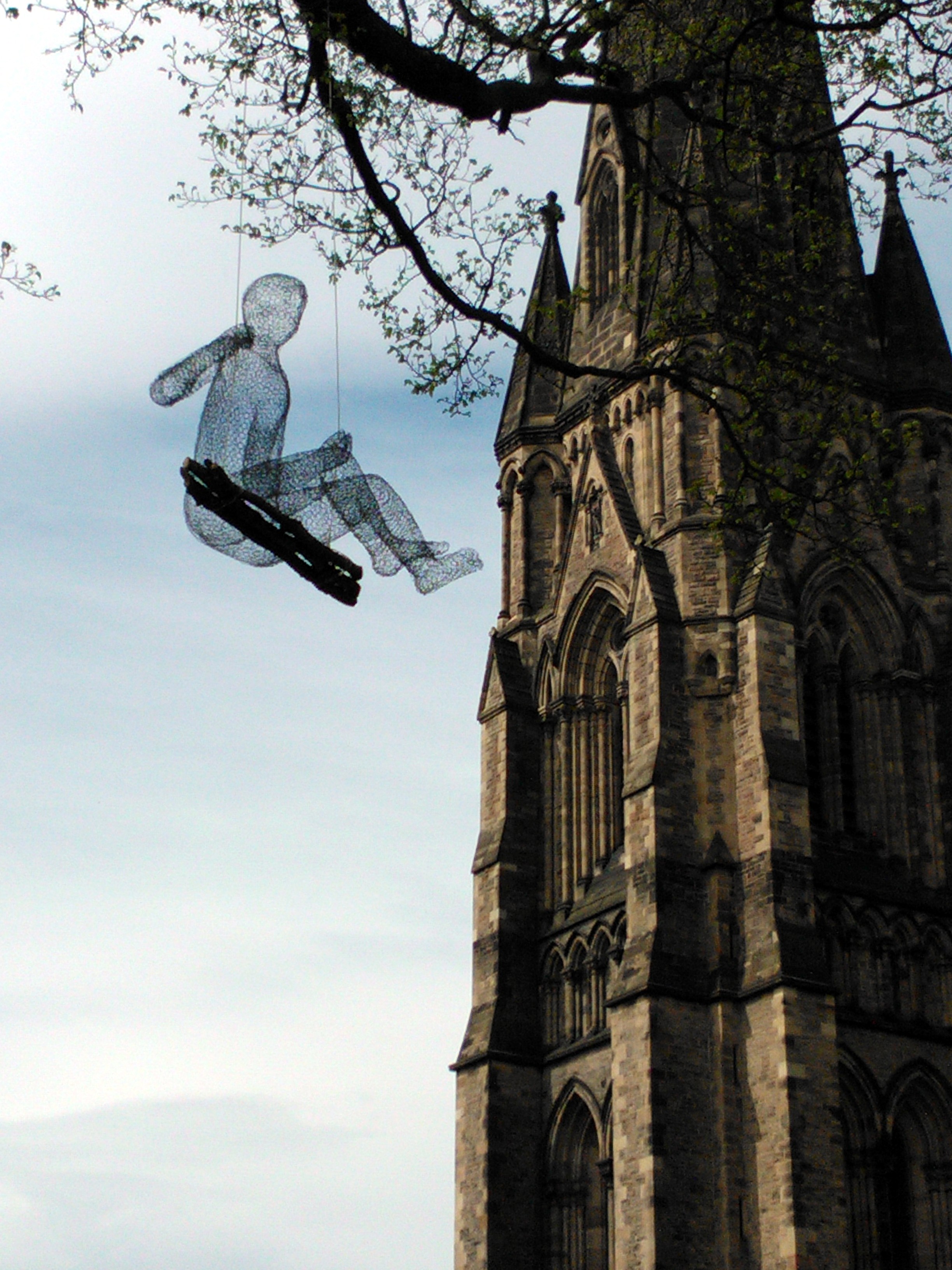
And so it was, walking along the tree-lined footpath by St Mary’s Cathedral in Edinburgh. Looking up, amongst the trees it was difficult to see it clearly at first. Something metallic, floating, but also appearing to be entwined amongst the branches, merged with the sky. It was only when a light breeze, initiated a gentle rocking movement that the suspended human form fully emerged.
From another angle, the drifting figure resembled a pencil drawing sketched on to the sky. A shaded human form floating against the blue canvas, slowly dissolving back into leaf and branch.
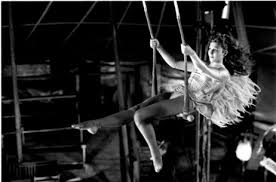
The gentle motion, both hypnotic and dreamlike conjured up thoughts of Solveig Dommartin’s character, Marion, in Wim Wenders’ Wings of Desire. A lonely trapeze artist, inhabiting the space between ground and sky, who entices an angel down to Earth.
.
Solveig Dommartin as Marion in Wings of Desire
.
I have subsequently read other people describe the St Mary’s work as “sinister, creepy or disturbing” and it certainly startles you when you first look up and see it. An experience that I’m sure would be intensified if you encountered it in the dark under moonlight. However, for me, the figure conjured up a sensation of something otherworldly, yet strangely familiar. A fluid form of substance and air, swinging silently, and like ‘Marion’ suspended between the earth and sky.
From a distance I watched for a short time as many people passed along the footpath. The vast majority did not look up or see the figure suspended amongst the leaves. Silently watching, waiting to transform the everyday city into an encounter with the uncanny.
≈
Now playing: Nick Cave and the Bad Seeds – The Carny
I have found out that the sculpture is a work called Spirit by Aliisa Hyslop, a Finnish/Scottish artist. Spirit is presently part of an exhibition at the Arusha Art Gallery.
The quotation from Rilke’s Duino Elegies are the last lines of the translation by David Young (New York: W.W. Norton & Company, 1978). Wim Wenders cites Duino Elegies as the initial inspiration for Wings of Desire.
a flower expresses itself by flowering, not by being labelled
Patrick Geddes
That blue
There – beyond the iris heads.
As if a grey tarpaulin
has been peeled back
across the eyeball of the sky.
.
Spring light, a different light.
.
Colours made strange,
as smears of white heat
dab at fold-gathered shadows.
.
The spooling thread of a blackbird’s raga, weaves through a chitter-chatter tapestry of blue tit and sparrow song as we lie under the flowers, observing a line of marching ants. A posse of advance troops, jolted into collective industry after winter’s hibernation. Out, once again, to prospect and survey the land.
Here. Now. All of us. Feeling the natural cycles turn.
Looking up to the sky from underneath the flowers.
An ant’s world view invoking vague memories of Land of the Giants, and of this place before the flowers arrived.
Across the road, jump the fence and head towards what turns out to be a picture frame.
Walking into the frame and down an avenue of young trees, we are lured by the vanishing point of reflecting silver.
.
Flocks of daffodils gather around the rotunda, a yellow flecked congregation. Heads nodding, as if worshipping the filigree forms of a newly descended alien god. Bringer of light and heat.
A turn into mature woodland and a network of tracks and paths. A sense of water running close-by but which we cannot see – yet. Tree animism.
.
You will have to move closer,
to hear,
the guttural whispers
of the tree maw
.
.
With spring sunshine, woodland, birdsong and the sense of water, this feels like ‘the countryside’ but it doesn’t take long to be reminded how close we are to the centre of this New Town. We look up at the polished concrete belly of transport entrails as the low thrum of traffic passes overhead.
In the last photograph, on the left hand side, you can see what turns out to be a rather incongruous plinth nestling under the concrete flyover. We discover that it is displaying a 16th century stone-carved coat of arms, of the Leslie family. The stone originally came from an old building in the nearby policies (grounds) of Leslie House, the ancestral home of the Earls of Rothes. It bears the griffins and motto of the Leslie family: Grip Fast
From Kinross, I came to Lessley, where I had a full view of the palace of Rothess, both inside and outside … The house is the glory of the place and indeed of the whole province of Fife.
Daniel Defoe, 1724
Sir Norman Leslie acquired Fythkil, the original name of this parish, around 1282 and renamed it after the Rothes family lands in Aberdeenshire. The Leslies became the Earls of Rothes in 1457. The earliest evidence of a house on this site is 1667 which was destroyed by fire in December 1763. A much smaller house was subsequently built, supposedly restoring the least damaged Western side.
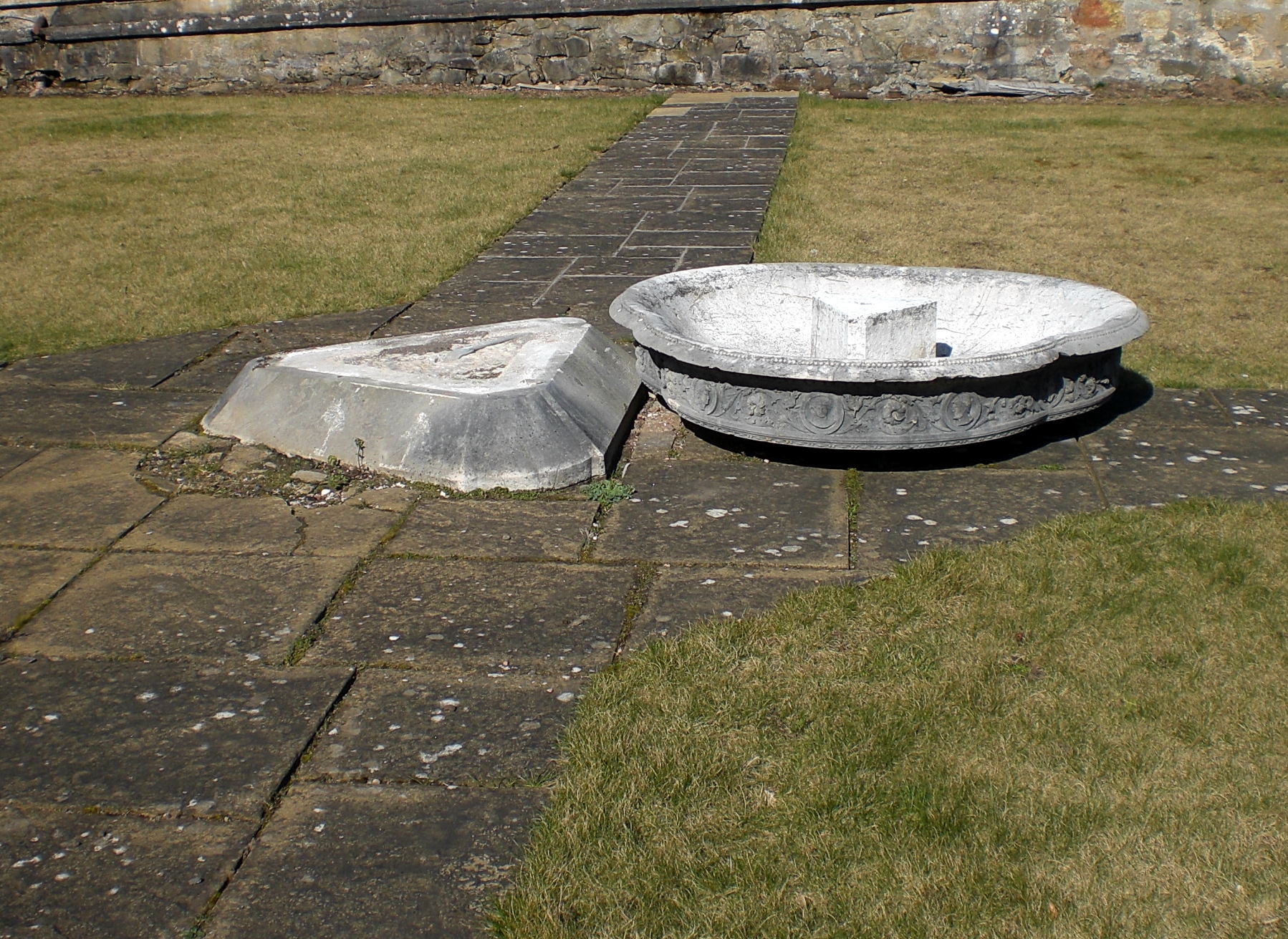
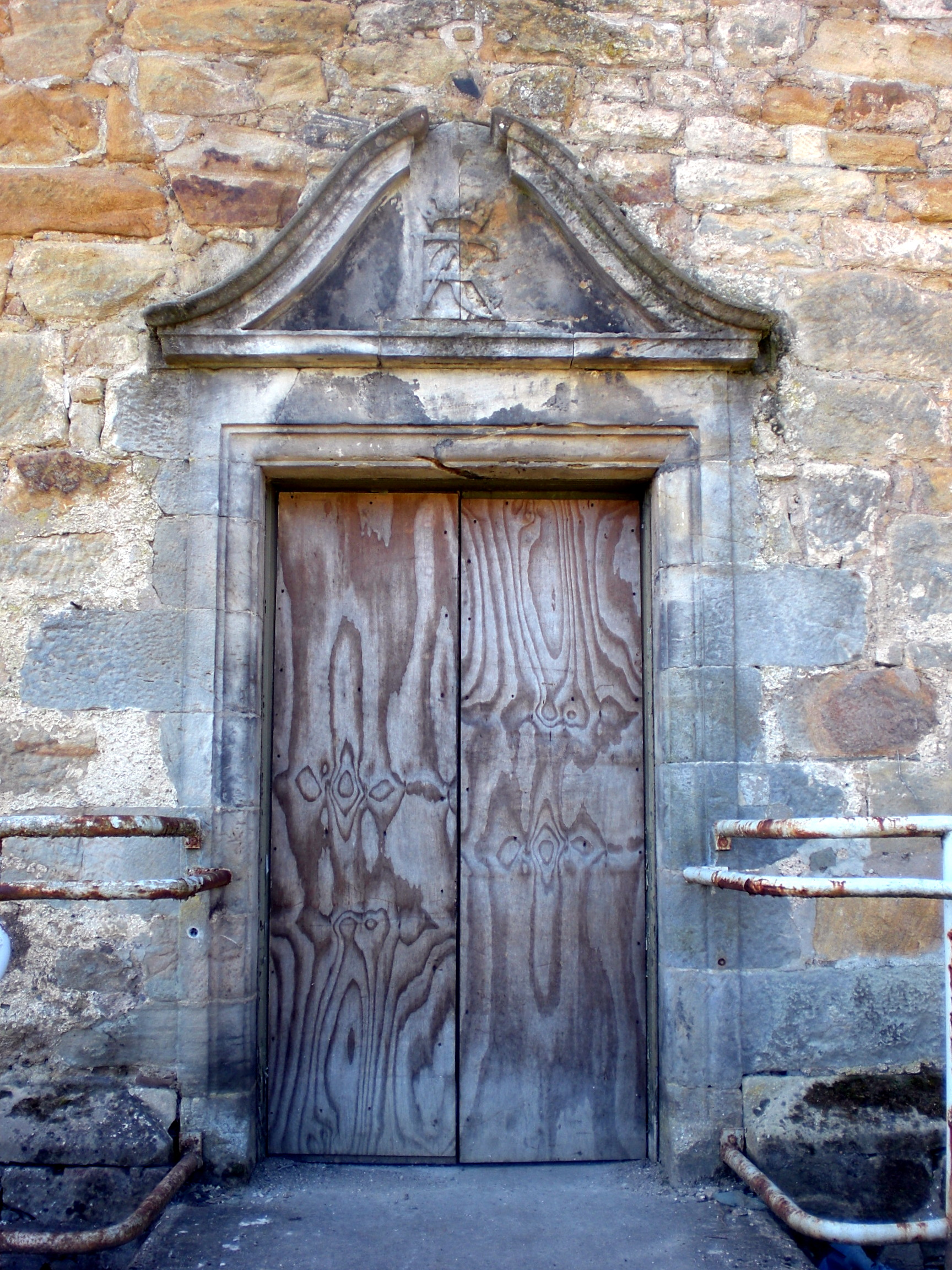
The Earls of Rothes, obviously didn’t Grip Fast enough as we soon alight on the ancestral home, now sealed off with iron spiked fencing. It’s not too difficult to find a way in to have a quick look. The building looks fairly structurally sound but is minus a roof and much of the interior, creating the effect of being able to see right through the facade to the other side.
One part of the fabric that has clearly survived intact is the flagpole which we can see through various windows:
.
In.
Spring light
No flags fly
≈
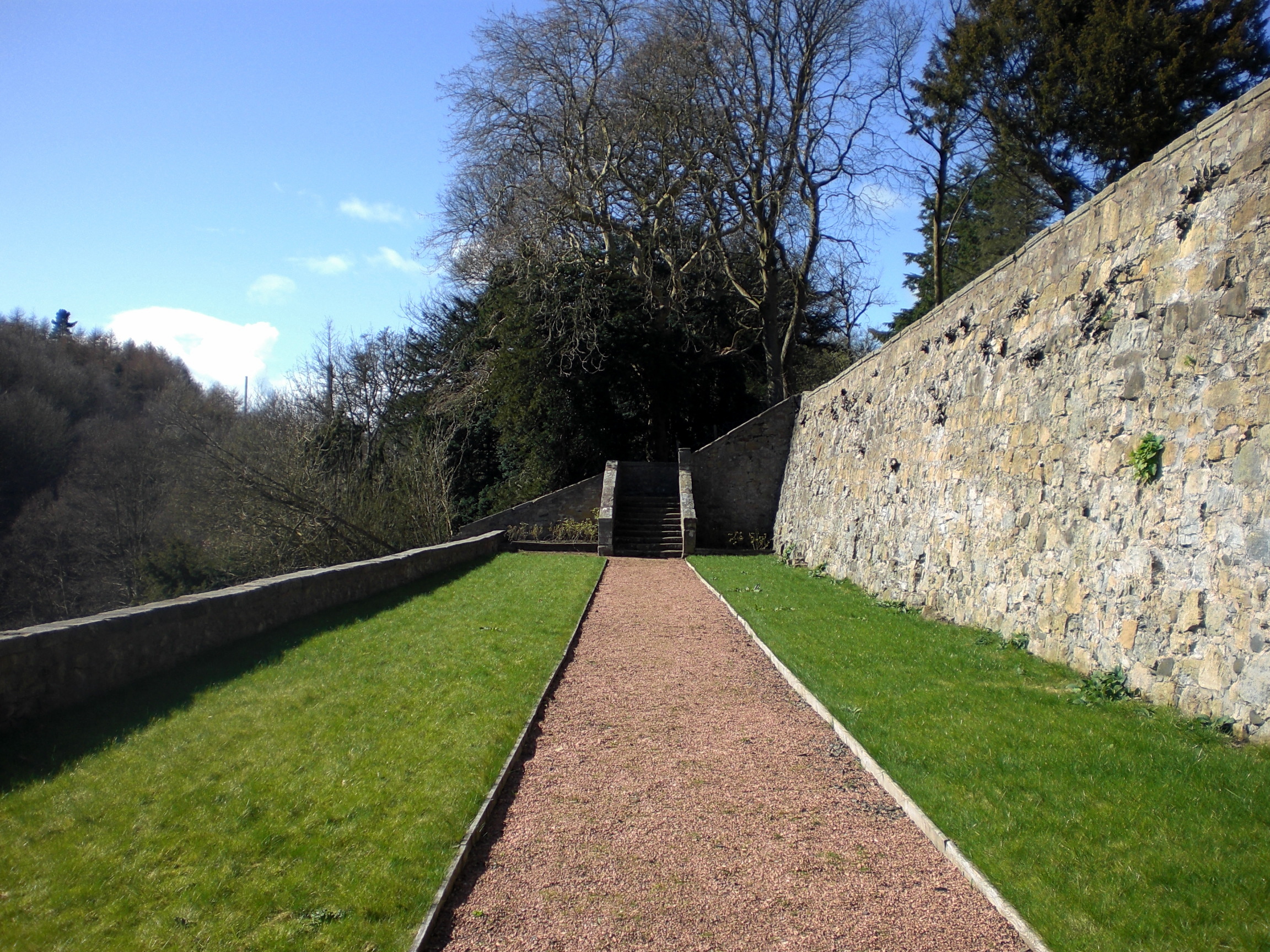
To the left of the house are a tiered set of south-facing terraces, although now denuded of any plant life other than the carefully manicured grass. Like the grounds in front of the house it shows that some care and maintenance is obviously still taking place …
.
Whilst, in the conservatory, the buddleia appears to be thriving:
.
We are just about to scale the wall that will take us to the front of the house when we hear voices on the other side and decide to exit the grounds quietly by the way we came in.
We subsequently learn that the house had been acquired by Sir Robert Spencer Nairn in 1919 who, supposedly, as he saw the advancing development of the New Town, gifted it to the Church of Scotland in 1952 for use as an Eventide Home. After falling into disuse, the house was sold for property development in 2005. Little appears to have happened until December 2009 when an unexplained ‘raging inferno’ reduced the property to its present state.
(c) Mike Brailsford
≈
We head down towards the River Leven, thinking of its flowing waters coursing through the Fife landscape from Loch Leven near Kinross all the way to joining the Firth of Forth at Leven. What memory does this water hold? Of powering linen mills and the local paper mills of Tullis Russell and Smith Anderson. Of sustaining the tadpoles and sticklebacks in the pond where we used to peer into the depths searching for those tiny flickering tails. The webbed feet of the white swans gliding through the water today.
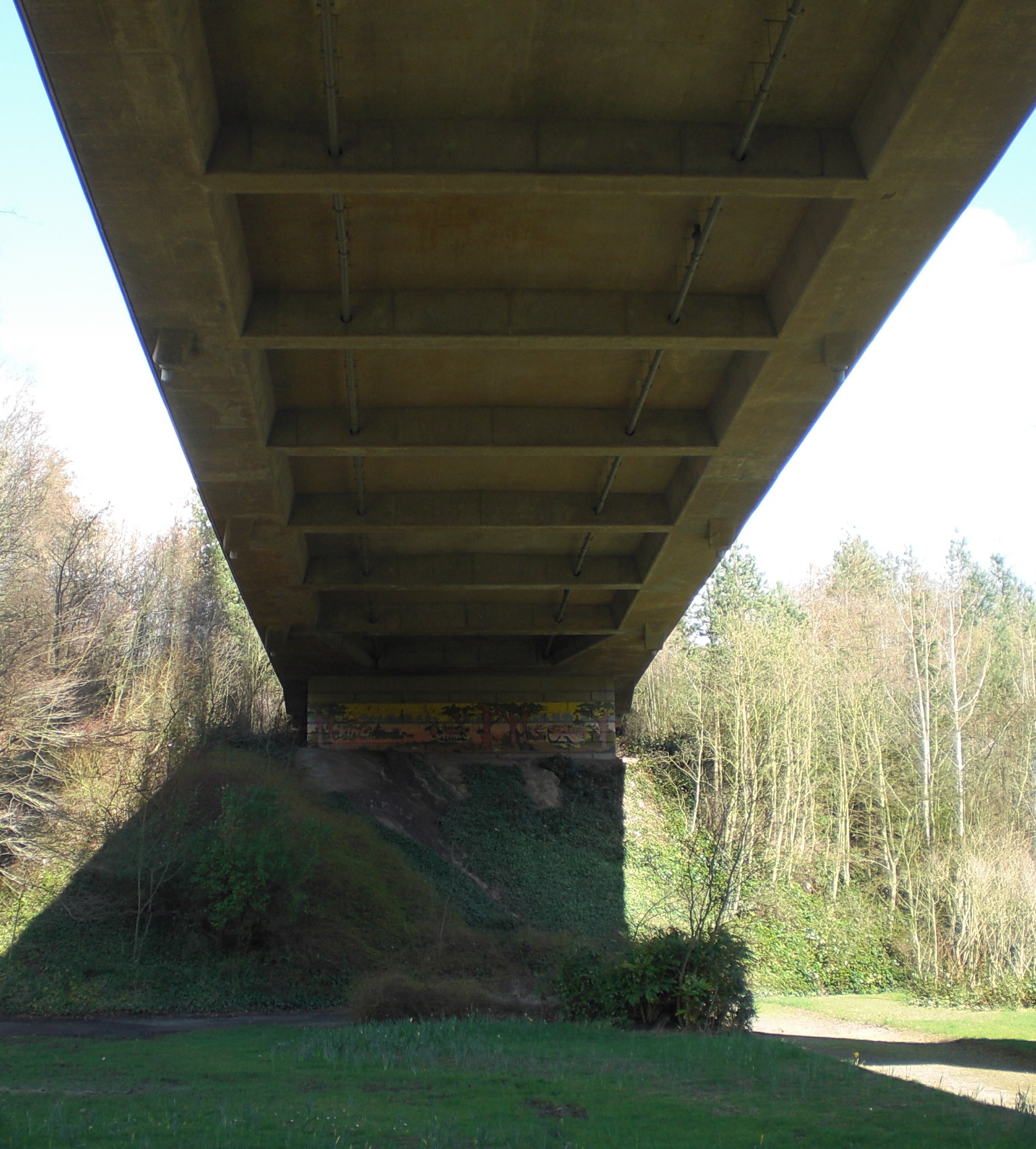
Before heading down to the riverside, we stop to listen to the bridge. The wind plucked treble of the harp like strings:
.
… and the deep base drones of the underside sound box. We expect the huge columnar legs to start lumbering forward at any time:
.
.
As always, the eaves of the bridge have been tagged.
Power and capital, enabled The Leslie family to appropriate, name and tag these lands. Our graffiti artist(s) tag is of a more existentialist nature. “I am here, in this place”.
.
.
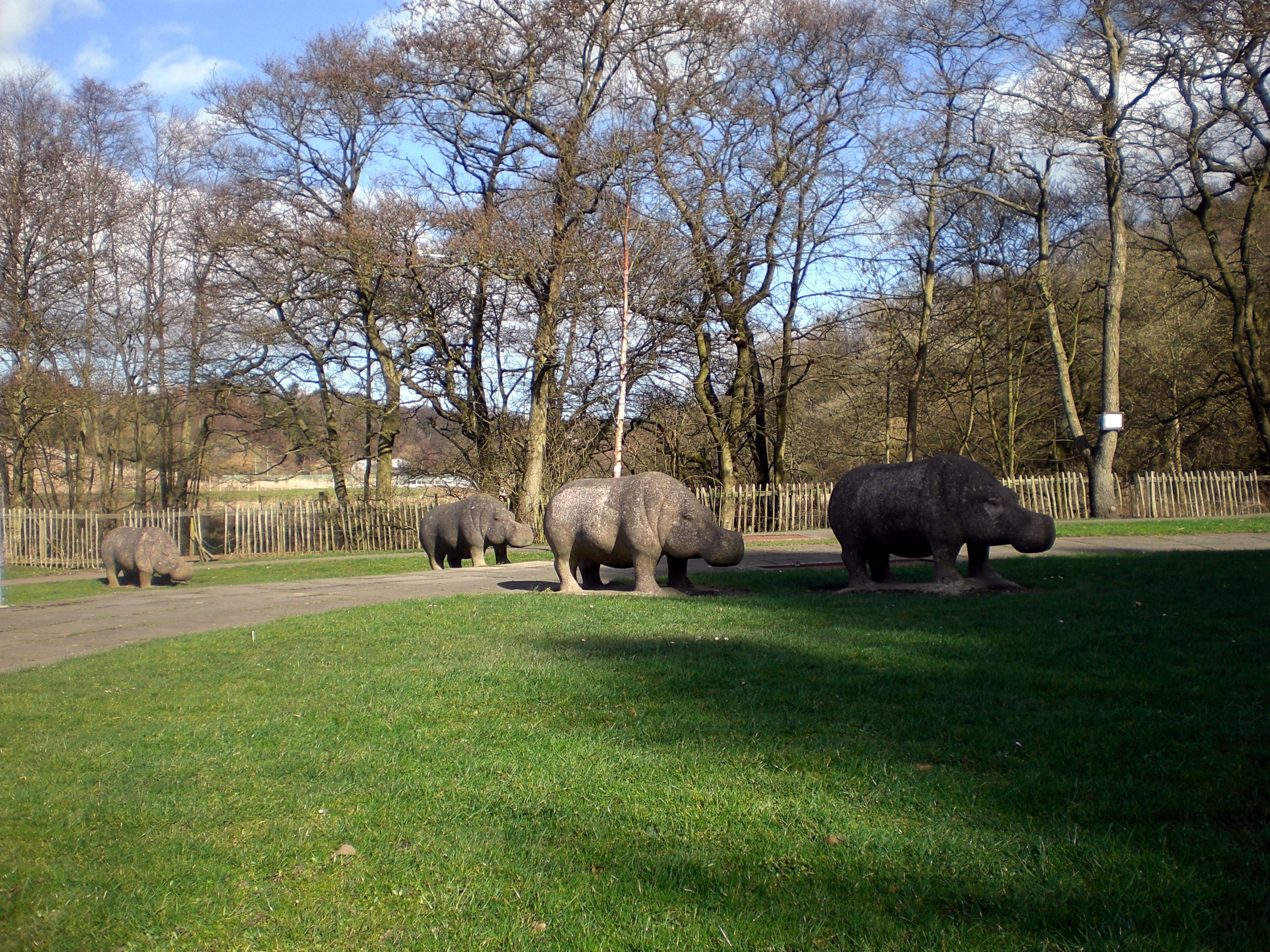
Following the course of the river, this world becomes a little stranger when we encounter the hippos traversing their water hole:
.
.
A familiar encounter in this town. If Proust had his madeleine to kick him into paroxysms of involuntary memory, then the image of a hippo should do the trick for anyone who grew up in this town.
.
(c) Douglas A McIntosh
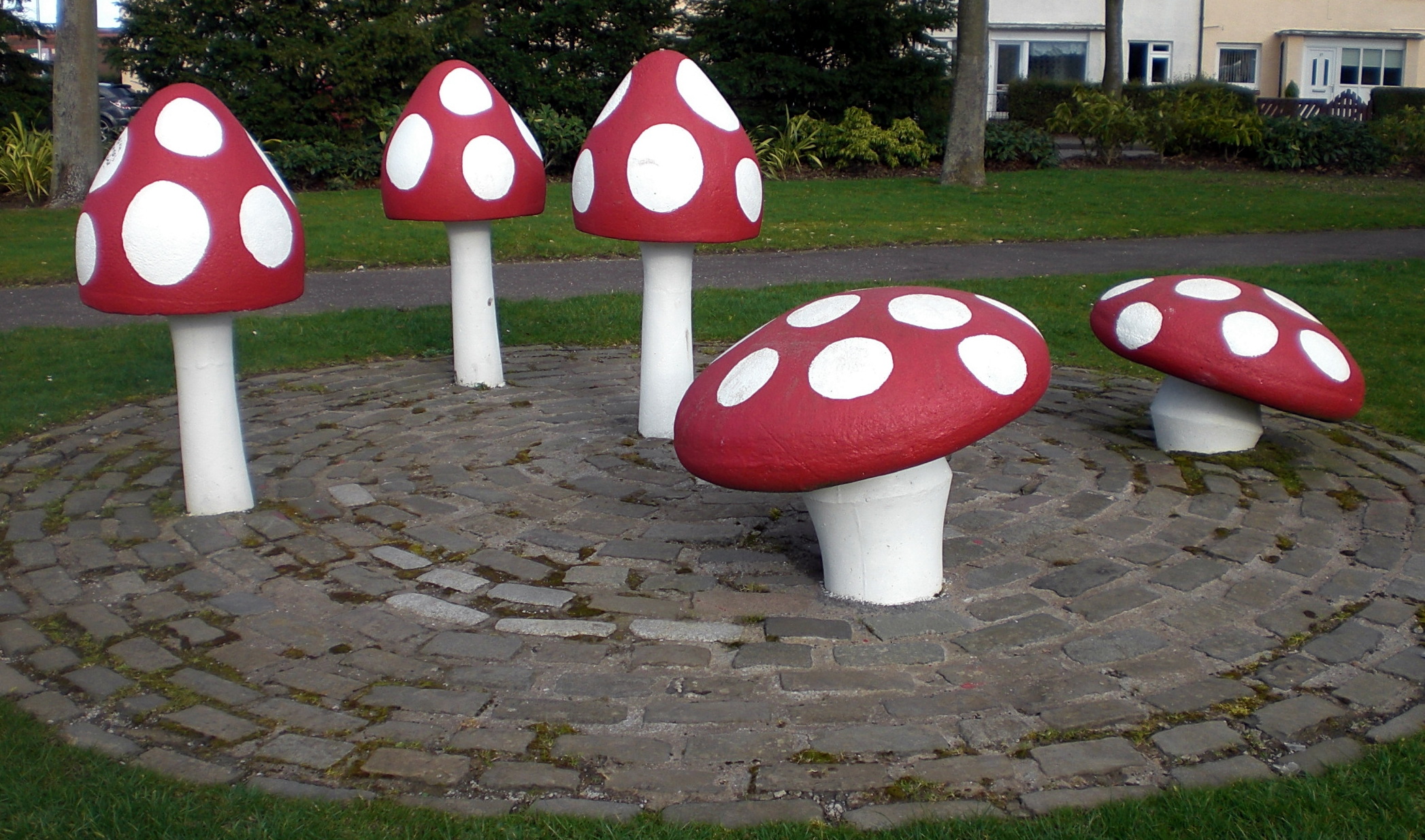
It’s not just the hippos. It’s also the dinosaurs, henges, flying saucers, pipe tunnels, giant hands, the toadstools and other curios which all ‘do something’ to social space for those who stumble across them.
Two bin bags murmur in agreement as they huddle in the shade, underneath the clatter of skateboards, waiting for the sun to come around.
.
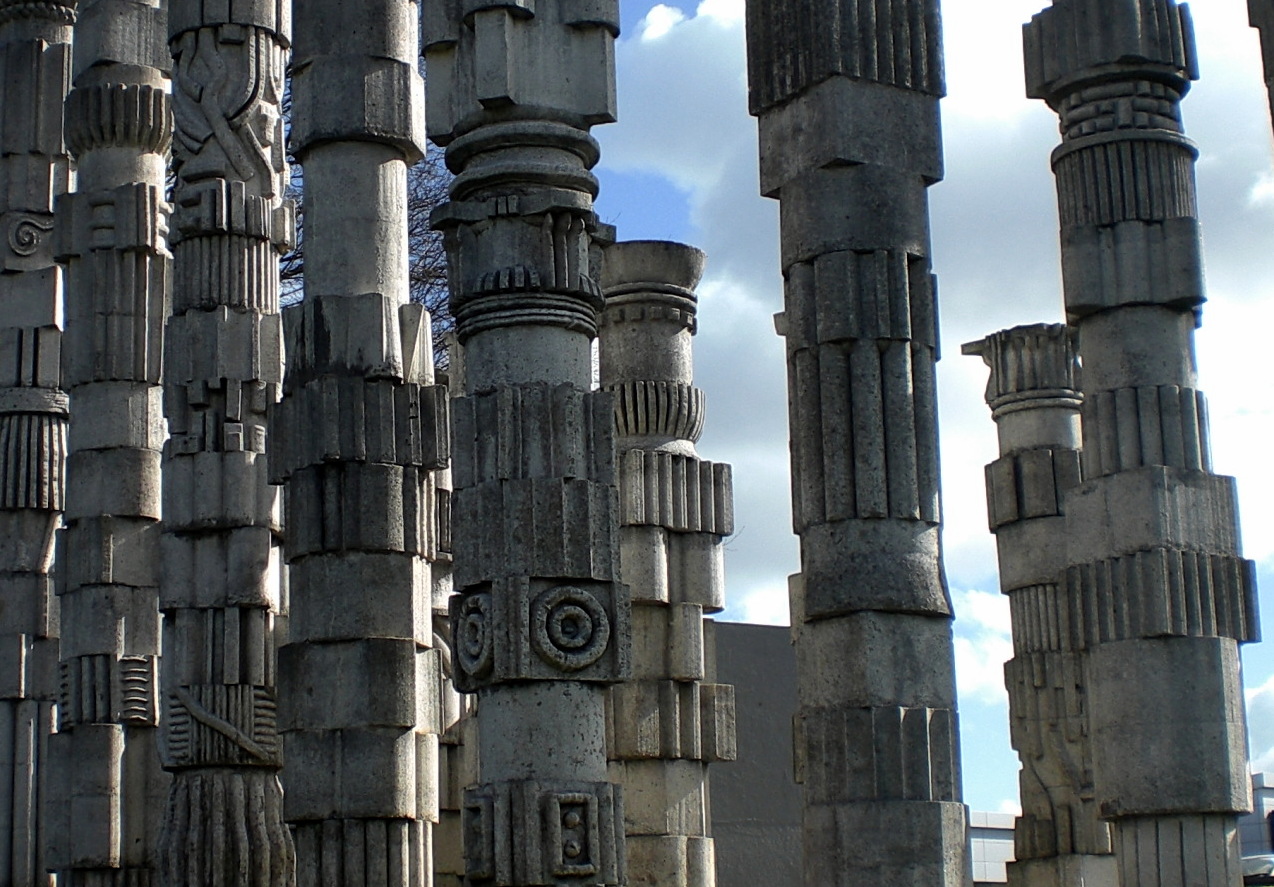
Ascending the hill to the town centre, we are reminded that every place needs its temples
.
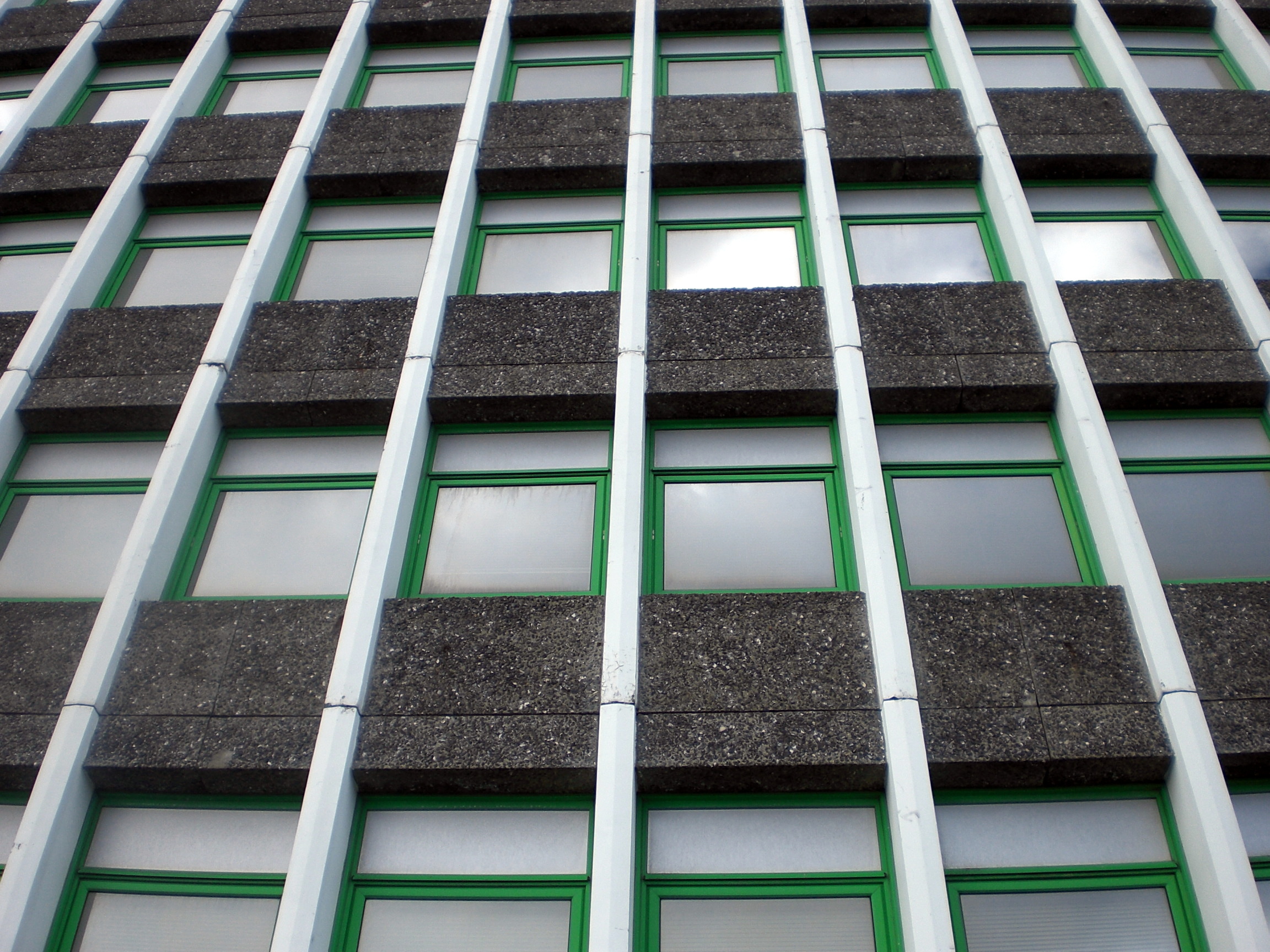
And what would any New Town be without its Brutalist municipal buildings? Guaranteed to be derided as ‘plooks’, ‘carbuncles’ and in this case, contributing to its award as ‘the most dismal town in Britain 2009’.
Well, perhaps it’s all a matter of perspective and the warm fingers of spring weather but the buildings are looking far from dismal today.
Tactile, concrete carpets, frame frozen flight and light.
.
Frozen flight – open sky
The original Brutalist grey cube of Fife House with its newer postmodern counterpart. It has to be a grandfather clock?
Green detailing can soften even the most austere facade:
.
Whilst brutalist windows, can dream of trees and sky
.
.T
Nearby, North facing Rothesay house hasn’t weathered quite as well.
.
After a walk back down to the public park, with vistas to the Paps of Fife we almost return to our starting point. Layers of place intersecting with past present and future in the returning bright light of Spring.
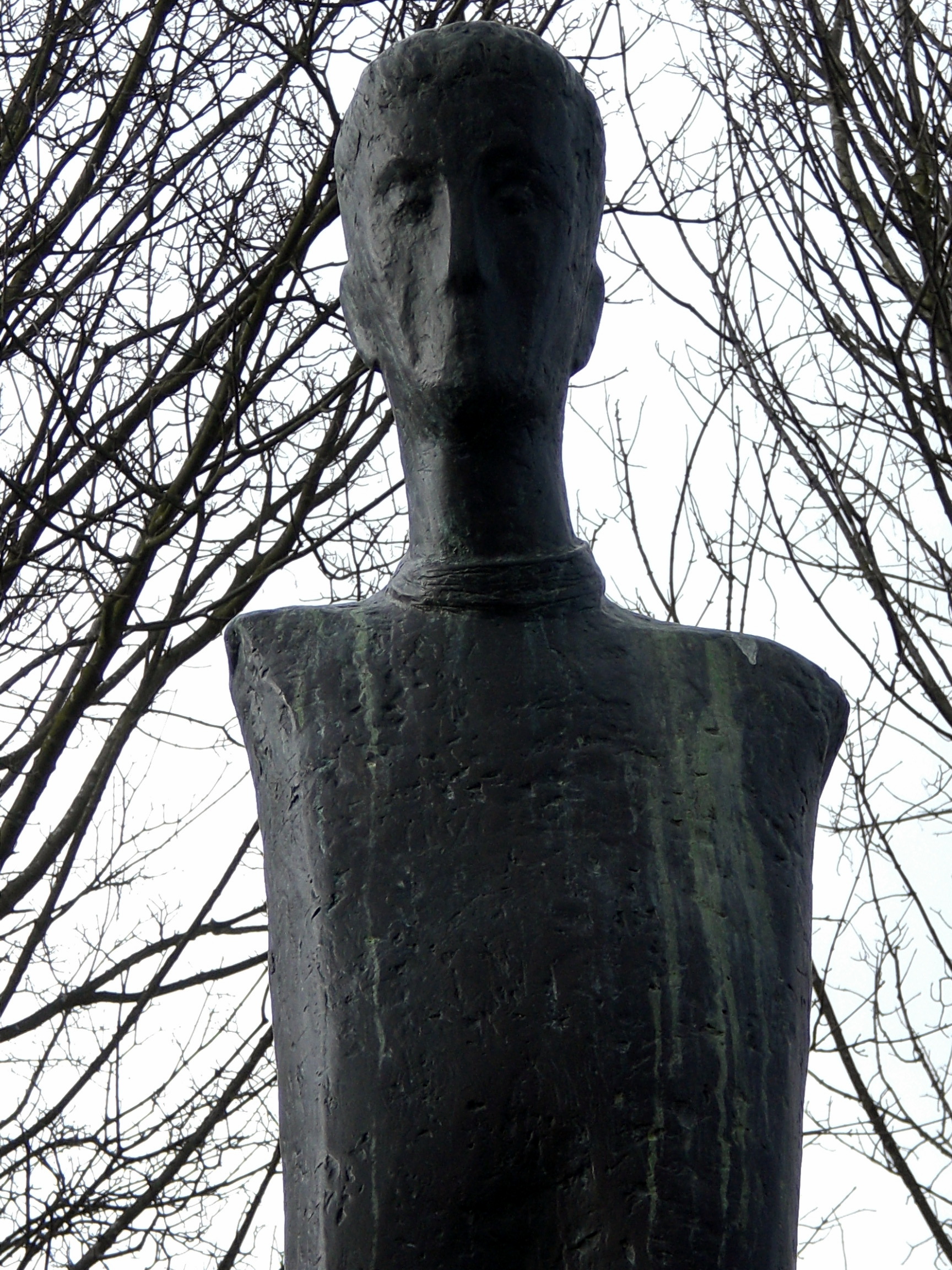
We nod to the defenceless one as we pass.
.
..
Comforted that the Good Samaritan is looking on from not too far away
.
And, as we leave town, how can we not stop to take delight in the toadstools. Vibrant and colourful, they look as if they have just (re)emerged, stretching into the returning Spring light.
Their months quietly growing in winter darkness appear to have passed.
≈
Now Playing: Motorpsycho – Behind the Sun.
Note:
The New Town is Glenrothes in Fife. Planned in the late 1940s as one of Scotland’s first post-second world war new towns, its original purpose was to house miners who were to work at a newly established state-of the-art coal mine, the Rothes Colliery. The mine never opened commercially and the town subsequently became an important part of Scotland’s emerging electronics industry ‘Silicon Glen’. It is now the administrative capital of Fife.
Glenrothes was the first town in the UK to appoint a town artist in 1968. This is now recognised as playing a significant role, both in a Scottish and in an international context, in helping to create the idea of art being a key factor in creating a sense of place. Two town artists, David Harding (1968–78) and Malcolm Roberston (1978–91), were employed supported by a number of assistants, including Stan Bonnar who created the hippos. A large variety of artworks and sculptures were created and are scattered throughout the town, some of which are shown above. David Harding went on to found the Department of Environmental Art at the Glasgow School of Art whose alumni include: Douglas Gordon, David Shrigley, Nathan Coley, Christine Borland and Martin Boyce.
References:
Daniel Defoe, (1724), A Tour Through the Whole Islands of Great Britain, (New Haven, Yale University Press, 1991 edition), (p.346).






















 Murdo Eason - From Hill to Sea