Faust – All Things Must Pass

Delightful and profound cultural ‘happenings’ at the last Le Weekend festival which has taken place at The Tolbooth in Stirling over the past thirteen years. Arguably, the most inventive, adventurous music festival in the UK, it has consistently delivered a stellar mix of old and new sounds, film and ‘happenings’ which cut across and dissolve styles and genres. On the purely musical front, this years line up included highlights such as Ben Frost’s glacial noise minimalism, a new commissioned piece Oceans of Silver and Blood and Marilyn Crispell’s stunning piano improvisations.

One of the most enjoyable events for the collective was an audience with Jean-Herve Peron and Zappi Diemer from the legendary, iconoclastic, Faust. A touch of Fluxus style performance as they riffed on the theme of the festival: All Things Must Pass. Diemer, filmed and projected the room/audience in real-time whilst another screen projected some legendary performances of the band. Peron recited some text whilst performing drip painting and gradually uncovering the layers of wrapping over a lumpen shape to reveal their iconic cement mixer.  It all worked seamlessly, carried by Peron’s infectious enthusiasm and charisma. What was of most interest, however was how the ‘setting’ had made an impression on his text.  He recounted how he had been wandering in the graveyard next to the Church of the Holy Rude, blown away by the spectacular outlook from the ridge under the Castle with its vista onto the landscape of centuries of Scottish history – Stirling Bridge, The Wallace Monument, Highlands to the North, Fife to the East…. All of this had made an impact on Peron and was reflected in this clearly psychogeographically inspired happening.

The other event of the festival that stood out for the collective was a realisation of Alvin Lucier’s I am sitting in a room. Lucier’s electro acoustic music and sound installations have long explored the physical properties of sound itself, the limits of auditory perception and the resonating properties of material objects.  In this piece, which by its very nature is unique in every performance, he examines the specific dimensions, acoustic properties and atmospheres of certain rooms.

The realisation took place in The Cowane Hospital, built next door to the The Church of the Holy Rude between 1637 and 1649. John Cowane aka the poetically named
‘auld staney breeks’ was a very wealthy Stirling merchant and Dean of the Merchant Guild who left funds for this building to be used as an alms house and the maintenance of thirteen elderly Guild members. It was also used for many years as the Guildhall where the Merchants gathered for meetings and dinners. The Guildry fixed the prices of goods, and dominated town council affairs.  Later the building was used as a schoolhouse and a hospital during epidemics. It is once again being used for concerts, meetings and ceilidhs, but the statue of John Cowane above the entrance and the portraits of Guild Deans inside remind us of its multi-layered history.

Auld Staney Breeks

It is said that at midnight on Hogmanay the statue of Cowane will come to life and do a little jig in the forecourt before returning to his post.To return to Lucier’s piece, it works by recording a short speech text which is then played back into the room where it is again re-recorded. The new recording is then once again played back and re-recorded, and this process is repeated over and over.  Since all rooms have a characteristic resonance, the effect is that certain frequencies are gradually emphasised as they resonate in the room. Eventually the words become unintelligible, replaced by the pure resonant harmonies and tones of the room itself.  This process takes around 45 mins in Lucier’s recorded version. I forgot to check how long the Cowane Hospital realisation lasted but it did not seem as long as 45 mins although by its very nature, ‘time’ appears to become suspended as one is drawn in by the minute variations of each repetition. It is a very meditative piece and sitting in the oak panelled room, with the fading light, dribbling through the stained glass windows, all those years of history appeared to be isolated in these ghostly, disembodied harmonies.

Now playing: Faust – The Faust Tapes
Zaha Hadid and Kirkcaldy

Interesting interview with iconoclast architect Zaha Hadid in The Guardian.

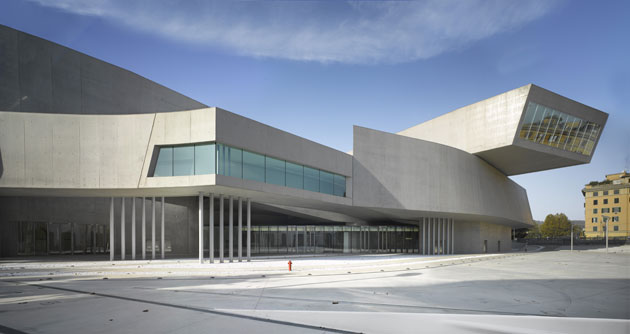
Hadid has recently won the The Stirling Prize for her National Museum of 21st Century Art, in Rome, which appears to resemble some sort of cubist Star Wars, AT-AT Walker.

National Museum of XXI, Rome. Design by Zaha Hadid.

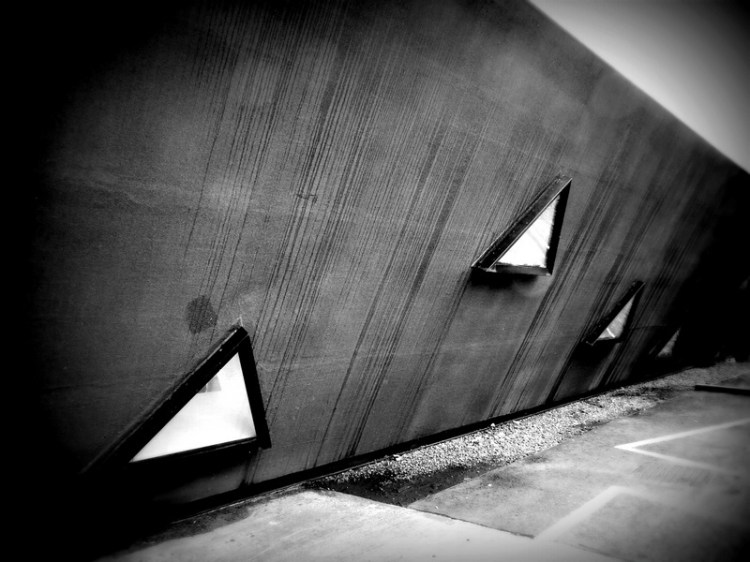
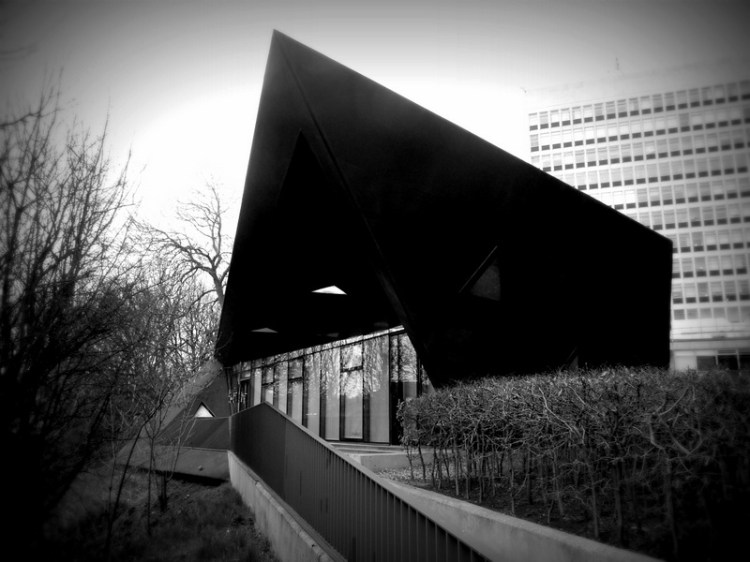
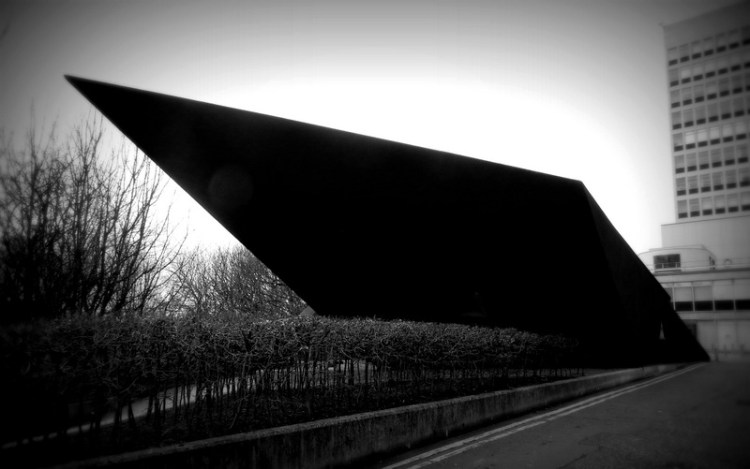
For such a lauded and controversial architect (in Britain !) it is quite surprising to learn that she has only had two designs realised in the UK.  The recently opened Evelyn Grace Academy in Brixton and her first built work in the UK: Maggie’s Cancer Care Centre in Kirkcaldy which was opened in 2006.

DSCN0841

DSCN0846


Hadid designed this building for no fee and the people of Fife, raised over £500,000 towards the cost of its construction.

Her design at the Victoria Hospital was a result of a brief to: ‘create a relaxed atmosphere where people can access additional support outside of the more clinical hospital environment’.  This challenge is in keeping with the ethos behind all the Maggie’s Centres which were the vision of the late Maggie Keswick-Jencks and her plea to improve care for people with cancer in the UK.  She was a firm believer in the capacity of buildings and space to uplift people, even in the most challenging personal circumstances.

DSCN0852

Her husband Charles Jencks is still actively carrying this vision forward and five centres, have now been constructed across the UK, all designed by world-renowned architects: Frank Gehry in Dundee, Daniel Libeskind in Cambridge, Page and Park Architects in Glasgow and Inverness and Zaha Hadid in Kirkcaldy.

The site of Hadid’s Maggie’s Centre is in a hollow to the south-west of the main entrance of the hospital where it stands on the edge of a fairly steep valley to the South.  The hollow has overgrown foliage and a line of trees provides a natural setting to distance the building from the rest of the original hospital.  As the building is a single-storey construction, it provides a continuation of the border that the trees already provide. One of the overall objectives for the design of the centre was that it should be a transition between the two different types of spaces, the natural landscape and the car park/hospital.  This has arguably been undermined somewhat by the colossal new 525 bed extension which has been built immediately adjacent to the centre and you can almost feel it crowding out and pushing Hadid’s building into the valley.  This is further accentuated by Hadid’s design, with its angular prow and folded in wings, which appears to float over the edge of the steep chasm. Part spaceship, part cubist crow, poised to take flight out over the trees and on to the stars.

A truly liminal space…

DSCN0848


Now playing: Oneohtrix Point Never – Returnal

Cup and Ring – Haunted by a Symbol

I am being haunted by a symbol!

During the summer a visitation to one of the richest sites of ancient psychogeographic energy – Kilmartin Glen. 

In particular the cup and ring marks at Auchnabreck, led to a fascination with this symbol that transcends cultures and geographies and yet refuses to yield up any verifiable meaning. Theories abound: possibly aesthetic, ceremonial, territorial or route markers are common propositions.

I stare at my iPod and the podcasting symbol. Whilst ostensibly a human form/antenna enveloped in concentric circles, it is clearly identifiable as a cup and ring symbol.

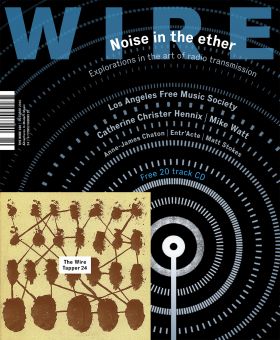
The latest edition of the marvellous music magazine The Wire pops through the letterbox. Cup and ring imagery radiates from the cover. ‘Noise in the ether: explorations in the art of radio transmission’. Dialed in, tuned in, picking up the signal.

Last night, Flower and Dancer are watching The X Factor. Before each contestant performs, they are enveloped in cup and ring digital effects.  Channeling their karaoke talents into the receptive cerebrum of popular culture.

In all of these images  I like the idea of transmission; of energy radiating outwards, of ripples on the surface of consciousness being picked up by the tuned in antenna.  Perhaps our ancient forebears were also receptive to this idea, way before the discovery of radio waves begat such an adaptable and iconic image.  These ancient rock carvings continue to transmit their own seductive energy and whilst the signal to noise ratio is weak, the dials are picking up the broadcast. Even the popular culture charms of the X Factor are not immune.

And what of these ancient symbols within the Fife landscape? I was delighted to find out about some perfectly preserved examples on Binn Hill at Burntisland.  A field trip for the collective beckons.

Now playing: Kayo Dot – Choirs of the Eye

The Lundin Links Stones

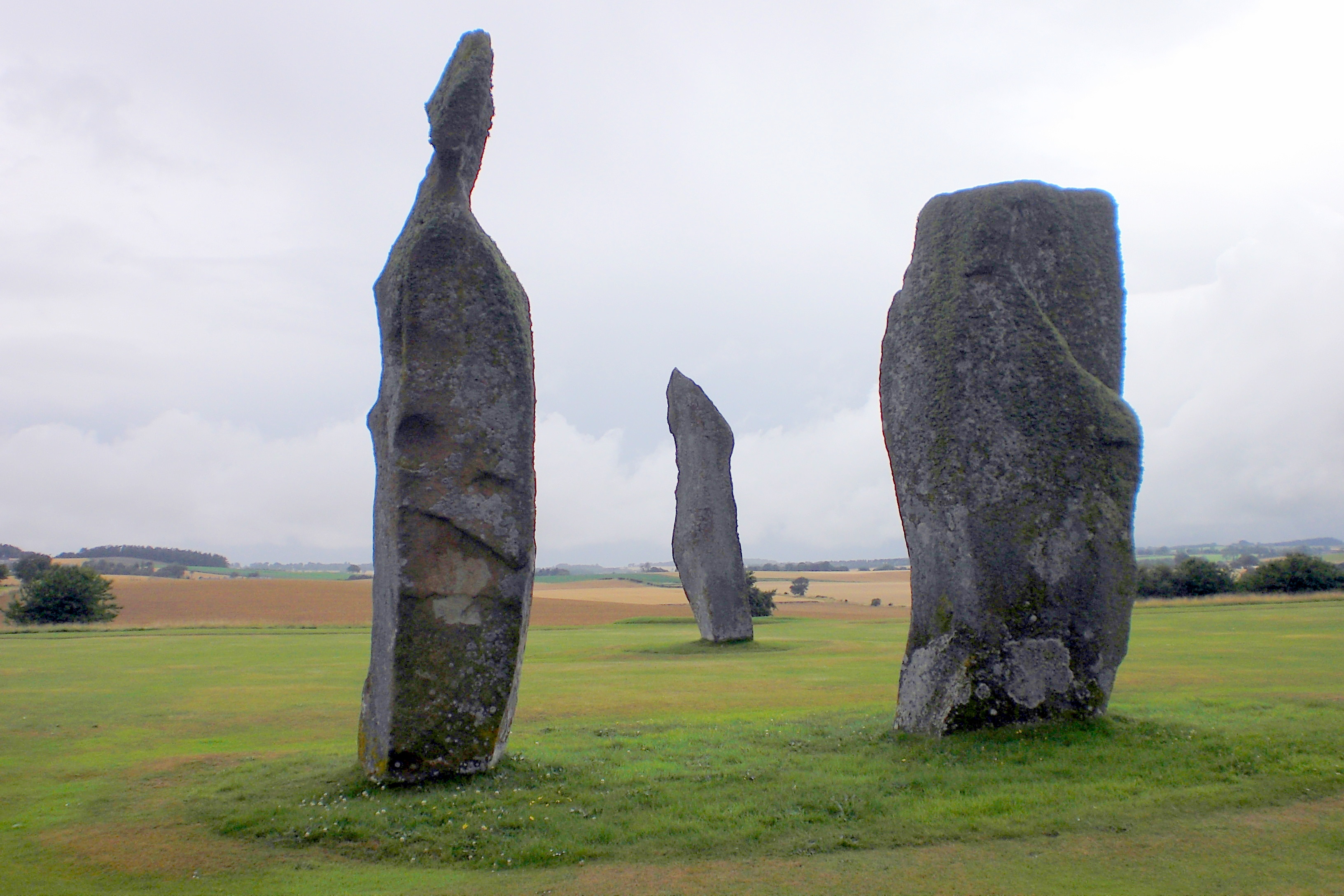
On the cover of Julian Cope’s album Rite is a picture of three colossal megaliths.  The human form giving some indication of the size and scale of this unusual grouping. Whether a function of crafted intent or the ageing process, the three distinctly shaped stones (especially the foregrounded ‘pin head’ or finger?) conjure up a strong sense of the uncanny when you see them up close.  Imagine my delight when I found out that these beauties, the remains of the largest of all the Scottish four-poster stone circles, are located in Lundin Links. Even more surreal is to find out they are presently located on the second fairway of a ladies golf course. It was a mild, drizzly day as I snaked along the A915, into the East Neuk. It was a bit of an opportunistic visit so hadn’t fully determined  the exact location of the stones. All I knew was that they were located on a golf course in Lundin Links.  Of course I hadn’t realised that there are two golf course in Lundin Links so initially stopped off at The Lundin Golf Club, which has the appearance of catering for the affluent, Edinburgh-on-sea weekenders who tend to congregate around this part of the coast at their weekend cottages. By this time it was a pretty dreich day so not a lot of people were around to ask.  I just set off, going on the basis that the size of these monsters should make them fairly easy to track down.  However, the landscape didn’t feel ‘right’. Largo Law was too far away, and the Lundin Club is right on the coast. Nonetheless I had an enjoyable saunter along the seaward side of the links, back towards Leven, watching the white breakers fizz on the shore.  I soon realised that this was not a landscape where sacred stones would be erected.  It was too windswept, open, and there was no relationship to Largo Law. Back I trudged, gazing up the coast and feeling the wind, spray and drizzle on my face. I had to be guided by the Law – what Julian Cope refers to (rather poetically) as a mother mountain – and set off once again in search of the stones. I soon found some signposts to the Lundin Ladies Golf Club and I could tell that this location was going to yield a more fruitful expedition.  I subsequently found out that Lundin Ladies is the oldest ladies golf club in the world (established in 1890) and is run completely independently by the lady members.  In the unreconstructed chauvinism of the typical male golf club, there was something quite radical and subversive about all this.  It was further confirmed when I asked two ladies who were loading their clubs into the car where I may find the stones and whether I need to seek formal permission to go and have a look.  They couldn’t have been more welcoming, and it was pleasant to observe their local accents and nay a set of pearls in sight.  As indicated, I crunched along the stone path to the starters hut and as soon as you turn the corner, you can see the stones way up the fairway in the distance. Once again, the starter was very welcoming and told me that there was no-one on the course so I could go and have a good look without worrying about any balls passing nearby. This time the land did ‘feel right’. A clear relationship is evident with Largo Law, and the stones nestle in the rolling foothills.  Notwithstanding the sand bunkers, tee boxes, and suburban sprawl on the south side, this still feels like a special place, and the light drizzle, absence of people and eerie quietness added to this.  As I walked up the edge of the fairway, the sheer size of the stones soon becomes apparent. These are towering monsters at thirteen, seventeen and eighteen feet high, with the finger/pinhead stone, twisting and pointing to the heavens, radiating a strange, seductive energy.  There used to be four stones, and apparently the fourth stone lay prostrate until around 1792 before it was no doubt removed for more utilitarian purposes. There is a local story that Michael Scot, the Wizard of Balwearie, summoned the demon familiars, Prig, Prim and Pricker to the sacred hill of Largo Law with a view to dismantling it.  As they began to dig, Scott had a change of plan and their single shovelful was thrown to create the nearby cairn of Norrie’s Law at the wonderfully named farm of Baldastard.  There is also a local story that a rich goldmine exists somewhere underneath Largo Law and that sheep have returned from grazing  on the foothills with golden fleeces. I guess that these stones must be one of the best kept secrets in Fife, (Scotland?) and yet as a site for experiencing the uncanny, difficult to surpass. I can understand that the good ladies of Lundin Links do not want hordes of trampling visitors all over their gold course, so perhaps there is something poetic that they remain available to the seeker and yet are well looked after and protected by the Lundin Ladies, drawing energy from their mother mountain. I wonder if it helps their golf? Thanks to Julian Cope’s magisterial The Modern Antiquarian. Now playing: John Barleycorn Reborn: Dark Britannica, V/A.

J.G.Ballard and The Edinburgh Riviera

From Will Self’s Psychogeography:

“I now realise…that Jim [Ballard], has made this Thames littoral his own…he is the purest psychogeographer of us all, ever dissolving the particular and the historical in the transient and the psychic. Making states into states of mind. From Terry Farrell’s spec office block – now occupied by the Secret Service – to Chelsea Harbour, and on upriver, the last fifteen years have seen a great and glassy burgeoning of these – Jim’s mind children – ‘luxury’ developments. At first rectilinear and concrete, latterly faced with ‘weathered’ boards, to give them that authentic ‘wharf’ feel, the apartments would be just as at home in Malmö or on the Mediterranean”

Will Self, Psychogeography, (London: Bloomsbury, 2007), p. 25.

From any suitable vantage point on the south Fife coastline, you can take in the vista of the stillborn ‘Edinburgh Riviera’.  A monument to pre-credit crunch architectural and financial hubris; a jamboree of two-bit, debt fuelled, property hustlers offering up their ‘luxury developments’ with status dripping names such as Platinum Point.  Come and enjoy your outdoor balcony and sun yourself to a crisp.  This triumph of hope and denial over meteorological reality, means that you are more likely to end up with a face like a skelped erse from the wind chill.   Now many of these ‘developments’ sit lugubriously, half-finished, and barely occupied behind their security fences. A post-industrial interzone, of deflated citadels still waiting for the sun.

Now playing: Brainticket, Psychonaut.

Why Fife?

Why Fife?

The great sites of psychogeographic exploration have perhaps not surprisingly tended to privilege the urban environment with London and Paris the primary lodestones of psychogeographic endeavour.

Taking a lead from Patrick Geddes, the great polymath, regional theorist, activist and (as yet, unacknowledged) proto-psychogeographer, the FPC believe that both urban and rural environments are mutually constitutive and therefore equally valid as spaces for psychogeographic wanderings.

What better a site than Fife?  A virtual island interzone, betwixt and between the cities of Edinburgh and Dundee; an ancient Pictish Kingdom, bounded by the Firths of Forth and Tay.  Where a New Town is built on a 4,000 year old henge and 18 feet menhirs brood on a ladies golf course, under the shadow of Largo Law.  Not far away, the statue of  Alexander Selkirk, gazes out, projecting his own haunting presence into the psychogeographic mindscape.  If Selkirk was the inspiration for Defoe’s Robinson Crusoe, it is the ghost of Robinson who wanders and stalks through many a tract of the psychogeographic imagination. Witness Rimbaud’s supposedly derived verb robinsonner (to travel mentally, or let the mind wander) or the unseen and unheard researcher in Patrick Keiller’s films London and Robinson in Space.

Ideas crackle, tussle and fizz, throughout the ether over this Scottie dogs heid. Kirkcaldy’s famous son Adam Smith  tossed a large brick into the pool of economic theory with a Wealth of Nations (and let us not forget The Theory of Moral Sentiments) written on a site now housing Greggs the Bakers.  The self-interest of the baker to supply us with Steak Bakes is alive and well. (The debate as to whether Smith, the moral philosopher, has been hijacked by the right will be left for another day). There is a also a hauntology of radical socialism. In Cowdenbeath, Lawrence Storione founded the Anarchist Communist League and West Fife elected Willie Gallacher as the first Communist MP.  In Lumphinnans you will find Gagarin Way, a street tagged in honour of the Soviet cosmonaut and from which Gregory Burke named his first play.

Concrete hippos and dinosaurs traverse the urban landscape in Glenrothes; cup and ring marks lie mute on Binn Hill whilst a green witch’s shop sits on the high street of Aberdour to deliver up soothing potions to the contemporary unwell.  A secret bunker channels cold war paranoia and the devil is reputedly buried on Kirkcaldy beach, interred by the occult energies of the dark magus Michael Scott.

These are just a few random scatterings from this space of possibilities. ‘A beggar’s mantle fringed with gold’… a palimpest of histories and vibrations.  A site for exploration.

Now playing: John Cage’s Etudes Boreales