The Poppies are in the Field: Pattiesmuir 26th June 2013

.

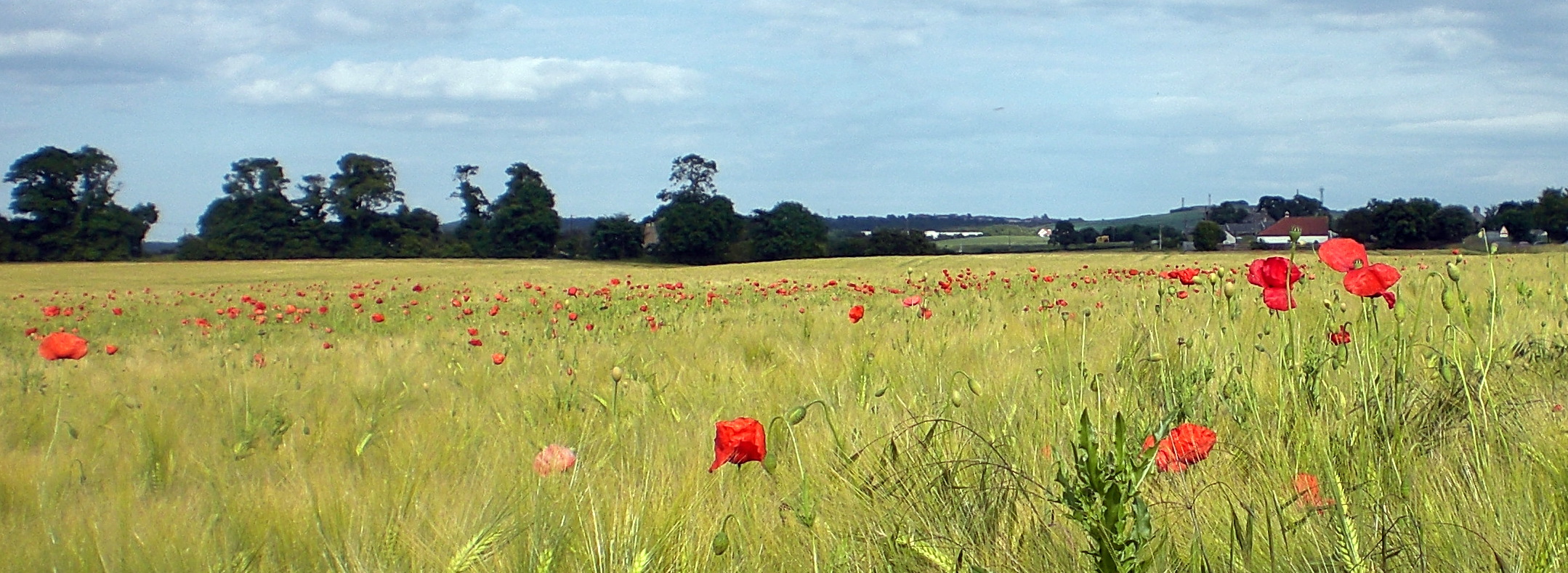
The poppies are in the field

But don’t ask me what that means

– Julian Cope

The Poppies are in The Field I

There is no

long march of progress

in this field.

No future

enlightenment

to strive for.      

                                 Only

this eternal play

of returning.

A cycle of flowering flame

                           smouldering                                              

                                               to ash

in the rooted earth

underneath my feet.
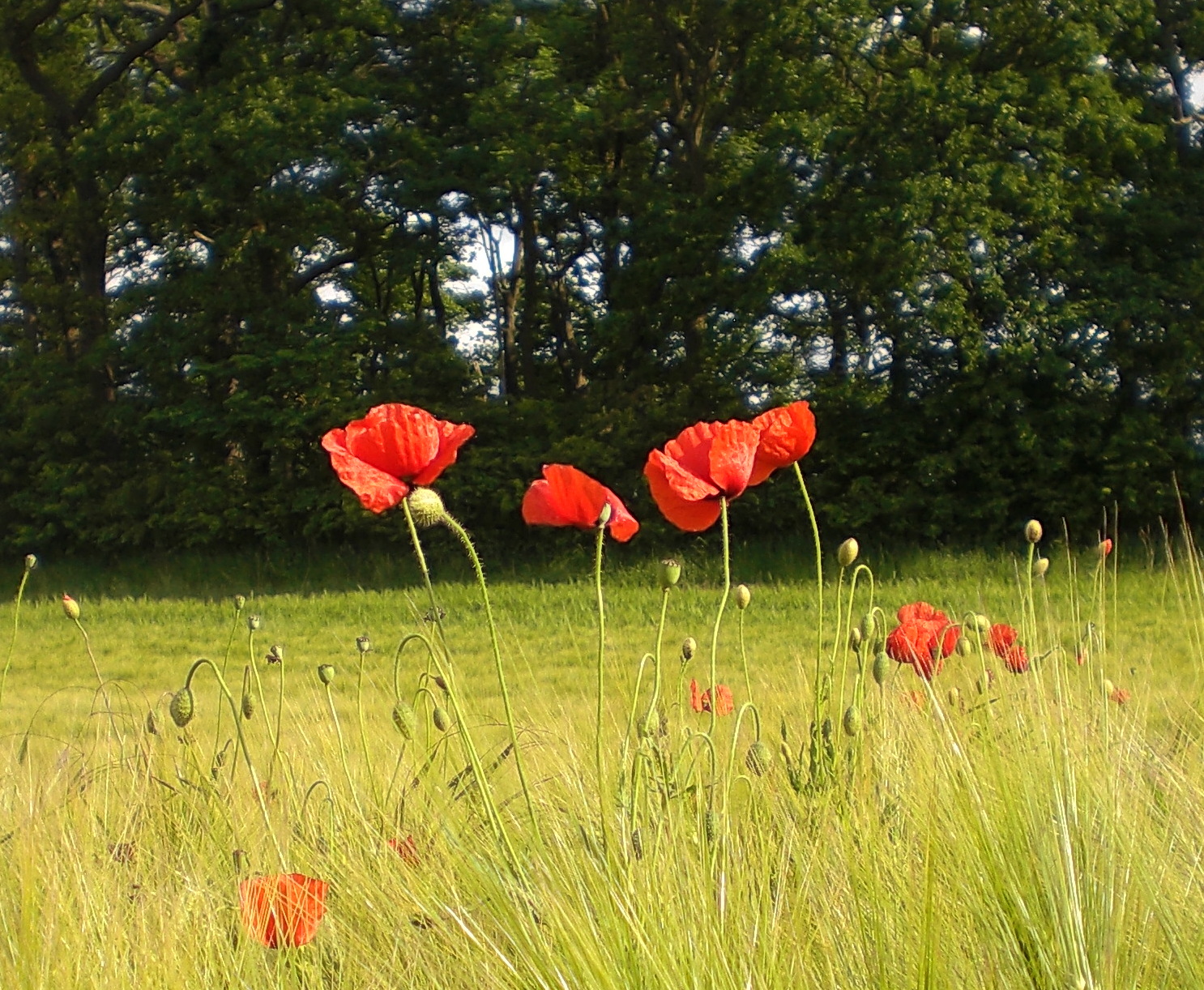
 

The Poppies are in the Field II

That we find a crystal or a poppy beautiful means that we are less alone, that we are more deeply inserted into existence than the course of a single life would lead us to believe.

John Berger – The White Bird

The Poppies are in the Field III

Homer mentions poppies in the Iliad, comparing the head of a dying warrior to that of a hanging poppy flower.
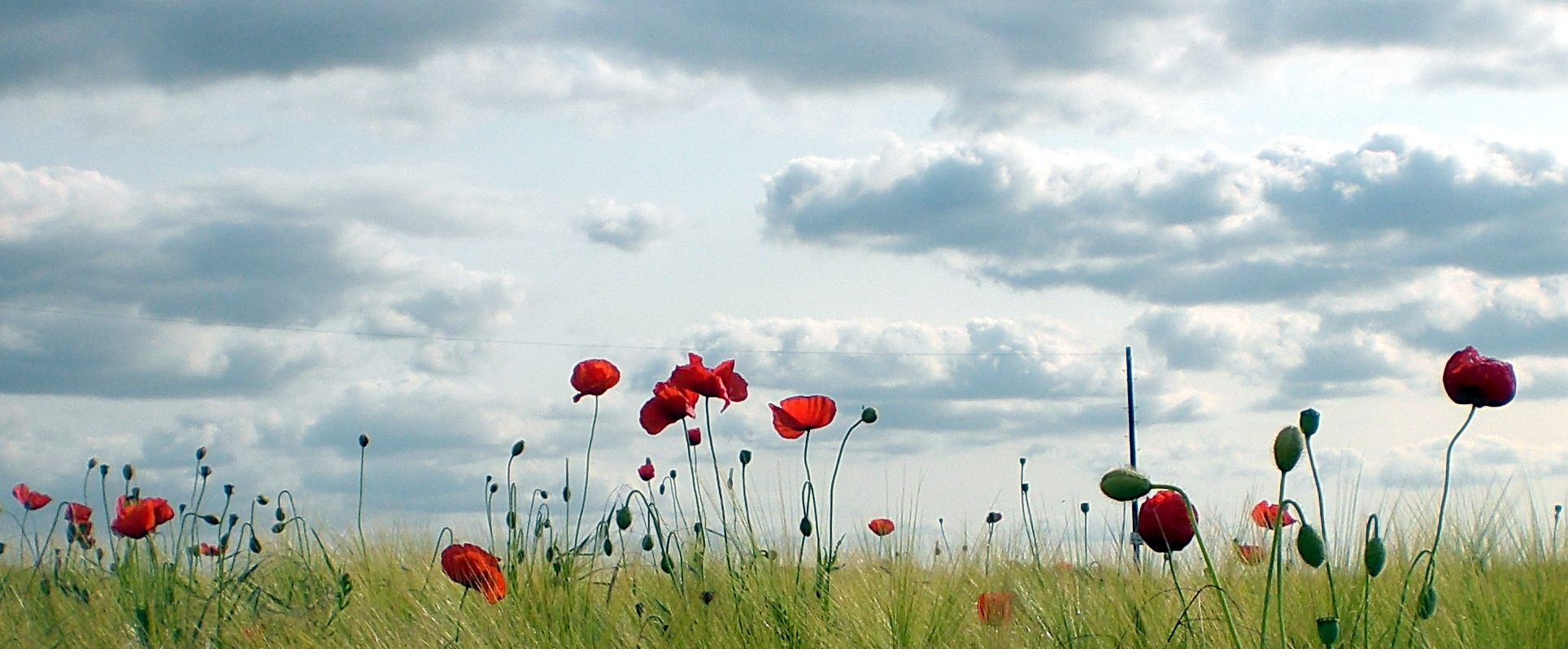
The Poppies are in the Field IV

The god Morpheus made crowns out of the poppy flowers and gave them to those he wanted to put to sleep. Poppy flowers were used to decorate the temple.

The Poppies are in the Field V

The Greeks have a legend that explains how the poppy came to be called the Corn Poppy. The poppy was created by the god of sleep, Somnus. Ceres, the goddess of grain, was having difficulty falling asleep. She was exhausted from searching for her lost daughter; still she couldn’t fall asleep and had no energy to help the corn grow. Somnus cooked up a concoction and got her to take it and soon she was sleeping. Rested and relaxed Ceres could then turn her attention to the corn which began to grow. Ever since that time the people believed that poppies growing around cornfields ensure a bountiful harvest. And so was born the Corn Rose, or as we call it today the Corn Poppy.

Adapted from The Modern Herbal
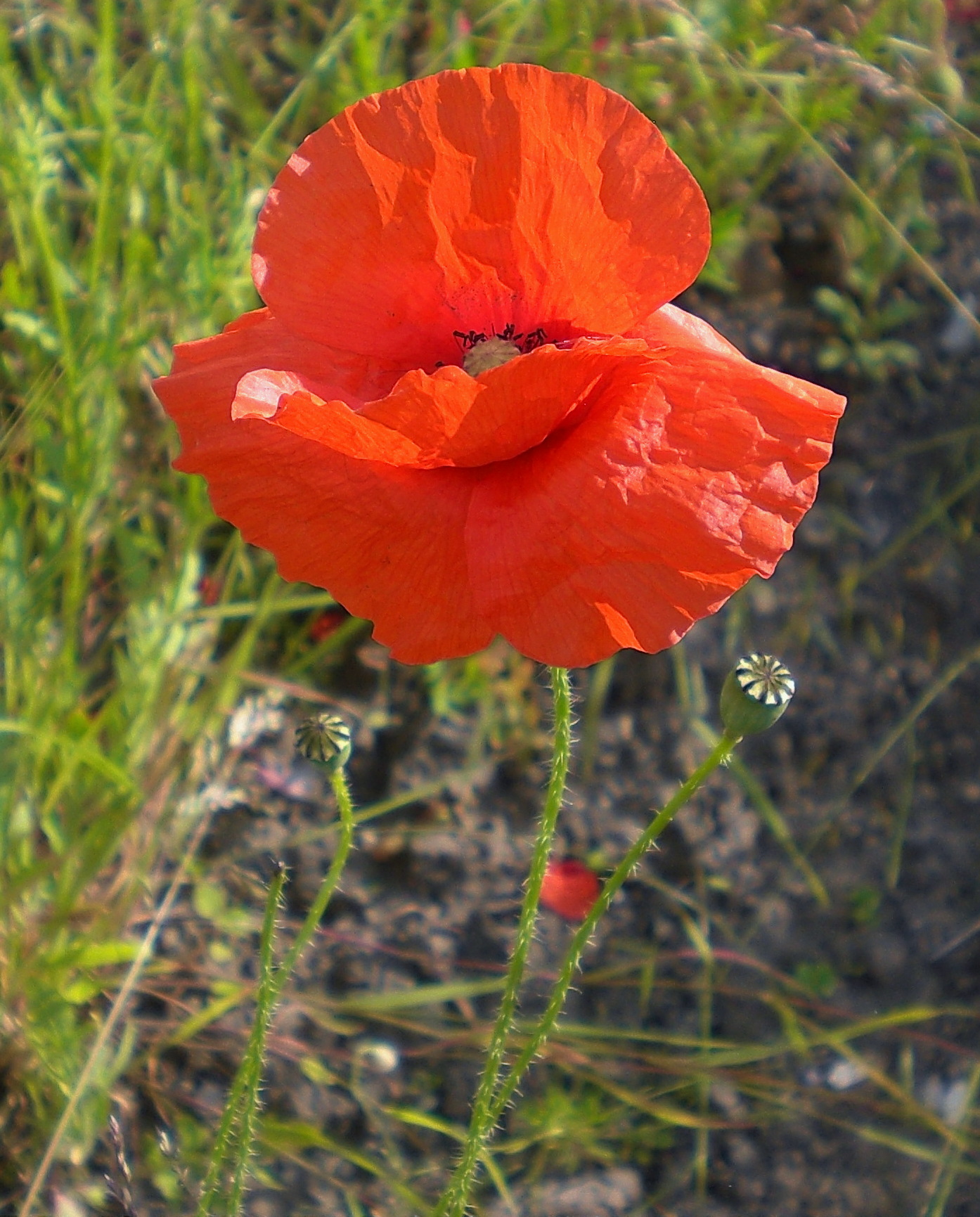
The Poppies are in the Field VI

But the Poppy is painted glass; it never glows so brightly as when the sun shines through it. Wherever it is seen-against the light or with the light –  always, it is a flame, and warms the wind like a blown ruby.

John Ruskin –  Proserpina
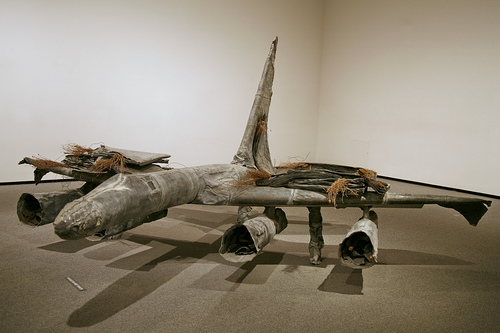
Angel of History: Poppy Memories
Photo credit: cliff1066™ / Foter.com / CC BY

Angel of History: Poppy and Memory by Anselm Kiefer. 

A warplane fabricated of lead

wings laden with books of beaten lead sheets

stuffed with dried poppies.
The Poppies are in the Field VII

Now Playing: Siouxsie and the Banshees  – Poppy Day &  The Teardrop Explodes – Poppies in the Field.

Through fence and over field, to beyond the hem of trees.

through fence

and over field – to

beyond the hem

of trees.

Thanks to all who have taken time to read any of the postings this year. It has been much appreciated and a delight to interact with so many creative and interesting folk. Whether you chose to celebrate, or not, best wishes to all for a peaceful and enjoyable week and onwards to new openings and possibilities for Year 2013.

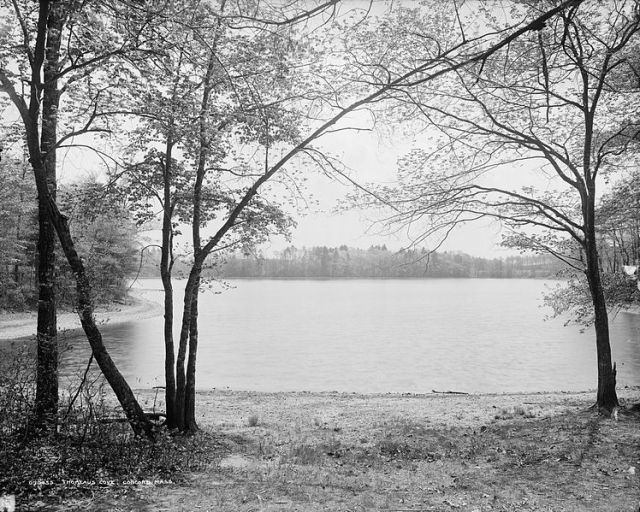
And just having a look at what Henry David Thoreau was writing in his journal on 24th December 1841:

I want to go soon and live away by the pond, where I shall hear only the wind whispering among the reeds. It will be success if I shall have left myself behind. But my friends ask what I will do when I get there. Will it not be employment enough to watch the progress of the seasons?

http://commons.wikimedia.org/wiki/File:Walden_Pond.jpg
Walden Pond

Now playing: Jan Bang, Erik Honoré – Uncommon Deities. (With David Sylvian, Sidsel Endresen, Arve Henriksen, John Tilbury & Philip Jeck).

Reference:

The Journal, 1837-1861 by Henry David Thoreau; preface by John R. Stilgoe, edited by Damion Searls (New York: New York Review Books classics, 2009).

On the edge and further out: to slip through time

It is not down in any map; true places never are.

Herman Melville

Fife - from Brighter Later by Brian David Stevens

I

Out on the fringe of gold

                        – lip of coastal edge.

Eyeing that breath of line

                       – flux of sea and sky.

Grounded punctuation

                       – conical crag of hill.

Arrested flow of time

                       – phonolitic trachyte.

II

I’m over the cerulean Forth

                        – tang of brine and caws of gulls.

Walking the high line     Out

                        – to North Berwick Law.

Treading clouds and updraughts

                       –  the whale, reeling me in

Out there,                     slipping through

                       –  into that void of white.

With a huge thanks to Brian David Stevens for the use of his photographs shot from Kinghorn Beach in Fife. These images are part of Brian’s ongoing Brighter Later project which is a journey around the British Isles looking outward from the coastline to show a different view of the UK.  The journey will visit every coastal county in the British Isles. The project is currently being serialised on the Caught By the River website with Fife the most recent entry.

The volcanic plug of solidified lava – North Berwick Law (hill) – is clearly visible in the photographs and I had forgotten about the whale jawbones on the summit which Brian mentions in his text.  Staring at the images got me thinking about Kinghorn, volcanic plugs, whales, Herman Melville, Laurie Anderson…

Some people know exactly where
they’re going
The Pilgrims to Mecca
The climbers to the mountaintop
But me I’m looking
For just a single moment
So I can slip through time.

Laurie Anderson, Life on a String. (Including songs from her stage production Songs and Stories From Moby-Dick).

Images © Brian David Steven.

Also check out Brian’s other wonderful photographic work here

On National Libraries Day

“I had no books at home. I started to frequent a public library in Lisbon. It was there, with no help except curiosity and the will to learn, that my taste for reading developed and was refined”.

Jose Saramago

“Libraries aren’t in the real world, after all. They’re places apart, sanctuaries of pure thought. In this way I can go on living on the moon for the rest of my life”.

Paul Auster

“The library was my salvation. Through the library I got to see the world, to read books from every century. It was my temple.”

Patti Smith

I am what libraries and librarians have made me, with little assistance from a professor of Greek and poets.

Heraclitus

Now Playing: Moondog in Europe – Moondog

Biocentric – Gary Snyder/Patrick Geddes

Dipping into The Gary Snyder Reader and Jim Dodge’s excellent introduction:

[Snyder] views his work as inhabiting “the mythopoeic interface of society, ecology and language.”

He enlarges one’s delight in existence and amplifies the élan vital, the life force coursing through it all.  And if so doing he also, as Freeman House put it, “gives you the permission to use your senses and offers tools to take on the more destructive aspects of Western Civilization,” all the better.

The sense of work centred in place, of addressing a community that includes plants and animals as well as people.

The nature of imagination tends towards integration, inclusion and intimacy and as such is inimical to the alienation and homogeneity of corporate global capitalism, centralised government and the other forces of darkness that regard the planet as dominion rather than domicile, markets instead of hearths.

As his essays prove and his poems embody, Gary Snyder is among the most ferociously imaginative proponents of the bio-centric (“life-centred) view over the egocentric (self-centred) model.

Foreword by Jim Dodge, The Gary Snyder Reader, (New York: Counterpoint, 1999).

All of this also highly resonant with some of the key ideas of Patrick Geddes:

This is a green world, with animals comparatively few and small, and all dependent on the leaves. By leaves we live. Some people have strange ideas that they live by money. They think energy is generated by the circulation of coins. Whereas the world is mainly a vast leaf colony, growing on and forming a leafy soil, not a mere mineral mass: and we live not by the jingling of our coins, but by the fullness of our harvests.” 

Patrick Geddes final lecture to students at University College Dundee in 1918.

Everything I have done”, he once said at Le College des Ecossais, “has been biocentric; for and in terms of life, both individual and collective; whereas all the machinery of the state, public instruction, finance and industry ignore life, when indeed it does not destroy it. The only thing that amazes me, therefore, as I look back over my experiences is that I was not caught and hung many years ago.”

Rob Cowan quoting Hugh MacDiarmid and Geddes in Town and Country Planning, September 1979.


Now Playing: Ben Frost & Daniel Bjarnason – Solaris

On Foot

“The world reveals itself to those who travel on foot”.

                                                                                                  Werner Herzog

Now playing: Alice Coltrane – Lord of Lords

They’ll never see as we do…

‘They’ll never see, as we do, the hidden spaces, the rampant ecology, weeds, wild flowers; hawthorn, dogwood, hedge-parsley, willowherb, tormentil’.

Iain Sinclair, London Orbital, (London: Penguin, 2003), p. 325.

Now playing: Sun Araw: On Patrol.

A New Year Slogan

‘Not Traditions – Precedents!’

Hugh MacDiarmid, The Scottish Chapbook, (1922-1923).

Now playing: Morton Feldman – For Bunita Marcus (performance by Louis Goldstein).

Deleuze on Walking

A schizophrenic out for a walk is a better model than a neurotic lying on the analyst’s couch.  A breath of fresh air, a relationship with the outside world.

Gilles Deleuze and Félix Guattari, Anti-Oedipus.

Now Playing: Henry Flynt – C Tune

Herzog on Human Language and Culture

But everybody talks about extinction of whales or endangered whales, and we are not aware that at the same time, at a much more rapid rate, human languages and cultures are dying out. And the speed of it is staggering. You see, within the next fifty years, 90 per cent of all spoken languages on this planet will have disappeared without a trace.

Q&A: Werner Herzog, New Statesman, 24th April 2009.

Now Playing: Morton Feldman – For Christian Wolff