Whilst in Glasgow recently, it was a sad sight to walk along Renfield Street and see the hollowed out shell of The Glasgow School of Art. Even in it’s fire-damaged condition, Charles Rennie Mackintosh’s architectural masterpiece remains identifiable as one of the great buildings of the world.
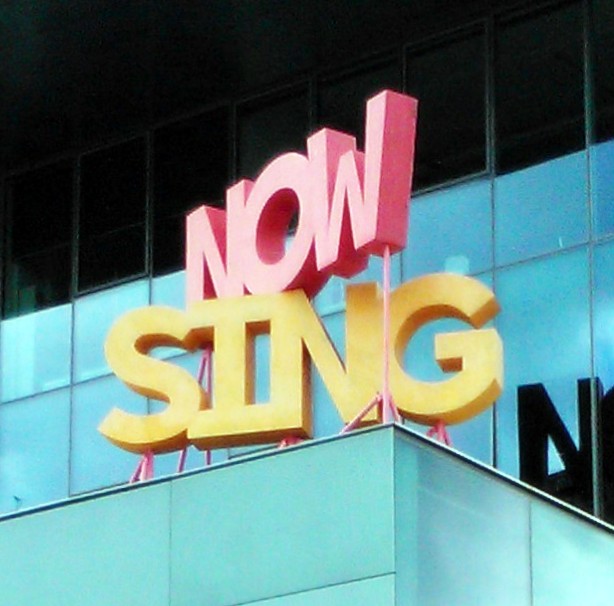
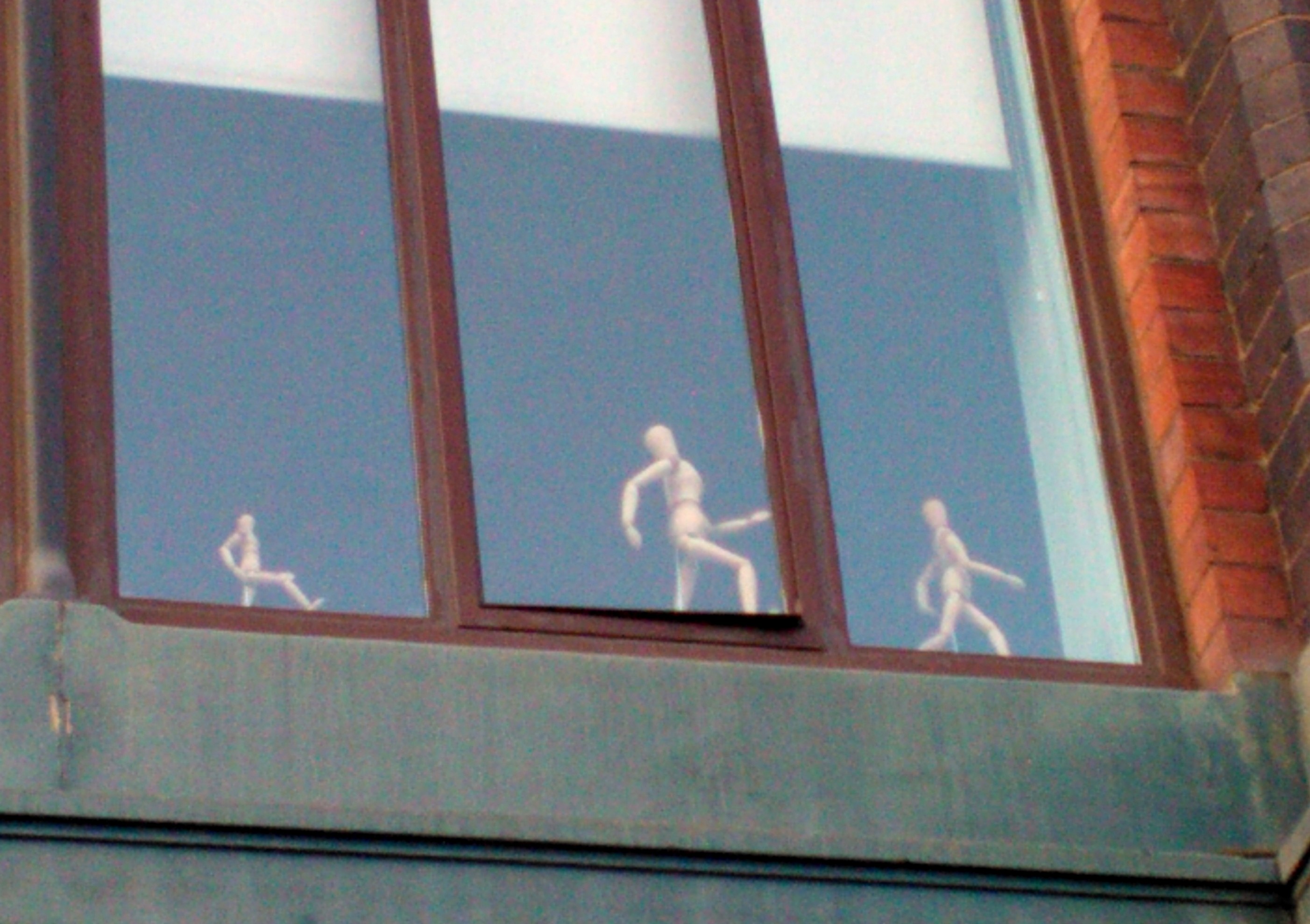
On the other side of the street, a shiny new neighbour, the Reid Building, hunches over its ailing, elderly companion. A reflective sympathy of glass, metal and concrete. On the balcony, Michael Stumpf’s installation, speaking to the moment:
As an invocation, it’s a good one:
NOW SING
.
As twilight descends, and the sounds of Sauchiehall Street murmur below, we can imagine the Reid Building and all people passing, singing soft lullabies. Songs to comfort. Songs to bring back light and air to soot-blackened lungs. Songs to soothe the city fabric.
So no fire damaged pictures of The Mackintosh Building. It’s presence will always be there: to heal, challenge and sustain the human imagination, whatever its material state.
(and soothe the city fabric)
Now playing: Richard Youngs – ‘The Future is So Different Today’ from Summer Through My Mind
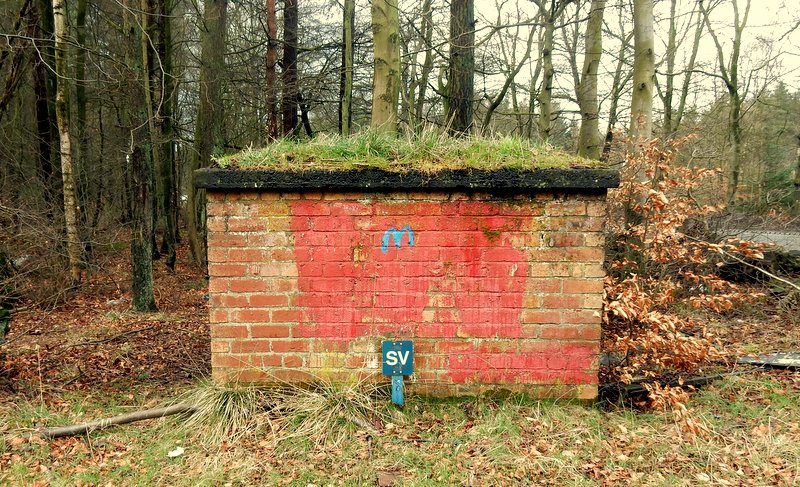
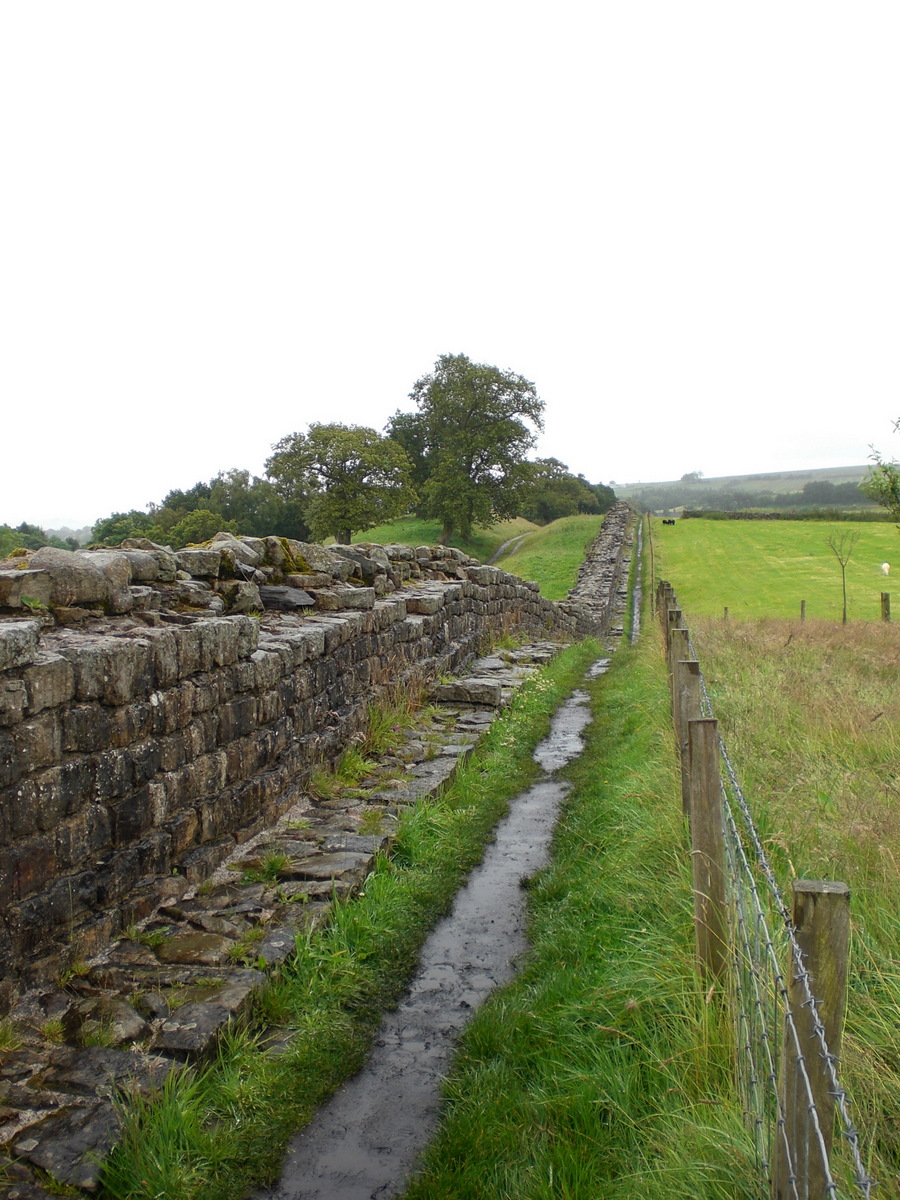
Hadrian’s WallThe Berlin WallLimekilns, Danger, Keep Out
≈ ≈
.
Sauchiehall Street Glasgow
.
.
– Where is the coldness of the sun?
.
.
.
.
– What is the gravity of the moon?
.
at Mogwai play Zidane, Broomielaw, GlasgowRosyth Station, Car Park
.
.
.
.
.
.
.
≈
– Where is the boundary of night?
.
Under Regent Bridge, Calton Road, Edinburgh (Callum Innes installation).
≈ ≈
.
.
Where is the future of freedom?
.
Stirling Jail car park mural. Detail from Freedom Versions v.1
≈
– What is the distance of love?
.
Berlin Wall, late 1980s. Looking towards the East
.
≈ ≈ ≈
Opening quote from Clarice Lispector’s The Hour of the Star.
The photos of the Berlin Wall are from an inter-railing trip in the late 1980s. It was a coincidence to rediscover them in an old shoebox on the day that it was announced Lou Reed had died. I can still vividly recall a lurid, orange BASF cassette being pressed into my hand in the school playground. “Listen to this!” It was a recording of Rock n Roll Animal. Things changed.
I can still remember a number of the cassettes that travelled in the rucksack on that inter-railing adventure. Berlin was certainly one of them.
Watch a street and you become it. You construct, if so inclined, a narrative: but you are also part of the witnessed event. You shape what you see.
Iain Sinclair, Edge of the Orison
In Glasgow. Uncharacteristic, sweltering heat and a half hour to spare before the gig. Just enough time for a quick wander, to stretch the legs without expectation. A phone camera will have to suffice if anything should reveal itself.
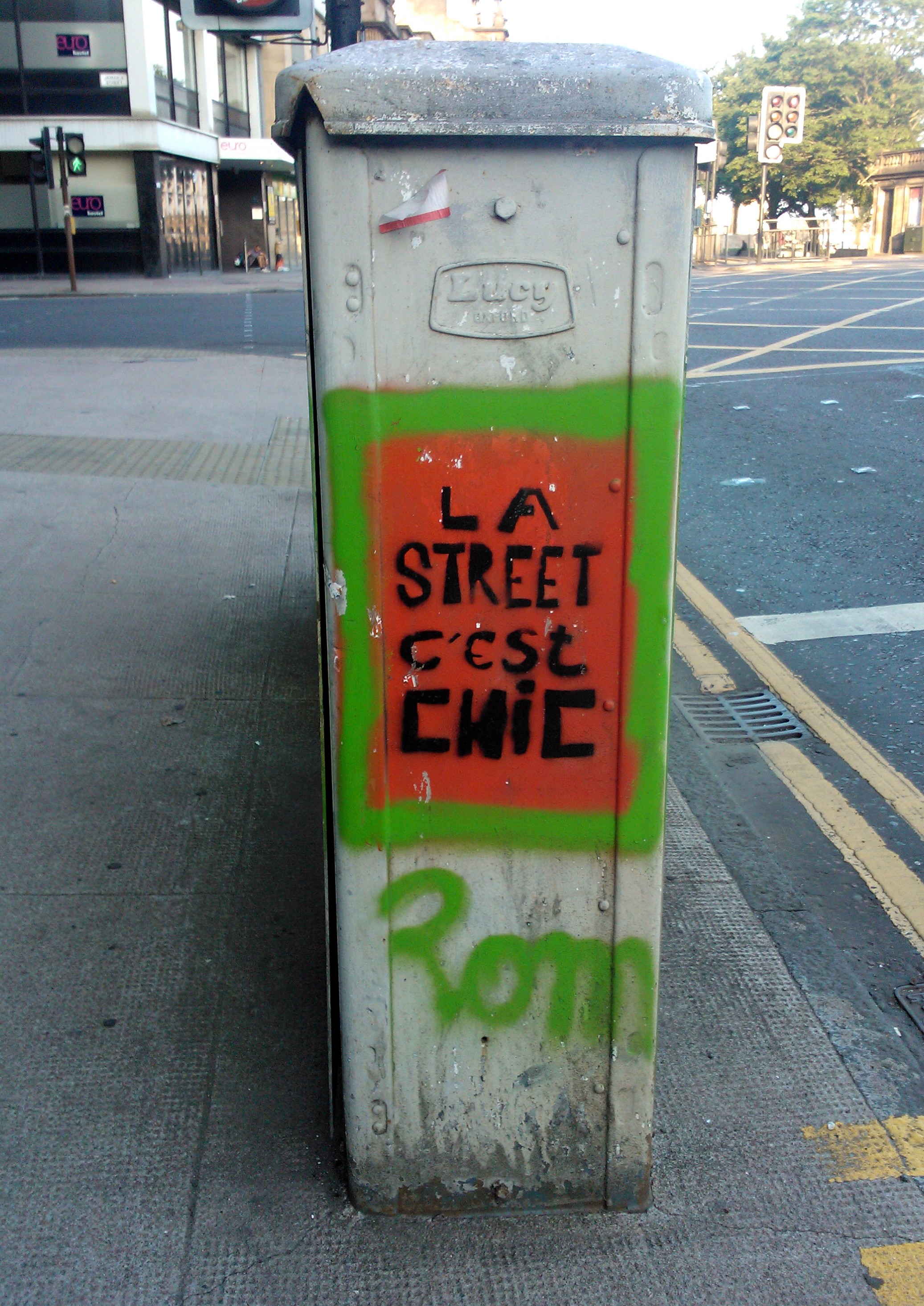
Out of the Arches, underneath Central Station, and into air larded with deep-fried food aromas and traffic fumes. I’m scanning for a sign to get started. Pastel shades shout out for attention and it seems that even the graffiti is responding to the sunshine:
Can’t help noticing the little green archipelago thriving around the base. The resilience of nature to establish existence, in the most barren of conditions, at a busy city centre intersection.
Head down towards the river and pick up the trail:
More dancing colour to puncture the grey. A Bernard Edwards bass line bounces around in the head.
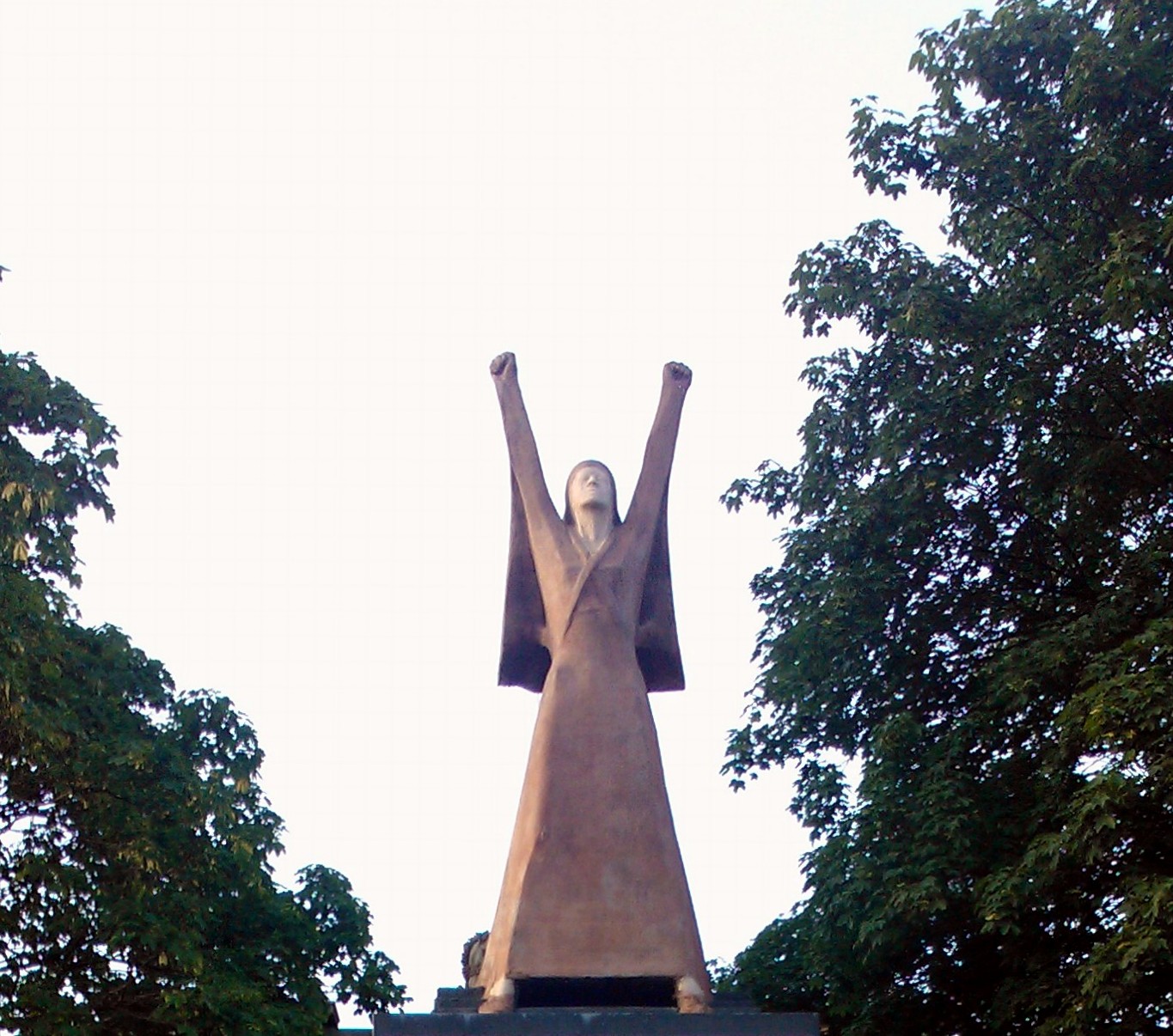
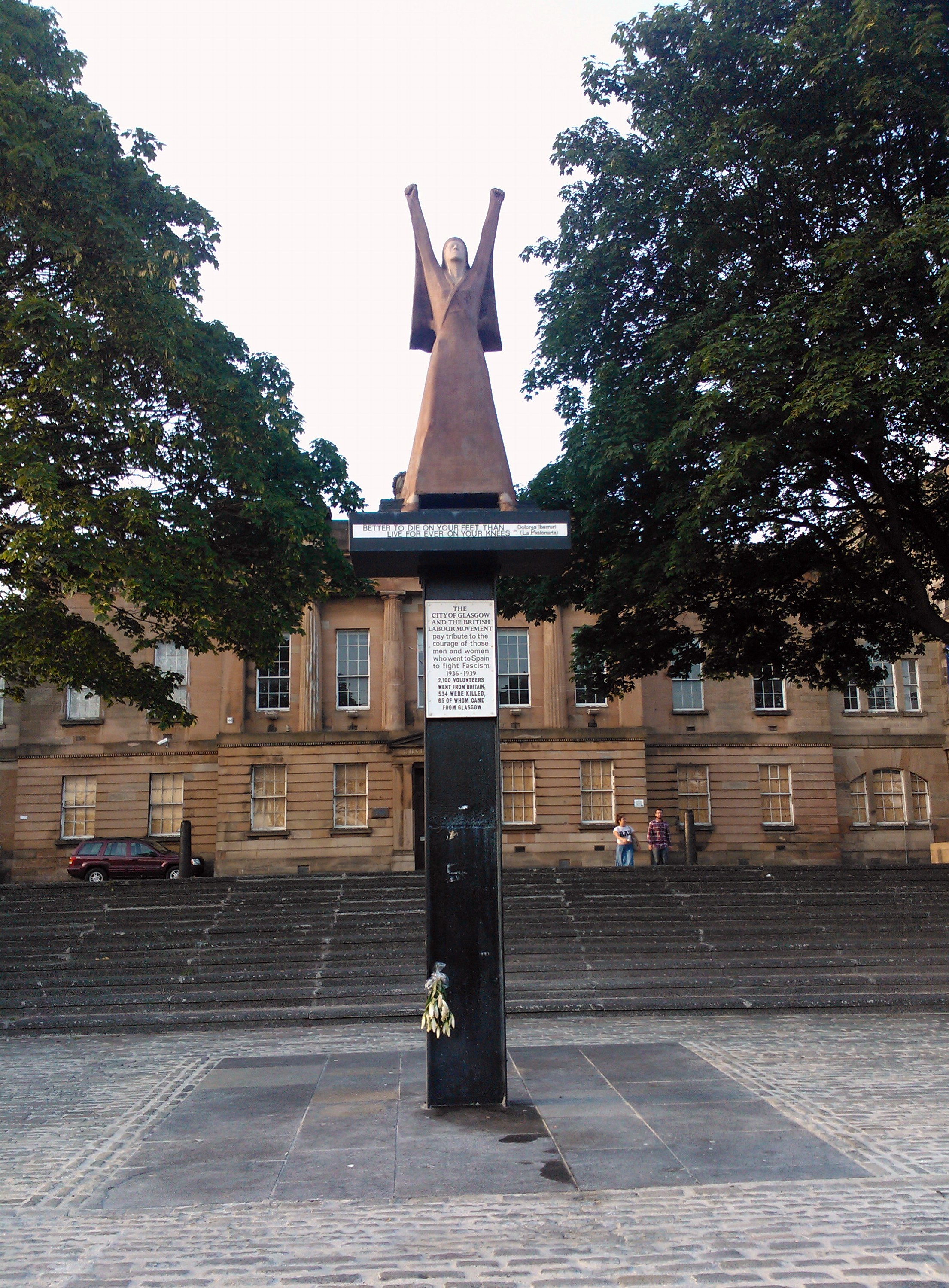
Walk straight on for a bit and over to the right there is a figure, facing towards the river, which looks interesting. From the rear I’m assuming it’s some form of religious icon, arms stretched out to heaven? St Mungo perhaps? Cross the road and down a shallow incline of steps to view the figure face on.
A bunch of flowers. wilting in the heat is tucked into the base of the statue. Obviously, still an active site of memory and remembrance. The plaque directly underneath the figure reads:
The statue is of Dolores Ibárruri (1895-1989), “La Pasionaria” (“The Passion Flower”), a heroine and leader in the Spanish Republican and Communist movements. An inspiration to the volunteers of the International Brigade who fought in the Spanish Civil War of 1936-1939.
I subsequently find out the sculpture is by Liverpool artist Arthur Dooley, who created the famous Beatles statue,Four Lads Who Shook the World. I was even more shocked to learn that Dooley never saw La Pasionaria installed, unable to afford the bus fare to come to Glasgow.
Continuing along the riverside walkway, a few people are taking full advantage of the heat wave. “Taps aff”. Sitting, lying down, starfished, enjoying being out-of-doors, heads raised, eyes closed, embracing the setting sun. A sense of the more usual activities of the area are perhaps revealed as a young man is pulled up by two patrolling police officers and asked to empty his pockets.
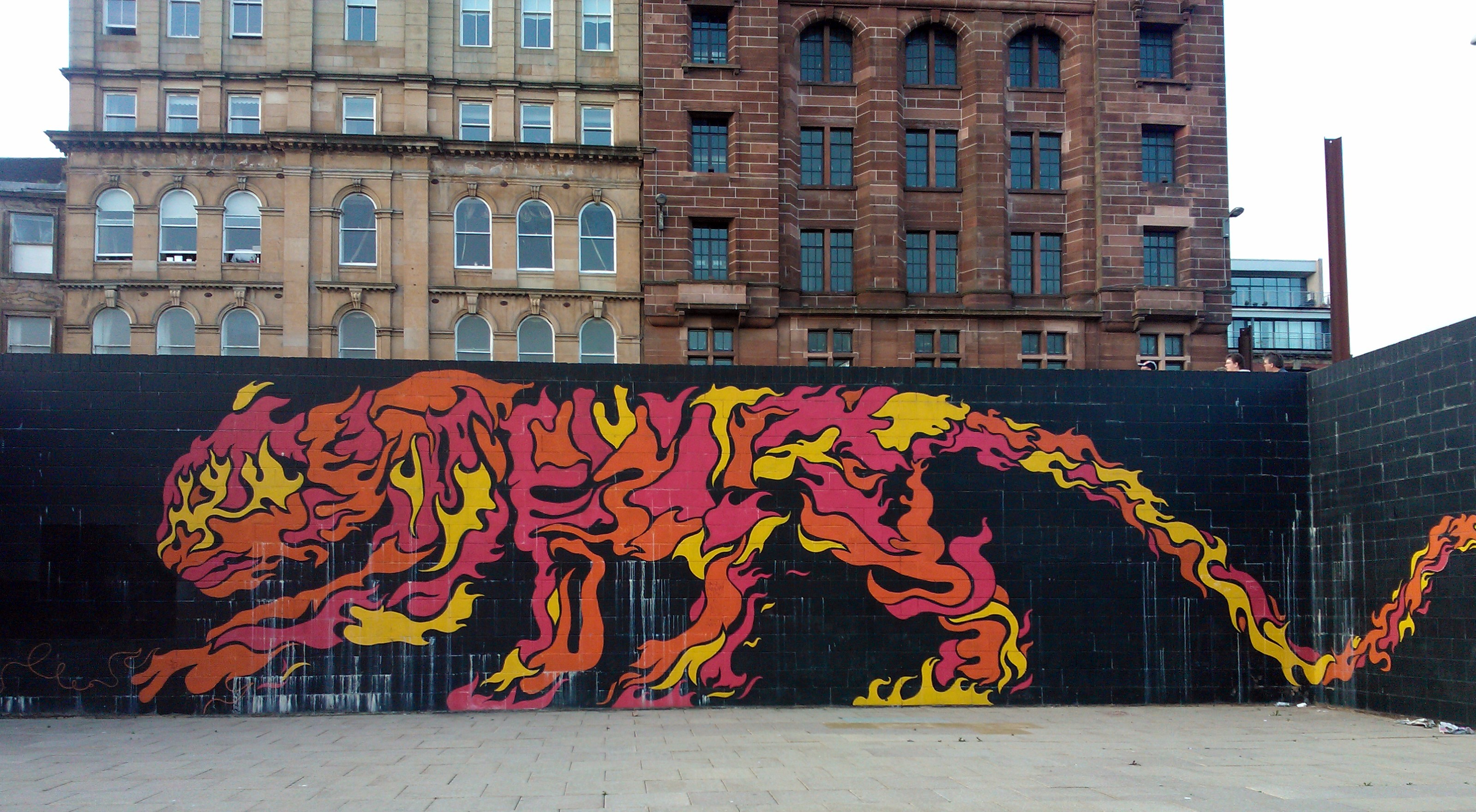
Underneath another bridge to come face-to-face with a psychedelic tiger. A fiery flux of shifting colours, crouched and ready to pounce on the indolent walker:
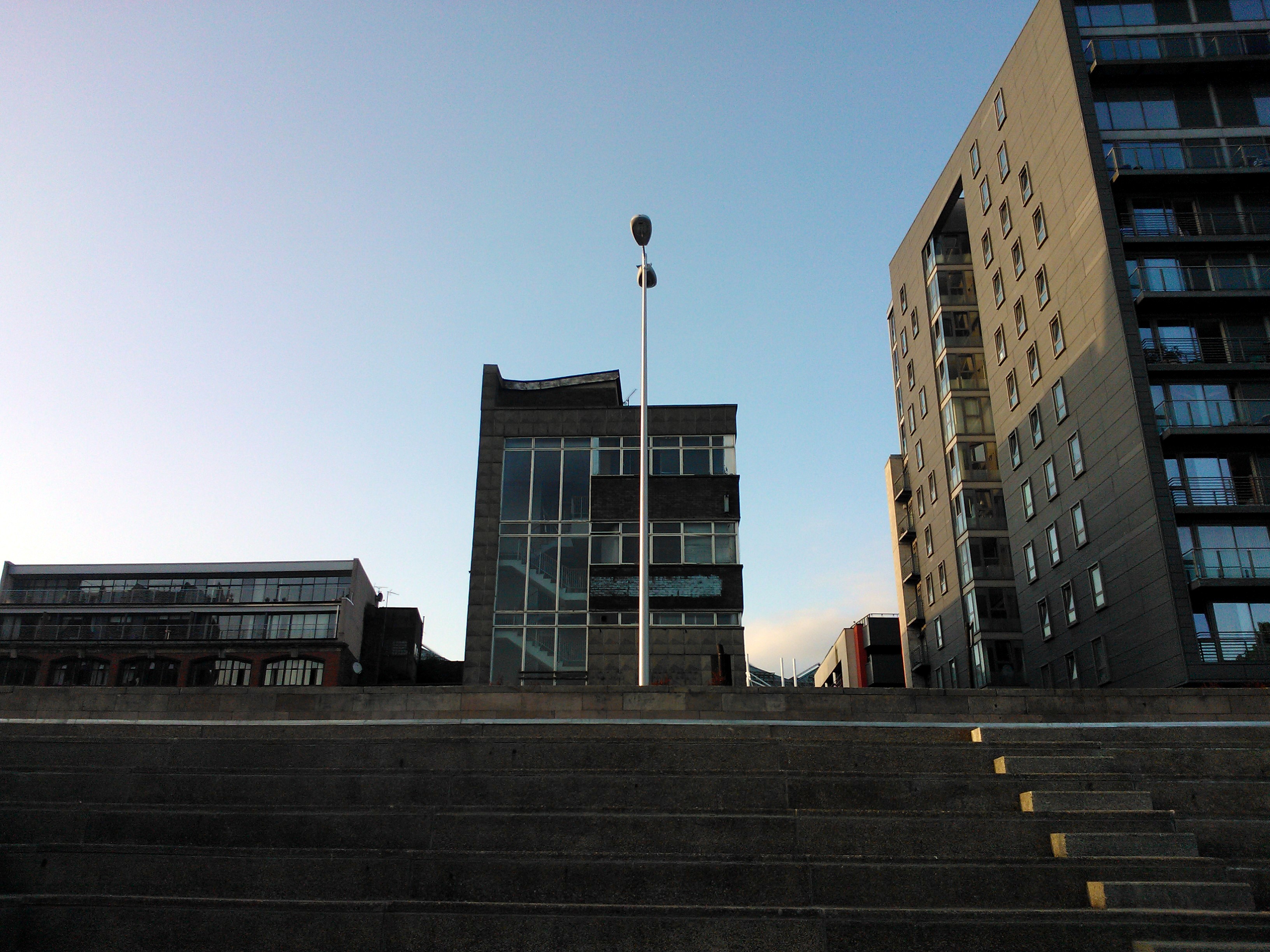
Ascending from the river up a miniature Odessa Steps, I half expect a pram to come toppling over the top.
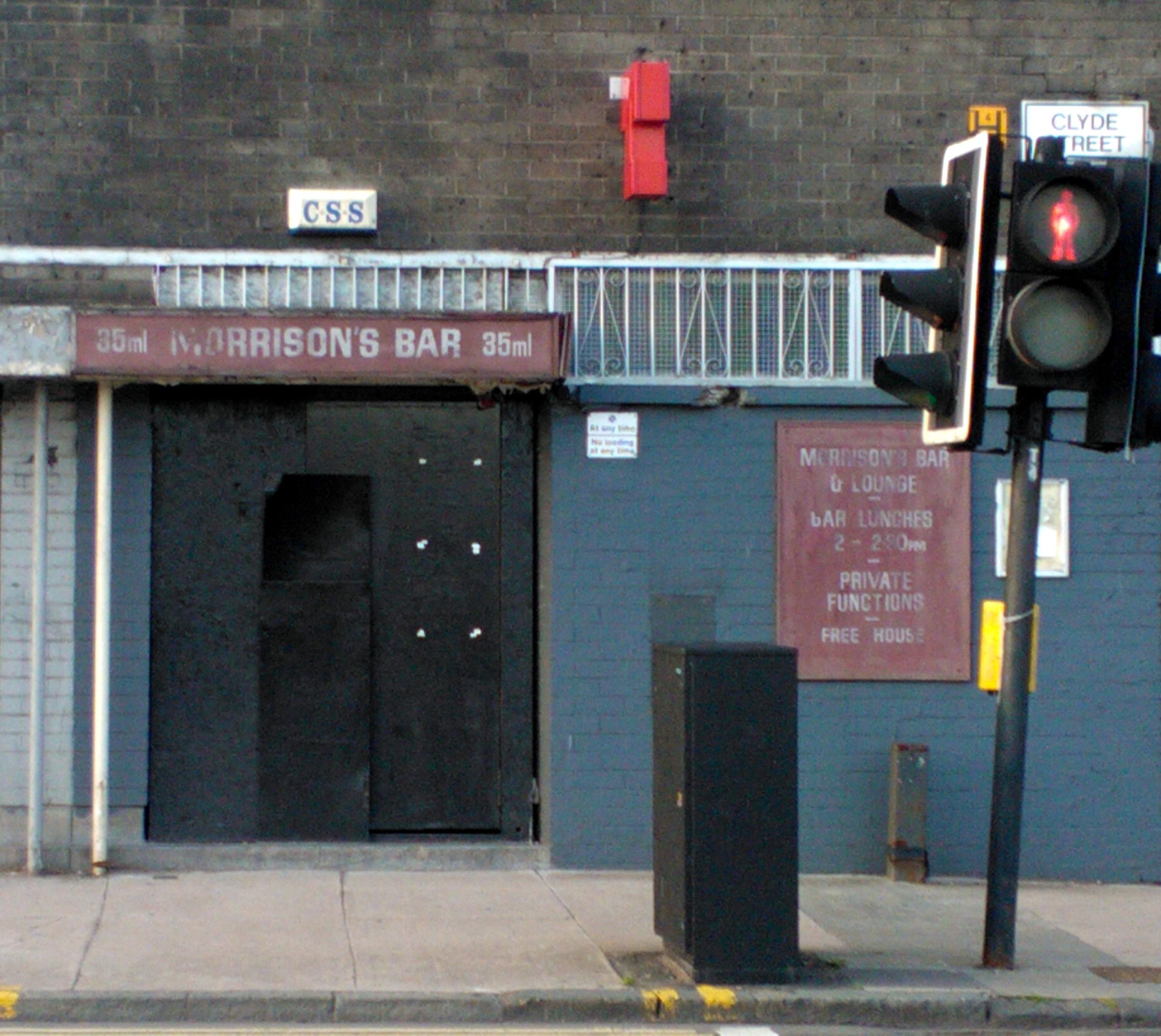
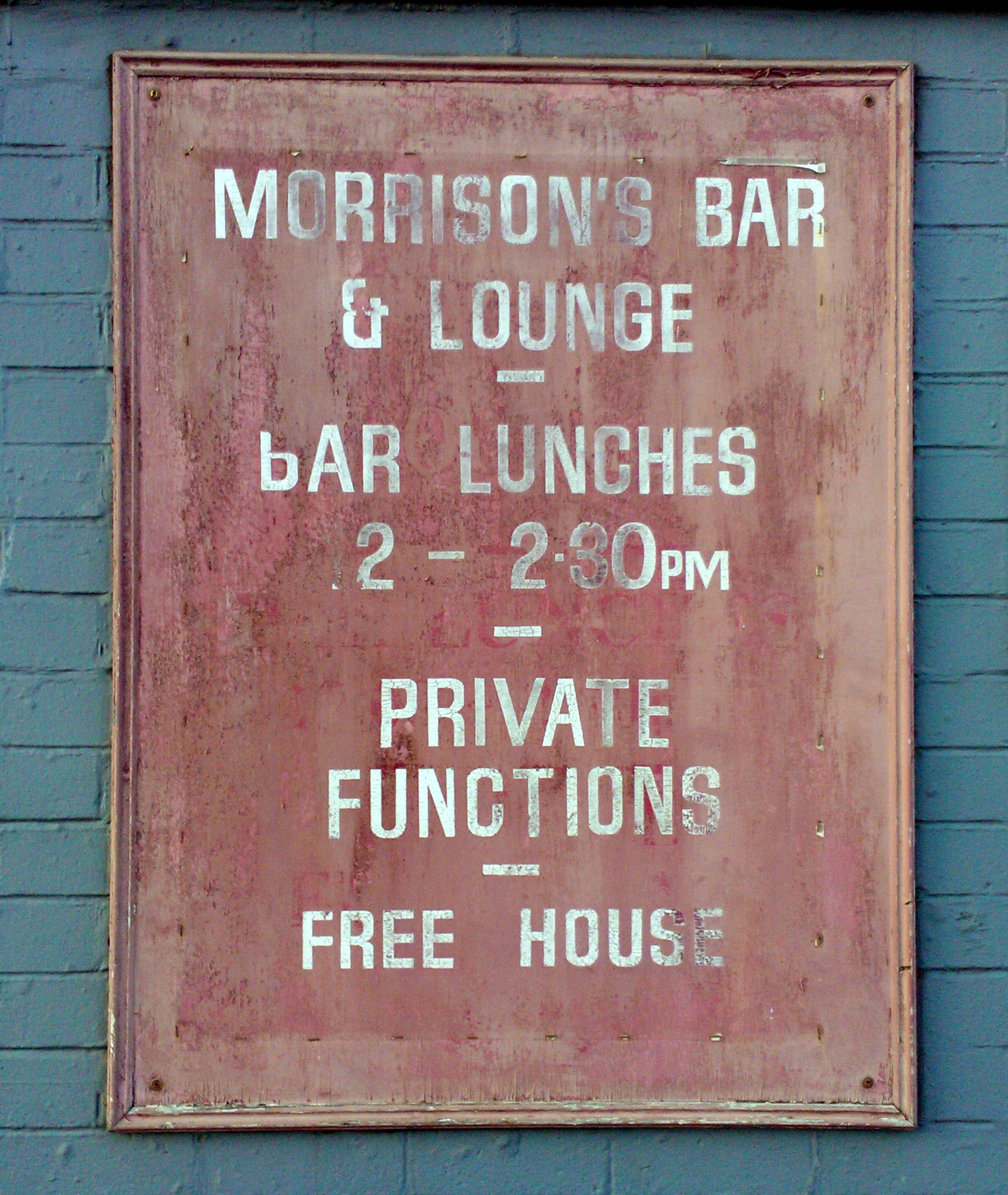
…and I’m facing Morrison’s Bar which looks like it may never have opened since Jim checked out:
….
…. Around the corner, The Riverside Club doesn’t look to be doing much business either. Perhaps these are ‘badger’ venues – they only come out in the dark?
I head into what I find is Fox Street. Looking back towards the east, the setting sun fracturing into shards hitting the ecclesiastical windows of a distant church:
Continuing west will take me back towards the City Centre:
Along with the heat and the sunshine, two cheerful lovehearts brighten up the street:
And a message a few feet away. No addressee. No object of affection. No initials. Just a statement addressed to whom?
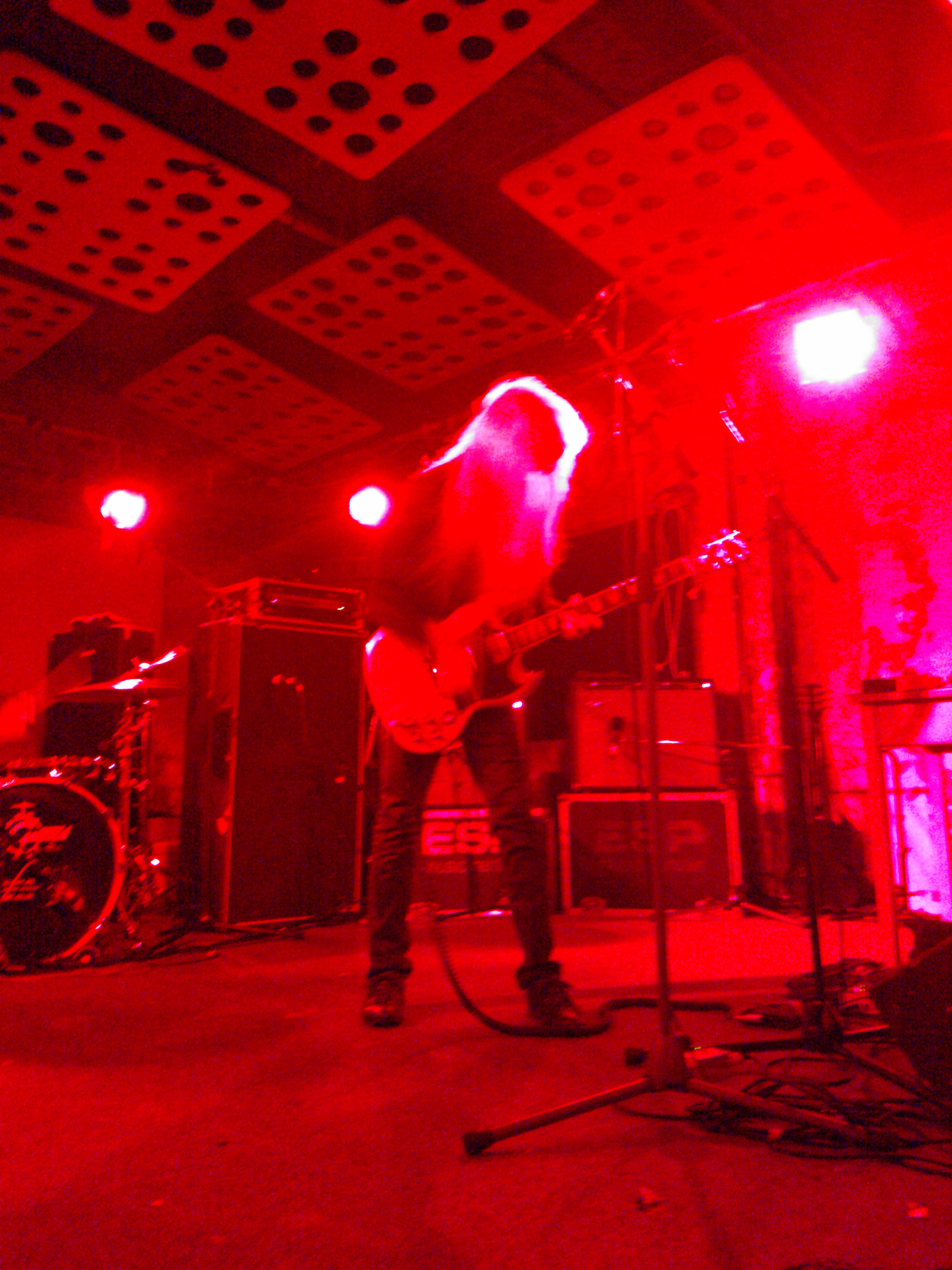
I walk up towards Renfield Lane, thinking about how even the shortest of walks through a city can surprise, enchant and provoke reflection. I’m thinking about La Pasionaria, The International Brigades and psychedelic tigers as I descend into the Stygian depths of Stereo. Moving between worlds. From light into darkness and a prelude to shortly having all body molecules rearranged by the shamanic noise rituals of Nazoranai: Keiji Haino, Stephen O’Malley and Oren Ambarchi. Sound as alchemy, carried within, back through the city, as, after the show, I head for the train in the warm, dark night.
The white centre … is both an emptiness and an energy generator. Your eye is continually drawn back to its white silence, its void-ness. Then your attention is propelled out again along the twisting road-ways. The eye cycles back and forth between “something” and “nothing”.
First Rauschenberg laid down a base coat of white paint on a 48-by-32 inch piece of masonite. Then on the top four-fifths of this white ground, he pasted pieces of maps of American cities: Minneapolis, Pittsburgh, St Louis, New Orleans Boston, Denver…
The twisting spidery roadways – dark lines radiating across off-white backgrounds crackle with shivery linear energy. This frenetic activity is silenced at the pictures centre by a great white circular void that hovers like a pulsating energy field. This void isn’t empty. Literally it’s a layer of brushed white paint that laps over the cut edges of the maps. Visually, the painted surface dematerialises into a humming whiteness.
Kay Larson on Robert Rauschenberg’s Mother of God
I recently finished Kay Larson’s wonderful book Where the Heart Beats: John Cage, Zen Buddhism and the Inner Life of Artists. I don’t particularly want to offer a review here but if you have any interest in John Cage then I guess that you will be well rewarded by reading it.
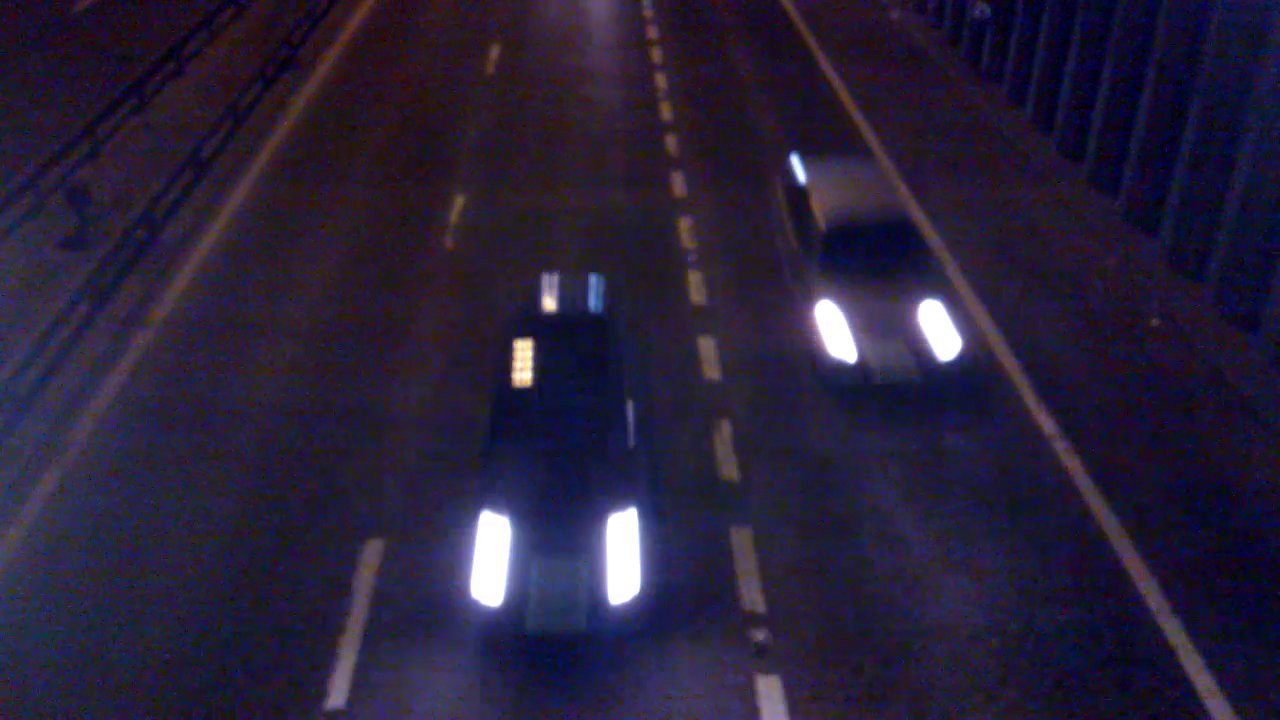
Like any great book, it’s the ideas that linger around afterwards that are of greatest value. They push, prod and poke. Unconscious spectres haunting the edges of conscious thought before demanding some form of engagement, application or reflection. This perhaps explains why, for a few minutes last weekend I stood, in the dark, on a motorway bridge at Charing Cross, Glasgow. A walk back to the station interrupted by thoughts about “something” and “nothing”. The traffic of the M8 motorway cascading underneath my feet and I’m recording it on my phone…
Well clearly my silent piece…expresses the acceptance of whatever happens in that emptiness. And the same thing was expressed by that empty painting, that white painting of Bob Rauschenberg.
John Cage
One of the most fascinating parts of Larson’s book deals with Cage’s conceptual evolution leading up to his (in)famous ‘silent’ piece 4’33”. Larson makes the case that prior to 4’33”, Cage’s thinking was expressed in Either / Or dualities. His two lectures: Lecture on Something and Lecture on Nothing bookend this approach. Increasingly inspired by the Zen lectures of D. T. Suzuki at Columbia University and the white paintings of Robert Rauschenberg, Cage moved towards the idea of the radical act that was required to detonate these dualisms. His famous visit to the anechoic (sound-proof) chamber at Harvard had shown Cage that ‘silence’ could never be an absolute absence of sound. Even in the scientifically quietest place on Earth he could still hear sounds. The high whine of his own nervous system and dull roar of his blood circulation. He heard the sound of his life in process and Cage concluded that there is no such thing as silence.
Silence is not acoustic. It is a change of mind, a turning around.
4’33” embodies the idea of life and art as a process. As Larson says: “before anything else, it’s an experience.” It is a proposition that says, in notational shorthand: stop for a moment and look around you and listen; stop and look; stop and listen. “Something” and “Nothing” can never be divided.
Well I use it (4’33”) constantly in my life experience. No day goes by without my making use of that piece in my life and in my work…I turn my attention towards it. I realize that it’s going on continuously…
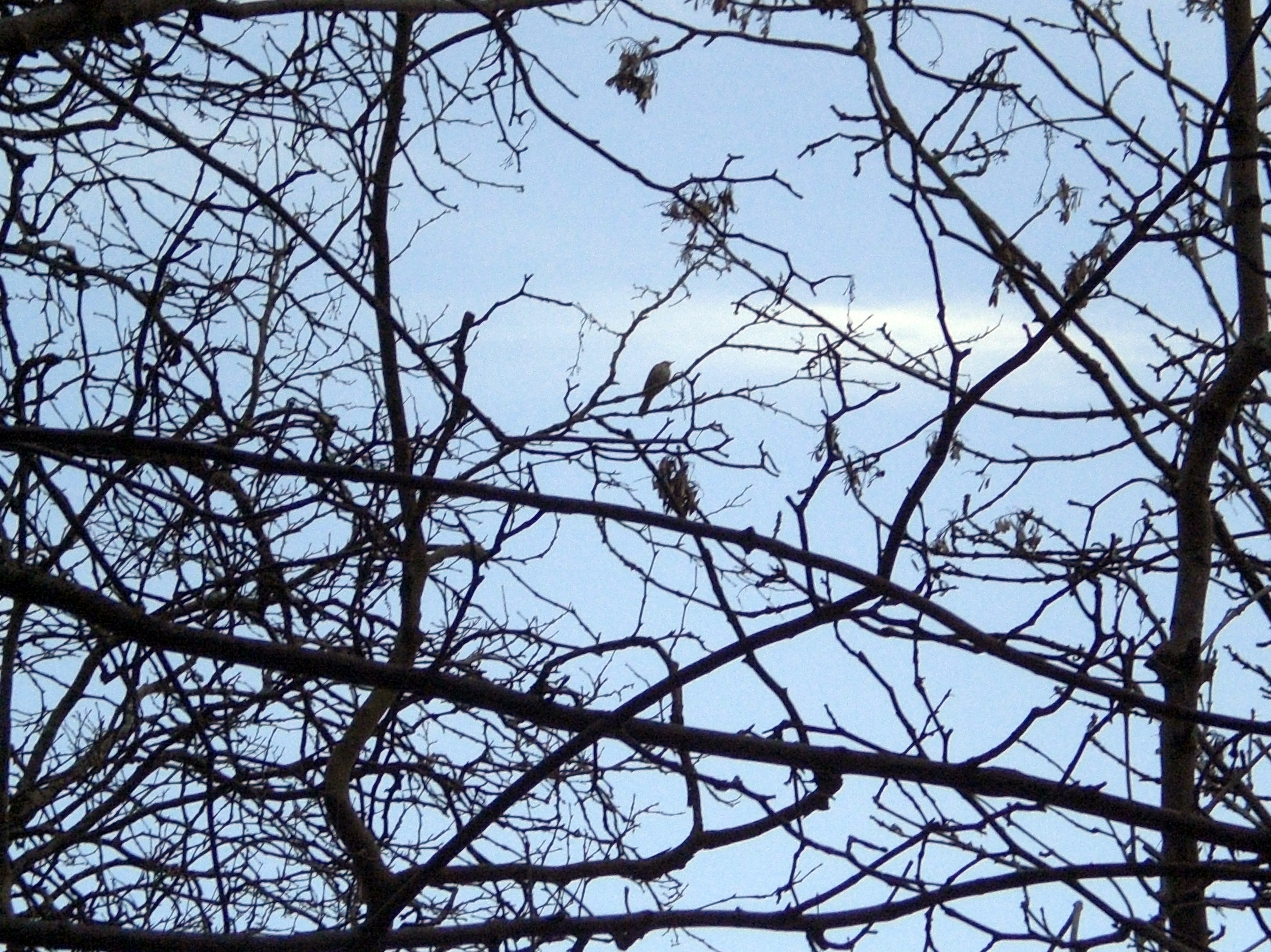
This may all sound pretty abstract but two events from a recent afternoon wander through Glasgow bring it all home. Heading back from the West End, the energetic bustle of Byers Road noticeably slips off the shoulders as you enter Kelvingrove Park. Welcomed into the crisp and brittle air by the bare winter trees, very few people are around and circumstances are conspiring to shift towards something approaching an urban ‘silence’. (The ubiquitous, low hum of traffic is always there, much like the sound of Cage’s blood circulation). Slipping into a kind of unconscious walking reverie, measured out in the rhythm of movement, I was brought completely into the moment by the spooling song of possibly a mistle thrush or song thrush high in a tree. What an enchanting experience to simply stop and listen to the cadences and Fi-ga-ro Fi-ga-ro refrains weaving a thread of song through the urban silence. An oscillation between something and nothing. Lives in process. I managed to capture around 40 seconds on a pretty rough phone recording, by which time several people had gathered around wondering what I was looking at:
.
.
[sometimelater]
.
.
I wanted to be quiet in a nonquiet situation.
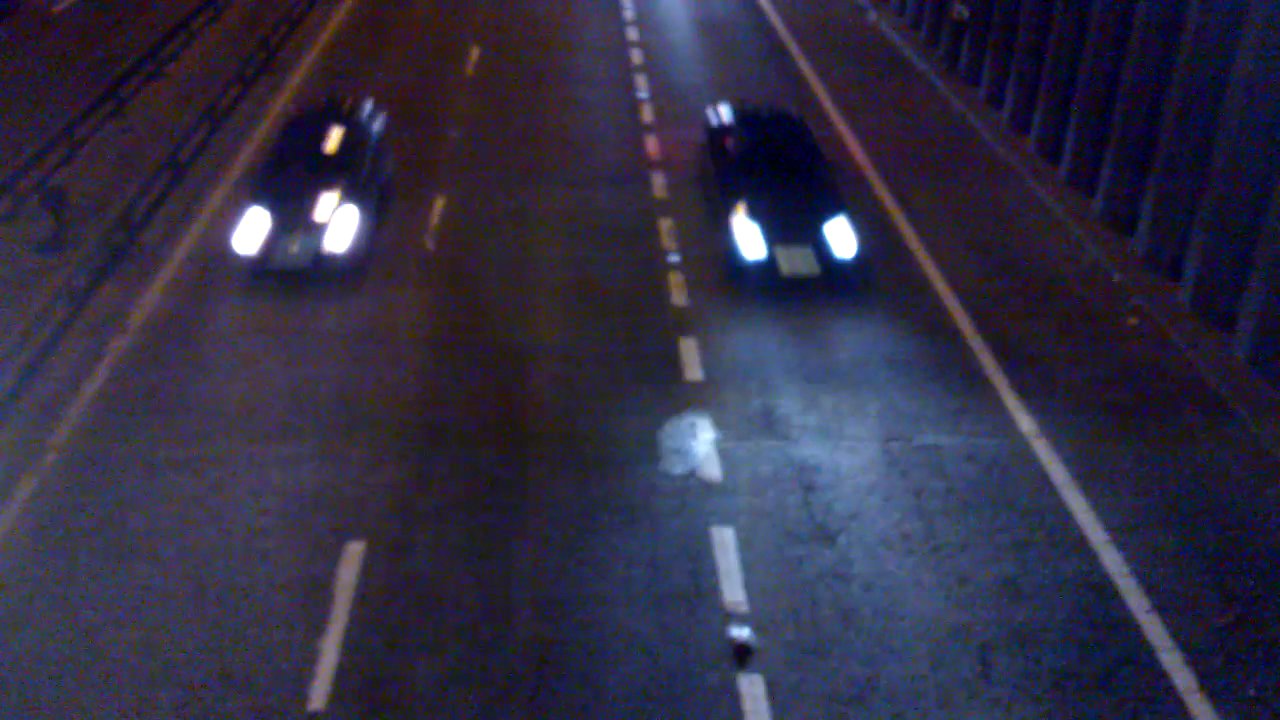
Later in the early evening, it is already dark and I’m walking back into the town centre . I stop on the motorway flyover bridge at Charing Cross. For a short time I just watch the traffic swoosh past underneath. Pools of light flooding the motorway and dispersing within seconds. The experience is strangely mesmerising and calming. The rhythms of sound vary depending on the sequence and number of cars across the three lanes. Like a childhood game, I start to guess which lane a car will appear in next. A chance operation in process. I then notice that occasionally there can be an almost complete drop out towards a momentary void of sound. For a few seconds no cars are in view in any of the lanes. Once again this is a rough recording but within this short clip it happens a couple of times:
.
.
After a few minutes of this hypnotic experience, I realise that I’ve been in the white centre of Rauschenberg’s painting. The void. Quiet in a nonquiet situation. As I lift my head to look around, the roads and paths of the city spiral off in every direction. Energies of neon, arteries of possibility, encounters, histories and stories yet to come.
I walk towards Sauchiehall Street, always poised between something and nothing.
Now playing: Kevin Drumm – Tannenbaum
References:
Richard Konstelanetz (ed), Conversing with Cage (London: Omnibus Press, 1989).
Kay Larson, Where the Heart Beats: John Cage, Zen Buddhism and the Inner Life of Artists, (New York: The Penguin Press. 2012).
Robert Rauschenberg, Mother of God, 1950. San Francisco Museum of Modern Art.
Special thanks to Fraser Macdonald and Louise Arber for offering suggestions as to the identity of the singing bird. The wonder of Twitter.

























 Murdo Eason - From Hill to Sea