silently
being
silent
~
being
silent
silently
.

Now playing: Eliane Radigue – Transamorem – Transmortem
Murdo Eason - From Hill to Sea
walking / writing / between world and word
murdo eason / walking / writing / between world & word
silently
being
silent
~
being
silent
silently
.
Now playing: Eliane Radigue – Transamorem – Transmortem

Retain your memories
but détourn them
so that they correspond with your era.
Asger Jorn
We are in Berlin travelling on the U-Bahn to Kottbusser Tor in Kreuzberg. It is a gloriously warm April morning with fists of sunlight starting to punch through the clouds. From the elevated train tracks we can survey the sweeping spread of the city below. In the foreground, a graffiti inscribed, cubist assemblage written on to the earth. “How do they manage to get up there to paint it? asks R, pointing to a 3-D effect trompe l’oeil covering the entire gable end of a tall building. A and I marvel at the scale and ambition. An exploding riot of colour and illusion. We both shrug our shoulders…
I had been in Kreuzberg the previous evening at a gig in the HAU 2 theatre complex. (As an aside, I was delighted to discover later that this building was the original site of the Zodiak Free Arts Lab formed by Conrad Schnitzler, Hans-Joachim Roedelius and Boris Schaak in 1968. More on this below if interested. (1)). I didn’t have much time to stroll around the streets beforehand but picked up a little of the night ambiance. Clearly the zest to inscribe almost any available surface with graffiti and street art was alive and well. I realised that my previous visit to Berlin had been when the Wall was still standing and Kreuzberg was the beating heart of a chaotic, edgy, alternative radicalism. An enclave of squatters, artists and musicians, living cheek by jowl with the, largely Turkish, immigrant population. At the time it felt like some bunkered interzone within the island of Berlin. A city trapped and adrift in topography, history and cold war paranoia. Inter-railing around Europe, I remember having to scrape up the Deutschmarks to buy a ticket and visa to allow travel through the DDR from Hamburg. Walking out of Zoo Station with a head full of Berlin tropes: Bowie, Iggy, Lou Reed and Christiane F. I could imagine witnessing scenes of Blixa Bargeld and Nick Cave holding court in the bars of SO36 underneath the watch towers. On reflection, a romanticised, pop-culture depiction of the city shaped more by the NME than by any history or guide-book.
Around twenty-five years later I’m walking out of Kottbusser Tor station with the family still carrying these ghosts of memory. It feels a bit surreal to experience the bright sunshine and languid air of the street as we set off in search of the Turkish market down on the banks of the Landwehrkanal. We pass the grocery stores and a few cafes where groups of men (and it is all men) are sitting outside sipping Turkish coffee and gossiping. It’s only a short walk to the canal and it evidently becomes apparent that we have either got the day or our directions wrong. There is no sign of any Turkish market. Perhaps Bowie, Iggy and Blixa can help guide us? Feed us a few signs? However, R is already off. A nine-year old is not going to hang around whilst our putative tour guides attempt to get their shit together.
♦
Unburdened by worldly cares, unfettered by learning, free of ingrained habit, negligent of time, the child is open to the world.
Yi-Fu Tuan
Children are natural and consummate psychogeographers. They can happily drift through any environment, urban or rural, seeking out and following the signs of place that speak to them. With the city as potential playground R, starts to saunter on ahead of us, leading the drift, although, of course, not aware or caring that this is what is happening. We wander along the tree-lined canal path for a good stretch and apart from the dog shit, and occasional jogger, the city takes on an almost rural feel. Bowie, Iggy and Blixa are struggling to keep up. I think they may have stopped for a fag. The sunlight is clearly not agreeing with them.
I could feel the interest of our spectral trio dissolve even further as we sat down on a bench to marvel at two magnificent white swans and a group of mallards bobbing on the canal. “How do the swans keep so white in the city?” A pleasure boat chugs past and the gentle wake lip-lips against the canal sides. Our quiet reverie is broken when the larger swan rises out of the water, and extends its full wingspan. For a moment it looks as if the wingtips will almost touch either side of the canal. A few strong beats and the swan takes to the air. We wonder where it can be heading and whether the birds flew freely between East and West when the Wall was up.
Against a riot of cubist, Kreuzberg colour
– “Fuck Yuppies – Reclaim the Streets”
a white swan rises from the water
outstretched wings unfurling,
almost pushing
the canal walls apart.
We can feel ourselves being pulled into another city world as a ladybird lands on A’s arm. I love how ladybirds always look hand painted. After watching it run over her skin, it pauses to open its tiny wings as if basking in the sun. R lets it run on to her fingers and kneels down to reunite the hand daubed, smudge of colour with the greenery beneath the lime trees. She discovers the bustling activities of an ant colony and we observe the industry of the leaf carrying comrades, marching in their regimented lines – lugging, organising, creating. Sucked in closer to the unfolding drama of this animistic, micro world, we start to notice other flecks of red and black moving amongst the earthy shades of leaf mould. They are not ladybirds. We are looking at hordes of small insects that are completely unknown to us. Some scurry around alone, whilst others pile on top of each other to accumulate into little shuffling balls of red and black. Too absorbed in the moment, we ‘forget’ to take a picture of them. It is only once we are home that we eventually manage to find an image and identify these mysterious little creatures as firebugs. From now on they will be known as The Firebugs of Kreuzberg.


Time has dissolved as we eventually head away from the canal and start to re-enter Kreuzberg street life. We start to notice the hum of cars again. A Mad Max biker type walks past with a tiny dog on a pink lead. The dog is sporting a bandanna. Our drift takes us up the entire length of Oranienstrasse, the main street of the district. It is still pretty quiet in daylight and we pass the door of SO36, the club where Bowie and Iggy used to hang out and, by now, have probably once again, taken refuge. R has commandeered the camera and is now taking photographs, still drifting through a city more akin to Hayao Miyazaki’s animistic universe than my one populated with spectral ghosts. The signs are speaking:
The Détourned Red Bulls of Oranienstrasse

The Goddess and Protector of Oranienstrasse
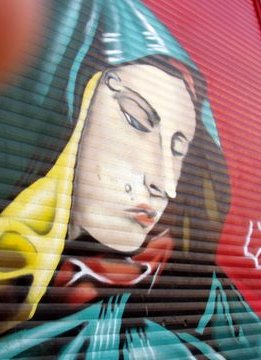
The Visitor (detail from the side of a parked van)
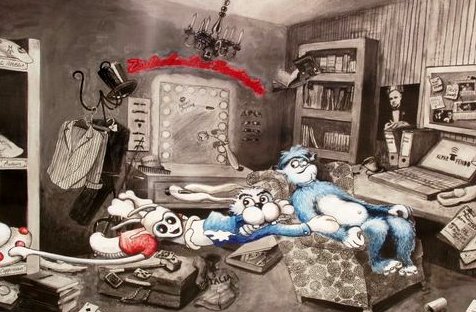
We eventually return full circle and ascend the steps back up to Kottbusser Tor station. Our quest to find Turkish markets, and gain enlightenment from Bowie, Iggy and Blixa has failed. They have all remained spectral and elusive. Our drift has pulled us into another dimension of Kreuzberg. One of canal paths, white swans, mallards, ants, and détourned red bulls. Above all, we have discovered and witnessed something mysterious and new. The red and black insects that we now know as The Firebugs of Kreuzberg.
That’s all from the Berlin holiday. It’ll be back to Fife next. Possibly Cowdenbeath!
Now playing: Kluster – Klopfzeichen
♦ ♦

(1) HAU 2 and The Zodiak Free Arts Lab
I was excited to learn that, after a hiatus of twelve years, Keith Rowe, Oren Ambarchi, Christian Fennesz, Peter Rehberg (Pita) and Pimmon were reconvening their curiously named Afternoon Tea project for one night only in Kreuzberg. It was delightful happenstance to discover that this was happening on one of the nights of our holiday. I headed down to the HAU 2 venue and certainly wasn’t disappointed. One long piece saw this stellar ensemble layer up a set of dark, fractured shards of glitch improv, punctuated with blankets of shimmering serenity. A deep, meditative, all embracing sound. An unfolding. Ambarchi sat almost motionless unleashing his trademark sonic ‘depth charges’. The aural equivalent of watching and feeling a lava lamp. The bass resonance of the note entering through the feet and traveling up and out of the body. It was also good to see Keith Rowe having to play in a much louder and busier sound environment than the last couple of times I’ve encountered him. Fennesz couldn’t help but attempt to excavate and instil some melodic fragments into the proceedings whilst Rehberg and Pimmon intervened with pincer movements of laptop noise assault. All in all a fabulous event to witness and experience in the dark, minimal space of HAU 2.
The happenstance of this event was further enhanced when I later discovered that HAU 2 was actually the original site of the Zodiak Free Arts Lab or Zodiac Club, formed by Conrad Schnitzler, Hans-Joachim Roedelius and Boris Schaak in 1968. Whilst only open for a few months, the Zodiak was a melting pot where “freaks and avant-gardists of all stripes could enjoy live psychedelia, free jazz, free performance and freakout”. (A1). It was a space also directly responsible for the emergence of Kluster (Schnitzler/Roedelius/Moebius) and Tangerine Dream, at that time with Schnitzler and Klaus Schulz in the ranks. This early incarnation of the Tangs is light years away from the vapid new-age pap that they later embraced in the 1980s.
The first few Kluster albums were engineered by a young Conny Plank who brought his experience of working with Edgar Varese to give some shape and coherence to the brutalist improvised chaos of this embryonic kosmische music. With the subsequent exit of Schnitzler and a later name change to Cluster, the sound took on a softer edge and the recording of classic kosmische albums such as Cluster II, Zuckerzeit, Sowiesoso and Cluster & Eno. The Zodiak also hosted performances by, amongst others, Agitation Free, Ash Ra Tempel, Human Being, Peter Brotzmann and Alexander Von Schlippenbach.
I love it when buildings can reveal their embedded memories like this. From a few months activity, the ripples from the epicentre are still being felt.
(A1) Nikolaos Kotsopoulos (Ed), (2009), Krautrock: Cosmic Rock and It’s Legacy, (London: black dog publishing).
It is not down in any map; true places never are.
Herman Melville

I
Out on the fringe of gold
– lip of coastal edge.
Eyeing that breath of line
– flux of sea and sky.
Grounded punctuation
– conical crag of hill.
Arrested flow of time
– phonolitic trachyte.
II
I’m over the cerulean Forth
– tang of brine and caws of gulls.
Walking the high line Out
– to North Berwick Law.
Treading clouds and updraughts
– the whale, reeling me in
Out there, slipping through
– into that void of white.
♦
With a huge thanks to Brian David Stevens for the use of his photographs shot from Kinghorn Beach in Fife. These images are part of Brian’s ongoing Brighter Later project which is a journey around the British Isles looking outward from the coastline to show a different view of the UK. The journey will visit every coastal county in the British Isles. The project is currently being serialised on the Caught By the River website with Fife the most recent entry.
The volcanic plug of solidified lava – North Berwick Law (hill) – is clearly visible in the photographs and I had forgotten about the whale jawbones on the summit which Brian mentions in his text. Staring at the images got me thinking about Kinghorn, volcanic plugs, whales, Herman Melville, Laurie Anderson…
Some people know exactly where
they’re going
The Pilgrims to Mecca
The climbers to the mountaintop
But me I’m looking
For just a single moment
So I can slip through time.
Laurie Anderson, Life on a String. (Including songs from her stage production Songs and Stories From Moby-Dick).
Images © Brian David Steven.
Also check out Brian’s other wonderful photographic work here

◊
This land
these rocks and stones
vessels of deep time
being before
being inscribed
in landscape
before being
named and claimed
as landscape.
This land
a made place
a place made
to build, dwell
settled.
Gone now
gone. Only
ghosts and bocans
sounding
the stones over
peat bog, moss
moor and lichen.
.
Breathe and feel
the chiliastic serenity
of this uncanny land.
◊
I rediscovered this photograph recently which was taken a couple of years ago at Machrie Moor on the Isle of Arran. We were on holiday and I went out at around 6.00am to go for a walk before the family were up. It’s about 2.5km to the stones from the closest road, which is long enough to immerse yourself in the feeling of the place. The photograph is of the main grouping of stones which stand amongst a ritual landscape consisting of seven stone circles, several chambered cairns and hut circles. A highly evocative liminal landscape to wander alone in the thin morning light wrapped in light drizzle. Whilst written at a different time of the day, I cannot better the feeling described by John McArthur in The Antiquities of Arran (1861):
We have never witnessed a wilder and more grandly solemn scene than these old circles on the Mauchrie Moor, looming in shadowy indistinctiveness of an autumn moonlight…as we wandered amongst the old ruins, the weirdly stirring legends of the past haunted our mind, til the wreaths of mist seemed to float about like shadowy phantoms and the circling monoliths and hoary cromlech appeared to rise from the heath, like ghosts of the heroes of old, bending around the grave of their buried chief.
On my way back to the road, I’m reflecting on the tales of local folklore and particularly the stories of the bocans (malign spirits) which are said to inhabit the area. I’m rolling some sheep trintle in my hand – those soft wisps of wool which get snagged on fences or whin. It was as quiet as a remote landscape could be. Only the occasional bird call, a tuft of wind, the soft fizz of drizzle. Amongst all the greens and browns, I’m distracted by an impressive growth of witches butter, that bright yellow, almost golden fungus and head over for a closer look. I’m just about to step over a large tuft of moor grass, when, as is their wont, a pheasant takes wing from almost underneath my foot, squawking like a banshee. As the bird ascends in that awkward, unbalanced, flapping squall a tail feather whirligigs down from the sky which I manage to catch just before it hits the ground.
A gift from the moor dwellers to soothe my pounding heart.

Now playing: Eliane Radigue – Koumé, the third part of Trilogie de la Mort.
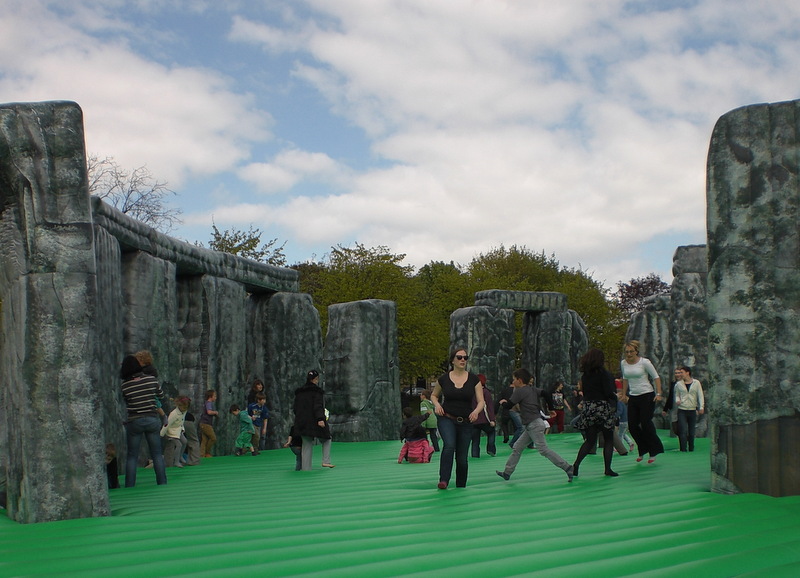
It is futile to search in our theories of architecture or dérive for any other motive than the passion for play.
Guy Debord (1)
As we enter Glasgow Green, my daughter takes aim, like an archer pulling a bowstring and points to the horizon. “There it is!” We both follow the trajectory of the imaginary arrow and gaze over the vast expanse of green common land. From all directions, ant-like threads of people are drifting towards the iconic structure of Stonehenge sitting in the landscape. The lines of people are converging and congregating around the monument and we can hear the distant sounds of carnival. Feeling the totemic pull of the stones, we set off to join them. This is why we have come.
Except this Stonehenge is Jeremy Deller’s ultimate bouncy castle version. An interactive art installation named Sacrilege and part of the Glasgow International Festival of Visual Art. Such is the popularity of Sacrilege, that, on arrival, we are assigned to one of the two holding ‘pens’ which allow up to one hundred people, at a time, to assemble and wait for a fifteen minute ‘interactive experience’ with the exhibit. As we sit in the sunshine, and soak up the celebration taking place amongst the stones, it really is a joy to watch the utter delight on faces as they attempt to run, jump, roll, lie or simply walk. Toddlers are happy to bounce up and down on the spot whilst the older kids are going off like pressure cookers, doing cartwheels, forward rolls, playing tig and body slamming into the iconic henge. Adults are given licence to do pretty much the same if they can keep up. A tribe of teenage goths stick to the perimeter, appearing to be disoriented by the brilliant sunshine and riot of lurid green plastic. Some pilgrims simply take refuge at the base of a stone and observe.

What also contributes to the Sacrilege experience is how the area is completely cleared between pen changeovers. For a short period of time the empty installation is replete with possibility, creating a sense of playful anticipation in the crowd as shoes are kicked off, jerseys discarded and bags are heaped in piles. The good-humoured security crew attempt to enforce their mock authority as they patrol the ‘control zone’ between crowd and structure, yakking into their walkie talkies. An anarchic youngster unable to contain herself, sneaks under the rope and makes a dash for the centre before being retrieved, kicking and screaming, by a slightly embarrassed parent. The heid bummer security guard with the megaphone barks out instructions (“no shoes, heavy bags, human sacrifice”) and the rope is finally dropped with all the ceremony of an Olympic starting gun. It’s a mad, mad rammy to clamber on to the structure and within seconds all ontological baggage is released by the sheer thrill of being and bouncing in the moment. When our turn comes around we (I!) soon find that fifteen minutes of plastic stone hi-jinks is pretty exhausting but exhilarating. We are part of a communal assemblage, literally jumping for joy. Sacrilege indeed.
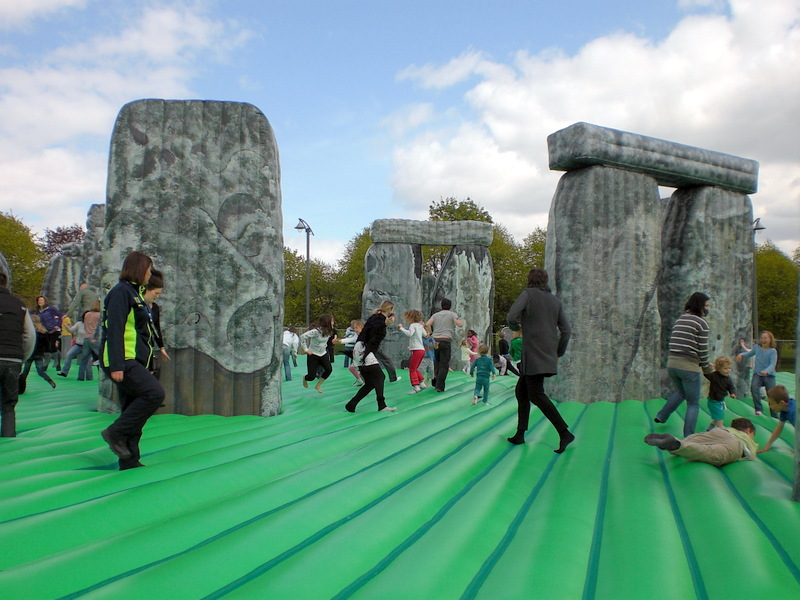
I’m not overly familiar with Deller’s work, but afterwards it struck me that there is a lot more going on with this bouncy castle than at first may appear. I’m reminded of Ralph Rumney and Guy Debord’s attraction to the ludic ideas of Huizinga who proposed that spontaneity, play and festival should be a vital part of daily life and a potentially transformative agent to break free from the ‘stultifying nature of boring, non-ludic life’. Hussey suggests that Huizinga’s arguments had a revolutionary significance for Debord who was intrigued by the suggestion that games or spontaneous play could be experimental forms of new social behaviour. Rumney claims to have introduced Huizinga’s Homo Ludens to Debord which was instrumental in providing him with a vocabulary for thinking about and anticipating ‘the construction of situations’. If nothing else, Deller has certainly constructed a situation. I’m also reminded of Bakhtin’s notion of the carnivalesque whereby the participation in carnival can remove individuals from the social hierarchies of everyday non-carnival life and allow the exercise of normally repressed energies to flower. Perhaps Sacrilege can be viewed as a practice of Situationist détournement. By hi-jacking the iconic image of Stonehenge, and all of its associated cultural baggage, Deller has created a new artwork that celebrates free assembly, mass appeal and the carnivalesque. Perhaps more importantly it is playful, fun, cheeky and joyous. Not terms that would leap to mind should you visit the original Wiltshire version these days. I understand that Sacrilege is now heading to ‘the Olympics’ and it will be interesting to observe whether the Glasgow experience will be ‘allowed’ to translate to a very different cultural space. Will anyone be able to pitch up at will, freely assemble and take part? We shall observe with interest.

And as we join the dehydrated but elated crowd drifting over the green common land to the winter gardens of the People’s Palace, we also take the chance to view the people’s history of Glasgow. A history of grim social conditions and top-down imposed planning failures, leavened with histories of resistance. My daughter is particularly taken with two iconic artefacts from popular culture: Billy Connolly’s banana boots and Alex Harvey’s leather jacket. Two performers, who also know/knew something about invoking the carnivalesque.
So here we are, with freedom
within our sweaty, greedy, grasps.
So remember this, boys and girls,
when freedom comes along…
DON’T pish in the water supply…
Alex Harvey
Now playing: The Sensational Alex Harvey Band – Live
References:
(1) Guy Debord, ‘Architecture and Play’ Potlach no. 20 (May 30, 1955).
(2) Andrew Hussey, (2001), The Game of War: The Life and Death of Guy Debord (London, Jonathan Cape).
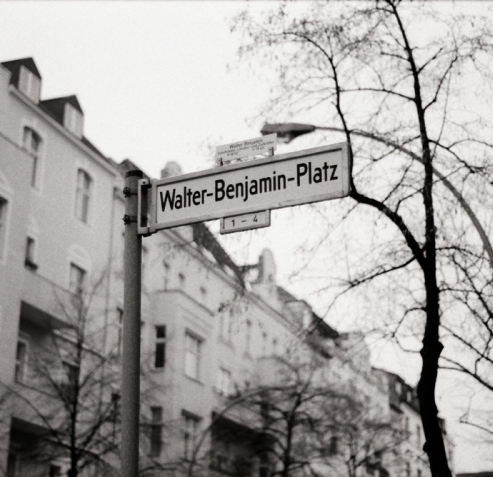
Not to find one’s way around a city does not mean much. But to lose one’s way in a city, as one loses one’s way in a forest, requires some schooling.
Walter Benjamin
awaken
to the spooling thread
of a blackbird’s raga
gravity loosens and
Berlin floats – just a little
just off the Ku’damm
a corporate glass palace
with outdoor aviary
squawks and fireworks of
green and red, caged
and displayed as trophies.
did the birds
of East and West
sing different songs?
can walls ever
constrain the birds?
that moment when
subterranean shackles
are shattered and
the S-Bahn explodes
into light.
drifting back from
the bauhaus-archiv
having just read
of the stormtroopers
arriving on 11th April 1933
the bauhaus is closed
but minds and ideas
continue to expand
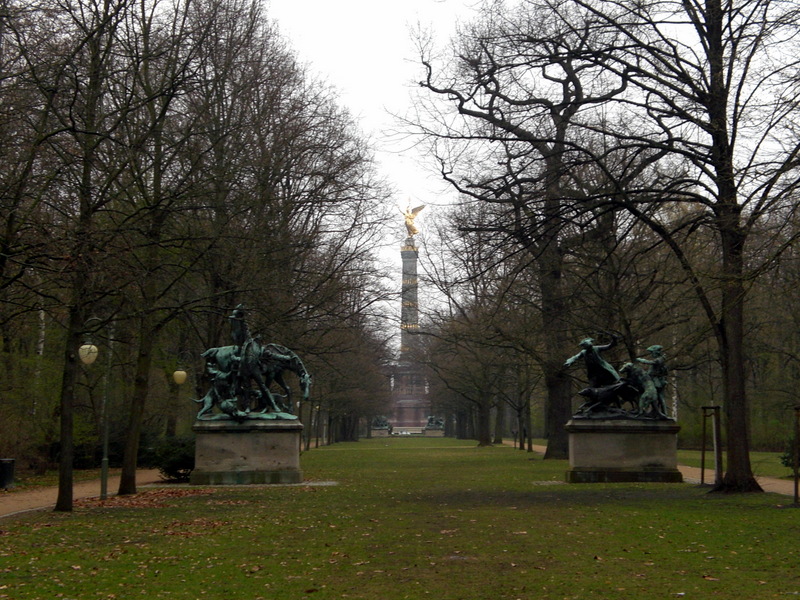

I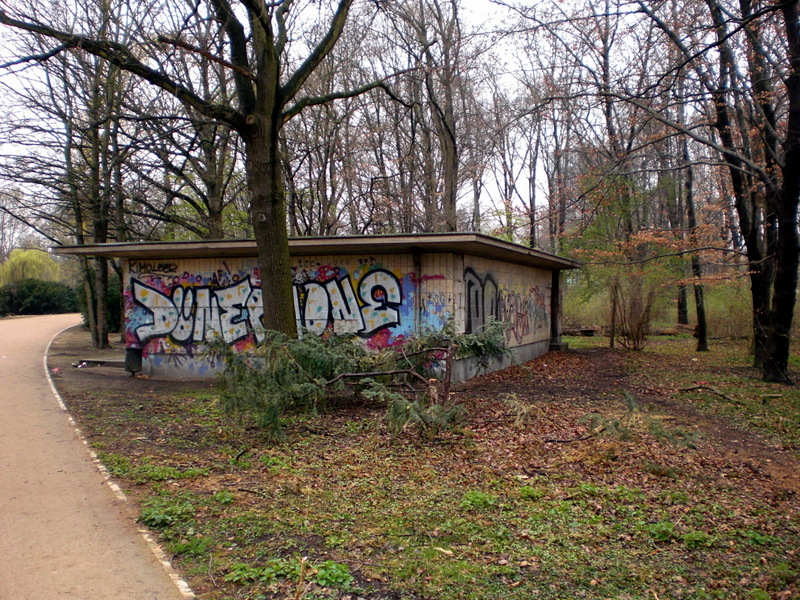
In the old hunting forest
under the gaze of
the golden angel
quiet stillness
mute graffiti bunker
I could be the last
person on earth
II
footprints in
the children’s sandbox
a trace of presence
a presence of absence
III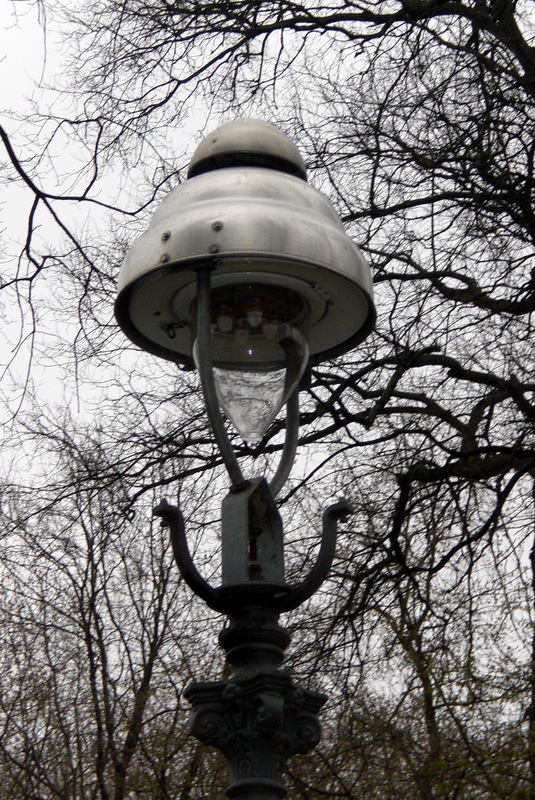
the open-air museum
of street lamps
a chronology of gas
technology and progress
a timeline
illuminating a history
of human darkness.
IV
her skull shattered
and a bullet in the head
Rosa sinks under
the dark water of the
Landwehr canal
her flickering flame
snuffed out
distant sparks kindle…
V
blue stars are pushing through
but today huddle for warmth
blackbirds, finches,
and a leering zoo
hyena for company.
Now playing: Einstürzende Neubauten – Strategies Against Architecture III (1991 – 2001).
(Edit: may not format correctly on a smartphone).
Poor Pegeen Rumney
on the
r—————U—————n Peggy
Guggenheim…………………………………. in………… purrr……………….. s….u…i..t
He
in with Guattari
a fellow patient and former welder
breaks Rumney’s 2CV into
p ie
c
es
to make a sculpure
“Something I thought was rather brilliant. I appreciated that very much” (1)
Reference:
(1). Ralph Rumney, (2002), The Consul, (San Francisco: City Light Books), p. 96.
Now playing: Ambarchi and Brinkmann – The Mortimer Trap*

If I actually make it, no one will know what this journey means.
I’m following a direct imaginary line.
Werner Herzog’s Of Walking in Ice is arguably one of the great texts of existential walking and pilgrimage. A short diary, never intended for publication, all is reduced to the (a)lone figure of Herzog moving through a landscape, trying to cope with a litany of physical discomforts and atrocious weather conditions which write themselves on his body. If psychogeography is an increasingly used, abused, and slippery signifier, it is clearly absent from Herzog’s practice. There are no dérives here. This is walking as an act of resistance against the ultimate inevitability of death and as a process to absorb and internalise the landscape rather than make any attempt to open up and engage with it. This is an immersion into the mind and soul of the “I” pitted against malevolent nature that cares little for humankind.
I set off on the most direct route to Paris, in full faith, believing that she would stay alive if I came on foot. Besides I wanted to be alone with myself.
In November 1974, Herzog received a telephone call from a friend advising him that the  German film critic Lotte Eisner was seriously ill and would ‘probably die’. She was 78 years old. Herzog responds: “I said that this must not be, not at this time, German cinema could not do without her now, we would not permit her death”. As an act of secular faith, he decides to walk from Munich to Paris and strides out on what turns out to be a three-week odyssey. Armed only with a jacket, compass, duffel bag, new boots (!) and some survival money, Herzog sets out from Munich on 23rd November and eventually arrives in Paris on 14th December. Along the way, he endures increasingly intense levels of physical discomfort, shelters from the hostile weather in chapels and farm buildings, breaks into unoccupied houses to sleep and gradually withdraws and tries to avoid any prospect of human contact:
Then snow, snow, rainy snow, snowy rain; I curse Creation. What for? I’m so utterly soaked that I avoid people by crossing sodden meadows, in order to save myself from facing them.
Rain, rain, rain, rain, rain, only rain, I can’t recall anything more. It’s become a steady, even drizzle and the roads become endless.
The soles burn from the red-hot core in the earths interior.
In spite of all the physical ailments that Herzog endures, I find the book strangely uplifting as it is clear that the process of walking is an almost shamanic ritual that allows access to what he has described, in other interviews, as ‘ecstatic truth’. It is as if the repeated act of placing one foot after another gradually opens up the mind to a transcendent dream state where fact and fiction merge and new ideas are born:
Traveling on foot has nothing to do with exercise. I spoke earlier about daydreaming and that I do not dream at nights. Yet when I am walking I fall deep into dreams. I float through fantasies and find myself inside unbelievable stories. I literally walk through whole novels and films, and football matches. I do not even look at where I am stepping, but I never lose my direction.
It is not difficult to imagine how Herzog’s obsessive, driven characters may have been dreamt into being during this process of walking pilgrimage.
In Wanderlust, Rebecca Solnit makes the point that by going on a pilgrimage, one has left behind the complications of one’s place in the world – family, hierarchy, and duty and the pilgrim enters a truly liminal state. A state of being-in-the-world on the cusp of past and future personal identity – a state of possibility. Solnit also reminds us that liminality is derived from the Latin limin, a threshold. As the pilgrim steps over the line, symbolically and physically, s/he is stripped of status and authority, removed from a social structure, maintained and sanctioned by power and force, and levelled to a homogenous state of being with fellow pilgrims through discipline and ordeal. However, if the sacred pilgrim is bound by a sense of comradeship and communion with fellow travellers, there is no such comfort for Herzog and nor is any sought.
Herzog’s existential, shamanic, pilgrimage also reminds me of the great Franco-Scottish poet, 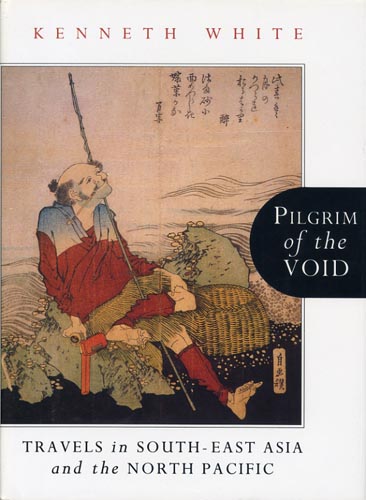 essayist and geopoetician Kenneth White whose work is also centred on walking as a means of ‘opening a world’ and, in particular, establishing a fundamental relationship with planet Earth. White was involved with Alexander Trocchi’s Project Sigma in the 1960s and took part in the Paris évenements of 1968. This lost him his university teaching post which led to him going ‘on a long walk in the Basque Country’. White is inspired by what he calls ‘intellectual nomads’ such as Friedrich Nietzsche, Arthur Rimbaud, Henry Thoreau and Patrick Geddes (all keen walkers) who he views as having wandered from the ‘motorway of Western civilisation’ in order to find new ways of thinking and living. (As an aside Giles Deleuze was one of the panel who judged White’s doctoral thesis on intellectual nomadism). White has undertaken numerous long walks and geopoetic pilgrimages such as his travels in Asia which are collected in the volume Pilgrim of the Void. (the title says it all!) This includes an account of White walking in the footsteps of Basho from Tokyo to Hokkaido:
All alone
with an old crow
in unfamiliar country
which reminds me of one of the rare occasions in Herzog’s book where he achieves some form of solace and communion with the natural world:
A nuthatch was tapping on a tree and I stood there a while, listening to him, as it soothed me.
Off course, as Herzog arrives in Paris, the question has to be asked. What happened to Lotte Eisner? She is tired and weak, but still alive and given that she manages to push a chair over to Herzog, is possibly in better shape than he is:
Someone must have told her on the phone that I had come on foot – I didn’t want to mention it. I was embarrassed and placed my smarting legs up on a second armchair which she pushed over to me. In the embarrassment a thought passed through my head and, since the situation was strange anyway, I told it to her. Together, I said, we shall boil fire and stop fish. Then she looked at me and smiled very delicately, and since she knew that I was someone on foot and therefore unprotected, she understood me. For one splendid, fleeting moment, something mellow flowed through my deadly tired body. I said to her, “Open the window. From these last days onward, I can fly.”
Lotte Eisner lived for another nine years and died in 1983.
Now Playing: Thomas Köner – Permafrost
References:
Paul Cronin, ed, (2003), Herzog on Herzog, (London, Faber & Faber).
Werner Herzog, (1978), Of Walking in Ice, (Delf, Free Association, English translation 2008).
Michael Gardiner, (2006), From Trocchi to Trainspotting, Scottish Critical Theory since 1960 (Edinburgh, Edinburgh University Press).
Rebecca Solnit, (2001) Wanderlust: A History of Walking (London, Verso).
Kenneth White, (1992), Pilgrim of the Void (Edinburgh, Mainstream).

Slightly incongruous to be re-reading Werner Herzog’s Of Walking in Ice whilst we all wallow in the sunshine this week. A bit like walking around with an ice-cube in my pocket as Edinburgh metamorphoses into an outdoor theatre and city life explodes on to the streets. It’s interesting to think about how a hot snap of unseasonal weather can challenge the notion of city design, public space, and it’s usage. Groups and individuals start to congregate freely in the most unlikeliest of spaces under ‘normal weather conditions’. The usual wet and windy expanse of the Usher Hall steps are transformed into a natural amphitheatre, for meeting, eating, drinking, thinking and reading. Any available sun-facing surface is colonised by the intrepid light worshiper including window sills and ledges. People appear to embrace drifting and flaneuring in lunch hours, glad to be moving though the city with no particular purpose. I haven’t really given too much thought about the relationship between weather and city space but when you see such an instant and radical transformation it is hard to ignore.
Now playing: Untitled – Birchville Cat Motel . Bruce Russell.
e

d

g

e          l          a          n          d          s
                        é                                                                       e
d                                   r                                   v
                                                                   i
                 t     r
s                                         a                 a
                                                 v
                                                                           g
                                                                       i


p          i          l          g          r          i          m          a          g          e
Now Playing: Marilyn Crispell – Gaia
 Murdo Eason - From Hill to Sea