Two Spectral Trees – Somewhere North of Devilla Forest

Two Spectral Trees - Somewhere North of Devilla Forest

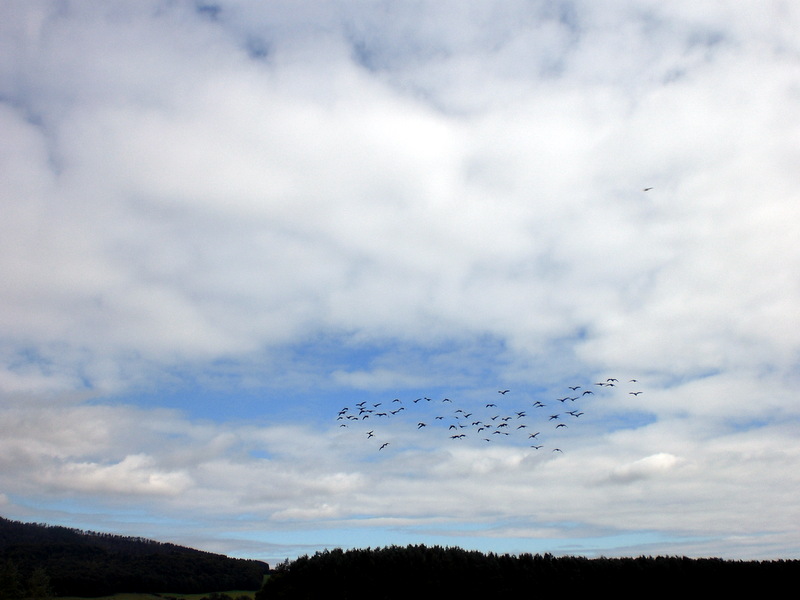
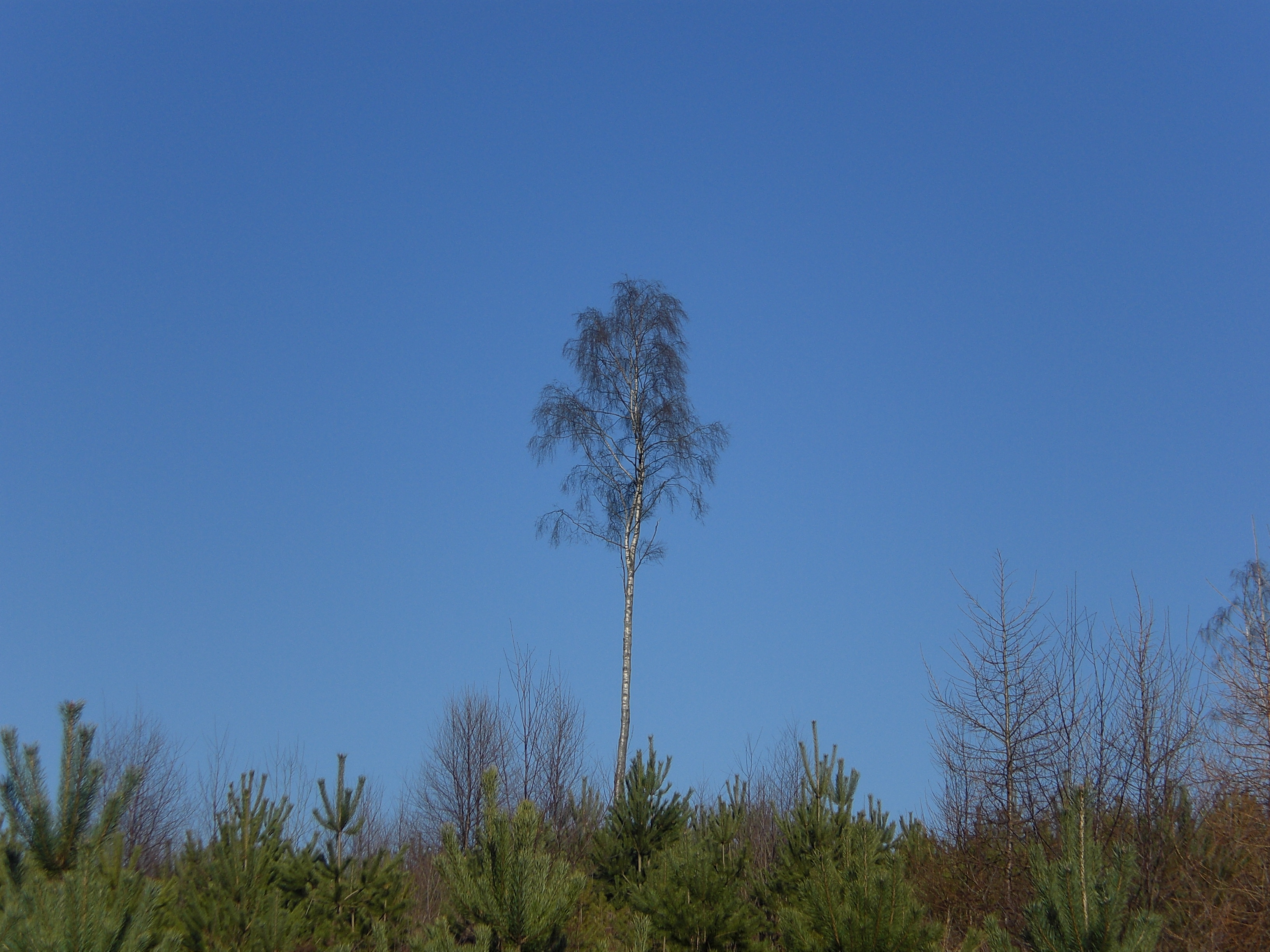
Looking up to the ridge, over the evergreen crowns, two spectral trees hang mid-air in the limpid heat. A  smoke spiral, all coiled movement, settles to stillness as a Rorschach blot of charcoal smudge bleeds into sun saturated blue. The universe melts into my hands. A sublime stasis cupped and held close.

For how long is not the right question – linear time is of no help to us here.

The “caw caw” of a black craw  – pierces the membrane of this no-time. The moment trickles away, dissolves on the ground, scattering the seeds of its eternal recurrence as memory…
CIMG2247

Memory is not an instrument for exploring the past but its theatre. It is the medium of past experience, as the ground is the medium in which dead cities lie interred.

Walter Benjamin

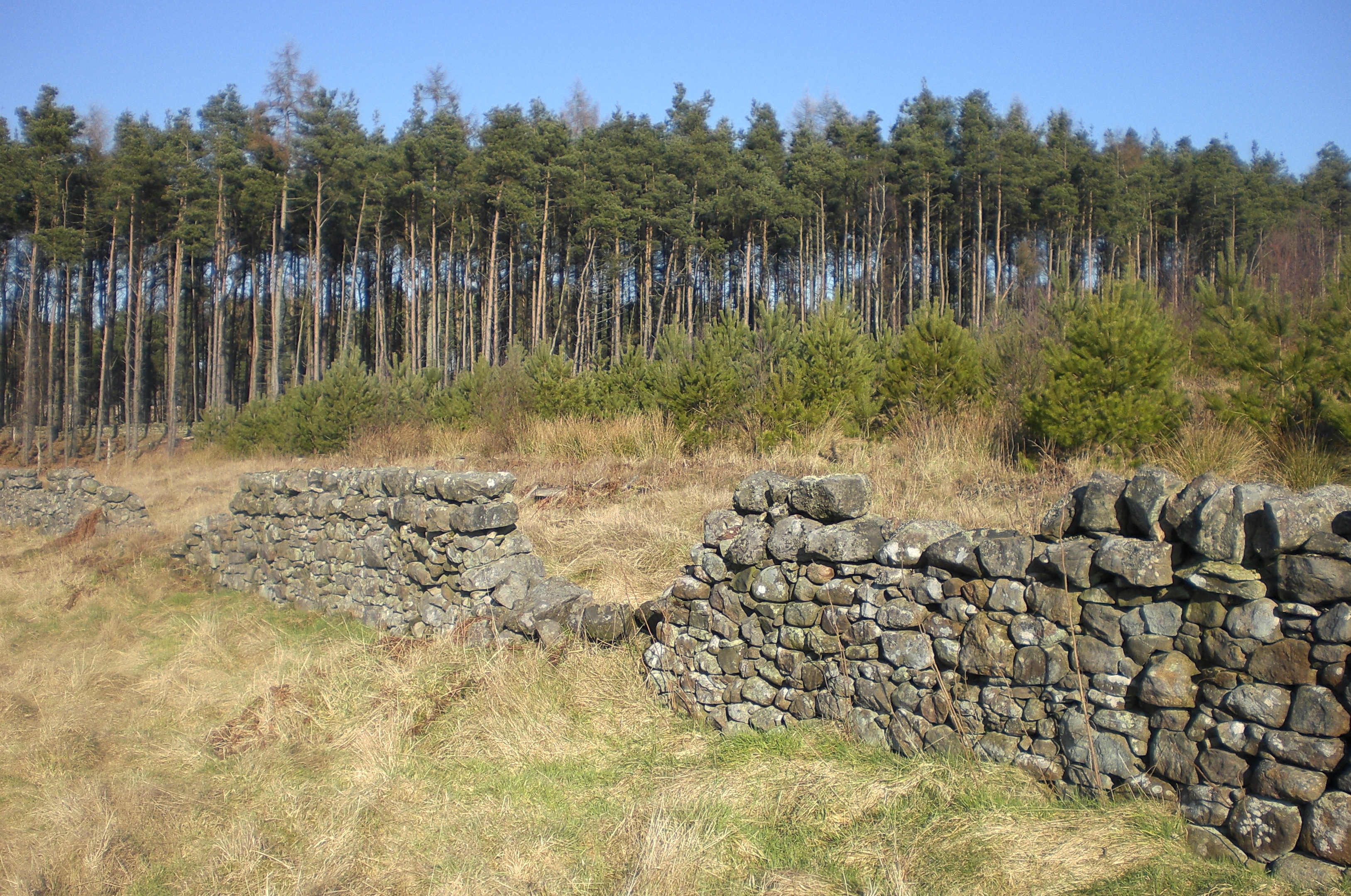
Just a brief extract from what will eventually develop into a longer piece or a series of shorter pieces. We have made a couple of visits to Devilla Forest, near Kincardine, recently and it is clear that it will take us a good few more trips to really get the measure of this place. Our foray into the heart of the forest last week was an exercise in getting hopelessly lost which coupled with the first intimation of Spring was no bad result.  The overhead sky, was a cloudless colour field of bleached blue and once the sun was up it felt like the last of the winter murk was being cleansed away.  We eventually ended up North of the forest climbing up to a ridge above the tree tops. Here we found the spectral trees and a curious weather mast amongst crumbling drystane dykes.

Mast I

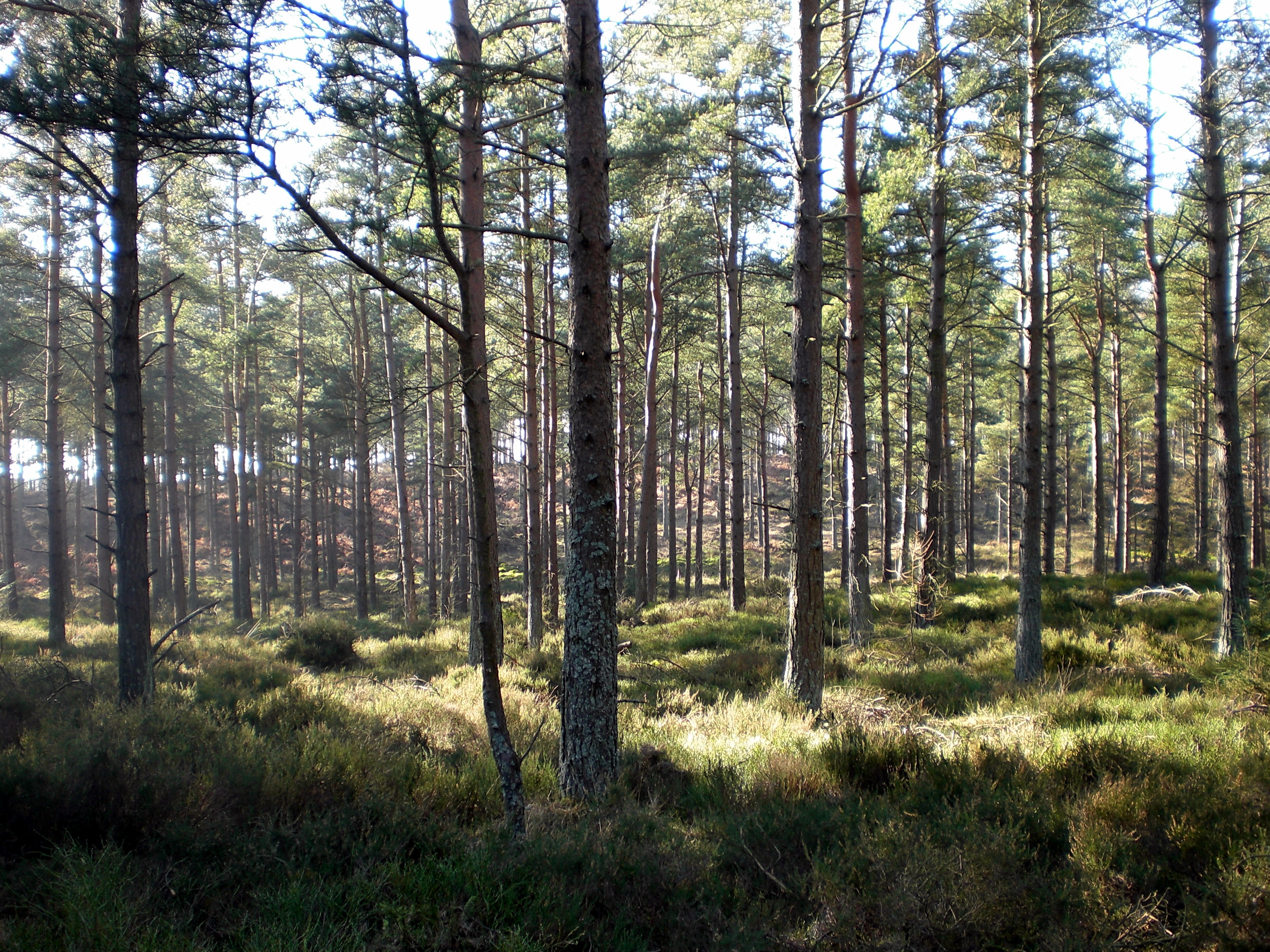
Drystane dykesScot's Pine - Devilla Forest - You Could Feel the SkyDevilla Forest is located just North East of Kincardine and the name is said to come from the Gaelic “dubh” and “eilean” meaning “black island”. The forest is now run as a commercial tree plantation by the Forestry Commission and consists mainly of Scots Pine, Norway Spruce and Larch. However, the area has a long history of land use with Prehistoric coffins, stone circles and Roman urns all found in different parts of the forest.
Devilla Forest

There are also plague graves, a stone which a local legend says is marked by the grooves from a witches apron string and the remains of a World War II explosives research establishment within the forest area. Combine all of that with four lochs/ponds, burns, meadowland and rich wildlife – including red squirrels – and it’s easy to see why this site should we worthy of further investigation.

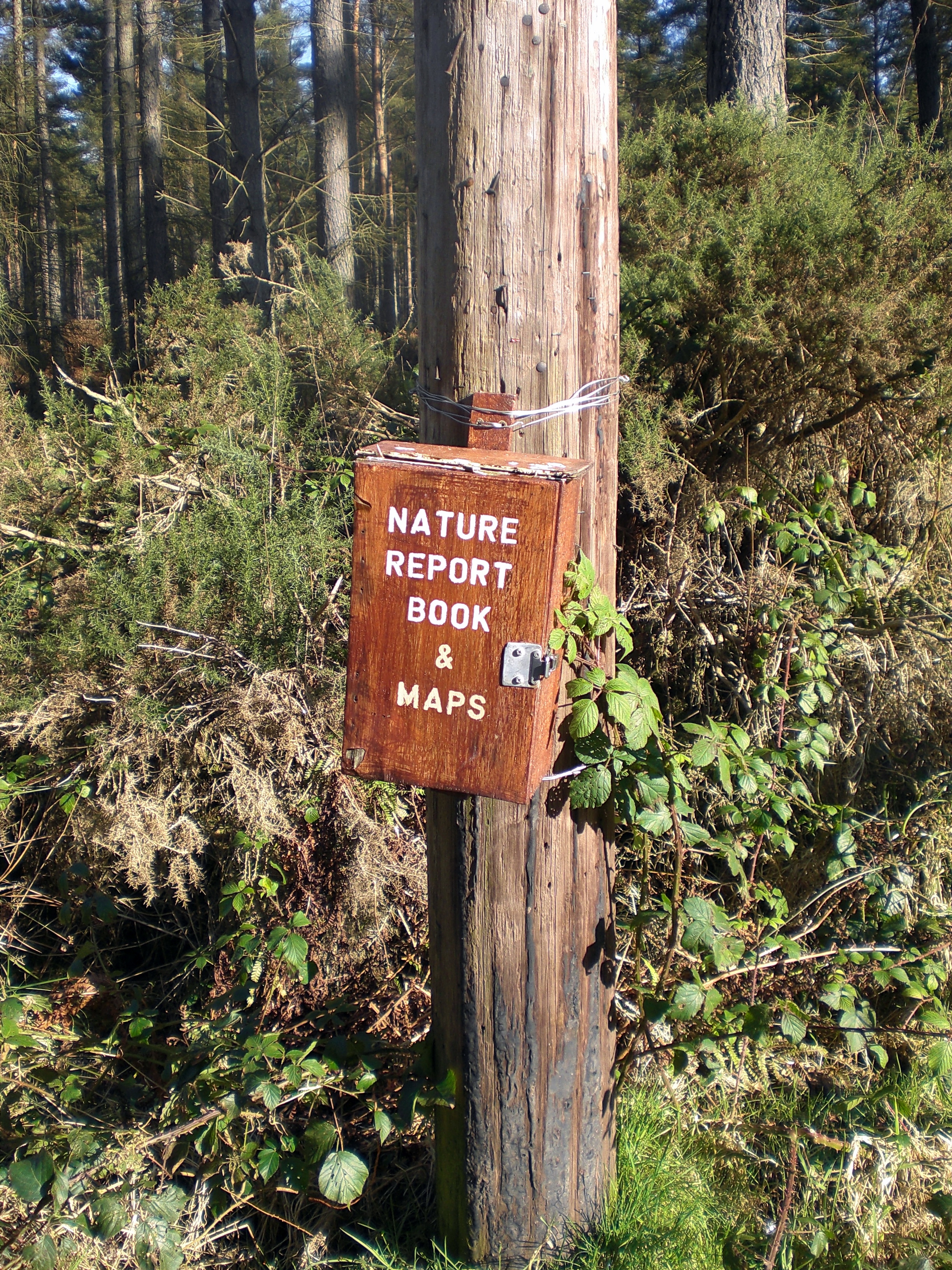
Oh and there is also a history of Big Black Cat sightings. We may have the chance to record one ourselves in The Nature Report Book.
CIMG2238

Unfortunately there were no maps:

CIMG2239-001

“I hunt among stones” – Charles Olson.

Prior to last week, we had made one previous brief visit to the forest on 23rd February. This date coincided with Terminalia, the ancient Roman Festival in honour of the god Terminus who presided over boundaries. Often his statue was merely a post or stone stuck in the ground to mark the boundaries between land.  Aware that some psychogeographers throughout the country were commemorating Terminalia in some fashion, it was perhaps a serendipitous discovery to find some wonderful local examples in the forest:

Meith Stone This is a Meith Stone which has the St Andrews Cross carved in the top. The stones were used to mark land boundaries and sometimes initials were inscribed on each side of the stone denoting land ownership. Apparently five stones have been found along what would have been the old drove road between Kincardine and Culross.

Standard StaneThis enigmatic looking stone is known locally as The Standard Stone, which according to local legend marks the spot where a Danish Army defeated Duncan and his generals Macbeth and Banquo in The Battle of Bordie Moor. (1038). The stone could also have been where the Scots army placed their battle standards, but is more likely to be the base of a medieval stone cross on a parish boundary or a wooden gallows.

From our initial couple of visits, we can feel that Devilla is going to yield up some interesting discoveries if we can manage to avoid getting lost next time.  Then again that may be no bad thing.

The Owl is awaiting our return.

CIMG2016

CIMG2260

Now Playing: Boards of Canada – ‘You Could Feel the Sky’ from Geogaddi.

Through fence and over field, to beyond the hem of trees.
through fence

and over field – to

beyond the hem

of trees.

Thanks to all who have taken time to read any of the postings this year. It has been much appreciated and a delight to interact with so many creative and interesting folk. Whether you chose to celebrate, or not, best wishes to all for a peaceful and enjoyable week and onwards to new openings and possibilities for Year 2013.

And just having a look at what Henry David Thoreau was writing in his journal on 24th December 1841:

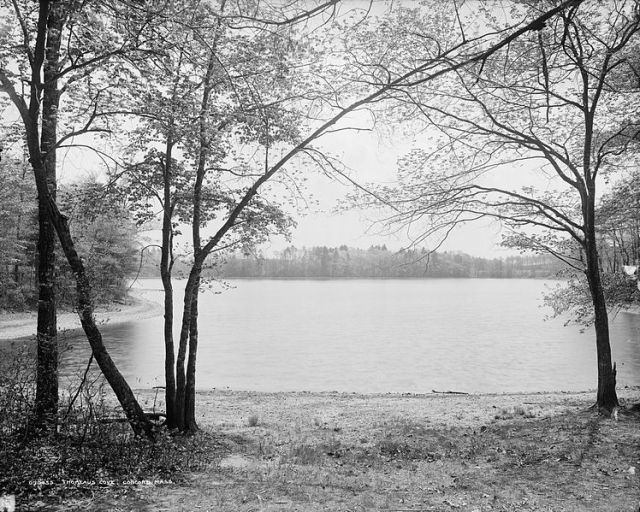
I want to go soon and live away by the pond, where I shall hear only the wind whispering among the reeds. It will be success if I shall have left myself behind. But my friends ask what I will do when I get there. Will it not be employment enough to watch the progress of the seasons?

http://commons.wikimedia.org/wiki/File:Walden_Pond.jpg
Walden Pond

Now playing: Jan Bang, Erik Honoré – Uncommon Deities. (With David Sylvian, Sidsel Endresen, Arve Henriksen, John Tilbury & Philip Jeck).

Reference:

The Journal, 1837-1861 by Henry David Thoreau; preface by John R. Stilgoe, edited by Damion Searls (New York: New York Review Books classics, 2009).

The Woods and the Words

The stories are still told

of a time before the water.

When the earth lay heaped,

black and smouldering.

It is said that they tunnelled

u

n

d

e

                                      g          r          o          u          n          d

for black diamonds

to burn for warmth.

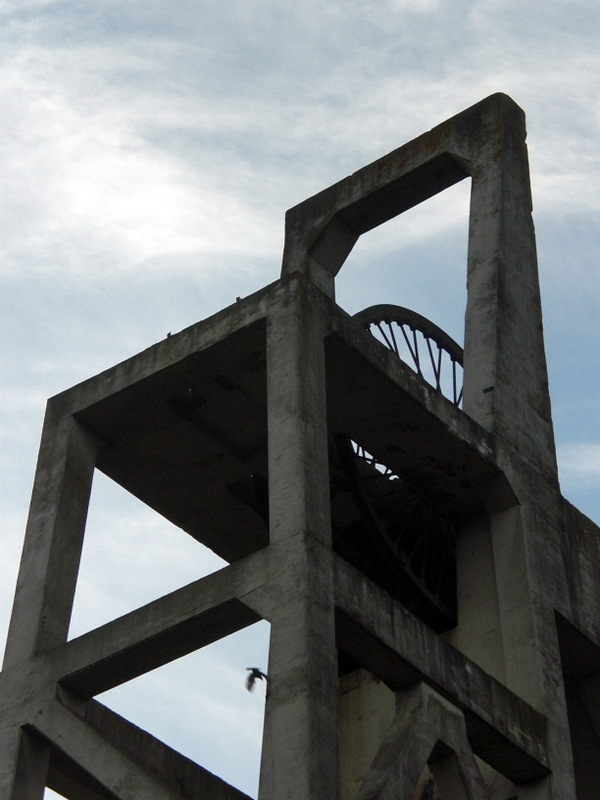
A structure survived

the darkest of

the dark days –

although, now, no one

is quite sure

what it was used for

Now.

now to simply be

amongst our co-dwellers

in this healing place.

If you remain still

for long enough

they become curious

and congregate,

silently swaying

with the wind.

A few season-cycles ago

the visitors started to return.

We listen for their arrival

always the calling first.

despite

bluebell

all that happened

stitchwort

the woods and the words

wild hyacinth

at least

oak

some of the words

hazel

and some of the woods

dog mercury

survive

And the thin

bleached light

of a pale sun

continues to shine

on  the white tree

of Harran Hill Wood.

♦                    ♦

This little field trip, possibly sent from another point in time (?), was inspired by frequent visits to a favorite place in Central Fife: Lochore Meadows or The Meedies as it is known locally.

The Meedies opened as a Country Park in 1976 following one of the largest and most ambitious industrial landscape renovation projects in Europe. This included the reclamation of 600ha of heavily contaminated land comprising six redundant coal mine sites, colliery buildings, mineral railways, refuse tipping, areas of subsidence and the towering pit bings (most of them burning) which rose to 60m over the surrounding countryside and settlements.

The Meedies is now a major centre for outdoor and environmental education with Loch Ore the largest area of standing water in Fife. It is an important habitat for wildfowl with significant numbers both over-wintering and breeding.  Otters, bats, water voles and even ospreys have been recorded within the park boundary. The acid grasslands of Clune Craig are botanically rich and also bear traces of hut-circles and enclosures from a Bronze age settlement.

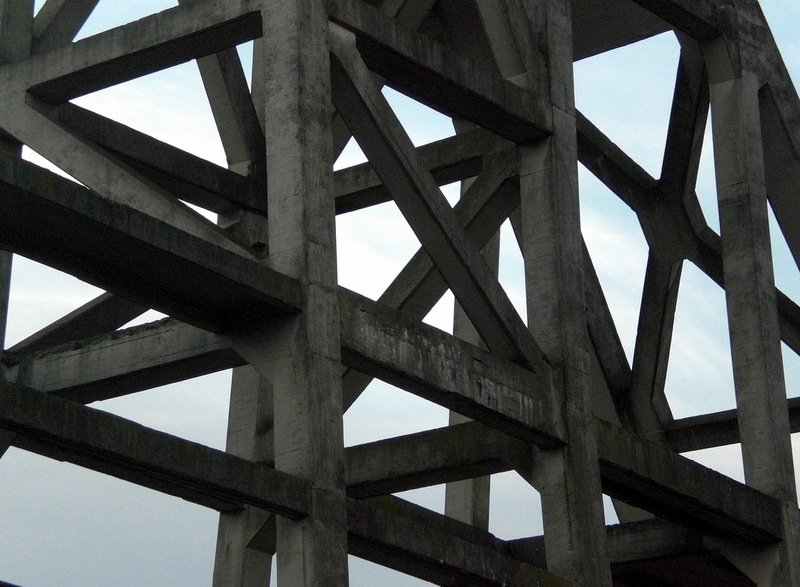
The ‘structure’ in the photographs above is the reinforced concrete headframe of the ‘Big Mary’ No. 2 pit shaft, sunk in 1923.  It is one of only two such surviving structures in Fife and a monument to the Kingdom’s mining heritage. (The other is The Frances in Dysart). You can gain some impression of how the area looked when mining was in operation from this photograph:

The pit head is in the distance and the smouldering pit bings in the foreground. This photograph is from the fabulous web resource on the Fife Pits by Michael Martin which can be accessed here.

The original Loch Ore was drained in the 1790s when the landowner, Captain Parks, attempted to reclaim the land for cattle grazing. The project was a commercial failure and the land formerly occupied by the loch remained boggy. Parks was declared bankrupt in 1798. The loch gradually returned in the mid 20th century, when coal mining flourished and the mineral railway serving the pithead became an embankment surrounded by water. The return of the loch was mainly due to subsidence caused by mining, and the ‘new’ loch now occupies a different footprint to the original. The loch is now stabilised but its depth still fluctuates. The islands in the loch are the remains of the former railway embankment.

To the north west lies Harran Hill Wood which sits on a rocky ledge between Loch Ore and Benarty Hill.  Botanical studies indicate a strong possibility that this site may have been wooded since shortly after the last Ice Age c. 10,000 years ago.

Whilst writing this, I’m listening to a composed piece called After The Rain by Barry Guy, perhaps better known as a free improviser.  I don’t think I had ever read the sleeve notes before but was intrigued to learn that it was partly inspired by the Max Ernst painting Europe After the Rain. As Guy says in the sleeve notes:

“The canvas portrays four large masses of tortuous baroque-like remains as if left after some unfathomable catastrophe…these images invite the viewer to speculate on the nature of the events. Here in Europe After the Rain could be the apotheosis of anxiety and destruction or the emergence of new life from the ruins. I am drawn to the latter…”

Now Playing: Barry Guy and City of London Sinfonia – After the Rain

Reference:

Fife Council Lochore Meadows Country Park Development Plan, November 2008.

Michael Martin, Fife Pits and Memorial Book, http://www.users.zetnet.co.uk/mmartin/fifepits/

Miles K Oglethorpe, (2006), Scottish Collieries: An Inventory of the Scottish Coal Industry in the Nationalised Era (Edinburgh, The Royal Commission on the Ancient and Historical Monuments of Scotland).

On experiencing a live performance of Morton Feldman’s Coptic Light

At the Edinburgh International Festival. Saturday 1st September, 2012.

Royal Scottish National Orchestra conducted by David Robertson.

Coptic tunic ornament

A sounded weave ‘pedals’
on spectral slubs of
small differences.

Time’s flow, slows, to stasis
a colour field revealed,
in asymmetries of warp and weft.

There is no horizon here – only
a fullness of field, the patterning
of an essence, stretched
into aura.

All around is sound

All here is light.

Sabine Shawl, 6AD in The Louvre Paris

Coptic Light (1985) is a late work by Morton Feldman which was first performed by the New York Philharmonic, in 1986, just a year before he died.  In many ways, Coptic Light is an atypical late-Feldman piece, lasting just under thirty minutes. His major compositions from 1977 onwards had been exploring longer – and some would say extreme – duration with the vast sonic canvases of For Christian Wolff (1986) at around three hours; For Philip Guston (1984) lasting over four hours and String Quartet No. 2 (1983) clocking in at up to six hours.

In Give My Regards to Eighth Street (2000), Feldman reveals some of his inspirations for Coptic Light.  Commenting on an earlier composition, Crippled Symmetry, (1983) Feldman notes how his growing interest in Middle Eastern rugs had made him question what is symmetrical and what is not. In particular, he noticed the great variations in shades of colour in the rugs, as a result of the yarn having been dyed in small quantities. Similarly, the mirror image and patterns in many of these rugs was characterised by small variations and less concern with the exact accuracy of replication. This prompted Feldman to think of a disproportionate symmetry in repeating patterns – “a conscious attempt at formalizing a disorientation of memory”.

Writing about Coptic Light, Feldman expresses his “avid interest in all varieties of arcane weaving of the Middle East” and in particular the stunning examples of early Coptic textiles on permanent display in The Louvre. What struck Feldman about these fragments of coloured cloth was “how they conveyed an essential atmosphere of their civilization”. Applying this idea to his music, he asked himself what aspects of music, since Monteverdi, might determine its atmosphere if heard two thousand years from now.

An important technical aspect of the composition was prompted by Sibelius’s observation that the orchestra differs from the piano in that it has no pedal. Feldman therefore set out to create an ‘orchestral pedal’ continually varying in nuance. This chiaroscuro is both the compositional and instrumental focus of Coptic Light.

In this particular concert, Coptic Light was performed alongside Charles Ives’s The Unanswered Question, (1906), which was perhaps the perfect choice. Two great American explorers, of the sonic landscape, bookending the 20th Century. Ives’s own subtitle for The Unanswered Question was ‘A Cosmic Landscape’.  As the plaintive trumpet intones and repeats ‘The Perennial Question of Existence’,  The Question remains Unanswered and eventually all fades to silence.

Now Playing: Morton Feldman – Coptic Light. New World Symphony Orchestra conducted by Michael Tilson Thomas

Reference:

Give My Regards to Eighth Street: Collected Writings of Morton Feldman, edited and with an introduction by B.H. Friedman, afterword by Frank O’Hara (Boston: Exact Change, 2000).

4’33” on a train – John Cage Centennial, 5th September 2012

(c) Edition Peters

Our modest contribution to the John Cage centennial celebrations. On 5th September 2012, we decided to undertake a performance of 4’33″on the train from Falkirk High to Glasgow Queen Street. Raising and lowering the seat tray served to mark the three movements. During our ‘silent’ performance this is what we heard:

Low bass throb

                                              – of train thrum.

occasional>>>>>stabs

                                              – of pitched track squeal.


a sigh

a cough

a sneeze.

earphones fizzzzz and

crisps crunch.


fingers tap on digital screens

as turning pages            – fan

distant carriage whispers.


The shuddering recoil – from

                                                     – the slap of a passing train

all sound and silence cocooned

                                                    – underneath a bridge.

Out in the landscape

– an imagined Williams Mix:

Doppler-shifted siren,

birdsong and turbine whirr.


a ratttttttttttttling window

“tickets please”

tacet

the seat tray creaks.

Happy 100th birthday John Cage. In another place you are walking around Walden Pond with Henry Thoreau looking for mushrooms.

http://johncage.org/2012/

Now Playing: John Cage and David Tudor – Rainforest II / Mureau – A Simultaneous Performance (Part I)

T h r e s h o l d

trying

to catch

a thread

of time

when

theincomingtide

becomes

the o u  t   g    o     i      n       g        t         i          d           e

listening

ebb

listening for

flow

an inflexion

ebb

of breath

flow

inhalation

ebb

becoming

flow

exhalation

flow

exhalation

ebb

becoming

flow

inhalation

ebb

at the river

still standing

grounded

still standing grounded

at the river, still standing grounded  –  but different

Now playing: The Necks – Silverwater

On the edge and further out: to slip through time

It is not down in any map; true places never are.

Herman Melville

Fife - from Brighter Later by Brian David Stevens

I

Out on the fringe of gold

                        – lip of coastal edge.

Eyeing that breath of line

                       – flux of sea and sky.

Grounded punctuation

                       – conical crag of hill.

Arrested flow of time

                       – phonolitic trachyte.

II

I’m over the cerulean Forth

                        – tang of brine and caws of gulls.

Walking the high line     Out

                        – to North Berwick Law.

Treading clouds and updraughts

                       –  the whale, reeling me in

Out there,                     slipping through

                       –  into that void of white.

With a huge thanks to Brian David Stevens for the use of his photographs shot from Kinghorn Beach in Fife. These images are part of Brian’s ongoing Brighter Later project which is a journey around the British Isles looking outward from the coastline to show a different view of the UK.  The journey will visit every coastal county in the British Isles. The project is currently being serialised on the Caught By the River website with Fife the most recent entry.

The volcanic plug of solidified lava – North Berwick Law (hill) – is clearly visible in the photographs and I had forgotten about the whale jawbones on the summit which Brian mentions in his text.  Staring at the images got me thinking about Kinghorn, volcanic plugs, whales, Herman Melville, Laurie Anderson…

Some people know exactly where
they’re going
The Pilgrims to Mecca
The climbers to the mountaintop
But me I’m looking
For just a single moment
So I can slip through time.

Laurie Anderson, Life on a String. (Including songs from her stage production Songs and Stories From Moby-Dick).

Images © Brian David Steven.

Also check out Brian’s other wonderful photographic work here

This Land…

Machrie Moor Arran

This land

these      rocks and stones

vessels of deep time

being                 before

being inscribed

in landscape

before      being

named and claimed

as landscape.

This land

a made place

a place             made

to build, dwell

settled.

Gone now

gone.          Only

ghosts and bocans

sounding

the stones      over

peat bog, moss

moor and lichen.

.

Breathe and feel

the chiliastic serenity

of this uncanny land.

I rediscovered this photograph recently which was taken a couple of years ago at Machrie Moor on the Isle of Arran.  We were on holiday and I went out at around 6.00am to go for a walk before the family were up.  It’s about 2.5km to the stones from the closest road, which is long enough to immerse yourself in the feeling of the place.  The photograph is of the main grouping of stones which stand amongst a ritual landscape consisting of seven stone circles, several chambered cairns and hut circles.  A highly evocative liminal landscape to wander alone in the thin morning light wrapped in light drizzle. Whilst written at a different time of the day, I cannot better the feeling described by John McArthur in The Antiquities of Arran (1861):

We have never witnessed a wilder and more grandly solemn scene than these old circles on the Mauchrie Moor, looming in shadowy indistinctiveness of an autumn moonlight…as we wandered amongst the old ruins, the weirdly stirring legends of the past haunted our mind, til the wreaths of mist seemed to float about like shadowy phantoms and the circling monoliths and hoary cromlech appeared to rise from the heath, like ghosts of the heroes of old, bending around the grave of their buried chief.

On my way back to the road, I’m reflecting on  the tales of local folklore and particularly the stories of the bocans (malign spirits) which are said to inhabit the area.  I’m rolling some sheep trintle in my hand  – those soft wisps of wool which get snagged on fences or whin.  It was as quiet as a remote landscape could be. Only the occasional bird call, a tuft of wind, the soft fizz of drizzle. Amongst all the greens and browns, I’m distracted by an impressive growth of witches butter, that bright yellow, almost golden fungus and head over for a closer look.  I’m just about to step over a large tuft of moor grass, when, as is their wont, a pheasant takes wing from almost underneath my foot, squawking like a banshee.   As the bird ascends in that awkward, unbalanced, flapping squall a tail feather whirligigs down from the sky which I manage to catch just before it hits the ground.

A gift from the moor dwellers to soothe my pounding heart.

Pheasant Feather/Sheep Trintle Cloud

Now playing: Eliane Radigue – Koumé, the third part of Trilogie de la Mort.

Berlin dérive – Tiergarten

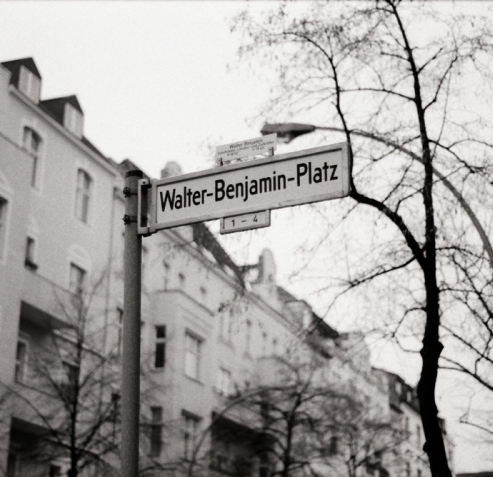
Walter Benjamin Platz - sign

Not to find one’s way around a city does not mean much. But to lose one’s way in a city, as one loses one’s way in a forest, requires some schooling.

Walter Benjamin

awaken
to the spooling thread
of a blackbird’s raga
gravity loosens and
Berlin floats – just a little

just off the Ku’damm
a corporate glass palace
with outdoor aviary
squawks and fireworks of
green and red, caged
and displayed as trophies.

did the birds
of East and West
sing different songs?
can walls ever
constrain the birds?

that moment when
subterranean shackles
are shattered and
the S-Bahn explodes
into light.

drifting back from
the bauhaus-archiv
having just read
of the stormtroopers
arriving on 11th April 1933

the bauhaus is closed
but minds and ideas
continue to expand

Tiergarten

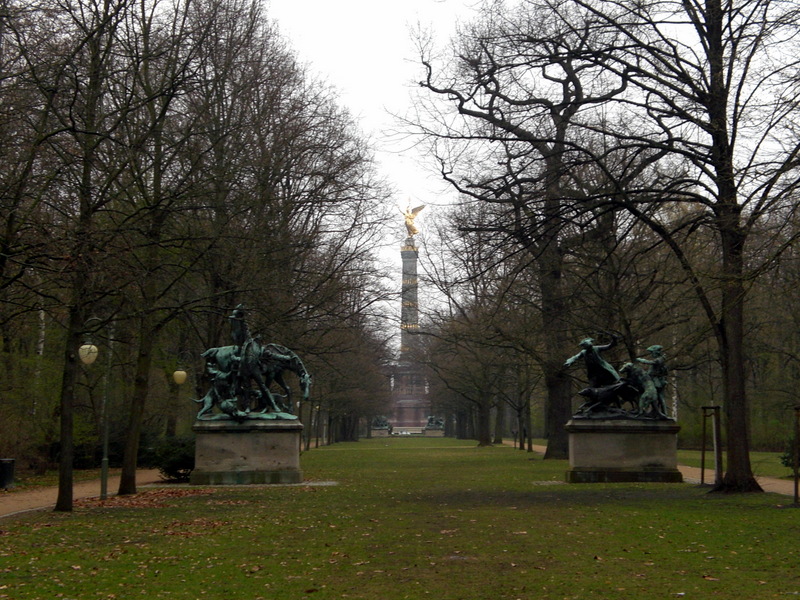
Under the gaze of the golden angel

Golden Else

ANY CHARACTER HERE

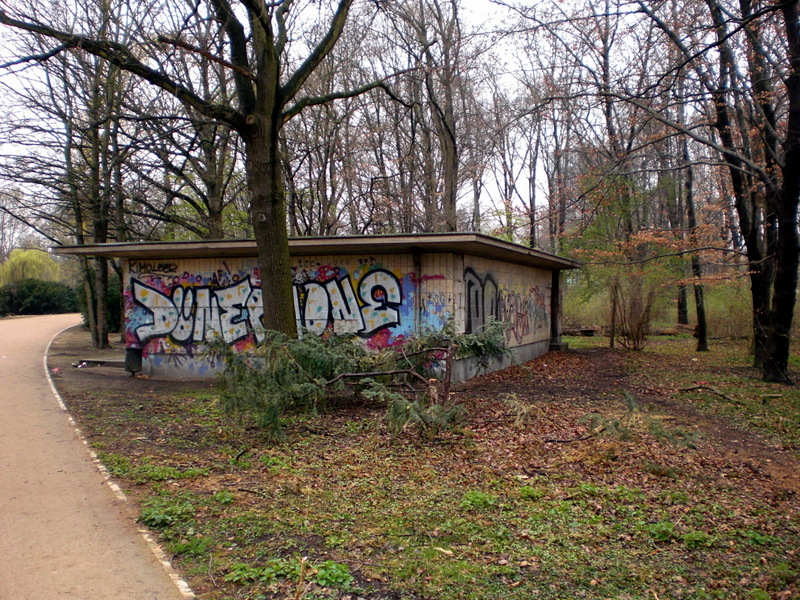
IGraffiti Bunker

In the old hunting forest
under the gaze of
the golden angel
quiet stillness
mute graffiti bunker

I could be the last
person on earth

II

footprints in
the children’s sandbox
a trace of presence
a presence of absence

IIIIlluminating the darkness

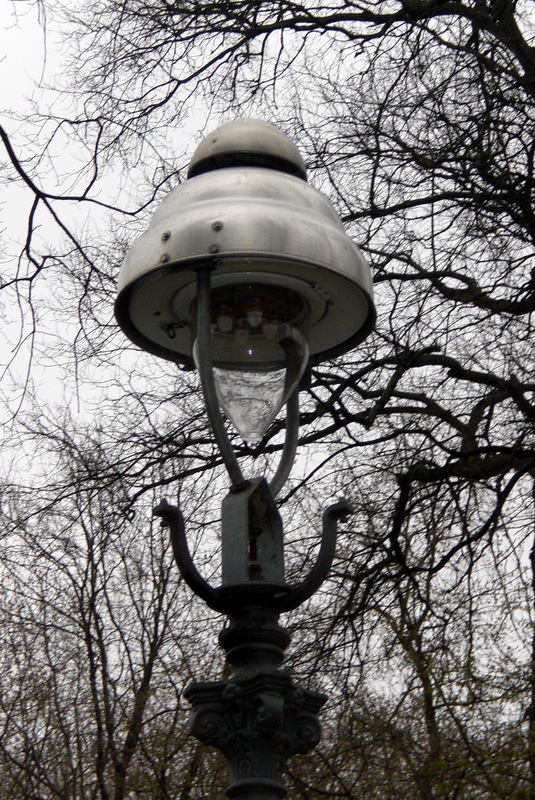
the open-air museum
of street lamps

a chronology of gas
technology and progress

a timeline

illuminating a history
of human darkness.

ANY CHARACTER HERE

IV

her skull shatteredRosa Luxemburg
and a bullet in the head
Rosa sinks under
the dark water of the
Landwehr canal
her flickering flame
snuffed out

distant sparks kindle…

ANY CHARACTER HERE

VChionodoxa

blue stars are pushing through
but today huddle for warmth

blackbirds, finches,
and a leering zoo
hyena for company.

ANY CHARACTER HERE

Now playing: Einstürzende Neubauten  – Strategies Against Architecture III (1991 – 2001).