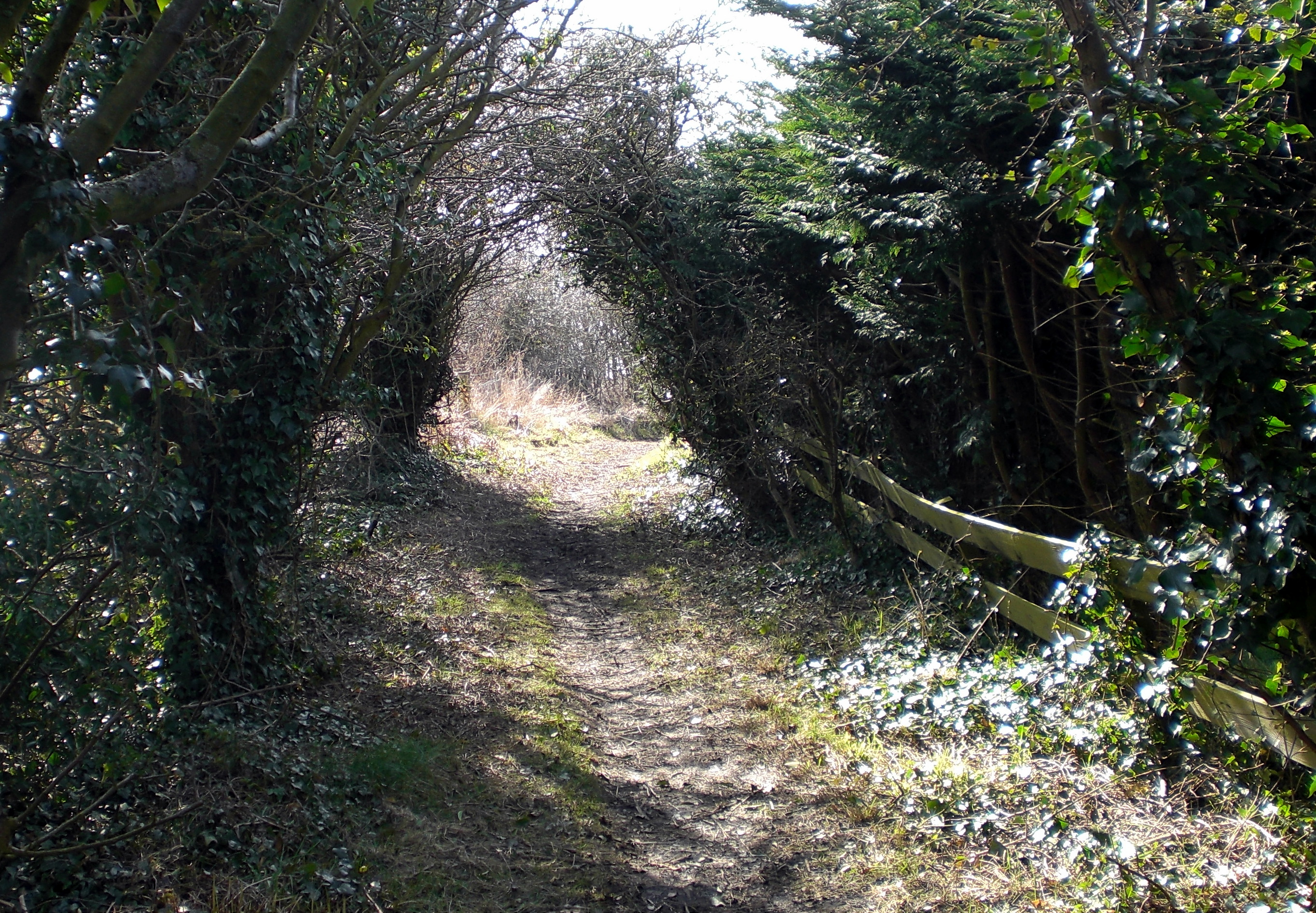
We approach the village from the North by the coffin road known as Windylaw. A sign indicates that this path was used for many centuries by people to carry their dead to Rosyth Church. Sometimes they would come from as far away as Dunfermline.
…
The ground is sodden underfoot and standing still you can feel the ticklish trickle of rivulets, running around your boots off the slight incline. This is the first day of reasonable weather for weeks and it feels good to stand under the mottled blue canopy and listen to the murmur of the flowing field.
L
i
s
t
e
n
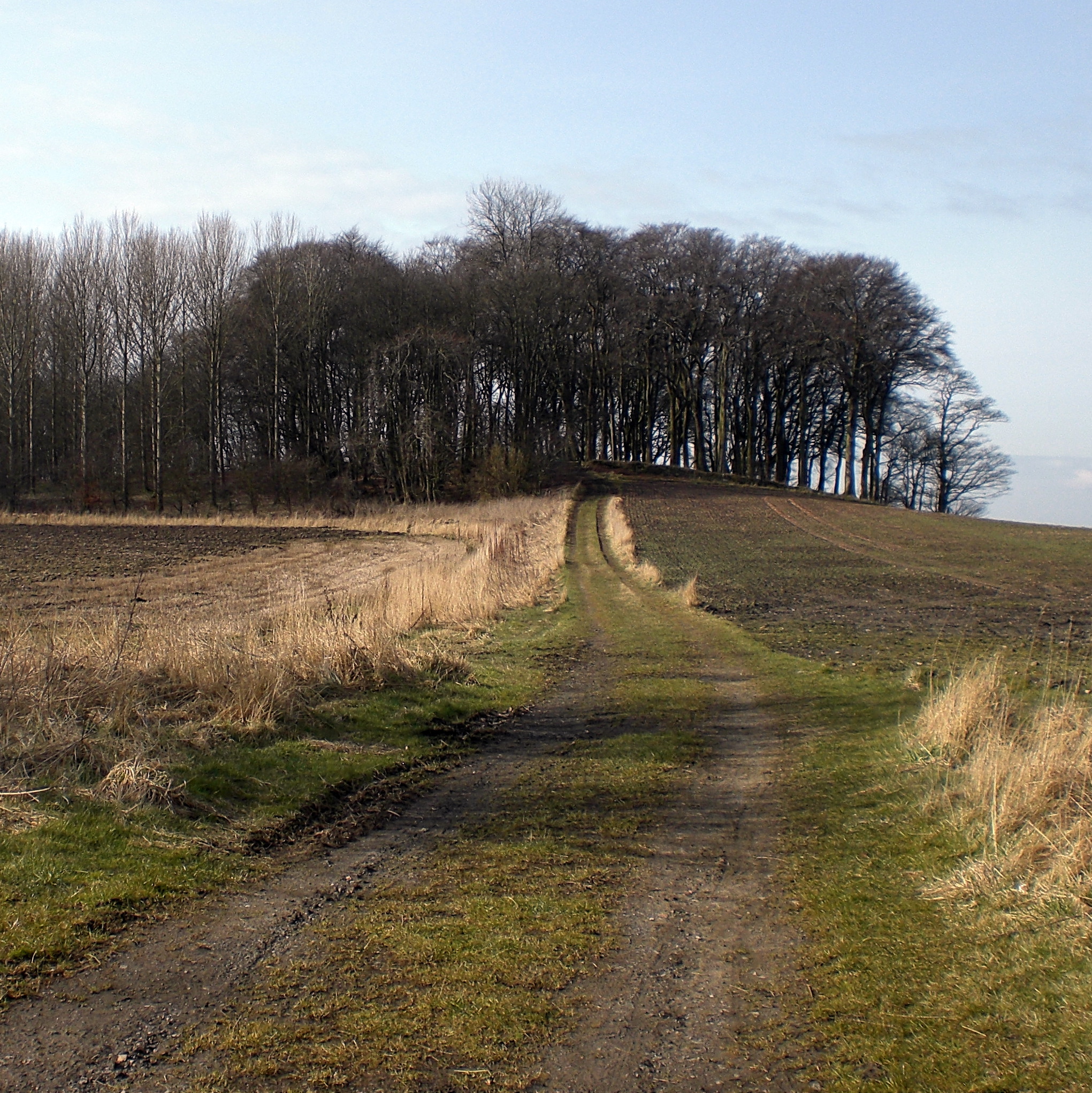
Windylaw meanders up towards a small copse of trees. We are greeted by the guardian of the forest, a snuffling, wood-hedgehog type apparition which looks like it could have come straight out of Pogles Wood.
A woodpecker industriously loops its rrrrrat-a-tat-tat rhythm but remains unseen. We stand still and stare but there is no dart of kinetic red against gray bark. Instead, one particular tree conjures up a Medusa like quality. The branches appear to move, twisting and writhing like a cauldron of snakes.
Windylaw meanders through the trees and we walk alongside all of the ghosts who have tramped this path over centuries.
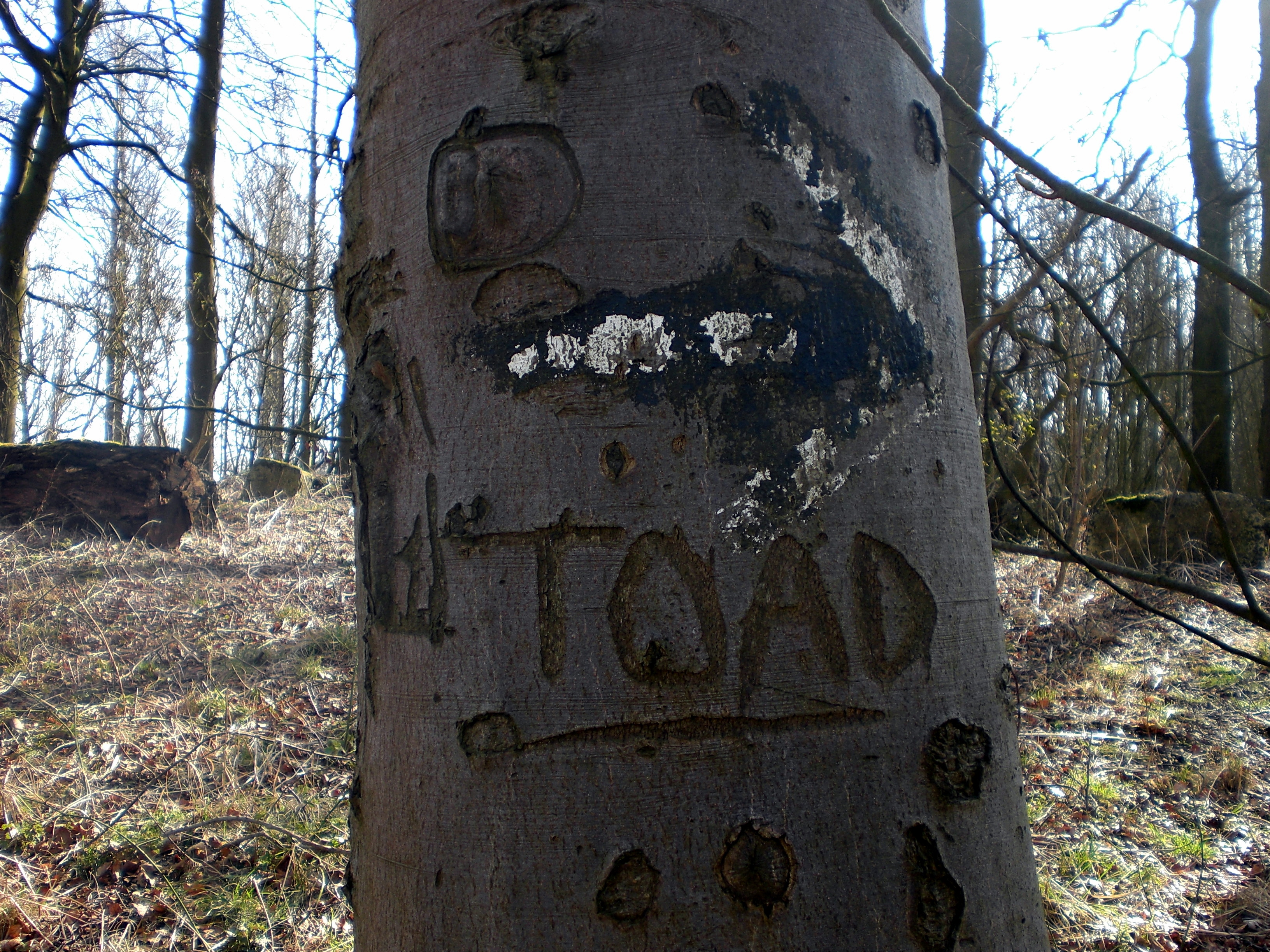
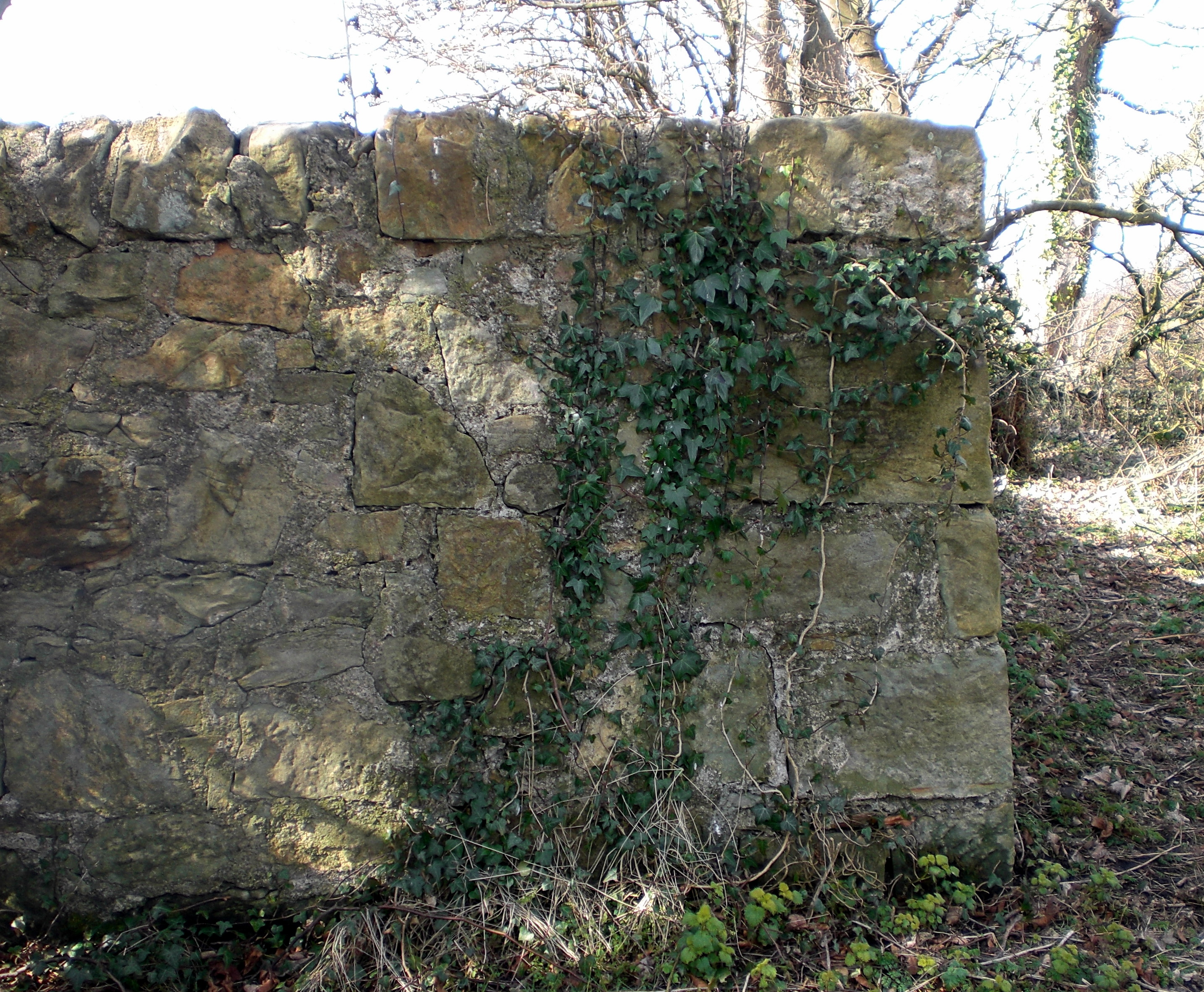
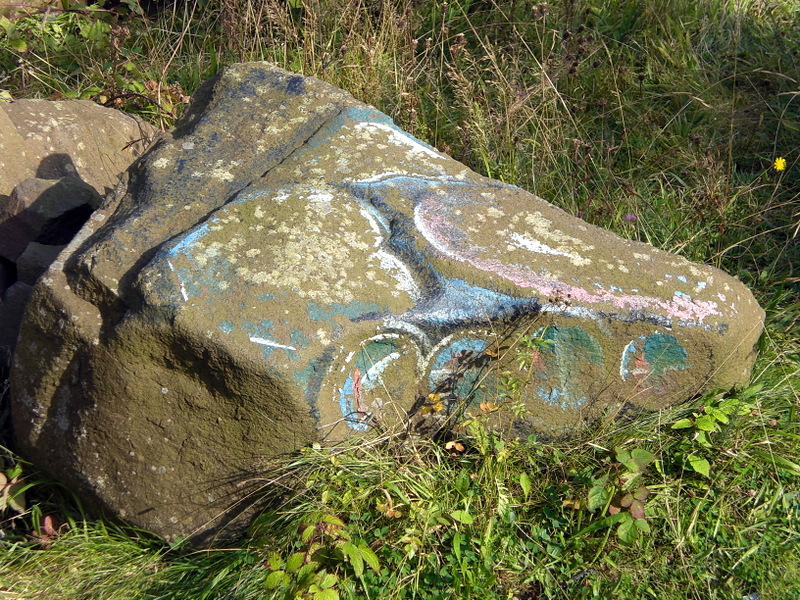
How many stopped to make their mark such as Toad has done here?
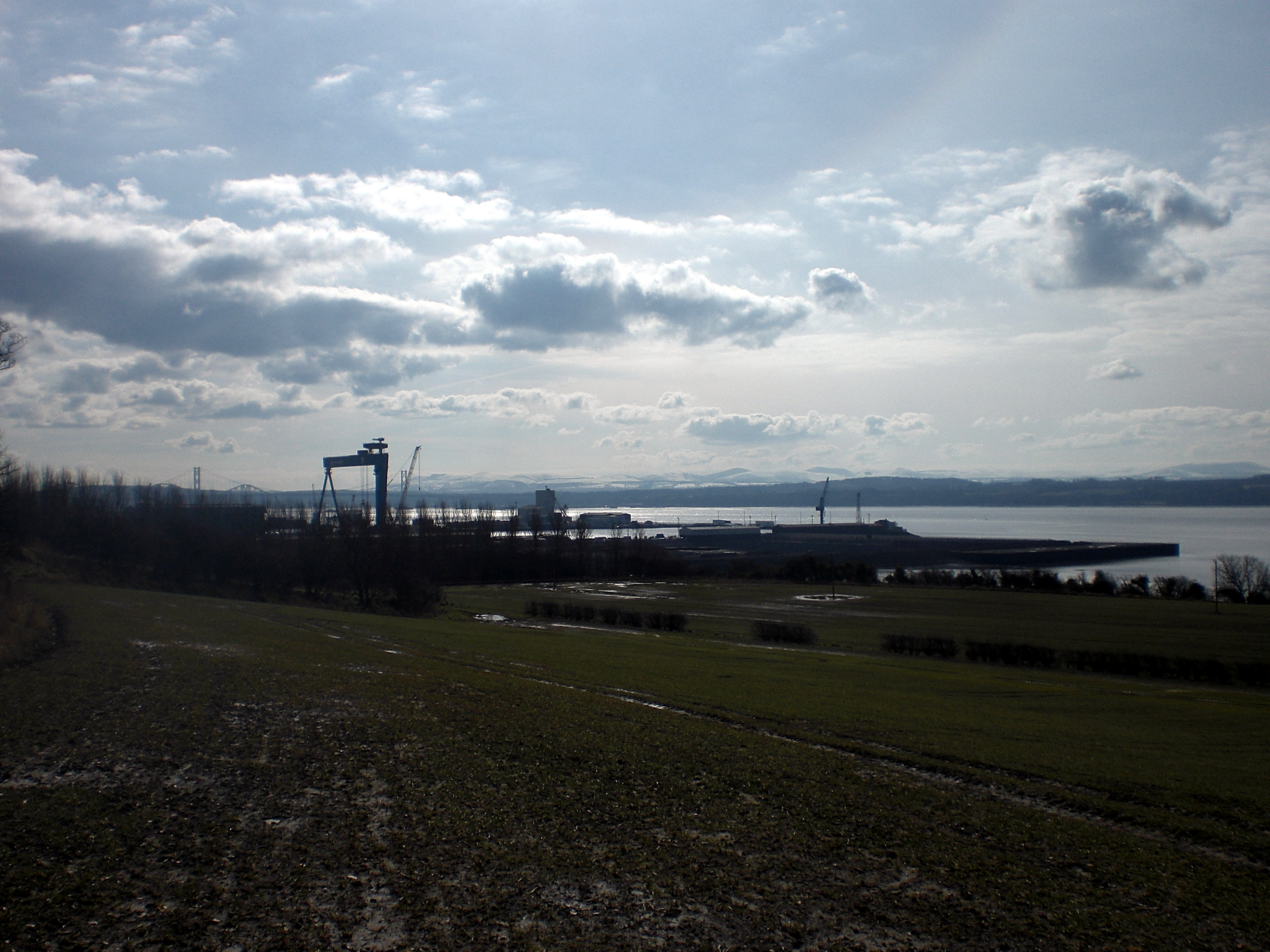
Once over the ridge of hill, we start to descend towards the shoreline and the village of Limekilns which we can see off to the right. We leave the path briefly to take in the vista over the Forth Estuary.
In many ways a picturesque enough view. Over the farmers fields to the river Forth and beyond to West Lothian. However, no view is ever as ‘innocent’ as it seems so let us tilt our heads a little bit further to the left and to the right. Let us ponder on what we can see…
…
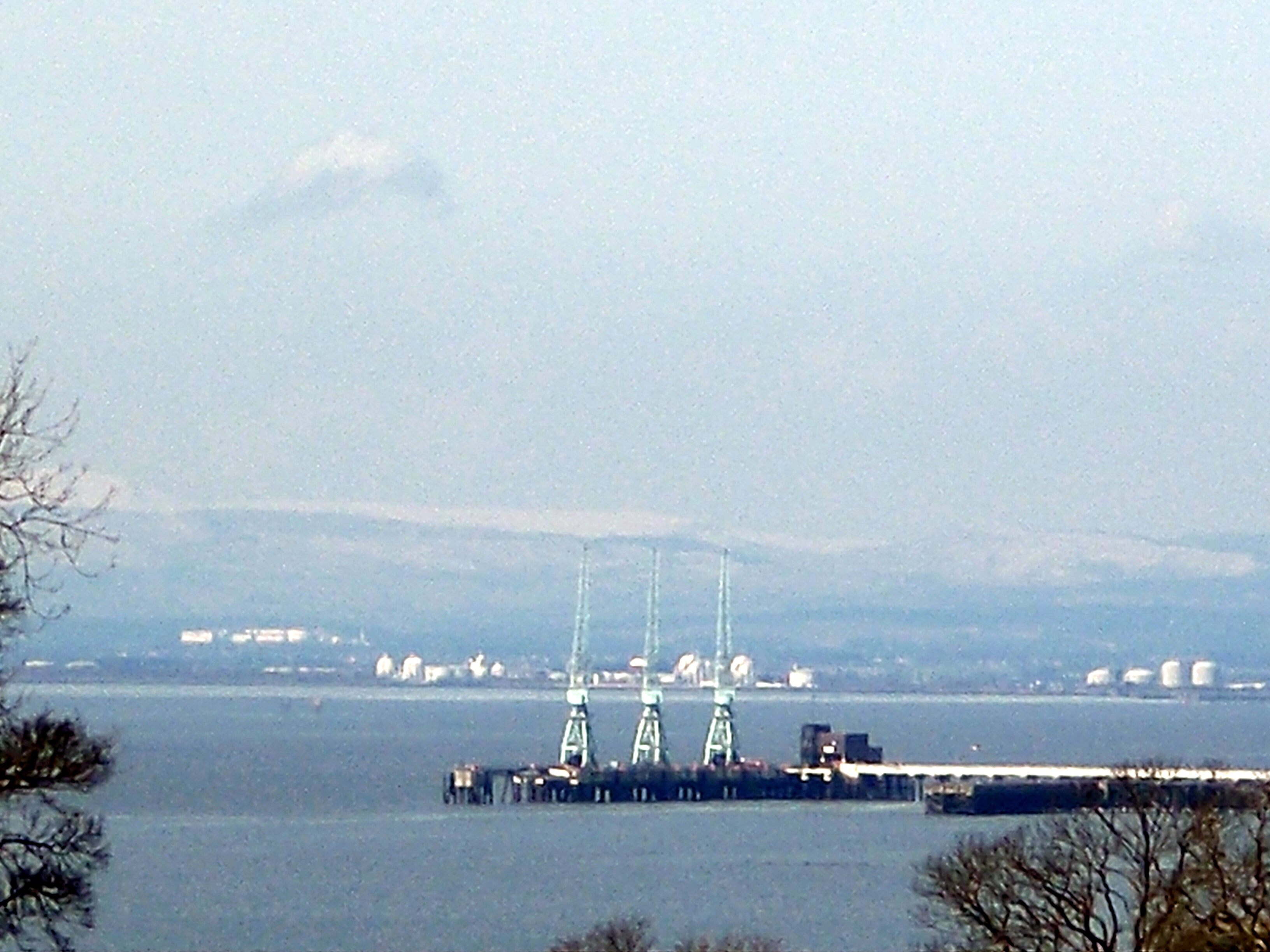
Firstly off to the left, lies Rosyth Dockyard:
The picture is not great but you can clearly see Goliath’s looming presence of whom we have written before:
“Goliath is the largest crane installed in the UK and part of the most expensive project in British naval history with two aircraft carriers presently being constructed at £3 billion a pop. We have already been told that once constructed, one will be mothballed immediately and the other will have no planes to fly from it. Try explaining this logic to a five year old. The carriers are to be named HMS Queen Elizabeth and HMS Prince of Wales. The sheer folly, financial carnage and symbolism of this whole escapade is such that it almost fries our collective brain into meltdown. However, very soon we are all whistling and singing Elvis Costello’s Shipbuilding – the Robert Wyatt version naturally – so we can hum the piano solo with our kazoos. This has the desired effect, tames the beast and calm descends. As we walk further along the road, we can gain a better vantage point to look down over the dockyard and see the true scale of Goliath. Our fear turns to pity as we realise that all we are looking at is simply a dumb, beast of burden, a heavy lifter, on which has been foisted the indignity of jingoistic colours, the White Ensign flag and the reek of failed empire. Also lurking down there, somewhere in the bowels are seven decommissioned nuclear submarines, still radioactive and we are reminded of some possibly apocryphal tales of technicians metal-capped boots glowing green in the dark. Isn’t it amazing what can be buried in the edgelands.”
On the same day as our walk (31st March 2013), a number of articles appear in the press to indicate that Rosyth Dockyard has been chosen for a pilot project to break up some of the nuclear submarines, prompting fears it could become a dumping ground for radioactive waste. (Ignoring the somewhat obvious fact that it already is). The one fairly fundamental snag in this proposal is that no site or facility has yet been identified to store radioactive material safely. (It is going to be there for a long, long time). I suspect that our inventory of Empire and hubristic bravado – HMS Dreadnought, HMS Churchill, HMS Resolution, HMS Repulse, HMS Renown, HMS Revenge and HMS Swiftsure may continue to sit and rust for many years to come, hopefully with the nuclear reactors remaining intact.
You can also just make out the Forth Bridges, beyond the dockyard, in the above photographs. The iconic red diamonds of the Victorian rail bridge and the twin suspension towers of the not inelegant road bridge. Construction work is now well underway for a third bridge to join them. It would appear that the existing road bridge has literally become a piece of auto-destructive art. Road vehicle usage, far in excess of what was originally envisaged has reduced the life of the suspension cables and consequently the bridge. (although there is some debate about this). The result will be a new road bridge with an increased capacity to continue to satiate our desire for car travel. Build it and it and it will be filled is the usual outcome of transport policy so perhaps we stand as witnesses to the birth of yet another piece of auto destructive art.
As is becoming evident, the Forth is still very much a working river and from our viewpoint it would not be unusual to see a container ship – the new packhorse of global capitalism – chugging up the central channel to Grangemouth container port to drop off its wares. Alternatively, it could be a British warship off for some ‘munitions and maintenance support’ at Crombie Pier which is part of the sealed off Crombie Munitions Depot.
.
This is very close to Crombie Point where Jules Verne and Aristide Hignard disembarked from an Edinburgh steamer in 1859 to continue their travels through Fife and Scotland. This journey inspired Verne’s novel The Green Ray.
‘Le Rayon Vert’
And beyond Crombie Pier lies the Grangemouth petrochemical plant, Scotland’s only oil refinery. An industrial city of chimneys and cooling towers, belching steam, and when darkness falls, shooting dramatic flares into the sky against a wash of sodium hue.
Chances are that all the cars sitting nose to tail on the Forth Bridges will ultimately get their petrol from here. Just another nodal point in the network of global petrochem dollars.
OK surely that’s it. But no. Strain your eyes to the far right and another iconic sight can be zoomed into view. The chimney of the coal powered Longannet Power Station. I’m sure it keeps our lights on but is regularly towards the top of the charts in any survey of ‘most polluting power stations’ in the UK and Europe.
Longannet Power Station – Zoom
Anyway this digression is just an illustration of how a landscape view is never neutral. On one level, yes this is a beautiful landscape. However, this is also a landscape inextricably linked into the ebb and flow of the global capitalist economy or on a more pessimistic note is there any more perfect spot to catalogue and observe the agents and consequences of what George Monbiot calls the Age of Entropy. (Thanks to Liminal City for alerting us to this). At the very least, the psychogeographer can reverse the panoptical gaze of the modern political machine. Standing here we can use landscape as a mirror to reflect back. We can see the war machines, the entropic processors of fossil fuels, how the local is connected to the global. On this spot we can be the watchers. We can see what you are up to and imagine and enact alternative possibilities. (Such as going for a walk!).
…
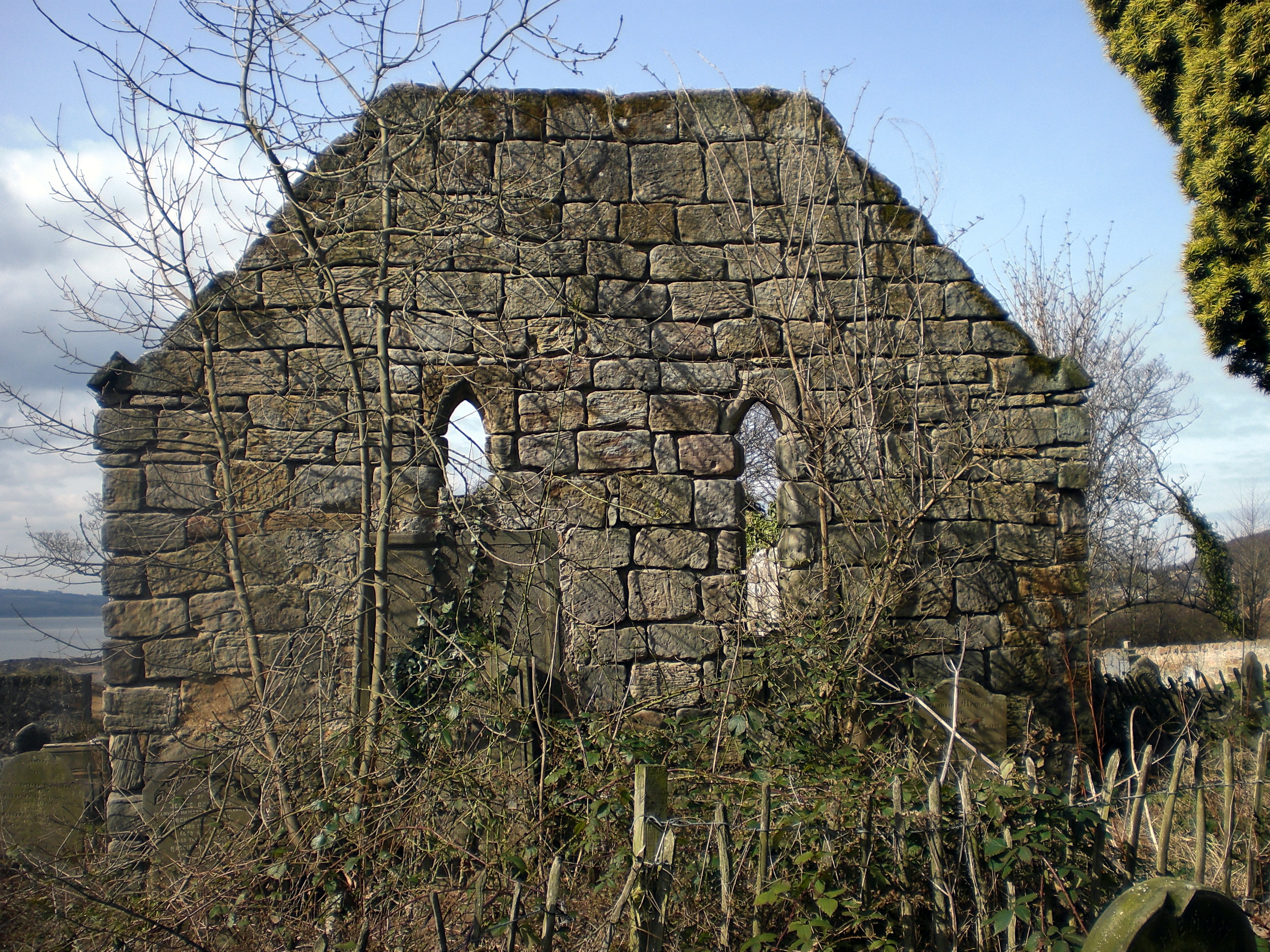
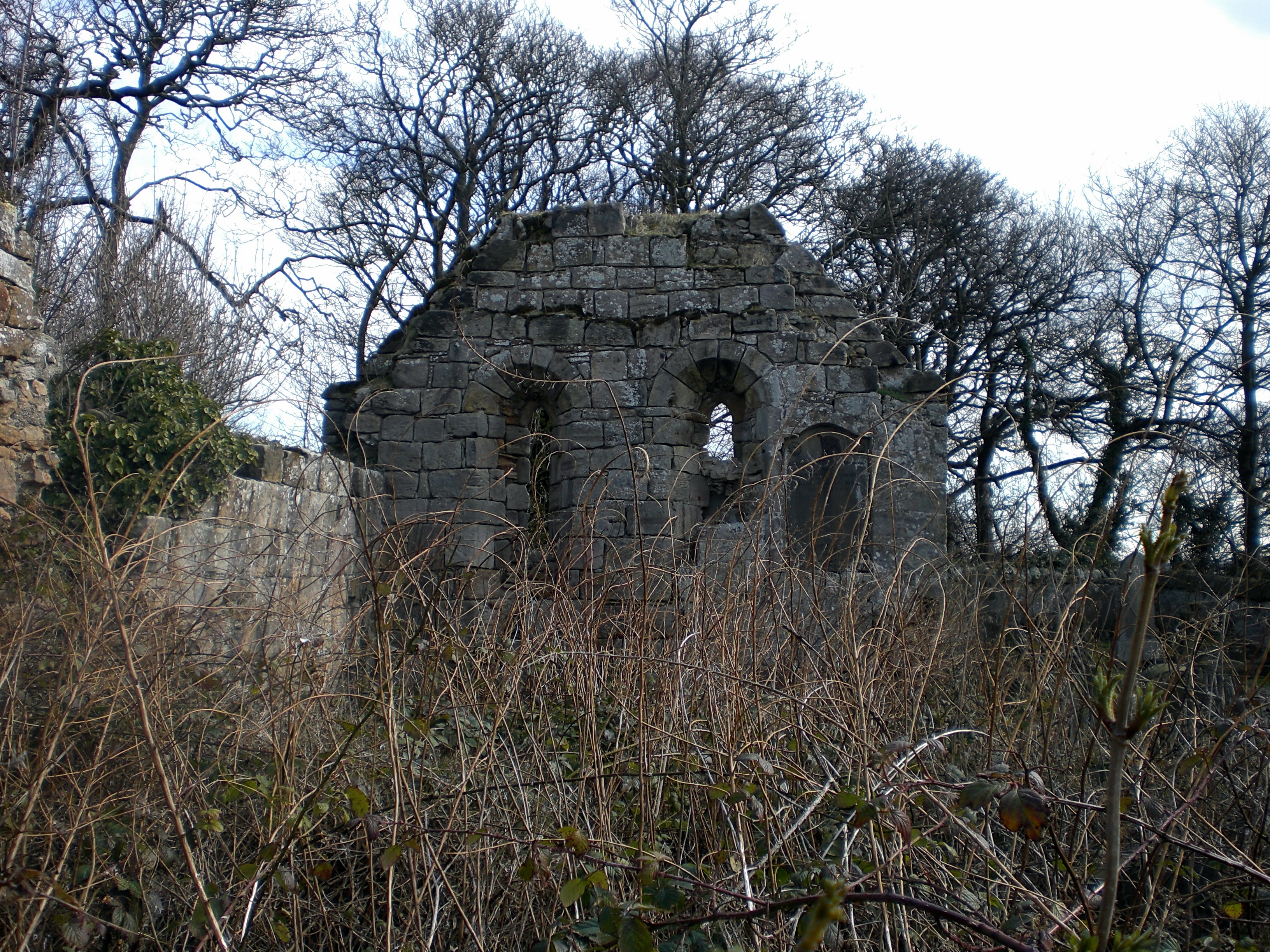
We continue our descent down Windylaw which edges the perimeter of the newer built part of Limekilns. A desire path breaks off to the left and we soon find ourselves at the rear of the old ruined Rosyth Church. Records indicate that the church dates back to the 12th century when it is mentioned in the charter sent to the monks of Inchcolm Abbey in 1123. The church ceased to be used as a place of worship sometime between 1630 and 1648. You can clearly appreciate why the coffin road evolved. Even today, the only access to this spot is by walking or possibly by boat. Whilst doing a bit of research, a curious entry in the RCHMS archive records catches the eye. In 1998 a “stray human mandible was found on a grassy area just south of Rosyth Old Kirk burial ground by Mr Walmsley of Inverkeithing. The very weathered and friable bone belonged to a child aged 6-9 years.”
there is none more lonely and eerie than Rosyth, at anyrate at the close of a winter day, when a rising wind is soughing through the bare branches, and the sea is beginning to moan and tramp to and fro over rock and shingle.
John Geddie, The Fringes of Fife, (1894)
Unlike Geddie, we find the church reflecting sunlight on a bright, still morning with just the slightest intimation of Spring in the air. Little of the original structure remains. Only the East gable and part of the North wall. A mort house still stands, built at a later date, to no-doubt frustrate the profitable enterprise of the resurrectionists (body snatchers) who are known to have prowled the coastal graveyards, often arriving by boat.
East Gable -OuterEast Gable Inner – from West
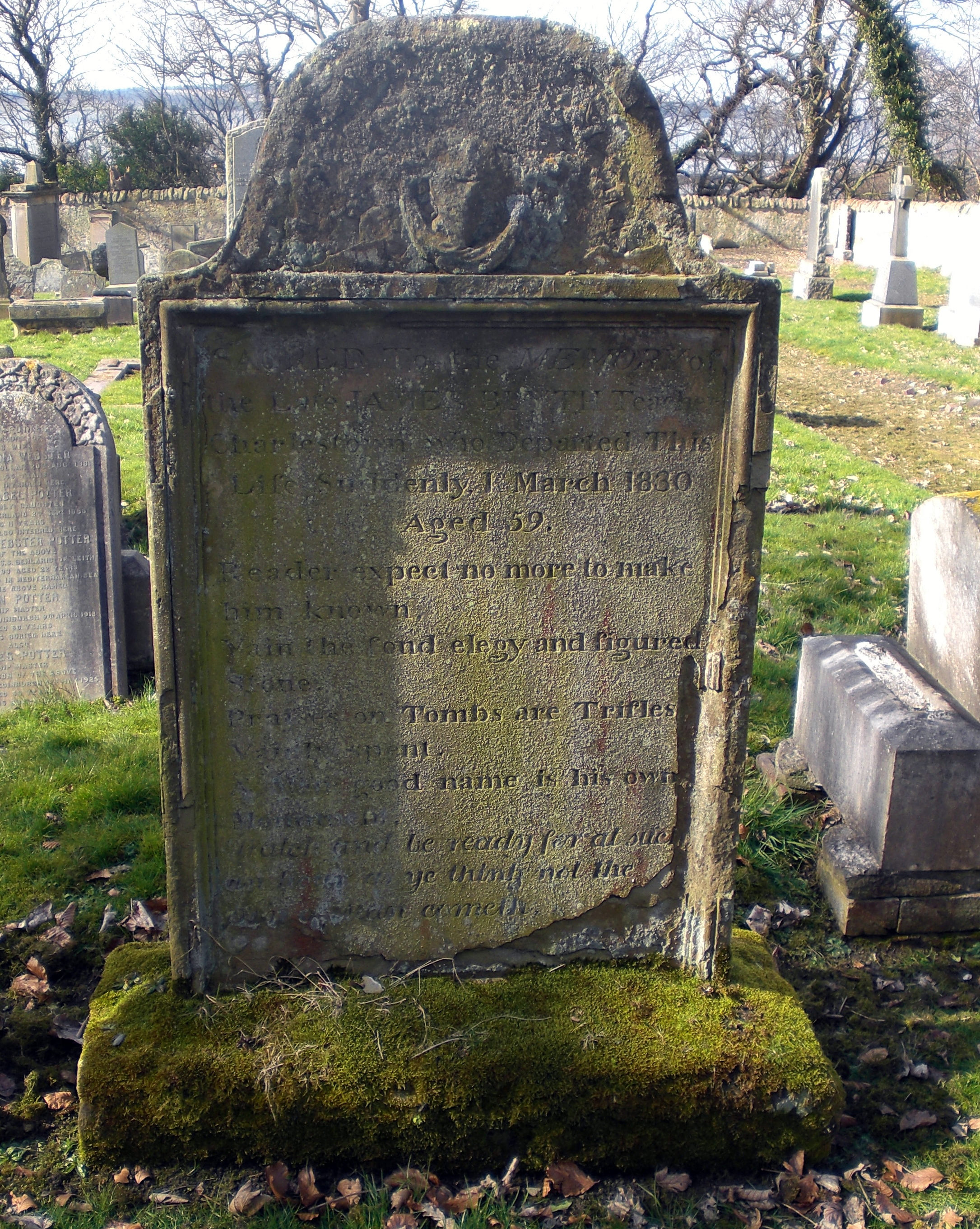
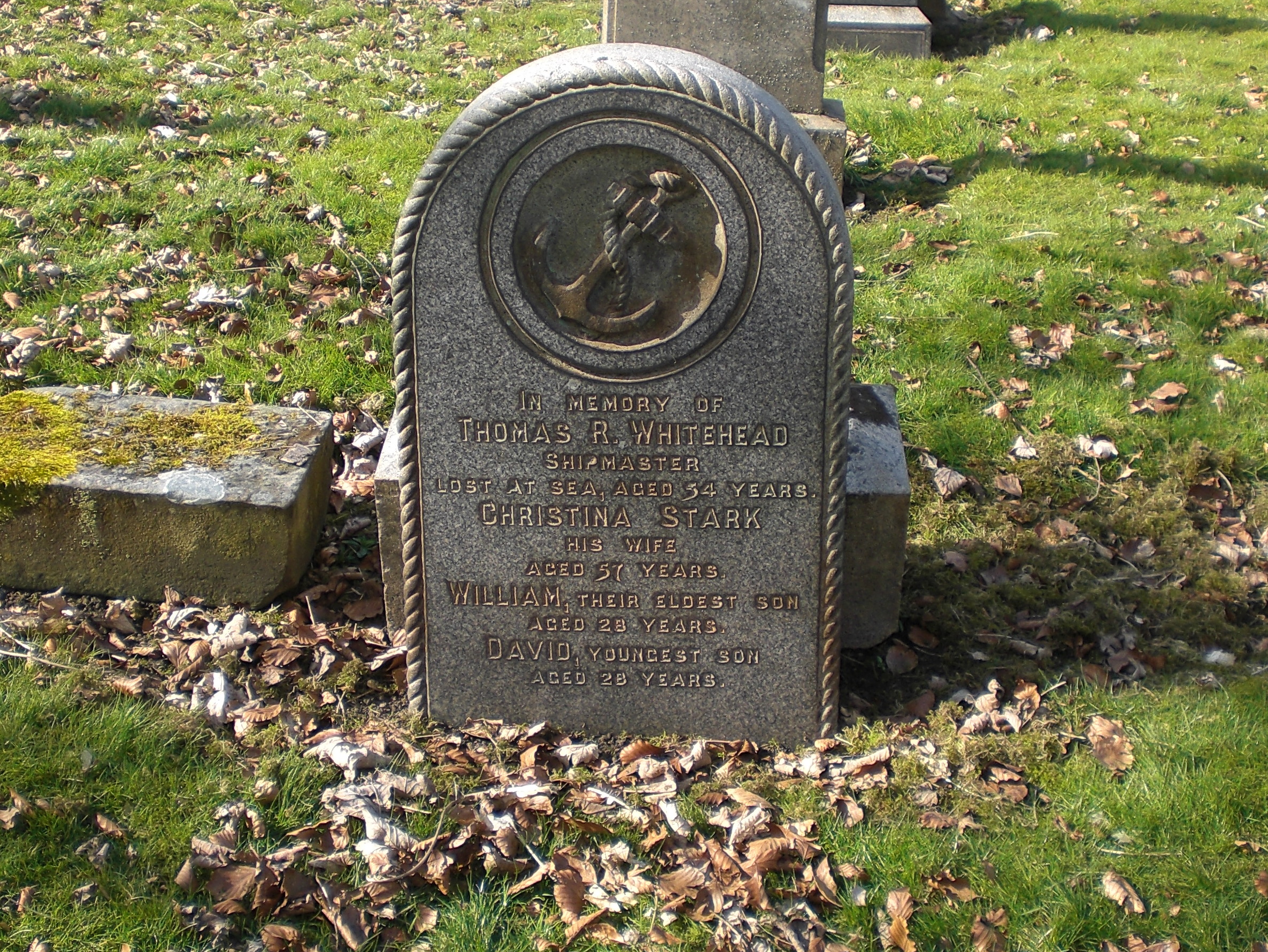
The churchyard, as in all churchyards, is full of stories. Manicured fragments of past lives lived. How much of a person can be captured when reduced to a few lines of inscription on a gravestone? In many cases, the weather and the passage of time work to gradually efface even this small act of material remembrance. Chiseled stone is returned to smoothness as the distant past becomes literally more difficult to read yielding up only broken fragments and guesses.
FracturedFragments & GuessesRobert Wood and Mary HarrisonTombs are TriflesLost at Sea
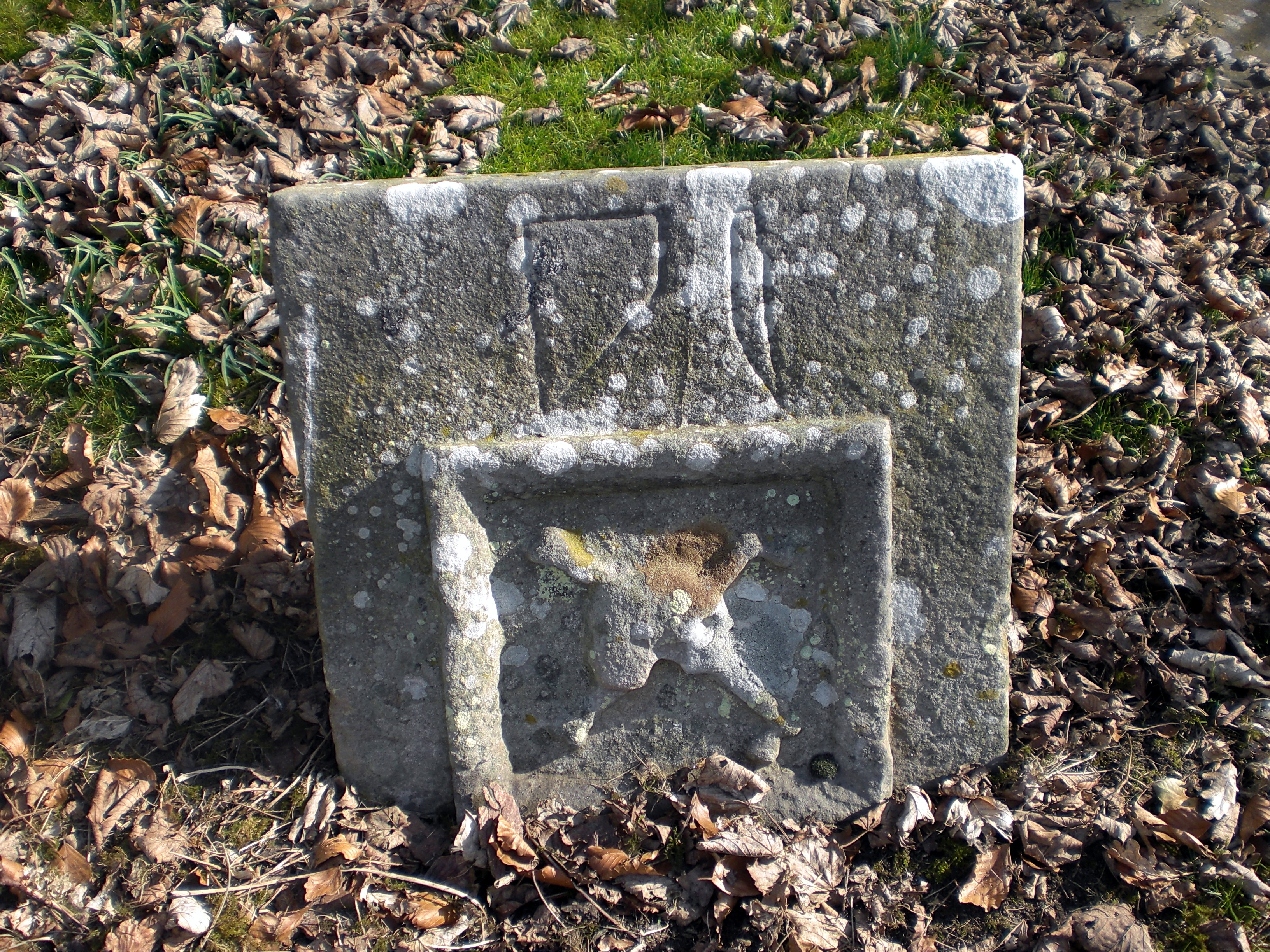
This gravestone below is particularly rich in symbolism: the trumpet blowing Angel of the Resurrection; the memento mori skull as a representation of death and the hourglass denoting the passing of time.
Angel of Resurrection, skull & hourglass
This stone was erected in the year of the French Revolution:
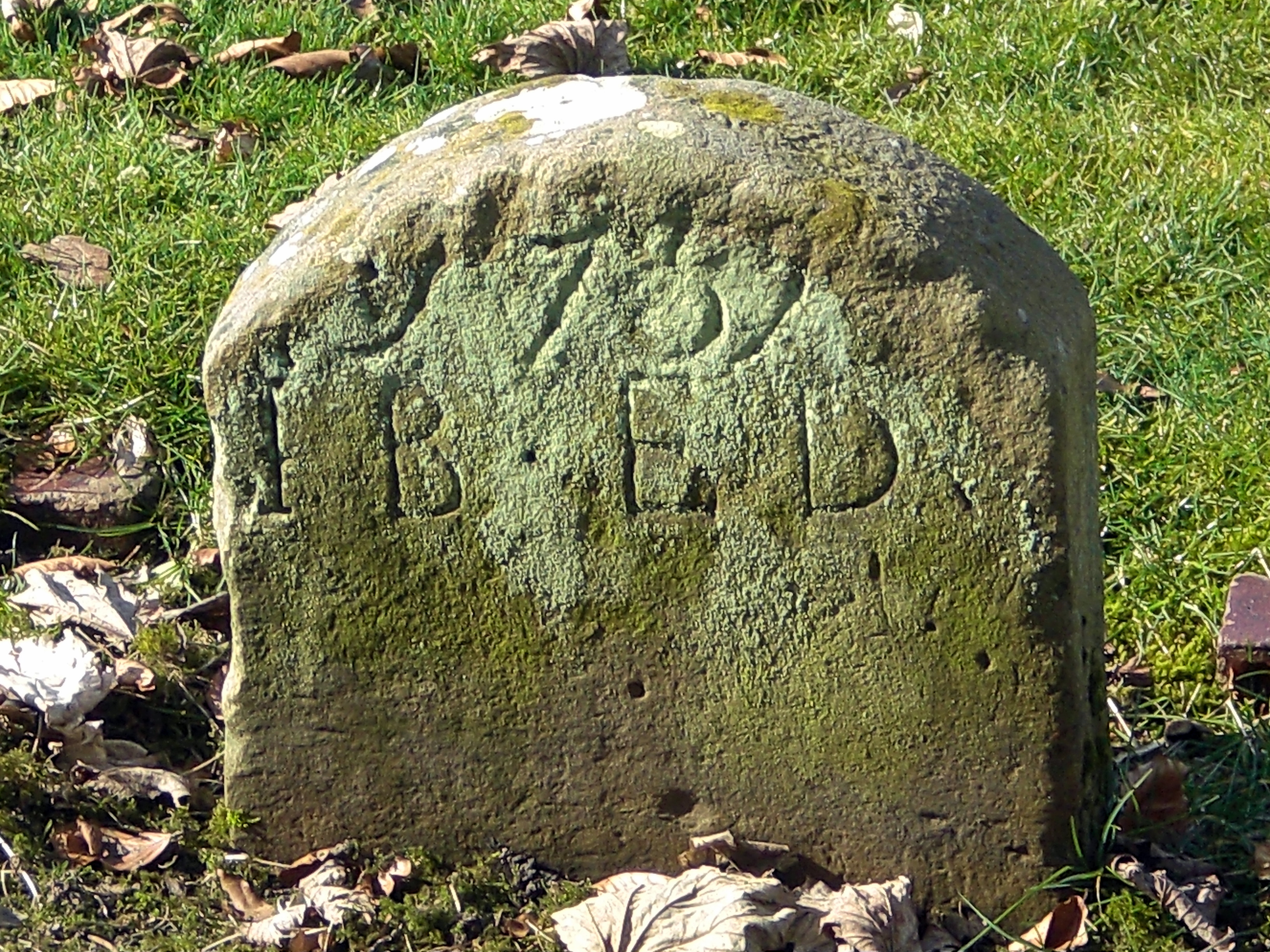
1789
We were really intrigued with this one. The reversed numeral “7” in particular. Also the fact that four sets of initials are on the gravestone?
Nowadays, the quiet graveyard appears to be a haven for bird life. During our visit, blackbirds scurried amongst the leaves whilst a robin dotted around the gravestones following us.
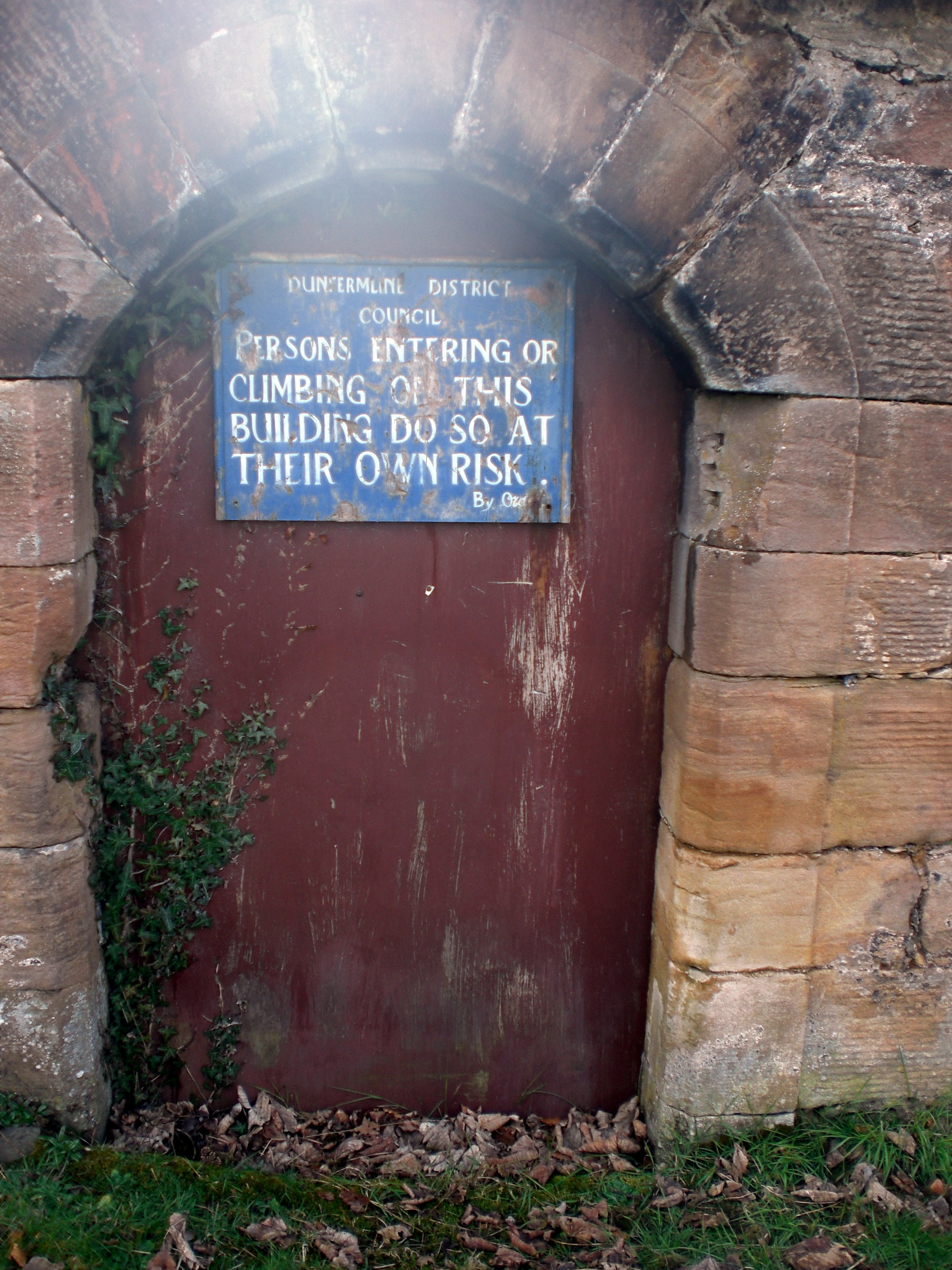
One last photo before we leave and its only later that we notice the ghostly halo around the door frame. Saturated light I’m sure but who knows?
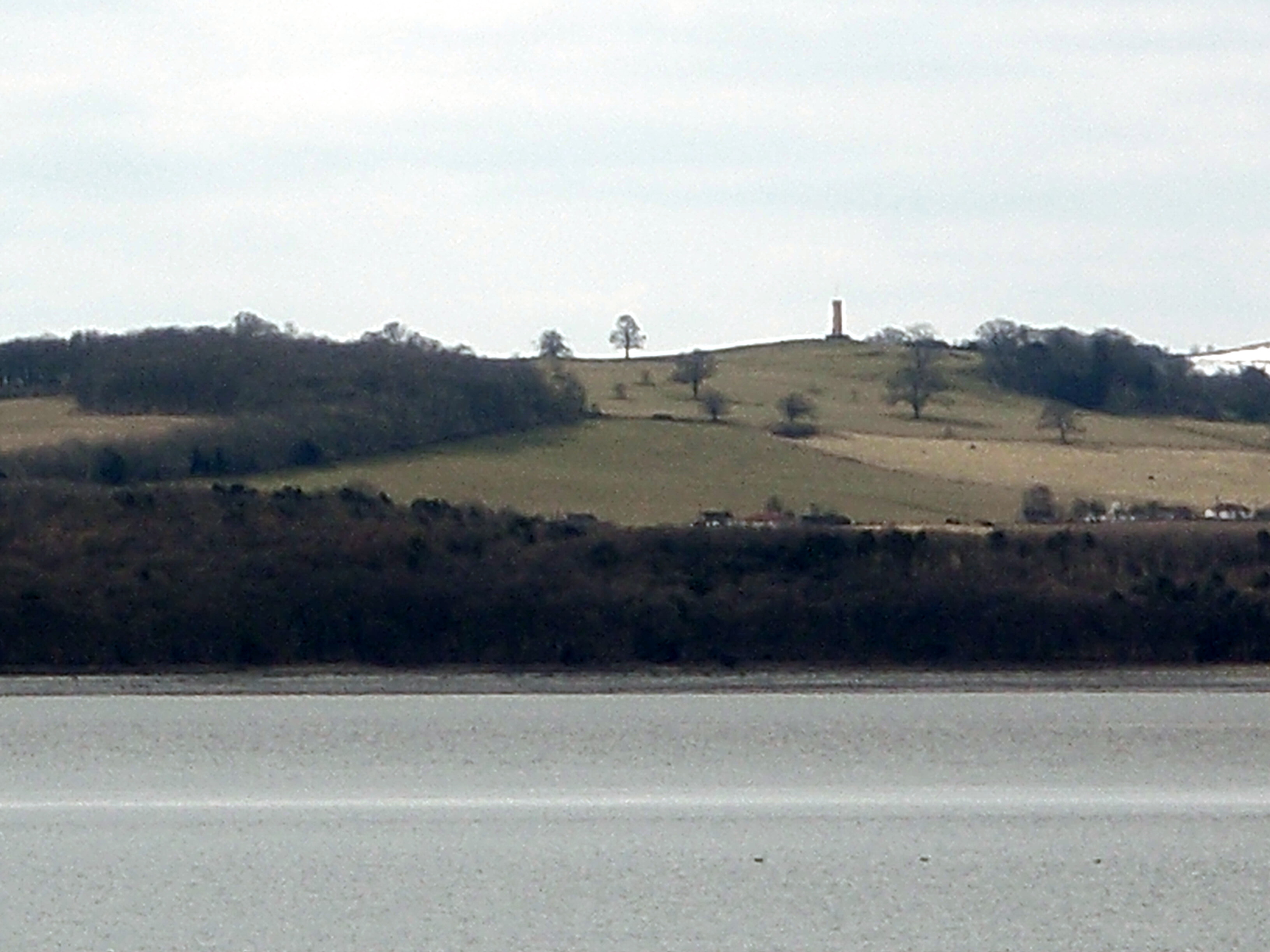
On leaving the the graveyard, we head right which leads to a pleasant shoreline walk along to Limekilns. Looking over the water there is even a hint of Glastonbury Tor over in West Lothian. It’s the tower folly of The House of the Binns, Tam Dalyell’s family home. It’s a short walk to Limekilns and as we approach we are reminded of David Balfour and Alan Breck who visit the village in Robert Louis Stevenson’s Kidnapped:
“about ten in the morning, mighty hungry and tired, came to the little clachan of Limekilns. This is a place that sits near in by the water-side, and looks across the Hope to the town of the Queensferry.”
(Kidnapped, Chapter XXVI, End of the Flight: We Pass the Forth).
We will write-up what we found in Limekilns and Charlestown another day.
Now Playing: Current 93 – Baalstorm, Sing Omega
References:
Alan Reid, Limekilns and Charlestown: A Historical Sketch and Descriptive Sketch of a Notable Fifeshire Neuk, (Dunfermline: A. Romanes, 1903).
Looking up to the ridge, over the evergreen crowns, two spectral trees hang mid-air in the limpid heat. A smoke spiral, all coiled movement, settles to stillness as a Rorschach blot of charcoal smudge bleeds into sun saturated blue. The universe melts into my hands. A sublime stasis cupped and held close.
For how long is not the right question – linear time is of no help to us here.
The “caw caw” of a black craw – pierces the membrane of this no-time. The moment trickles away, dissolves on the ground, scattering the seeds of its eternal recurrence as memory…
Memory is not an instrument for exploring the past but its theatre. It is the medium of past experience, as the ground is the medium in which dead cities lie interred.
Walter Benjamin
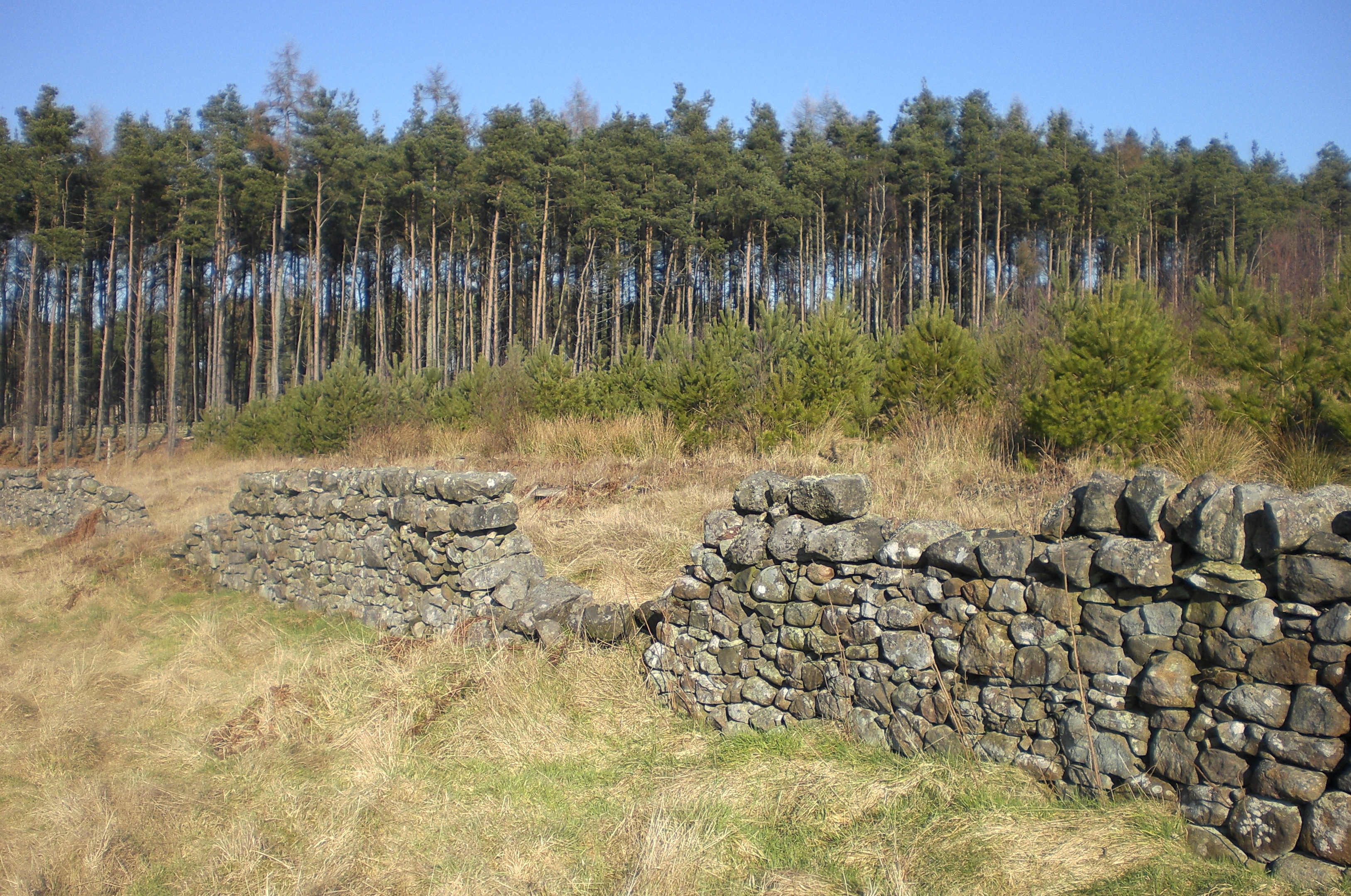
Just a brief extract from what will eventually develop into a longer piece or a series of shorter pieces. We have made a couple of visits to Devilla Forest, near Kincardine, recently and it is clear that it will take us a good few more trips to really get the measure of this place. Our foray into the heart of the forest last week was an exercise in getting hopelessly lost which coupled with the first intimation of Spring was no bad result. The overhead sky, was a cloudless colour field of bleached blue and once the sun was up it felt like the last of the winter murk was being cleansed away. We eventually ended up North of the forest climbing up to a ridge above the tree tops. Here we found the spectral trees and a curious weather mast amongst crumbling drystane dykes.
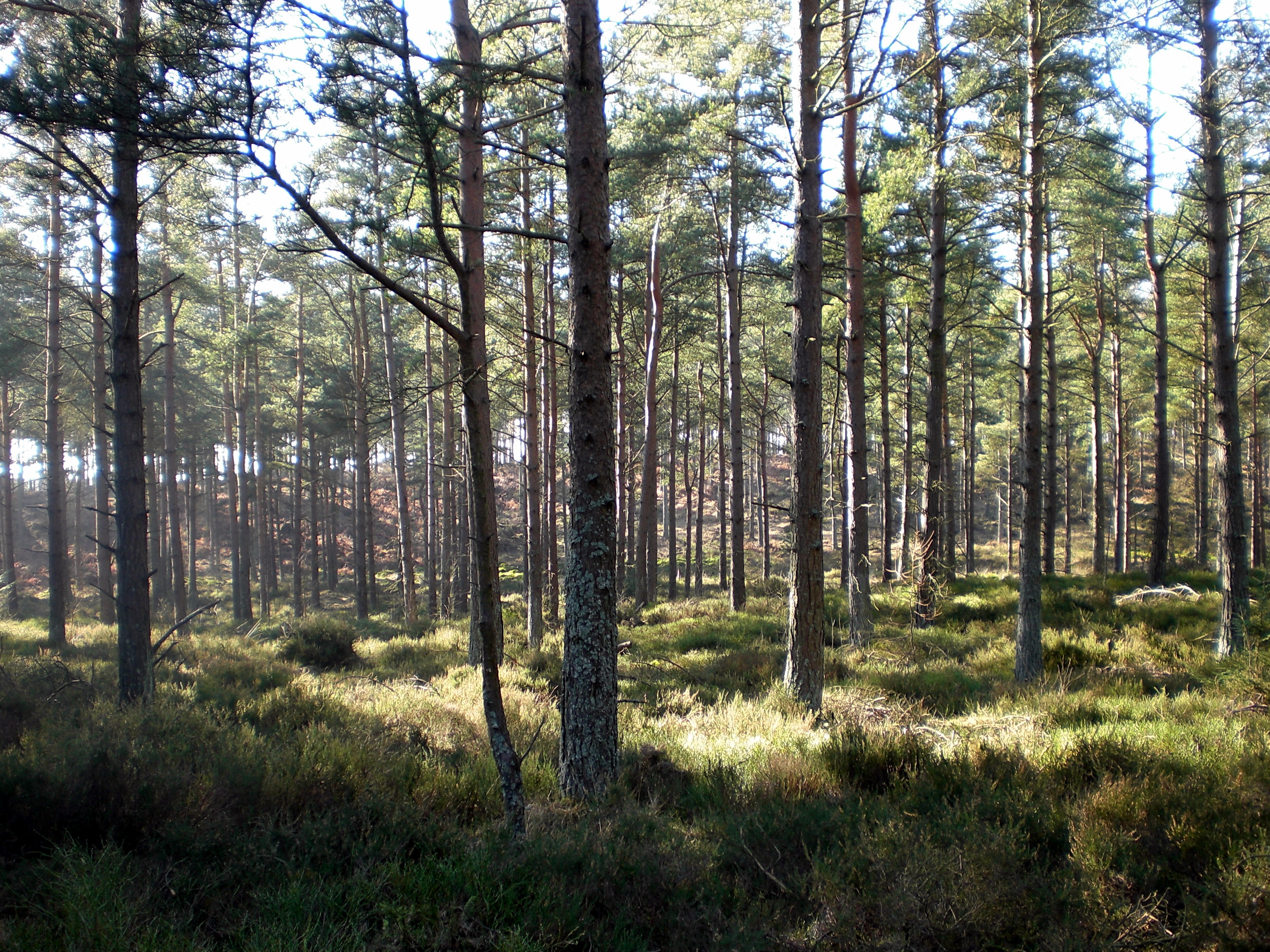
Devilla Forest is located just North East of Kincardine and the name is said to come from the Gaelic “dubh” and “eilean” meaning “black island”. The forest is now run as a commercial tree plantation by the Forestry Commission and consists mainly of Scots Pine, Norway Spruce and Larch. However, the area has a long history of land use with Prehistoric coffins, stone circles and Roman urns all found in different parts of the forest.
There are also plague graves, a stone which a local legend says is marked by the grooves from a witches apron string and the remains of a World War II explosives research establishment within the forest area. Combine all of that with four lochs/ponds, burns, meadowland and rich wildlife – including red squirrels – and it’s easy to see why this site should we worthy of further investigation.
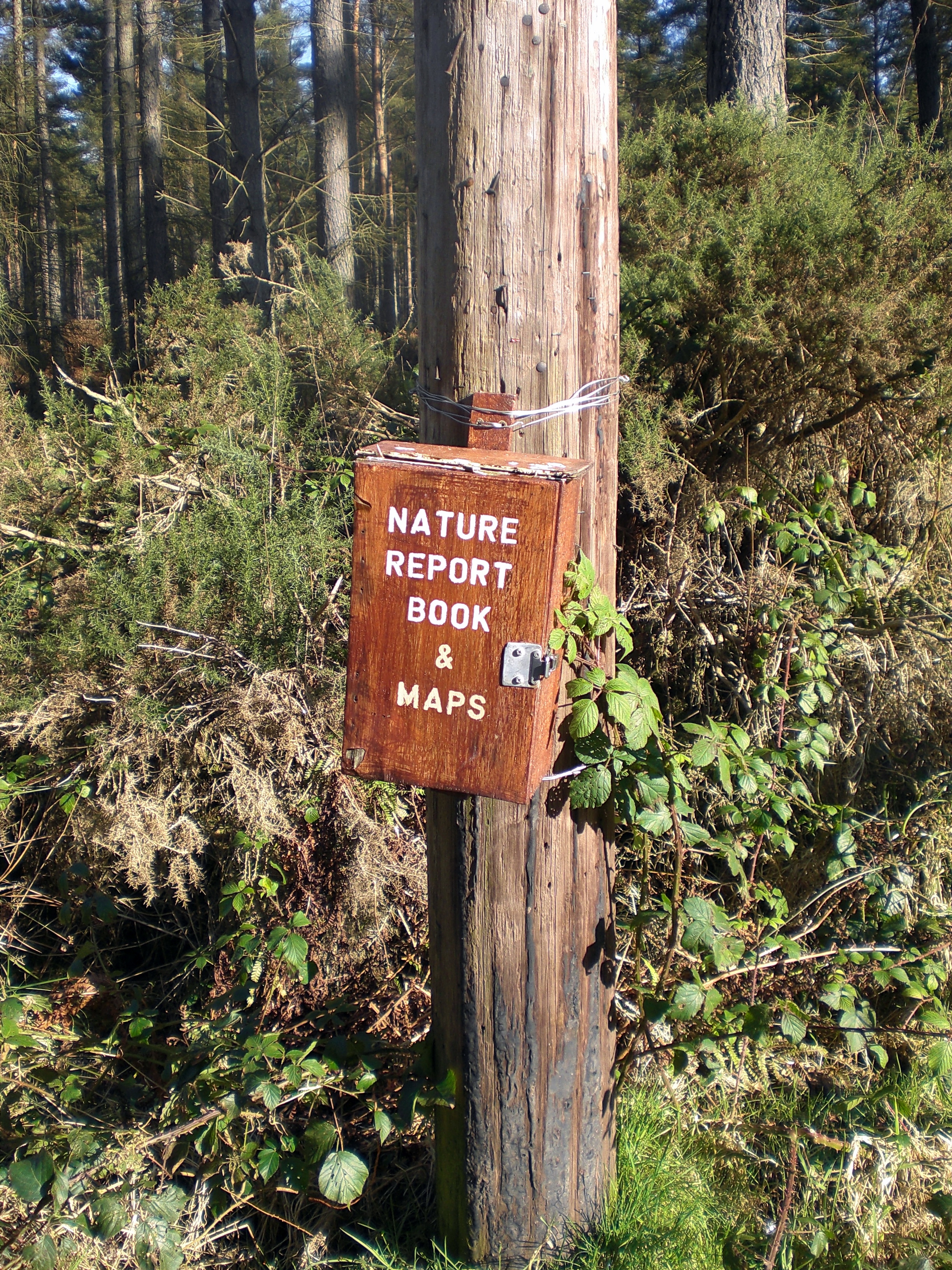
Oh and there is also a history of Big Black Cat sightings. We may have the chance to record one ourselves in The Nature Report Book.
Unfortunately there were no maps:
“I hunt among stones” – Charles Olson.
Prior to last week, we had made one previous brief visit to the forest on 23rd February. This date coincided with Terminalia, the ancient Roman Festival in honour of the god Terminus who presided over boundaries. Often his statue was merely a post or stone stuck in the ground to mark the boundaries between land. Aware that some psychogeographers throughout the country were commemorating Terminalia in some fashion, it was perhaps a serendipitous discovery to find some wonderful local examples in the forest:
This is a Meith Stone which has the St Andrews Cross carved in the top. The stones were used to mark land boundaries and sometimes initials were inscribed on each side of the stone denoting land ownership. Apparently five stones have been found along what would have been the old drove road between Kincardine and Culross.
This enigmatic looking stone is known locally as The Standard Stone, which according to local legend marks the spot where a Danish Army defeated Duncan and his generals Macbeth and Banquo in The Battle of Bordie Moor. (1038). The stone could also have been where the Scots army placed their battle standards, but is more likely to be the base of a medieval stone cross on a parish boundary or a wooden gallows.
From our initial couple of visits, we can feel that Devilla is going to yield up some interesting discoveries if we can manage to avoid getting lost next time. Then again that may be no bad thing.
The Owl is awaiting our return.
Now Playing: Boards of Canada – ‘You Could Feel the Sky’ from Geogaddi.
The white centre … is both an emptiness and an energy generator. Your eye is continually drawn back to its white silence, its void-ness. Then your attention is propelled out again along the twisting road-ways. The eye cycles back and forth between “something” and “nothing”.
First Rauschenberg laid down a base coat of white paint on a 48-by-32 inch piece of masonite. Then on the top four-fifths of this white ground, he pasted pieces of maps of American cities: Minneapolis, Pittsburgh, St Louis, New Orleans Boston, Denver…
The twisting spidery roadways – dark lines radiating across off-white backgrounds crackle with shivery linear energy. This frenetic activity is silenced at the pictures centre by a great white circular void that hovers like a pulsating energy field. This void isn’t empty. Literally it’s a layer of brushed white paint that laps over the cut edges of the maps. Visually, the painted surface dematerialises into a humming whiteness.
Kay Larson on Robert Rauschenberg’s Mother of God
I recently finished Kay Larson’s wonderful book Where the Heart Beats: John Cage, Zen Buddhism and the Inner Life of Artists. I don’t particularly want to offer a review here but if you have any interest in John Cage then I guess that you will be well rewarded by reading it.
Like any great book, it’s the ideas that linger around afterwards that are of greatest value. They push, prod and poke. Unconscious spectres haunting the edges of conscious thought before demanding some form of engagement, application or reflection. This perhaps explains why, for a few minutes last weekend I stood, in the dark, on a motorway bridge at Charing Cross, Glasgow. A walk back to the station interrupted by thoughts about “something” and “nothing”. The traffic of the M8 motorway cascading underneath my feet and I’m recording it on my phone…
Well clearly my silent piece…expresses the acceptance of whatever happens in that emptiness. And the same thing was expressed by that empty painting, that white painting of Bob Rauschenberg.
John Cage
One of the most fascinating parts of Larson’s book deals with Cage’s conceptual evolution leading up to his (in)famous ‘silent’ piece 4’33”. Larson makes the case that prior to 4’33”, Cage’s thinking was expressed in Either / Or dualities. His two lectures: Lecture on Something and Lecture on Nothing bookend this approach. Increasingly inspired by the Zen lectures of D. T. Suzuki at Columbia University and the white paintings of Robert Rauschenberg, Cage moved towards the idea of the radical act that was required to detonate these dualisms. His famous visit to the anechoic (sound-proof) chamber at Harvard had shown Cage that ‘silence’ could never be an absolute absence of sound. Even in the scientifically quietest place on Earth he could still hear sounds. The high whine of his own nervous system and dull roar of his blood circulation. He heard the sound of his life in process and Cage concluded that there is no such thing as silence.
Silence is not acoustic. It is a change of mind, a turning around.
4’33” embodies the idea of life and art as a process. As Larson says: “before anything else, it’s an experience.” It is a proposition that says, in notational shorthand: stop for a moment and look around you and listen; stop and look; stop and listen. “Something” and “Nothing” can never be divided.
Well I use it (4’33”) constantly in my life experience. No day goes by without my making use of that piece in my life and in my work…I turn my attention towards it. I realize that it’s going on continuously…
This may all sound pretty abstract but two events from a recent afternoon wander through Glasgow bring it all home. Heading back from the West End, the energetic bustle of Byers Road noticeably slips off the shoulders as you enter Kelvingrove Park. Welcomed into the crisp and brittle air by the bare winter trees, very few people are around and circumstances are conspiring to shift towards something approaching an urban ‘silence’. (The ubiquitous, low hum of traffic is always there, much like the sound of Cage’s blood circulation). Slipping into a kind of unconscious walking reverie, measured out in the rhythm of movement, I was brought completely into the moment by the spooling song of possibly a mistle thrush or song thrush high in a tree. What an enchanting experience to simply stop and listen to the cadences and Fi-ga-ro Fi-ga-ro refrains weaving a thread of song through the urban silence. An oscillation between something and nothing. Lives in process. I managed to capture around 40 seconds on a pretty rough phone recording, by which time several people had gathered around wondering what I was looking at:
.
.
[sometimelater]
.
.
I wanted to be quiet in a nonquiet situation.
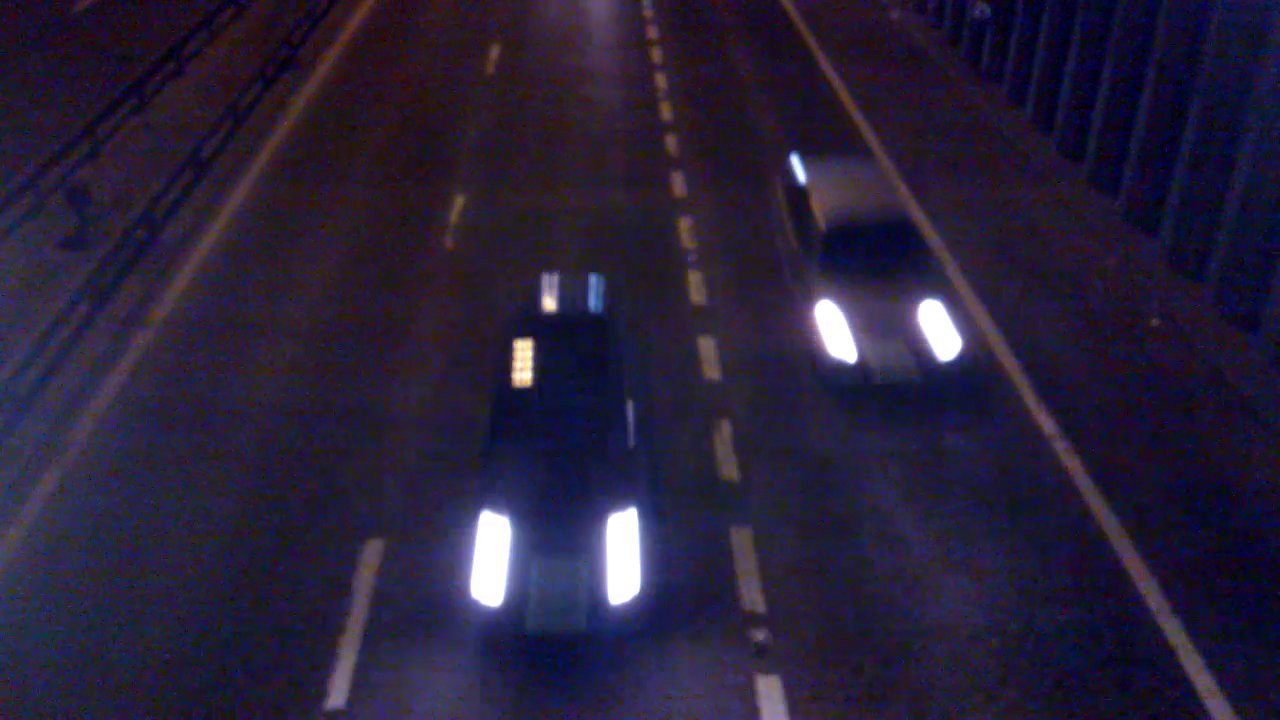
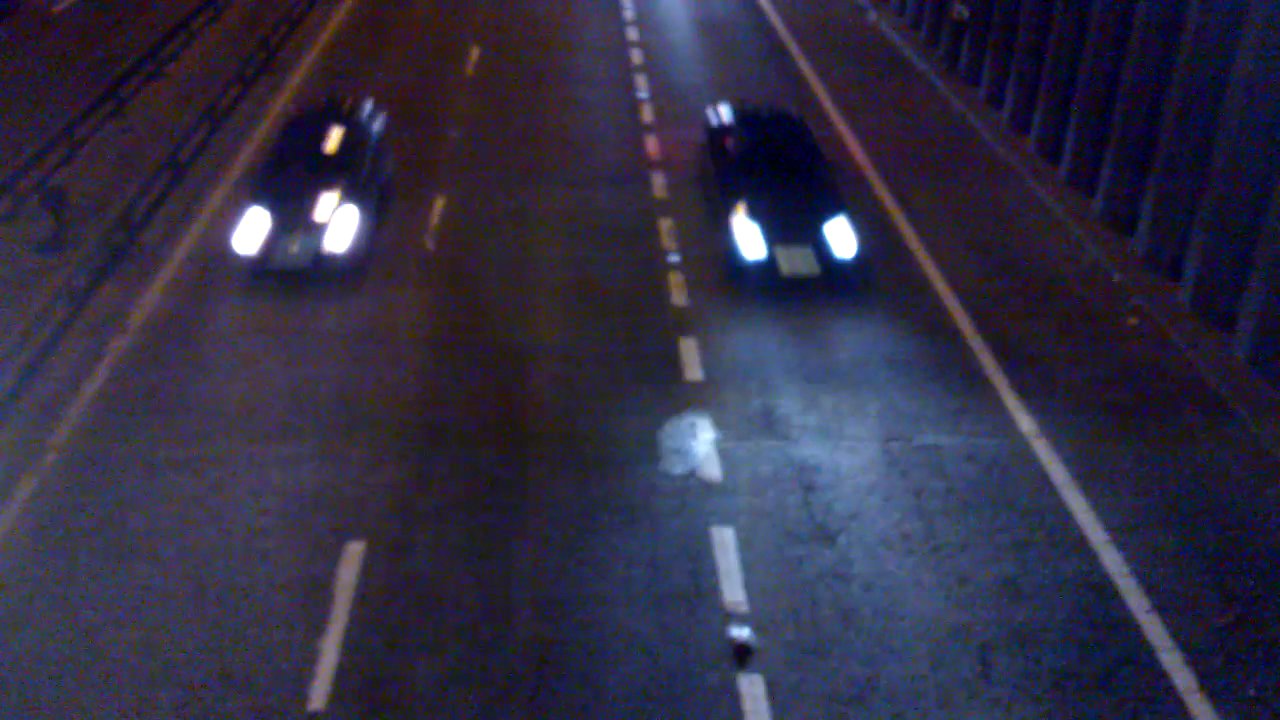
Later in the early evening, it is already dark and I’m walking back into the town centre . I stop on the motorway flyover bridge at Charing Cross. For a short time I just watch the traffic swoosh past underneath. Pools of light flooding the motorway and dispersing within seconds. The experience is strangely mesmerising and calming. The rhythms of sound vary depending on the sequence and number of cars across the three lanes. Like a childhood game, I start to guess which lane a car will appear in next. A chance operation in process. I then notice that occasionally there can be an almost complete drop out towards a momentary void of sound. For a few seconds no cars are in view in any of the lanes. Once again this is a rough recording but within this short clip it happens a couple of times:
.
.
After a few minutes of this hypnotic experience, I realise that I’ve been in the white centre of Rauschenberg’s painting. The void. Quiet in a nonquiet situation. As I lift my head to look around, the roads and paths of the city spiral off in every direction. Energies of neon, arteries of possibility, encounters, histories and stories yet to come.
I walk towards Sauchiehall Street, always poised between something and nothing.
Now playing: Kevin Drumm – Tannenbaum
References:
Richard Konstelanetz (ed), Conversing with Cage (London: Omnibus Press, 1989).
Kay Larson, Where the Heart Beats: John Cage, Zen Buddhism and the Inner Life of Artists, (New York: The Penguin Press. 2012).
Robert Rauschenberg, Mother of God, 1950. San Francisco Museum of Modern Art.
Special thanks to Fraser Macdonald and Louise Arber for offering suggestions as to the identity of the singing bird. The wonder of Twitter.
How could we not be intrigued?
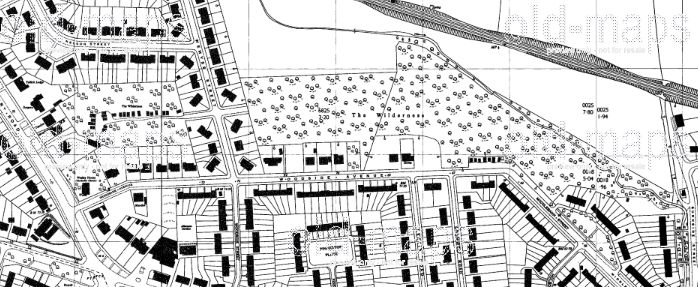
Casting an eye over some local maps from the late 1800s. Stumble and trip.
The Wilderness.
An actual place on the map.
The delineated form resembles a long-front-legged cartoon fox. We resist the urge to draw on ears, eyes, nose and a brush. Somewhat ironically, The Wilderness is represented by dotted clumps of trees contrasting with the surrounding patchwork of largely undefined white space.
A field trip beckons. Is it possible to visit The Wilderness as an actual place, rather than just as an idea? Is The Wilderness always just an idea, conjuring up clichéd images of distant rain forests, shifting desert sands or a featureless frozen tundra pulled towards a distant white edge of land and sky. What would this Wilderness look like in 2012?
On a sunny December Sunday of 2012 we set off to see what we can find and mentally attempt to visualise the area of the cartoon fox, as it is today. Our best guess is that if anything is left it may now be in the middle of a housing estate in Rosyth, Fife. There could also be a Tesco store and pub planted firmly in its hind quarters…
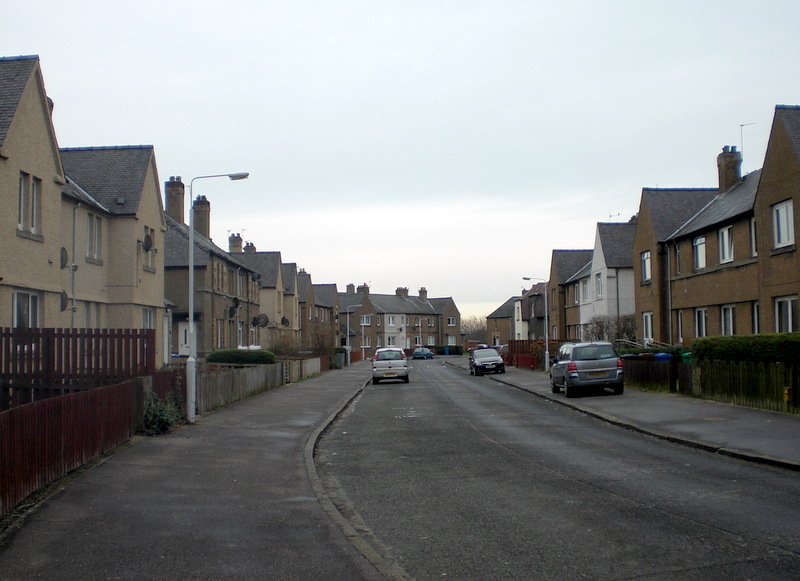
The above map dates from 1896 which predates the building of Rosyth, Scotland’s only Garden City. The town was built to service the Royal Naval Dockyard which began construction in 1909. The original houses were first occupied in 1915 and still stand, exuding a solidity and displaying attractive design features that would be alien to the mass, wooden boxbuilders of today. (Who would bet against the big bad wolf confronting a timber-framed flat pack?). The original tree-lined street plan also remains largely intact although you will have to search harder to find a front garden. Many are now paved over into parking spaces for the ubiquitous car.
Arriving in Rosyth, we orientate ourselves from the railway station and set off. As suspected, it is clear that the rear end of our fox, on the 1896 map, now houses a Tesco store with Cleos pub alongside. The main road through the town – Queensferry Road – dissects a later phase of house building on the other side. As we walk down Queensferry Road, there is certainly no obvious sign or hint of any wilderness. We can see some mature trees lining the side of the road but it is difficult to say whether these could be original Wilderness trees or part of the town landscaping plan. Following our noses we turn left into Wemyss Street and ponder on the name. “Wemyss” is derived from the Gaelic word ‘uaimh’, meaning ‘cave’. There are strong landscape resonances in Fife to the Wemyss caves up the coast, beyond Dysart but we guess that the linkage is more likely to be associated with the landowning Wemyss family. Descended from the MacDuff Earls of Fife, (Macbeth!) the Wemyss built their castle between what is now known as East and West Wemyss. There are certainly no obvious caves around, that we can see, but in appellation terms, the connotation of landed gentry hobnobbing with royalty sits well with the nearby Kings Road and Queensferry Road.
Walking along Wemyss Street, it does occur to us that this may be a short trip. We are surrounded by residential houses and yet looking at the map we must be walking over part of the fox’s torso mapped as The Wilderness in 1896. Maybe this is actually a walk of mourning. A wake for an idea that, for whatever reason, resulted in an area of land being named The Wilderness. We can also extrapolate from the local to the global and the sense of the Earth’s Wilderness footprint being appropriated, exploited, diminished and perhaps lost forever.
Wemyss Street, Rosyth
We continue to follow the sweep of Wemyss Street and start heading south when we come across a little cul-de-sac named The Woodlands. This feels better. The signs are singing. We can see trees to the East. This looks more promising – and it is.
Across the world, people have perceived forest wildernesses to be full of spirit, as if the real and visible world had an equally real but invisible world folded within it.
Jay Griffiths (Wild: An Elemental Journey, p. 53).
It never ceases to amaze how, within a few short steps, the feeling of our surroundings can change completely. Guy Debord talks of moving between zones of distinct psychic atmospheres in the city. We believe that this can also happen outwith an urban setting as described in our post on the Fife Coastal Path. This happens here. One minute we are unmistakably in a quiet residential area of a small Fife town. Our most noticeable observation is a black cat dozing contentedly on top of a blue plastic dustbin. She jumps down to greet us and walks a few paces alongside glad of the company. A few steps later and we are through that transition zone and enter The Wilderness. It really does exist.
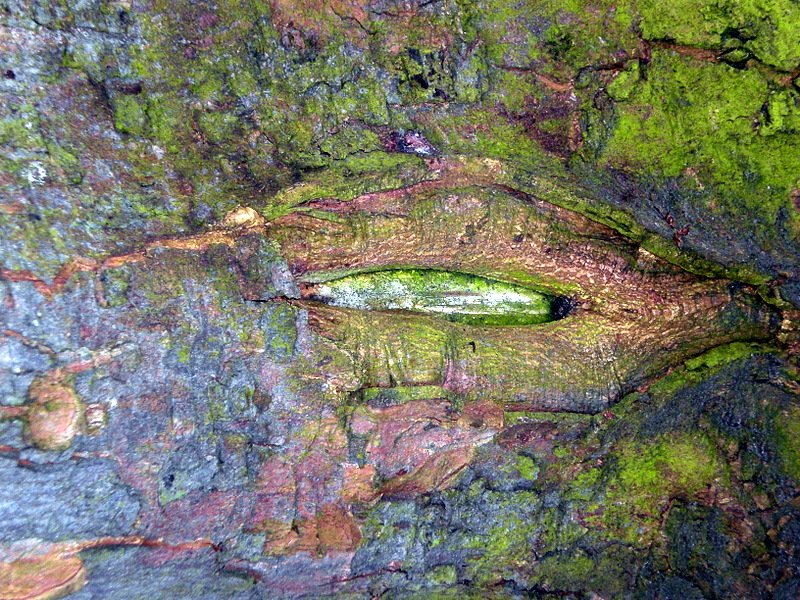
Tree mouth
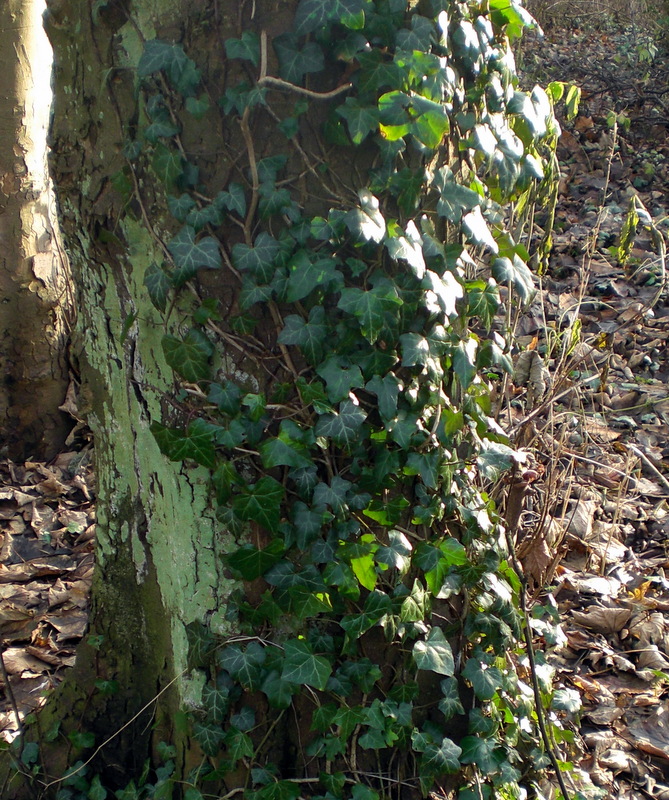
It’s good to feel the sun today. Fingers of warmth entwine and clasp hands amongst us. The lichens on my skin dissolve into light and the ivy loosens slightly. Stretching up towards the blue, a moment held in these short, chill days. Drinking from the earth, heavy with water. Sustained.
There are movers on the path. Coming.
Fingers of warmth entwine and clasp hands amongst uslichens on my skin dissolve into lightthe ivy loosens slightly
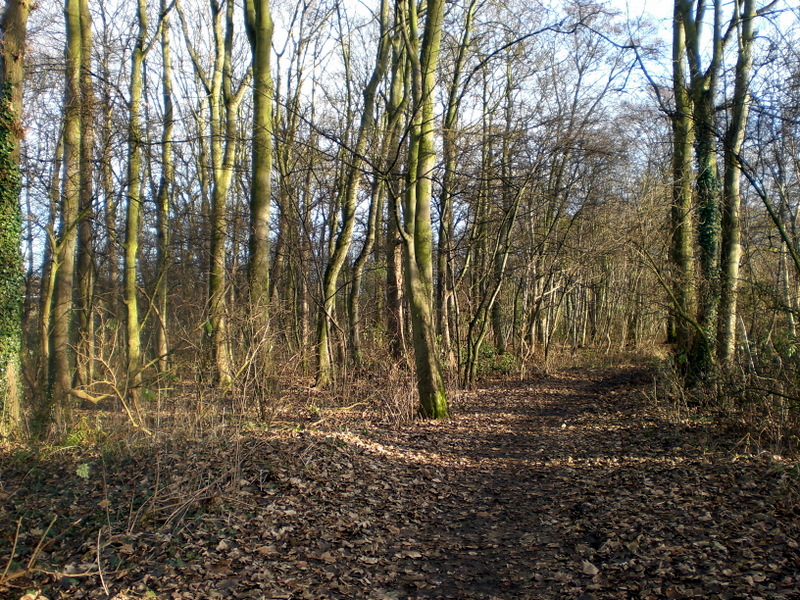
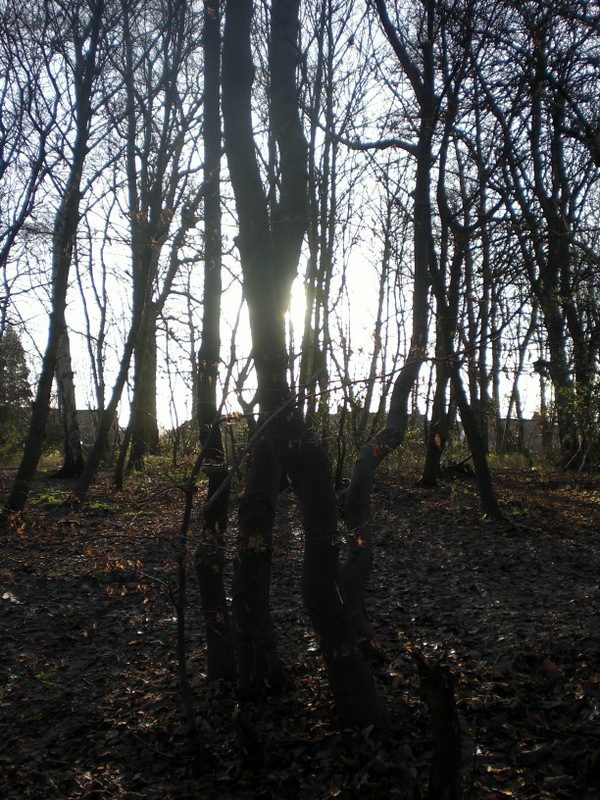
We enter the invisible, folded, other world of the wood. Old trees, bark encrusted with mottled green. Root formations resemble clawed, long-toed dinosaur feet. We expect them to lift free from the ground at any time.
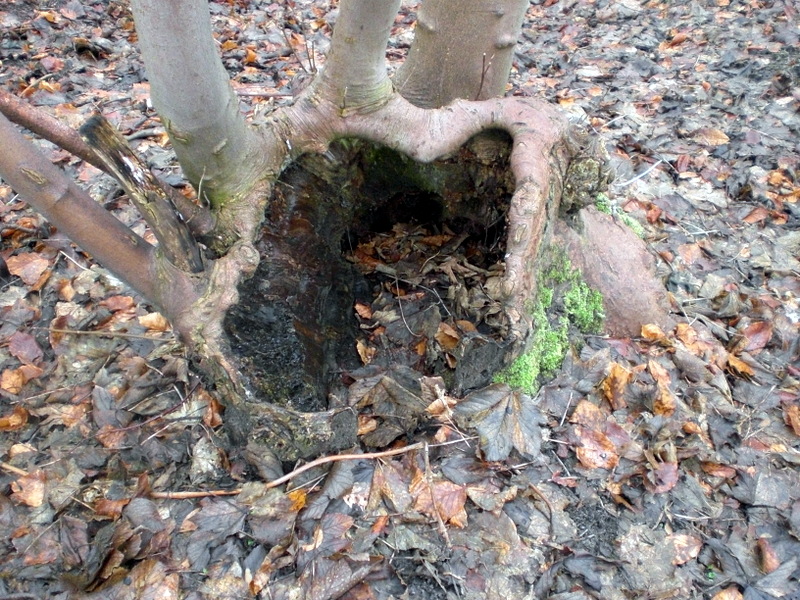
Hollowed out stumps of wooden teeth sup on leaves and sunlight.
There is a sense of a trail through the woods but little evidence of human visitation. During our visit no one arrives. No one goes. Just us. The trees and the sound and sense of birds. We find out later that there is no through-route. You have to climb a fence at the other end to get out so The Wilderness is effectively a bounded area. No doubt this discourages the use of the woods as path of transit, but perhaps helps to retain a little sliver of embedded wilderness.
We have often found that bounded, hidden areas become covert fly tipping sites but there is remarkably little evidence of this practice. A stray carrier bag probably relates to the two empty cans of Foster’s lager tossed aside.
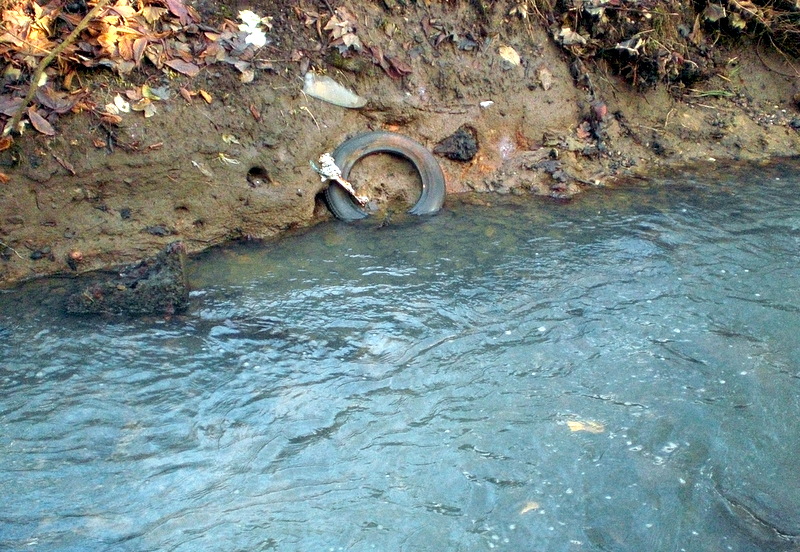
You can almost visualise the youngsters chipping in to scrape up enough money for their couple of cans before heading to the woods in anticipation of some bacchanalian wildness. We later find one car tyre and a bicycle frame. No white goods!
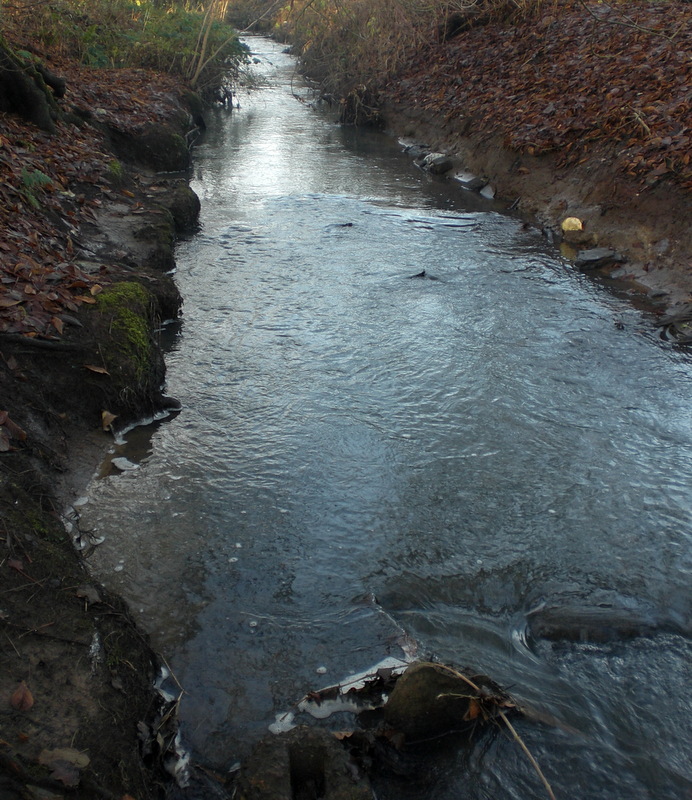
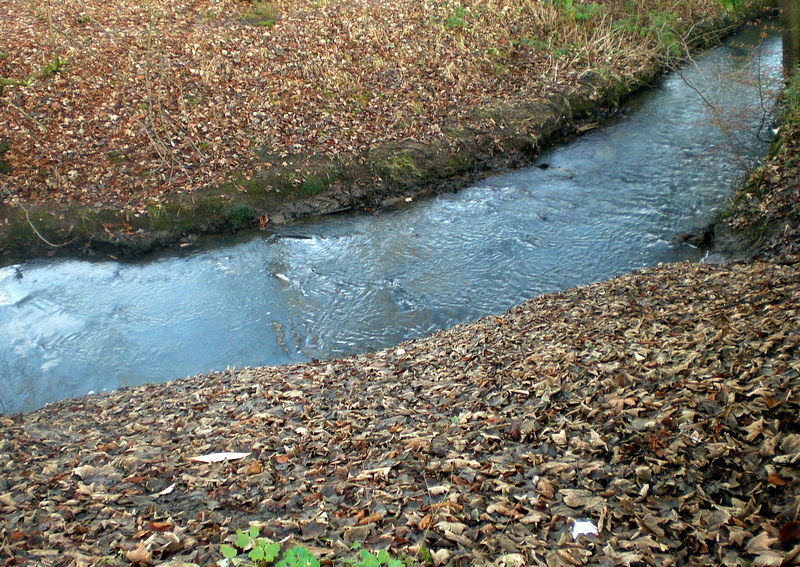
The purring murmur of running water soon entices and we follow the slope of the land down towards a wee burn.
Flowing here for many a year that’s what us wee burns do. The flow and the flux of the present moment, always existing in the eternal now. No history, no future, no time. Old Heraclitus was right you never step in the same burn twice.
Burn, stream, river, estuary. It’s all just a matter of scale.
A balloon lies trapped on the water underneath a branch. A human breath captured in time and space.
Imagine a situation where the last trace of human life on earth was the breath captured in a balloon? The most ephemeral of traces. Perhaps this is the breath of the Earth. The life-force slowly puckering, deflating, evaporating. If The Wilderness can exist in Rosyth, then why not the breath of Planet Earth?
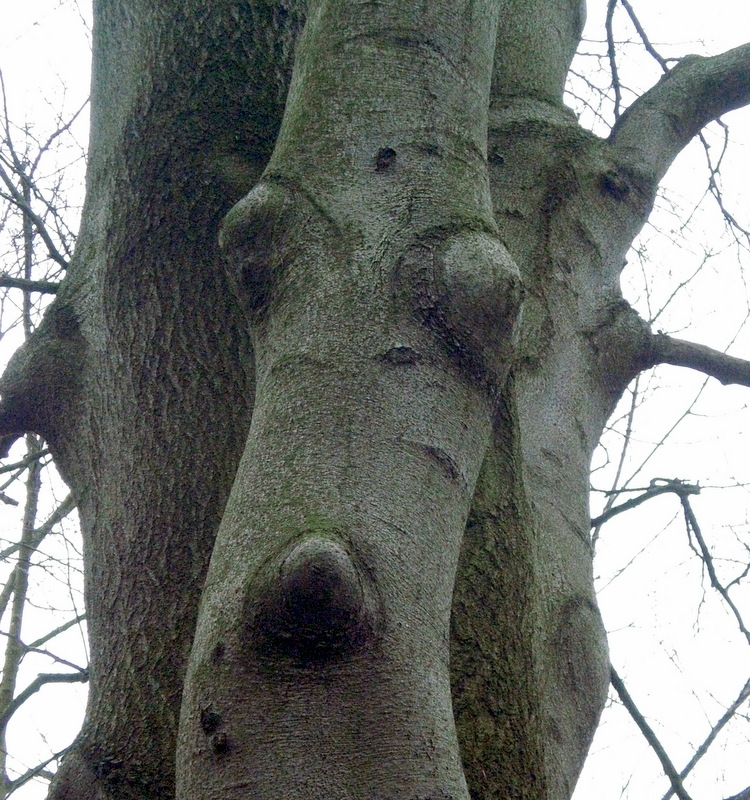
We follow the burn through to the end of the wood, watched by the bug-eyed tree spirit. Chameleon eyes surveying, observing. Oblivious to time or circumstance.
Listening and watching the wildness of the fungi, spilling from the tree stump.
[L o s t t i m e i n t h e m o m e n t]
Over the fence at the other end and we are back in a residential street. We know that we are walking down the front leg of the cartoon fox. Appropriately, the road is called Burnside.
The paws of the fox mark the transition zone and we exit The Wilderness and track back through Rosyth past the Carnegie Institute.
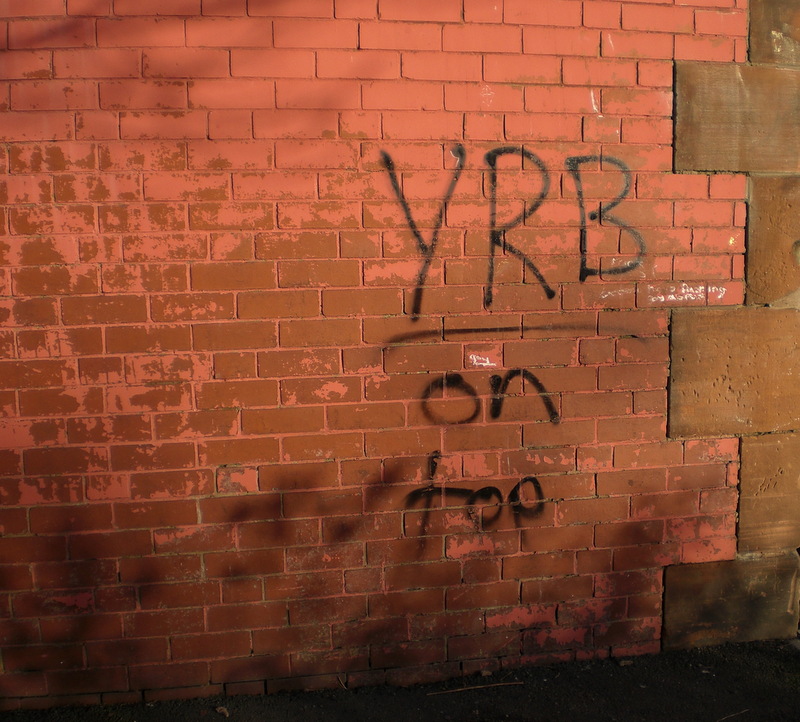
Back to civilisation, the chimneys, the birds and the tags.
Rosyth Institute – the chimneys, the birds
Appendix: The Wilderness over time
The Wilderness 1915
1915 – The Wilderness and our Fox are fully formed.
The Wilderness 1926-27
1926 -1927: The Garden City of Rosyth is now built. We can still see our fox although the rump has been annexed. A trail through The Wilderness is indicated on the map. Wilderness Cottage sits at the South West corner. Our best guess is that this was demolished and replaced by a new build church.
Wilderness 1952-66
1952-1966: New residential building has dissected our Fox’s torso almost right through the middle.
The Wilderness – 2013
2013: This is how The Wilderness is represented on Google Maps. Only a sliver of green remains – the head of our fox. The name has also disappeared but we know that however diminished it may be, The Wilderness most certainly does exist.
Now Playing: Andrew Chalk – The River that Flows into the Sands
References:
Jay Griffiths, Wild: An Elemental Journey (London: Penguin Books, 2006).
This little field trip, possibly sent from another point in time (?), was inspired by frequent visits to a favorite place in Central Fife: Lochore Meadows or The Meedies as it is known locally.
The Meedies opened as a Country Park in 1976 following one of the largest and most ambitious industrial landscape renovation projects in Europe. This included the reclamation of 600ha of heavily contaminated land comprising six redundant coal mine sites, colliery buildings, mineral railways, refuse tipping, areas of subsidence and the towering pit bings (most of them burning) which rose to 60m over the surrounding countryside and settlements.
The Meedies is now a major centre for outdoor and environmental education with Loch Ore the largest area of standing water in Fife. It is an important habitat for wildfowl with significant numbers both over-wintering and breeding. Otters, bats, water voles and even ospreys have been recorded within the park boundary. The acid grasslands of Clune Craig are botanically rich and also bear traces of hut-circles and enclosures from a Bronze age settlement.
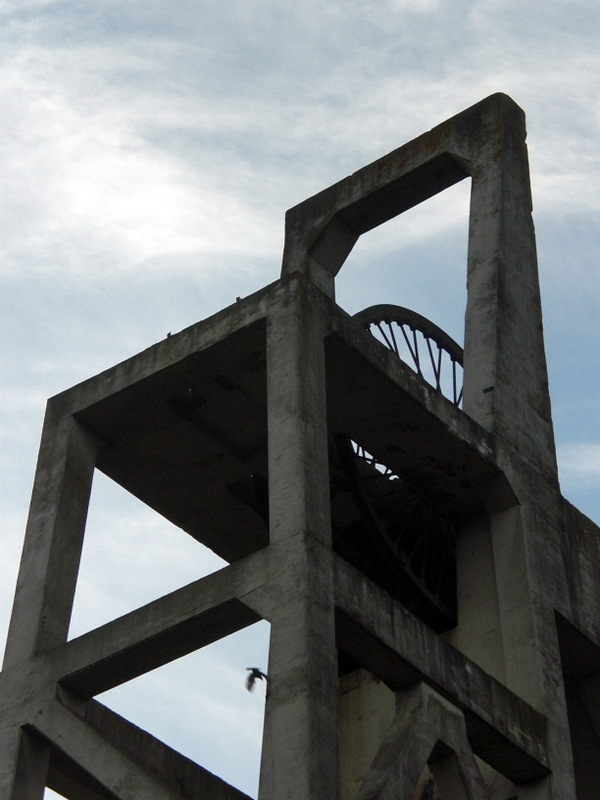
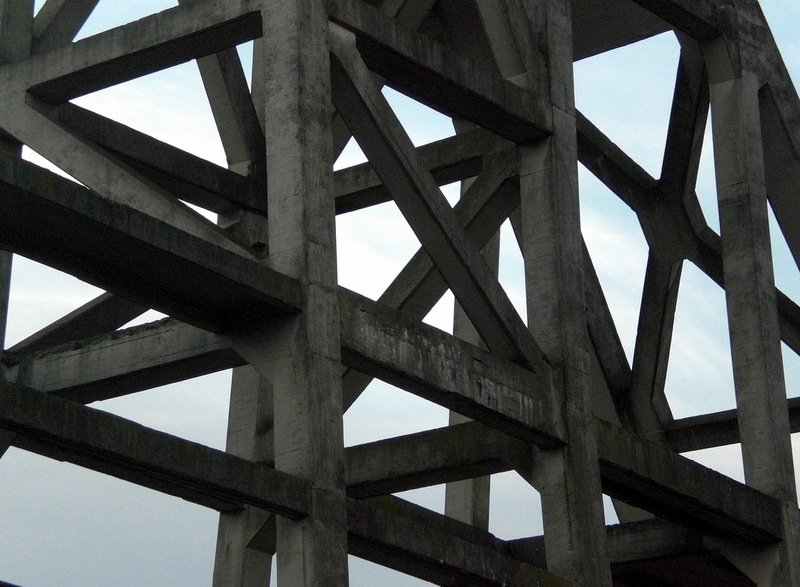
The ‘structure’ in the photographs above is the reinforced concrete headframe of the ‘Big Mary’ No. 2 pit shaft, sunk in 1923. It is one of only two such surviving structures in Fife and a monument to the Kingdom’s mining heritage. (The other is The Frances in Dysart). You can gain some impression of how the area looked when mining was in operation from this photograph:
The pit head is in the distance and the smouldering pit bings in the foreground. This photograph is from the fabulous web resource on the Fife Pits by Michael Martin which can be accessed here.
The original Loch Ore was drained in the 1790s when the landowner, Captain Parks, attempted to reclaim the land for cattle grazing. The project was a commercial failure and the land formerly occupied by the loch remained boggy. Parks was declared bankrupt in 1798. The loch gradually returned in the mid 20th century, when coal mining flourished and the mineral railway serving the pithead became an embankment surrounded by water. The return of the loch was mainly due to subsidence caused by mining, and the ‘new’ loch now occupies a different footprint to the original. The loch is now stabilised but its depth still fluctuates. The islands in the loch are the remains of the former railway embankment.
To the north west lies Harran Hill Wood which sits on a rocky ledge between Loch Ore and Benarty Hill. Botanical studies indicate a strong possibility that this site may have been wooded since shortly after the last Ice Age c. 10,000 years ago.
Whilst writing this, I’m listening to a composed piece called After The Rain by Barry Guy, perhaps better known as a free improviser. I don’t think I had ever read the sleeve notes before but was intrigued to learn that it was partly inspired by the Max Ernst painting Europe After the Rain. As Guy says in the sleeve notes:
“The canvas portrays four large masses of tortuous baroque-like remains as if left after some unfathomable catastrophe…these images invite the viewer to speculate on the nature of the events. Here in Europe After the Rain could be the apotheosis of anxiety and destruction or the emergence of new life from the ruins. I am drawn to the latter…”
Now Playing: Barry Guy and City of London Sinfonia – After the Rain
Reference:
Fife Council Lochore Meadows Country Park Development Plan, November 2008.
Miles K Oglethorpe, (2006), Scottish Collieries: An Inventory of the Scottish Coal Industry in the Nationalised Era (Edinburgh, The Royal Commission on the Ancient and Historical Monuments of Scotland).
It is often the shortest journey, undertaken with least expectation, that offers up an excess of possibility beyond what we expect to see.
It’s always worth exploring the other side of the barbed wire fence.
Never keep to the path.
(Extracts from FPC Field Guide).
Time constrained by commitments later on in the day and yet compelled by the need to go for a walk, we settle on a local part of the Fife Coastal Path. The very short stretch between Inverkeithing and Dalgety Bay is a narrow tarmacadam / cinder ribbon of a mile, or so, that meanders around the coastline. Whilst offering fine views of the Forth Rail Bridge and over to Edinburgh and Arthur’s Seat it is unlikely to trouble any tourist brochure. Indeed, the walking guide for the Fife Coastal Path devotes one short paragraph to it. There is a clear implication that this is a space that you can simply pass through. It is also a functional path, popular with dog walkers, leisurely strollers and is even lined with street lighting. However, as the sign above indicates, the traveller is asked to keep within the marked path. We cannot help thinking of Little Red Riding Hood but can only read the sign as an invitation to stray …
There is a distinctive topography to the land along this stretch of the path which edges around Inverkeithing Bay with sloping scrub and wooded elevations up to Preston Hill and Letham Hill behind. These factors and lack of road access, has prevented any urban coalescence between the nodal points of the old industrial harbour of Inverkeithing and the 1960s new town of Dalgety Bay.
Looking towards Dalgety Bay from Inverkeithing
However, there is also a distinct feeling of crossing a threshold, as you escape the gravity and material ephemera of the human settlement, and move into this zone from either end. A feeling of the wildness encroaching, long forgotten histories written into the land, whispered stories at the periphery of perception. A freeing up of the rules.
~~~
Lock-ups – Leaving Inverkeithing
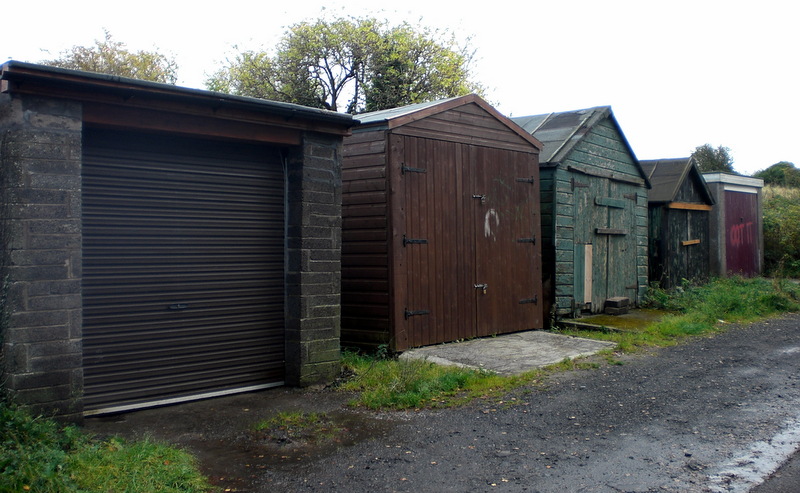
Leaving from Inverkeithing, we walk past a row of lock-ups, that are not without some semblance of aesthetic beauty in their irregular order and contrasting colours. You wonder what is behind these out-of-the-way closed doors? Some have obviously not been accessed for some time given the overgrown vegetation in front. We also notice that as soon as you pass the last lock-up, the wild space is already there, encroaching green fingers, edging into the human space and into the photo frame. There is also a rather cryptic graffiti announcement:
Oot ItEntering / Leaving The Zone – Dalgety Bay
We are not sure whether to read this utterance as a comment on some existentialist predicament (“Out of it”) or a marker post to signify a transition point of moving out of the urban setting. (Moving oot it). Later on, when we reach the Dalgety Bay end of the path we find more graffiti on the first inhabited house. There is a clear sense that both of these graffiti bookend an entry – or exit. We read these signs as an intimation that what lies between these threshold markers is a different place – a zone. Not urban, yet not rural. Not even ‘classic’ edgeland. Instead, an indication that what lies within is an escape from the ostensible order of the settlements. Possibly a play area, a hidden place, an out of sight place, a gathering place, a wildness.
Follow the Desire Path
We are not far out of Inverkeithing when our advice to keep to the marked path is quickly discounted. We are drawn to the barbed wire topped, chain wire fence that we can see across a flat area of post industrial wasteland off to the left. It’s a pretty feeble attempt at preventing access as a whole section has been removed and most of the barbed wire has been snipped off.
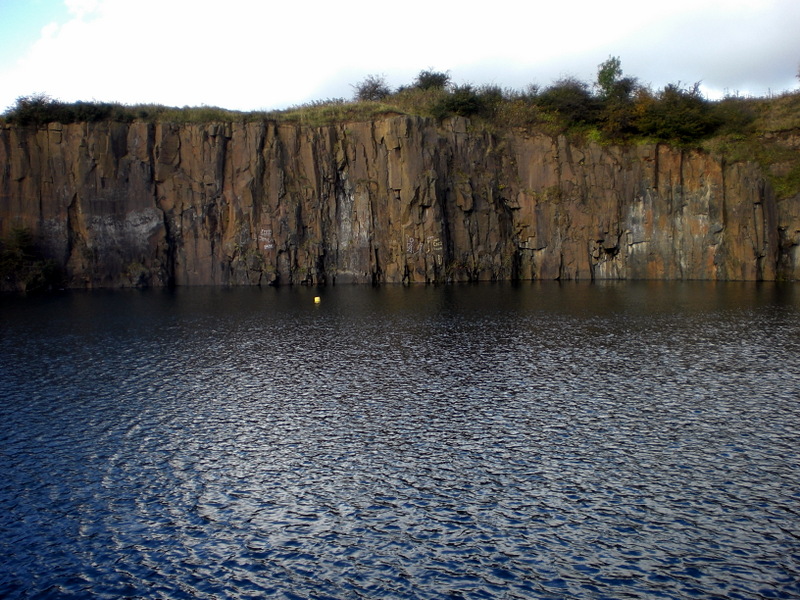
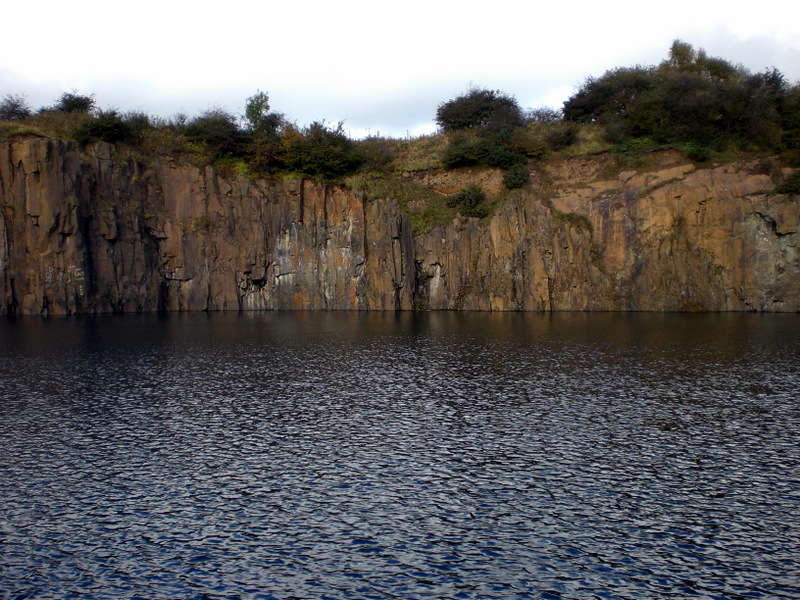
We follow the well trodden desire path through the fence to find ourselves in the heart of the abandoned Prestonhill Quarry, now filled up with water. There is a compelling, uncanny beauty to this place. A void gouged and hewn out of the Earth, with the remaining dolerite walls reflecting weak sunlight like a cubist canvas. The acoustic ambience has also noticeably changed. We are in a huge reverberating chamber so that the slightest noise pings around the walls. A distant ice cream van sounds as if it should be coming from somewhere within the quarry, possibly submerged underneath the water. At the same time swallows dart and zig-zag above our heads, whilst magpies hop and skip around the top rocks, observing us with curiosity. A couple of buzzards circle in the distance . There is no one else around.
Prestonhill Quarry – Cubist Walls ICubist Walls II
What is noticeable is that even in these most barren of conditions, non-human nature is restaking a claim with outcrops of growing vegetation, clinging to the quarry walls, thriving in the most hostile of conditions and the thinnest scrapings of soil.
Cubist Walls III
We soon find the ubiquitous discarded fridge. Lying face down, its broken body surrounded by other accumulated fly tipped debris. The human stain of the dumping ground. It is always a puzzle to consider the time and energy it must take to fly tip a fridge in an ‘out of the way’ area, such as this, compared with taking it to the recycling point. Perhaps it’s for the sheer visceral thrill of throwing a fridge into a quarry. We assume that it has been pushed over the top and has been there for some time.
~~~
There is perhaps another attraction of the quarry. It is an unseen place with very deep water. Every surface has another side. What else lurks underneath the skin of calm blue water? What is submerged down there in the green depths with the little fishes?
~~~~~
g
o
i
n
g
~~~~~
b
e
l
o
w
~~~~~
t
h
e
~~~~~
s
u
r
f
a
c
e
~~~~~~~~~~~~~~~
(c) Zibi(c) Zibi(c) ZibiFish in Prestonhill Quarry (c) Zibi
All underwater photographs of the quarry are by ‘Zibi’ and can be accessed here along with many others. Whilst we have attempted to seek permission from Zibi to use these images, we have not received any reply to our request. Clearly if our request is subsequently refused we will remove the photographs from the blog but in the meantime were are grateful to Zibi for their inclusion.
It would appear that the quarry is also a favored disposal spot for stolen cars, making for an ideal symbiotic relationship with the diving community who find the quarry an attractive destination for underwater exploration. There is plenty to see and investigate below the surface. We are also told later that local fishermen stock the quarry with fish which they then try to catch again, fostering a fledgling underwater eco-system. There are rumours that someone may have introduced a pike.
~~~
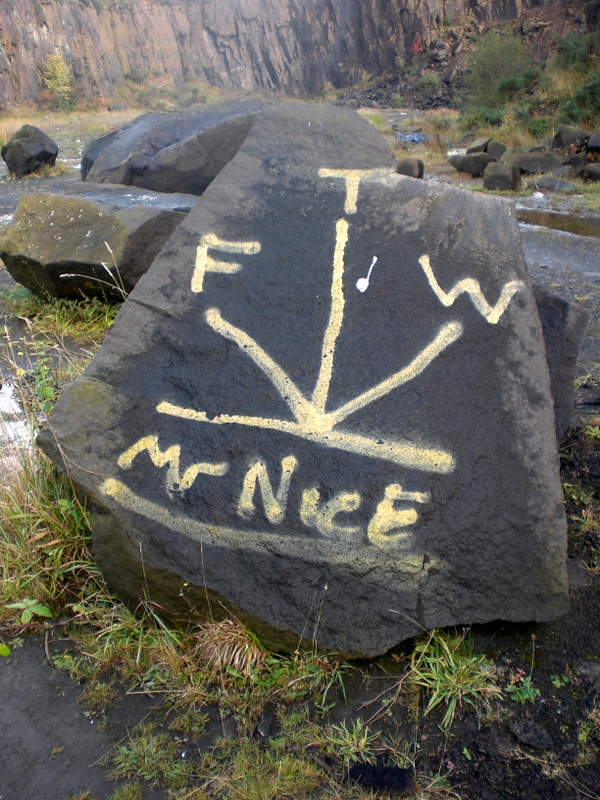
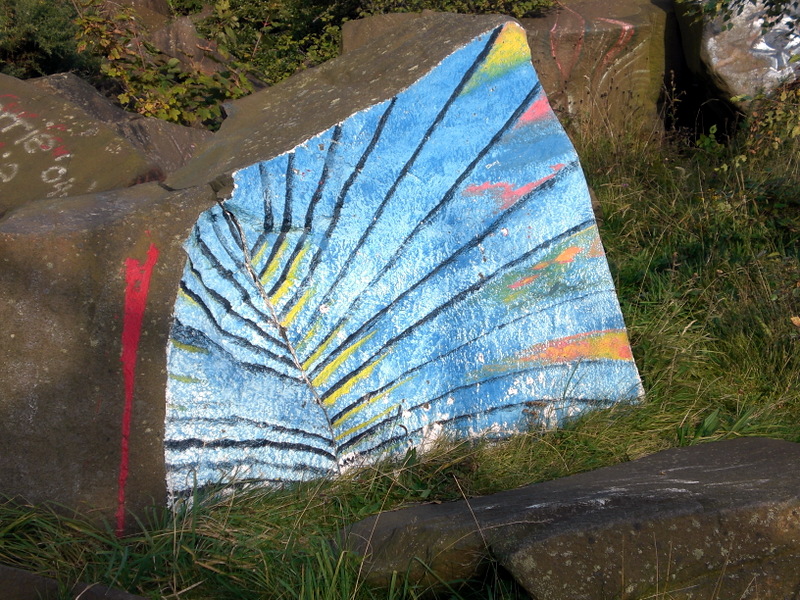
The quarry is also clearly a gathering place. A hidden place of escape and unregulated recreation. We walk around the void, recording some of the many tags that have been written on to the rocks.
Staring up at the quarry wall and contemplating the material passage of time ossified in these rocks. The play of light on the angular shapes conjures up dynamic planes of movement and appear to imbue the rocks with an almost animistic quality. We can eventually see a cubist rock giant, emerging from time with right arm raised:
Emerging Cubist Rock Giant
~~~
Back on the path, we head off to the right hand side this time.
Stretching out over the water is a fretwork pier of rusting metal which we find out later was the old industrial conveyor system used to load the quarried stone on to tethered ships.
We stand for a while to listen out for the lost sounds of this place. The kling klang ghosts of the industrial machinery, the heft of monolithic slabs of dolerite rattling down towards the waiting ships.
almost silent now
now almost silent
only the ack-ack-ack
of a solitary gull
riding the wind currents
overhead.
A large steel plate has been placed across the structure presumably in an attempt to prevent people from climbing out along the pier. It’s unlikely to be a deterrent but it no doubt satisfies some health and safety regime. The plate has rusted and weathered into something resembling a Richard Serra sculpture:
Richard Serra ?
Once again, we can see how the wildness is staking its claim with tendrils of green growing up, through and out of the lattice structure. “Shugg and Leanne” evidence the human urge to make a mark. The basic proof of existence. A name recorded. A demonstration of love?
Running parallel to the fretwork structure is another abandoned jetty. The pulleys remain suspended from the cross beam conjuring up something of the gibbet or perhaps some form of cosmic launch mechanism to project the traveller up and into the pillows of cloud:
all of this
abandoned history
lost stories, forgotten stories
sounds of absence
whispering in the wind.
We decide to explore a bit further underneath the conveyor structure sensing that this may yield possibilities. We are not disappointed when we alight on this gathering site:
What is noticeable is that there is no rubbish strewn here. It’s as if this is a place of respect. Strangely enough, the atmosphere evokes a similar feel to another outcrop of rocks that can be found on The Binn (Hill) along the coast at Burntisland:
Rock outcrop, The Binn, Burntisland
Humans have also made their marks on The Binn stones, albeit some 4,000 years earlier
Cup and Ring, The Binn, Burntisland
~~~
We pick up a bit of walking pace to take advantage of the seascape.
a sounded wave, persistent and seductive –
plays the shoreline.
flux and flow of sea brine –
a spilling over
of elemental energy.
Once again the unusual topography is such that we can hear a mash-up of field and hedgerow bird song against foreshore waders and gull talk. A chorus of crows, darting finches and tits; a wren bobs along the wall before taking refuge in the trees. What looks like a falling red leaf is actually a robin. On the foreshore, oystercatchers, and curlews wade and waddle whilst fulmars, cormorants and herring gulls dive and swoop. Symphonies of birdsong and gull chatter.
It doesn’t take long to reach Dalgety Bay, but just before the threshold graffiti we come across this:
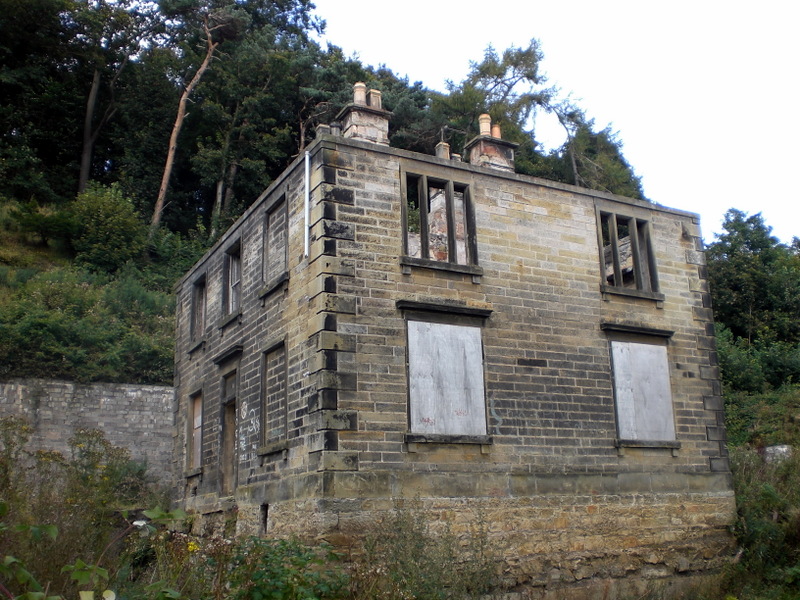
Abandoned House Dalgety Bay
Roofless and abandoned, it looks as if all of the surrounding land has been sucked away from the foundations leaving it sitting like an old tooth stump.
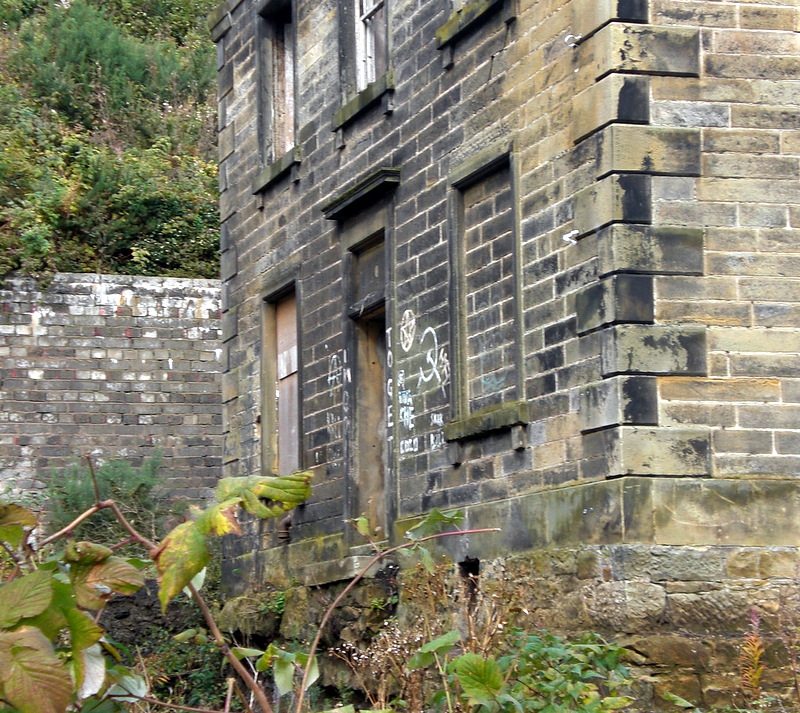
Doorway to Nowhere
We try to piece together a narrative here but fail. Why has it been abandoned? Why left to ruin? It was clearly a property that had wealth behind it at some point, sitting in its walled garden. Enquiries are made of a few passing locals but yield nothing. “It’s always been like that” says a man who looks to be in his forties. “Ever since I was a wee kid”. He doesn’t know the story though.
~~~
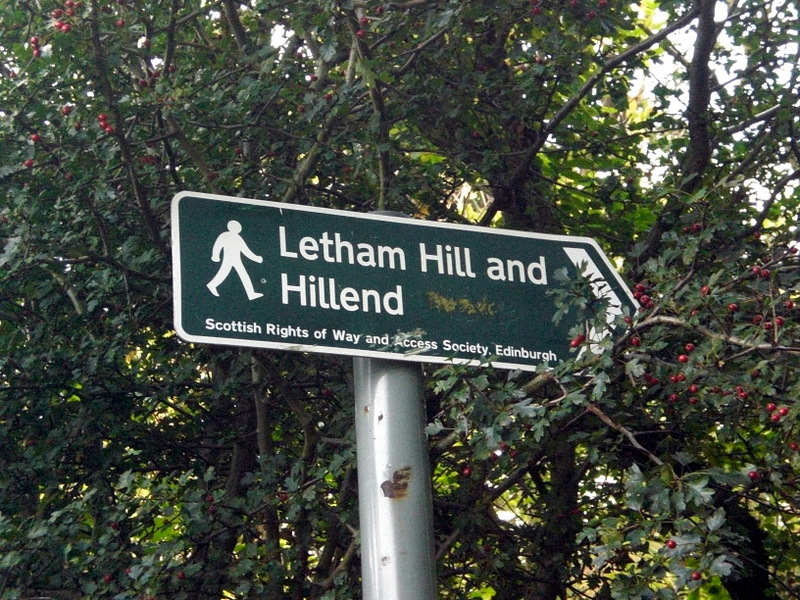
We are on the reverse trip back to Inverkeithing when we spot a small opening in the stone wall with a signpost:
How could we resist? Off up the rickety path which didn’t appear overly well trodden.
We find a beetle on its back on one of the steps clearly distressed. A multitude of legs. flailing wildly, unable to right itself. We soon tip it on to its feet and the little jet black shell scuffles off into the grass.
The path ascends fairly steeply and it’s not long before we find ourselves on a high ridge which slopes away towards Letham Wood. That will have to wait for another day. Our immediate area of interest lies off to the left. Another barbed wire fence and it’s as easy to circumvent as the last one. This is what we had been leading up to. We could already feel what we were about to witness but were unprepared for the sheer scale of it. Compared to the ground level, water-filled heart of the quarry, we could now gain a perspective of the entire void and walk right up to peer over the edge.
The VoidThe Void IIThe Void III
Peering over the side, into the void, it’s as if a vacuum is trying to suck your insides out. I’m reminded of Aragon in Paris Peasant and the ‘suicide bridge’ in Buttes Chaumont park – coincidentally built in a reclaimed stone quarry. Before metal grilles were erected along the side of the bridge, it would supposedly claim victims from passers-by who had had no intention whatsoever of killing themselves but found themselves suddenly tempted by the invocation of the abyss.
Our photographic skills are unable to adequately capture the scale of this almost mournful absence, hewn from the Earth. It’s a place to simply sit and stare for a while.
.
.
.
.
.
.
It’s often easy to forget to raise our heads to the horizon. Having escaped the seduction of the void, we now realise how high up on the ridge we are. It changes our sense of the whole topography of the area. We can see how connected we are to the East side of Inverkeithing and marvel at the long view over to Dunfermline. We can see Spinner in the distance with the distorted perspective making it appear as if it is growing out of a housing estate.
Spinner
We later discover that there is also an abandoned WW2 radio station complete with intact pill boxes not too far away but don’t see them today. Another time.
We descend back down the hill to the coastal path and reflect on our experience. What we had anticipated as a short, local coastal walk had been transformed into something else. A journey through a zonal space teeming with encounters and traces of the human, non-human and even the animistic. A co-existence of dumping ground, liminal playground, gathering place and nature sanctuary. The transient narrative of human activity inscribed in the abandoned house and the mute quarries and jetties a reminder of how financial capital abandons one exhausted void to migrate to the next site of profitable extraction.
Above all of this, the continually changing drama in the sky:
Sometimes it’s in the sky when you look – Buzzard dotsLooking to Arthur’s Seat and Edinburgh
Eye in the Sky
And as we return to Inverkeithing we can smell the sweet wood lying in the still functioning timber yard and take one last photo. It’s only later, that we notice that in this photograph, and almost all of the others, there is some intimation of wild nature straying into the frame.
An alert wildness, observing, perhaps patiently waiting for its moment to come.
Buildings loom over us and persist beyond us. They have the perfect memory of materiality
Longevity has no chance without a serious structure
Stewart Brand – How Buildings Learn
We finally got the chance to have a good investigative wander around the Summerhall building. Just in time before the Edinburgh Art Festival exhibitions close.
Summerhall is the old Dick Vet building (The Royal (Dick) School of Veterinary Studies of the University of Edinburgh) which has now been transformed into what must be one of the most unique art and performance spaces in the UK. (Europe/World/Cosmos?).
A previous visit was during the full-on party atmosphere of the Edinburgh Festival. Archie Shepp was performing in the Dissection Room, blowing his fire music and détourning jazz standards for the animal spirits. Quite a contrast to a September Saturday when you could wander through the building and its environs and rarely encounter another soul. With over 500 rooms, located over three floors, a basement and outbuildings, wandering the footprint of Summerhall is more like exploring a Borgesian labyrinth where encounters and exhibits are chanced upon and randomly discovered. Quite unlike the mapped-out, directional flow of the conventional gallery experience. Even spending most of the day at Summerhall, we still didn’t ‘find’ everything that was here – around thirty discrete exhibitions that are incorporated into the existing fabric of the building.
And what a building. Whispering from the walls and corridors, you can sense the stories and sounds that are soaked into this space. Stories not only of the human, but also the animals who have inhabited and passed through here: the corridors, the stables, the animal hospital, the dissection rooms…
Above the Entrance to 7x7th Street
First exhibition stop is the, rather playful, outdoor installation 7×7 by Jean Pierre Muller in collaboration with seven musicians: Robert Wyatt, Archie Shepp, Sean O’Hagan, Mulatu Astatke, Kassin, Nile Rodgers and Terry Riley. Muller and his stellar band of sonic explorers have created 7x7th Street consisting of seven wooden huts linked to a letter, a colour of the rainbow, a day of the week, a chakra, and a specific place. Riffing on these associations, each musician has then created an interactive sound sculpture tapping into their own diverse personal histories to create “new connections of knowledge, meaning and poetry”.
Robert Wyatt’s hut is ‘A’ for the Alhambra, the Red Palace. Monday, the first day of the week, so the day of the Moon.
Robert Wyatt 7×7
Inside Wyatt’s Alhambra, everything is under the influence of Clair de Lune. Audrey Hepburn strums a guitar and sings Moon River, Louis Hardin, aka Moondog, keeps watch over the lunar rockets and Neil Armstrong prepares for take-off.
Robert Wyatt 7×7 Interior
Archie Shepp’s hut is ‘B’ for the Blues and the B-line to Brooklyn. The colour of orange sits well with Tuesday, the day of Mars.
Archie Shepp 7×7Archie Shepp 7×7 Interior detail
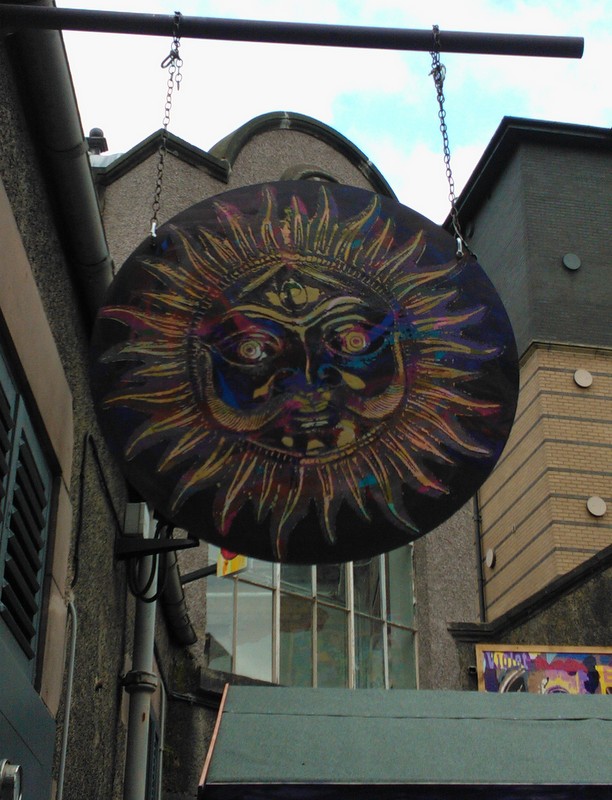
Perhaps our favourite is Terry Riley’s ‘G’ for Galaxies, the colour violet and seventh day of the week, Sunday, day of the Sun. A hut of the Cosmos, the domain of The Sun King,
Terry Riley 7×7Terry Riley 7×7 Interior detail
What is noticeable in Terry Riley’s interior panel is a much reduced number of visual elements. Instead, symbols and motifs are treated to repetition, distortion, diffraction and linked up through connecting space. Much like Riley’s music!
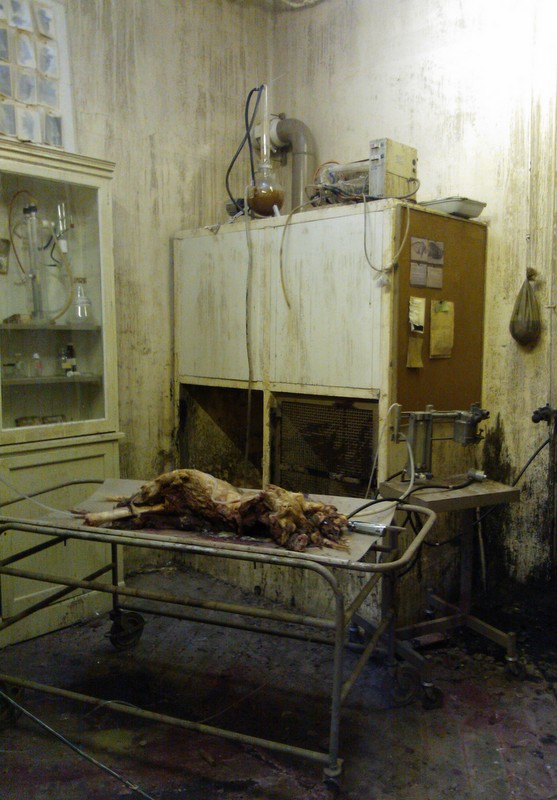
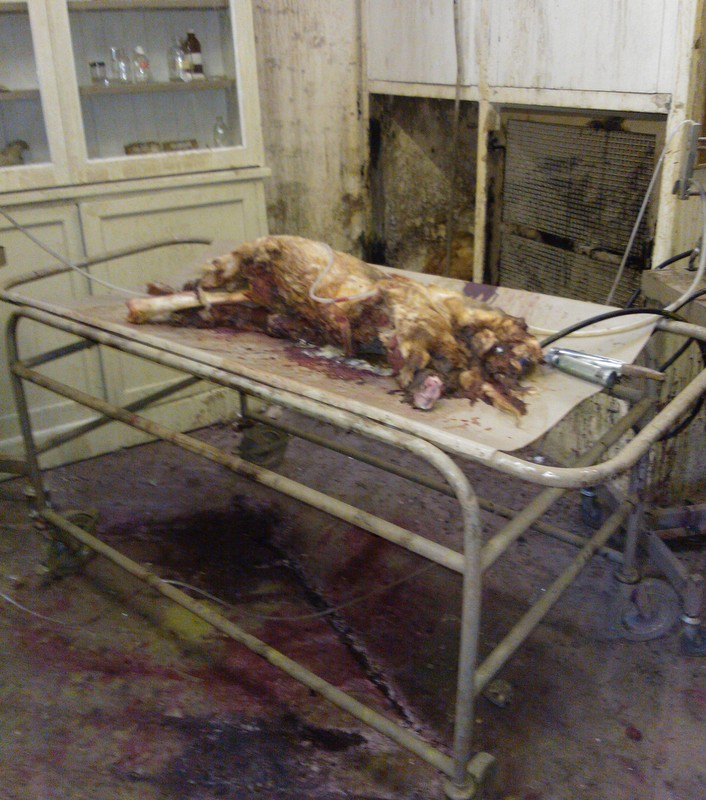
After the jaunty, neo-pop art of 7x7th Street, a sharper contrast could not be made visiting the Old Stables. Tucked in behind Robert Wyatt’s hut, this is the scene of Robert Kuśmirowski’s installation Pain Thing. There is a palpable change in atmosphere as you enter the building from the street. The colours of 7×7 Street leach out of the retina and fade to dirty cream and grey. Flecks of what looks like dried blood stain the floor and an oppressive air starts to envelop and smother. When we arrive in the main room – an asthmatic room – it feels like we are witnessing the aftermath of some post-apocalyptic scene. An animal experimentation zone where something has gone horribly wrong. The paraphernalia and apparatus of the medical research establishment lies around, test tubes, bell jars, pumps and instruments, some scattered on the floor. The torso of a unidentified creature lies on a hospital style trolley, limbs severed, bone sliced through:
.
.
.
.
.
.
This is not a place we wish to linger.
Inside Summerhall, the building retains its institutional air. Long corridors, unmarked closed doors, stairwells and the cell like structures of the basement. Signage still indicates past functions: The Post-Mortem Room, The Demonstration Room, The Anatomy Lecture Theatre. It is a great place to simply wander around, listening out for whispered narratives layered into stone, wood and glass. The fabric of the building is also used to good effect. The original laboratory benches are used for display purposes and basement cells exude a sinister ambience. One room hosts what looks like some restraining, torture chair and in another a dark sticky ooze spreads on the floor, apparently the residue from some long decomposed water melons.
.
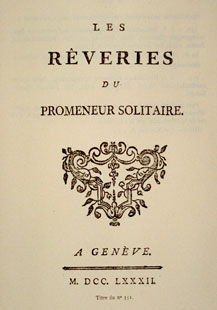
Chance discovered highlights include stumbling into Ian Hamilton Finlay’sFewer Laws, More Examples which examines Finlay’s response to and fascination with The French Revolution. An ambivalent mash-up of principle and virtue, but also fear and terror. Robin Gillanders’sThe Philosopher’s Garden Redux portrays ten photographs taken in the Parc Jean-Jacques Rousseau at Emenonville where Rousseau spent the last years of his life. Each photograph represents one of the ten walks of Rousseau’s last (uncompleted) book Les Reveries du Promeneneur Solitaire (1782).
“These hours of solitude and meditation are the only time of the day when I am completely myself”
Jean-Jacques Rousseau
The Richard Demarco Archives host a treasure trove of photographs and posters and are a wonderful tribute to Demarco’s visionary approach to curating art. There are legendary documented events featuring Joseph Beuys, Marina Abramovich and Tadeusz Kantor and Scottish artists such as George Wyllie and Jimmy Boyle. There is also a reminder that Demarco would take his productions over to Fife with photographs of Valery Anisenko’s production of Macbeth at Ravenscraig Castle, Kirkcaldy in 1996. A hand scribbled NB reads:
“MacDuff was the Thane of Fife. His Castle lies 8 miles down the Coast”
which indeed it still does at East Wemyss. Now a ruin, the site is associated with the MacDuff Earls of Fife, the most powerful family in Fife in the Middle Ages.
Venus with Severed Leg is a collection of photographs by William English documenting the early days of Vivienne Westwood and Malcolm McLaren’s ‘ Sex’ shop. The crucible for the birth of The Sex Pistols and Westwood’s influential punk stylings.
Venus-With-Severed-Leg (c) Summerhall
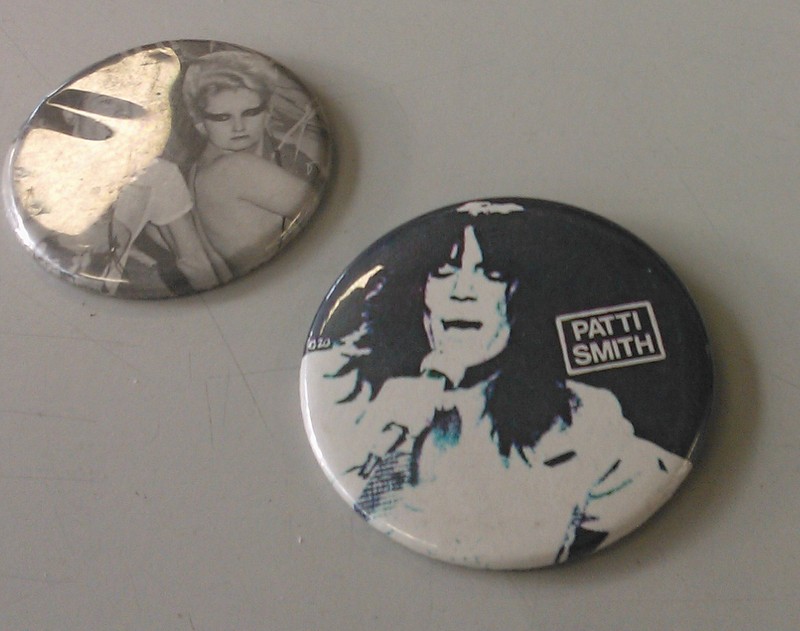
Phenotype Genotype (PhG) is a collection of documents, artists books, object multiples catalogues and other ephemera from 1900 to the present day. Displayed on the original college laboratory benches, it is perhaps a bit strange and even disconcerting to see Debord’s La Société du spectacle and Patti Smith pinbutton badges, displayed like museum exhibits, encased behind glass.
.
.
.
.
.
.
.
Also in the same room, painted directly on to the wall is The Periodic Table of Art. Executed with a certain touch of humour and perhaps also playing upon what appears to be a fundamental human need to catalogue, and document almost anything into a ‘meaningful’ taxonomy.
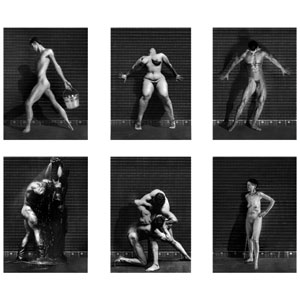
The Periodic Table of Art (Extract)Michaelek-After-Muybridge (c) Summerhall
The absolute standout piece, however, is David Michalek’sFigure Studies and Slow Dancing. An utterly mesmerising, beautiful and thought-provoking 3-screen film installation inspired by the pioneering photography of Eadweard Muybridge. Michalek works with choreographers, dancers, actors and people from the streets of New York and has filmed them, unclothed, performing various 5 second human ‘actions’ in extreme high-resolution. These 5-second actions are then played back over a period of 7 minutes with every nuance of movement captured on the human body over this elongated time frame. The rich diversity of human form is portrayed across age, gender, ethnic diversity, shape and size. It also raises the question of whether ‘class’ is written on the unclothed body. This is a work that not only enriches and enthralls but helps you to see the world afresh outside of clock time. The work is further enhanced by the (uncredited) soundtrack which is used to great effect to compliment the images. The unmistakable slow breathing of Morton Feldman’s Piano and String Quartet.
Just before closing, we are trying to find our way out when we turn a corner and find ourselves facing the iconic image of Joseph Beuys. It is as if he is walking towards us, puposefully, the reflecting light creating a halo around him. As we leave, it is good to know that the spirit of Joseph Beuys is patrolling the corridors of Summerhall. We wonder if the vets ever treated a Coyote?
Beuys Halo – Summerhall
Now Playing: Terry Riley – Descending Moonshine Dervishes
 ~
~


























































 Murdo Eason - From Hill to Sea