
.
in fading light, at
cusp of sea and sky
barely a shadow, alone
stalking the shoreline
≈
Murdo Eason - From Hill to Sea
walking / writing / between world and word
.
in fading light, at
cusp of sea and sky
barely a shadow, alone
stalking the shoreline
≈

.
A glorious autumnal day.
Sunshine daggers – fade
cloaked in honey.
≈

.
.
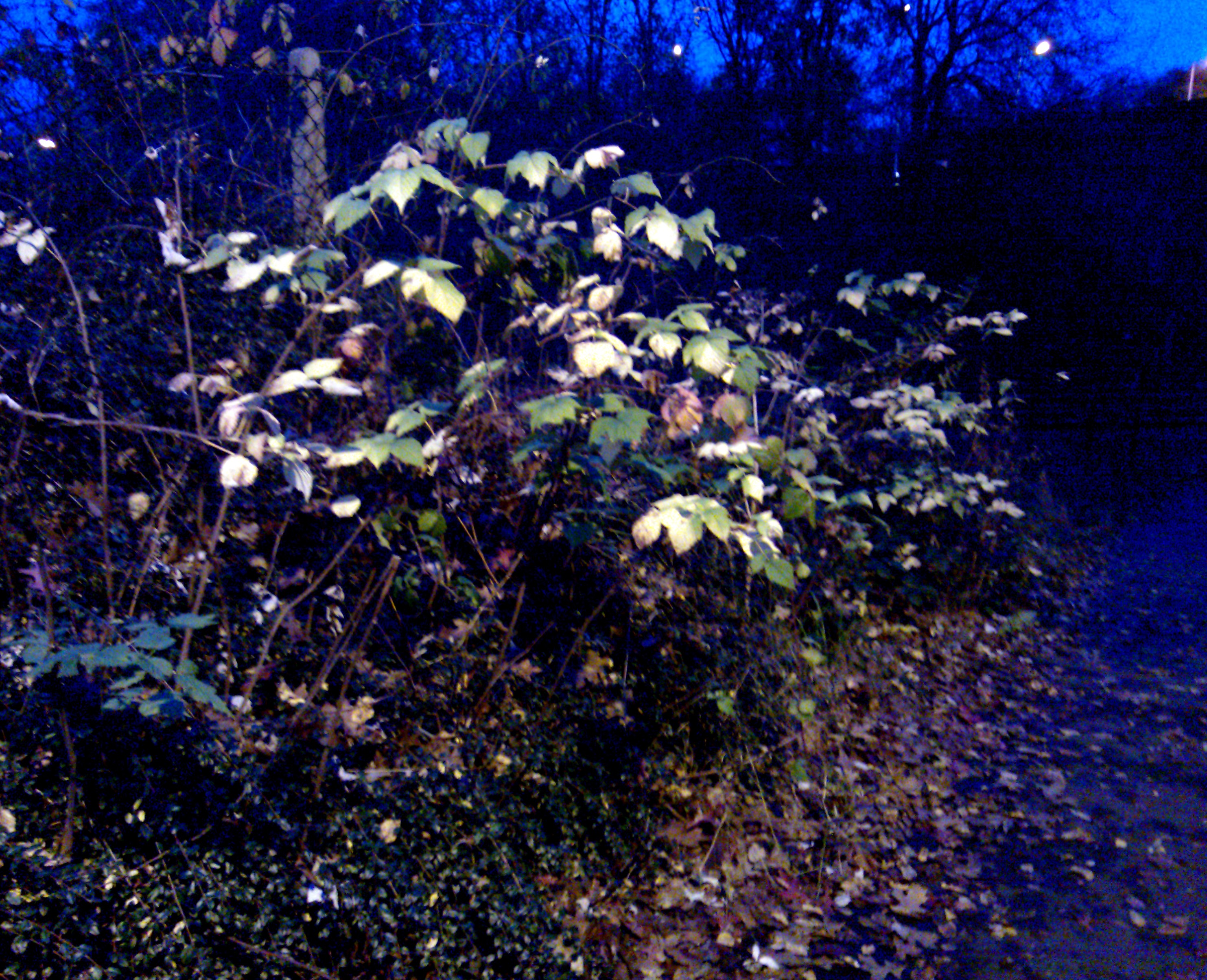
Autumn leaves (twilight / nocturne)
≈
We have previously entered the Zone-like territory of The Void which was documented in a previous post here:
.
We have just been sent this wonderful photo by Stray Seal which captures the uncanny, submerged world of The Void. It also confirms that the pike rumoured to patrol the waters is clearly swimming in the depths:

Stray Seal is Lindsay Brown, a cinematographer specialising in underwater film and photography for both drama and documentary, including natural history. There are some more of her quarry pictures here and check out her website and facebook albums.
Now playing: Mothlite – ‘The One in the Water’ from Flax of Reverie
With the clocks about to go back this weekend, autumnal hues cloak the body and seep into the skin. The piercing light of summer is almost emptied out. Weak threads of sunlight dissolve amongst russet, ochre and blanket skies of grey.
Here then, some small cups of blue:

.
inked
……………upon the sky
blue
……………cupped
time
……………held
in a breath
≈≈≈
The potter makes the earthen pitcher out of earth selected and prepared specifically for it. The potter … shapes the clay. No – he shapes the emptiness.
Martin Heidegger
When posting the above image on twitter, I received, by return, a digital echo from Andrew Male, (@AndrewMaleMojo). A fragile image, of the same unknown plant, etched in glaze and fire; ‘cupped’ and bleeding into blue.

The bowl was made by the potter Beresford Pealing who ran a studio-pottery at Harnham Mill, West Harnham, Salisbury, Wiltshire from 1966-1972. Pealing created hand-thrown domestic stoneware оf а type pioneered by Bernard Leach working іn аn Arts & Crafts tradition.

The image of Pealing’s bowl resonated with the image of that flower cupping light, sky and time and somehow reminded me of Martin Heidegger’s late thought, particularly his Bremen Lecture of 1949, Insight into That Which Is:
When we fill the pitcher, the liquid flows into the empty pitcher … The thingness of the container in no way rests in the material that it is made of, but in the emptiness that [it?] contains.
I’m not sure if Heidegger ever acknowledged it, but it seems too much of a coincidence if this passage was not influenced by the arguably more poetic rendering in the Tao Te Ching:
Shape clay into a vessel;
It is the space within that makes it useful.
(Tao Te Ching: Chapter 11, translated by Stephen Mitchell, 1988)
or in an alternative translation:
Hollowed out,
clay makes a pot.
Where the pot’s not
is where it’s useful.
(Tao Te Ching: Chapter 11, translated by Ursula K. Le Guin, 1998)
A random moment this week threaded together that plant inked against the sky and Beresford Pealing’s bowl. Opening the front door, an empty form cupping the autumn light:

Overnight, a dweller on the threshold had constructed possibly the perfect form of useful emptiness. A filigree construction allowing the world to pass through and bring whatever bounty may stick on the way…
And of the unknown plant?
When the photograph was taken, I had no idea what it was, although A, who is the gardener, told me that it would soon ‘explode’. She didn’t know the name either.
Fraser MacDonald @JAFMacDonald kindly identified it as Agapanthus and sent a link to this stunning time-lapse film. Enjoy the white stars exploding in all their glory. All within fifteen seconds:
.
But there is one final act of synchronicity. Re-watching the film clip today and revisiting Heidegger’s lecture, I come across his thinking on the emerging technologies of 1949 (for example film) and specifically, their ability to collapse time and space. An example that he gives is:
the sprouting and flourishing of plants which remained hidden throughout the seasons is now openly displayed on film within a minute…
We can only imagine what his response may have been to the webs spun by modern technologies. Lots of un-useful emptiness? Perhaps we can learn from the spider. Spin the web, shape the emptiness and see what sticks.
Many thanks go to Andrew Male and Fraser MacDonald for their invaluable contributions to this post.
Now playing: Brian Lavelle – Empty Transmissions.
References:
Martin Heidegger, Insight into That Which Is, Bremen Lecture, 1949 (Indiana: Indiana University Press, 2012)
Lao Tzu. The Tao Te Ching, various translations.
 .
.


. 
.
 Now playing: Arne Deforce & Mika Vainio – Hephaestus

On the longest day
…………………………………….all
…………………………………………………..hail the light
.
≈
21 June 2014. Walking along an overgrown railway track near Crombie in Fife. As ‘night’ approaches, darkness fails to smother the light. Even the Giant Hogweed (?) appears to embrace the sky.
Now playing: Loren Mazzacane & Suzanne Langille – Come Night
And we
………….who always think
……………………….of happiness rising
would feel the emotion
……………that almost startles us
………………………….when a happy thing falls.
Rainer Maria Rilke – Duino Elegies
≈
It often happens. A sensation at the edge of perception. A glint of light, a fluttering of movement. The feeling that some-thing has flitted across the threshold of the senses.
Something there – but not there.
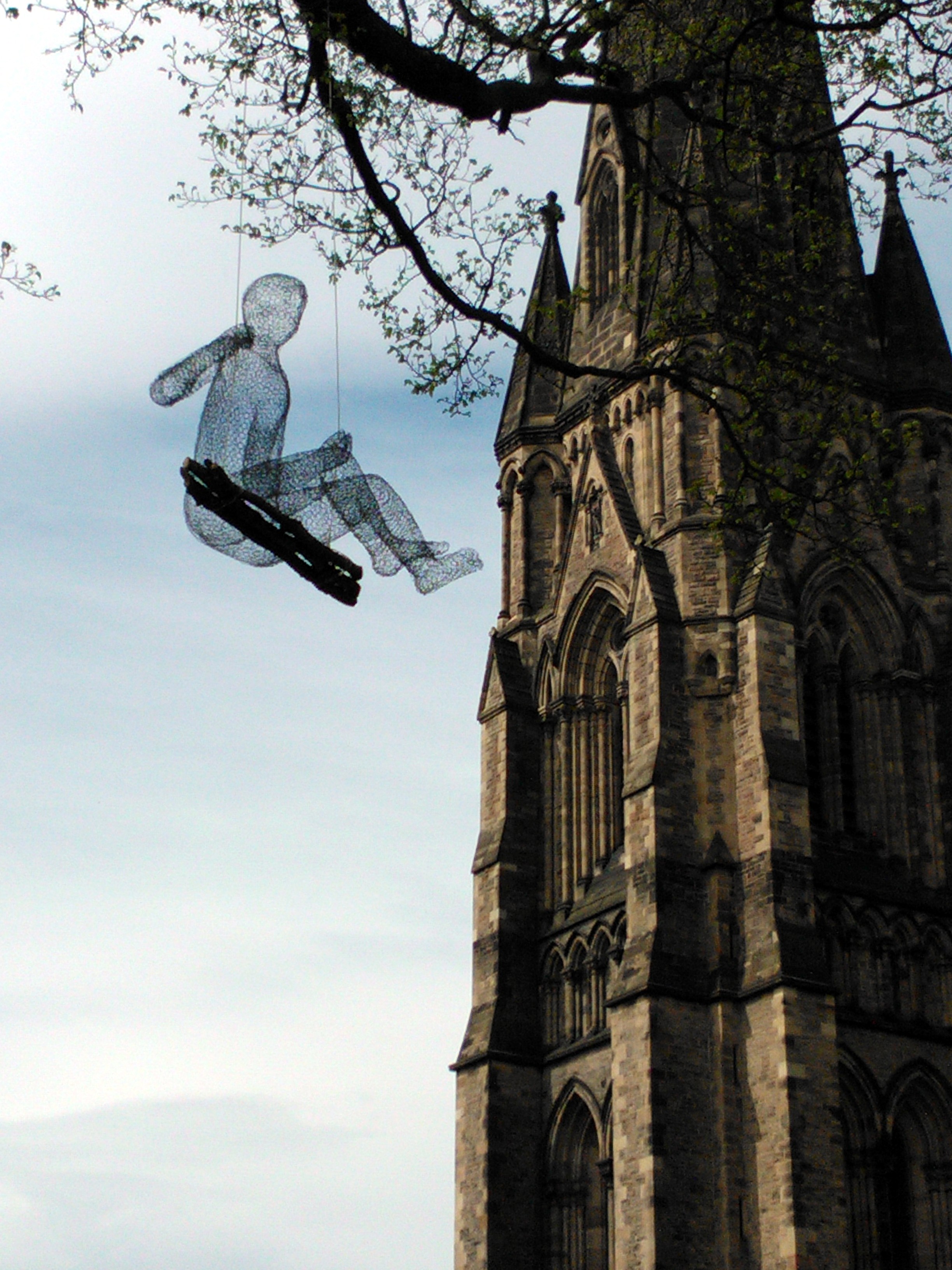
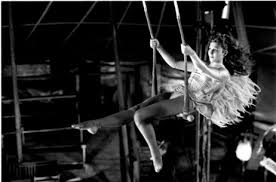
And so it was, walking along the tree-lined footpath by St Mary’s Cathedral in Edinburgh. Looking up, amongst the trees it was difficult to see it clearly at first. Something metallic, floating, but also appearing to be entwined amongst the branches, merged with the sky. It was only when a light breeze, initiated a gentle rocking movement that the suspended human form fully emerged.

From another angle, the drifting figure resembled a pencil drawing sketched on to the sky. A shaded human form floating against the blue canvas, slowly dissolving back into leaf and branch.
The gentle motion, both hypnotic and dreamlike conjured up thoughts of Solveig Dommartin’s character, Marion, in Wim Wenders’ Wings of Desire. A lonely trapeze artist, inhabiting the space between ground and sky, who entices an angel down to Earth.
.
.
I have subsequently read other people describe the St Mary’s work as “sinister, creepy or disturbing” and it certainly startles you when you first look up and see it. An experience that I’m sure would be intensified if you encountered it in the dark under moonlight. However, for me, the figure conjured up a sensation of something otherworldly, yet strangely familiar. A fluid form of substance and air, swinging silently, and like ‘Marion’ suspended between the earth and sky.
From a distance I watched for a short time as many people passed along the footpath. The vast majority did not look up or see the figure suspended amongst the leaves. Silently watching, waiting to transform the everyday city into an encounter with the uncanny.
≈
Now playing: Nick Cave and the Bad Seeds – The Carny
I have found out that the sculpture is a work called Spirit by Aliisa Hyslop, a Finnish/Scottish artist. Spirit is presently part of an exhibition at the Arusha Art Gallery.
The quotation from Rilke’s Duino Elegies are the last lines of the translation by David Young (New York: W.W. Norton & Company, 1978). Wim Wenders cites Duino Elegies as the initial inspiration for Wings of Desire.

Methil 08.02.14.
Now Playing: Mogwai – The Hawk is Howling.
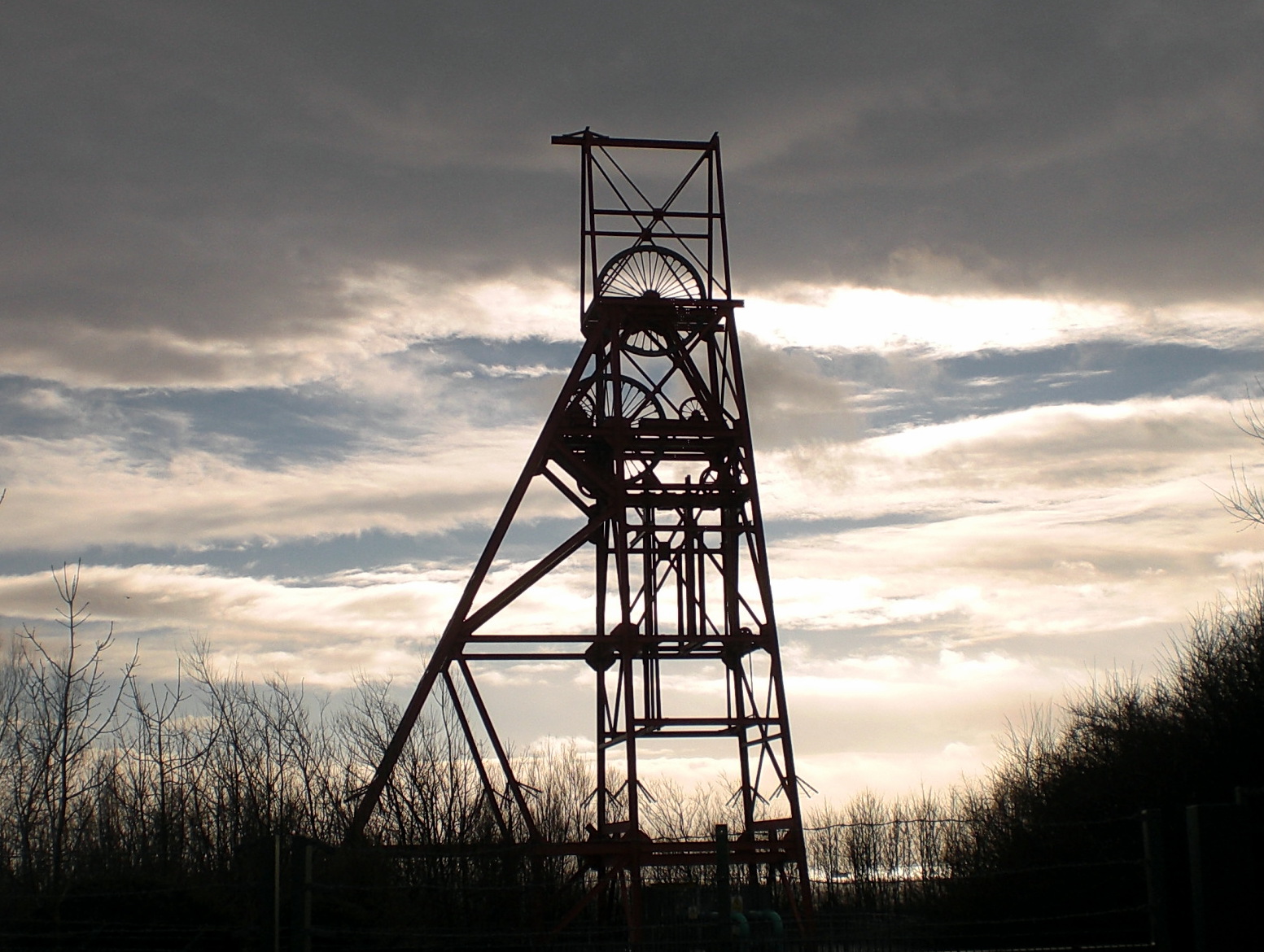
Industrial ghost – winding gear of the Frances Pit Dysart, 08.02.14
Now playing: Matt Berry – Kill the Wolf
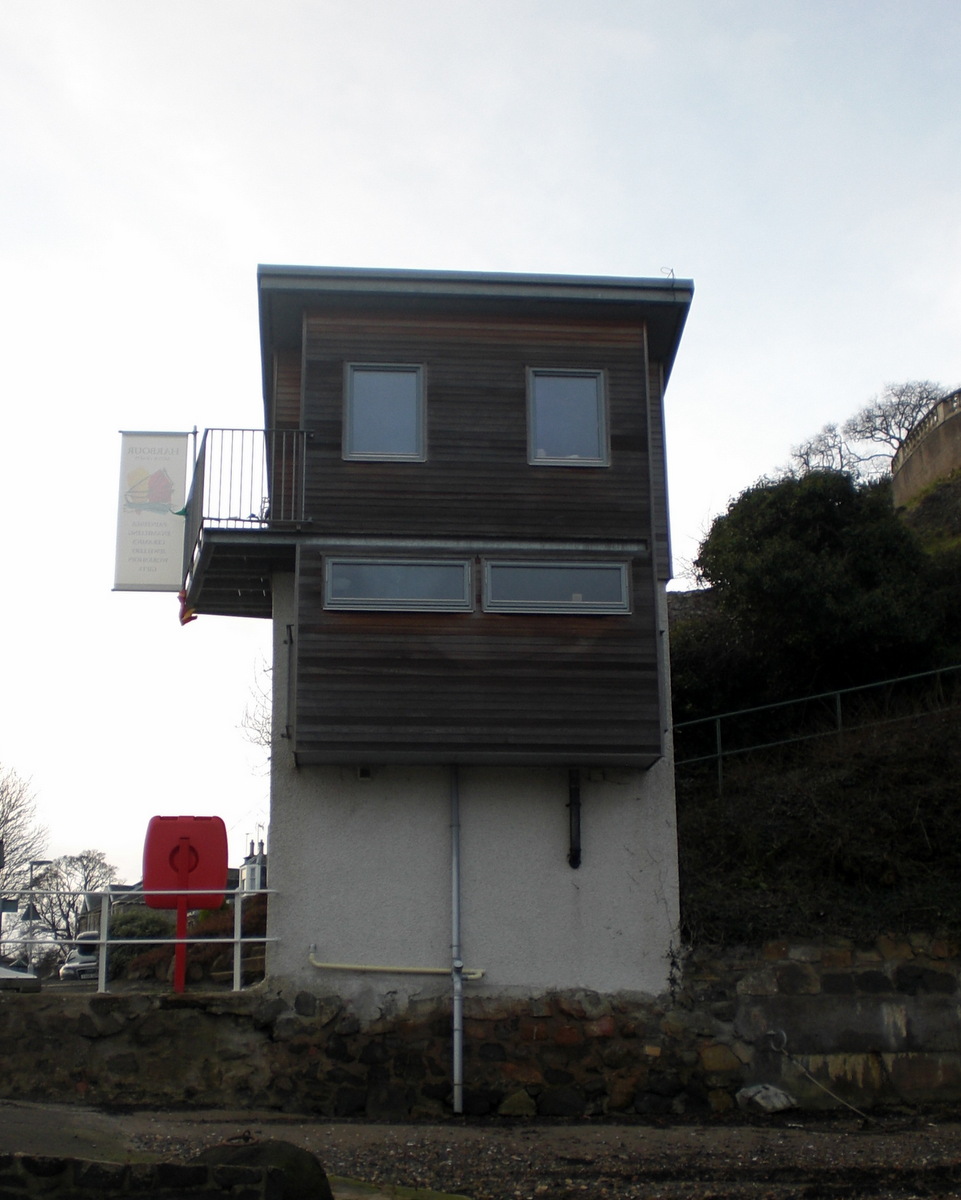
Aberdour, Fife, 28th December 2013.
Now playing: Simply Saucer – Here Come the Cyborgs
 Murdo Eason - From Hill to Sea
