Some Questions of the Drift

Weather vane, NSEW, blue sky, light
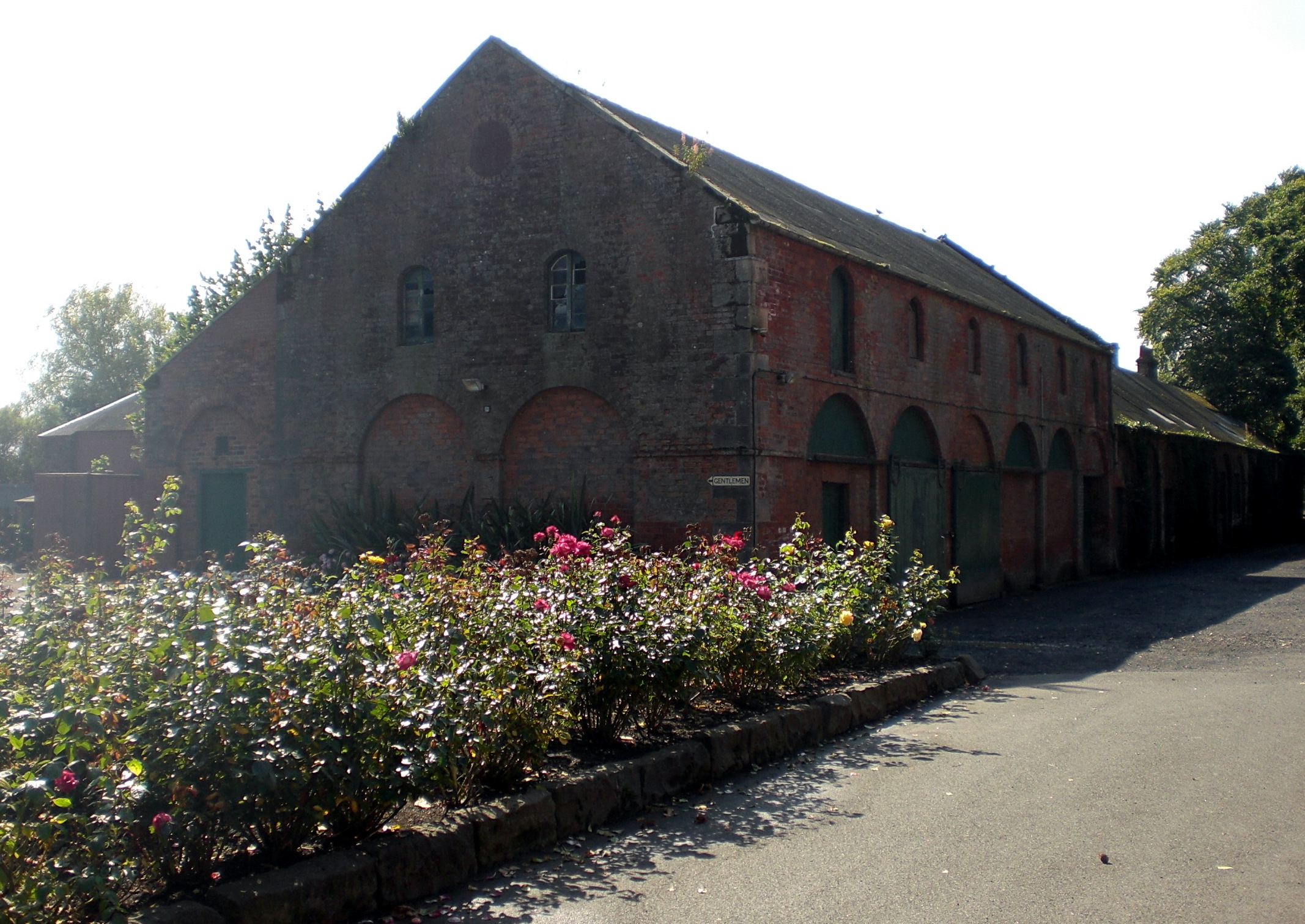
Kirk Wynd, Kirkcaldy

I ask you: 

– What is the weight of light?

– Clarice Lispector

≈ ≈ ≈

.

Merchant's House, Kirkcaldy
Merchant’s House, Kirkcaldy

.

.

 – What are the colours of time?

.

.

.

Merchant's House Kirkcaldy II
Merchant’s House Kirkcaldy II

.

.

 – What are the sounds of the stones?

.

.

..

.

.

.

 – When does the inside become the outside?

.

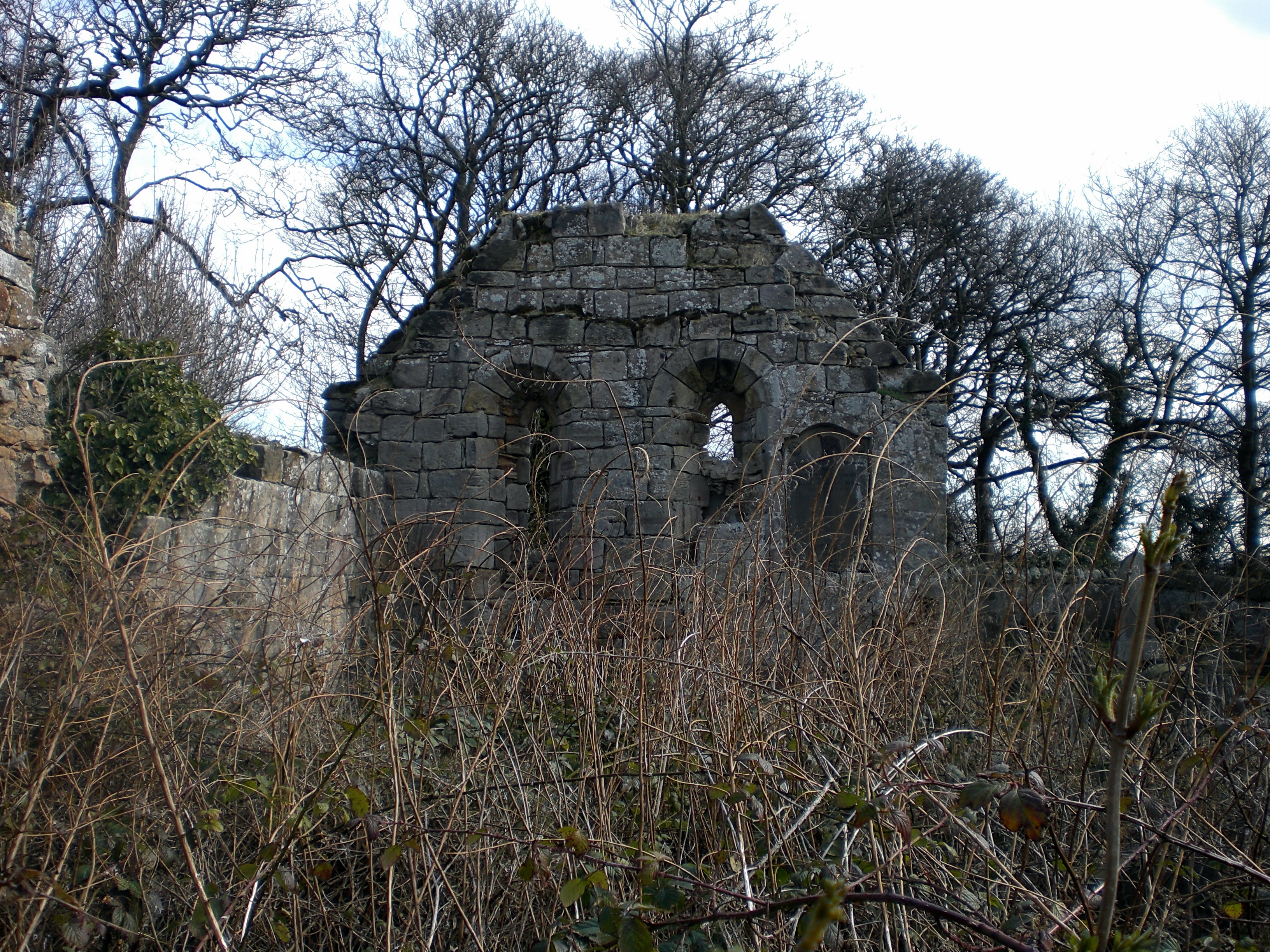
Rosyth Church - East Gable Inner - from West
Rosyth Church – East Gable Inner – from West

Gravestone, decay, erosion
St Cuthbert’s Churchyard, Edinburgh

.

.

.

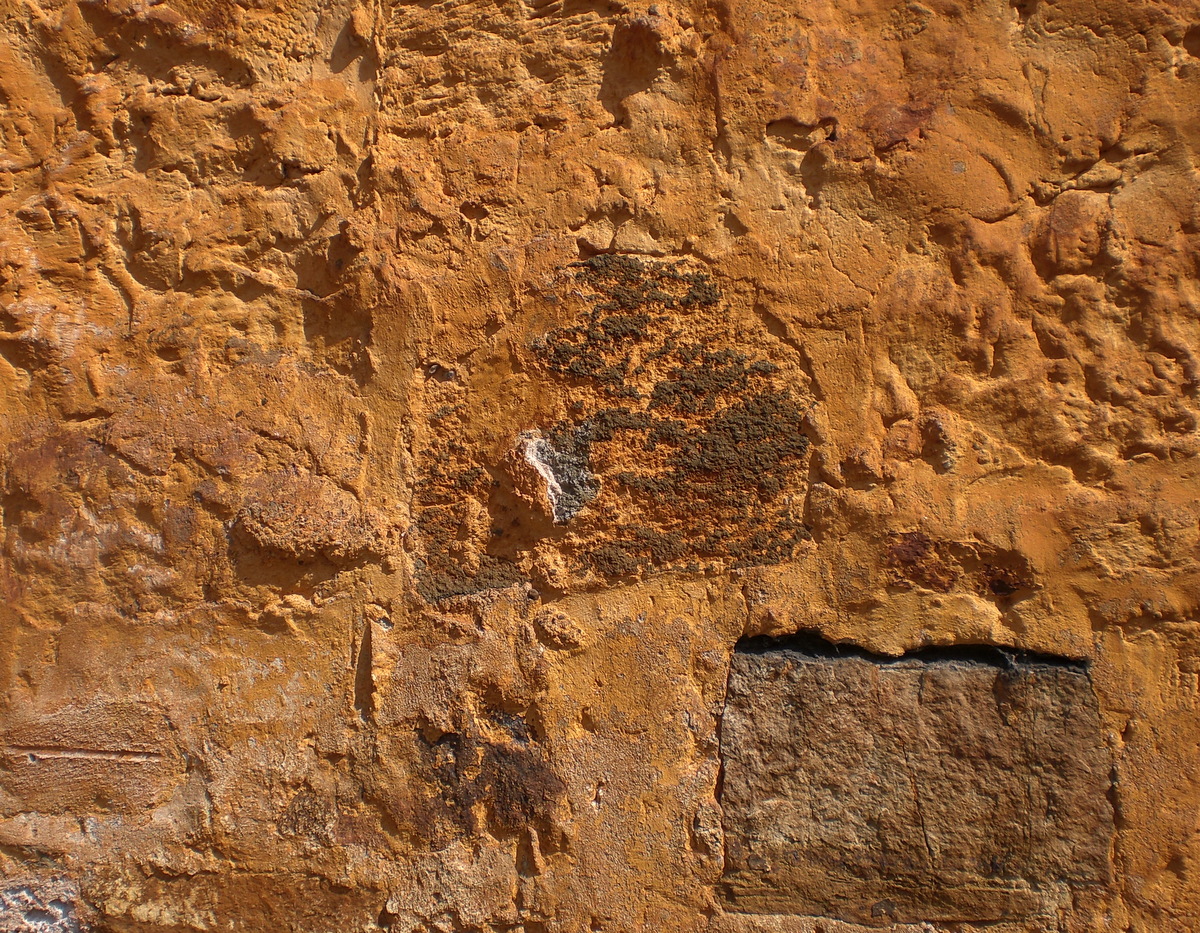
 – What is the material of memory?

.

.

.

.

.

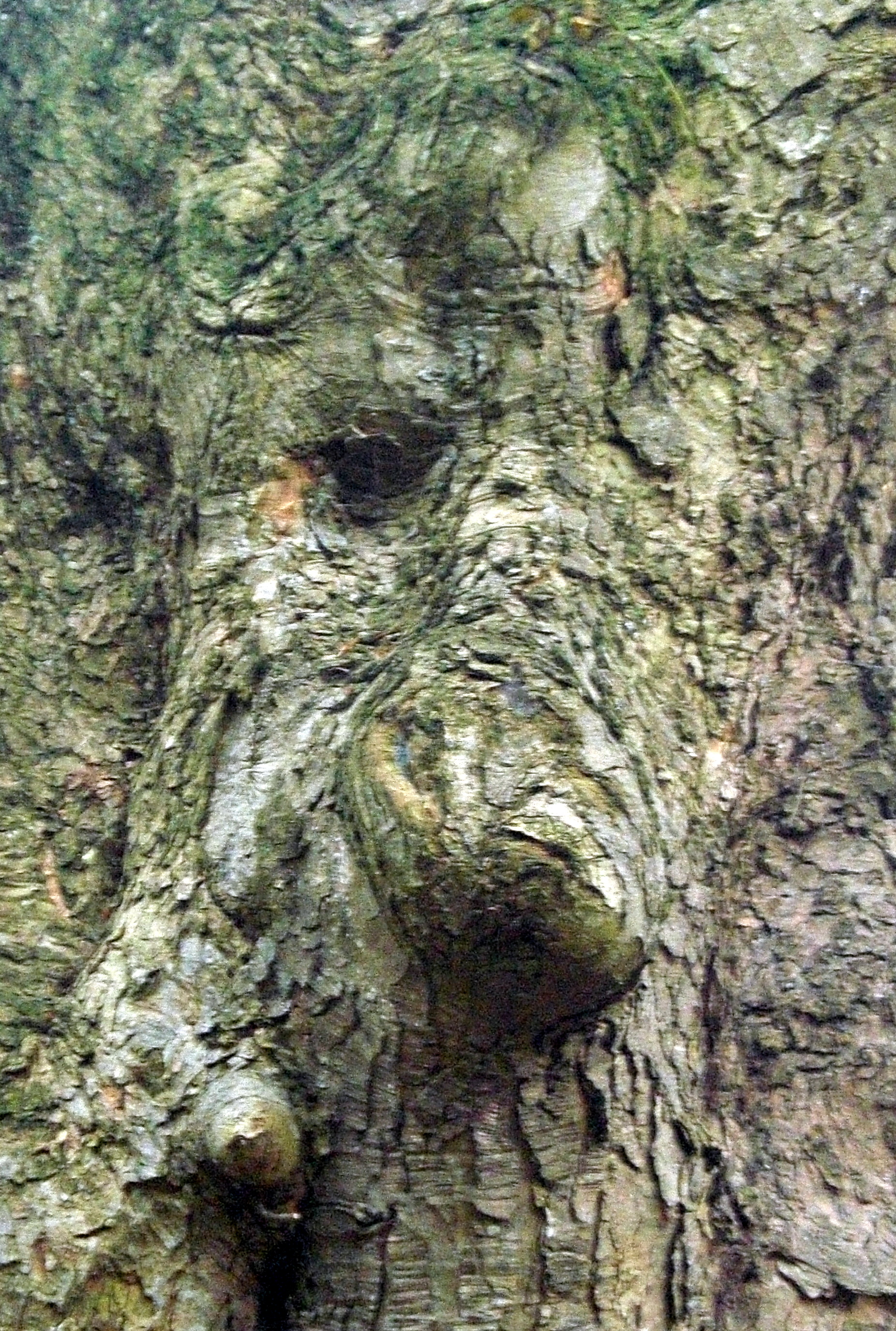
– What would the trees think?

.

Scot's Pine - Devilla Forest, Fife
Devilla Forest, Fife

.

Limekilns, Fife

.

.

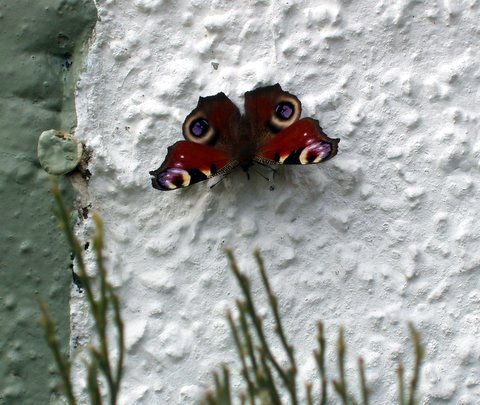
– What is the geography of a butterfly?

.

.

.

CIMG1841
Lochore Meadows, Fife

.

.

– What is the shape of flight?

.

.

.

.

.

– When does the local become  – the universal?

.

Burntisland from The Binn

.

≈ ≈

– Where does the sky begin?

.

Digbeth Derive
Digbeth, Birmingham

– What is the taste of place?

.

Cafe now Open – Digbeth Birmingham


WP_000110
Custard Factory, Digbeth

.

.

– Where are the energy flows?

.

.

.

WP_000105
Abandoned factory, Digbeth

.

.

.

– What is the future of the past?

.

.

.

.

≈ ≈

Watching over Sauchiehall Street, Glasgow
Sauchiehall Street, Glasgow

.

.

.

– Who watches the watcher?

.

.

.

.

.

George Square, Glasgow

.

.

.

 – Who controls this space?

.

.

.

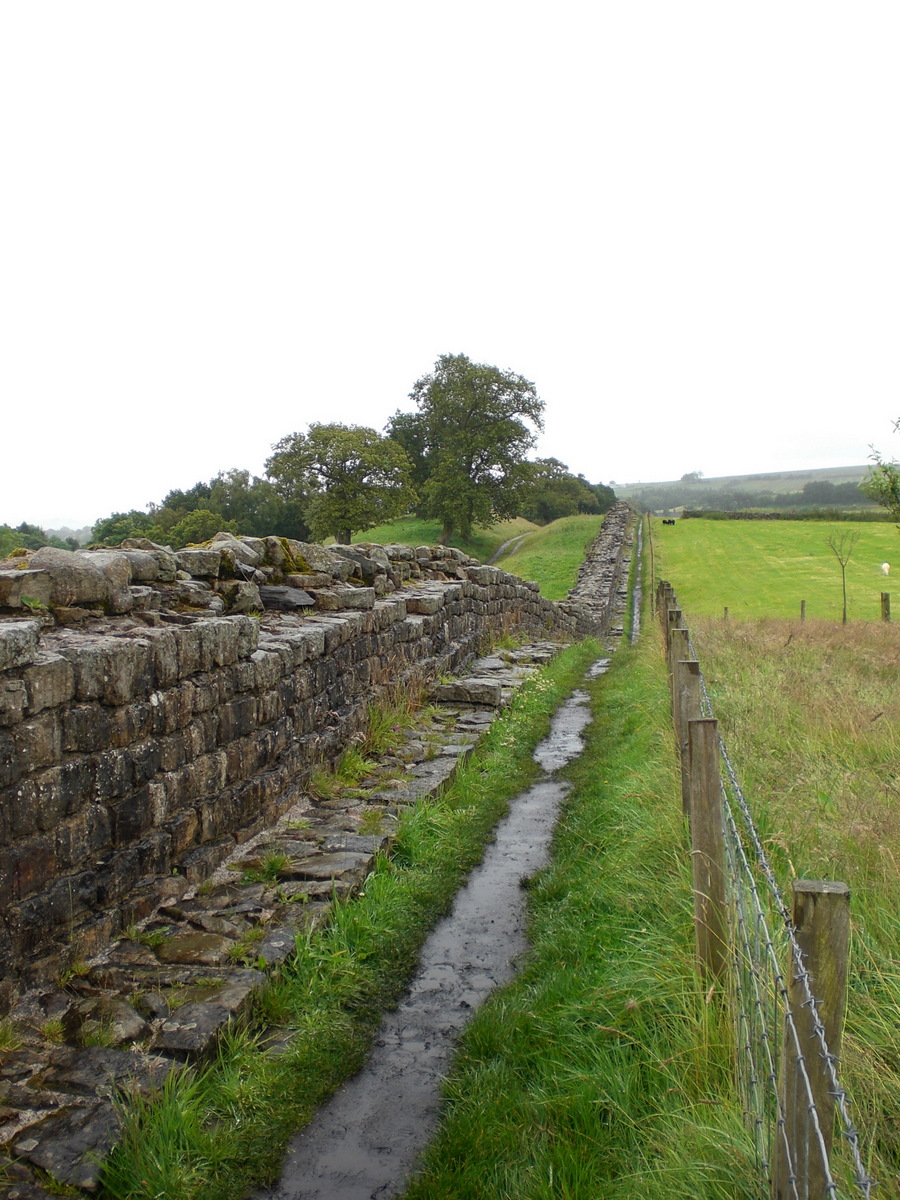
 – Who determines the boundary?

CIMG1210
Hadrian’s Wall
Berlin Wall
The Berlin Wall
Keep Out
Limekilns, Danger, Keep Out

≈ 

.

Sauchiehall Street, Glasgow
Sauchiehall Street Glasgow

.

.

–  Where is the coldness of the sun?

.

.

.

.

– What is the gravity of the moon?

.

at Mogwai play Zidane, Broomielaw, Glasgow
Rosyth Station, Car Park

.

.

.

.

.

.

.

– Where is the boundary of night?

.

Under Regent Bridge, Calton Road, Edinburgh (Callum Innes installation).

≈ ≈

.

.

Where is the future of  freedom?

.

Stirling Jail car park mural. Detail from Freedom Versions v.1

– What is the distance of love?

.

Berlin Wall, late 1980s. Looking towards the East

.

≈ ≈ ≈

Opening quote from Clarice Lispector’s The Hour of the Star.

The photos of the Berlin Wall are from an inter-railing trip in the late 1980s. It was a coincidence to rediscover them in an old shoebox on the day that it was announced Lou Reed had died.  I can still vividly recall a lurid, orange BASF cassette being pressed into my hand in the school playground. “Listen to this!”  It was a recording of Rock n Roll Animal. Things changed.

I can still remember a number of the cassettes that travelled in the rucksack on that inter-railing adventure. Berlin was certainly one of them.

Now playing: Lou Reed – Berlin. RIP LR.

Silverburn: in the flux and flow of place

CIMG2422

We are walking out, along the shoreline, from Leven towards Lundin Links. Coastal energies are in full flow, our field of vision filled with an excess of sand, sea and sky.

CIMG2782

In the distance, an intensity of white light appears to drift in the Firth of Forth like a frosted iceberg. The Bass Rock. Invisible threads loop in the conical forms of Berwick Law and the sacred hill of Largo Law. Three nodes of a triangle that collapse North and South; earth and water; land and sky. An energy field that pulls us into an expanded world. Bardic bird yells, brine on the tongue and buffeting sea breezes whip up folding white breakers that fizz over the sand.

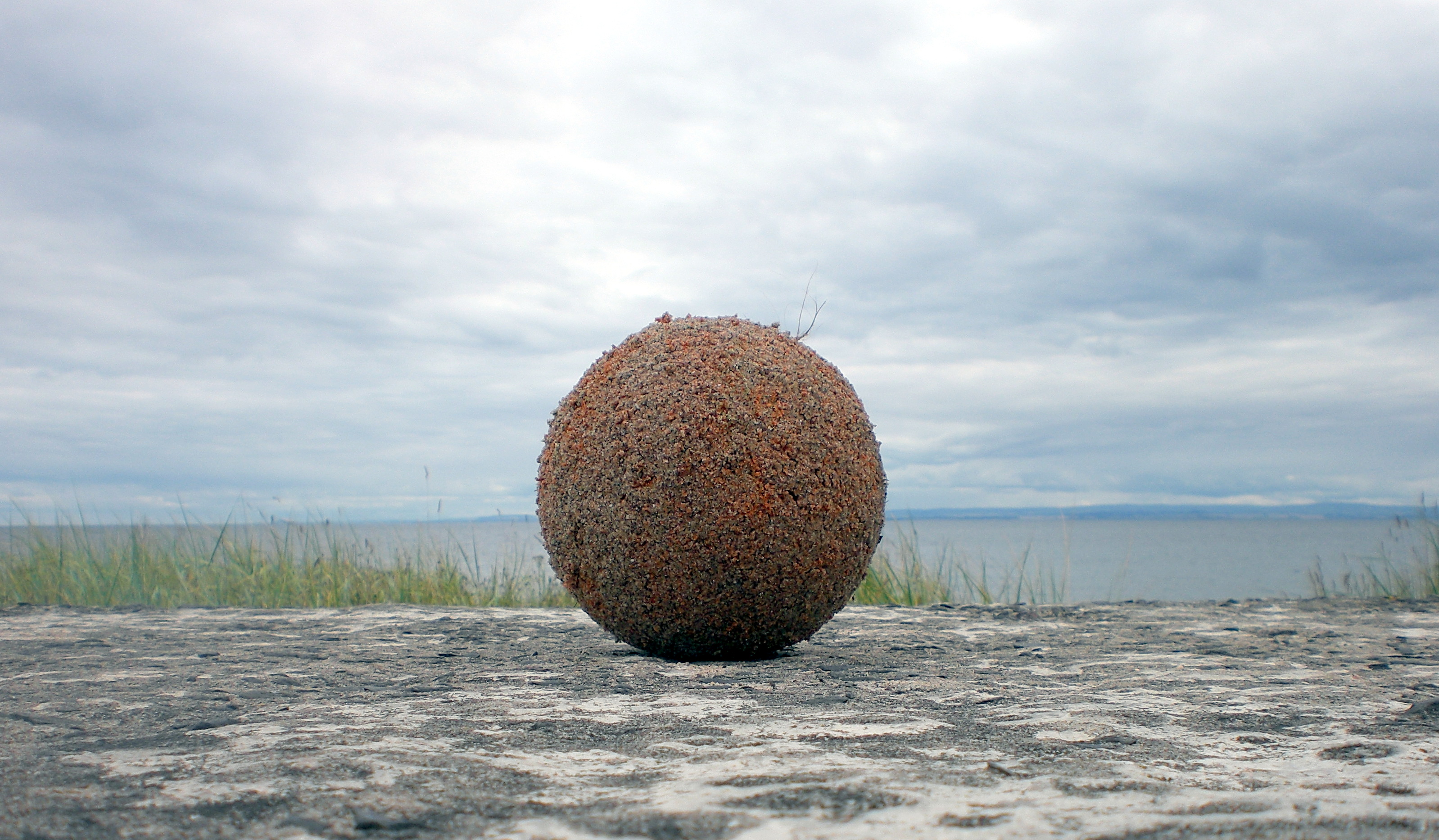
We soon encounter the talisman lying in the dunes. It’s protective, synthetic membrane, perished long ago by wind and water.  Now crusted with sand and water-logged, it has transmuted into a living entity. Green tendrils sprout from the surface. It appears to be an auspicious omen, a process of alchemy worthy of the legendary Wizard of Balwearie, Michael Scot, (1175 – c.1232), reputed to have form in these parts.

CIMG2621

Local legend has it that Scot summoned his three imp familiars, Prig, Prim and Pricker to Largo Law with a view to levelling it. A sort of job creation scheme for hyper-active familiars. As they began to dig, Scot had a change of plan and the imps were hurriedly despatched to Kirkcaldy to make ropes out of sand. This was to assist Scot in his showdown with the devil on Kirkcaldy beach.  Scot appears to have triumphed in the encounter as evidenced by a local saying: “The devil’s dead and buried in Kirkcaldy”.  As a result of the ‘Kirkcaldy interruption’, only a single shovelful of earth was thrown from Largo Law to create the cairn of Norrie’s Law at the wonderfully named farm of Baldastard.  There are also local folk tales about an abundant goldmine that supposedly exists underneath Largo Law and that sheep have returned from grazing on the foothills with golden fleeces.

CIMG2780
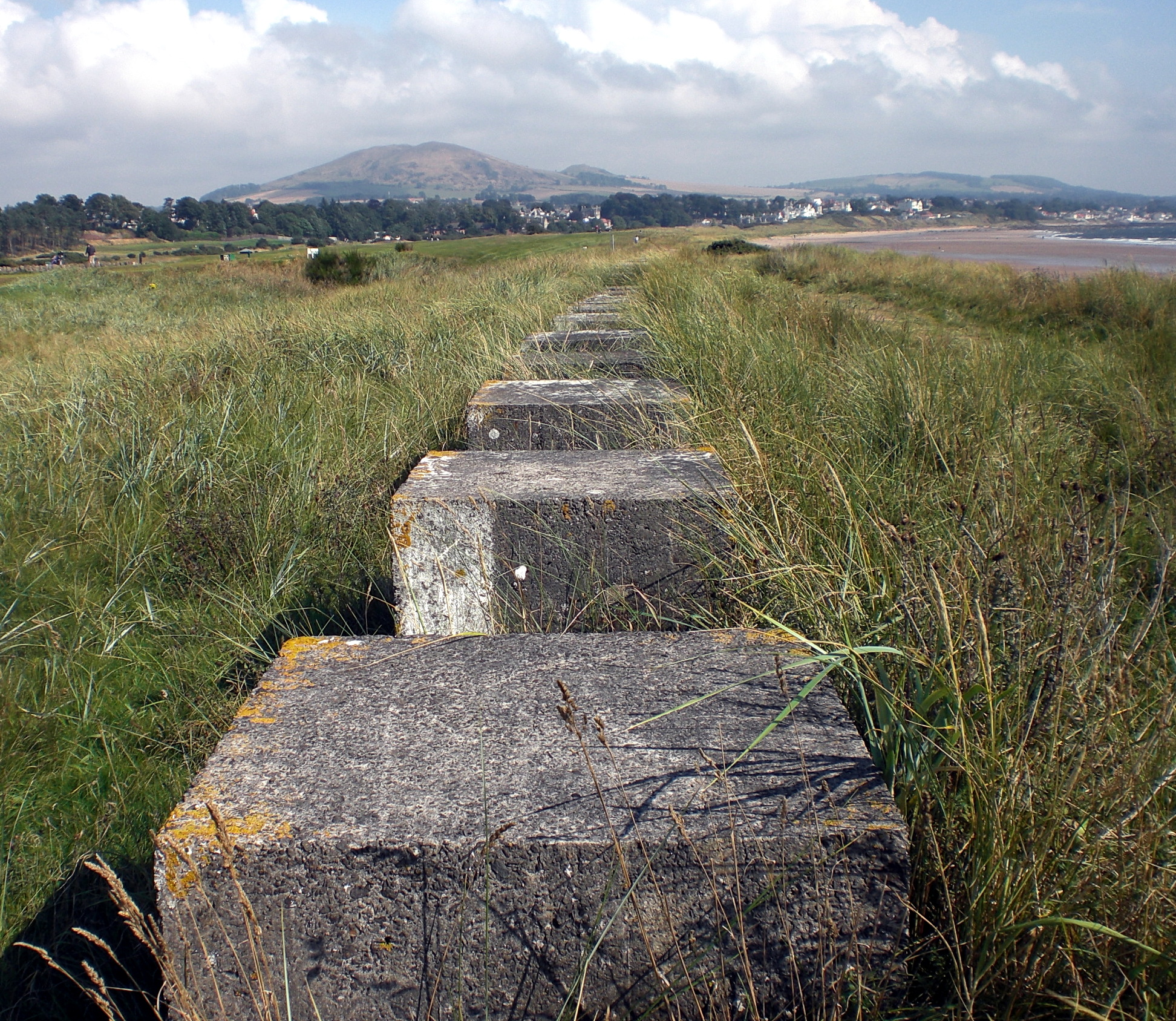
Giant stepping-stones. Largo Law ahead.

Huge concrete blocks line this part of the coast like giant stepping-stones.  Could we step all the way to Largo Law?  The blocks were part of the necklace of coastal defences installed during WW2 and were designed to frustrate any German tank invasion from the sea. The blocks were constructed and laid by the Polish army who had several divisions based in Fife during WW2.  Today, the original purpose of the blocks may be somewhat forgotten but their solidity and mass provide a pleasing sculptural rhythm to the foreshore.   

One of the blocks serves as a makeshift altar to revere the action of the natural world on our talismanic old football. A process of transmutation – of rebirth and growth.

We turn inland from the coast to take the path, called Mile Dyke, that heads between the links golf courses.  This will take us to Silverburn and we can now feel its connection to Leven and the coast.  S  i  l  v  e  r  –  b  u  r  n  is a name to roll around the mouth and along with golden fleeces and transmuted footballs we can sense that we are truly in an alchemical landscape. 

CIMG2756

Silverburn – a Brief History

Silverburn is the former estate of The Russell family who were owners of the Tullis Russell paper making business.  The land was originally part of the Barony of Durie and was leased to Mr David Russell by Charles Maitland Christie of Durie in 1854.  Arthur Russell purchased the land in 1866 and rebuilt Silverburn House. A dower house known as Corriemar was also built and a flax mill was established on the site. 

David Russell died in 1906. His son, (also named David) and who later became Sir David Russell was born at Silverburn in 1872 and in 1912 married and went to live in Aithernie House. He returned to Silverburn in 1929. Sir David had a great interest in trees and many were planted including some rare and unusual species which continue to thrive today.

The flax mill closed around 1930.

In 1973, Sir David Russell’s grandson, Major Russell (Head of Tullis Russell Paperworks) gifted the houses and grounds to Leven Town Council, but also stipulated through the National Trust for Scotland that the “subjects should remain forever as a quiet area used for the benefit of the public in general and the people of Leven in particular for nature trails, quiet parkland and organised camping”. In the mid to late 1980s, the former Kirkcaldy District Council undertook a Job Creation Programme to reinstate Silverburn House for use as a Residential Centre for groups to use such as scouts and guides; school parties, caravan rallies etc. A stand alone wing to the rear of the House was used by crafters to make and show their wares throughout the Summer and Christmas/New Year periods.

Between 1990 and 1999, an average of 20,000 + people per year visited Silverburn. Its main attraction was the former “Mini-Farm” which had on show a wide range of domestic and exotic animals, birds, reptiles and insects.  However, following a Council policy decision in 2002, to cease operating Animal Centres across Fife there have been very few visitors to Silverburn, other than local people. Financial constraints have also led to year-on-year reductions in revenue expenditure with no meaningful capital investment in the Park.

Over the years, various ideas have been proposed for Silverburn including the setting up of a Scottish Music/Arts and Craft Centre and redevelopment as a crematorium.  None of these have come to fruition.

However, work is presently underway by Fife Employment Access Trust (“FEAT”) in collaboration with the local community, agencies and local authorities in the Levenmouth area on a project entitled ‘Heart Mind Soul Silverburn’. This aim of this initiative is to secure a long-term future for the park and to promote wellbeing and employment opportunities. 

We have visited Silverburn a number of times over the past few months.  Drifting around the mixed woodland trails and environs of the estate at different times, on different days and in different weather conditions.  Most apparent is observing and feeling the subtle changes of a thriving natural world; an incipient wildness forever encroaching on the deteriorating materiality of the buildings.  Silverburn is a place highly conducive to the immersive dérive. A locus of past, present and possible. 

The excellent Blacketyside Farm Shop is a wonderful place for sustenance at the start or finish of a Silverburn visit. However, this does means crossing the A915 road which is the main artery into the East Neuk of Fife. The road is a long, straight stretch which can be very busy with vehicles tanking past at high-speed:

wheeeeeeeeeeeeeeeeeeeeeeejjjjjjjjjjjjjjjjjjjggroooooooooooooooooooooooom

mmmmmm oi nnnnnnnnnnnn

nnnnnnnnnnnn oi mmmmmm

mmmmmm oi nnnnnnnnnnnn

wheeeeeeeeeeeeeeeeeeeeeeejjjjjjjjjjjjjjjjjjjggroooooooooooooooooooooooom

Enter Silverburn

Overhead, a charcoal smudged blue, heralds a chorus of rooks riffing off the traffic screech.

CIMG2449CIMG2450

Giant American redwoods stand sentinel, stretching for the sun. “Ambassadors from another time” silently announcing that this may not be your conventional Scottish woodland:

CIMG2770

The redwoods, once seen, leave a mark or create a vision that stay with you always. No one has ever successfully painted or photographed a redwood tree. The feeling they produce is not transferable. From them comes silence and awe. It’s not only their unbelievable stature, nor the color which seems to shift and vary under your eyes, no, they are not like any trees we know, they are ambassadors from another time.

John Steinbeck

N: “do you know you can punch a redwood and it doesn’t hurt your hand?”

Blue melts to green as sunlight showers through the tree canopy, dappling the forest floor. Traffic thrum gradually dissolves in the low lipping burr of the flowing burn.  A sunken path beckons and so our immersion into Silverburn begins. 

CIMG2766 CIMG2752

 Once in the shade, a sprinkling of light and water; a scattering of silver drops:

CIMG2765CIMG2759

A network of wooded paths through and around Silverburn provide ample scope for aimless drifting. The topography is interesting with a long flat elevated plateau where Silverburn House sits which tumbles away quite steeply down to the flax mill with the golf courses and coast beyond.

CIMG2699CIMG2706

Depending which path you take you will soon stumble across one of the ghosts…

Corriemar: The Dower House

CIMG2821

Corriemar is thought to have been the dower house for Silverburn House.  A dower house is usually a moderately large house available for use by the widow (dowager) of the estate-owner.

Corriemar has been vacant since 1970, having previously served as day patient accommodation for Stratheden Hospital or the Fife and Kinross District Asylum as it was formerly known. (Stratheden will be a place-name that resides in the (un)consciousness of many Fifers. My mother used to say that the teenage antics of my brother and I would send her there. In hindsight, I hope that she was only joking. RIP Mum).

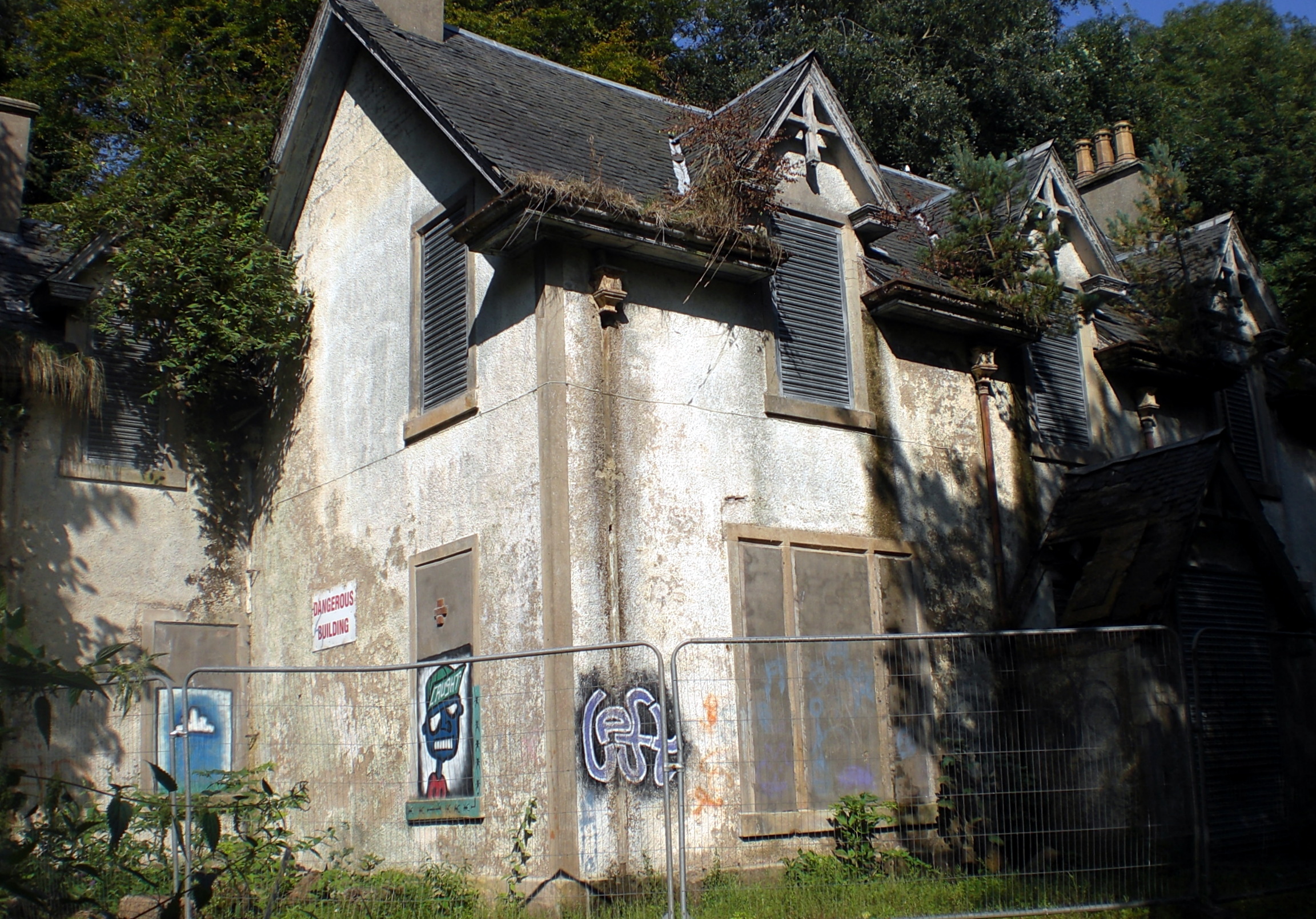
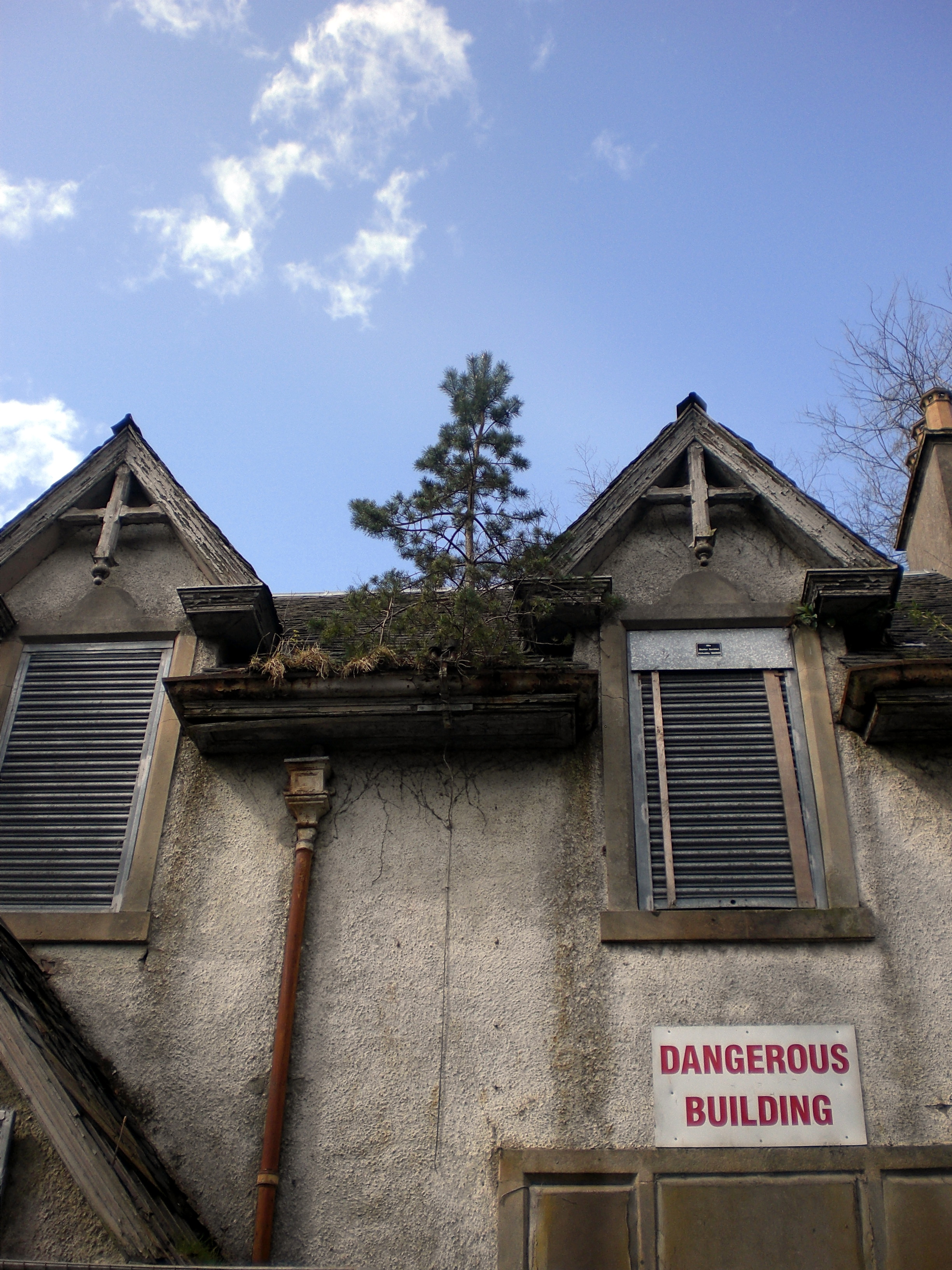
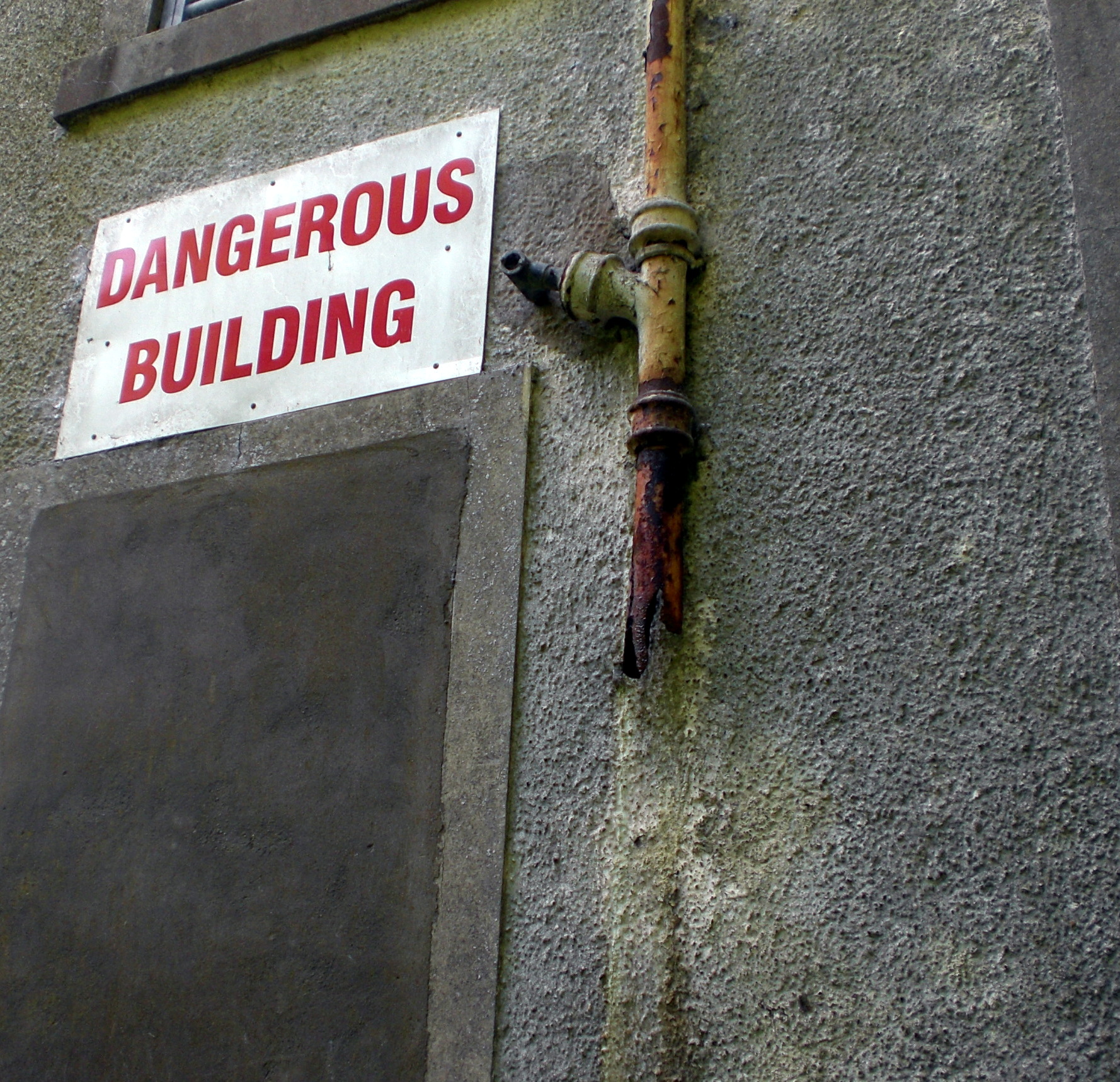
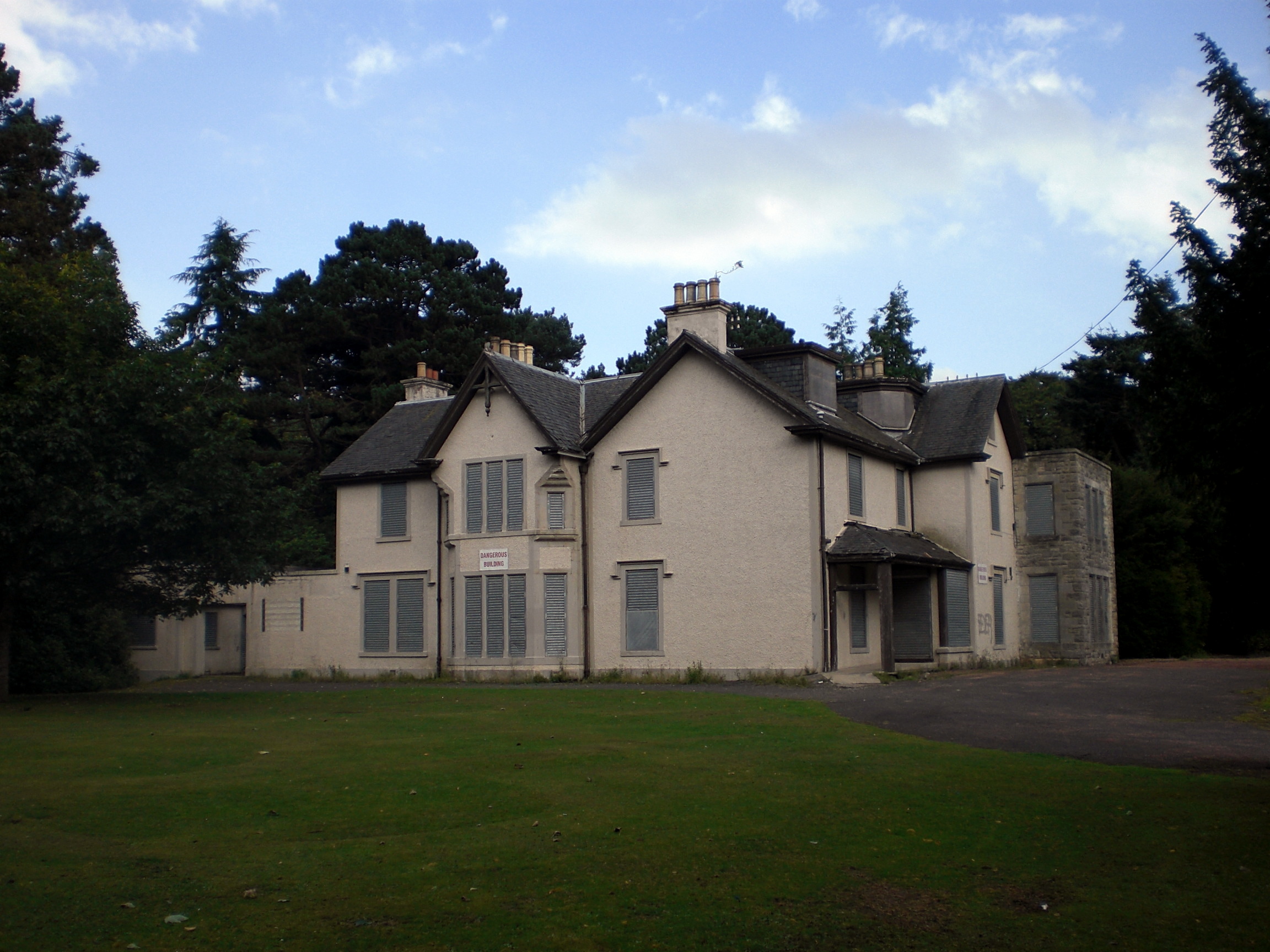
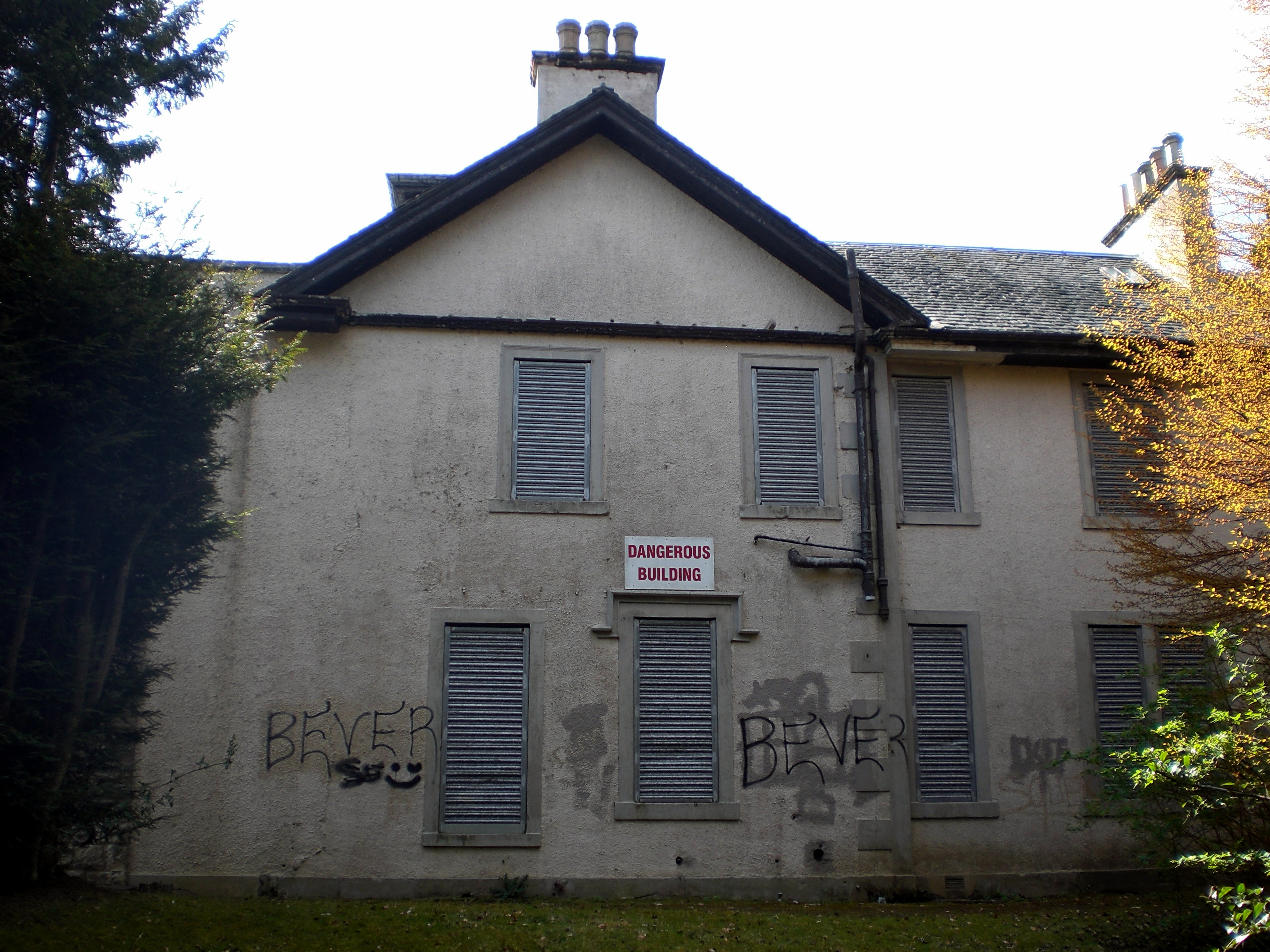
The house today is a crumbling ghost of a building. Buildings need capital, care and a purpose to thrive and Corriemar has had neither of these since the 1970s. Now officially classified as a dangerous building and on the Buildings at Risk register, nature is slowly restaking her claim.

CIMG2387

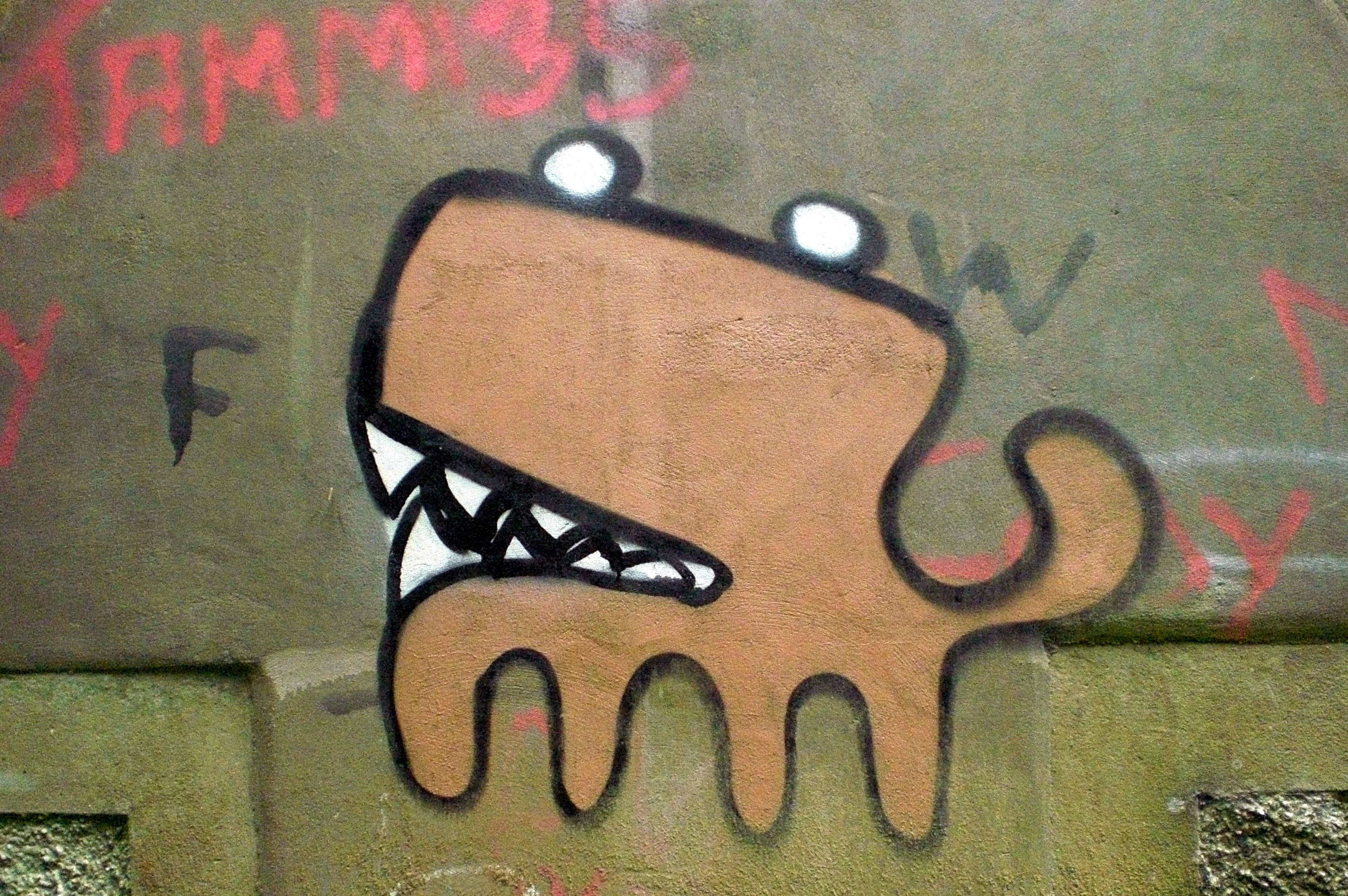
A pine tree grows out of the roof guttering. Many slate tiles have been lost to the elements, leaving the roof like a mouth full of smashed teeth.

CIMG2386

The building is not just boarded but sealed.

Mute.

All flow and circulation broken:

CIMG2828
Mute
CIMG2829
Broken Flow

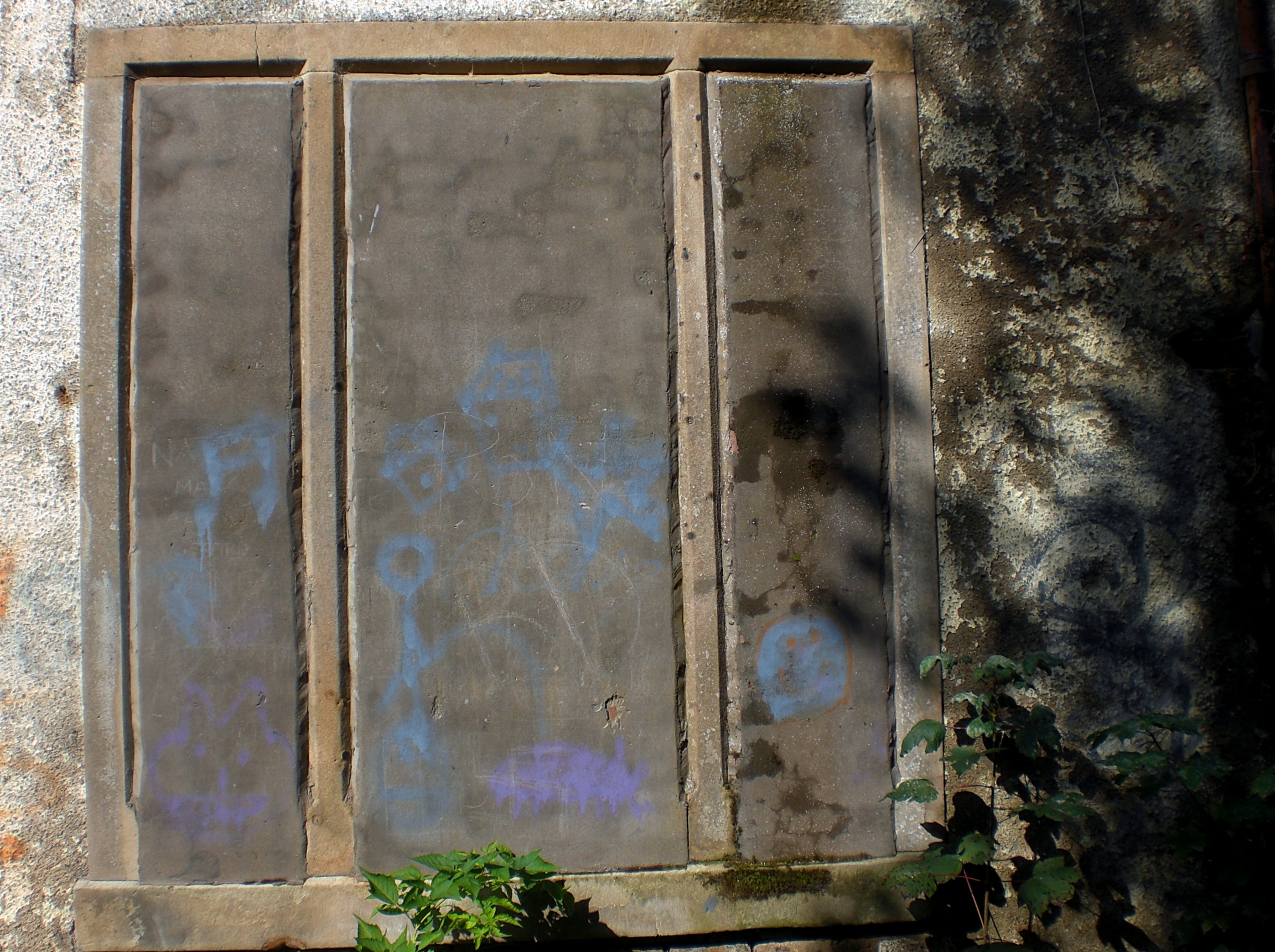
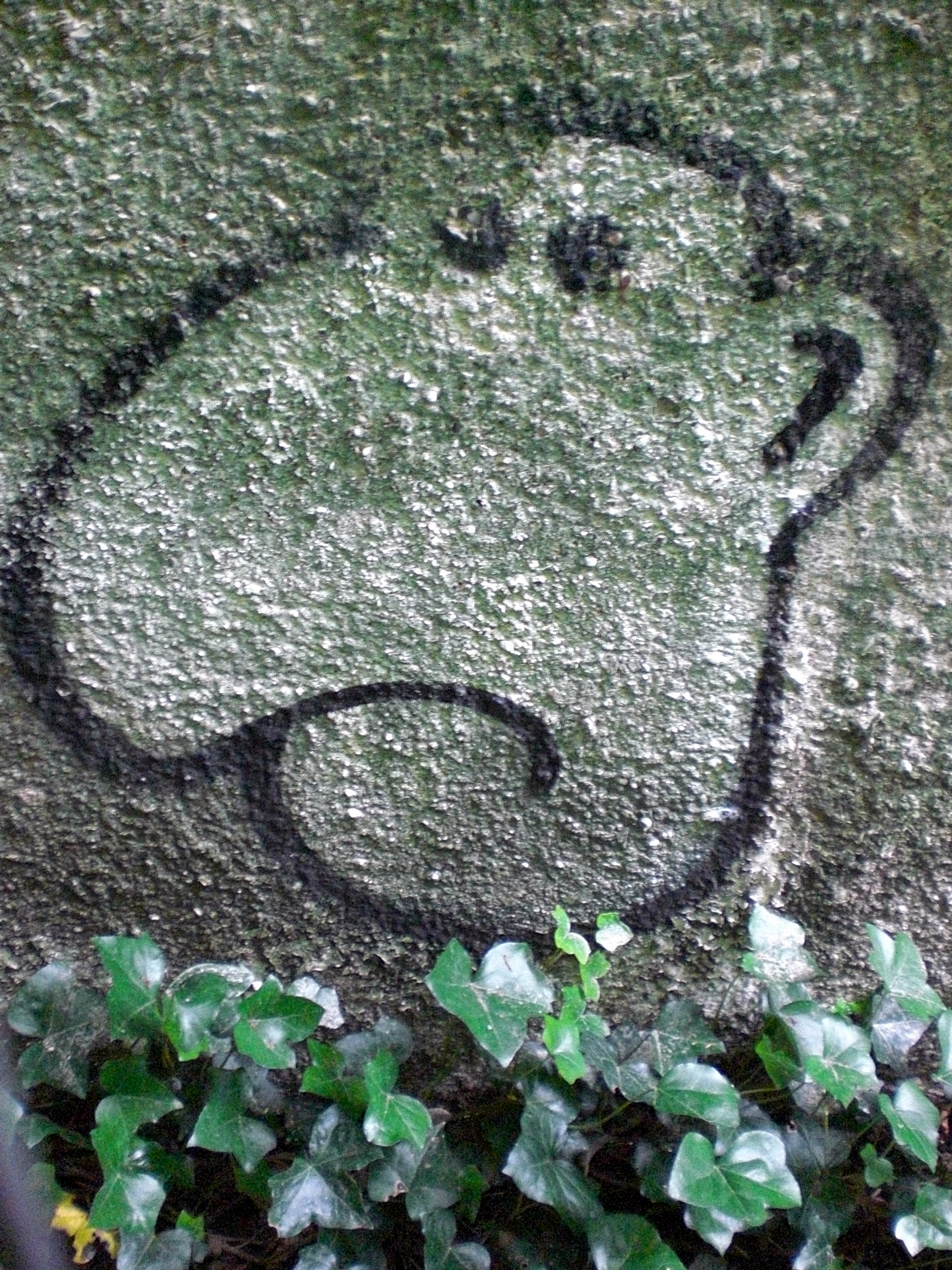
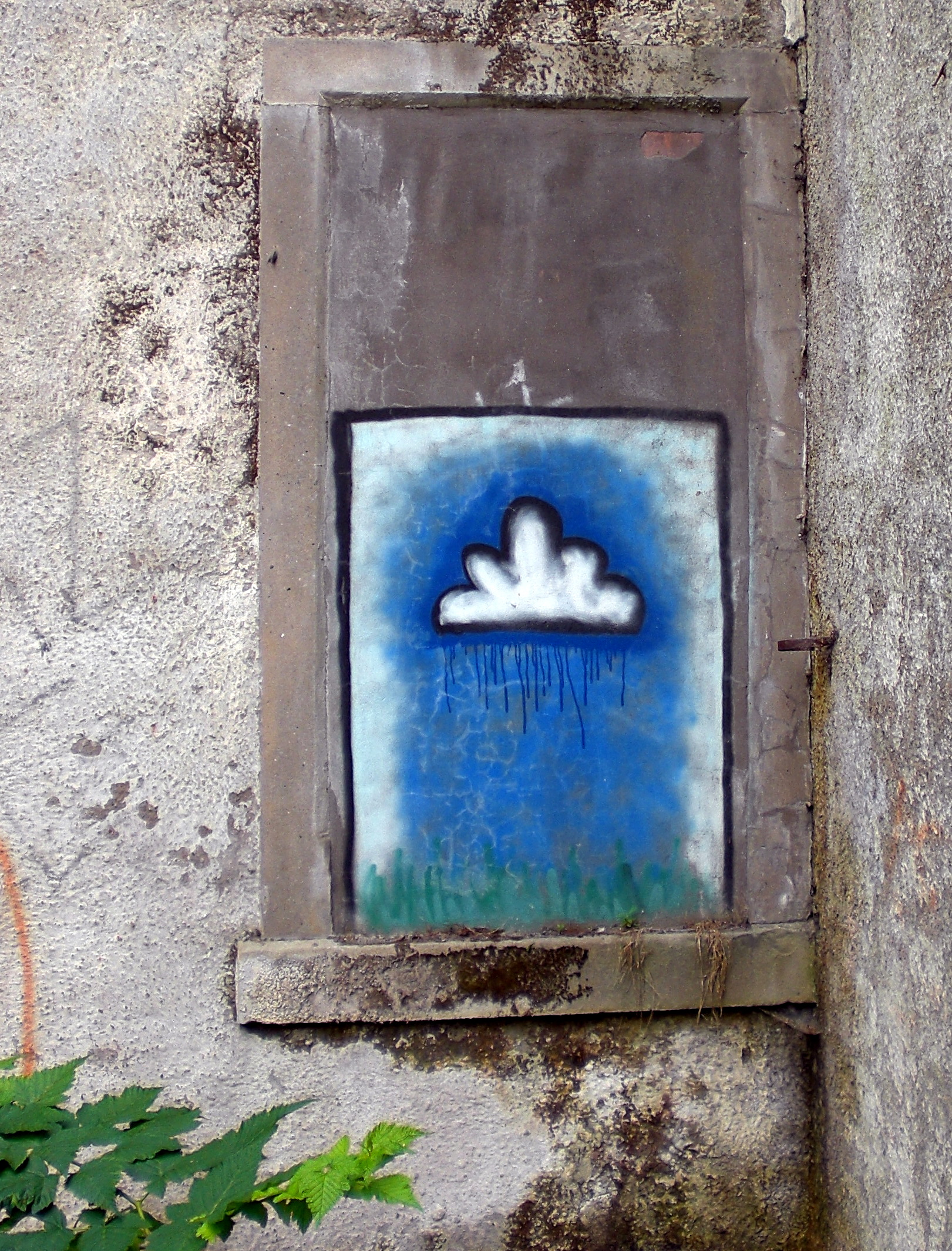
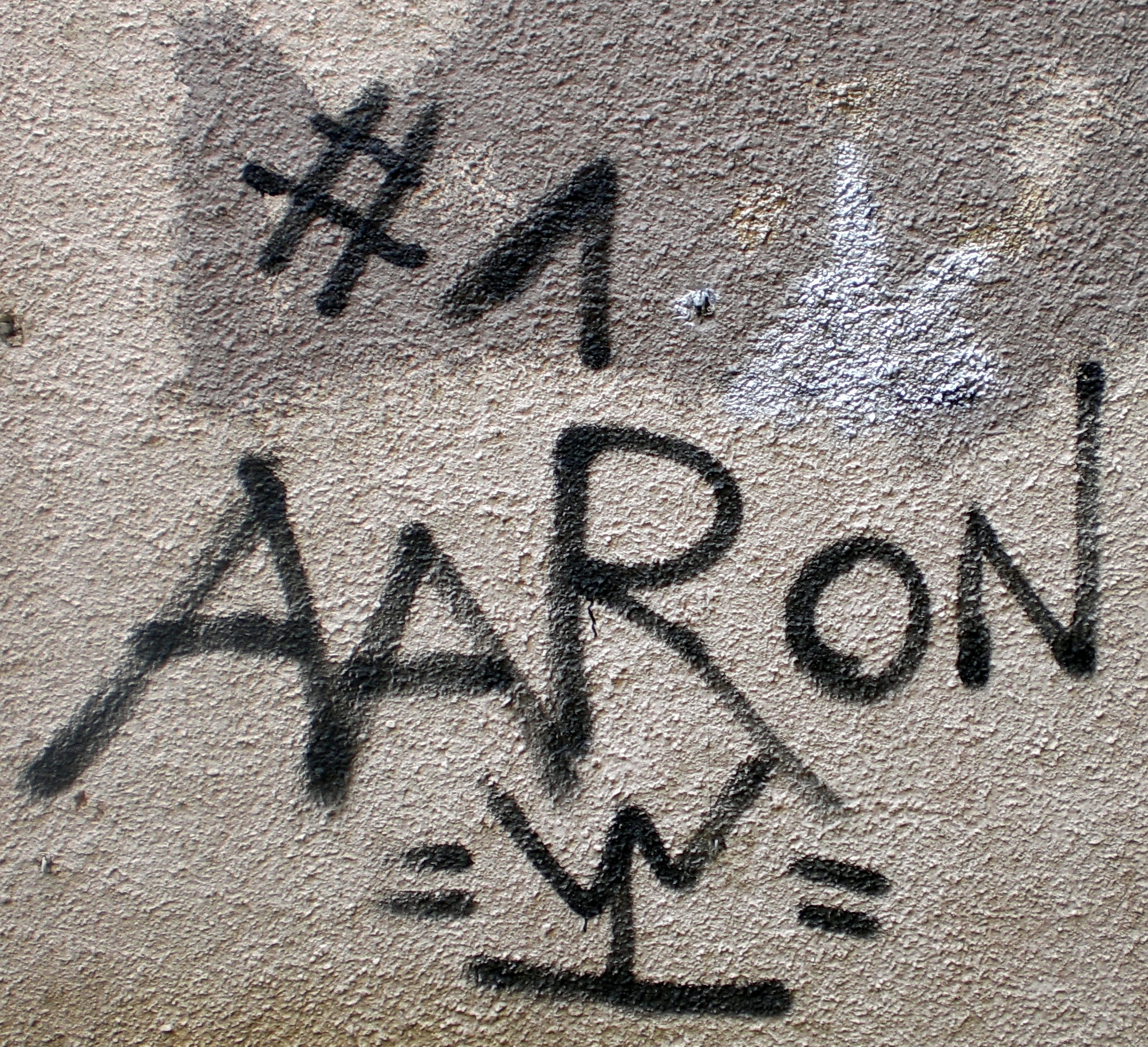
Graffiti abhors a blank surface and Corriemar has become a canvas for a surprisingly diverse display:

CIMG2670

CIMG2678CIMG2680
CIMG2677
CIMG2672CIMG2668

CIMG2669

Interesting in that all of these shots, the green leaves of nature always encroach into the frame.

Silverburn House

CIMG2839

Once a home to the Russell family. Old, super-8 film shows children playing and running around on the lawn in front of the house. Adults relax in deck chairs, smoking and chatting…

Now, like Corriemar, Silverburn House is sealed up and dangerous:

CIMG2377CIMG2687

Broken Flows:

CIMG2379CIMG2374

CIMG2378CIMG2380

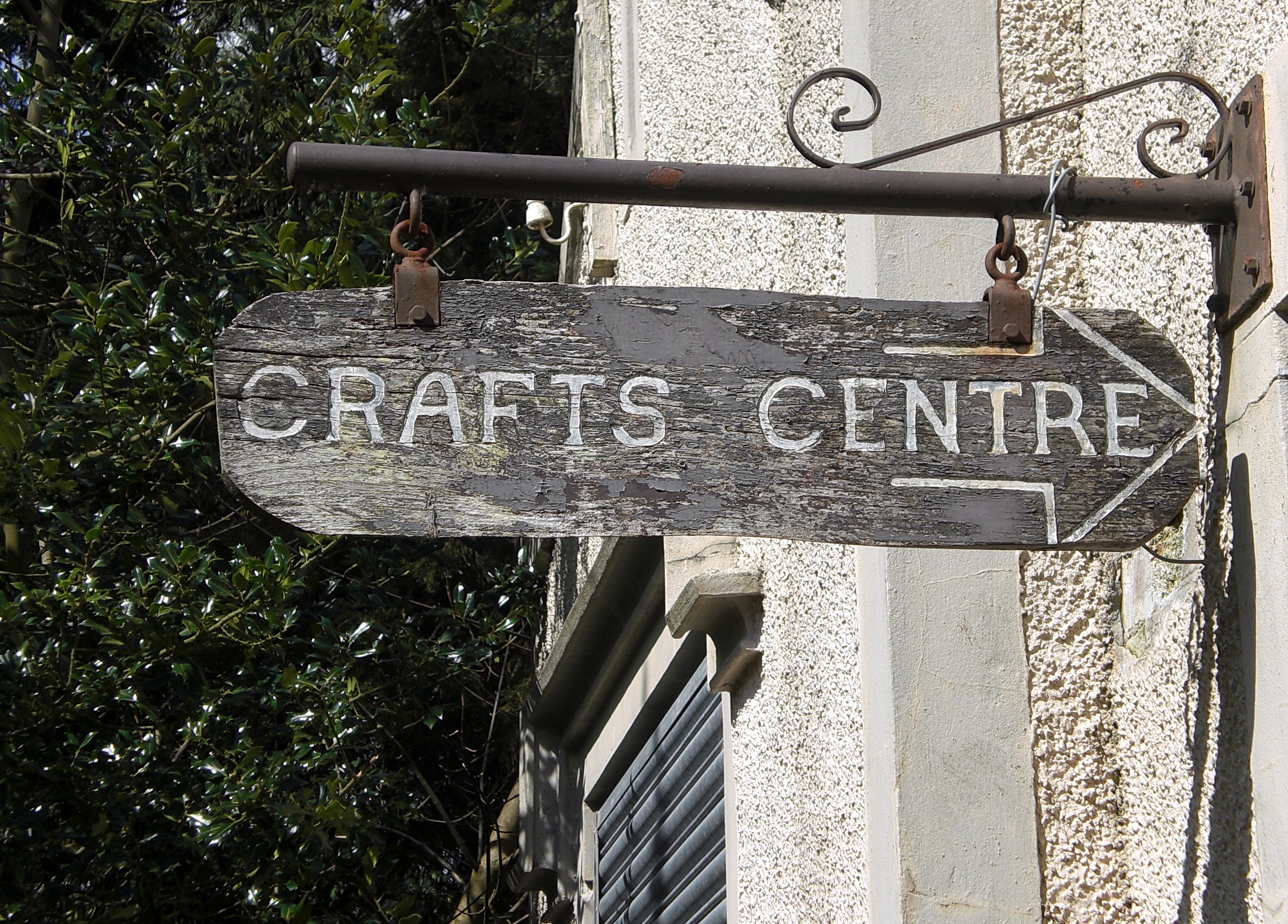
The entrance to the old crafts centre:

CIMG2383

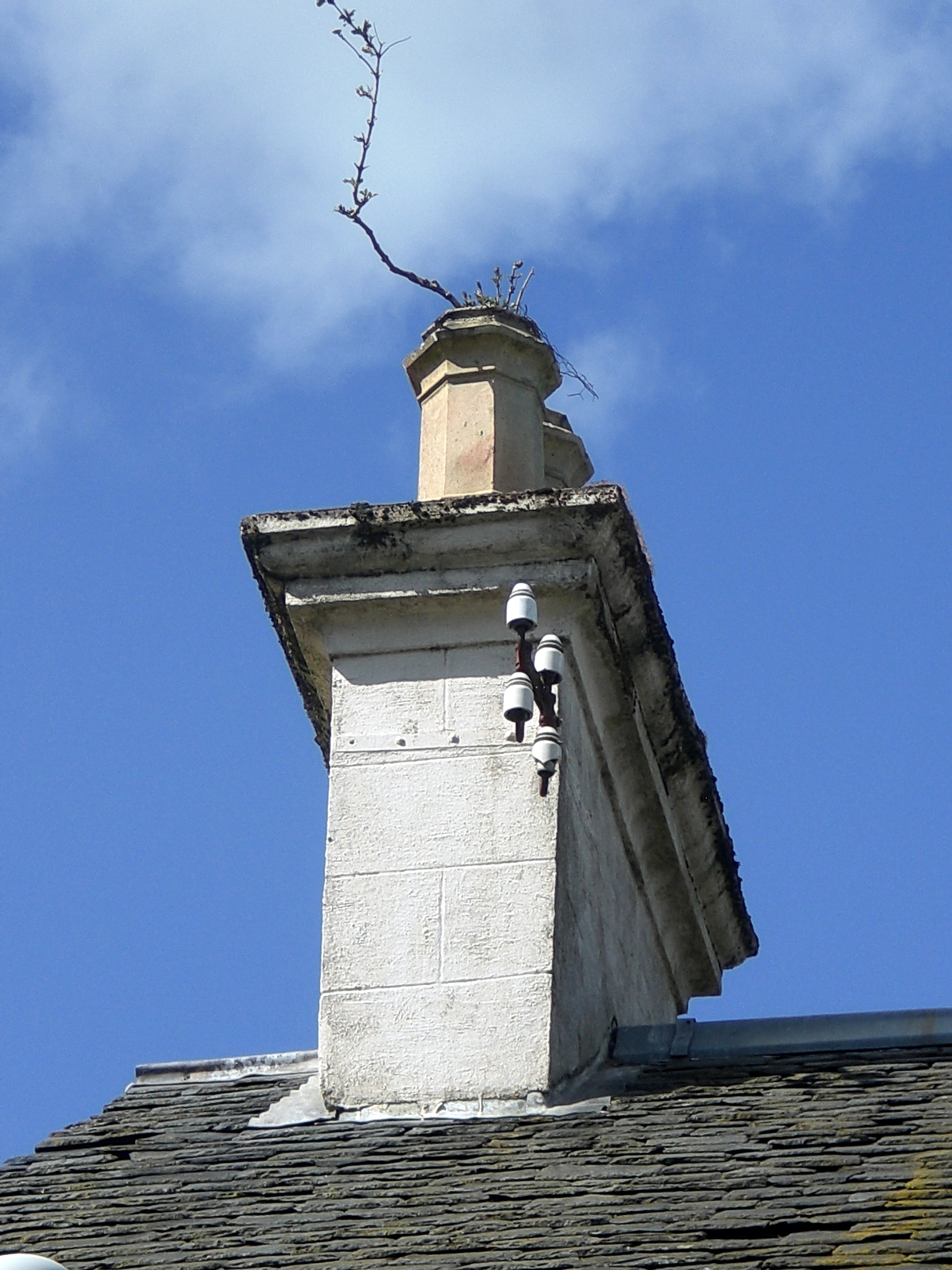
Stretching for the sky:

CIMG2371

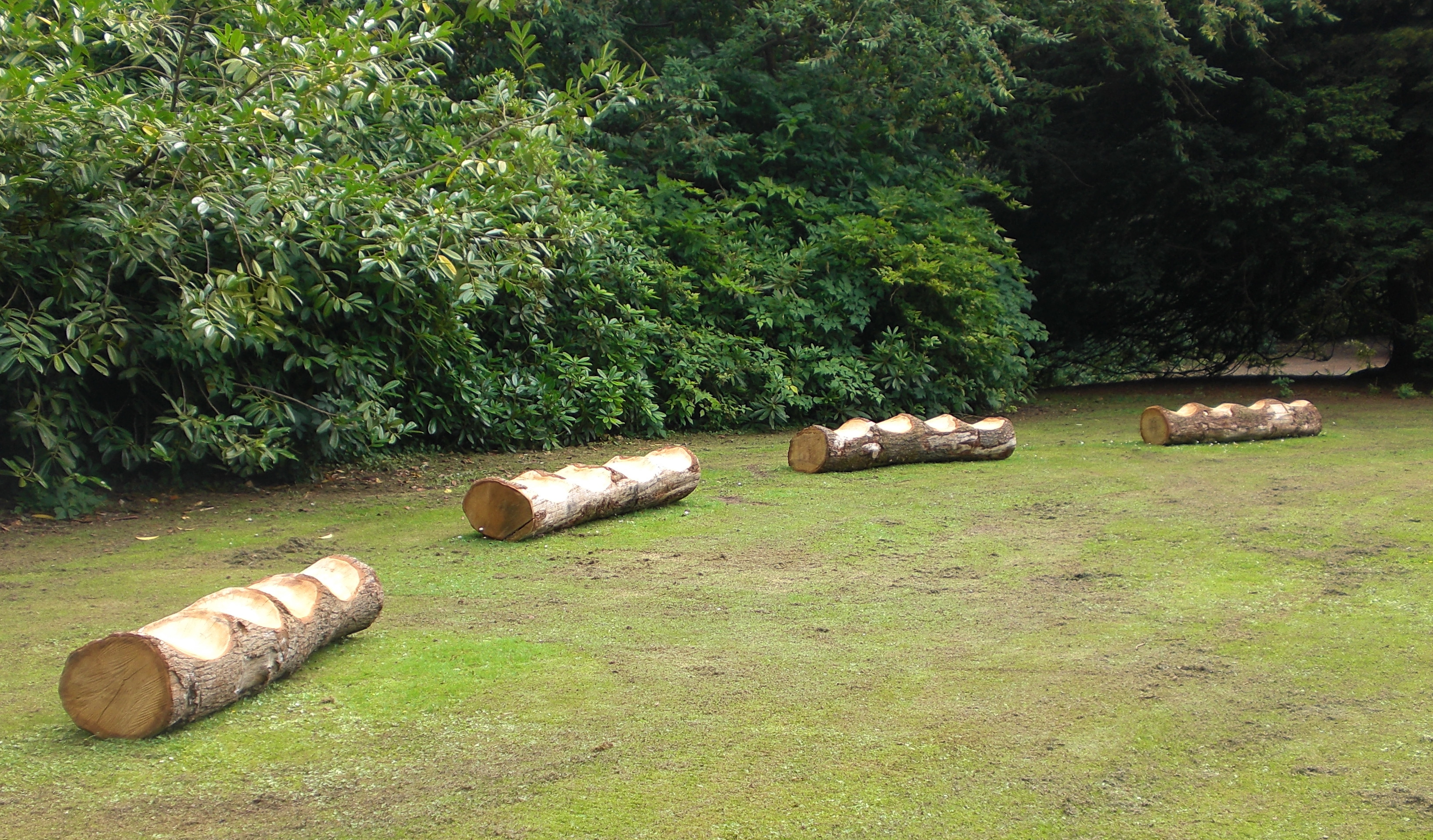
On our last visit, we noticed a new addition. Some outdoor seating has been added, fashioned out of tree trunks:

CIMG2694CIMG2691

CIMG2692

And at the opposite end of the lawn, a collection of shamanistic divining posts in the family sculpture area:

CIMG2834CIMG2836

As is common with any drift, with a little attention, a surreal world can reveal itself:

The shoe tree:

CIMG2413

The worm mound:

CIMG2406

One tries to wriggle free:

CIMG2408

The giant pencil:

CIMG2411

The stalled roundabout:

CIMG2445

The unknown and undecipherable signs:

CIMG2410CIMG2409

.

.

One visit, late Saturday afternoon, a dull twilight. No other humans around and even the bird song is subdued. Only the rustle of leaves – hopping blackbird and scurrying rabbit.  The fungi radiate a pale light:

CIMG2662

A message from the trees:
CIMG2658-001CIMG2659

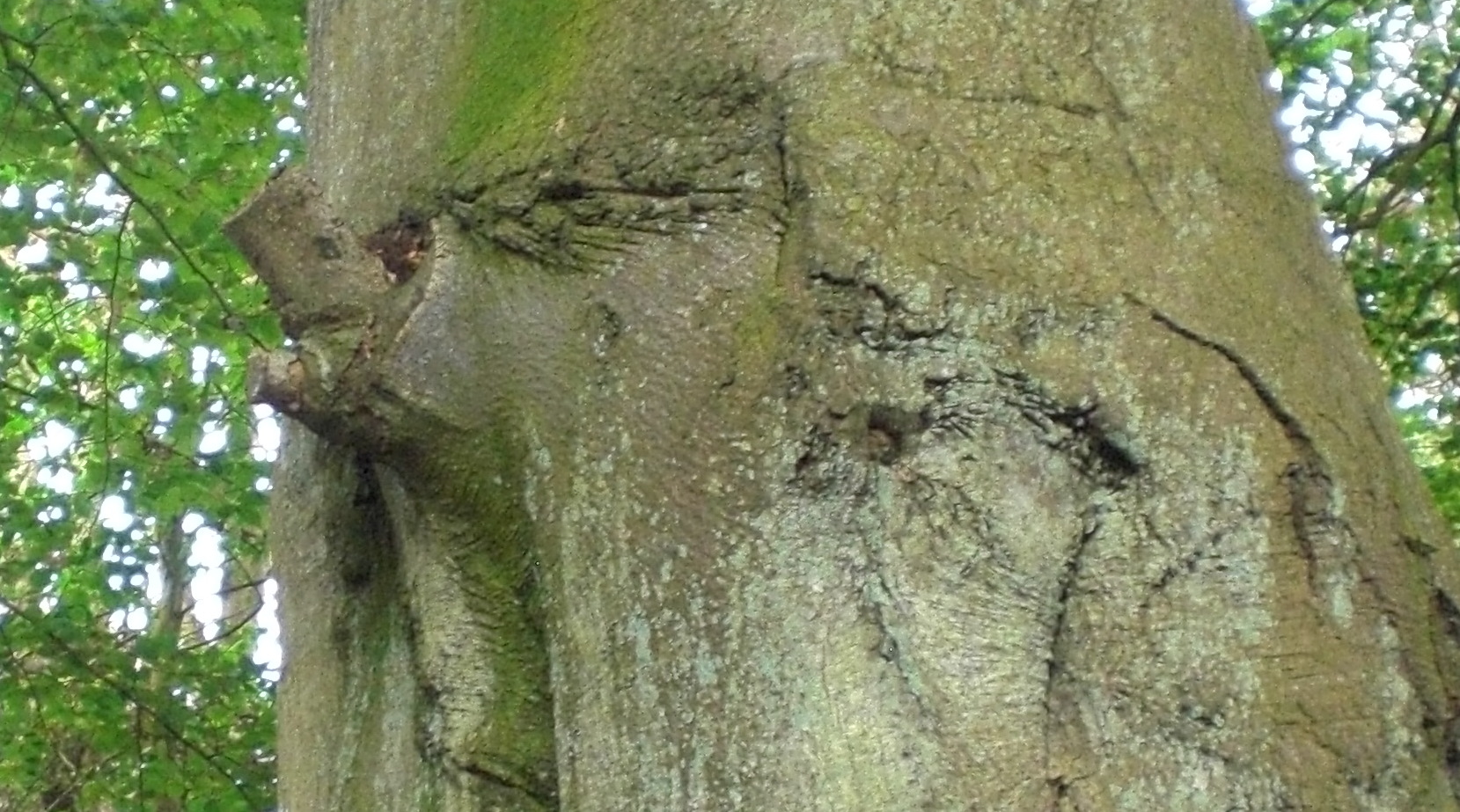
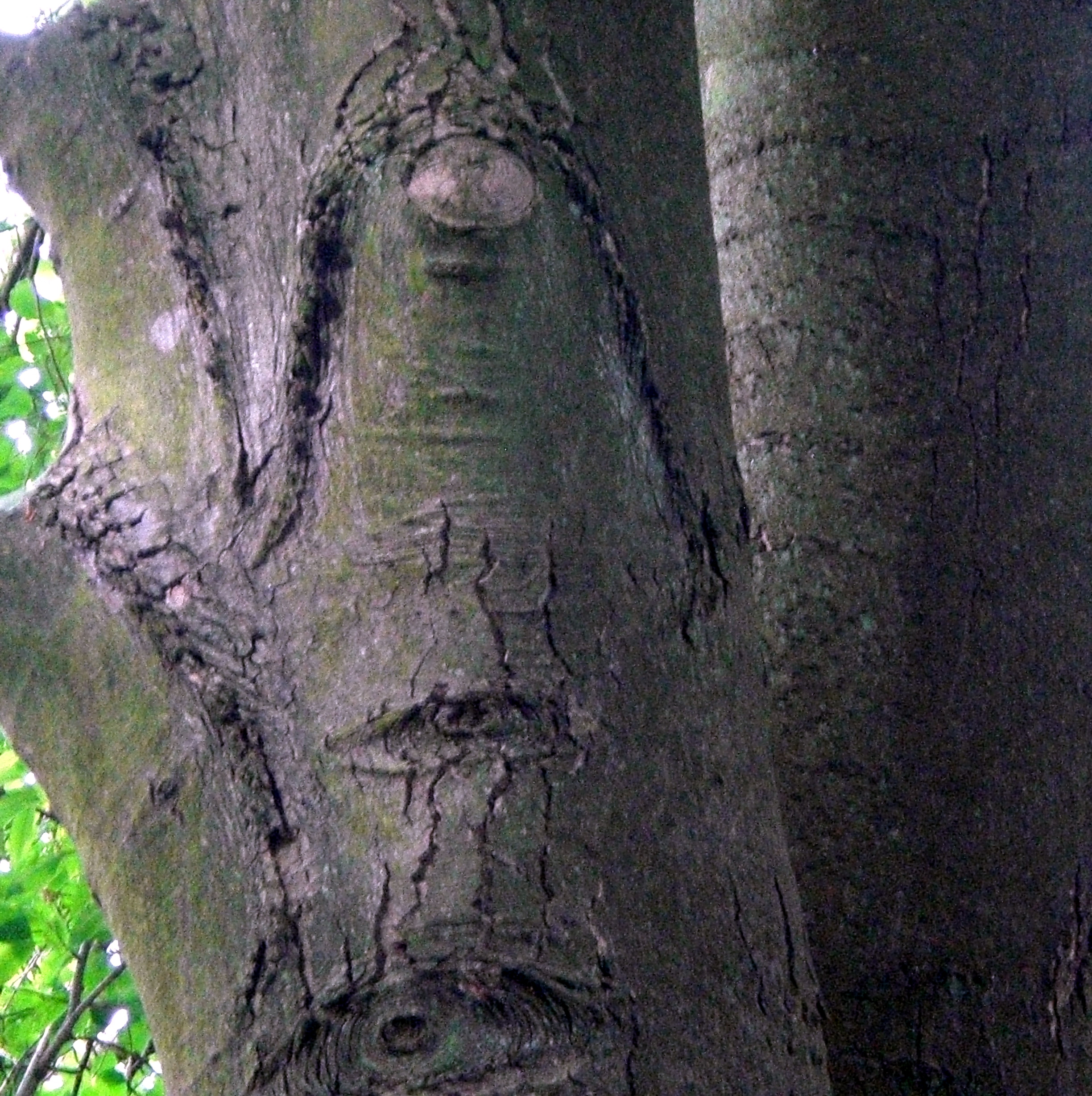
Stare for long enough and the tree spirits begin to reveal themselves:

dog-bear

CIMG2704

Tusked boar

CIMG2700

Cyclops

CIMG2682

Preying Mantis

CIMG2844tentacle clawed … ?

CIMG2711

The Flax Mill & Retting Pond

On the lower level of Silverburn sits the Flax Mill and its associated retting pond.

CIMG2801

Retting is a process which employs the action of micro-organisms and moisture on plants to dissolve or rot away much of the cellular tissues and pectins surrounding bast-fibre bundles. This process is used in the production of fibre from plant materials such as flax and hemp stalks and coir from coconut husks.

CIMG2640

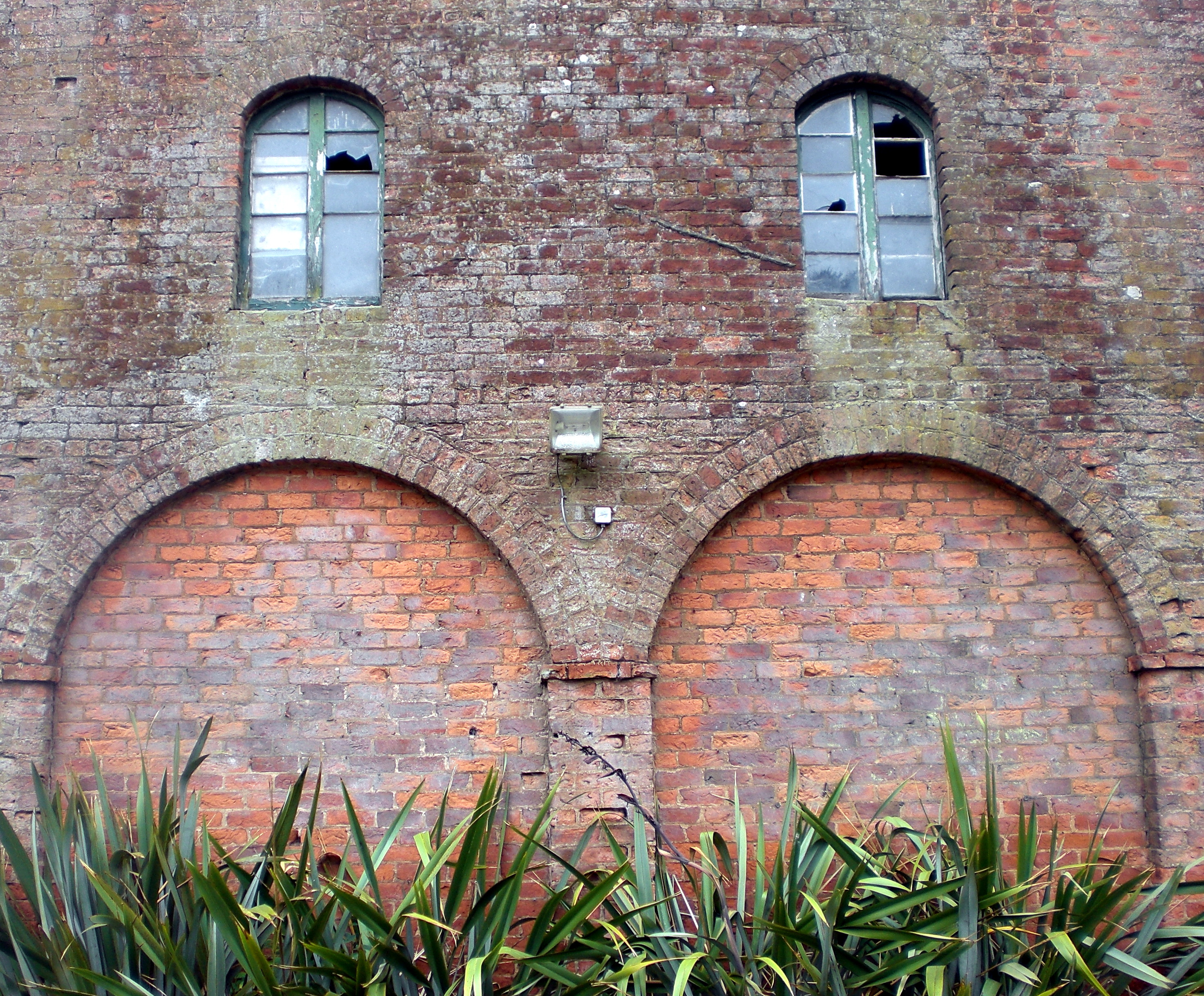
The flax mill was built in the mid 1800s and was one of the first industrial buildings to be roofed with a ‘new material’ called corrugated iron.  Flax fibre was prepared for spinning at Silverburn and was soaked in the retting ponds for about 10 days, after which it was thrashed. Retting Ponds were brought into play after an Act in 1806 prohibited the use of local streams due to excessive pollution which occurred from the process. The flax mill itself was run on steam power. The mill closed in 1930, although, as previously mentioned, the outbuildings were used for the mini zoo during the 1990s.  Today, the brickwork is failing in some places, with over 50% of the brick turned to dust.  An adjacent row of cottages were probably built for the flax mill workers and remain used and in good condition today.

CIMG2652

Look out for the face in the factory:

CIMG2642

and the quizzical ghost:

CIMG2655

CIMG2654CIMG2648

.

.

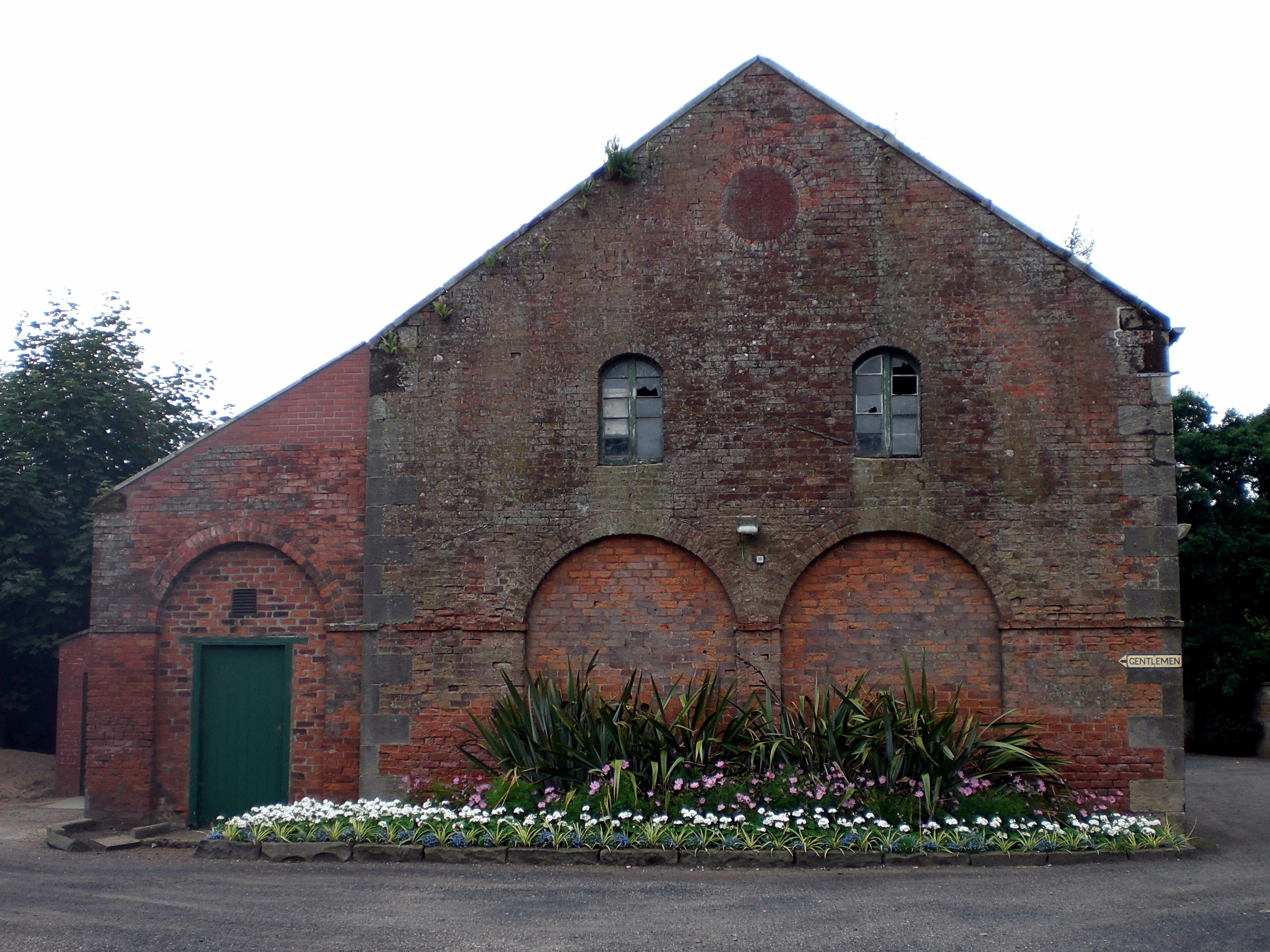
The outbuildings:

CIMG2644

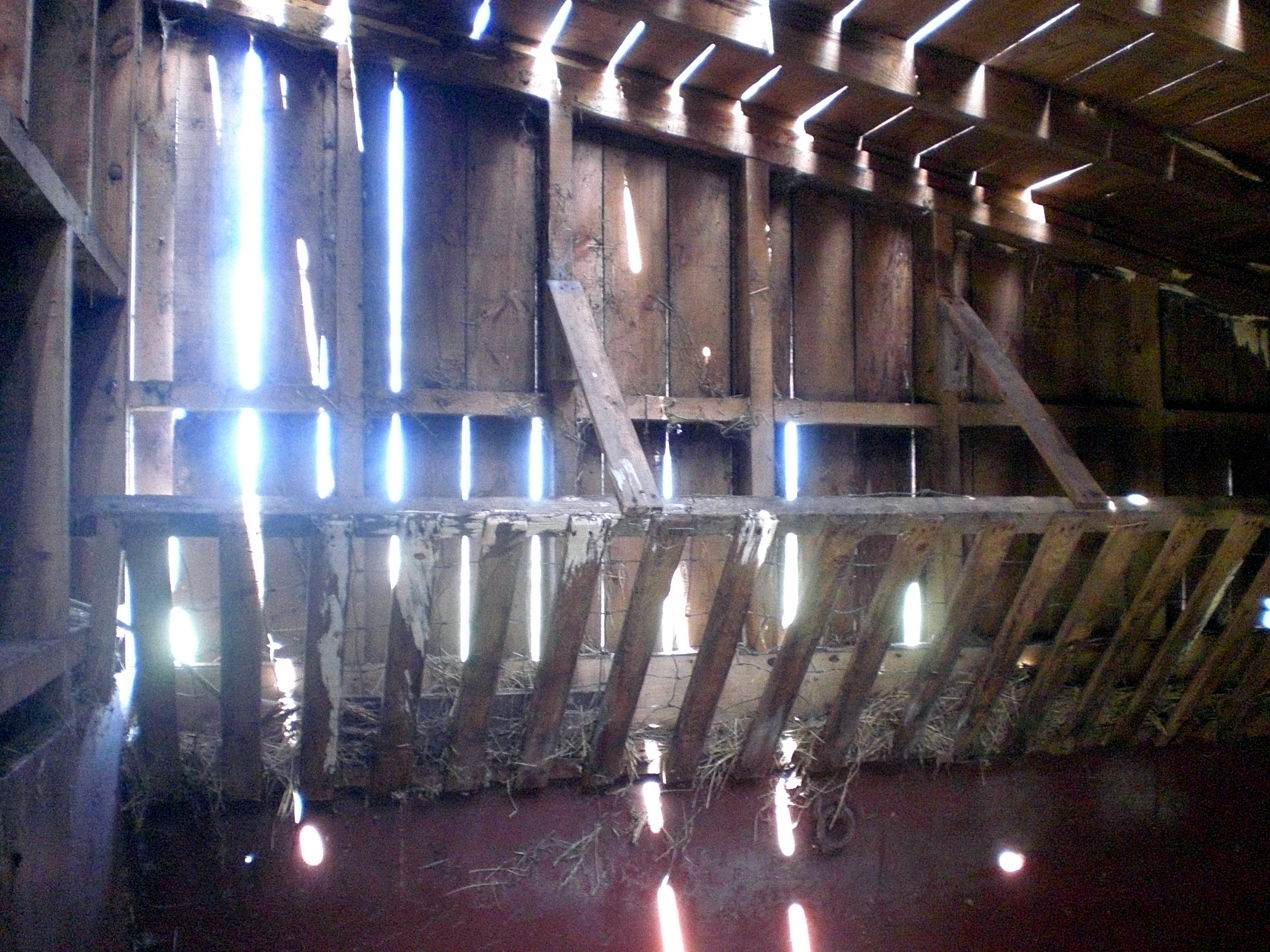
The old stables:

CIMG2441CIMG2442

Inside the old stable

the darkest corners – bleed

in slatted sunlight

CIMG2440

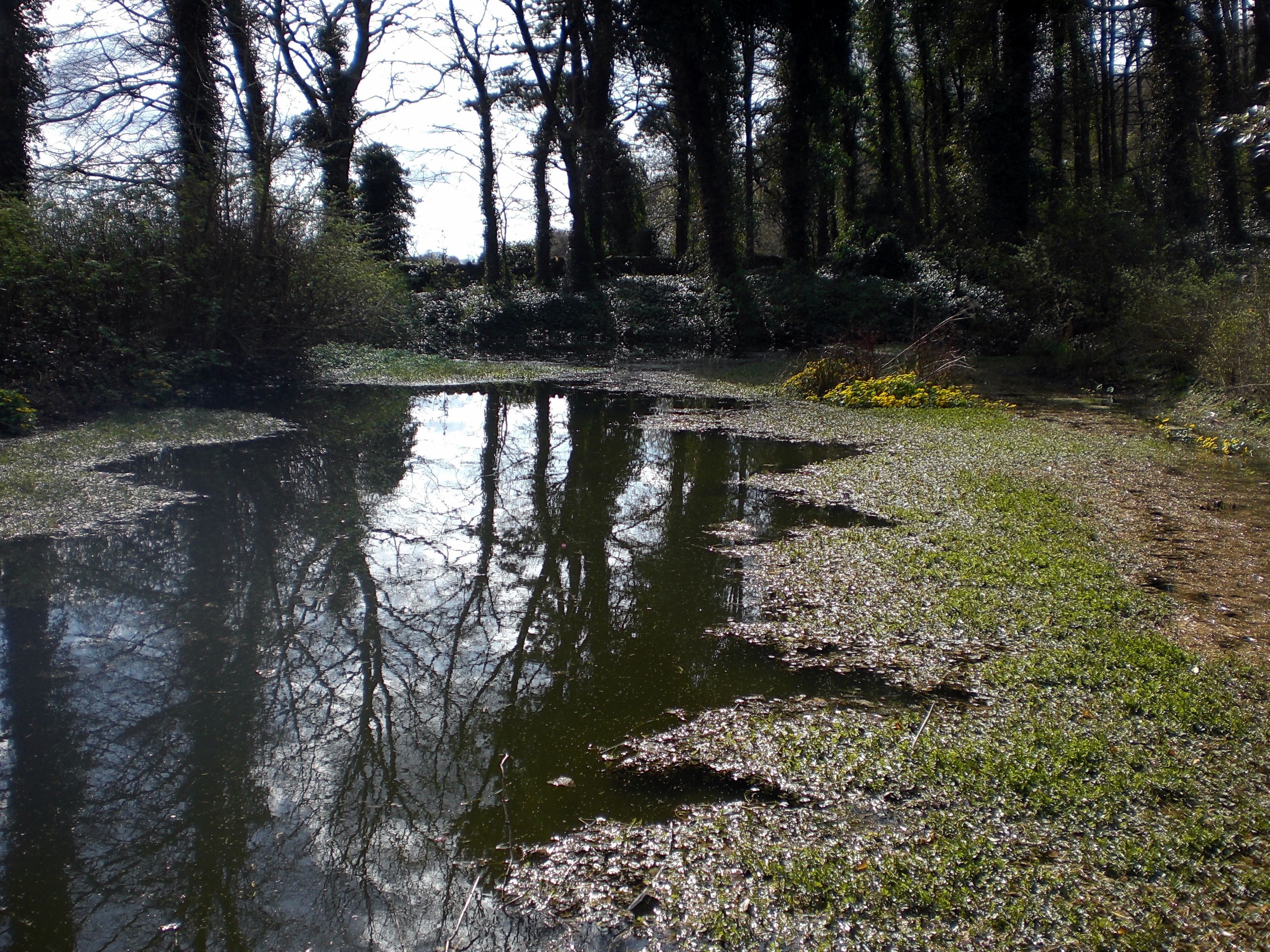
The retting pond where the flax was soaked is close by. Now heavily overgrown with vegetation, it is a meditative spot to watch the reflected trees in the water and the teeming pond life on the surface:

CIMG2396

CIMG2815

The Tree House and Formal Gardens

How could anyone not be captivated by the tree house? It looks as if it could walk away at any moment on its stilted legs:

CIMG2729

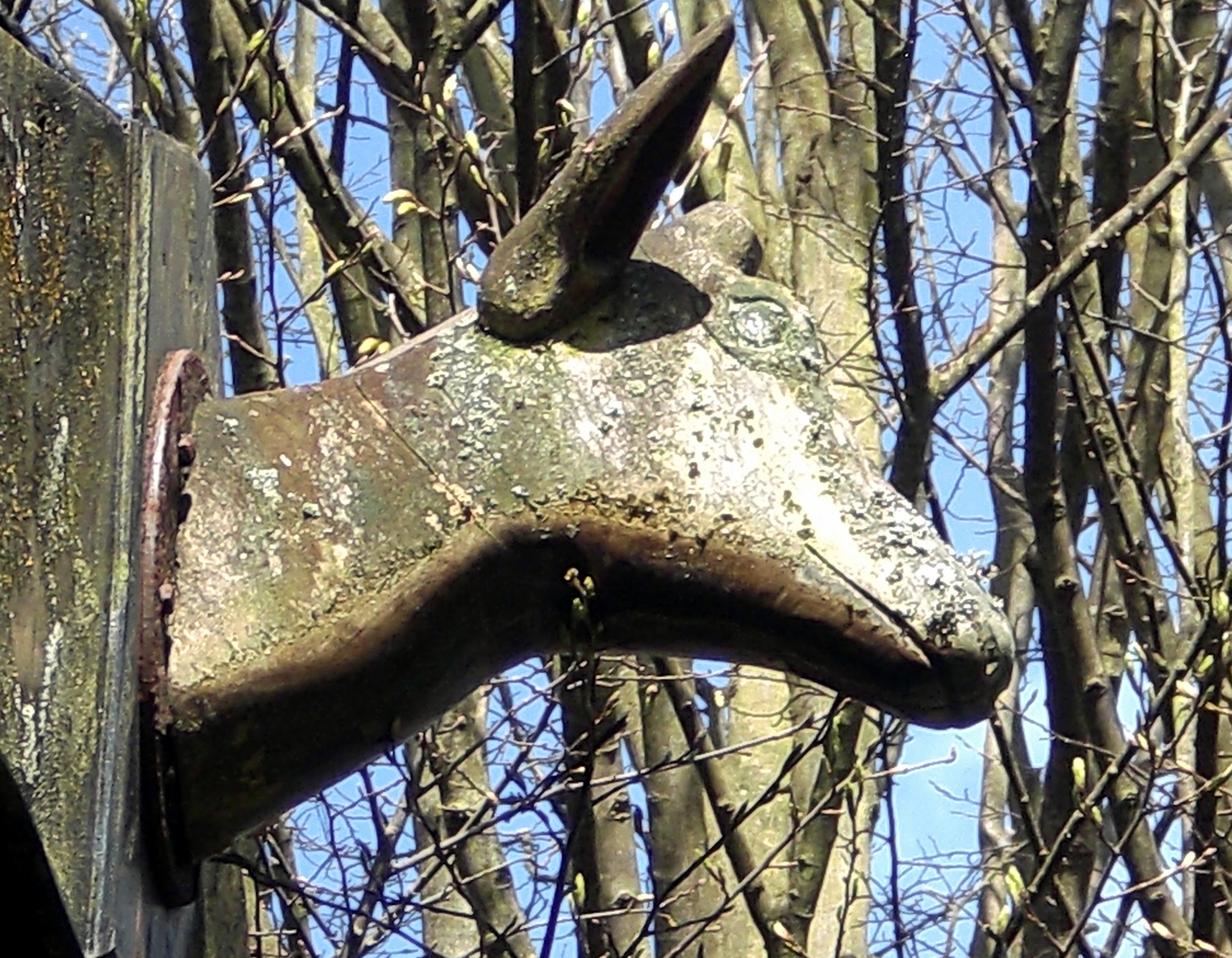
The sense of being watched by the animal heads on either side add a touch of the uncanny:

CIMG2421CIMG2425

.

.

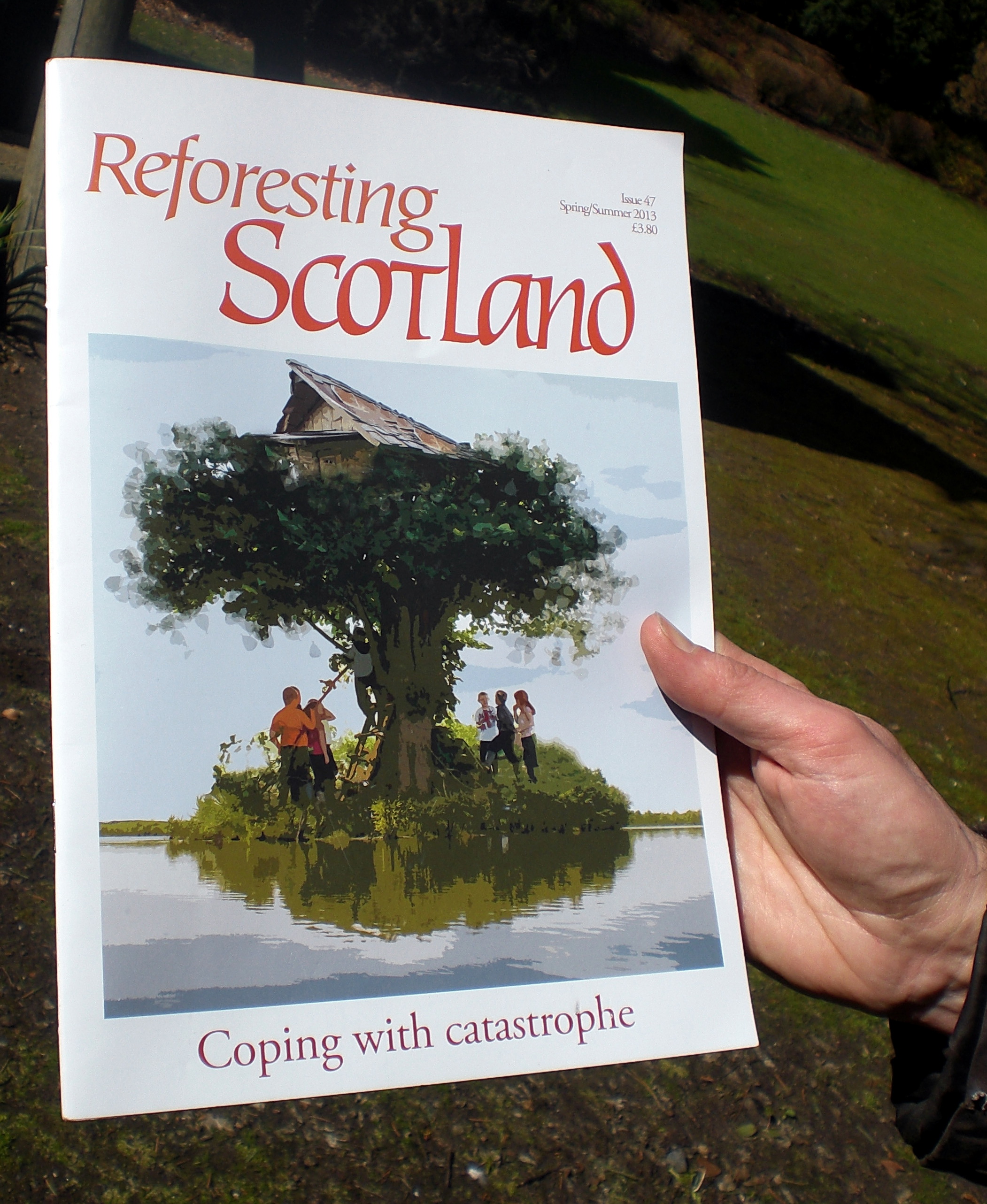
By complete coincidence, N has a copy of Reforesting Scotland in his bag. The cover illustration an echo of what we are standing underneath:

CIMG2424

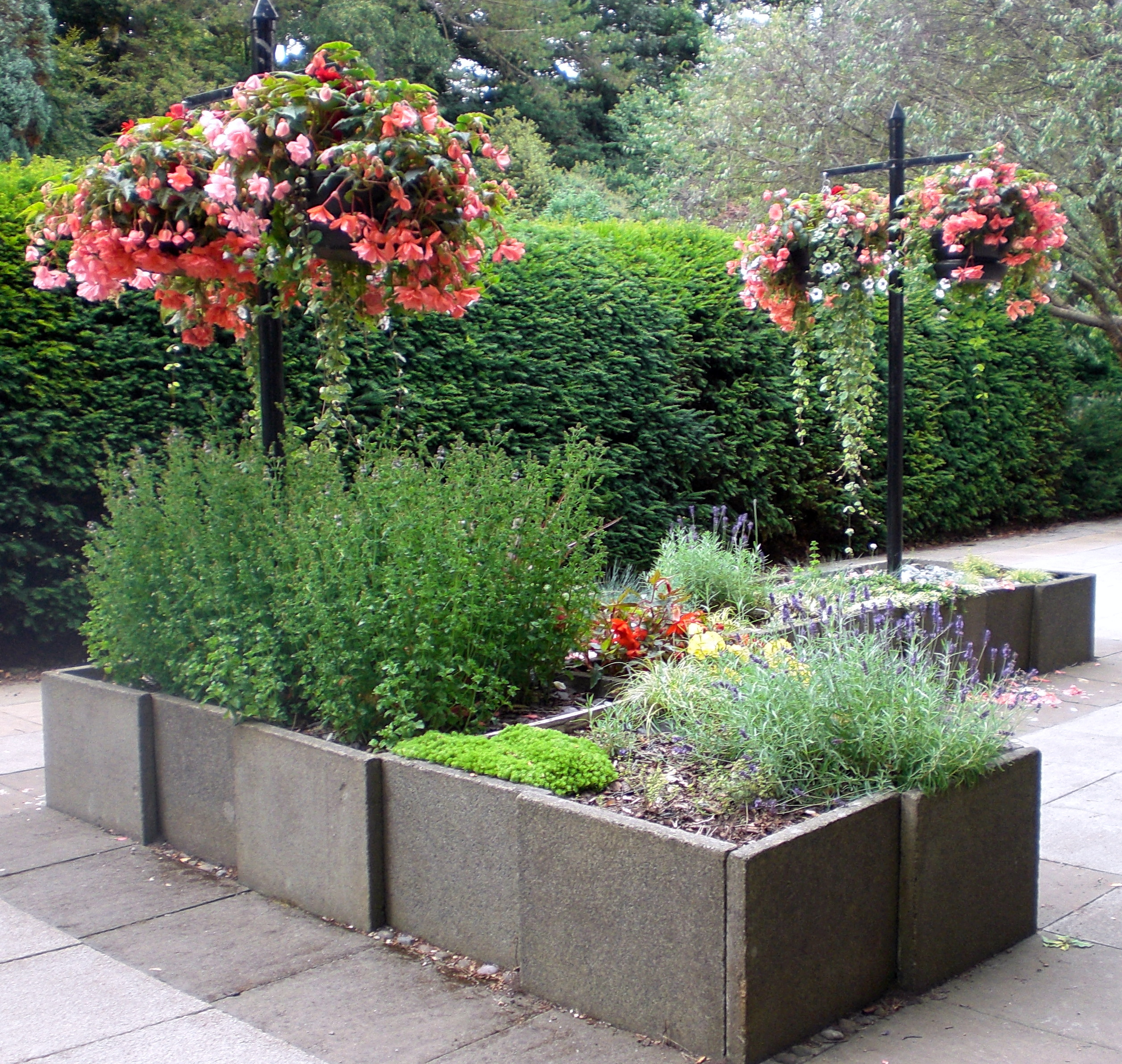
The formal gardens, also comprise a sensory and walled garden. They are clearly places of meaning and memory. On our first visit, we find a wreath of knitted flowers:

CIMG2435 CIMG2434

By the time of our second visit they have gone. There are also the lives commemorated and remembered. Emotional linkages between people and place.

CIMG2717

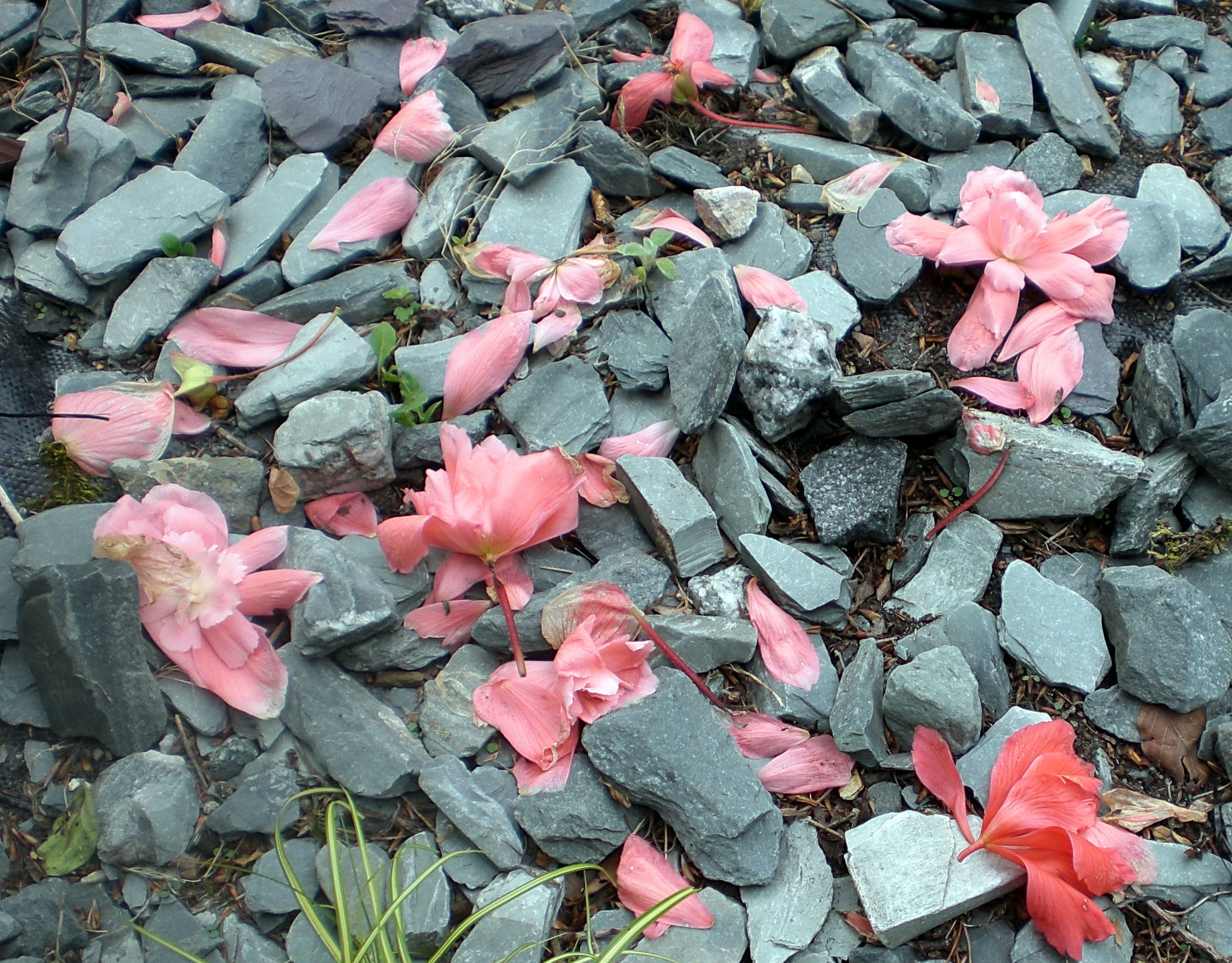
From the sensory garden, the gentle trickle of running water projects around the natural amphitheatre. Bees congregate upon yellow and pink petals shower down on grey.

CIMG2719CIMG2715

CIMG2720CIMG2722

Perhaps there is also evidence of the cunning folk at play. A small entrance through a hedge; a portal to another world?

CIMG2429

CIMG2430

What is in a Name?

We leave Silverburn to head for the coast once again. Following the flow of the burn back down Mile Dyke to where the silver stream meets the sea.

CIMG2792

We reflect on the name:

Silver – precious, with, the highest conductivity of any metal, allowing energy to flow.

Burn – always in flux/flow. As Heraclitus said, you never step in the same river twice and we know we will never visit the same Silverburn twice. There is also the idea of how prescribed burning of vegetation can recycle nutrients tied up in old plant growth to invigorate new growth.  With the current FEAT and community initiative ‘Heart Mind Soul Silverburn’ perhaps new possibilities for Silverburn are emerging.

And to end. A whispered message from a beach encounter:

CIMG2795

To end with a name and only the name. To end with only the letters of the name:

.

Silver sun sliver –

burrs liven us.

.

River veils runes

in blue siren lures.

.

Briers line ruins,

burn rises in

river lens.

.

Vein in burn

silver in vein

burn silver

S  i  l  v  e  r  b  u  r  n.

CIMG2790

Now playing: The Necks – Silverwater

References:

Buildings at Risk Register for Scotland

County Folk-Lore Vol VII. Examples of Printed Folk-Lore concerning Fife with some notes on Clackmannan and Kinross-Shires collected by John Ewart Simpkins (London: Sidgwick & Jackson for the Folk-Lore Society, 1914).

RCHAMS, Canmore

John Steinbeck, Travels with Charley: In Search of America.  (New York: Viking, 1962).

Marysia Lachowicz, Polish Army in Fife. (Work in Progress).

With very special thanks to Margaret and Aiveen for the invitation to “come and see what we make of it” and also Aiveen, Margaret, Graham and Ninian for inspiration and sharing that first visit.

Echoes of the Pioneers: Three Beehives in Leven

Recently, we have been visiting the area around the coastal town of Leven.  A fairly long piece is slowly coming to fruition.  Until then, here is a short post.

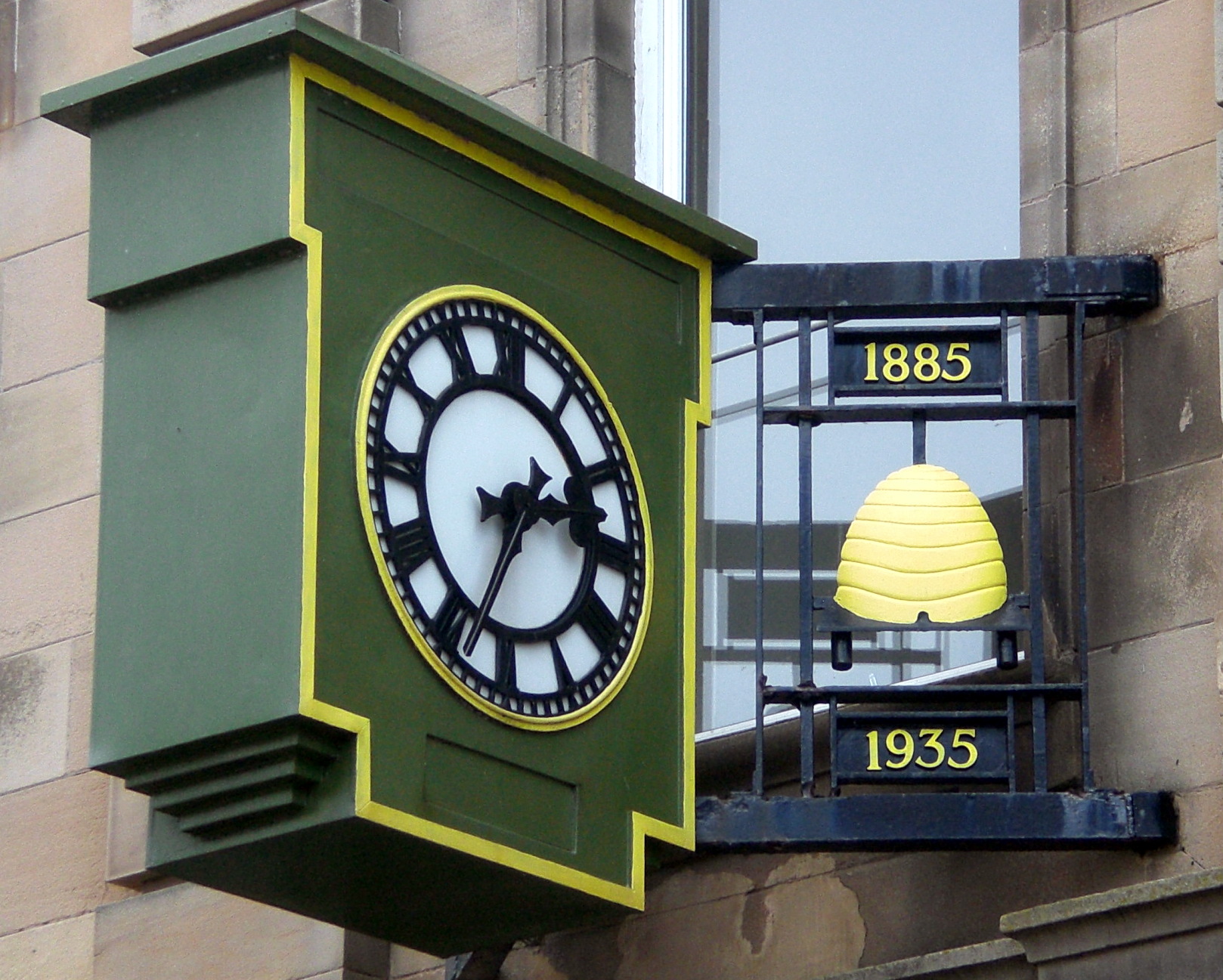
Walk up Durie Street in Leven and listen out for the bees singing. Perhaps, the sound of the skep is more of a muted murmur now, but raise your eyes from street level and you may hear them. 

The first hive is above what is now the town library. Our industrious and co-operative little bees swarm around their skep as they have done since 1887.

CIMG2848

This symbolic image on a former building of the Leven Reform Co-operative Society reminds us of the Rochdale Pioneers. In 1844, with an economy in decline, wage reductions and strikes, a group of unemployed weavers met at the Socialist Institute to debate the philosophies of Robert Owen and Chartism.  Whilst there are many examples of co-operative societies existing before 1844, The Rochdale Pioneers formulated a set of guiding principles, upon which, an expansive version of co-operation was founded.  Looking at these principles today, it is notable how well these stand up as a set of co-operative ideals:

1. Democratic control, one member one vote and equality of the sexes.

2. Open membership.

3. A fixed rate of interest payable on investment.

4. Pure, unadulterated goods with full weights and measures given.

5. No credit.

6. Profits to be divided pro-rata on the amount of purchase made (the dividend or divi).

7. A fixed percentage of profits to be devoted to educational purposes.

8. Political and religious neutrality.

The Rochdale Society of Equitable Pioneers raised money from 28 original subscribers to establish a shop at 31 Toad Lane, Rochdale which was equipped and stocked with basic goods and produce. The Pioneers chose the beehive as a symbol of co-operation and unity and the original stone skep stood on top of the, now demolished, central store at 45-51 Toad Lane, Rochdale.  The skep now sits preserved and incorporated into the outside wall of the Rochdale Pioneers museum. 
Rochdale Pioneeers museum4
(c) The Rochdale Pioneers Museum

Within ten years of the Pioneers founding efforts the co-operative movement in Britain had grown to nearly 1,000 co-operatives with many adopting the symbol of the beehive.

We are back in Leven. Follow the echoes and walk further up Durie Street. On the clock of the former Co-operative department store, a golden skep, clotting the fingers of weak, ebbing sunlight:

CIMG2852

Stand.  Raise your head and look to the sky.  Follow the thread of sibilant hum to the very top of the building.  A change of tone – to low dissonant drone. A sign that the bees are, once again, getting ready to swarm:

Leven

Underneath the skep

intimations of new life

still sounding – echoes

of the Pioneers.

Now Playing: Earth – The Bees Made Honey In The Lion’s Skull 

References:

The Rochdale Pioneers Museum

Manchester History

Three steps …

Three steps  may be all it takes to alter our perception of place

Dalgety Bay Looking out to Inchcolm & over to Arthur's Seat

A fairly idyllic view taken last weekend from the Fife Coastal Path at Dalgety Bay. An expansive sky animated by great dollops of scudding cloud, mirrored in the calm, glassy sea. Inchcolm Island lies straight ahead and over to the right, the contours of Edinburgh and Arthur’s Seat ink the horizon.

Waders and gulls amble and preen on the bay foreshore with divers, ducks and the occasional seal bobbing in the deeper water.

take three steps back

o

n

e

t

w

o

t

h

r

e

e

CIMG2614

You find out that you are actually standing on radioactive contaminated land.

The contamination is believed to originate from the residue of radium coated instrument panels that were used in military aircraft.  Between 1946 and 1959, over 800 planes were incinerated and the ash was land-filled in the area.

Radioactive material was first detected on a part of the foreshore in 1990 and, since then, more than 1000 radioactive items have been removed.

It has taken twenty-three years for the MoD to be ‘officially’ named as polluter of the site by the Scottish Environment Protection Agency (SEPA). However, the MoD continue to prevaricate in actually admitting responsibility and most importantly undertaking remediation options.  This week, the can has been kicked forward, once again, until September when another ‘discussion’ between SEPA and the MoD will take place.

There is a possibility that SEPA will be required to formally designate the beach at Dalgety Bay as a radiation-contaminated area.  If this happens, it will be the first such designated site in the UK.

“It would be extraordinary that in a Britain that has nuclear storage sites, nuclear processing sites, nuclear weapons and nuclear waste, the beautiful beach at Dalgety Bay would stand out as the first and only radiation-contaminated site in the country.”

(Gordon Brown, MP, Hansard, 9th July 2013)

The layered traces of human activity embedded in the land takes on another dimension when the presence of absence can be measured in half-lives.

Now playing: Sun Ra – Nuclear War.


A H a u n t i n g o f L e a v e s

A Haunting of Leaves

t h e r e    –    n o t    t h e r e

a n    x – r a y    o f    s i l e n c e

a    h a u n t i n g    o f    l e a v e s

CIMG2605-001

l u m e n    e t c h e d

f i l i g r e e    o f    s h a d o w p l a y

f a d i n g    f l u x    o f

e a r t h            r o o t            b r e a t h

a    f r a g i l e    g r o u n d i n g

a    p a s s i n g    c l o u d

h e r e    –    n o t    h e r e

From a walk in Wester Shore Woods, near Blackness Castle, south shore of the Firth of Forth.

Now playing: Jakob Ullmann – disappearing musics

La Pasionaria and the Psychedelic Tiger: A short wander in Glasgow, 10th July 2013

Watch a street and you become it. You construct, if so inclined, a narrative: but you are also part of the witnessed event. You shape what you see.

Iain Sinclair, Edge of the Orison

WP_000266-001

In Glasgow. Uncharacteristic, sweltering heat and a half hour to spare before the gig. Just enough time for a quick wander, to stretch the legs without expectation. A phone camera will have to suffice if anything should reveal itself.

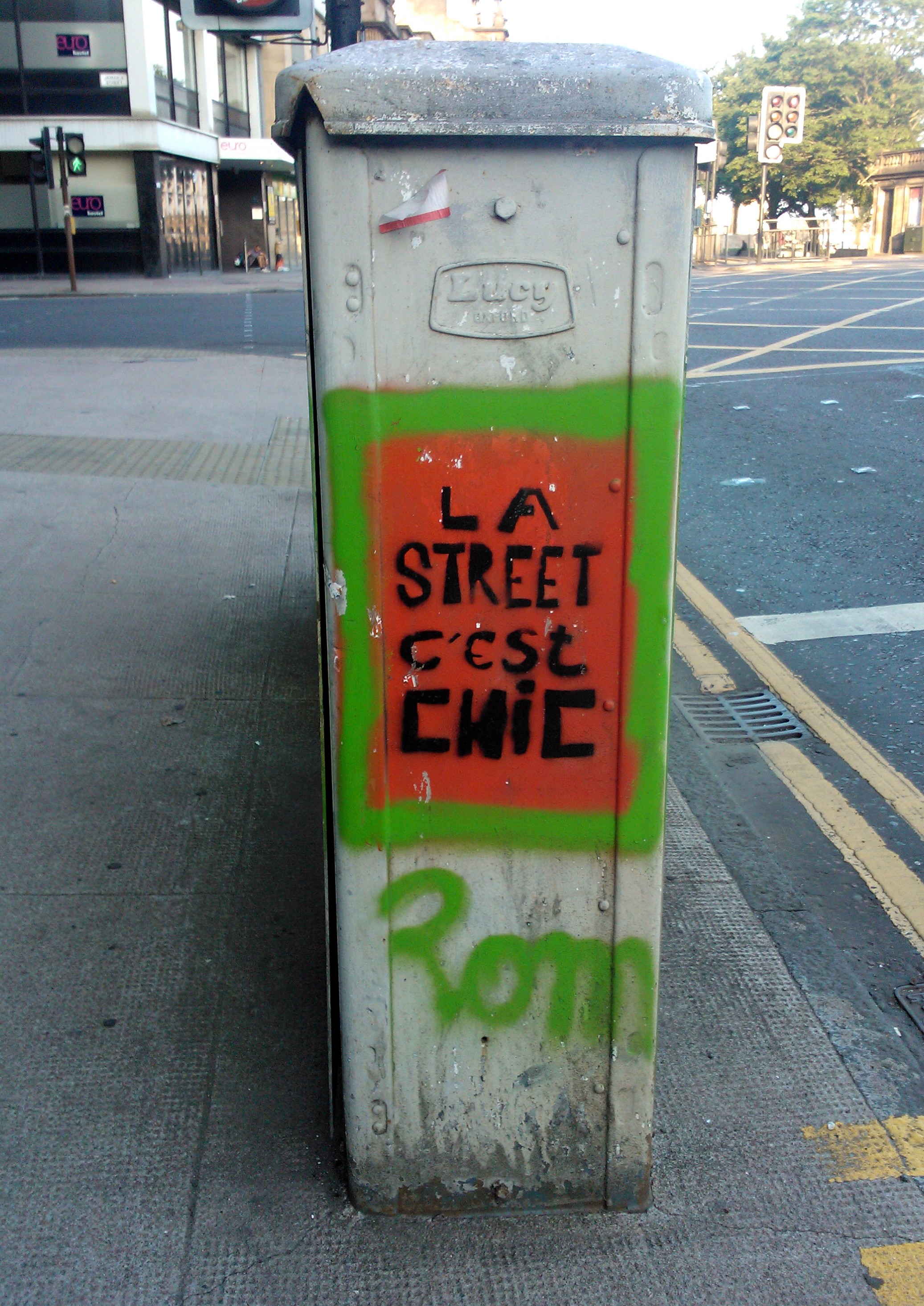
Out of the Arches, underneath Central Station, and into air larded with deep-fried food aromas and traffic fumes. I’m scanning for a sign to get started. Pastel shades shout out for attention and it seems that even the graffiti is responding to the sunshine:

La Street C'est Chic 1

Can’t help noticing the little green archipelago thriving around the base. The resilience of nature to establish existence, in the most barren of conditions, at a busy city centre intersection.

Head down towards the river and pick up the trail:

La Street C'est Chic II

More dancing colour to puncture the grey. A Bernard Edwards bass line bounces around in the head.

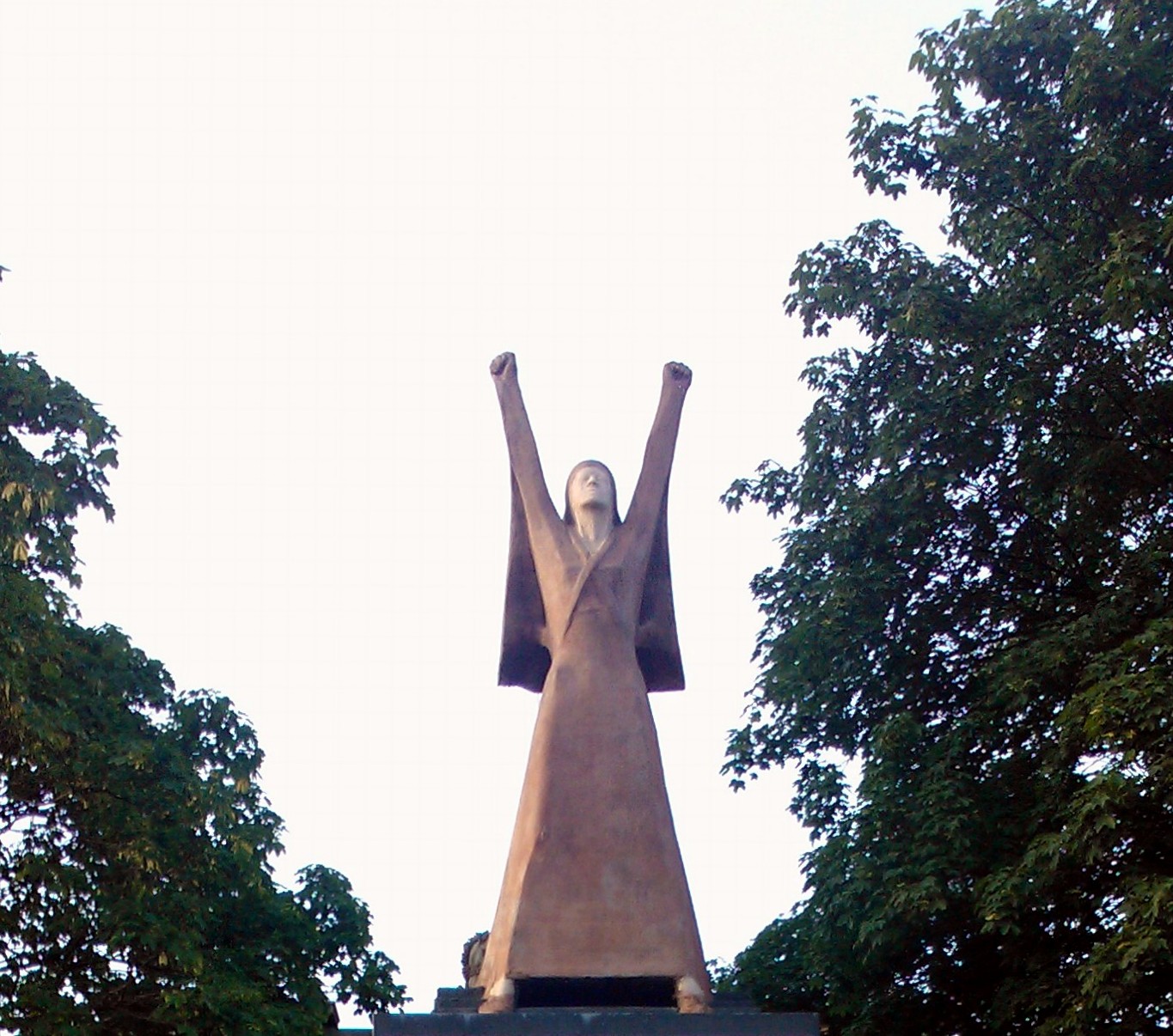
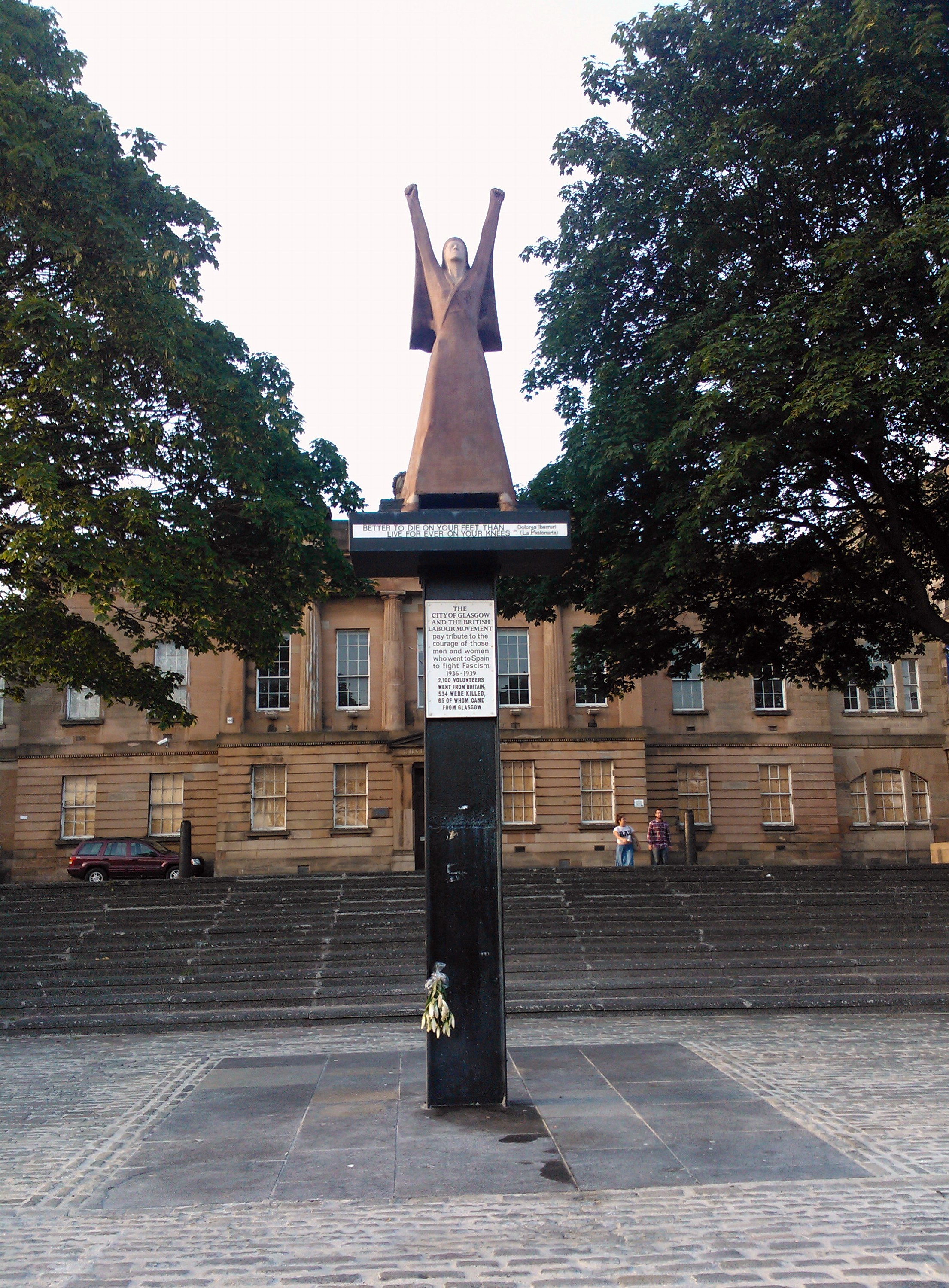
Walk straight on for a bit and over to the right there is a figure, facing towards the river, which looks interesting. From the rear I’m assuming it’s some form of religious icon, arms stretched out to heaven? St Mungo perhaps? Cross the road and down a shallow incline of steps to view the figure face on.

Glasgow 10.07.13

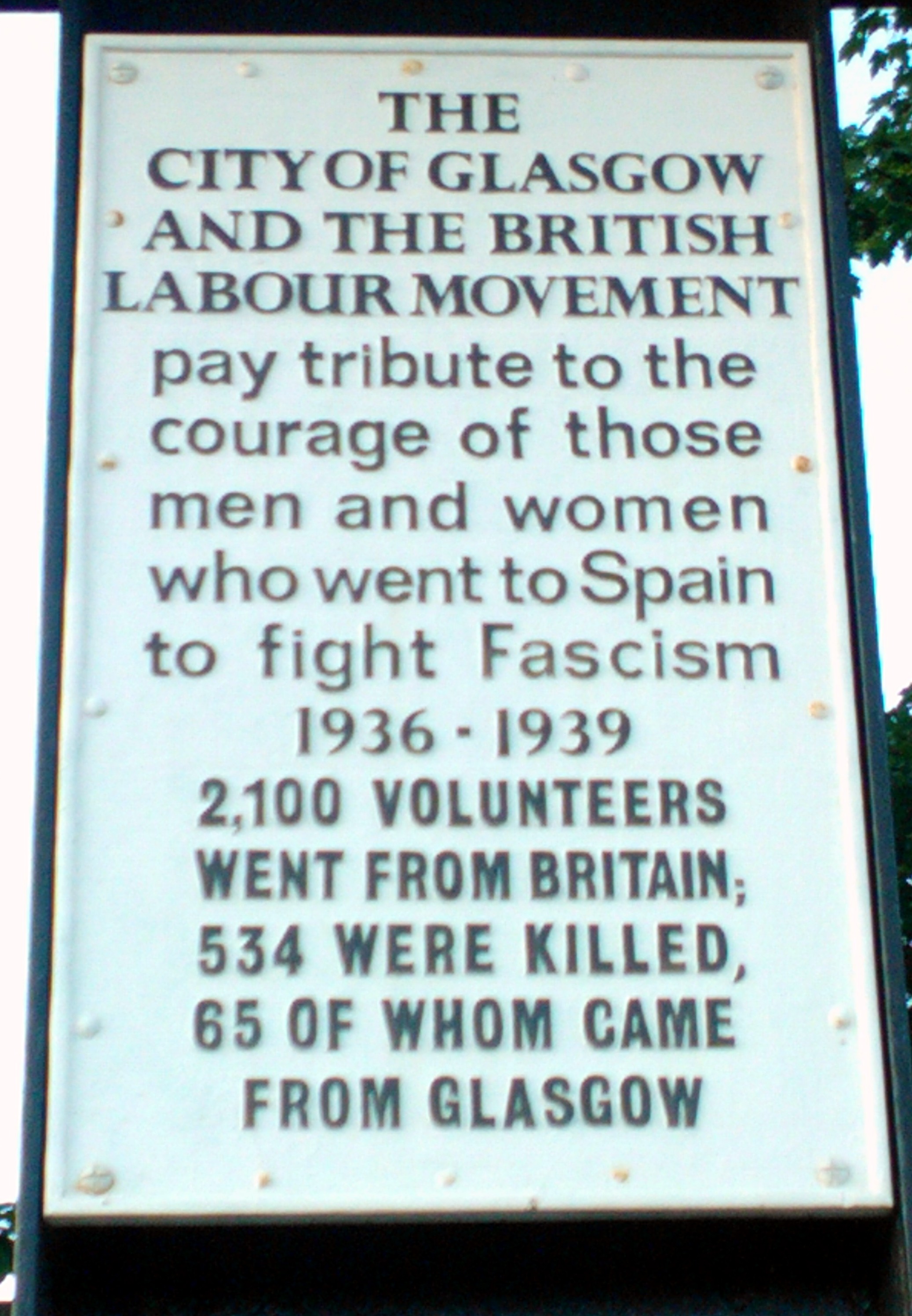
A bunch of flowers. wilting in the heat is tucked into the base of the statue. Obviously, still an active site of memory and remembrance. The plaque directly underneath the figure reads:

WP_000268-001

The statue is of Dolores Ibárruri (1895-1989), “La Pasionaria” (“The Passion Flower”), a heroine and leader in the Spanish Republican and Communist movements. An inspiration  to the volunteers of the International Brigade who fought in the Spanish Civil War of 1936-1939.  

WP_000265

I subsequently find out the sculpture is by Liverpool artist Arthur Dooley, who created the famous Beatles statue, Four Lads Who Shook the World. I was even more shocked to learn that Dooley never saw La Pasionaria installed, unable to afford the bus fare to come to Glasgow.

Continuing along the riverside walkway, a few people are taking full advantage of the heat wave. “Taps aff”. Sitting, lying down, starfished, enjoying being out-of-doors, heads raised, eyes closed, embracing the setting sun. A sense of the more usual activities of the area are perhaps revealed as a young man is pulled up by two patrolling police officers and asked to empty his pockets.

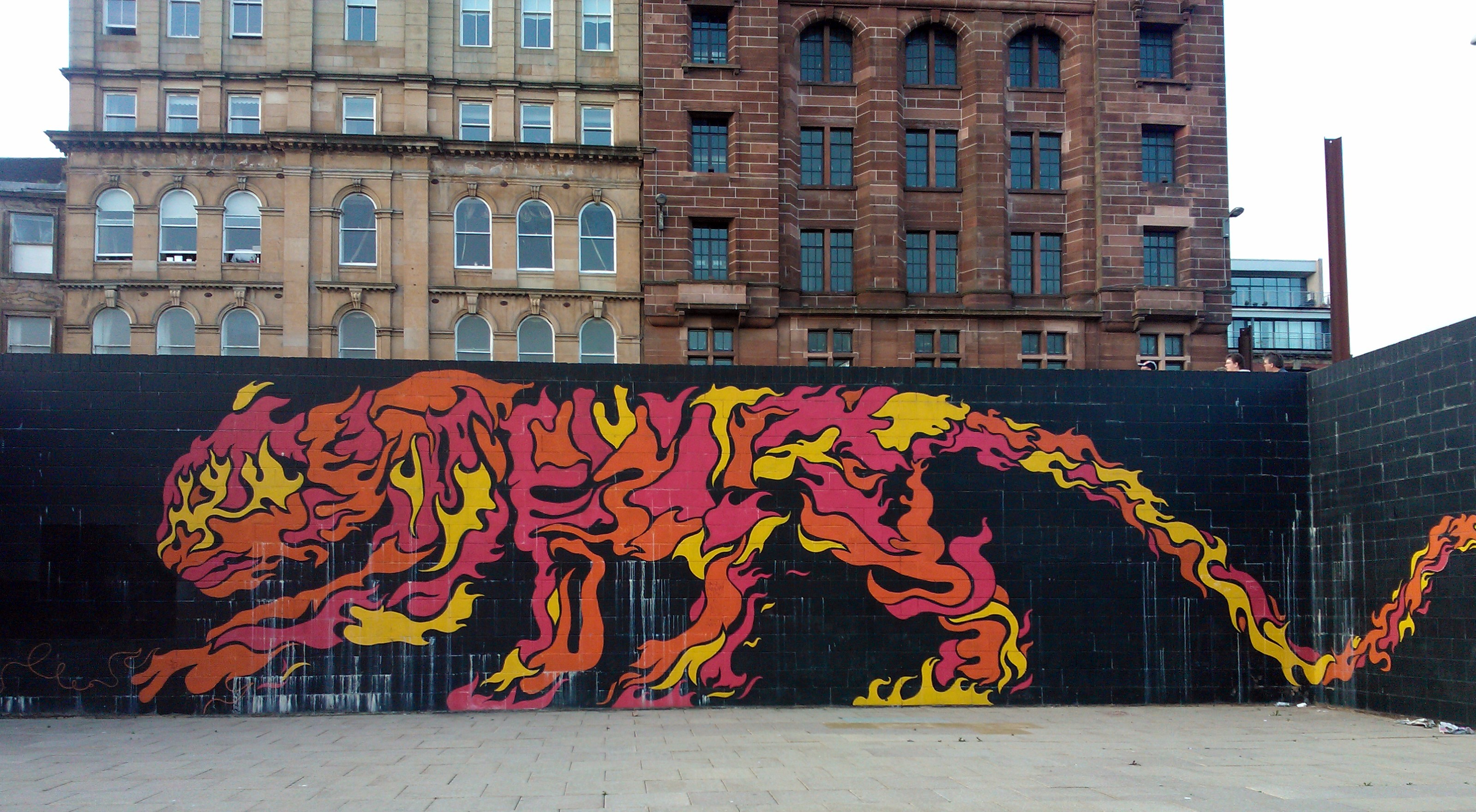
Underneath another bridge to come face-to-face with a psychedelic tiger. A fiery flux of shifting colours, crouched and ready to pounce on the indolent walker:

Tiger

Tiger 2

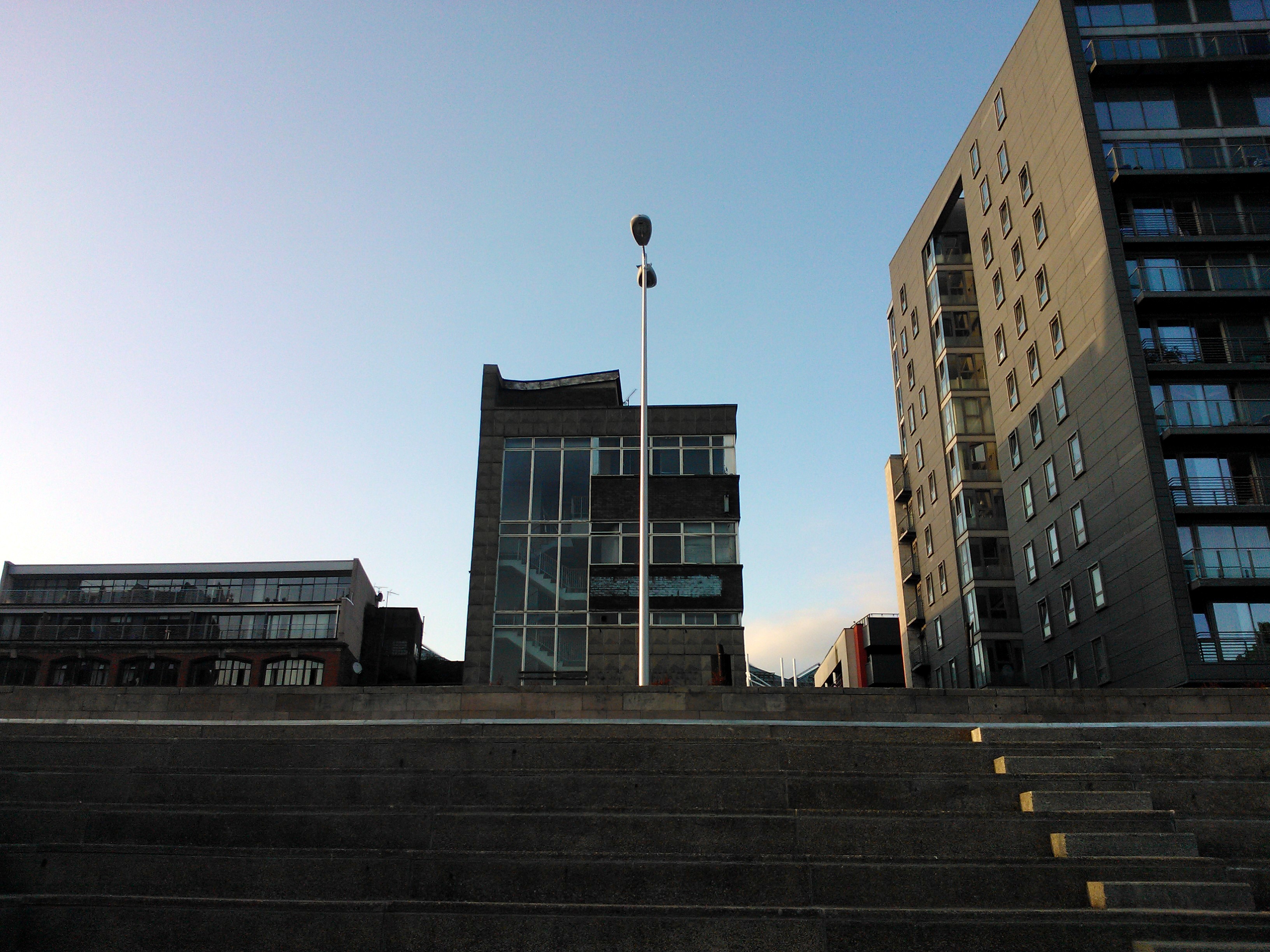
Ascending from the river up a miniature Odessa Steps, I half expect a pram to come toppling over the top.

Ascension

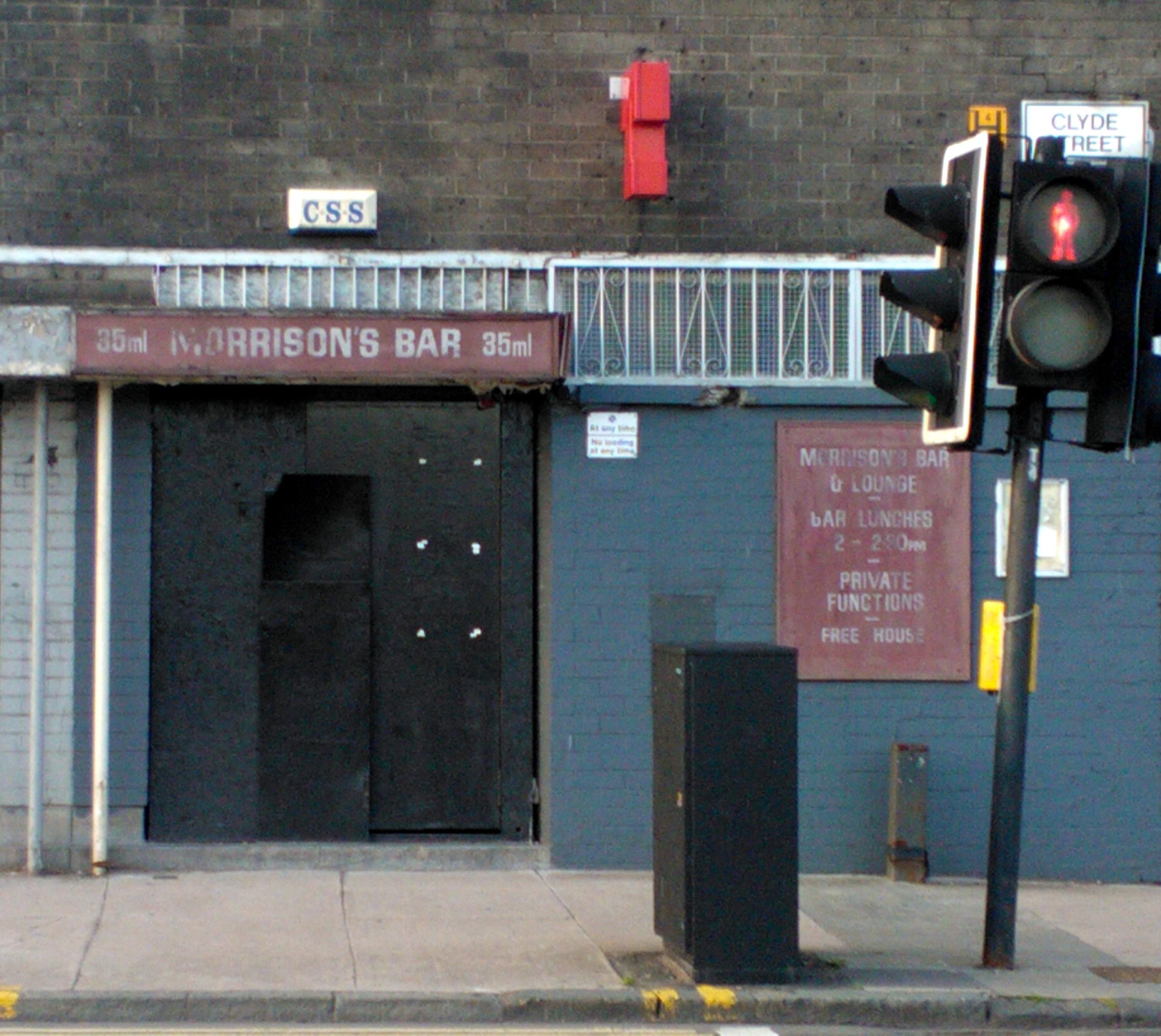
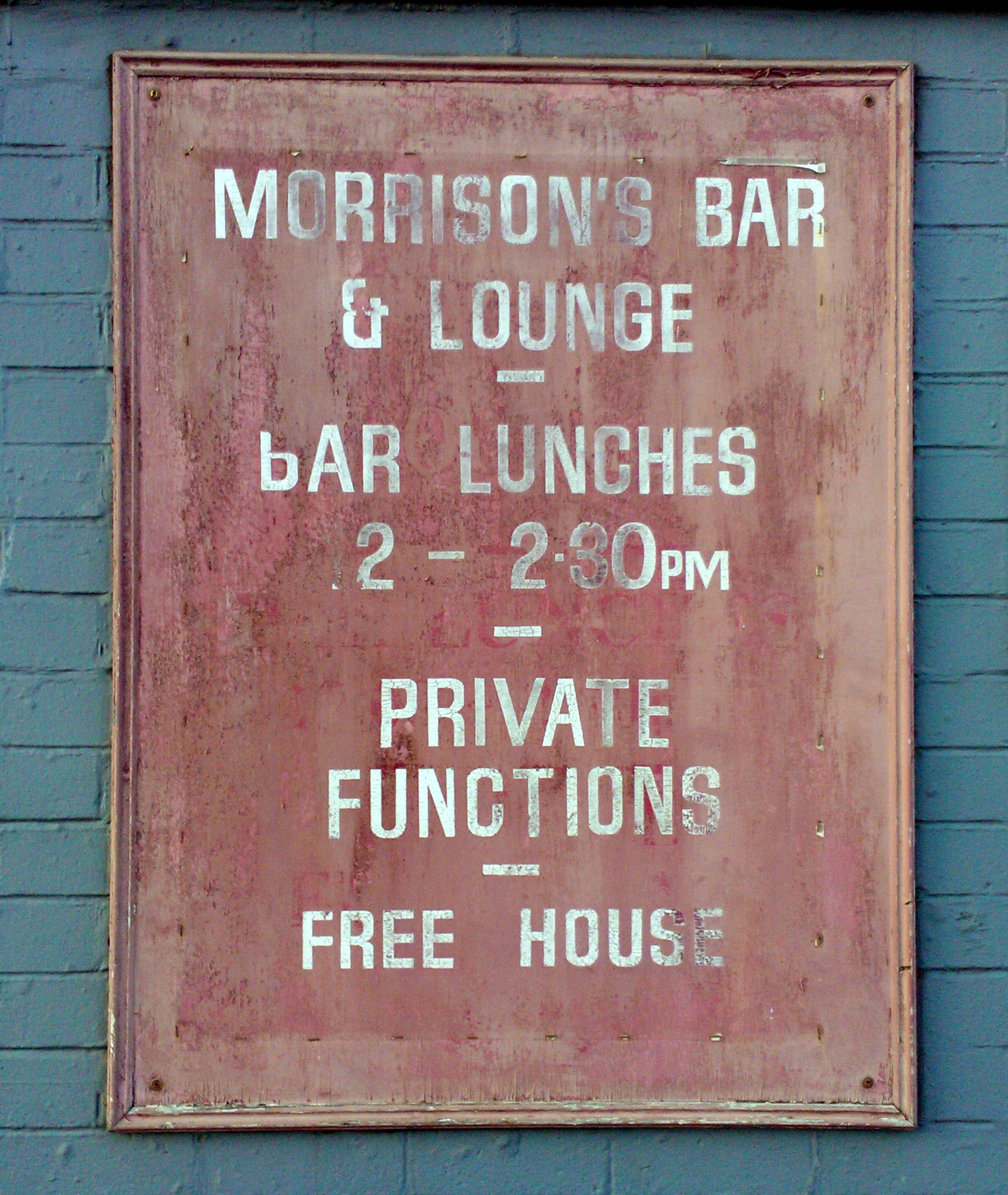
…and I’m facing Morrison’s Bar which looks like it may never have opened since Jim checked out:

WP_000277

Morrison's Bar 1

Morrisons Bar….

…. Around the corner, The Riverside  Club doesn’t look to be doing much business either. Perhaps these are ‘badger’ venues – they only come out in the dark?

The Riverside Club

I head into what I find is Fox Street. Looking back towards the east, the setting sun fracturing into shards hitting the ecclesiastical windows of a distant church:

Sunshine on the Church

Continuing west will take me back towards the City Centre:

Past the silent runners:

Silent Running

and the ghosts of Christmas Past:

Ghost of Xmas Past

and what could be a detail from the Boyle Family’s Journey to the Surface of the Earth  project:

Boyle Family ?

Along with the heat and the sunshine, two cheerful lovehearts brighten up the street:

Side by Side

And a message a few feet away.  No addressee. No object of affection. No initials. Just a statement addressed to whom?

I Love You

I walk up towards Renfield Lane, thinking about how even the shortest of walks through a city can surprise, enchant and provoke reflection.   I’m thinking about La Pasionaria, The International Brigades and psychedelic tigers as I descend into the Stygian depths of Stereo. Moving between worlds. From light into darkness and a prelude to shortly having all body molecules rearranged by the shamanic noise rituals of Nazoranai: Keiji Haino, Stephen O’Malley and Oren Ambarchi. Sound as alchemy, carried within, back through the city, as, after the show, I head for the train in the warm, dark night.

Keiji Haino - Stereo, Glasgow 10th July 2013
Haino I
Keiji Haino - Stereo Glasgow
Haino II

.

.

.

.

.

.

.

WP_000297
O’Malley
WP_000301
Ambarchi / Haino

.

.

.

.

.

.

.

..

.

.

Now playing: Stephen O’Malley – Salt

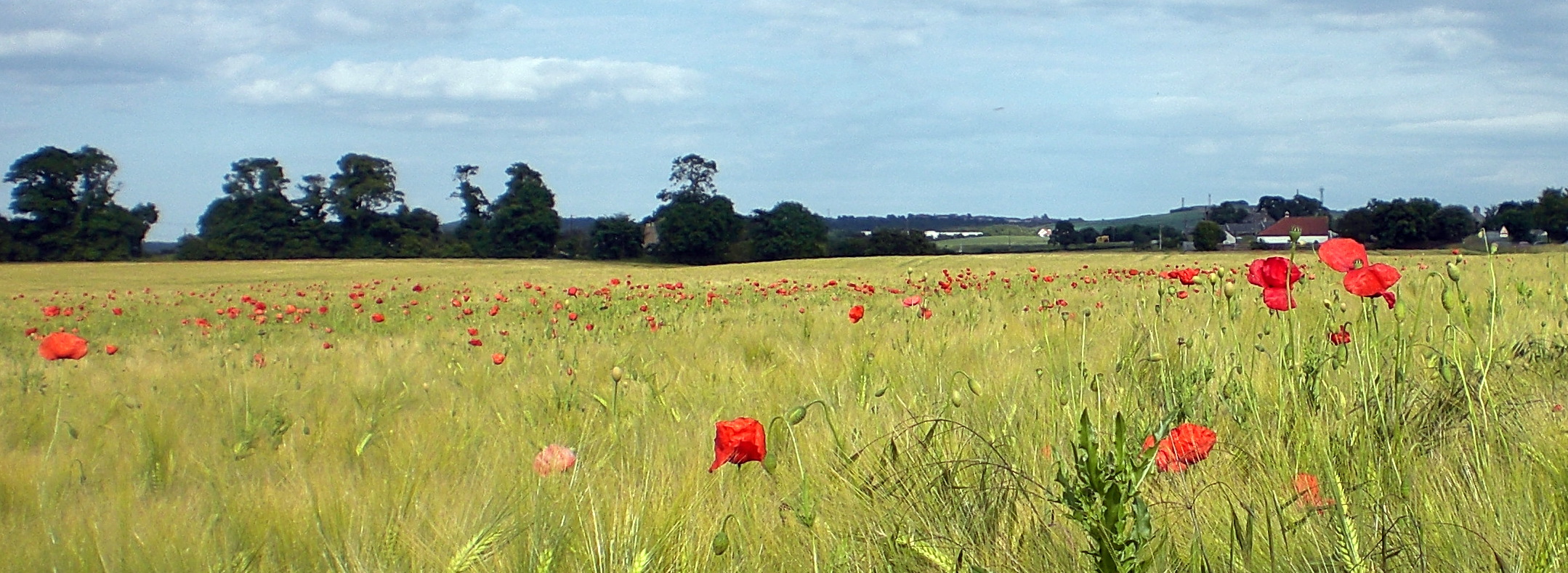
The Poppies are in the Field: Pattiesmuir 26th June 2013

.

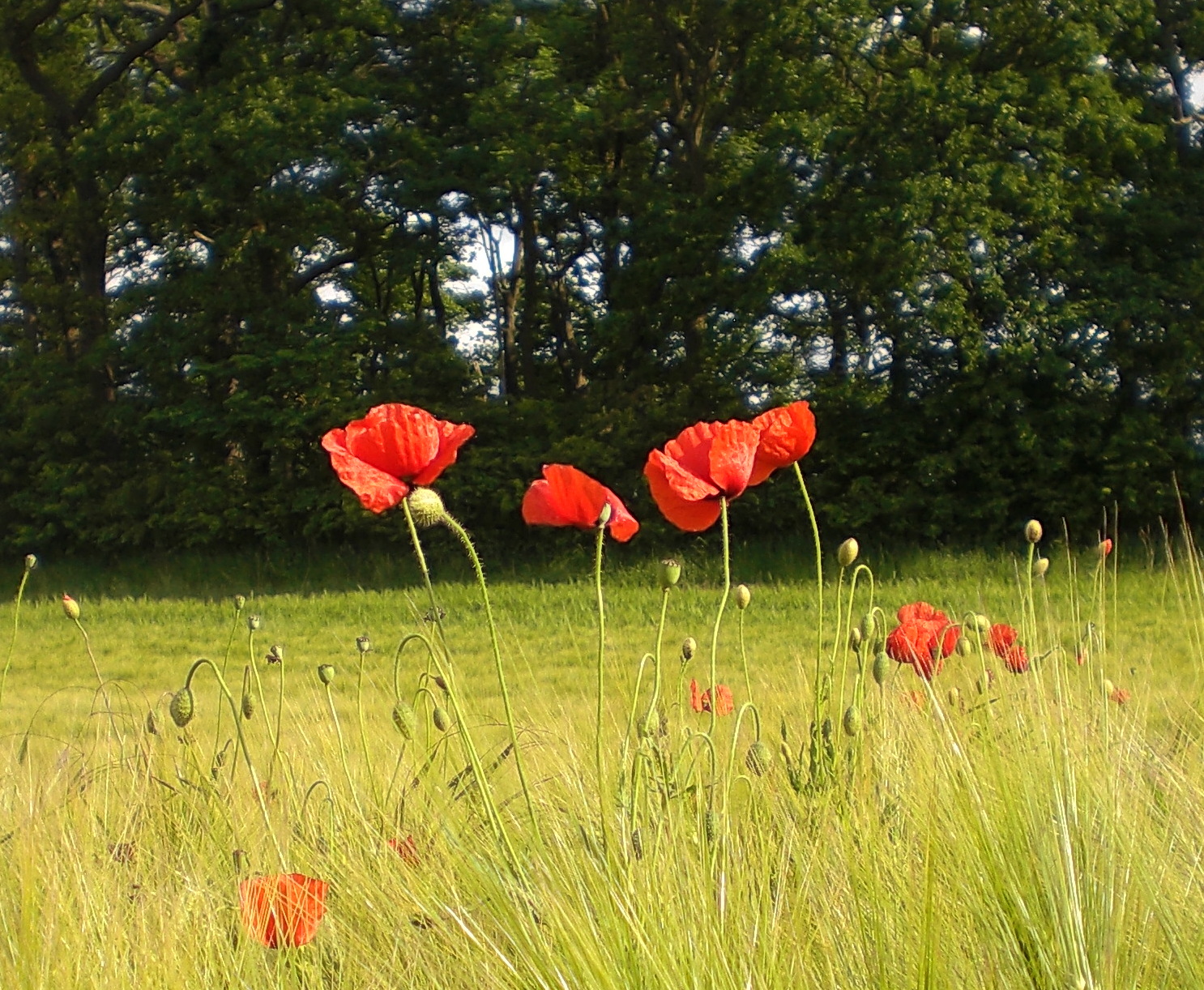
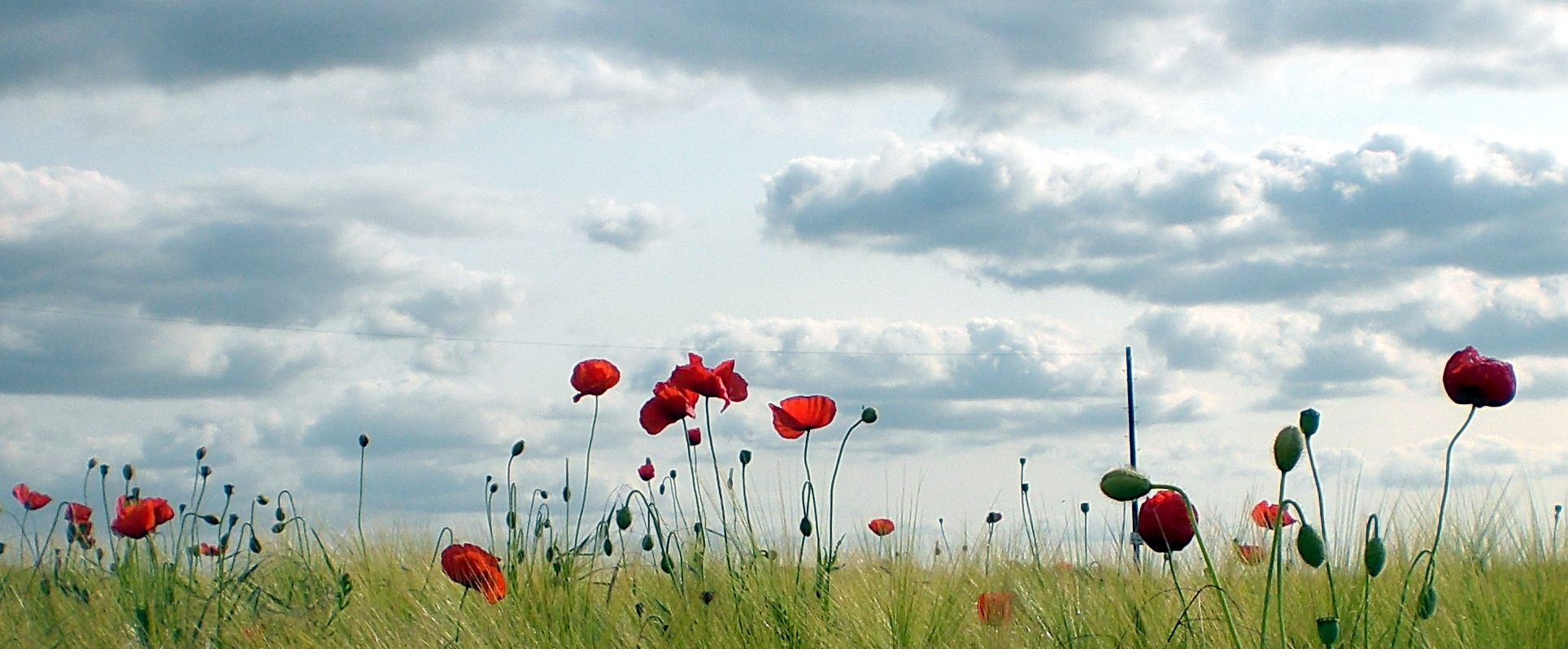
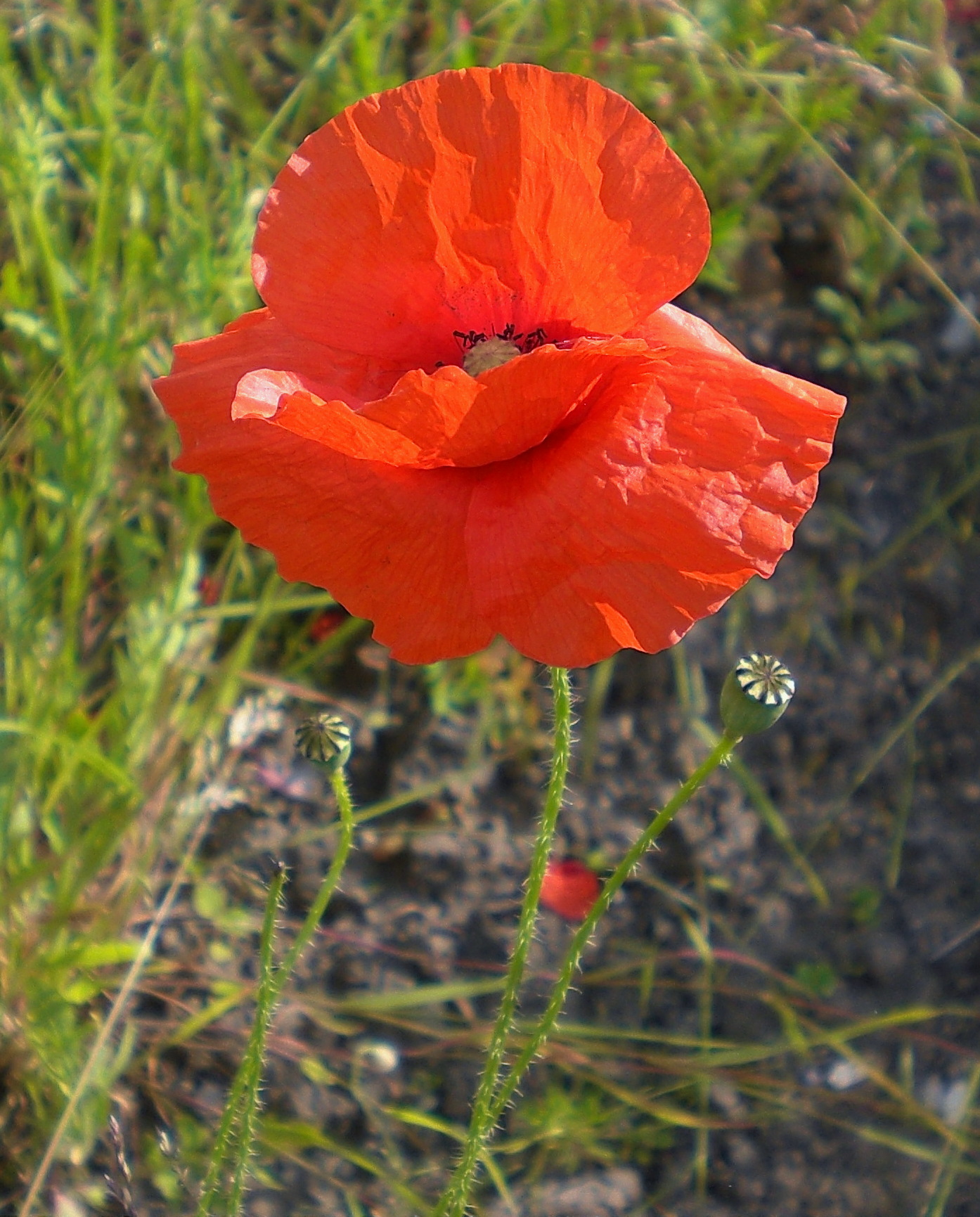
The poppies are in the field

But don’t ask me what that means

– Julian Cope

The Poppies are in The Field I

There is no

long march of progress

in this field.

No future

enlightenment

to strive for.      

                                 Only

this eternal play

of returning.

A cycle of flowering flame

                           smouldering                                              

                                               to ash

in the rooted earth

underneath my feet.


The Poppies are in the Field II

That we find a crystal or a poppy beautiful means that we are less alone, that we are more deeply inserted into existence than the course of a single life would lead us to believe.

John Berger – The White Bird

The Poppies are in the Field III

Homer mentions poppies in the Iliad, comparing the head of a dying warrior to that of a hanging poppy flower.

The Poppies are in the Field IV

The god Morpheus made crowns out of the poppy flowers and gave them to those he wanted to put to sleep. Poppy flowers were used to decorate the temple.

The Poppies are in the Field V

The Greeks have a legend that explains how the poppy came to be called the Corn Poppy. The poppy was created by the god of sleep, Somnus. Ceres, the goddess of grain, was having difficulty falling asleep. She was exhausted from searching for her lost daughter; still she couldn’t fall asleep and had no energy to help the corn grow. Somnus cooked up a concoction and got her to take it and soon she was sleeping. Rested and relaxed Ceres could then turn her attention to the corn which began to grow. Ever since that time the people believed that poppies growing around cornfields ensure a bountiful harvest. And so was born the Corn Rose, or as we call it today the Corn Poppy.

Adapted from The Modern Herbal

The Poppies are in the Field VI

But the Poppy is painted glass; it never glows so brightly as when the sun shines through it. Wherever it is seen-against the light or with the light –  always, it is a flame, and warms the wind like a blown ruby.

John Ruskin –  Proserpina

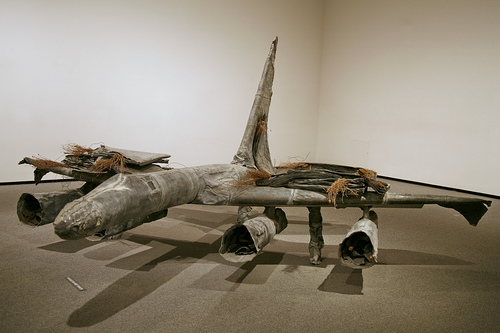
Angel of History: Poppy Memories
Photo credit: cliff1066™ / Foter.com / CC BY

Angel of History: Poppy and Memory by Anselm Kiefer. 

A warplane fabricated of lead

wings laden with books of beaten lead sheets

stuffed with dried poppies.

The Poppies are in the Field VII

Now Playing: Siouxsie and the Banshees  – Poppy Day &  The Teardrop Explodes – Poppies in the Field.

Moby Dick, Laurie Anderson and The King’s Cellar, Limekilns.

The book is so modern, it’s insane. Melville uses all these voices — historian, naturalist, botanist, lawyer, dreamer, obsessive librarian. His jump-cut style is truly contemporary.

Laurie Anderson on Moby Dick 

November 1999

The métro pulls in to Bobigny Pablo-Picasso in the North Eastern suburbs of Paris. Walking out on to Boulevard Maurice Thorez and up Boulevard Lénine, it is apparent that this is a world apart from the Haussmanised elegance left behind around forty minutes ago. Breaking free of the tourist flocks on the Champs-Élysées, I had descended into the subterranean belly of Charles de Gaulle Etoile to meet the familiar smell of the chthonic underworld and the squeals, clangs and clatters of the metallic worms burrowing through the entrails of the city. Doors explode open at each métro stop to displace and gorge on the huddles and tentacles of drifting humans in transit.

i            t

n            i

t            s

r            n

a            a

n            r

s            t

i            n

t            i

Up and down, to and from, the everyday life possibilities occurring directly overhead: Ternes > Courcelles > Monceau > Villiers > Rome > Place de Clichy > Blanche > Pigalle > Anvers > Barbès–Rochechouart > La Chapelle > Stalingrad >…

A change at Jaurès to pick up line 5 and soon it’s an ascent, emerging blinking into bright daylight and this different world.  Here, the streets are named after artists and communist revolutionaries and the buildings remind me of the Scottish New Towns: stark, brutalist and functional.  Consulting my notebook from the time I can see a handwritten scrawl:

Glenrothes!

The town where I grew up appears to have relocated to the Paris suburbs.

Bobigny - Prefecture Building
Bobigny – Prefecture Building
Fife Council Offices - Glenrothes
Fife Council Headquarters – Glenrothes

I was in Bobigny for the Festival d’Automne and heading to the MC93 Cultural Centre to see Laurie Anderson performing her ‘multi-media’ theatrical work Songs and Stories From Moby-Dick. Not a wholly accurate title as the piece is more of a meditation on Melville and what that book means to her. It was a fabulous experience to witness. The familiar Anderson performance tropes of expansive and existential themes, constructed instruments, minimal gestures and laconic storytelling were all brought to the fore. It certainly convinced me that there was more to this book than Ahab and his crew chasing a big fish. (ok mammal).

Laurie Anderson

Then I read [Moby Dick] again. And it was a complete revelation. Encyclopedic in scope, the book moved through ideas about history, philosophy, science, religion, and the natural world towards Melville’s complex and dark conclusions about the meaning of life, fear, and obsession. Being a somewhat dark person myself, I fell in love with the idea that the mysterious thing you look for your whole life will eventually eat you alive… [1]

For Anderson, Americans of her century and Melville’s share certain unmistakable similarities: they are obsessive, technological, voluble and in search of the transcendental,” she writes in the show’s notes. It is this latter aspect — the meaning of life — which is the focus of “Songs and Stories,” as Anderson asks Americans today, as Melville did in his lifetime: “What do you do when you no longer believe in the things that have driven you? How do you go on?” [2]

Up until that day I had managed to avoid reading Moby Dick. Walking back to the metro, I decided to rectify that and subsequently did.  A copy now resides in the ‘hallowed’ section of the FPC library and is never too far from reach.  There was also the strange delight of discovering some references to Fife in the book and a recent encounter with a building in the West Fife village of Limekilns caused me to search these out once again.

≈≈≈≈≈≈≈≈

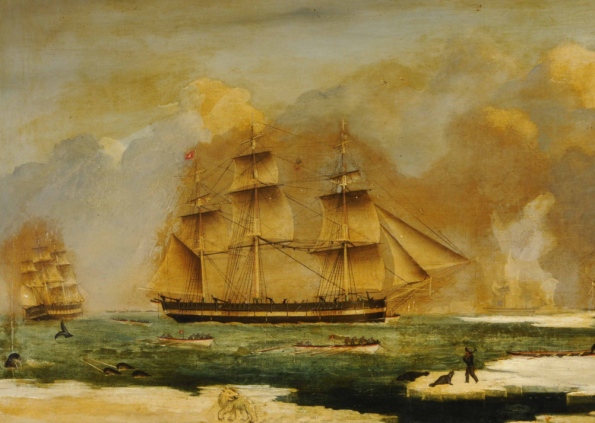
A Kirkcaldy Whaler

Unlike a merchant vessel going from

point A > >  > > > > > > > > > > > > > > > > > > > > > > > > >  to point B,

a whaling ship is prowling,

z   i   g   z

                                                                                    a

                                                                              g

                                                                         g

                                                                                 i

                                                                                       n

                                                                                              g

 looking for prey.

≈≈≈≈≈≈≈≈

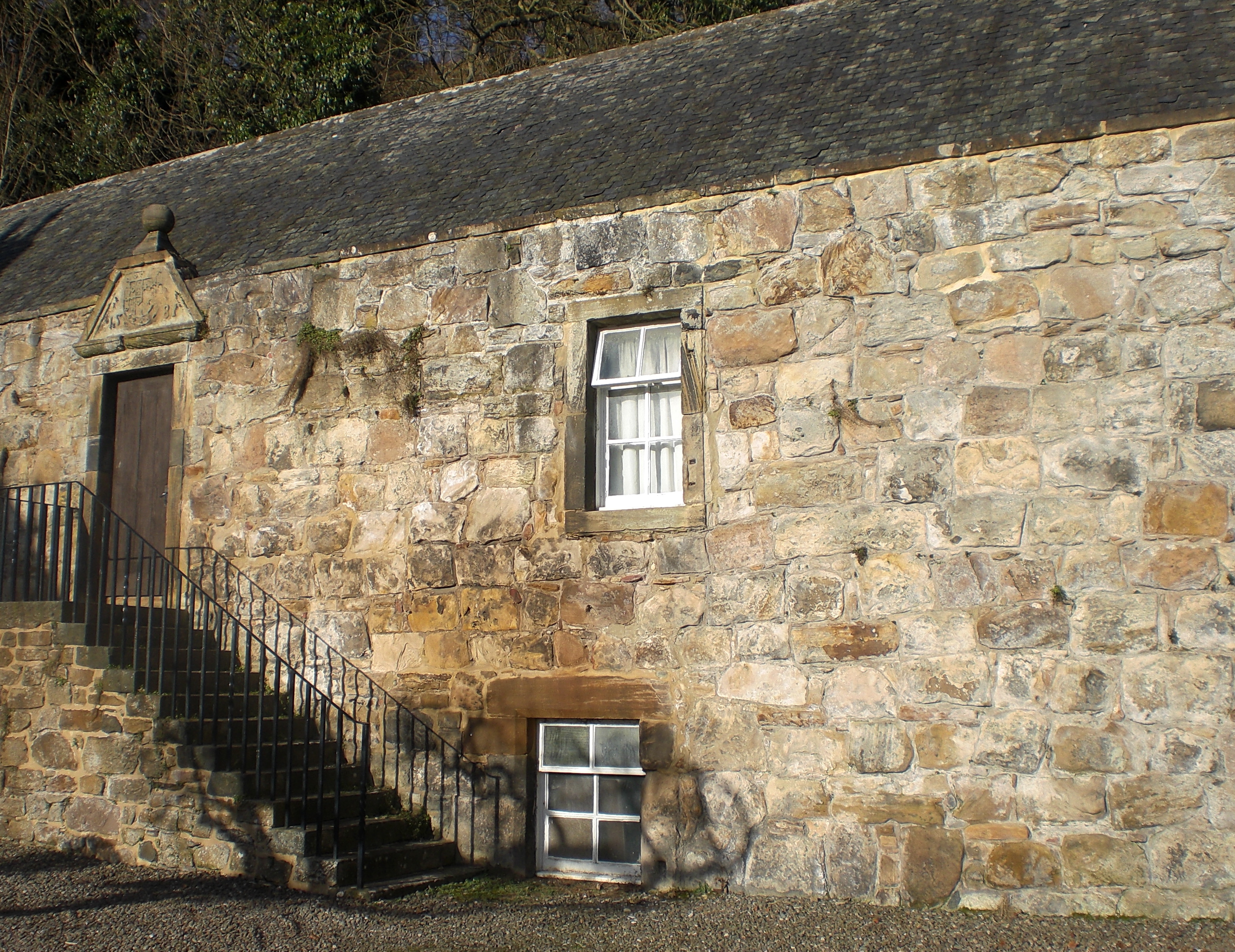
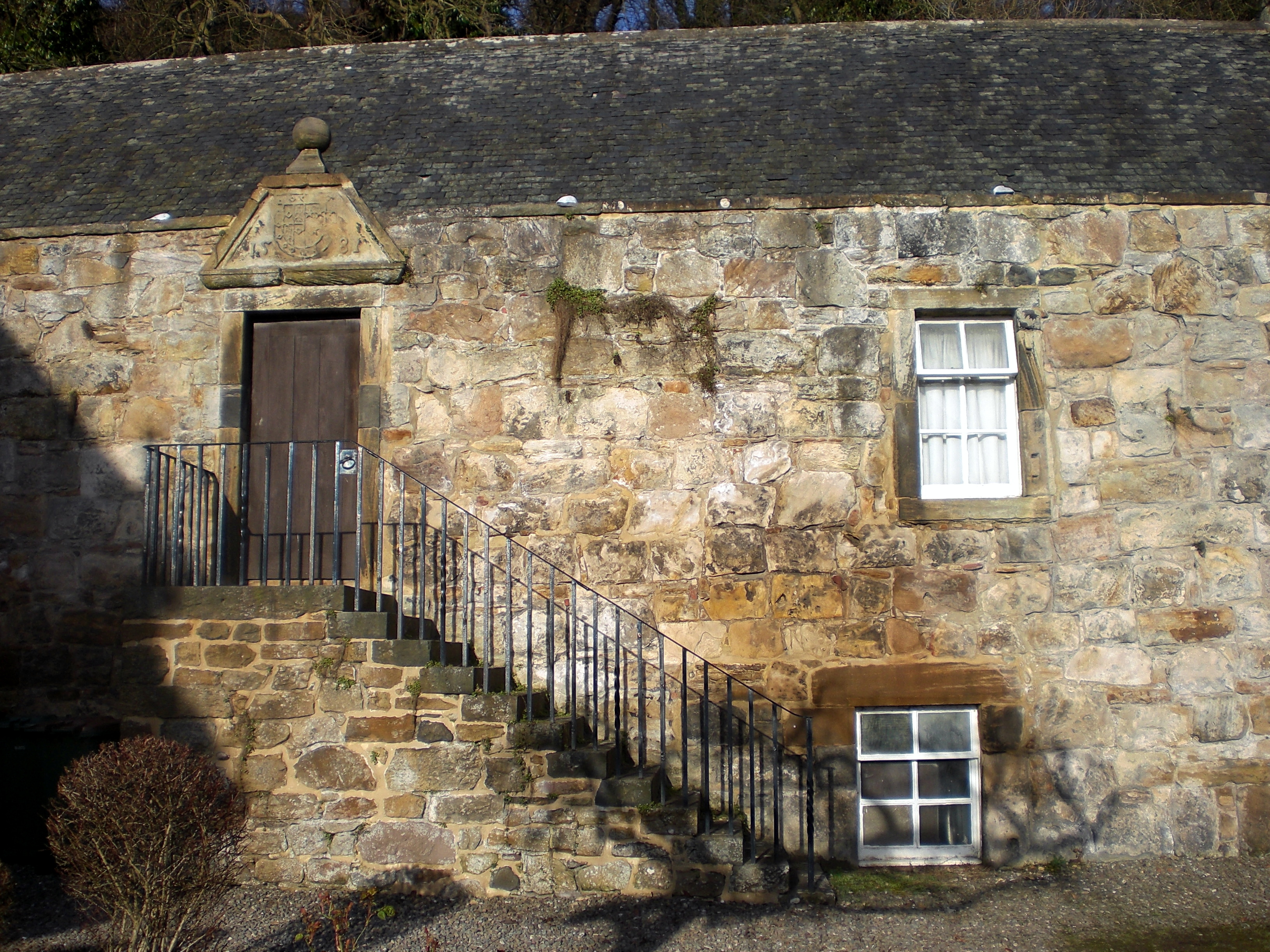
Kings Cellar

May 2013

The King’s Cellar, as it is known today sits in the village of Limekilns just west of Rosyth. A more appropriate name would be “The Monk’s Cellar” as the original building is believed to have been built by and for the monks of Dunfermline Abbey. The earliest official record of the building dates back to 1362, although the monks owned the surrounding Gellet lands as early as 1089 and it is believed that they used the “Vout” or “Vault” for storing wine and as a clearing house for monastic supplies brought in by sea.  It is not clear when the building became known as the King’s Cellar but is likely to be following the dissolution of the monasteries when it was no doubt appropriated by the Crown. 

Today it almost appears as if the building is being sucked into the ground with the bottom windows almost at ground level.

Kings Cellar I

High up in the trees

to the rear of the cellar

a buzzard (?)

silent sentinel

bearing witness

observing our every move

as has always been done

Buzzard (?) Limekilns

CIMG2208

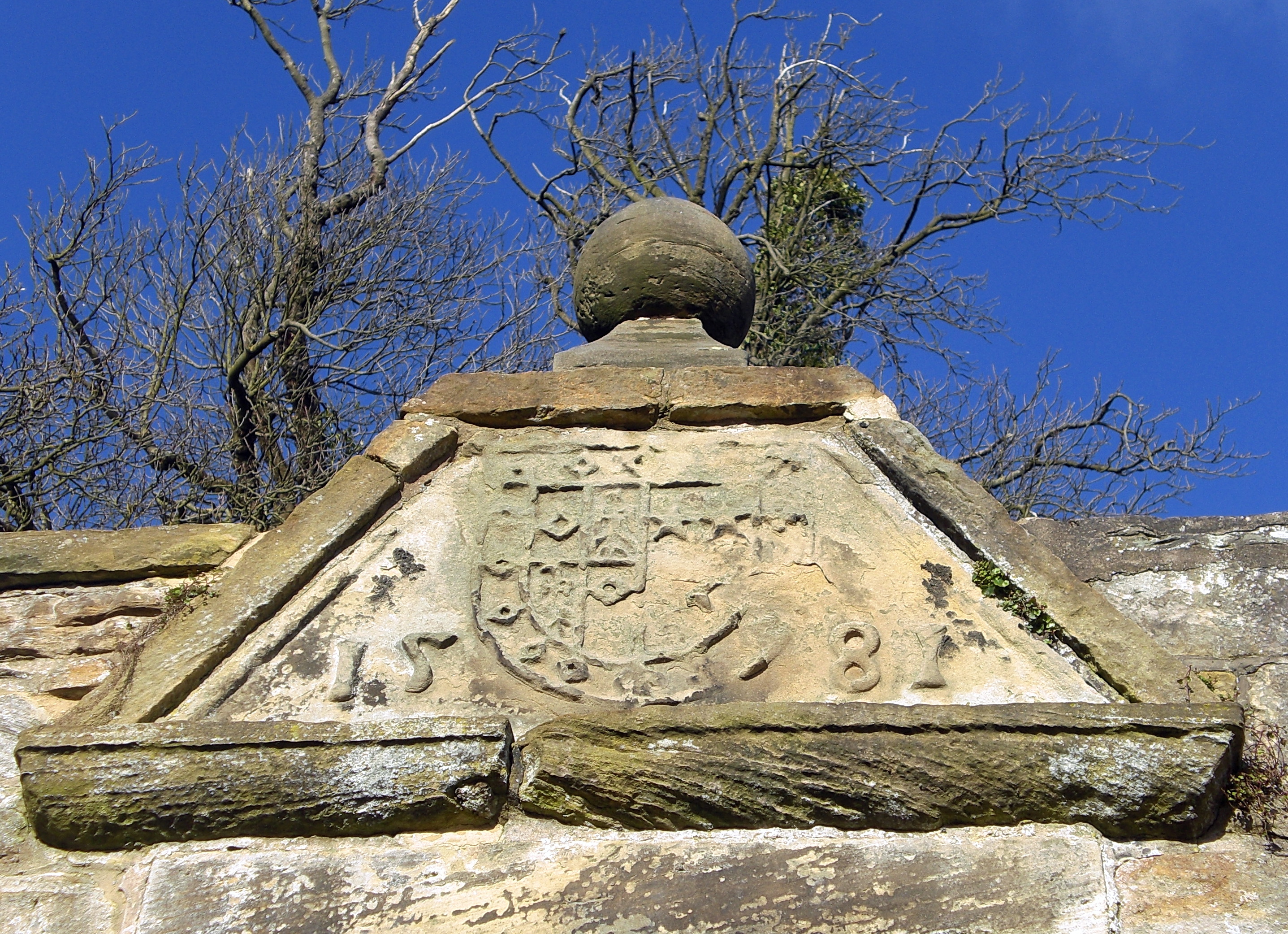
The stone above the door is misleading as it bears the arms of the Pitcairn family and the date, 1581. Pitcairn owned part of Limekilns and was the King’s private secretary and Commendator of Dunfermline. He lived in Limekilns and died in 1584, being buried in Dunfermline Abbey. The stone was transferred from his house.

Over the past 500 years the building has had parts of it rebuilt and adapted including the roof which was originally thatched. The building has been used as a wine cellar, storehouse, school, library, Episcopal Church in World War I, an air raid shelter in World War II. It is now used as a masonic lodge linked to the Bruce family of Robert the Bruce and the Elgin Marbles. A local belief exists that a secret underground tunnel connects the Cellar and the Palace at Dunfermline 4 miles away.

So what could be the connection of this building with Moby Dick?

 Porpoises, indeed, are to this day considered fine eating. The meat is made into balls about the size of billiard balls, and being well seasoned and spiced might be taken for turtle-balls or veal balls. The old monks of Dunfermline were very fond of them. They had a great porpoise grant from the crown.

From Chapter 65 of Moby Dick – The Whale as a Dish.

Is it too fanciful to imagine that this is the building where the porpoises would be landed for the old monks of Dunfermline?

Melville also quotes from Sibbald’s Fife and Kinross in the first few pages of Moby Dick:

“Several whales have come in upon this coast (Fife). Anno 1652, one eighty feet in length of the whale-bone kind came in, which (as I was informed), besides a vast quantity of oil, did afford 500 weight of baleen. The jaws of it stand for a gate in the garden of Pitfirren.”

From Moby Dick EXTRACTS (Supplied by a Sub-Sub-Librarian)

The reference to Pitfirren certainly refers to this locality and is now known as Pitfirrane, located just North West of Limekilns.  I decided to have a look at Sibbald’s original text which Melville used and discovered that the immediately preceding passage reads:

“There is a vast fond of small coal in the lands, which is carried to the port of Lyme Kills, belonging to Pitfirren […] it is well provided with coal-yards and cellars. Several whales have come in upon this coast…”

Had Melville used the longer quote from Sibbald, Limekilns (as spelt today) would be mentioned in the book with a reference to cellars, albeit not the King’s Cellar specifically.

There are a couple of other whaling references in Sibbald:

“The monks of Dunfermline had a grant from Malcolm IV of all the heads of a species of whale that should be caught in the Firth of Forth, (Scottwattre) but his Majesty reserved the most dainty bit to himself, viz. the tongue. It is curious to remark the revolutions of fashion in the article of eatables.”

(Sibbald p. 116)

“There are several whales which haunt the Firth of Forth, which have fins or horny plates in the upper jaw, and most of them have spouts in their head; some of these are above seventy foot long, and some less: one of these with horny plates was stranded near to Bruntisland, (sic) which had no spout, but two nostrils like these of a horse. These whales with horny plates differ in the form of their snout, and in the number and form of their fins”.

(Sibbald p. 117)

Two small paragraphs that offer a glimpse of a time passed, or has it? The privileges of royalty and the landed gentry arguably continue largely unabated and the non human species of the globe decline to the point of extinction at the hands of the human actor.

There are many voices of Melville present in Moby Dick but one of them is clearly alerting  humankind to pay attention and consider the consequences of potential ecological catastrophes arising from the lavish plunder of the natural world.

June 2013

Whilst out research is not conclusive by any means, we place a small photograph of Melville under the stones in front of the King’s Cellar to secure the linkage in our own mind. When we pass this building in future, if nothing else, we will be reminded of Melville, Moby Dick and the King with a taste for cetacean tongues.  And each time we see a copy of that encyclopedic text – Moby Dick – we will think of this small building in a West Fife village and of course Laurie Anderson who cast the line in our direction.

Now Playing: Laurie Anderson – Life on a String

[1] Horsley

[2] Grogan

References:

Norman Fotheringham, The Story of Limekilns (Charlestown: Charlestown Lime Heritage Trust, 1997).

Molly Grogan, ‘Laurie Anderson’s Songs and Stories’, Paris Voice, November 1999.

Carter B. Horsley, ‘Songs and Stories from Moby Dick’, The City Review, 5th October 1999.

Herman Melville, Moby Dick or The Whale (New York: Penguin Classics Edition, 1992).

Sir Robert Sibbald M. D., The History Ancient and Modern of the Sherrifdoms of Fife and Kinross (Cupar, Fife: R. Tullis, 1803).

Mike Zwerin, ‘Laurie Anderson Grapples with Melville’s Ghost’ The New York Times 2nd December 1999.

Searching for Storione – A walk with the ghosts of Little Moscow

Our research unit hasn’t exactly excelled itself. A scribbled address on a torn piece of paper is all that we have:

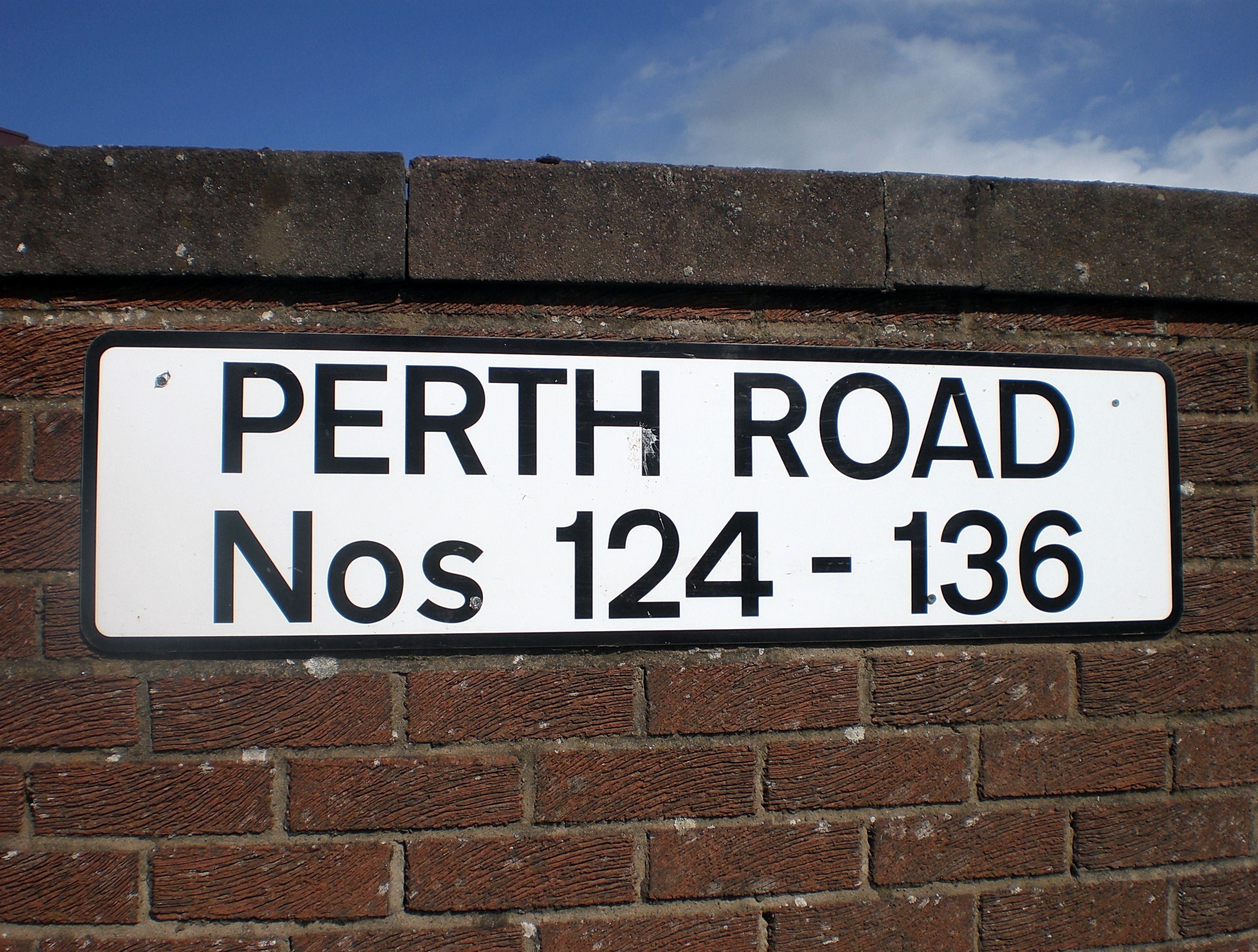
Communist Literature Depot, 128 Perth Road, Cowdenbeath.

This is the only material link we have to Storione and even then we are not exactly sure of its provenance. Why does Goggle never come up with the really interesting stuff? It’s a good job we still have some real libraries but further research can wait until our walk is over. We want to be open to the signs and an address is enough to get started…

~

Lochgelly Miners Institute

We are taking a walk today from Lochgelly, via Lumphinnans, to Cowdenbeath in search of Lawrence Storione, founder of the Anarchist Communist League in 1908.  We also intend our drift to act as a ritual exorcism of an article that ‘British travel writer and humorist’ Tim Moore wrote for the Daily Telegraph last year.  His piece on Lochgelly and Cowdenbeath subsequently appeared in his book You are Awful (but I Like You).  What is curious about Moore’s article is an almost complete lack of engagement with the actual materiality of this specific place. His encounters in pubs, hotels and fast food shops could have happened almost anywhere. (Just change the accents and place names). 

Like anyone, Moore is entitled to respond to a place as he sees fit and after all he had a book to flog with a specific agenda: to visit the towns of  ‘unloved Britain’.  Alongside Lochgelly and Cowdenbeath, Moore turns his c-list, Bill Bryson wit on the likes of Hull, Middlesbrough, Merthyr Tydfil, Nottingham and Rhyl amongst others.  The fact that this profound tome ended up in Richard Littlejohn’s ‘Best of 2012’ year end list is probably all you need to know. “A laugh out loud pilgrimage to the most hideous places in modern Britain” says Littlejohn.

So, with regard to Cowdenbeath and Lochgelly, we can understand why he bothered to come, or did he? (How can you not find the football ground in Cowdenbeath?). There is just a slight suspicion that his article may have been written before he even arrived, just looking for some local colour to flesh out his prejudices. Not surprisingly, he ‘found’ what he was looking for which revolves around the fact that Lochgelly is routinely trotted out as the town having the cheapest housing prices in the UK.  

The roads were lined with cramped little semis and 1960s bungalows, Britain’s cheapest houses in their flimsy, pebbledashed glory.

All had the kind of scuffed and anonymous front door you could imagine a TV interviewer knocking upon at the end of a quest to track down some forgotten star of yesteryear.

“The Beirut of Fife”

Admittedly, Lochgelly, a mining town that has waxed and waned with the fortunes of the Fife coalfield may be quite a contrast to Mr Moore’s birth town of Chipping Norton. Situated in the parliametary constituency of Witney, it is represented by one Mr David Cameron MP. (This is the stuff you can find on Google).  Lochgelly’s housing may also appear relatively cheap in comparison to the cost of Mr Moore’s public school education. At 2012 prices a mere £16,035 per year per student. However, let’s not be too harsh. A mildly humourous hack, hawking cheap laughs at the expense of a place ravaged by industrial decline is hardly worth fretting over. Oh and the word community is not mentioned once in Moore’s article so he must be correct. The value of a place must be correlated to its house prices.

So we are off to take a walk and find out what this area says to us. As with any place we know that there will be stories embedded into the materiality of the buildings, spaces and the ground we walk on. They are out there in the sensory field and we are hopeful some of them may reveal themselves.  This is an area that once returned Willie Gallacher as a Communist MP in the House of Commons from 1935 – 1950 and we have already mentioned Storione. Are all of these radical traces gone? Perhaps the ghosts of Little Moscow will reveal themselves to us. Will they have anything relevant to say to us in our present predicament? What of the future? Any insights will be gratefully received.

Lochgelly Centre and Jennie Lee Library

We convene at The Lochgelly Centre car park and it is a radiant, sun washed morning to set out. On a day like this Mr Moore could have taken himself down the road to experience one of Fife’s outdoor gems: Lochore Meadows Country Park, or The Meedies as it is known locally. A fabulous public space and Outdoor Environmental Education Centre. Not being great respecters of chronological time our own despatch from the Meedies at an uncertain point in time can be found here.

The Lochgelly Centre, reopened last year after a major refurbishment. It’s a fantastic community resource hosting a cafe, art exhibitions, various workshops and classes and a small theatre which hosts travelling companies and facilitates community arts projects . It also programmes film screenings, author readings such as Ian Rankin and Iain Banks and regularly hosts the perennials of the music gigging circuit. We can recall a slightly surreal chat one evening with Colin Blunstone and Rod Argent discussing The Zombies Odyssey and Oracle.  We also saw a snarling Hugh Cornwall delivering one of his best post-Stranglers appearances that we’ve seen. These events happen in Lochgelly.

Anyway, we have barely stumbled a few steps from the car park when the ghosts start to whisper in our ears. Also located in the Lochgelly Centre is the Jennie Lee Library, named after one of Lochgelly’s famous daughters.  Jennie is keen to tell us two things: How a bursary helped a working class woman go to University and how open access was enshrined in her greatest achievement as Minister of the Arts, The Open University. At the time it was a genuinely radical idea that people could study for a university degree without having any initial qualifications at entry.

“The heroine of the  whole story of the OU is Jennie Lee. The idea of it being called the Open University was very much hers” 

Lord Asa Briggs.


Jennie Lee was elected as an MP in 1929, becoming the youngest member of the House of Commons. Her maiden speech attacked Churchill’s budget proposals which impressed him so much that he offered her his congratulations after their spirited exchange. Jennie maintained her independence of spirit and mind throughout her life clashing with her husband, Nye Bevan, on several policy issues, notably Bevan’s support of the UK acquiring a nuclear deterrent which Jennie was firmly against.

Our encounter with Jennie Lee and the material presence of a library has already raised our spirits and by word association we recall another notable Lochgelly daughter Jennie Erdal, author of the fascinating memoir Ghosting. 

Ghosting

Ghosting combines an account of her early childhood in Lochgelly and of her time employed as the ghostwriter for ‘Tiger’ a charismatic London-based publisher.  Her ghostwriting assignments begin with personal letters, business correspondence and newspaper columns but, over time, eventually expand into novels and non-fiction titles. Whilst never named in Erdal’s book, it is clear that ‘Tiger’ is Naim Attallah, owner of Quartet Books, and for many years owner of The Wire – a music magazine dear to the hearts of the FPC.  Our library also contains many fine Quartet titles including Arthur Taylor’s Notes and Tones and Val Wilmer’s As Serious as Your Life a ground breaking work on the post-Coltrane, jazz avant-garde.  Funny how a walk in Lochgelly (not really even started yet!) has already taken us on a journey from Jennie Lee to Albert Ayler, Sun Ra and The AACM.

Joe TemperleySo with the sounds of saxophones ringing in our ears we can also eavesdrop in on a young, 14-year-old, miners son picking up a sax for the first time. A birthday gift from an older brother, who played the trumpet. 

Joe Temperley, places his fingers tentatively on the keys and blows to make his first sound.  A sound that will initiate a journey that leads from Lochgelly to London, with Humphrey Lyttelton, and eventually over the Atlantic to New York and a stint with the Duke Ellington Orchestra.


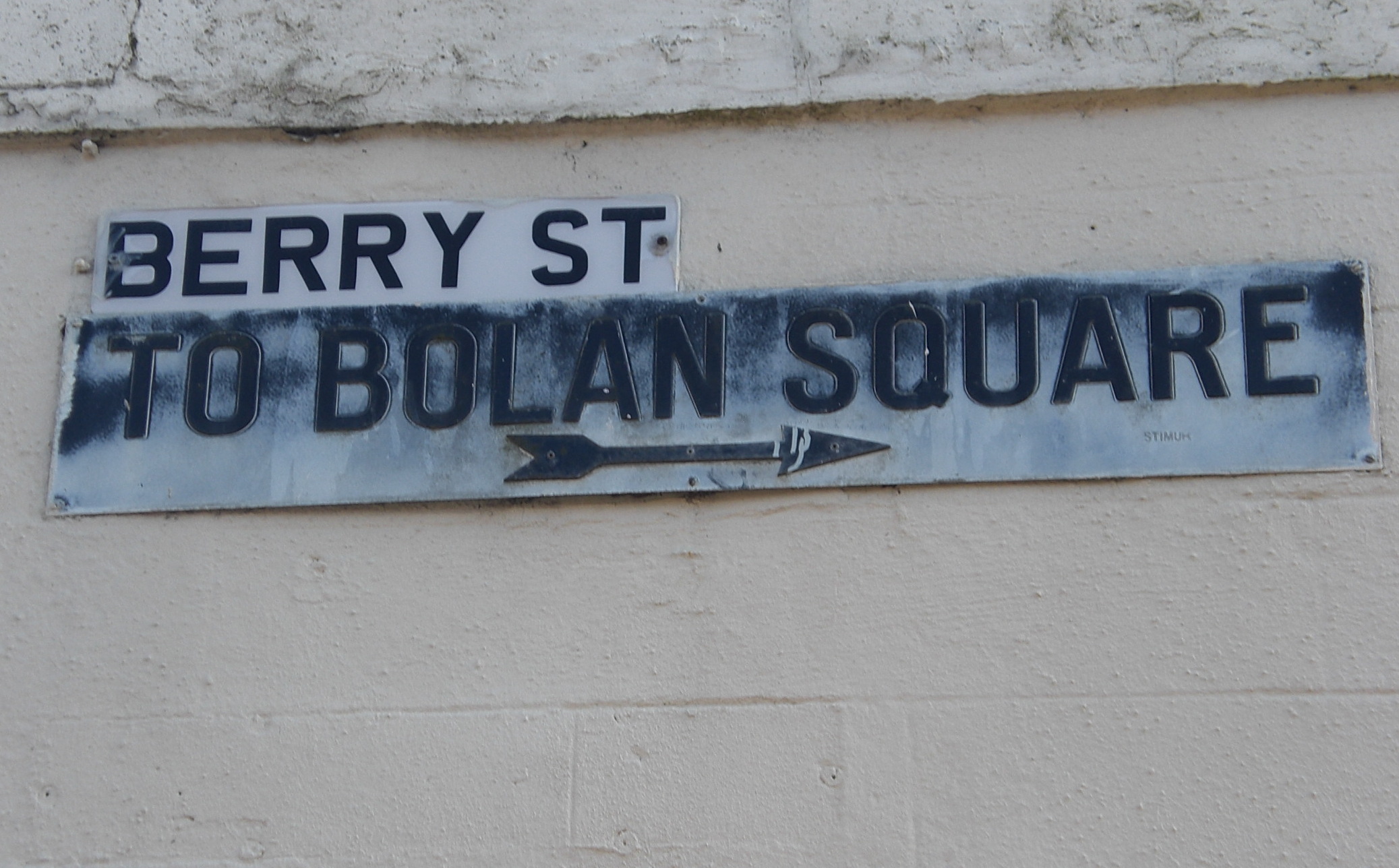
With all this music ringing in our ears, we better be on our way and commence our drift up Bank Street. However, there must be something in the air today as we are soon distracted by a street sign.  Could this be the definitive evidence that confirms Marc Bolan’s debt to Chuck Berry? Get it On was supposedly adapted from Berry’s Little Queenie and here is the evidence: Berry straight to Bolan square(d).

Chuck & Mark - Lochgelly Street Sign Can you square a riff? We would like to think so.

As an aside, we had previously posted this photo on Twitter and off it went into the virtual ether. It soon returned like a digital boomerang with a note from T.Rextasy – The World’s Only Official Tribute to Marc Bolan and T Rex. They have played Lochgelly Centre a number of times and had also noticed the sign but had never managed to take a photo.

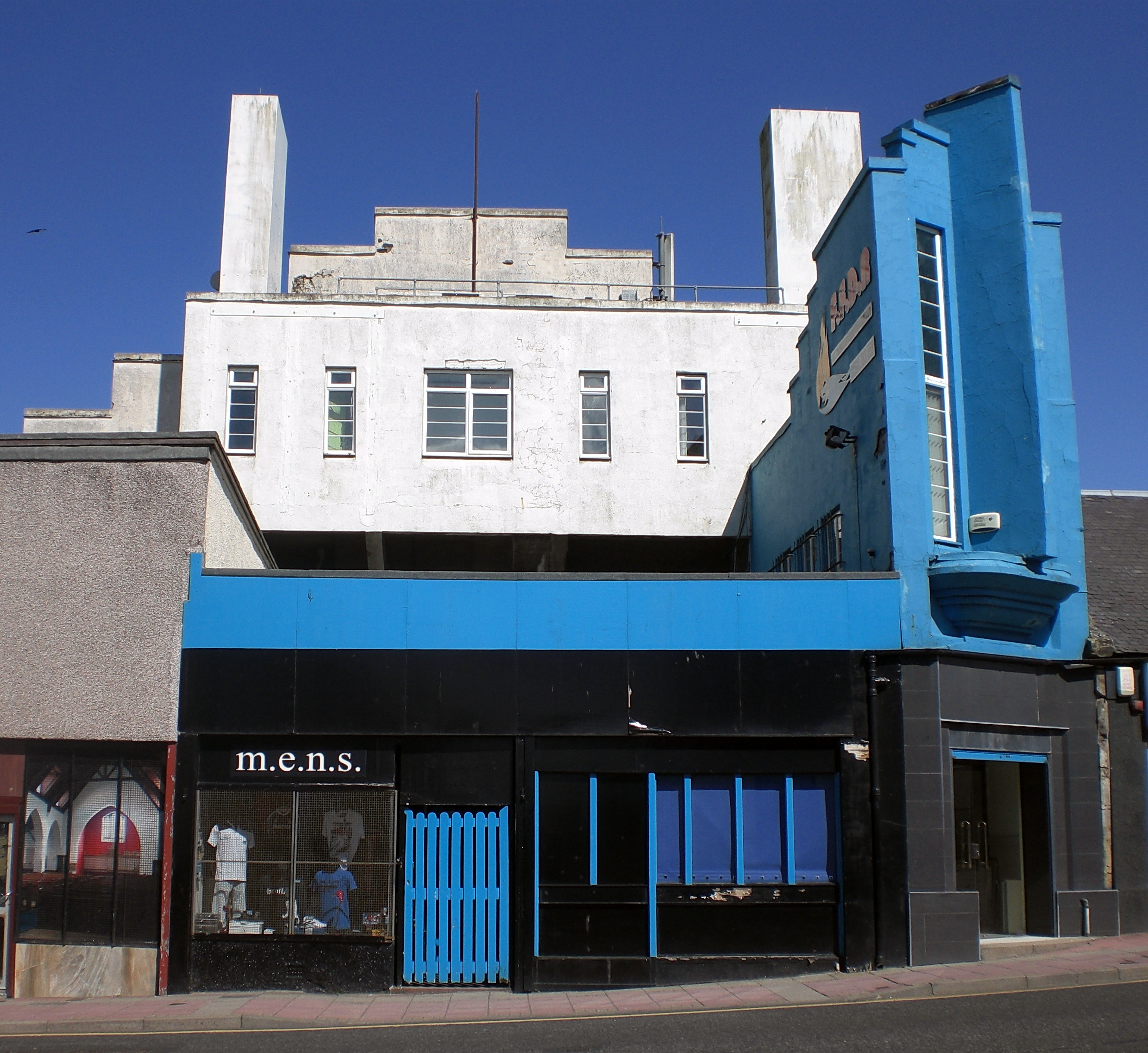
Lochgelly’s Bank Street/Main Street is the sort of place which capital has forgotten. In some ways this makes a refreshing change from the identikit, cloned high streets of more ‘prosperous’ towns full of the same old chain stores. There is a range of independent shops and a Co-op supermarket, which, despite its ethical credentials has been the subject of some disgruntled comments in the local press about high prices and abuse of their monopoly position. The buildings of Bank Street are solid and redolent of more prosperous days. The Cinema De-Luxe building, now a shop/office, retains a faded art-deco charm and you can transport yourself back to its luminous glory, offering up enticing wares of cinema, wrestling and dancing.

Cinema De-Luxe Lochgelly

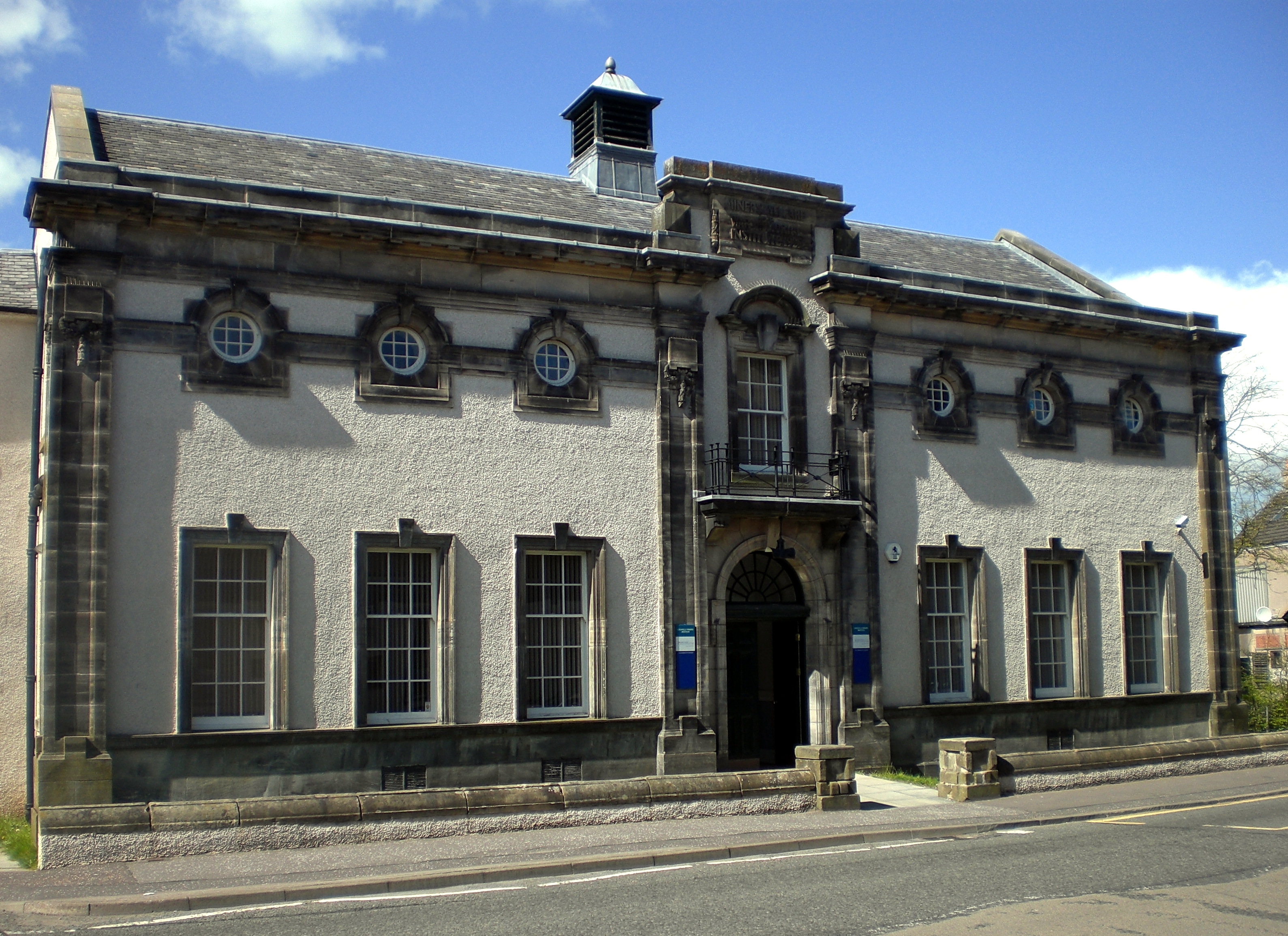
Around the corner, in Main Street stands the recently restored and still magnificent Miners Institute.
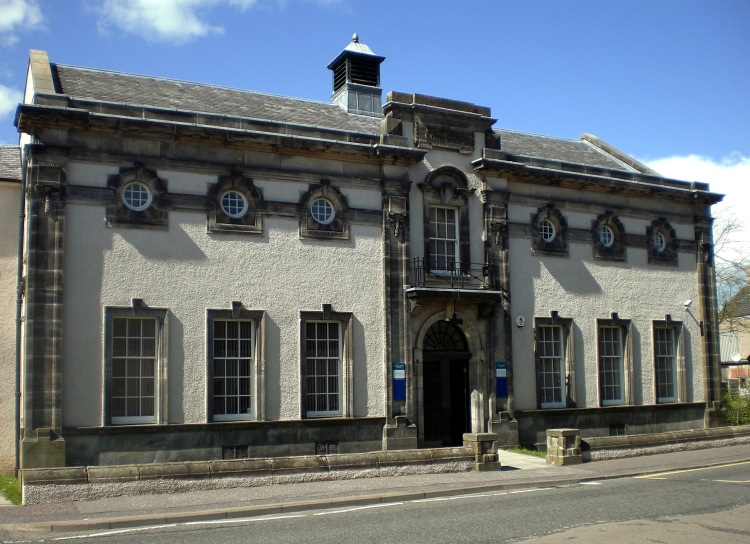
CIMG2475 This building is now used as the Fife Women’s Technology Centre, an award winning community based learning centre that has been providing training in new technology to unemployed women since 1990.

Next door is the new Ore Valley Business Centre  a state-of-the-art business centre aimed at helping start-up businesses in Fife to grow. The building has been designed to be highly energy-efficient, maximising solar gain and environmental management technology to keep the building’s energy requirements to a minimum.

CIMG2477 CIMG2479 In these two buildings alone is evidence of some of the good work going on to improve Lochgelly today and build towards the future.  Like many of the towns and villages around this area, they prospered with the deep mining of the Fife coalfield but suffered disproportionately when the industry began to decline and was eventually delivered a terminal bullet from the Thatcher government. We are reminded of Patrick Geddes’s inter-linked triad of Place Work and Folk. Is it any wonder that when ‘work’ is withdrawn, almost wholesale from an area, that Place and Folk suffer?

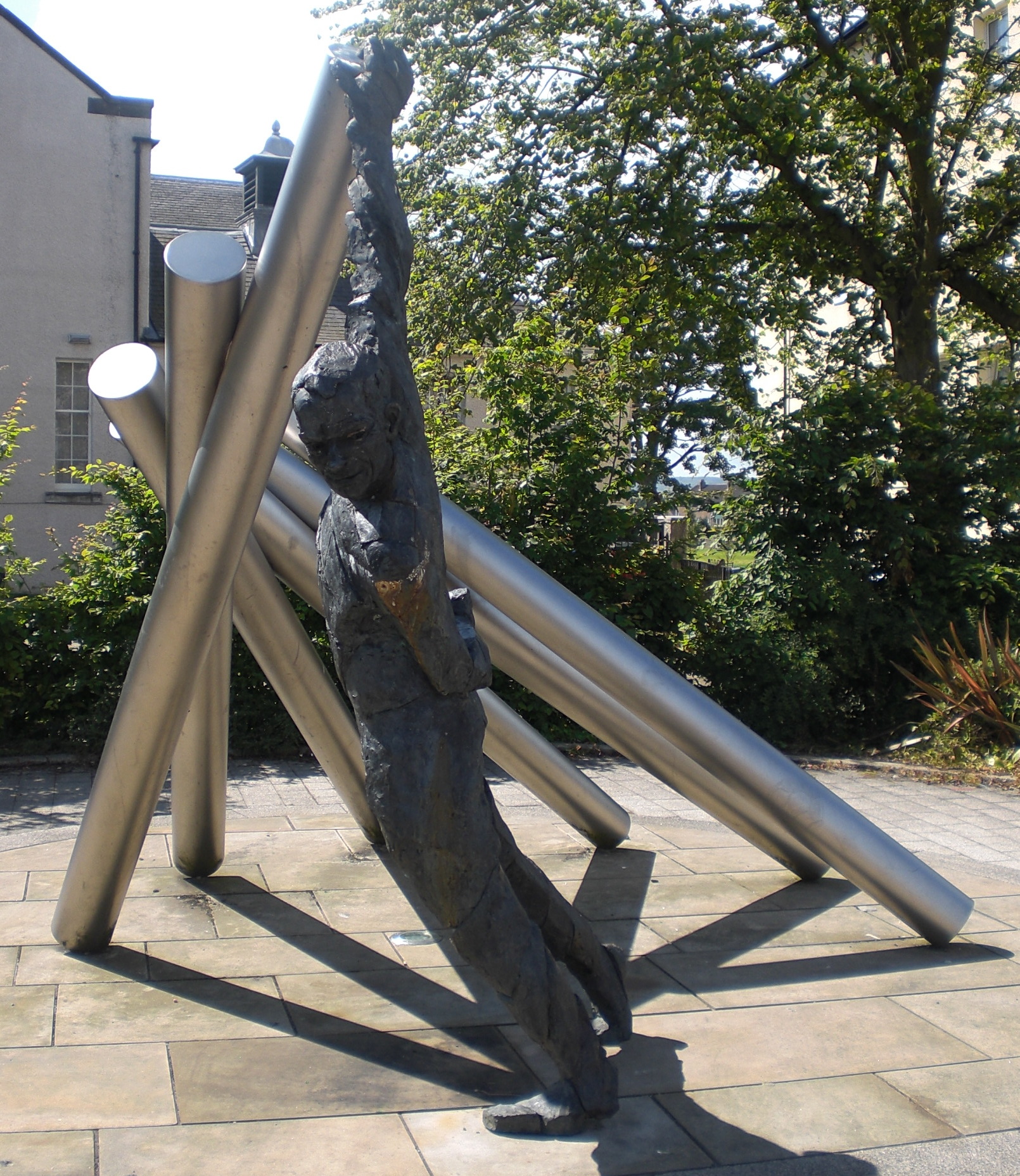
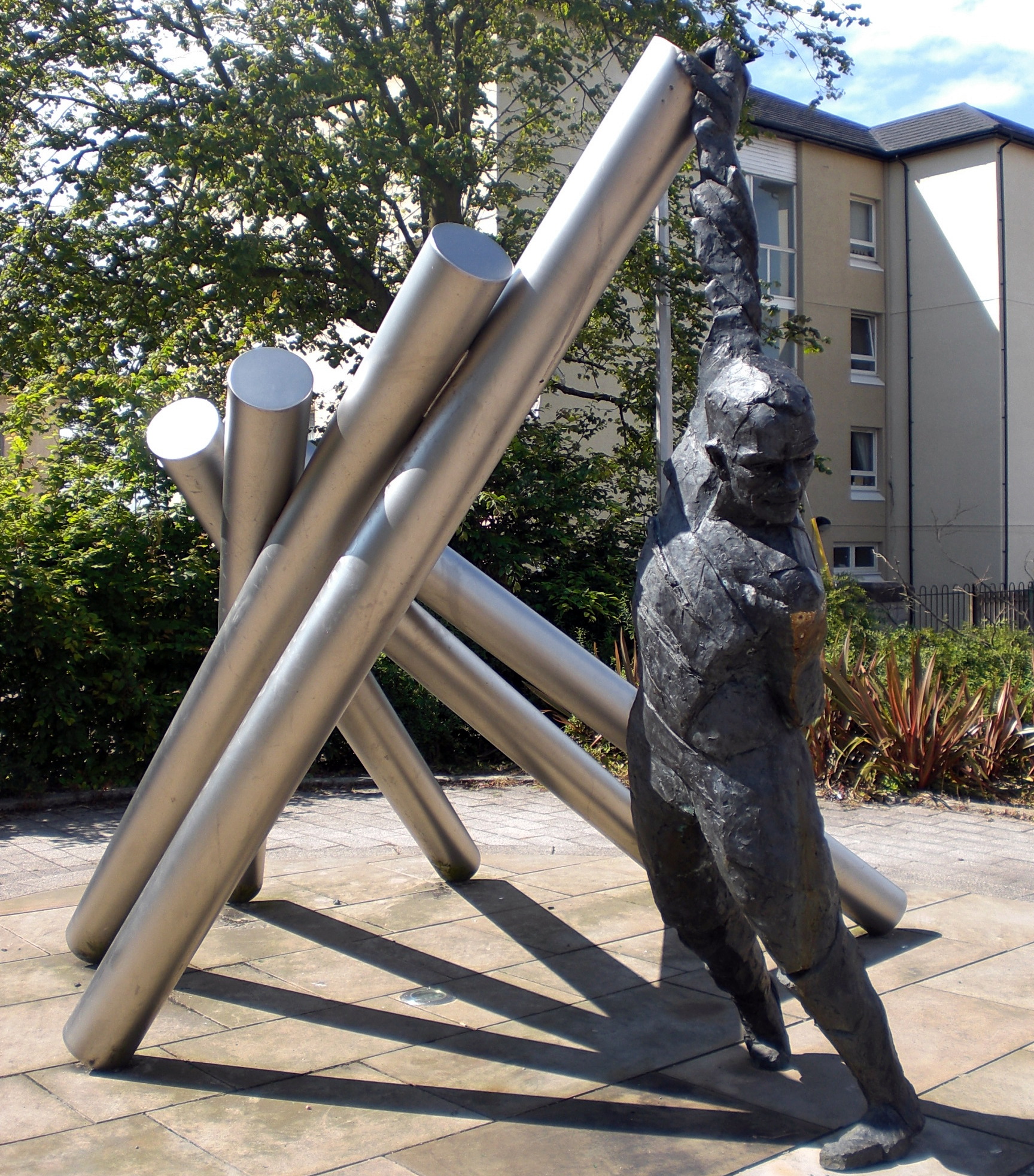
At the side of the Miners Institute is a sculpture called The Prop by the celebrated artist David Annand.  Annand’s other many notable works includes the statue of poet Robert Fergusson, outside the Canongate Church in Edinburgh, and Turfman, a collaboration with Seamus Heaney.

The Prop portrays  a lone miner propping up, or holding on, to six stainless steel forms, representing pit props? A reminder of the town’s mining heritage but an addition to a new sense of place in its own right. This is not monumental art. It quietly invites you to spend time with it. Walk around the space to catch the light fracturing off of the shining stainless forms and it’s then you notice that each column has a line of poetry engraved in to it.  We subsequently learn that the poem God is a Miner is by local  poet William Hershaw.
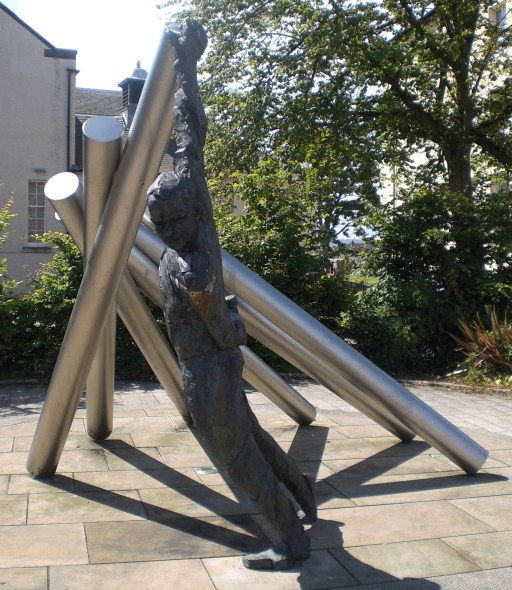
The miner looks as if he has just emerged from a coal seam, rough-hewn from deep time.  Absorbing light into solid form in contrast to the sleek, reflective stainless steel.

~

Yuri Gagarin

“The radicalism of Little Moscow developed out of a struggle to maintain and improve the basic conditions of life.”

Stuart MacIntyre
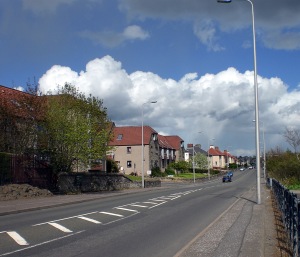
Lumphinnans looking towards LochgellyWe now heading down the long ribbon strip that connects Lochgelly with Cowdenbeath but is actually called Lumphinnans. There is housing down the north side of the road and an impressive cryptoforest to the south with a golf course beyond.  Were you to pass through this area today it may not be immediately apparent that this was once the beating heart of Little Moscow. An area that elected Willie Gallagher, a Communist, as  Member of Parliament for West Fife from the period 1935 – 1950. 

Little Moscow was a term applied to a small number of towns and villages in the UK that appeared to hold extreme left-wing political values.  In Scotland there was Lumphinnans and Vale of Leven, England had Chopwell and there was Maredy in Wales.  The term was initially used as a term of disparagement by the popular press but then reclaimed as a ‘badge of honour’ by the local communities.  Many of the areas that would later be dubbed ‘Little Moscows’ had earlier in the century attempted to find alternatives to the state sanctioned capitalist system.

In Lumphinnans, one of the key instigators was Lawrence Storione who arrived in the village in 1908. Storione was born in Italy in 1867 in the French-speaking area of Valle d’Aosta and later worked as a miner. It appears that he was introduced to anarchism by the noted French geographer and anarchist Élisée Reclus, who was lecturing at the University of Brussels. (Incidentally, Elisee and his brother Élie were friends of Patrick Geddes and attended Geddes’s International Summer Schools in Edinburgh, as did Peter Kropotkin). Due to his anarchist activities, Storione was forced to flee France disguised as a woman and he arrived in Scotland in 1897, working in the mines of Ayrshire and Lanarkshire.  After an aborted trip to Canada he returned to Scotland in 1908 where he settled in Lumphinnans and took up employment at the No 1 pit. His arrival at Lumphinnans had consequences for revolutionary ideas among the miners in that area and he soon set up the Anarchist Communist League which, according to Stuart MacIntyre: “preached a heady mixture of De Leonist Marxism and the anarchist teachings of Kropotkin and Stirner.”  Among those who appeared to have joined the League were the miners Abe and Jim Moffat and Robert (Bob) Selkirk. All three were to join the Communist Party in 1922, Abe Moffat having an important position within it and Selkirk serving as a Communist Party town councillor in Cowdenbeath for 24 years. The League set up a bookshop in 1916 in nearby Cowdenbeath at 128 Perth Road – which is where we are headed today. It sold titles such as Kropotkin’s Mutual Aid, Stirner’s The Ego and His Own, and De Leon’s Two Pages From Roman History and other anarchist literature.

Storione married Annie Cowan in 1900 and their children could only grow into their names: Armonie, Anarchie, Autonomie, Germinal and Libertie! The sole exception to these revolutionary appellations was his daughter Annie who was a leading light in a Proletarian Sunday School in Cowdenbeath.  Sunday evening meetings were held at which notable  activists such as Willie Gallagher, John McLean, and Jack Leckie came to speak.

It’s an enjoyable walk in the sunshine and it looks like a straight road towards Cowdenbeath, unbroken by housing when as if out of nowhere we are forced to drift from the main road by a sign:

CIMG2483

A small road leads off to the right and in seconds, our landscape has completely changed. An open road stretches out ahead with spectacular vistas over to Benarty Hill and The Bishop.  Old style telegraph poles whistling in the light wind appear to be humming a chorus of Wichita Lineman and we wonder whether we have stepped through a portal to the American mid-west.
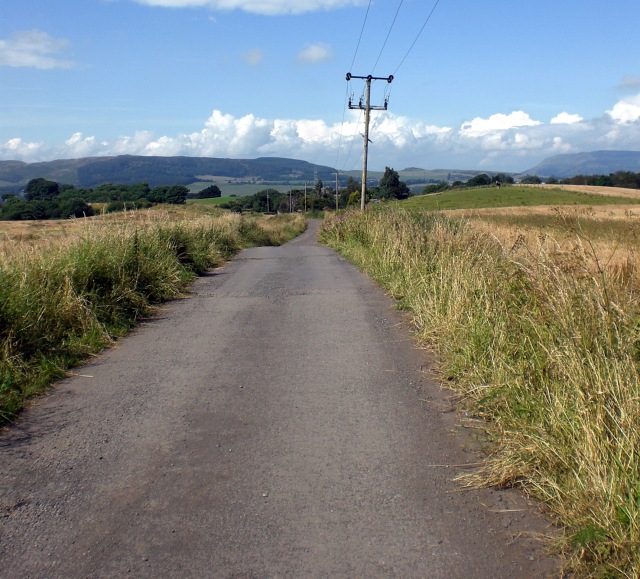
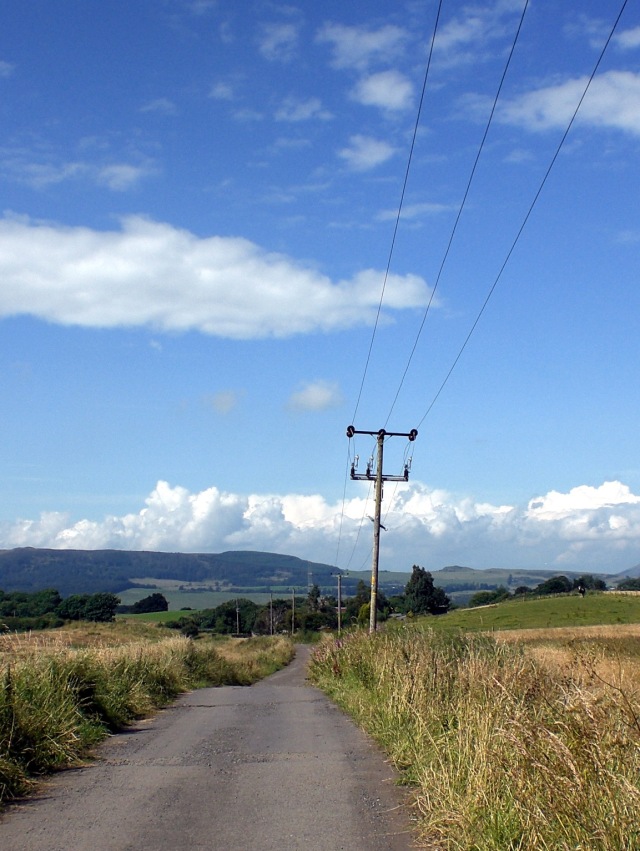
CIMG1754 CIMG1753 Our thoughts of Franco-Italian anarchists are derailed for a while until we recall the high correlation between anarchists and geographers. The land has always been important to the anarchist.

We subsequently come across the story of Lumphinnans NoXI mine which we guess was North West from here and was called the Peeweep pit as the miners could always hear the sound of Lapwings as they walked to work.

We also add to our collection of single-item, lost footwear.

CIMG1762

After our detour we are looking for any signs that remain of Little Moscow. The most obvious traces are to be found in the street signs: Gagarin Way and Gallacher Place.

Lumphinnans Fife, Named after Yuri Gagarin, Cosmonaut.

Named after Yuri Alekseyevich Gagarin, the first human to journey into outer space and hero of the Soviet Union:

Conquest of Space

This street also gave the name to Gregory Burke’s debut play which is perhaps a useful corrective to avoid becoming too nostalgic and romantic about institutionalised, political rhetoric of any persuasion.

CIMG1759

We invoke the ghosts to tell us anything that may be of use to us. Rather than deliver any political sloganeering Willie Gallagher tells us a story, or more like a scene from a play. It concerns the incident of a 12 year old girl brought before the Communist baillie, Jimmie Stewart for stealing a bag of coal:

Stewart: How auld are ye lassie?

Girl: Just twal sir

Stewart: How auld is yer wee brother?

Girl: He’s eight

Stewart: It was gey cauld last week?

Girl: Aye, it was gey cauld

Stewart: Did ye take the coal hen?

Girl: Aye

Stewart: Muckle?

Girl: Just a bucketful

Stewart: Did ye take the coal to make a fire for your wee brother?

Girl: Aye

Stewart: What ye did was richt. Charge dismissed. (1)

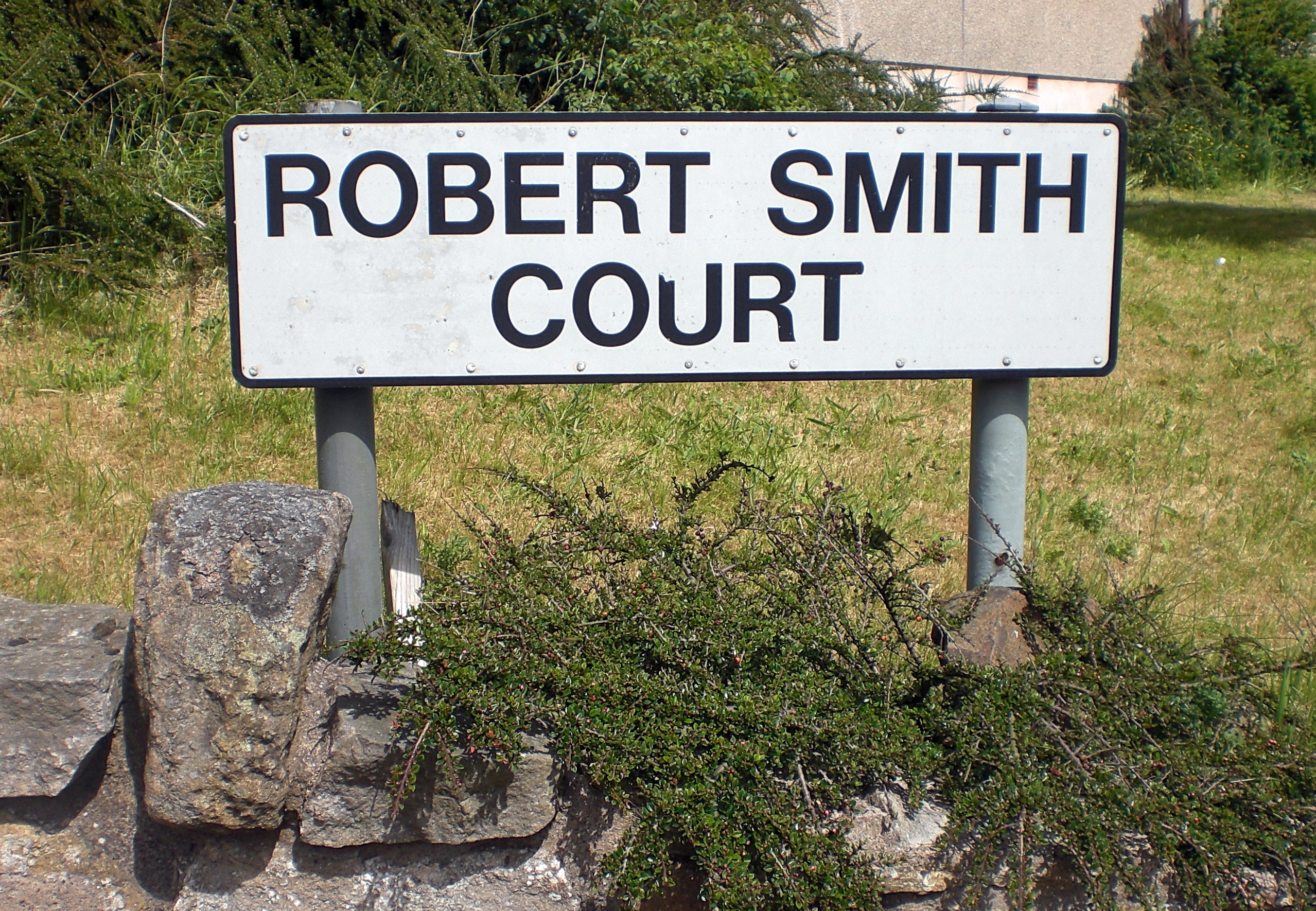
A more postmodern take on street names can be found with Robert Smith Court. Anyone spending time in the towns an villages of West Fife will notice that there a large number of pubs called The Goth.  (after The Gothenburg System). It therefore only appears fitting that there should exist a commemoration of the uber-goth himself in this street sign. We are surprised that it has not become more of a shrine. Perhaps a few stuffed, cuddly Love Cats would be appropriate although, there is the small beginnings of A Forest.*
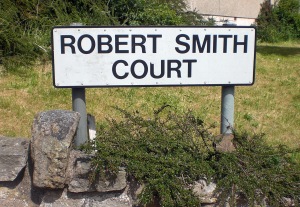
Robert Smith Court Lumphinnans

We have almost reached Cowdenbeath, when another sign whispers to us:

CIMG1764

The WEA (Workers’ Educational Association) was founded in 1903 and is the UK’s largest voluntary sector provider of adult education. In many ways it was a forerunner of the Open University.

We are transported to last years summer holiday when we visited the Hepworth Gallery in Wakefield.  Showing alongside Richard Long’s artist room was Luke Fowler’s film: The Poor Stockinger, The Luddite Cropper and the Deluded Followers of Johanna Southcott.

Fowler’s film focuses on the work of historian E.P. Thompson, who was employed by the WEA to teach literature and social history to adults in the industrial towns of the West Riding of Yorkshire. Like the Open University this was an opportunity to provide classes to people who had historically been unable to access a university education.

The film uses archive and contemporary footage to portray a moment of optimism in which E.P Thompson’s ideas for progressive education came together with a West Riding tradition of political resistance and activism.  In many ways you can feel the bonds of solidarity stretching from the Little Moscow of Fife to the West Riding of Yorkshire.

 And so we reach Cowdenbeath and it’s not too difficult to locate Perth Road. 128 is what our scribbled piece of paper says. Will there be any sign from Storione?

It’s not looking too hopeful as it soon becomes clear that the buildings are residential terraced houses probably built in the 1960s/70s.  We soon track down No 128 although there is no obvious trace of The Communist Literature Depot having existed.  

CIMG2487

The calendars does not measure time as clocks do. They are monuments of a historical consciousness of which not the slightest trace has been apparent in the past hundred years.

A historian […] stops telling the sequence of events like the beads of a rosary. Instead he grasps the constellation which his own era has formed with a definite earlier one. Thus he establishes a conception of the present as the ‘time of now’ which is shot through with chips of Messianic time. 

Walter Benjamin, Theses on the Philosophy of History

Perhaps it is enough to know that Storione’s bookshop may have once existed here and now resides within this little collective of numbers. A radiating form of energy that once rippled through the ether of Little Moscow and now lies awaiting its Messianic moment.

 Tim who?

 ~~~

Now Playing: Dick Gaughan  – A Handful of Earth

(1) This is an actual transcript recorded in Stuart MacIntyre’s book.

* The real Robert Smith was also a Communist councillor and appears to have suggested the proposal to name Gagarin Way.

References:

Walter Benjamin, ‘Theses on the Philosophy of History’, 1940, in Tasmin Spargo, (ed), Reading the Past (London: Palgrave, 2000).

Nick Heath, Lawrence Storione 1867 – 1922, on Libcom.org:  http://libcom.org/history/storione-lawrence-1867-1922

William Kenefick, Red Scotland! The Rise and Fall of the Radical Left, c. 1872 to 1932 (Edinburgh: Edinburgh University Press, 2007).

Stuart Macintyre, Little Moscows : Communism and working-class militancy in inter-war Britain (London: Croom Helm, 1980).

Tim Moore, You Are Awful (But I Like You): Travels Through Unloved Britain (London: Jonathan Cape, 2012).

Neil C. Rafeek, Communist Women in Scotland: Red Clydeside from the Russian Revolution to the End of the Soviet Union (London:  I.B.Tauris, 2008).

Walking Score No 1 (After Klee)

Walking Score 1

taking a line for a walk  ~ Paul Klee

taking a walk on a line ~ FPC

~

Walking Score No I (After Klee)

~

Take a map drawn to any scale

~

Draw a line that starts and ends at the same place

~

Attempt to walk the line as far as is practicable

~

Record your experience in some form and share if desired

~

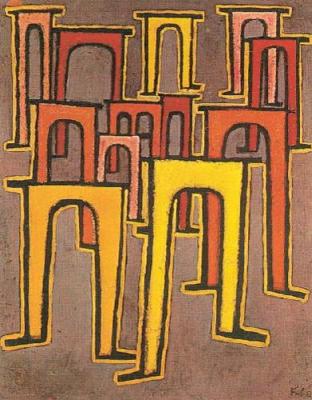
Paul Klee - Revolution des Viadukts, (1937)
Paul Klee – Revolution des Viadukts, (1937)

Now Playing: Wire – Map Ref. 41°N 93°W