William Gear – CoBrA artist and Monuments Man from Methil

(c) David Gear; Supplied by The Public Catalogue Foundation
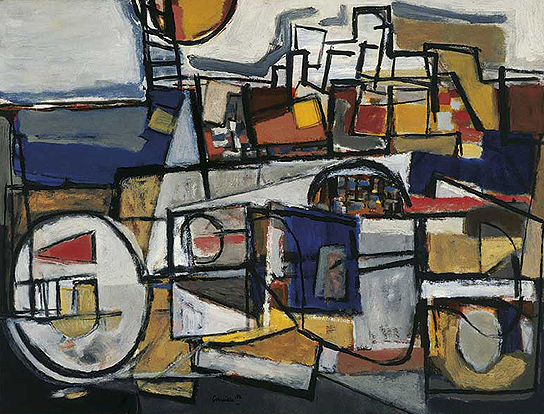
William Gear – Landscape, (1951)

the landscape of pitheads, the sea, rocks, castles, trees, storms and poverty marked his earliest identity with a place and probably remained the most influential to his art. 

he once described his paintings as ‘statements of kinship with the natural world’

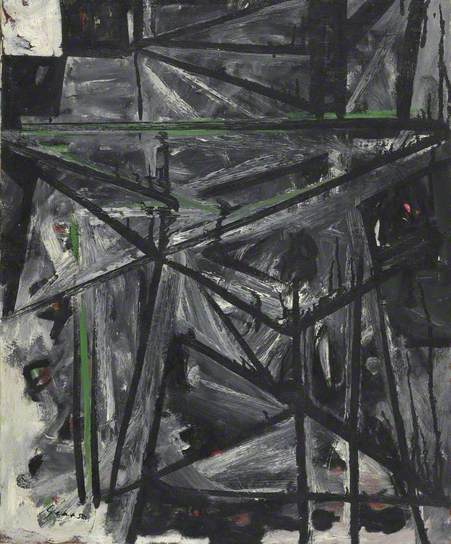
Amongst a fine display of Scottish Colourists, McTaggarts and Glasgow Boys, a painting hangs in the collection of the newly refurbished Kirkcaldy Galleries titled Intérieur noir (1950). It’s an abstract expressionist collision of angular black lines and post-war greys, leavened by hints of primary green and red.  The painting is by Methil born, William Gear (1915 – 1997) and dates from Gear’s ‘Cobra Years’ when he was one of only two British members of the post-war, European, avant-garde movement CoBrA. Two of the leading instigators of CoBrA, Asger Jorn (1914 – 1973) and Constant Anton Nieuwenhuys, aka ‘Constant’ (1920 – 2005) would later become founding members of the Situationist International.
(c) David Gear; Supplied by The Public Catalogue Foundation
William Gear – Intérieur noir (1950).

Sitting in the dark in the forgetting chamber. The trailer on the cinema screen is for a film called The Monuments Men. Directed by and starring George Clooney, the film looks to be a light-hearted comedy romp with a cast featuring Bill Murray, Matt Damon, John Goodman and Cate Blanchett amongst others. The trailer suggests a plot revolving around an unlikely band of allied troops tasked with finding and protecting important works of Art that the Nazis have stolen. At the time, I don’t really think a lot about this but it is clear from the preview that this will not be cinéma vérité. 

Approach Row, East Weymss
Approach Row, East Wemyss

Rows of miners cottages still stand squat and solid in the village of East Wemyss which sits between Kirkcaldy and Methil. The pithead winding gear of the Michael colliery would once have defined the surrounding landscape. At the time, the Michael was Scotland’s largest pit, but with a history of gas build up and spontaneous combustion underground. On 9th September 1967, a disastrous fire broke out in the mine. Although 302 men managed to escape, nine were killed and much of the coal reserves were destroyed. A memorial to the men stands in the village.

The Michael Memorial

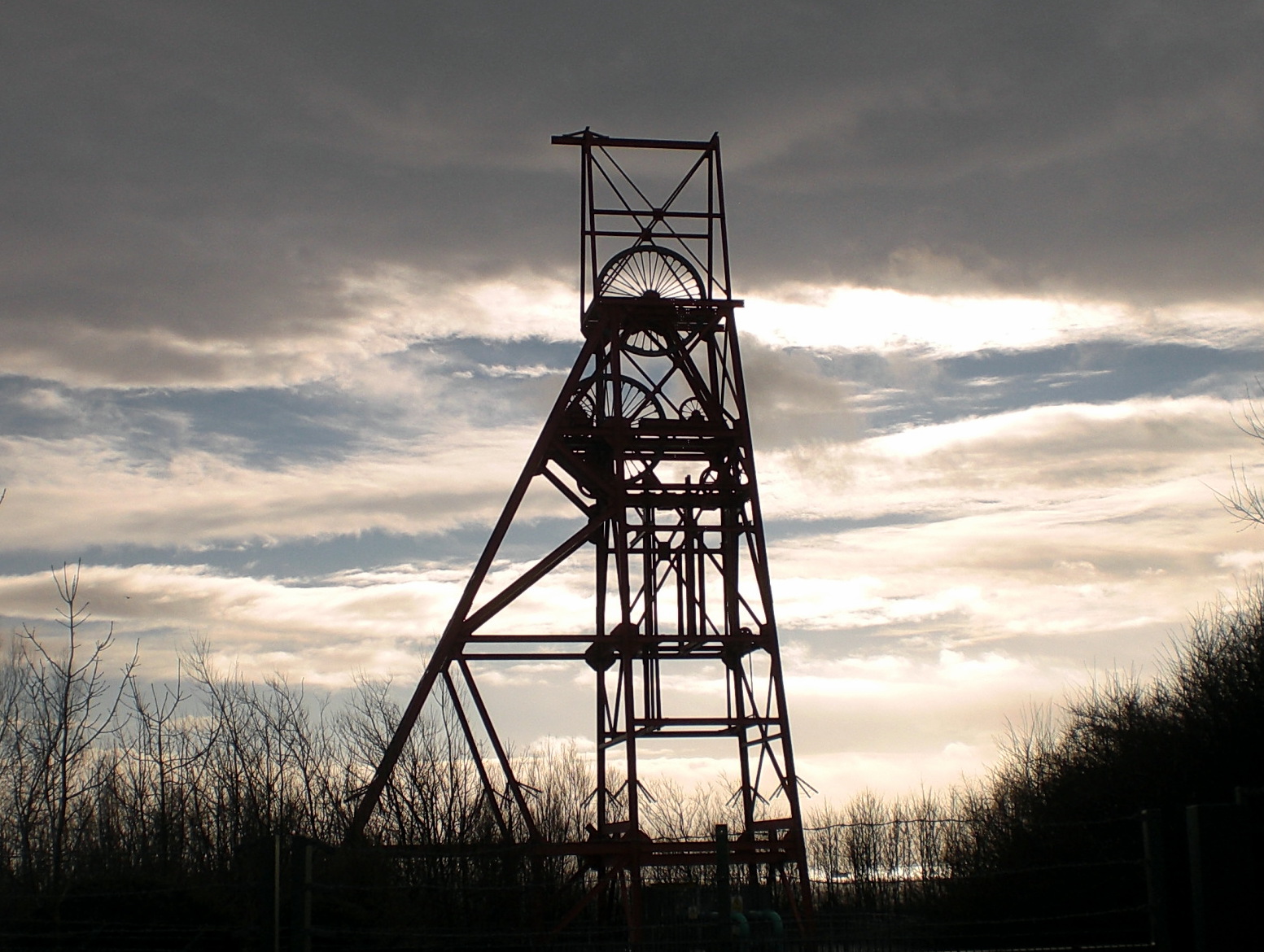
On the way to East Wemyss we had stopped at the site of the Frances Colliery, down the road at Dysart.  The mine closed in 1989 but the pithead winding gear remains. A towering presence in the landscape evoking something of The Wicker Man. An industrial ghost of angular dark lines and winding wheels etched against the muffled blues and greys of a cold, damp, February afternoon.

Something of the Wickerman? Frances Winding Gear - Dysart

On a more detailed view, we cannot help but be reminded of Gear’s Intérieur noir:

Pithead lines and landscape

This image of the pithead lingers as we imagine tracing the footsteps of William Gear’s formative years around the streets and coastal paths of East Wemyss. It doesn’t take long before we also encounter the sea, the rocks, the ruined castle, the caves, and the trees.

Cobra Museum

A painting is not a construction of colours and lines, but an animal, a night, a scream, a human being – or all of these.

 Constant
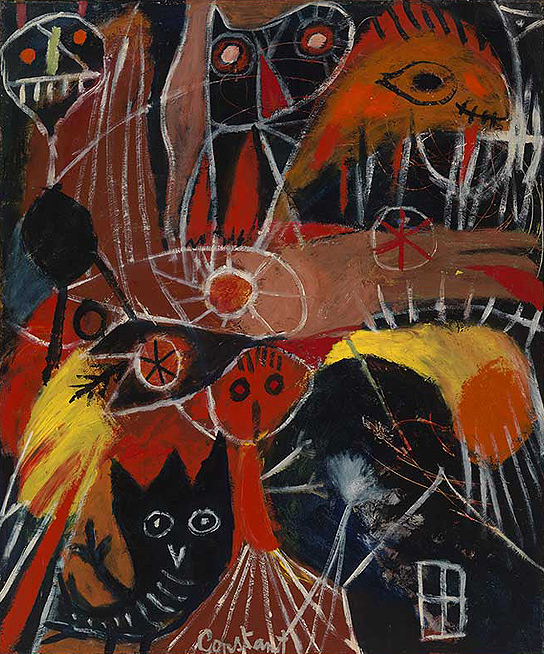
Animaux (1949)
Constant – Animaux (1949)
Corneille-
Corneille – l’homme dans la ville (1952)
Gear_White-Tree-1949
William Gear – White Tree (1949)

Prior to their involvement in the early phase of the Situationist International, Constant and Asger Jorn were key figures in the CoBrA avant-garde group. CoBrA was formed in November 1948 after six disaffected delegates walked out of a conference in Paris discussing proposals for an ‘International Centre For The Documentation of Avant-Garde Art’. The dissident group convened at Café Notre-Dame, and brought together: Constant, Karel Appel, and Corneille’s Experimentele Groep in Holland; Christian Dotremont and Joseph Noiret’s Revolutionary Surrealist Group from Belgium and Asger Jorn’s Høst Group from Denmark.

Dotremont came up with the name CoBrA (made up from Copenhagen, Brussels, and Amsterdam) and a short founding statement:

the only reason to maintain international activity is experimental and organic collaboration, which avoids sterile theory and dogmatism.  

There was no uniform CoBrA style but the artists were united in searching for new paths of creative expression based on spontaneity and experiment and complete freedom of colour and form. They drew their inspiration in particular from children’s drawings, primitive art forms and from the work of Paul Klee. Most of the founding artists had experienced life under German occupation and shared similar aspirations following World War II: a new society and a new art. The artists shared an interest in Marxism and saw themselves as a ‘red Internationale’ that would lead to a new people’s art.

CoBrA had a relatively short existence and was dissolved in November 1951.  However in this short space of time it distinguished itself from other post-war artist groups by being a manifestly international movement with a number of Cobra artists also collaborating in smaller, loose, cross-border exhibitions.

WP_000420-002

Britain had only two artists who became part of the CoBrA group. Both were born in Fife. Stephen Gilbert (1910 – 2007) was born in Wormit (1) and William Gear was born in Methil.

William Gear

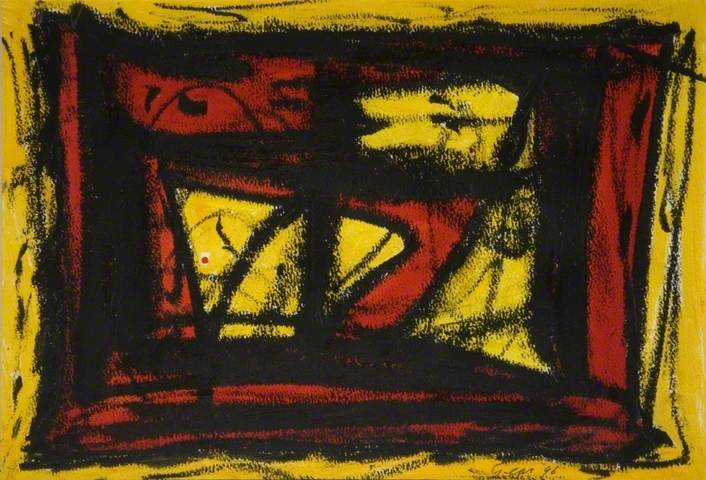
(Gear) speaks about being inspired by Fifeshire harbours, pit heads, naked trees and hedgerows reminding us that he is essentially a landscape artist whose use of solid, black lines refers to Léger, the Forth Railway Bridge, and medieval stained glass windows (a common reference among Cobra artists).
(c) David Gear; Supplied by The Public Catalogue Foundation
William Gear – Caged Yellow (1996)

Gear was born in Methil into the hardships of a poor mining family and grew up in the nearby village of East Wemyss. Initially the family lived in a miners row of cottages in Randolph Street and later in Approach Row. His father worked in the local pits, but had creative interests including photography and growing flowers. When young Bill began to show an aptitude for art, he was fully encouraged. Inspiration came from local teachers, the local library and visits to Kirkcaldy Art Gallery to view “Old McTaggart and Peploe.” A visit to an Edvard Munch exhibition in Edinburgh also made a huge impression. On finishing school Bill was encouraged to apply for a place at Edinburgh College of Art. Money was an issue for the family however small grants were available from Fife Education Authority, the ‘Carnegie’ and the Miners Welfare which made this feasible. As Gear recounts:

“this was rather lucky and it was a special Scottish thing or even a Fife thing, because the Fife Education Authority was quite left-wing, even Communist at one time and they very very much encouraged it, the education … and of course, the Carnegie and the Miners and in one way and the other, I was able to function…”(2).

Gear studied painting at Edinburgh College of Art, 1932–36, where he recounts: ” I was already doing my own thing a bit and being hauled over the coals for it, you know being advised to look at Ingres…” A year in Europe, on a travelling scholarship followed, where he ended up in Paris studying with Ferdinand Léger. It is likely that Gear first encountered Asger Jorn at this time as Jorn was working with Léger on his murals for the International Exhibition of 1937.

With the outbreak of the Second World War, Gear was called up to serve in the Royal Signal Corps in Europe and the Middle East. However, he still found time to paint – mostly works on paper of damaged landscapes. He managed to stage exhibitions in Jerusalem, Tel Aviv, and Cairo as well as one-man shows in Siena and Florence.

Monuments Man

When starting to find out a bit more about William Gear, I had no idea that he had in fact been one of the Monuments Men which George Clooney’s film supposedly turns into a historic caper. There were around 350 men and women from 13 nations signed up to the Allied Forces’ Monuments, Fine Arts and Archives (MFAA) section, during and immediately after the war. During 1946–7, Gear worked for the MFAA and was tasked with securing the safety of the Berlin Art Collection in Schloss Celle. He also organised an important series of modern art exhibitions, including work deemed by the Nazis as ‘Degenerate Art’ including Picasso and the German Expressionists. In particular, he promoted the work of Karl Otto Gotz who had been banned from exhibiting by the Nazis. Gear became a good friend of Gotz and later introduced him into the CoBrA circle.

Karl Gotto Gotz - Ein Kunststück (1947)
Karl Gotto Gotz – Ein Kunststück (1947)

Introduction to Cobra

It was during a period of army leave to Paris, in 1947, that Gear was introduced to Constant and Corneille by fellow Fifer, Stephen Gilbert. Gear had already met Jorn before the war and he also knew Jean-Michel Atlan and Jean Dubuffet. Gear therefore had social connections with the European avant-garde prior to the formation of CoBrA and when he demobbed in 1947, he headed for Paris and soon established a one-room studio at 13 Quai des Grands Augustins. Within a year there were exhibitions at two of the pioneering Paris salons and a first one-man show at the Galerie Arc en Ciel.

Gear was invited by Constant and Jorn to exhibit at CoBrA shows in Amsterdam and Copenhagen in 1949, alongside Corneille and Appel.  In the same year, he exhibited alongside Jackson Pollock at Betty Parson’s Gallery in New York.

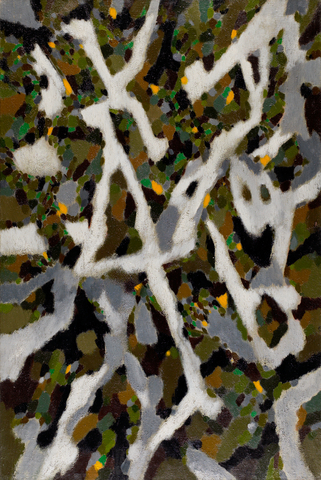
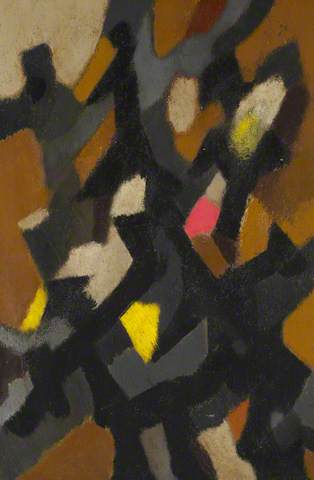
Whilst Gear’s paintings could be described as a ‘reinvigorated form of abstract expressionism’ many display a suggestion of landscape, not least in the recurring titles:
(c) David Gear; Supplied by The Public Catalogue Foundation
Spring Song (1951)
(c) David Gear; Supplied by The Public Catalogue Foundation
Landscape (1950)
Autumn Landscape (1950)
Landscape (1949)
Landscape (1949)

There was always a link with nature, I never denied nature really. Even in
those extreme abstract themes we have been looking at, there is an equivalence to, 
observable form. I don’t say nature in the naturalistic sense but of observable forms. They may be telegraph poles or stakes or trees or structures or, as I am looking out the window now, I mean, I can see, I can see my painting in two or three different ways. There is the severe architectural modern structure over there and at the same time
trees and foliage and blossom and light through the tree. I mean, there is my painting you see. This is where it comes from. I don’t necessarily sit down and paint that, but I am aware of it.

Festival of Britain 1950

Gear returned to the UK in 1950, recently married to Charlotte Chertok, and with a young son – David – in tow.  It was an opportune moment for Gear who, out of sixty artists invited to submit, was one of six artists awarded a Festival of Britain Purchase Prize. Gear’s painting was a huge canvas – Autumn Landscape – and the only abstract work selected. Illustrating just how little some things change over time, The Daily Telegraph and Daily Mail took great exception to this ‘waste of public money’ and urged readers to complain to their Members of Parliament.  The result was the Chancellor of the Exchequer, Hugh Gaitskill, being asked in the House of Commons whether he was satisfied with the expenditure of public money on a painting that had been described as ‘trash’. Gaitskill deferred to the decision of the distinguished international jury who had awarded the prizes which represented a broad section of British Art. 

David Gear; (c) David Gear; Supplied by The Public Catalogue Foundation
William Gear – Autumn Landscape (1951)

Gear makes the point that the whole adverse reaction came from a small 3″x 2″ black and white reproduction printed in the Daily Telegraph before the exhibition had opened and anyone had actually seen the picture.

Gear became curator of the Towner Gallery in Eastbourne from 1958 to 1964, where he managed to change the local authority’s collection policy from Victorian and local views to securing the foundation of a major collection of post-war British art. He became head of the Faculty of Fine Art at Birmingham College of Art in 1964, a post from which he retired in 1975.
CIMG3228Gear continued to paint until the end of his life and whilst out of critical favour for most of the 1960s and 1970s, a renewed interest and retrospective appreciation of the CoBrA movement has gone some way to reverse this. The major Cobra 1948-51 exhibition in 1982, at the Musee d’Art Moderne, Paris, included works by Gear and Stephen Gilbert and Cobra enthusiast Karel van Stuijvenberg has also been a prominent supporter. A retrospective of Gear’s The Cobra Years was held at the Redfern Gallery in 1987 and a much larger exhibition Paintings from the 1950s in 2006.  The Cobra Museum of Modern Art was opened in Amstelveen, near Amsterdam in 1995 with Gear invited to attend the ceremonial opening. Only a few weeks before his death, he was awarded a Leporello Award, appropriately instigated by fellow artists and presented by the Lower Saxony government. This recognised Gear’s service in the MFAA and the promotion of “democratic art and artistic freedom.” Today, Gears work sits in public collections around the world including collections in the cities and towns of: Kirkcaldy, Aberdeen, Amstelveen, Belfast, Birmingham, Brighton, Buffalo, New York, Canberra, Caracas, Chichester, Cincinnati, Eastbourne, Edinburgh, Fort Lauderdale, Glasgow, Hereford, Kendal, Liege, Lima, London, Manchester, Middlesbrough, Nelson, Newcastle, New York, Ottawa, Oxford, Perth, Rye, Southampton, Stirling, Sydney, Stromness, Tel Aviv, Toledo, Toronto.
(c) David Gear; Supplied by The Public Catalogue Foundation
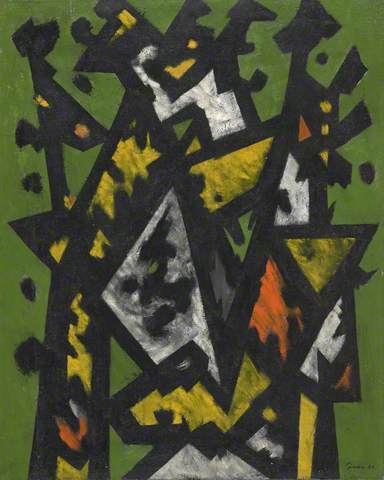
William Gear – Les Arbres (1950)
(c) David Gear; Supplied by The Public Catalogue Foundation
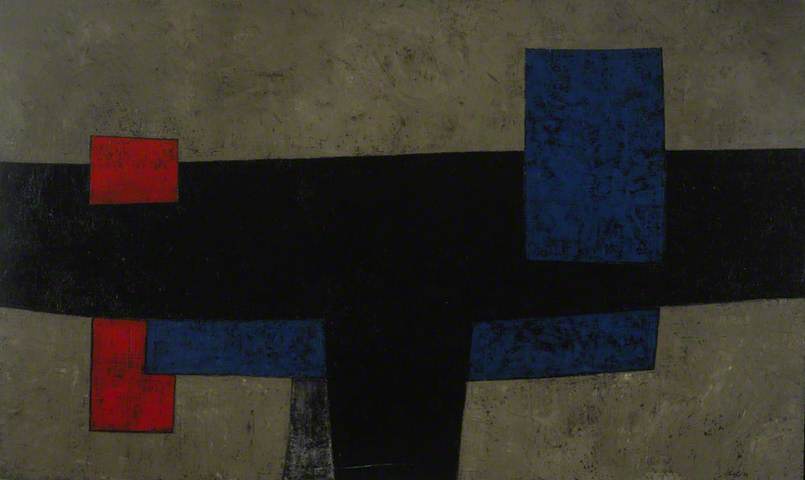
William Gear – Winter Structure (1955-56)
William Gear – Winter Landscape (1949)

.

.

.

.

.

..

.

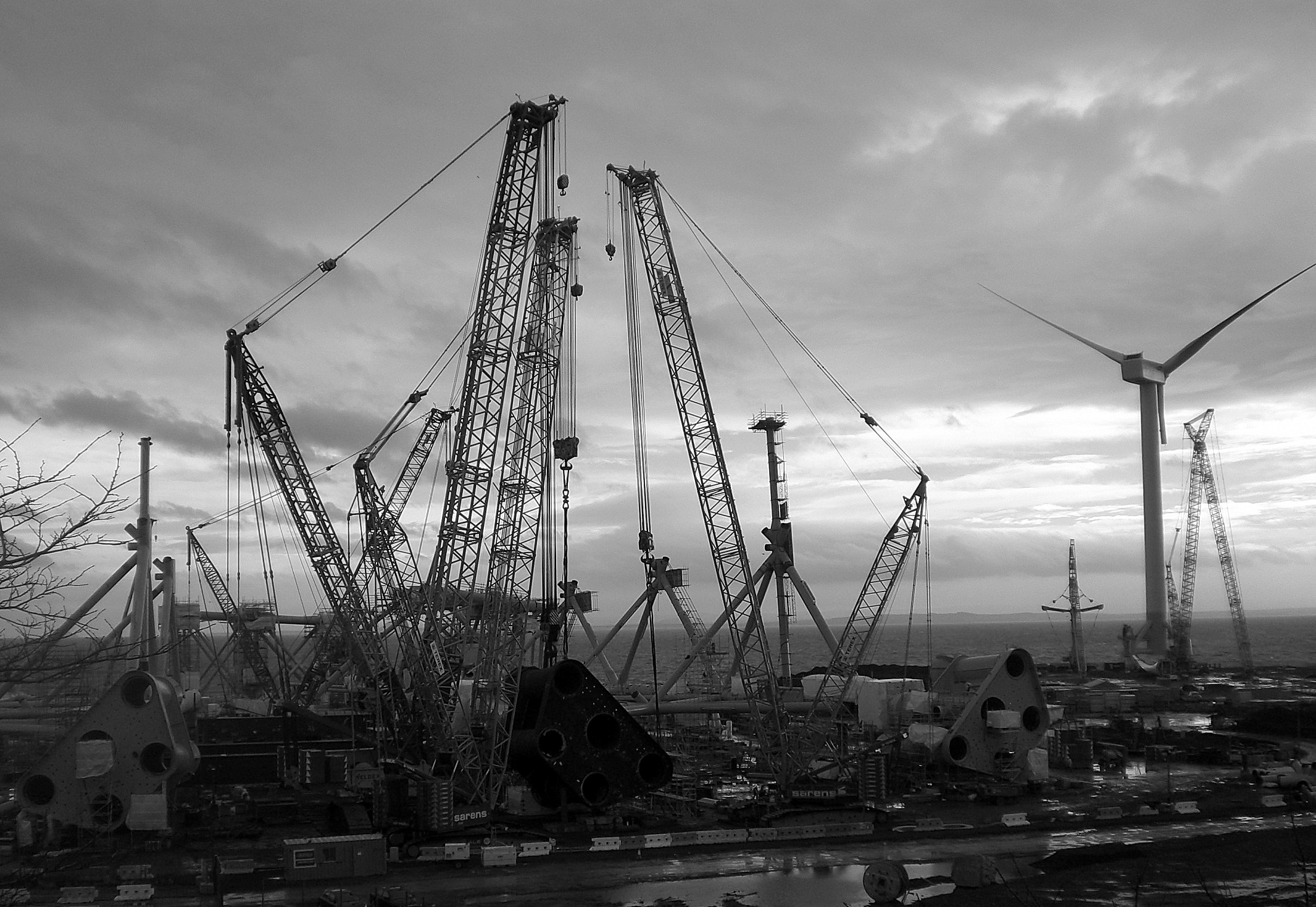
We finish our walk around these fundamental landscapes surprised by how much we appear to recognise, see or feel in Gear’s work. One final thought occurs as we pass Methil Docks which in Gear’s childhood would have been a bustling industrial complex exporting Fife coal around the world. The coal hoist structures for loading the ships may have disappeared but new industrial beasts are presently being constructed.

CIMG3186

Perhaps a symbol of transition from a carbon economy towards a more hopeful low-carbon future. We wonder whether these structures will function as the pithead did for Gear. Burning themselves in to the (un)conscious mind of those local artists who will take it, remake it and connect it to the wide wide world. If the local support structures are in place…

Now Playing: Stereolab – Cobra and Phases Group Play Voltage in the Milky Night

Notes and references:

(1) Perhaps a future post on Stephen Gilbert will follow.

(2) Any quotes attributed to Gear and much of his life background comes from a phenomenal 278 page oral transcription: National Life Stories, Artists’ Lives, William Gear interviewed by Tessa Sidey. Recorded at various dates during 1995. © The British Library.

Other texts:

William Gear, The Cobra Years 1948-1951, The Redfern Gallery, 1987.

William Gear 1915-1997, Paintings from the 1950s, The Redfern Gallery, 2006.

John McEwen, William Gear (London: Lund Humphries, 2003).

Tessa Sidey, ‘Obituary, William Gear’ The Independent, Monday 10th March, 1997.
Cobra Museum of Modern Art, Amstelveen.

BBC, Your Paintings, William Gear

Once we looked to the horizon

Blind Window

.

Once we looked to the horizon.

How can we see now?

Monitor

.

Encased

in the white wall

a pulse, a tracing

an inscription of breath.

CIMG3058

.

An acronym, or

a beginning

an interruption, or

an end?

Rushes

.

Wind-blown,

brush strokes

impasto smears

…………………………………………….– the sky

a feathered script

of light

At the Ghost Pier 28.12.13

.

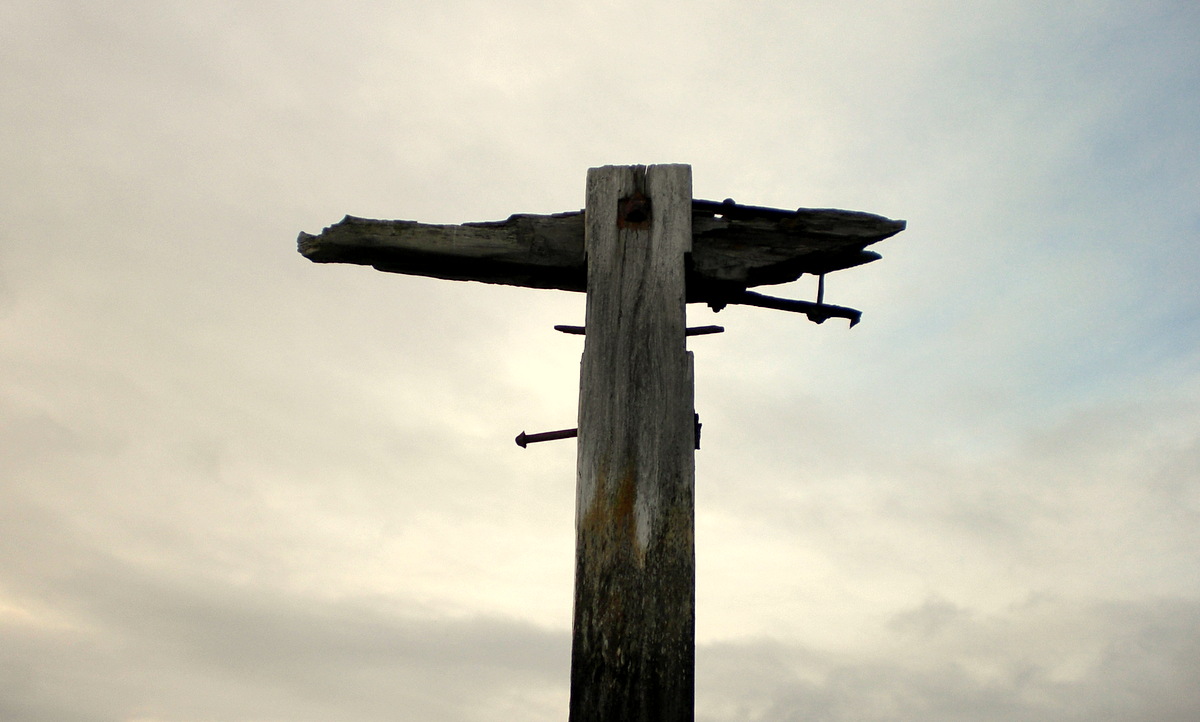
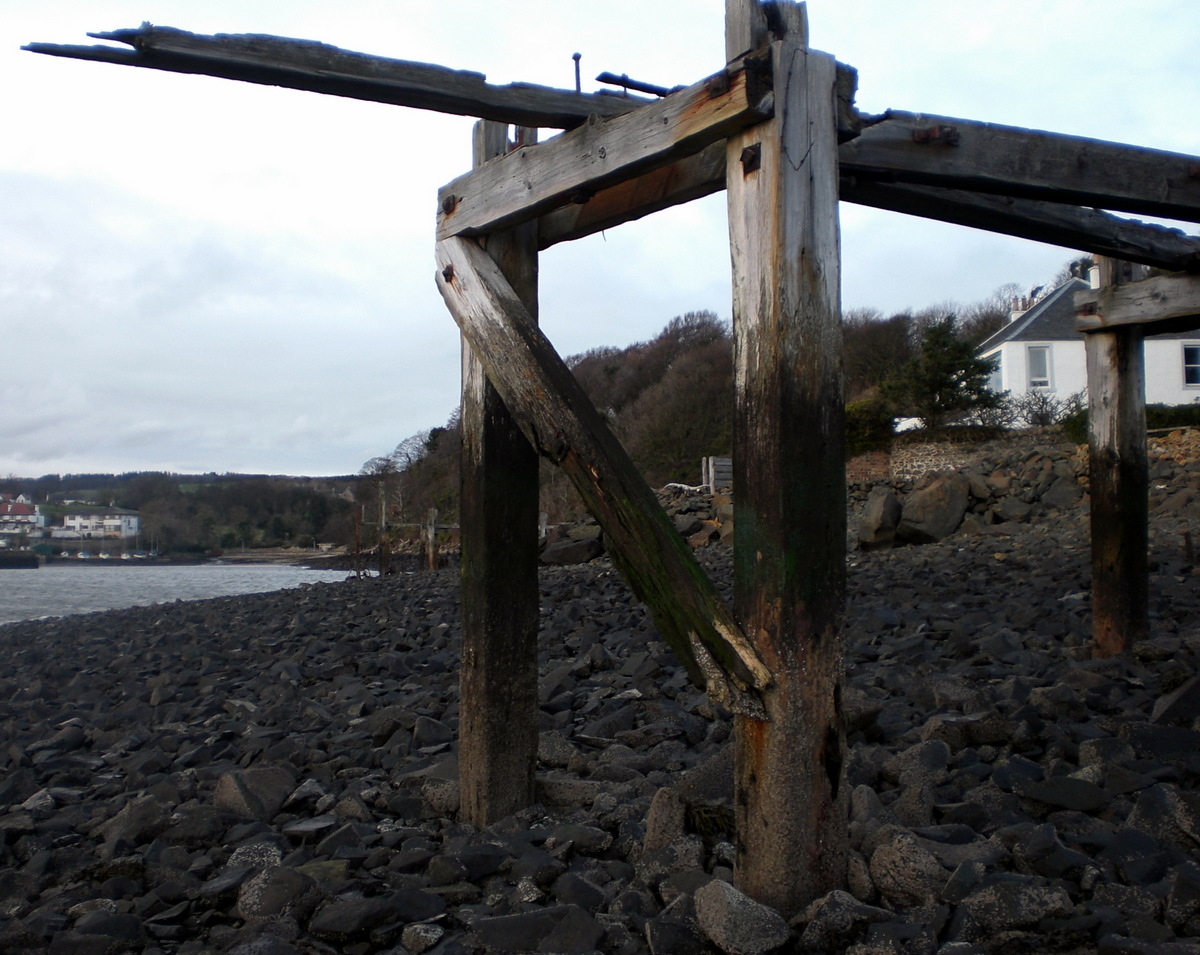
At the ghost pier

the ebb and flow

of memory

and forgetting

Nails

.

Weather soaked

histories

 etched – in wood

a redundancy of nails

.

.

Pier

.

.

From the shore

.

A polished pewter sky

dreams a wash of

copper-burnished kisses

CIMG3089

.

an invitation,

the pull towards

the edge

.

Cliffs

.

to sit and stare.

Listening

to the lichens

singing

CIMG3097

.

On the cliff top,

who is watching

the solitary watcher

Memory Bench

.

and at the bench

an outward gaze

to remember

and once again

look beyond

the edge of the horizon.

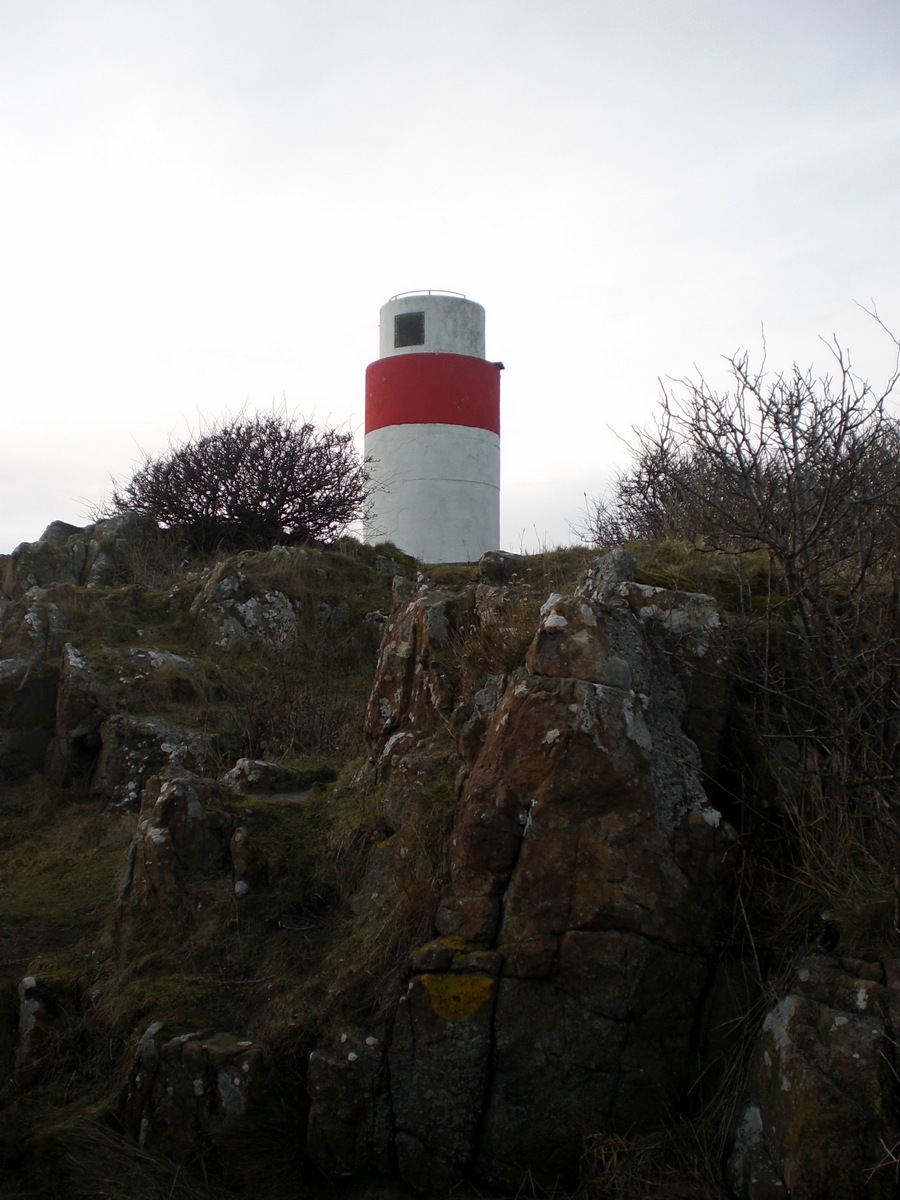
Musings from a short walk in the village of Aberdour, Fife, on 28th December 2013.

Thanks to @emmaZbolland for “Pewter light” in response to an earlier tweet of the Ghost Pier.

Now playing: Translucence – John Foxx and Harold Budd.

Newcastle upon Tyne: An Assemblage in 16 Fragments

I

.

WP_000388
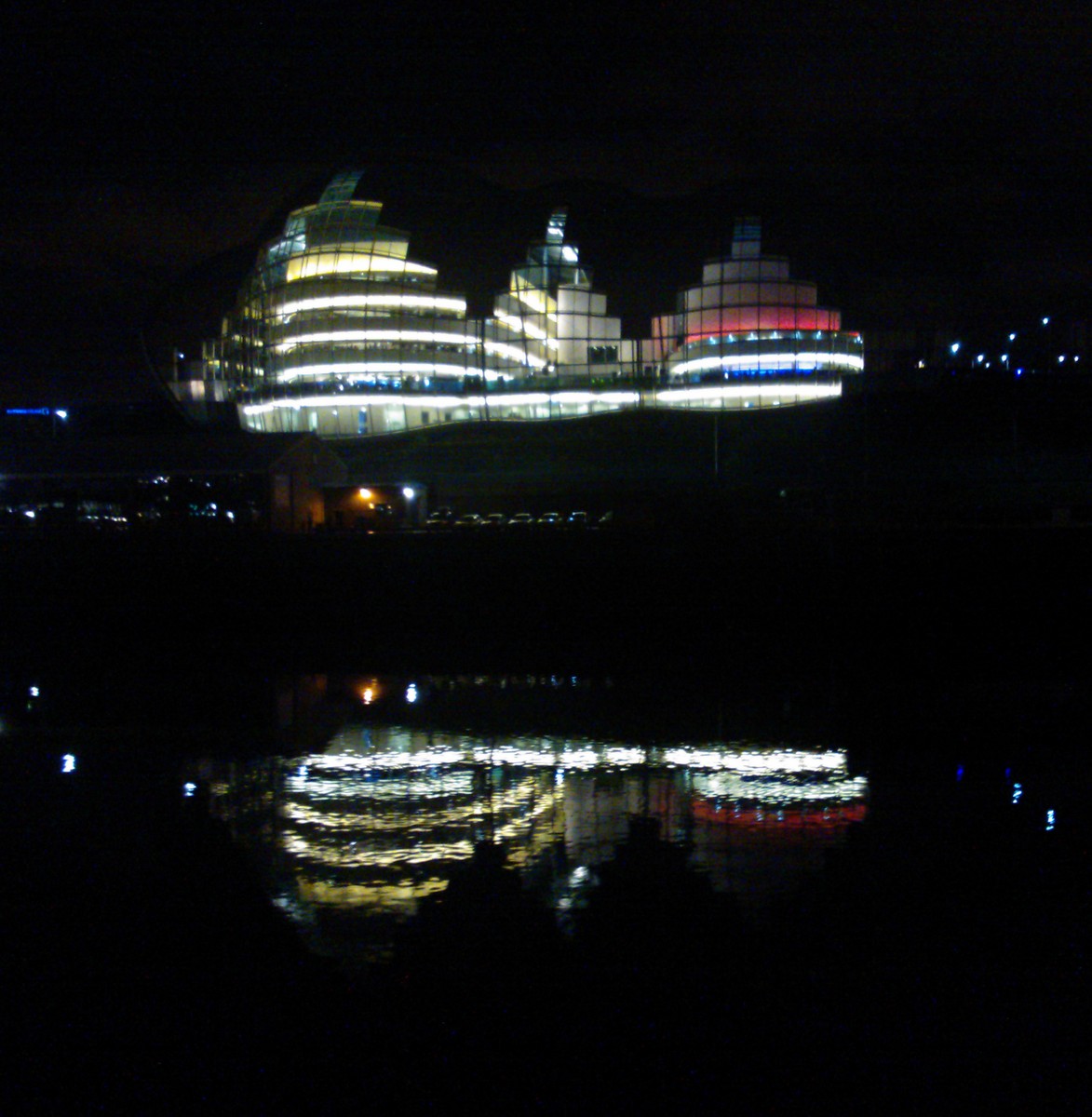
The Sage Gateshead at night

.

.

I remember

How the darkness doubled


.

.

.

.

Standing. In the dark, enveloped by a light rain on the quayside of the River Tyne.  The opening lines of Television’s Marquee Moon are snaking through my head. It feels as if the song is seeping out into the city’s arteries.  An energy circulating through the cobbled streets, overhead bridges and the reflecting river.  Marquee Moon is an album that has always seemed to stand outside of time and yet evokes a strong sense of  place. An almost cubist portrait of New York. Tonight it’s Newcastle that is being pulled into the gravity of the song.

The treacly purr of the Tyne does indeed double the darkness upon which two cathedrals of light are painted.  The Sage Gateshead, a silver slug of undulating movement in daylight, shape-shifts into a trio of glass pyramids. Bricks of light etched upon the darkness. Its reflective doppelgänger is traced in the depths of the lipping water. All edges smoothed into Guggenheim-esque spirals of shimmering curves.

MB 1

.

.

I recall 

lightning struck itself

.

.

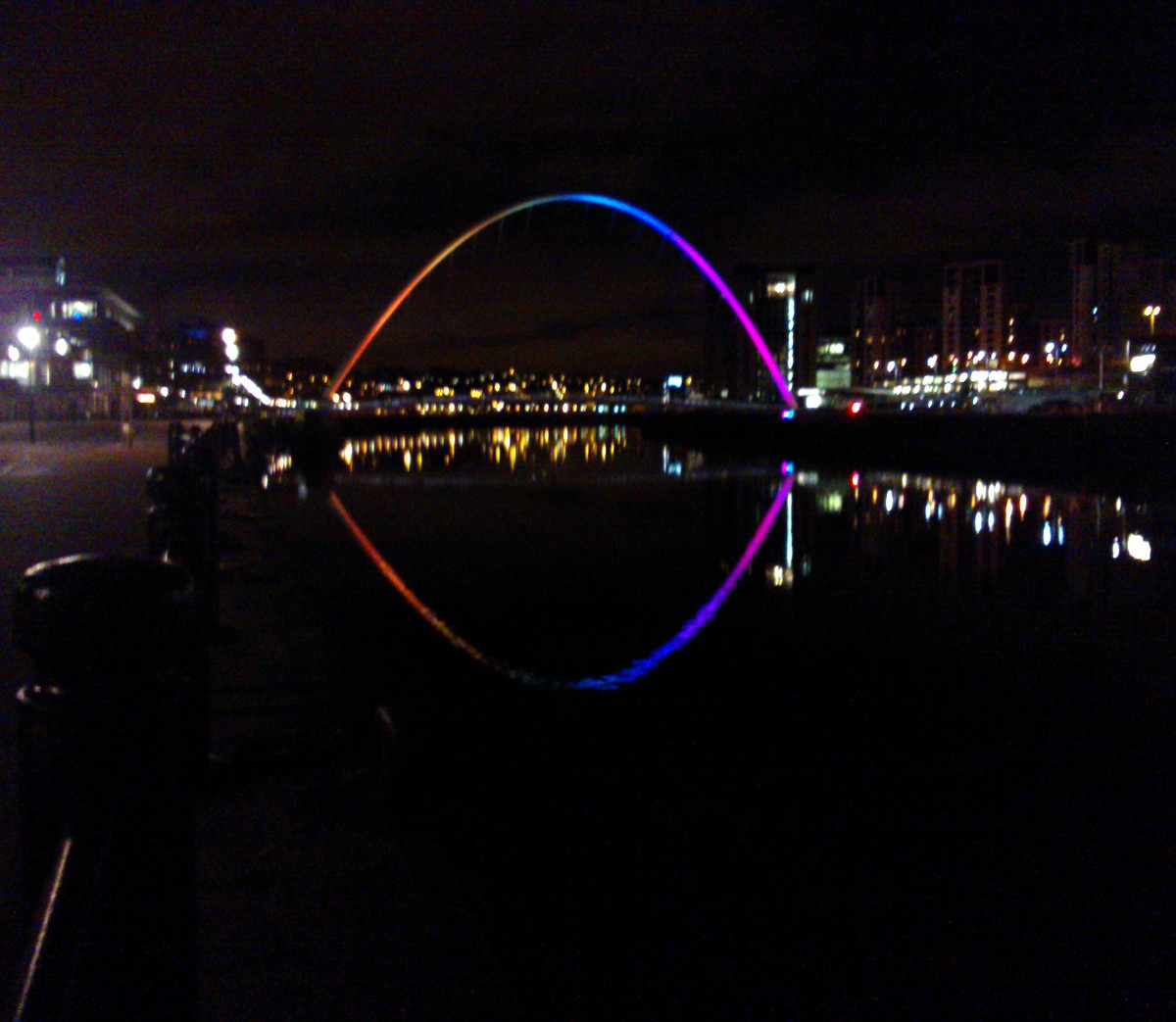
Further up the quayside, the Millenium Bridge indicates the route of travel over the river to where Tom Verlaine & Co will shortly take the stage for a very rare UK appearance. Once again the city appears to absorb and reflect back the enigmatic lyric. Lightning/lighting appearing to strike itself. An arc of rainbow colours  – the illusion of movement  a solid sphere – a Marquee Moon?

.

 II

At the Hatton Gallery, Newcastle University:

(c) http://www.apollopavilion.info/Pages/PictureGallery.aspx?Gallery=2
Apollo Pavillion, Peterlee 1970

Pasmore’s description of the Apollo Pavillion as “an architecture and sculpture of purely abstract form through which to walk”.

.

III

The Merzbarn Wall

I recall being alerted by Diana J. Hale to Kurt Schwitter’s Merzbarn near Elterwater in the Lake District.  Created in 1947 – 48 the Merzbarn was Kurt Schwitters’ final, and in his own estimation, ‘greatest’, piece of work.

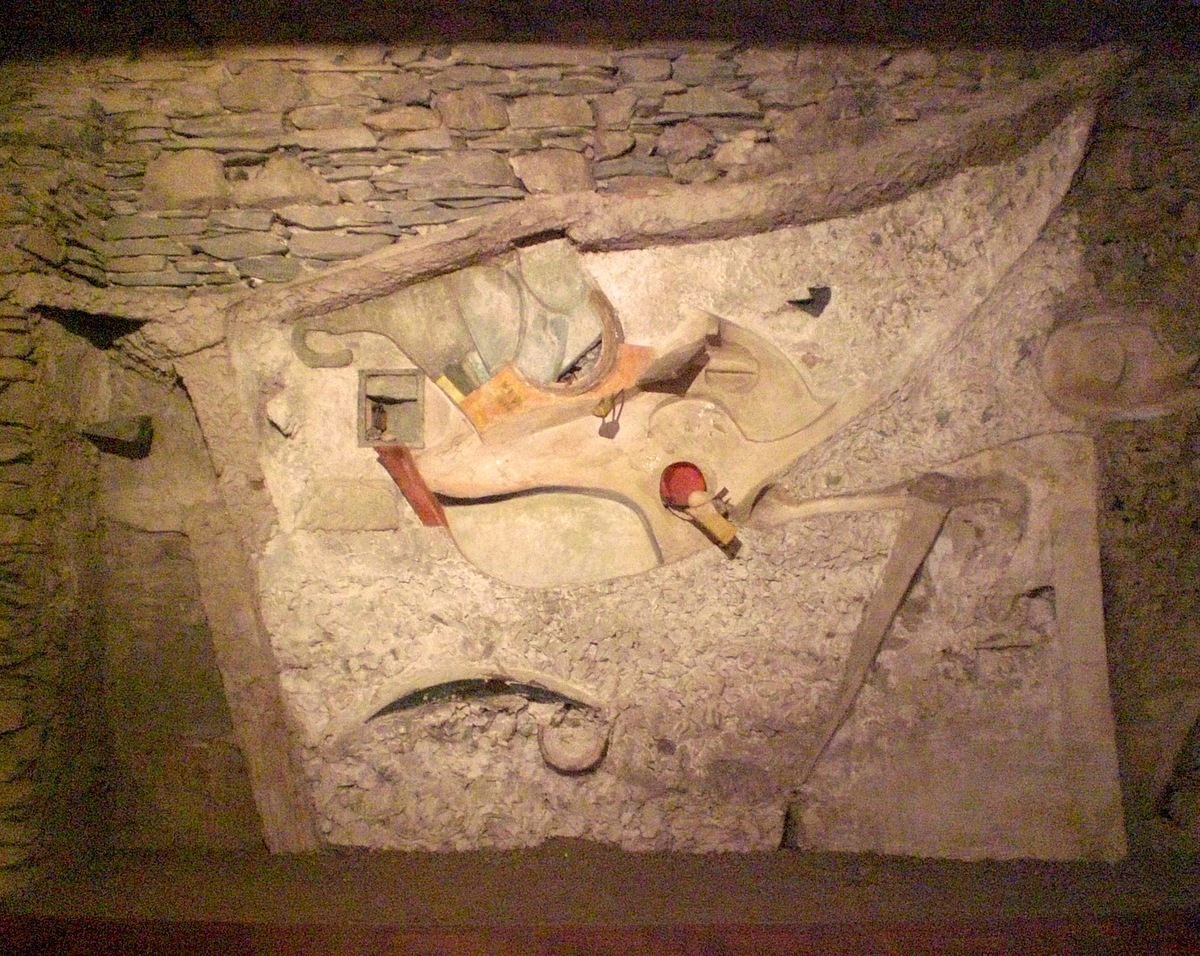
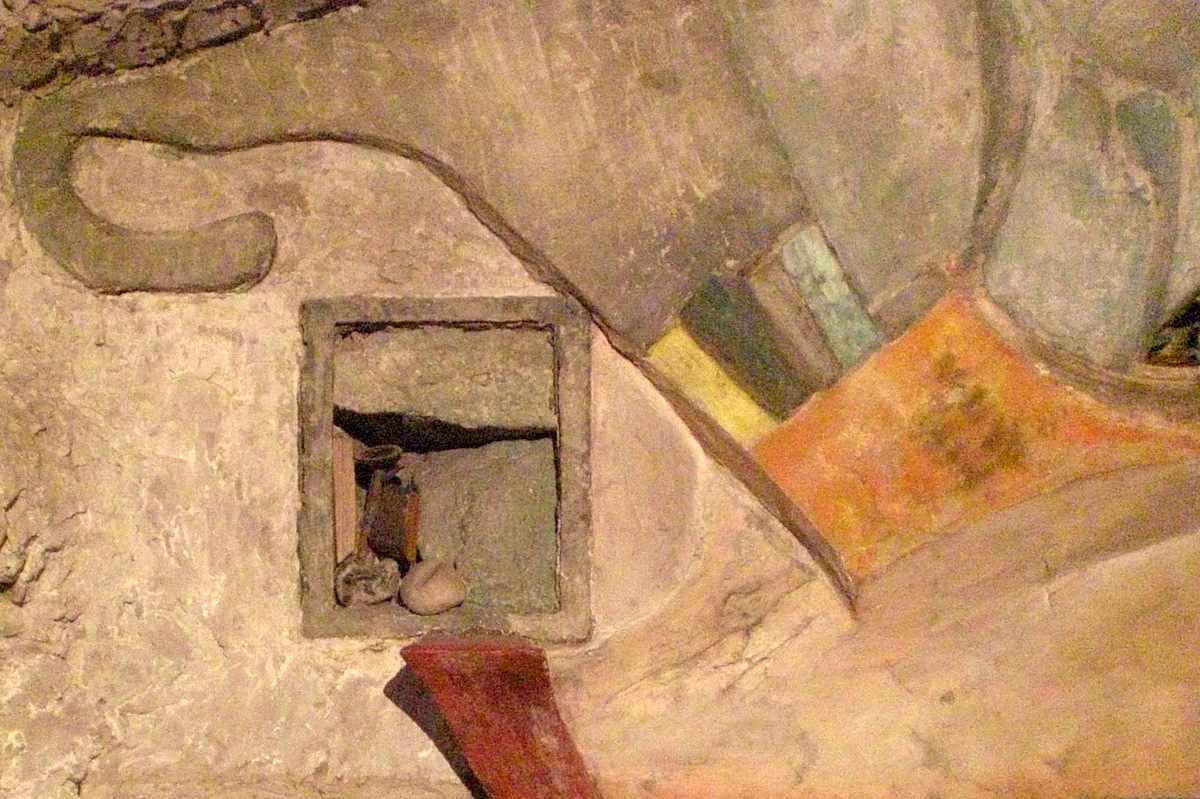
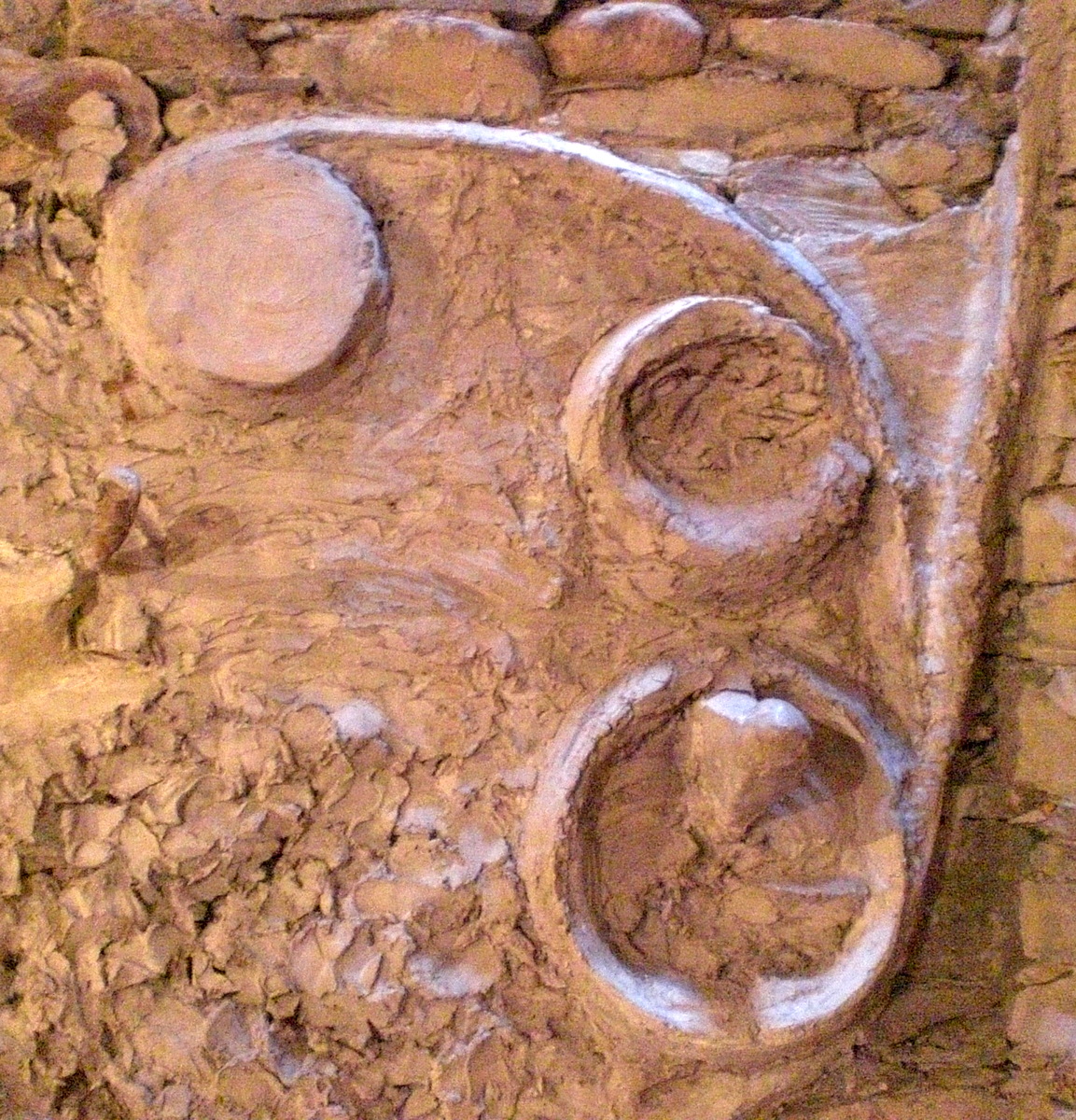
The Hatton Gallery has on display, as a permanent installation, the Merzbarn Wall which was part of the original barn construction at Elterwater. The Wall was unfinished when Schwitters died in 1948 and in 1965, after lengthy discussions about the barn’s future, the Wall was given to Newcastle University who undertook its removal, restoration and preservation. The Merzbarn was based on Schwitter’s idea of collage, in which found items are incorporated into an art work. Schwitters applied a rough layer of decorator’s plaster and painted over various found objects, giving the three-dimensional collage an abstract quality. The items incorporated into the wall include:

A slate log splitter
A small metal window frame
The rose of a child’s watering can
Twigs
Part of the rim of a cartwheel
A china egg
A section of guttering
Part of an oval gold mirror frame
A metal grid
A rubber ball
Stones from Langdale Beck
Some Gentians – which have now disappeared

Asked what the Merzbarn Wall meant, Schwitters replied: “all it is, is form and colour, just form and colour”.

The Merz Barn, 1947
The Merz Barn, 1947 (Postcard)
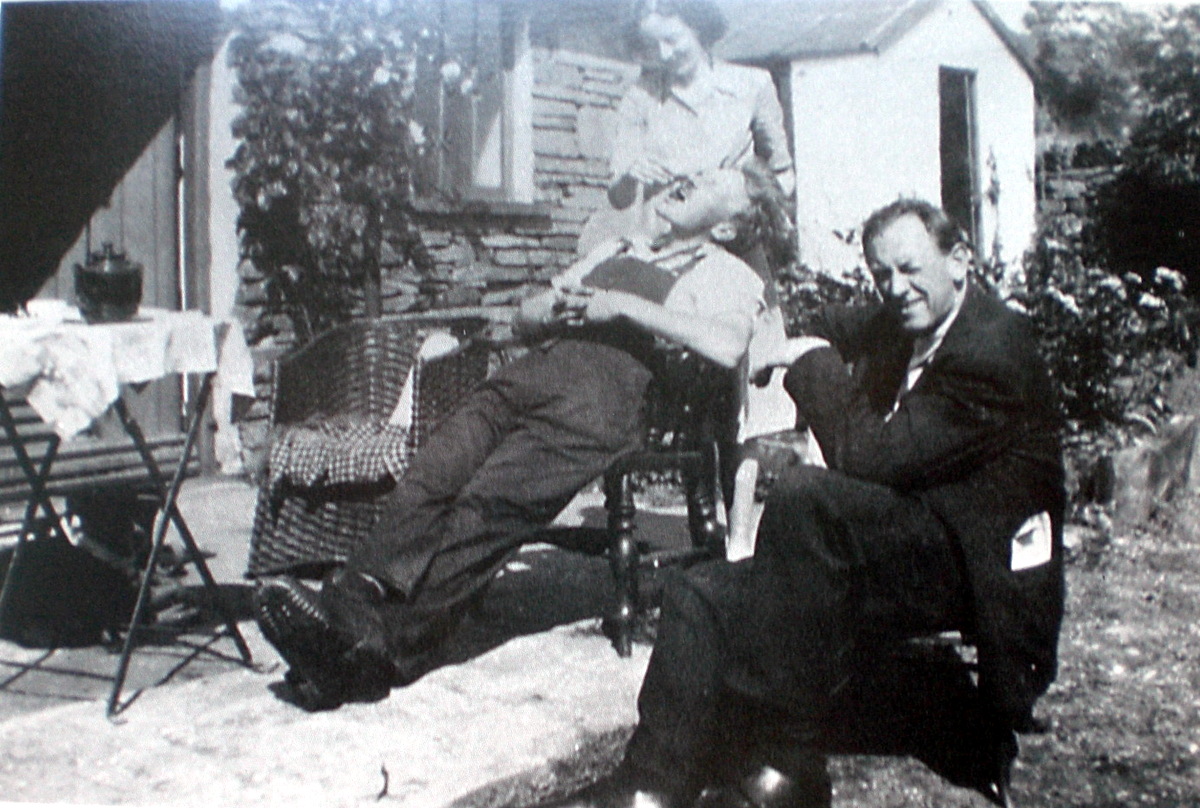
Schwitters on his 60th Birthday, 20th June 1947 (Postcard)

.

Merzbau – the creation of environments which use the forms and even debris from local places to create a new environment. Initially in the form of assemblages, Schwitters developed the human scale environments which he called Merzbau.

.

Wall 5
The Merzbarn Wall, Hatton Gallery Newcastle
Wall 2
The Merzbarn Wall – Detail I
Wall 4
The Merzbarn Wall, Detail II

.

.

.

.

.

.


Wall 1
The Merzbarn Wall – Detail III

.

IV

Kittiwakes on the Tyne

kittiwakes_on_rock_470x312
(c) BBC

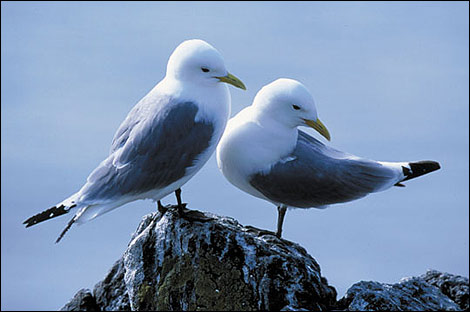
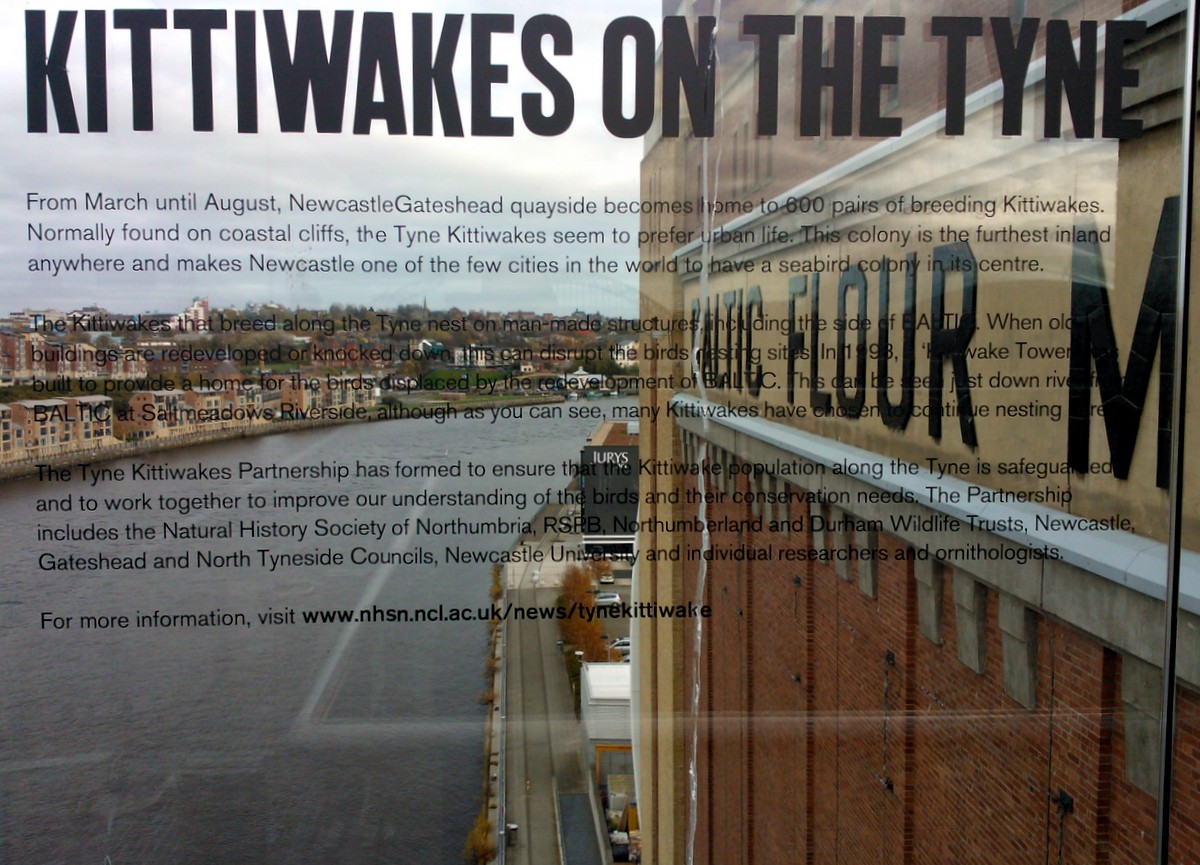
From March until August, Newcastle/Gateshead quayside becomes home to around 600 pairs of breeding Kittiwakes. Normally found on coastal cliffs, the Tyne Kittiwakes clearly prefer the narrow ledges of the Tyne bridges. The Kittiwake colony is the furthest inland anywhere in the world and makes Newcastle one of the few cities to have a seabird colony in its centre.

There are no Kittiwakes to be observed on this visit as they will be out soaring on Atlantic winds over the winter.  Some will travel as far as Canada and Greenland. However, it is comforting to know that come Spring, they will once again hear the unheard pulse of the city guiding them back to their breeding grounds on the bridges of the Tyne.

WP_000394

.

V

The Bigg Market

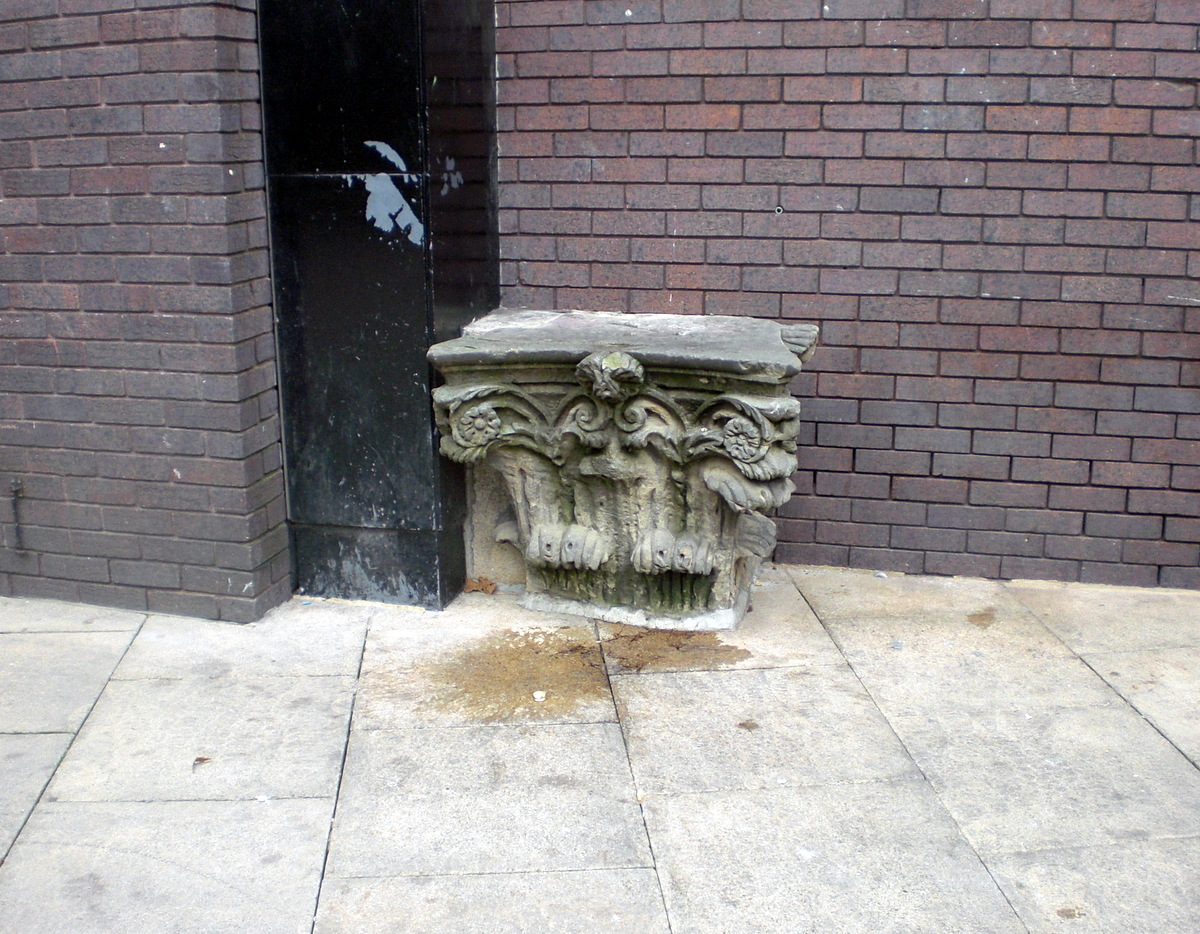
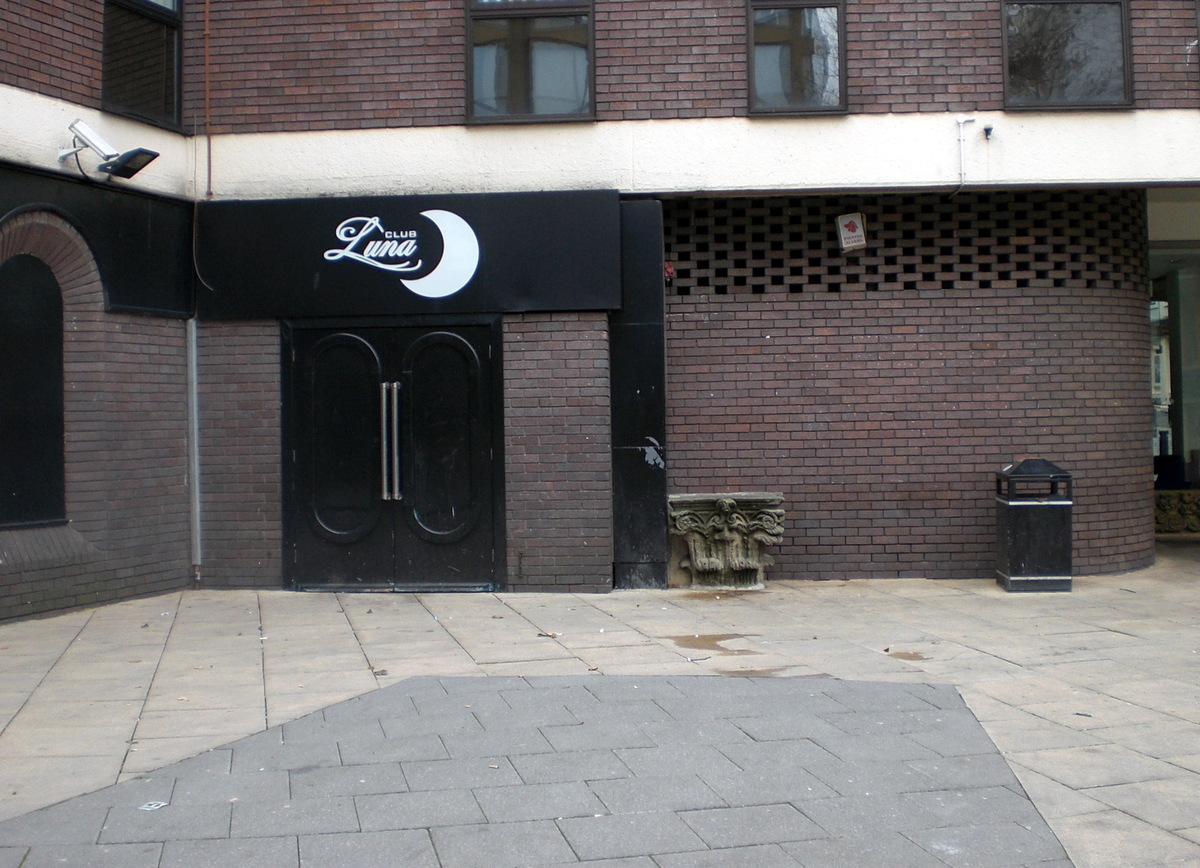
A lonely carved stone huddles unceremoniously in the Bigg market. The elegance and grace of the craftsmanship still evident and contrasted against the utilitarian tardis of the neighbouring, municipal rubbish bin. The stone, in its displaced environment, is now likely to be a seated sanctuary for the nocturnal fag smokers taking a breather from Club Luna next door. A silent witness to the human stains from last nights excess dried hard against the pavement.

Bigg Market

.

.

Bigg Market 2

.

VI

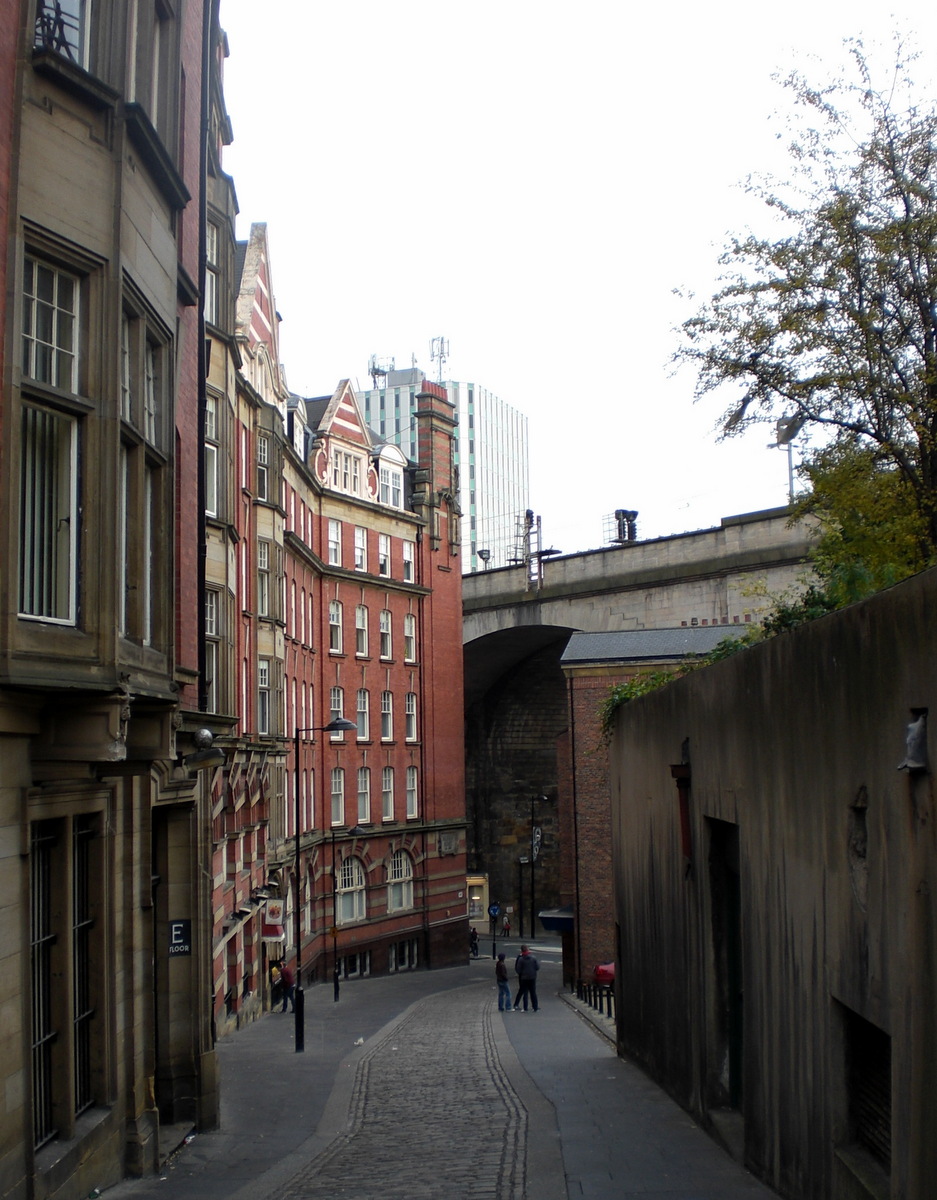
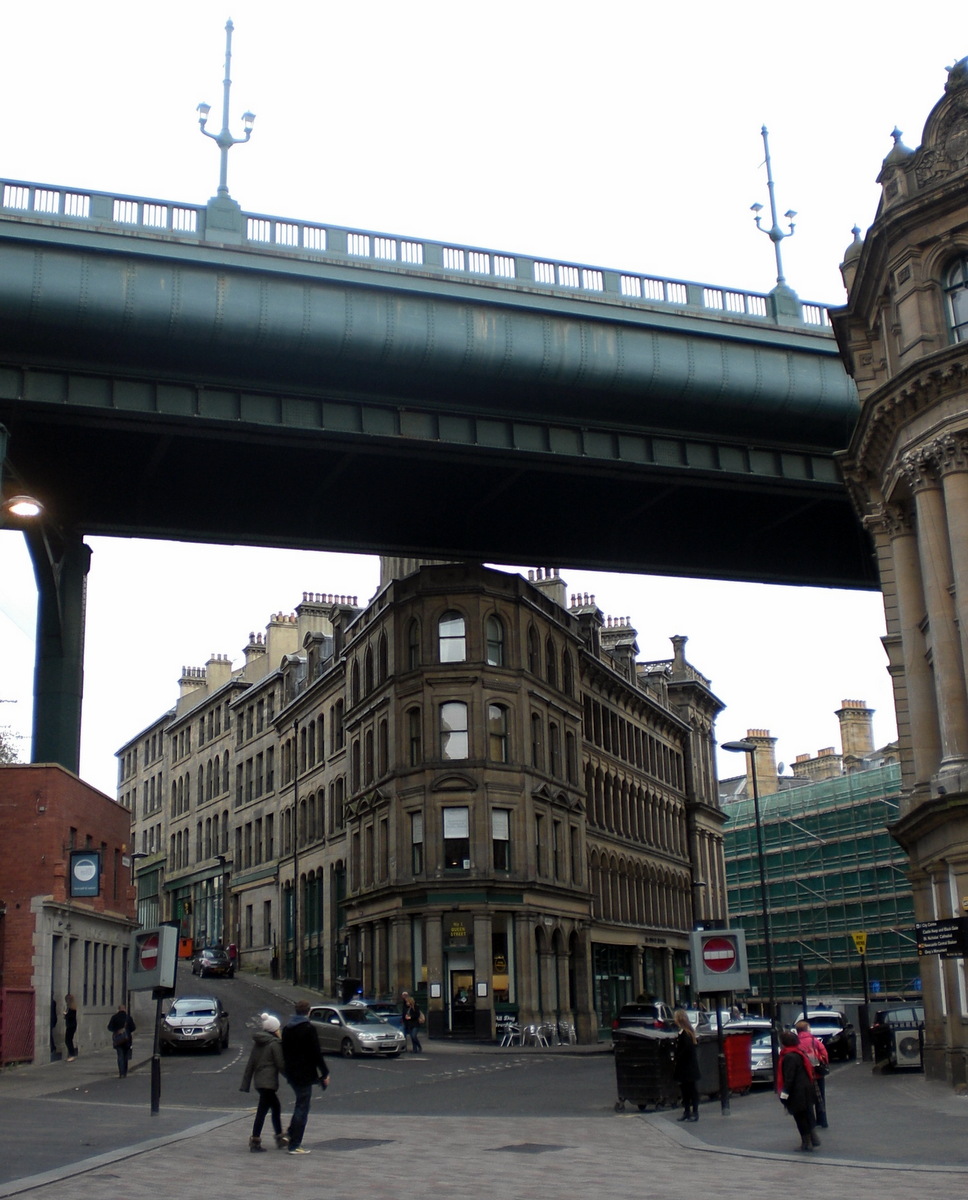
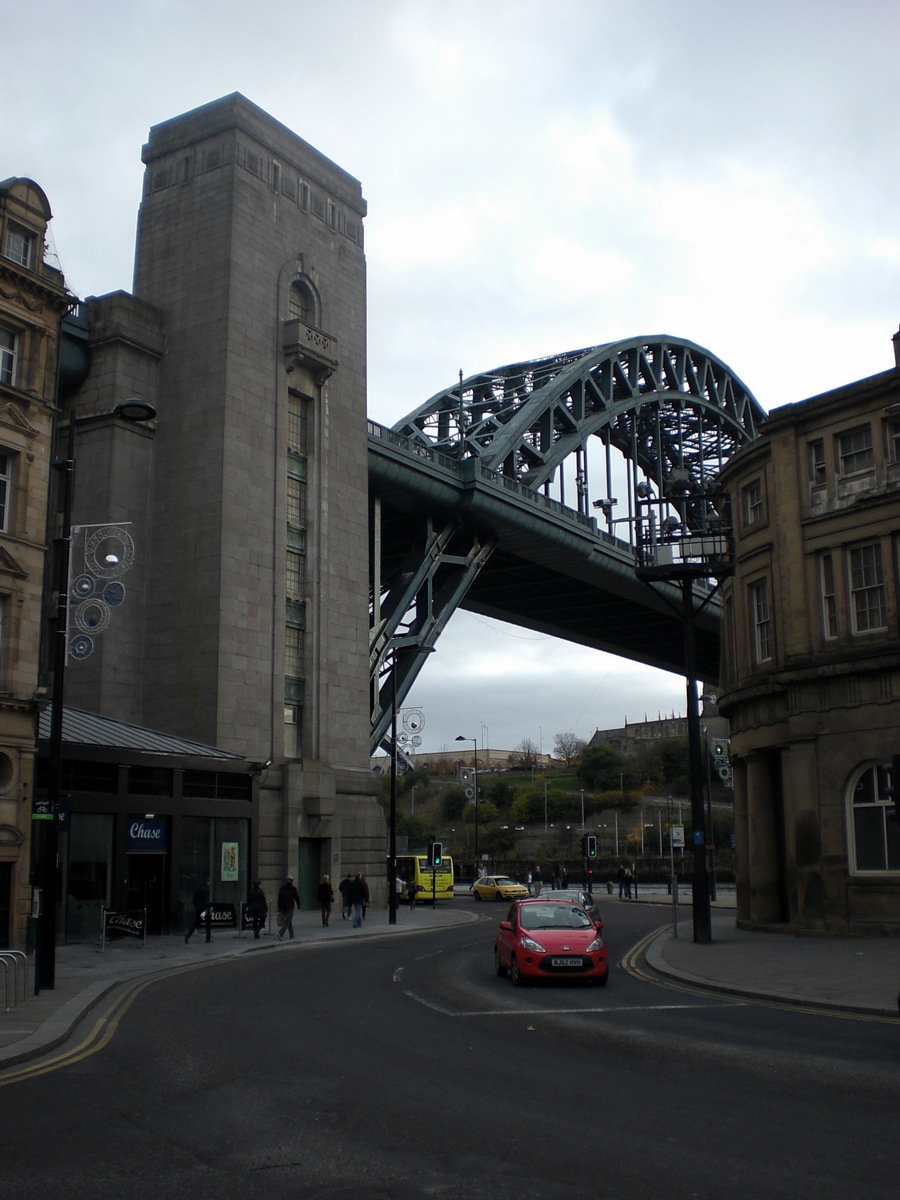
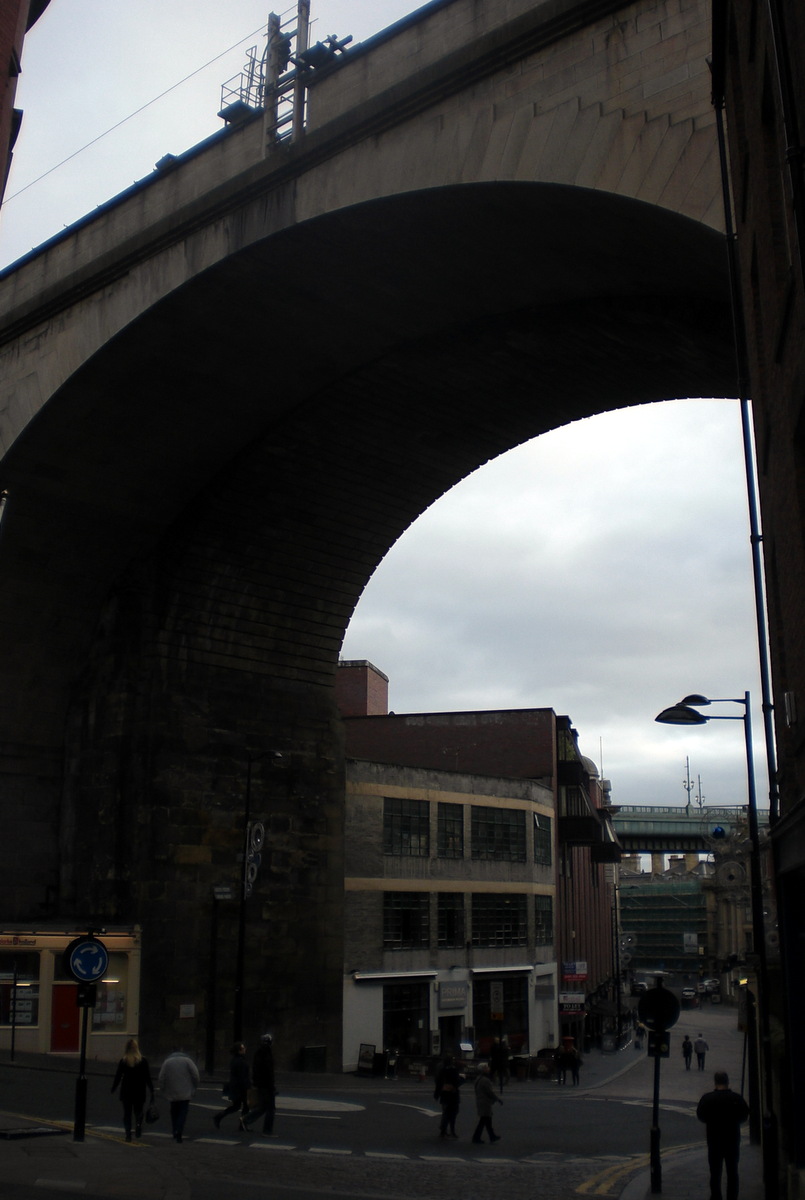
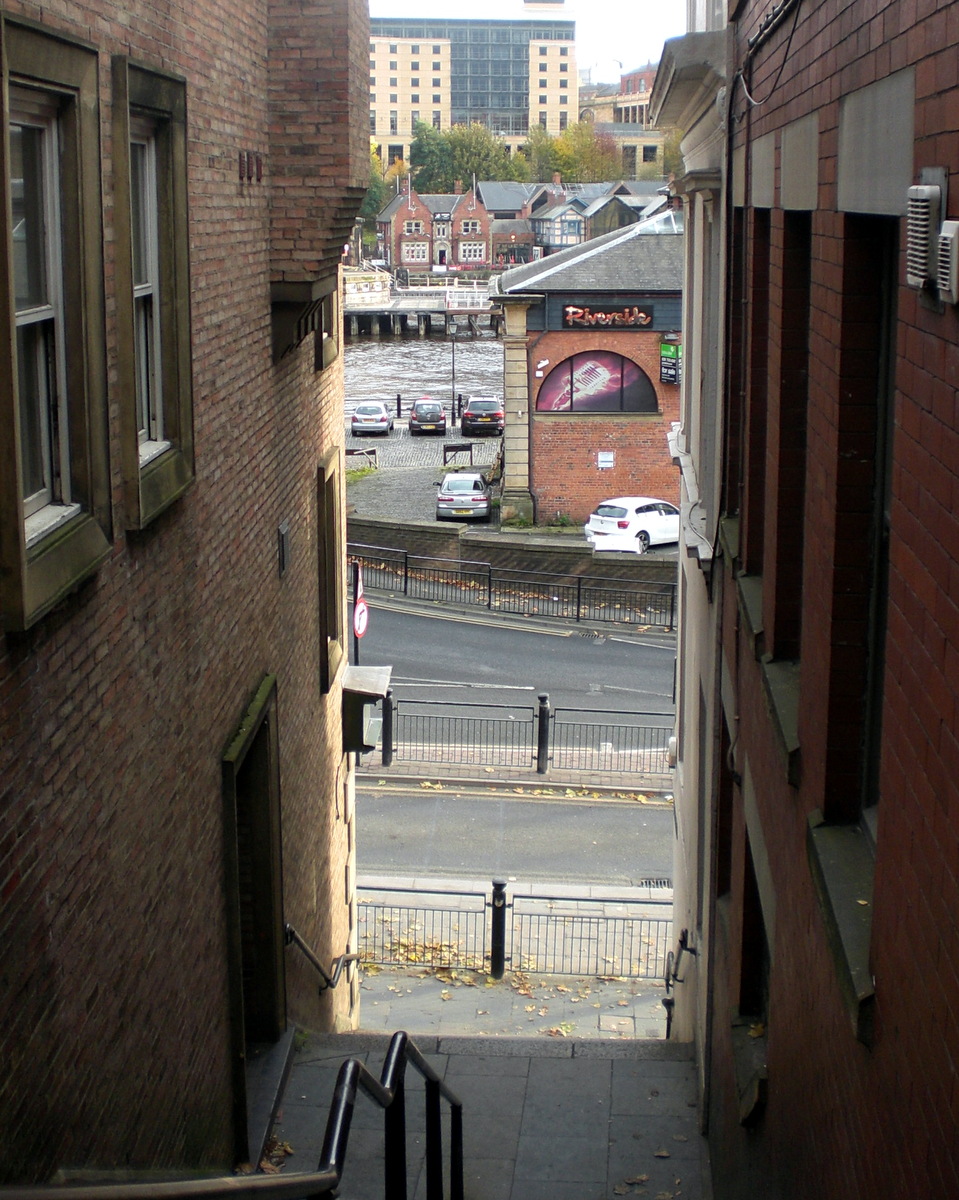
A steampunk kind of city.  A collision of multi-level curves and cobbles as retro-futuristic bridges cut across the sky.

Curves and Cobbles

.

CIMG2965

.

CIMG2966

.

CIMG2963

.

VII

Saturday at 12.15pm

Under a shifting sky

a chorus of angels

. . . . . . . . . . . . . . . .    – of the North

sing to the wind.

.

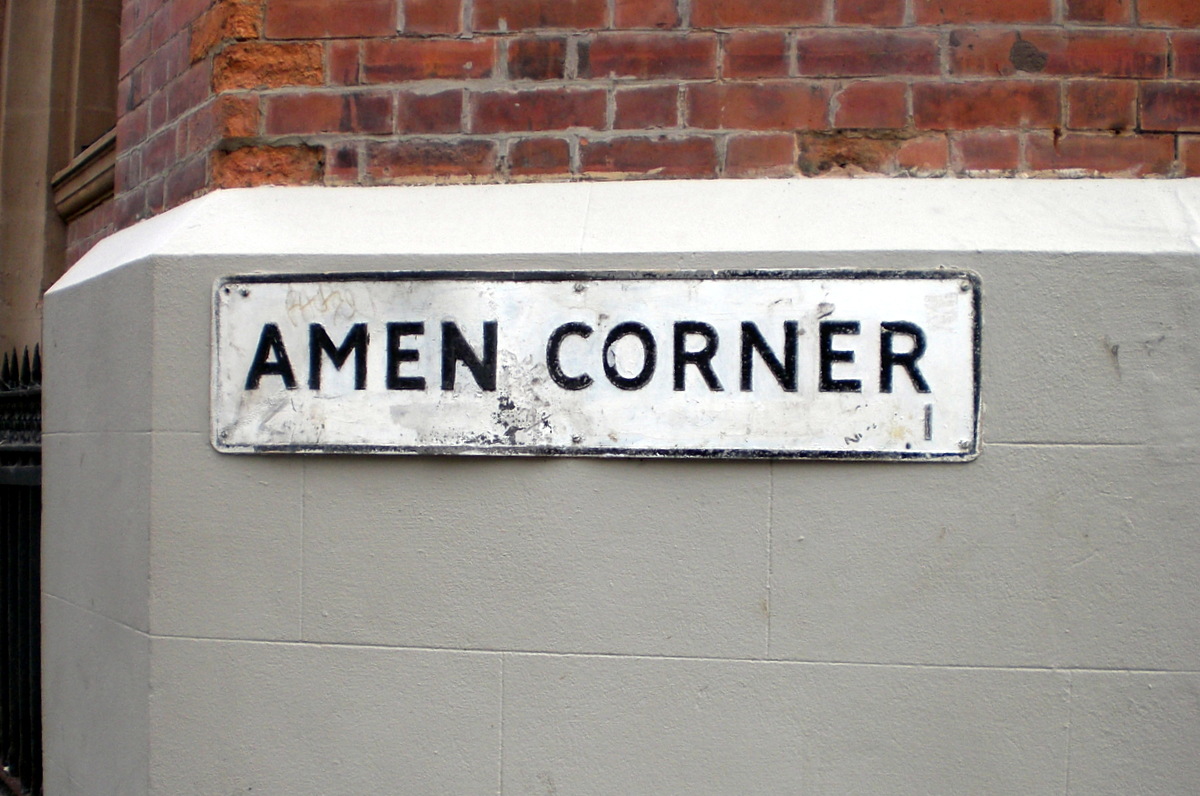
Cathedral bells

flood the city

sound spilling

around

Amen Corner.

.

Amen Corner

.

VIII

.

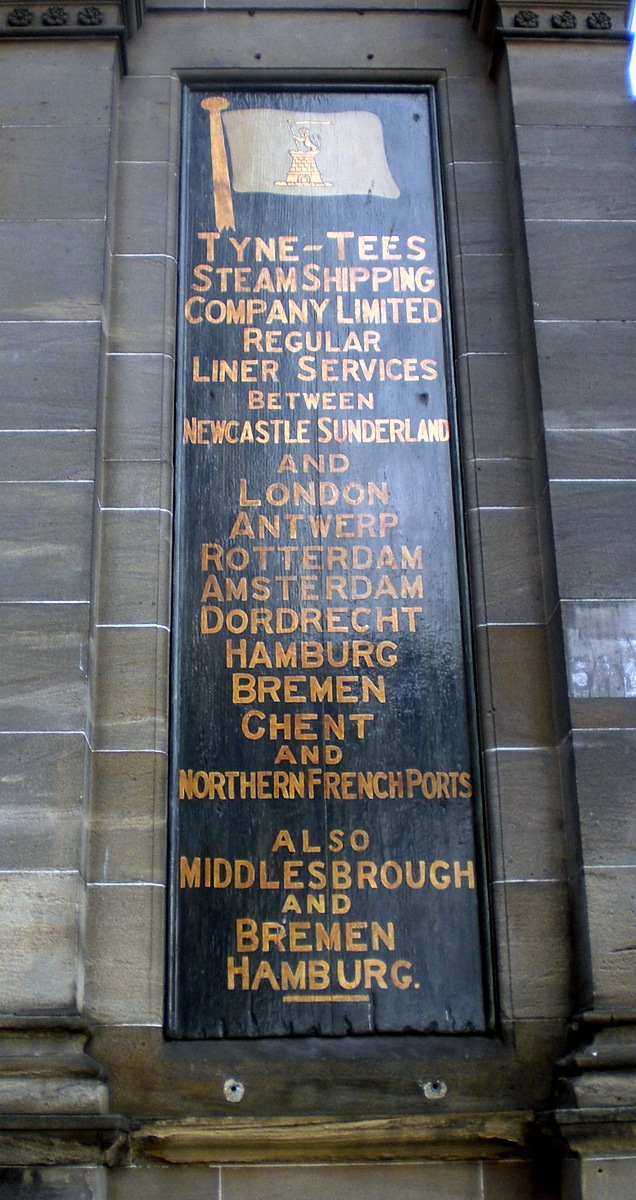
Powered by steam: the tendrils that connect the local into webs of possibilities and extended horizons.  Encounters with the other. Creating an expansive map.

.

Outwards

.

IX

The curious case of the virtual building at Trinity Chare on 57 Quayside. Did this building once exist here? It would appear improbable.

.

Virtual 1

.

Explore behind the facade of the spectacle:

.

.

Behind the Virtual
Behind the Virtual

.

X

Herbs in the City

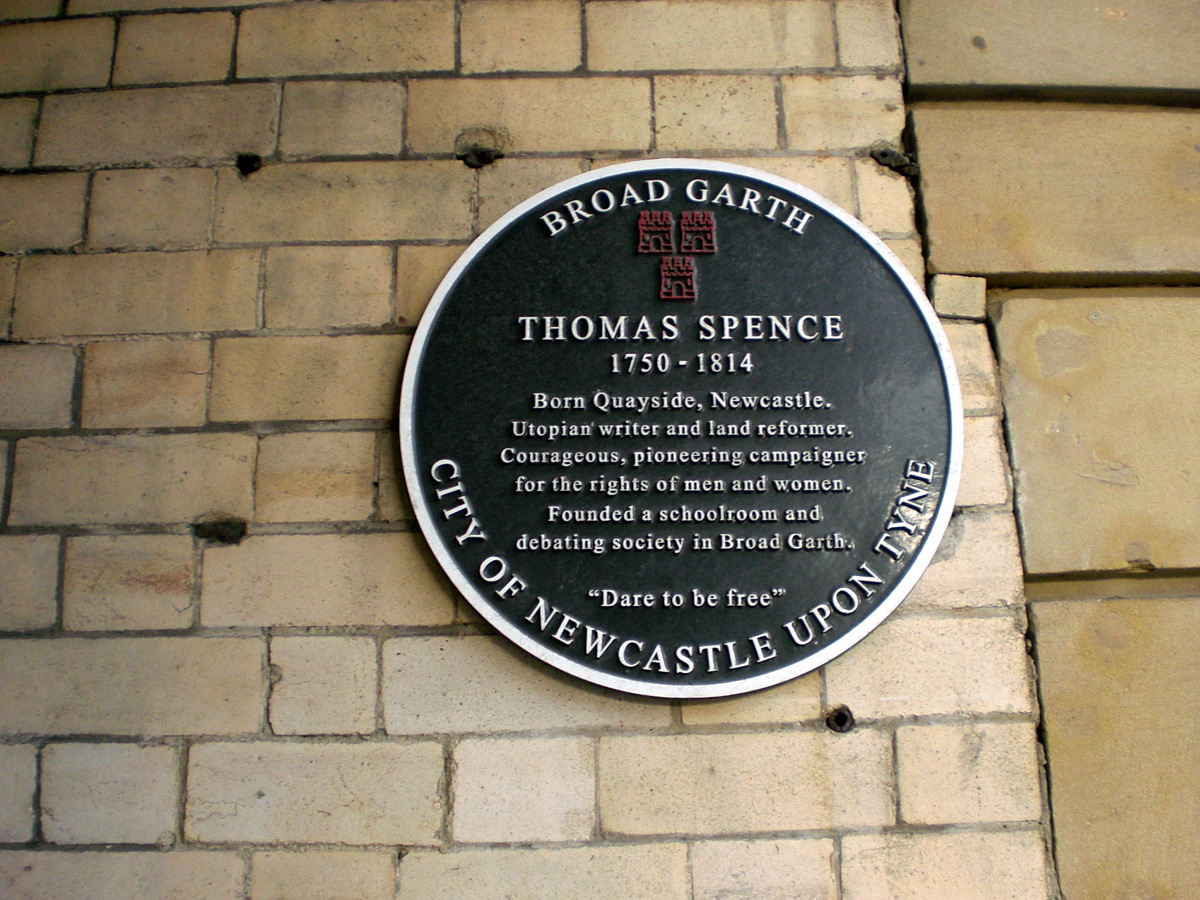
Broad Garth
Broad Garth

Botany scrutinised at the bottom of walls

asphalt’s rust

imaginable palpation raises them to the dignity of

plants

emanated from the earth

to the condition of contention

 – Raymond Queneau – from Hitting the Streets

.

XI

.

“Dare to be Free”

.

CIMG2976

.

XII

Turning from the river, the narrow vennel (chare?) of Watergate frames Bessie Surtees House. All wobbly frames of black and white like a hand drawn illustration  This was the scene on 18th December 1772 when a young, 17-year-old Bessie, daughter of a rich banker, climbed out of a window to elope with her lover to Scotland. It was considered such a major scandal at the time that people would come to stand and stare at the house.

I stand and stare at the house before learning of this story.

CIMG2988

.

XIII

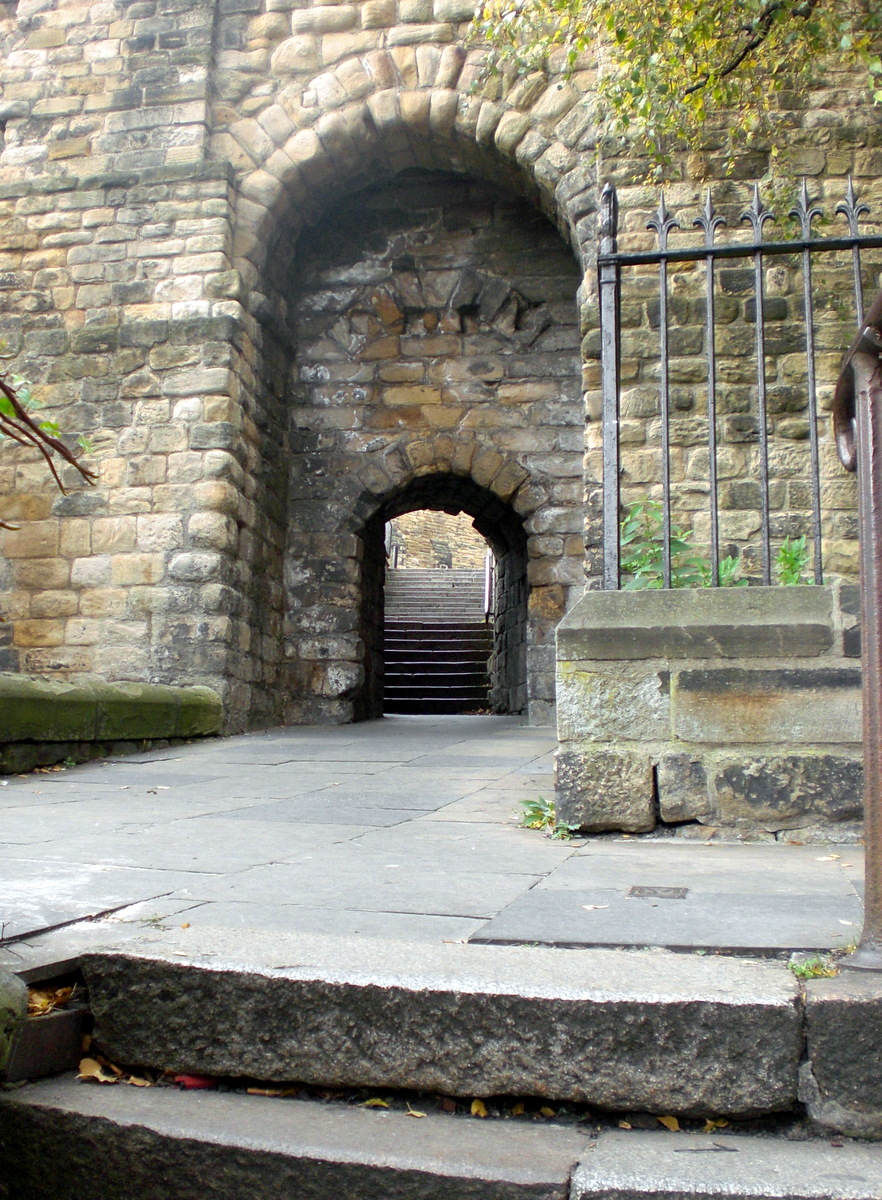
A shift of level.  With a final look back to the river, a chinese box of stairwells unfold to lead up towards the (New) Castle Keep and the Black Gate.

CIMG2992
Looking back to the river

CIMG2993

.

So he resumed his walk, but the way proved long. For the street he was in … did not lead up to the Castle hill, it only made towards it and then, as if deliberately, turned aside, and though it did not lead away from the Castle it got no nearer to it either.

Franz Kafka The Castle

.

XIV

.

CIMG2995

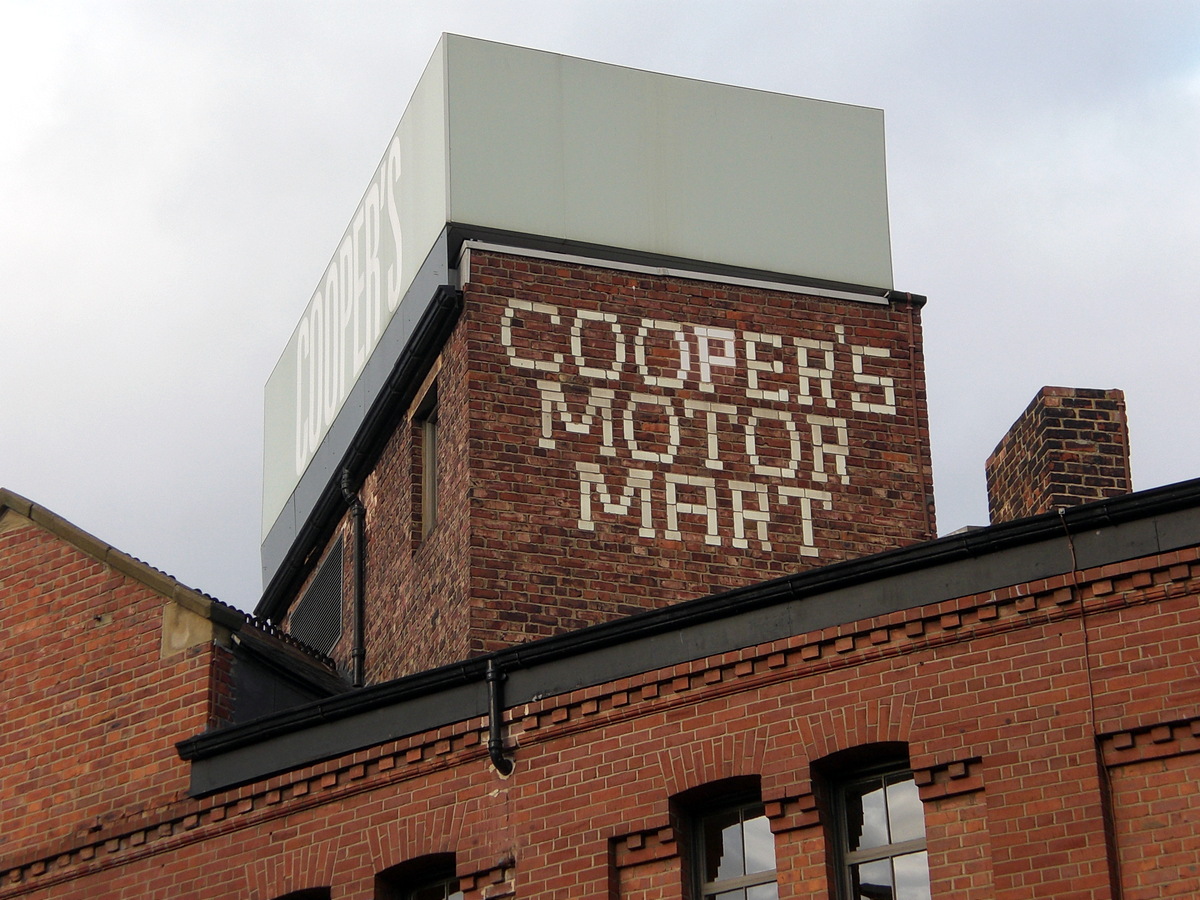
A very well-preserved ghost sign built into the brickwork. It can always seen on any train journey that passes through Newcastle.

The building is a is a rare surviving witness to the replacement of the horse by the motor car. Originally built in 1897 as a horse, carriage and cycle auction room it was essentially a showroom for horse-drawn carriages. By the 1920s the future prospects of horse-drawn transport were pretty bleak so the building was adapted to serve as one of the first motor car garages and dealerships.  I subsequently find out that the building stands on top of, part of the buried remains, of Hadrian’s Wall.

Layered histories converse in the topography of place.

.

XV

A fixed departure train ticket means that time is running short so no time to look for a building that I have heard so much about: The Literary and Philosophical Society of Newcastle Upon Tyne or The Lit & Phil as it appears to be known locally.  Serendipity intervenes and I stumble across the building very close to the station only to discover a one day book sale in progress. Twenty minutes to browse before the train leaves. I trust the space and know that the books will call out.  They do. It all works and it’s a short walk to the station to catch the train.

CIMG2996

.

CIMG3000

.

XVI

As the train heads northwards, I nod to Coopers Motor Mart. No longer simply a sign from a train window but time stacked in layers as a material place which the act of walking has ‘made real’.

A trace of footsteps are left behind. One more scratch upon the city streets and a drift through one version of Newcastle is assembled in memory. A small fragment of fragments. The city, carried within.

Merzbau – the creation of environments which use the forms and even debris from local places to create a new environment.

Now Playing: Tom Verlaine – Warm and Cool

References

The Apollo Pavillion

The Hatton Gallery, University of Newcastle.

Kurt Schwitters and the Merzbarn Wall

The Wall, the harsh building of the Merzbarn


Silverburn: in the flux and flow of place

CIMG2422

We are walking out, along the shoreline, from Leven towards Lundin Links. Coastal energies are in full flow, our field of vision filled with an excess of sand, sea and sky.

CIMG2782

In the distance, an intensity of white light appears to drift in the Firth of Forth like a frosted iceberg. The Bass Rock. Invisible threads loop in the conical forms of Berwick Law and the sacred hill of Largo Law. Three nodes of a triangle that collapse North and South; earth and water; land and sky. An energy field that pulls us into an expanded world. Bardic bird yells, brine on the tongue and buffeting sea breezes whip up folding white breakers that fizz over the sand.

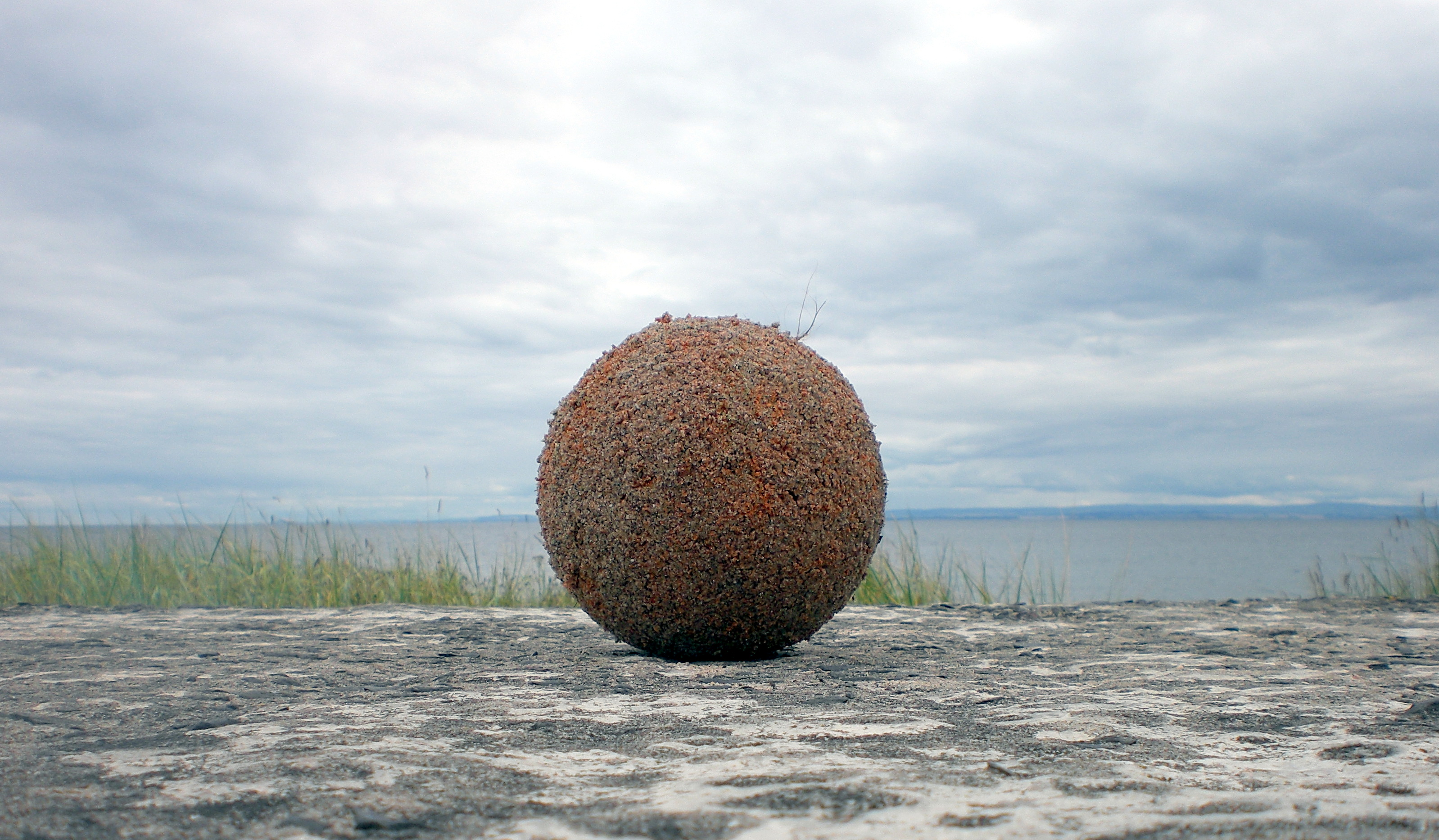
We soon encounter the talisman lying in the dunes. It’s protective, synthetic membrane, perished long ago by wind and water.  Now crusted with sand and water-logged, it has transmuted into a living entity. Green tendrils sprout from the surface. It appears to be an auspicious omen, a process of alchemy worthy of the legendary Wizard of Balwearie, Michael Scot, (1175 – c.1232), reputed to have form in these parts.

CIMG2621

Local legend has it that Scot summoned his three imp familiars, Prig, Prim and Pricker to Largo Law with a view to levelling it. A sort of job creation scheme for hyper-active familiars. As they began to dig, Scot had a change of plan and the imps were hurriedly despatched to Kirkcaldy to make ropes out of sand. This was to assist Scot in his showdown with the devil on Kirkcaldy beach.  Scot appears to have triumphed in the encounter as evidenced by a local saying: “The devil’s dead and buried in Kirkcaldy”.  As a result of the ‘Kirkcaldy interruption’, only a single shovelful of earth was thrown from Largo Law to create the cairn of Norrie’s Law at the wonderfully named farm of Baldastard.  There are also local folk tales about an abundant goldmine that supposedly exists underneath Largo Law and that sheep have returned from grazing on the foothills with golden fleeces.

CIMG2780
Giant stepping-stones. Largo Law ahead.

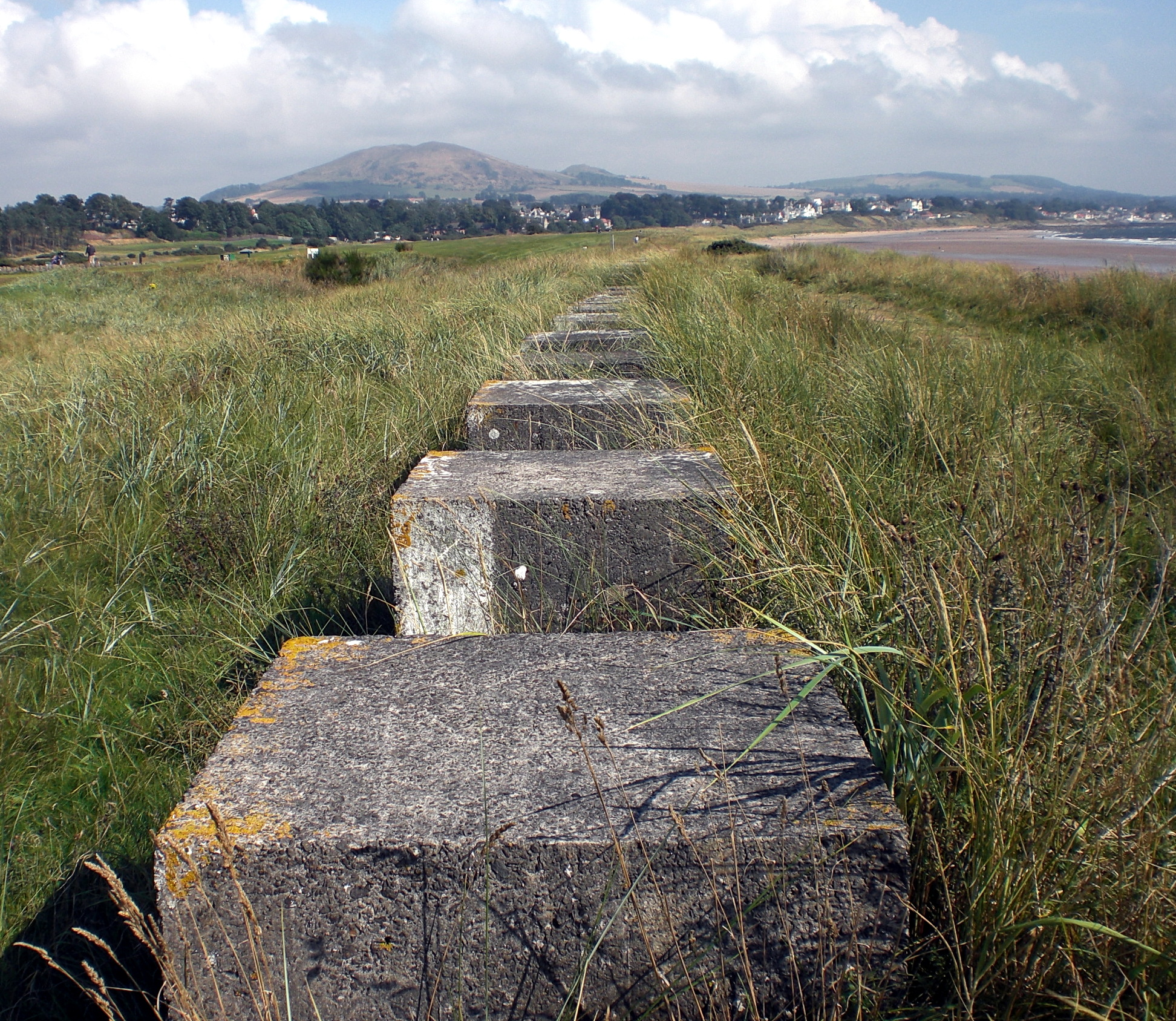
Huge concrete blocks line this part of the coast like giant stepping-stones.  Could we step all the way to Largo Law?  The blocks were part of the necklace of coastal defences installed during WW2 and were designed to frustrate any German tank invasion from the sea. The blocks were constructed and laid by the Polish army who had several divisions based in Fife during WW2.  Today, the original purpose of the blocks may be somewhat forgotten but their solidity and mass provide a pleasing sculptural rhythm to the foreshore.   

One of the blocks serves as a makeshift altar to revere the action of the natural world on our talismanic old football. A process of transmutation – of rebirth and growth.

We turn inland from the coast to take the path, called Mile Dyke, that heads between the links golf courses.  This will take us to Silverburn and we can now feel its connection to Leven and the coast.  S  i  l  v  e  r  –  b  u  r  n  is a name to roll around the mouth and along with golden fleeces and transmuted footballs we can sense that we are truly in an alchemical landscape. 

CIMG2756

Silverburn – a Brief History

Silverburn is the former estate of The Russell family who were owners of the Tullis Russell paper making business.  The land was originally part of the Barony of Durie and was leased to Mr David Russell by Charles Maitland Christie of Durie in 1854.  Arthur Russell purchased the land in 1866 and rebuilt Silverburn House. A dower house known as Corriemar was also built and a flax mill was established on the site. 

David Russell died in 1906. His son, (also named David) and who later became Sir David Russell was born at Silverburn in 1872 and in 1912 married and went to live in Aithernie House. He returned to Silverburn in 1929. Sir David had a great interest in trees and many were planted including some rare and unusual species which continue to thrive today.

The flax mill closed around 1930.

In 1973, Sir David Russell’s grandson, Major Russell (Head of Tullis Russell Paperworks) gifted the houses and grounds to Leven Town Council, but also stipulated through the National Trust for Scotland that the “subjects should remain forever as a quiet area used for the benefit of the public in general and the people of Leven in particular for nature trails, quiet parkland and organised camping”. In the mid to late 1980s, the former Kirkcaldy District Council undertook a Job Creation Programme to reinstate Silverburn House for use as a Residential Centre for groups to use such as scouts and guides; school parties, caravan rallies etc. A stand alone wing to the rear of the House was used by crafters to make and show their wares throughout the Summer and Christmas/New Year periods.

Between 1990 and 1999, an average of 20,000 + people per year visited Silverburn. Its main attraction was the former “Mini-Farm” which had on show a wide range of domestic and exotic animals, birds, reptiles and insects.  However, following a Council policy decision in 2002, to cease operating Animal Centres across Fife there have been very few visitors to Silverburn, other than local people. Financial constraints have also led to year-on-year reductions in revenue expenditure with no meaningful capital investment in the Park.

Over the years, various ideas have been proposed for Silverburn including the setting up of a Scottish Music/Arts and Craft Centre and redevelopment as a crematorium.  None of these have come to fruition.

However, work is presently underway by Fife Employment Access Trust (“FEAT”) in collaboration with the local community, agencies and local authorities in the Levenmouth area on a project entitled ‘Heart Mind Soul Silverburn’. This aim of this initiative is to secure a long-term future for the park and to promote wellbeing and employment opportunities. 

We have visited Silverburn a number of times over the past few months.  Drifting around the mixed woodland trails and environs of the estate at different times, on different days and in different weather conditions.  Most apparent is observing and feeling the subtle changes of a thriving natural world; an incipient wildness forever encroaching on the deteriorating materiality of the buildings.  Silverburn is a place highly conducive to the immersive dérive. A locus of past, present and possible. 

The excellent Blacketyside Farm Shop is a wonderful place for sustenance at the start or finish of a Silverburn visit. However, this does means crossing the A915 road which is the main artery into the East Neuk of Fife. The road is a long, straight stretch which can be very busy with vehicles tanking past at high-speed:

wheeeeeeeeeeeeeeeeeeeeeeejjjjjjjjjjjjjjjjjjjggroooooooooooooooooooooooom

mmmmmm oi nnnnnnnnnnnn

nnnnnnnnnnnn oi mmmmmm

mmmmmm oi nnnnnnnnnnnn

wheeeeeeeeeeeeeeeeeeeeeeejjjjjjjjjjjjjjjjjjjggroooooooooooooooooooooooom

Enter Silverburn

Overhead, a charcoal smudged blue, heralds a chorus of rooks riffing off the traffic screech.

CIMG2449CIMG2450

Giant American redwoods stand sentinel, stretching for the sun. “Ambassadors from another time” silently announcing that this may not be your conventional Scottish woodland:

CIMG2770

The redwoods, once seen, leave a mark or create a vision that stay with you always. No one has ever successfully painted or photographed a redwood tree. The feeling they produce is not transferable. From them comes silence and awe. It’s not only their unbelievable stature, nor the color which seems to shift and vary under your eyes, no, they are not like any trees we know, they are ambassadors from another time.

John Steinbeck

N: “do you know you can punch a redwood and it doesn’t hurt your hand?”

Blue melts to green as sunlight showers through the tree canopy, dappling the forest floor. Traffic thrum gradually dissolves in the low lipping burr of the flowing burn.  A sunken path beckons and so our immersion into Silverburn begins. 

CIMG2766 CIMG2752

 Once in the shade, a sprinkling of light and water; a scattering of silver drops:

CIMG2765CIMG2759

A network of wooded paths through and around Silverburn provide ample scope for aimless drifting. The topography is interesting with a long flat elevated plateau where Silverburn House sits which tumbles away quite steeply down to the flax mill with the golf courses and coast beyond.

CIMG2699CIMG2706

Depending which path you take you will soon stumble across one of the ghosts…

Corriemar: The Dower House

CIMG2821

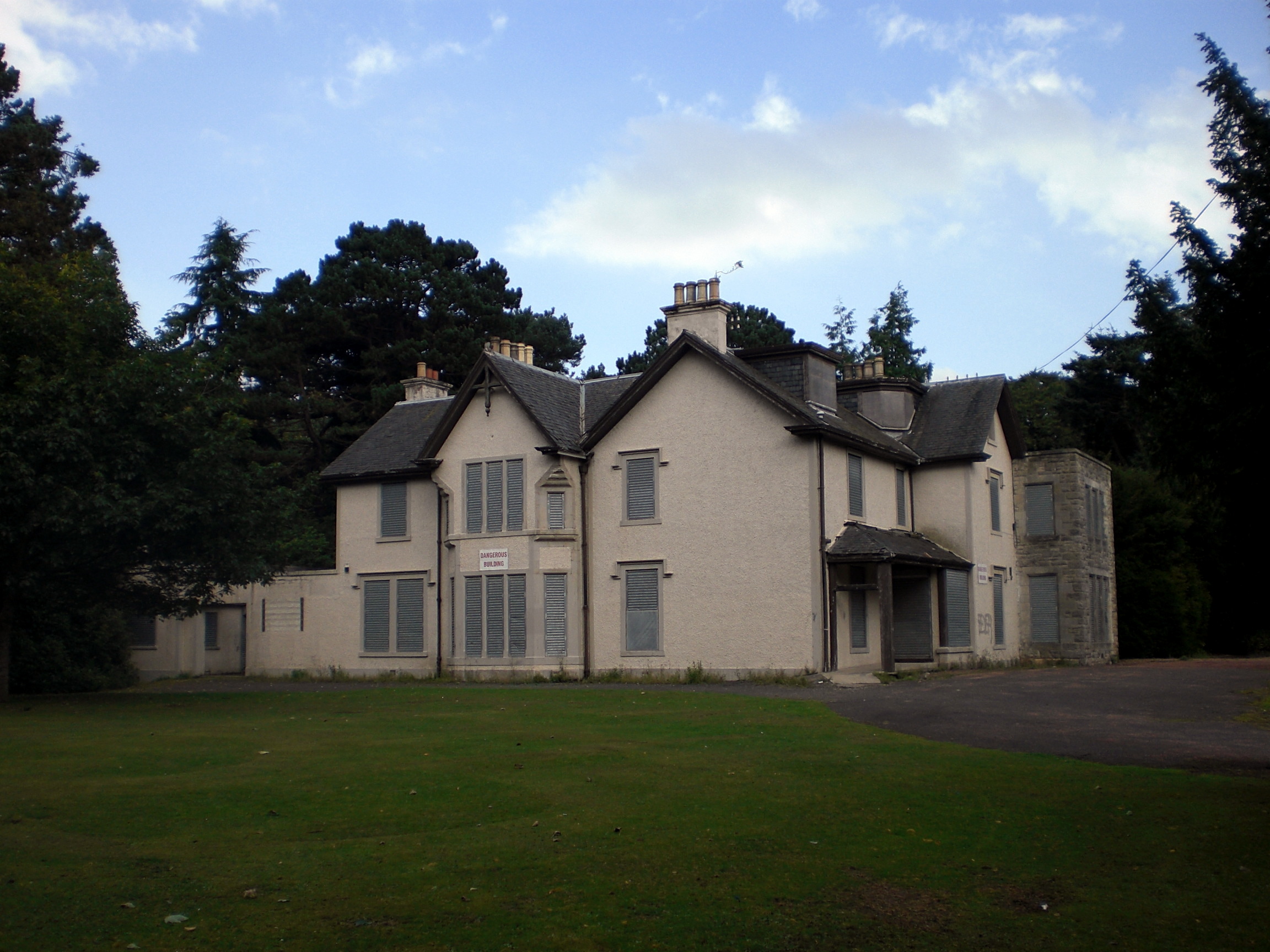
Corriemar is thought to have been the dower house for Silverburn House.  A dower house is usually a moderately large house available for use by the widow (dowager) of the estate-owner.

Corriemar has been vacant since 1970, having previously served as day patient accommodation for Stratheden Hospital or the Fife and Kinross District Asylum as it was formerly known. (Stratheden will be a place-name that resides in the (un)consciousness of many Fifers. My mother used to say that the teenage antics of my brother and I would send her there. In hindsight, I hope that she was only joking. RIP Mum).

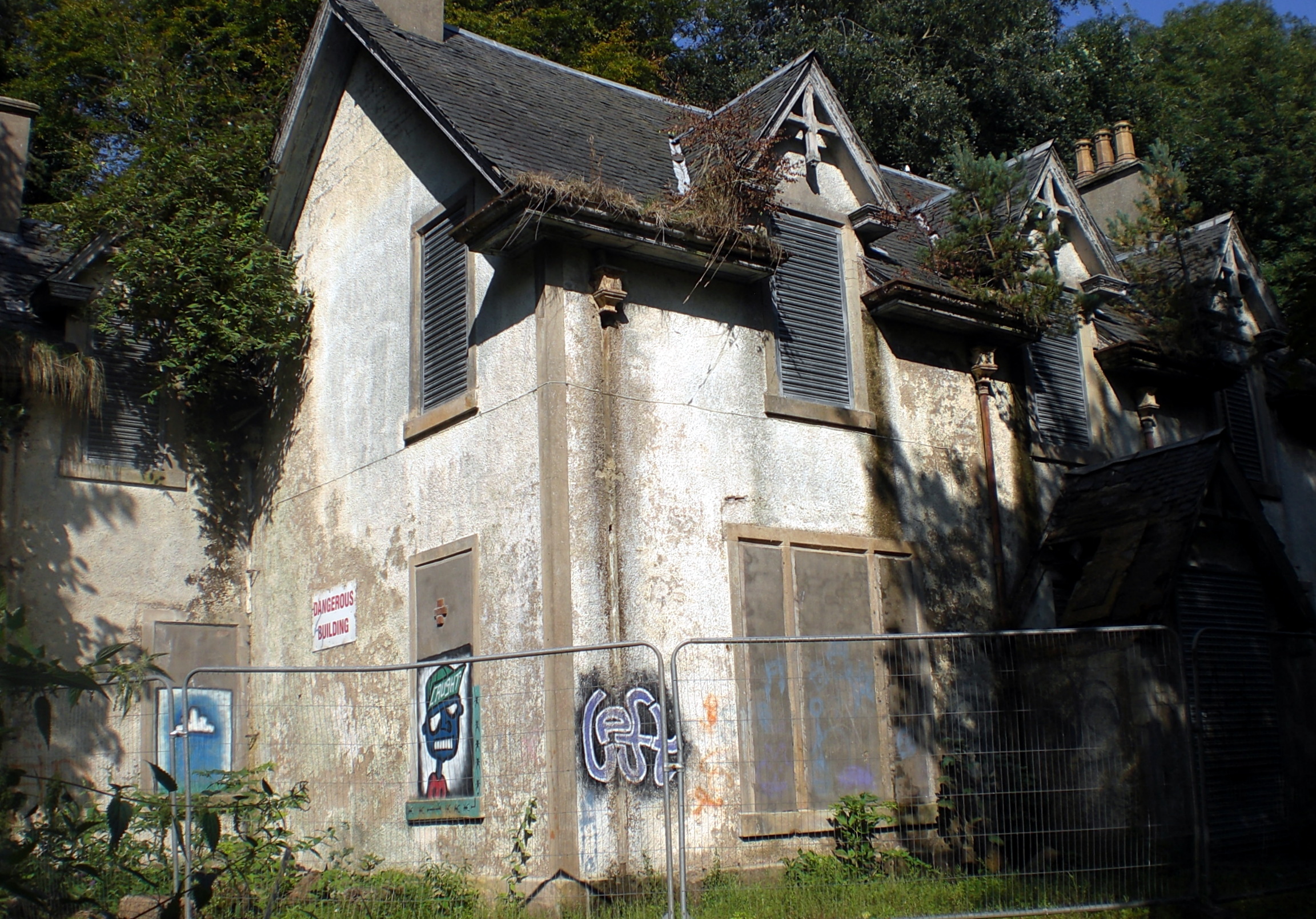
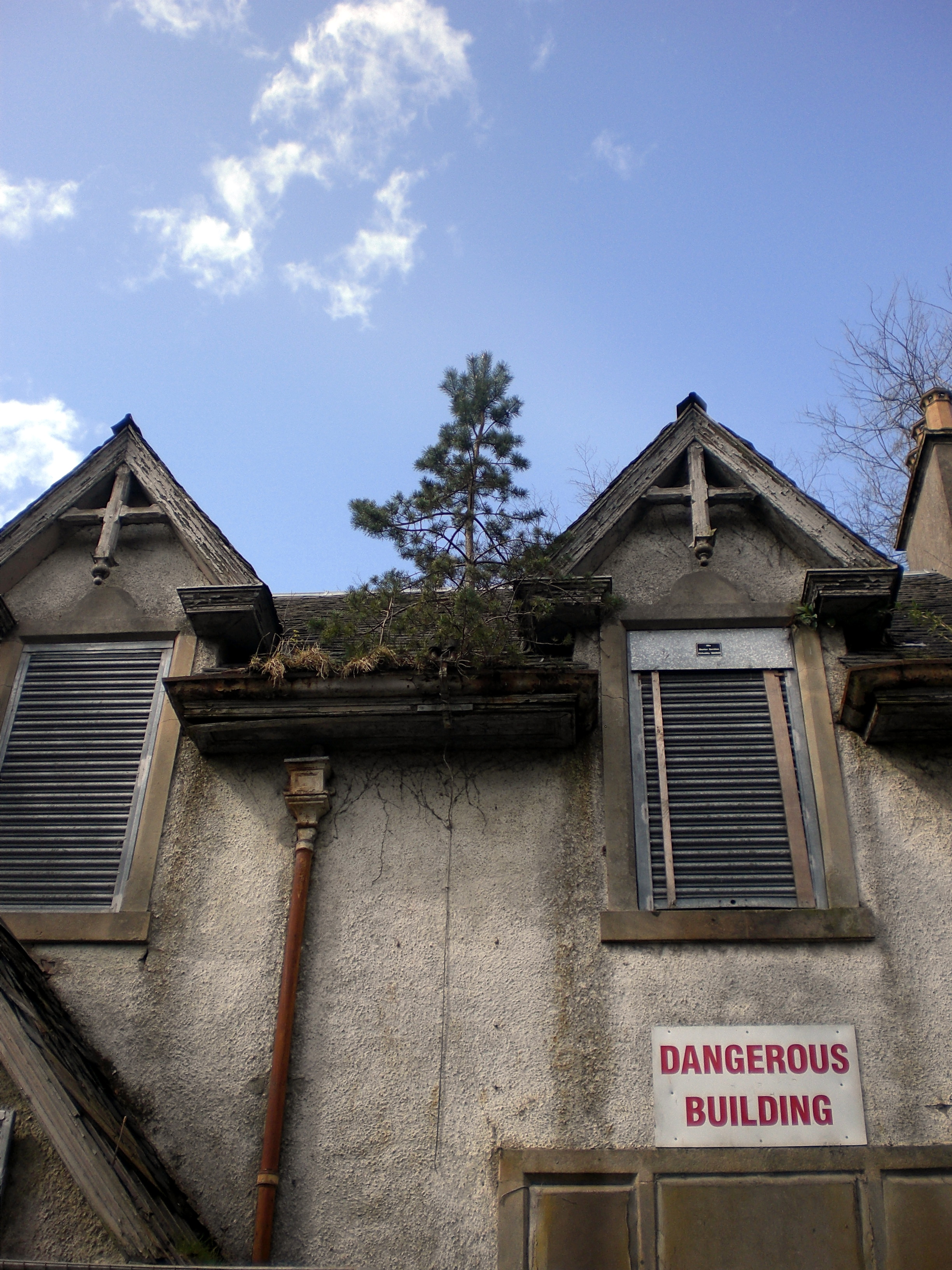
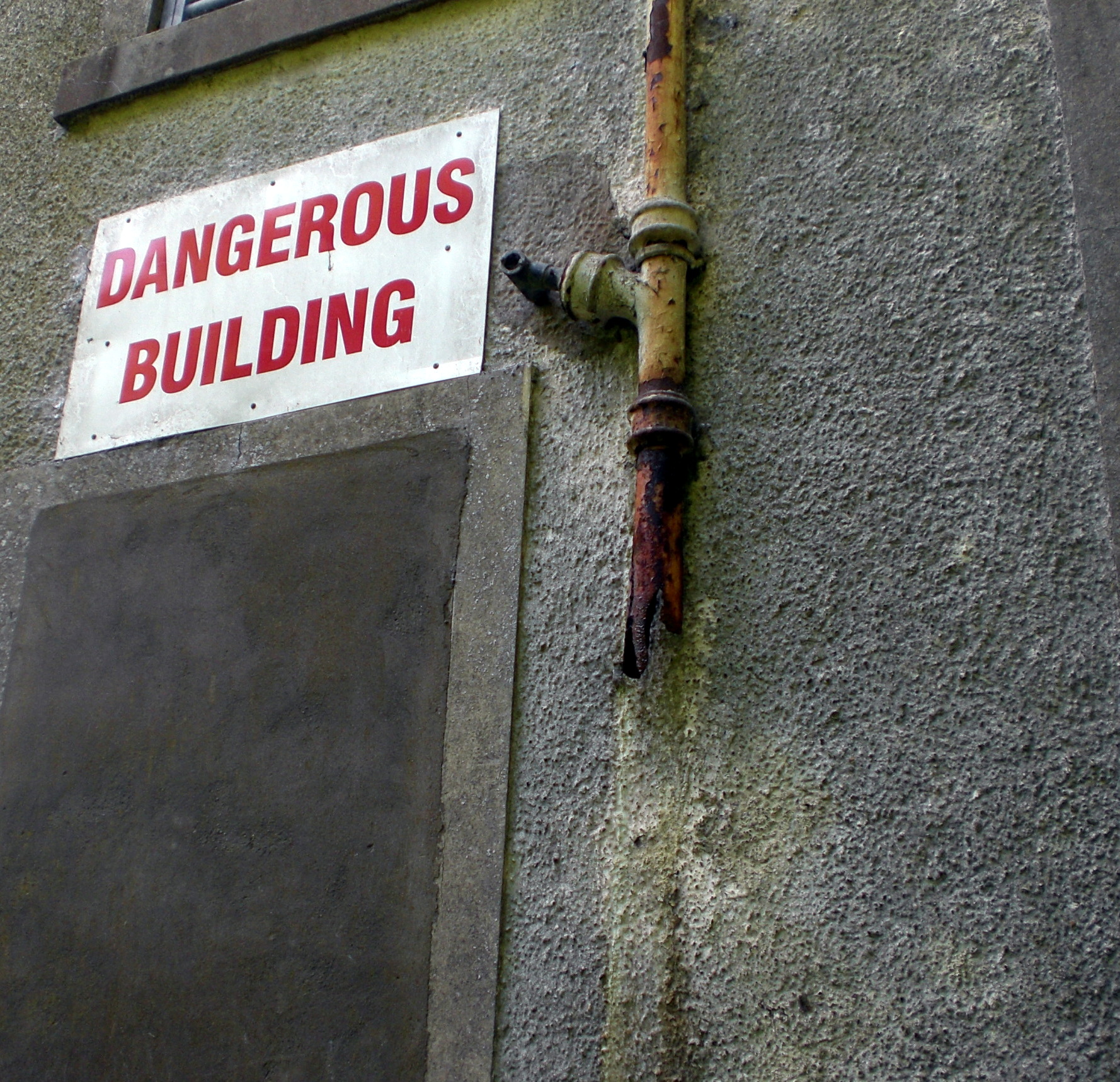
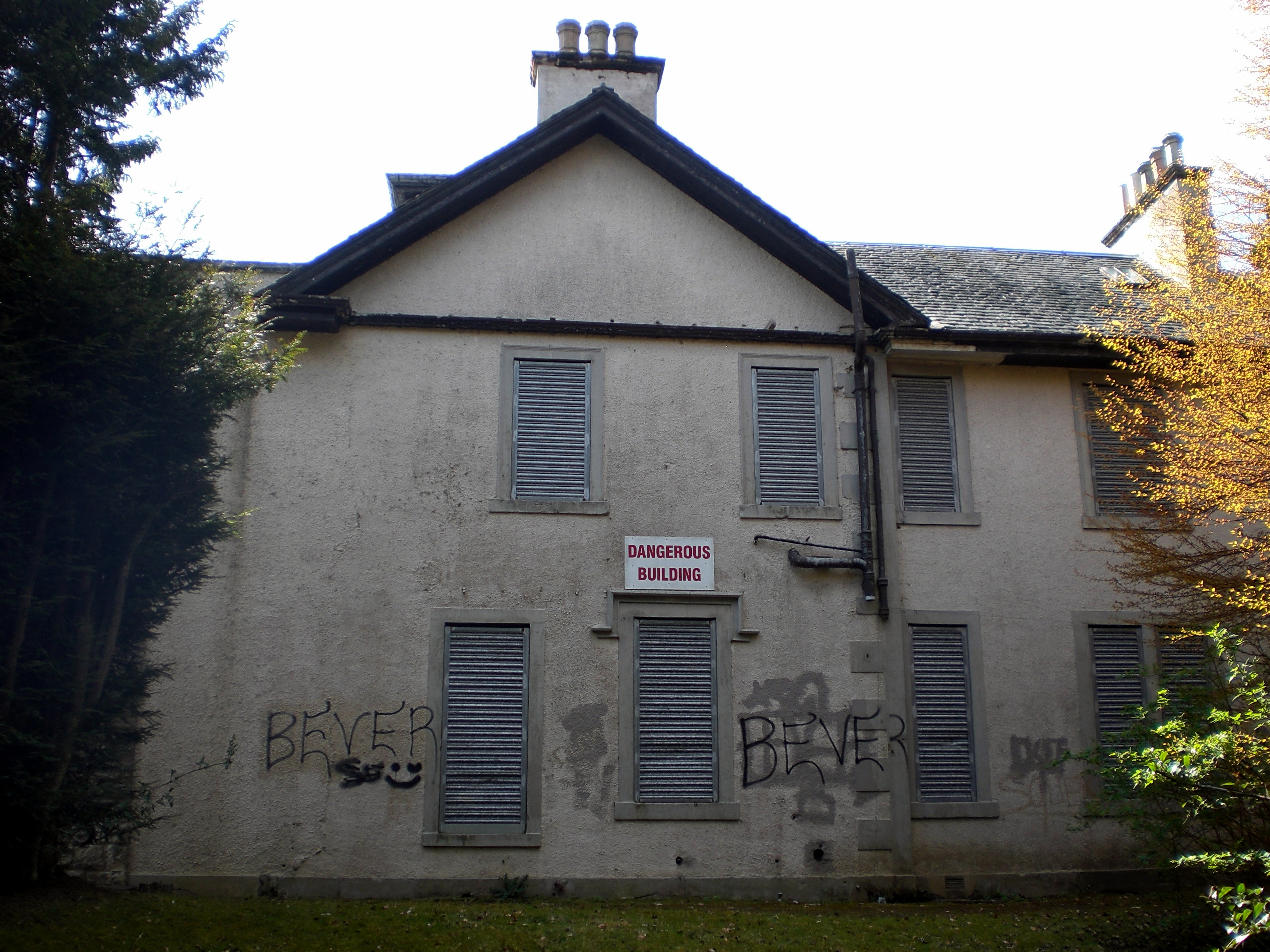
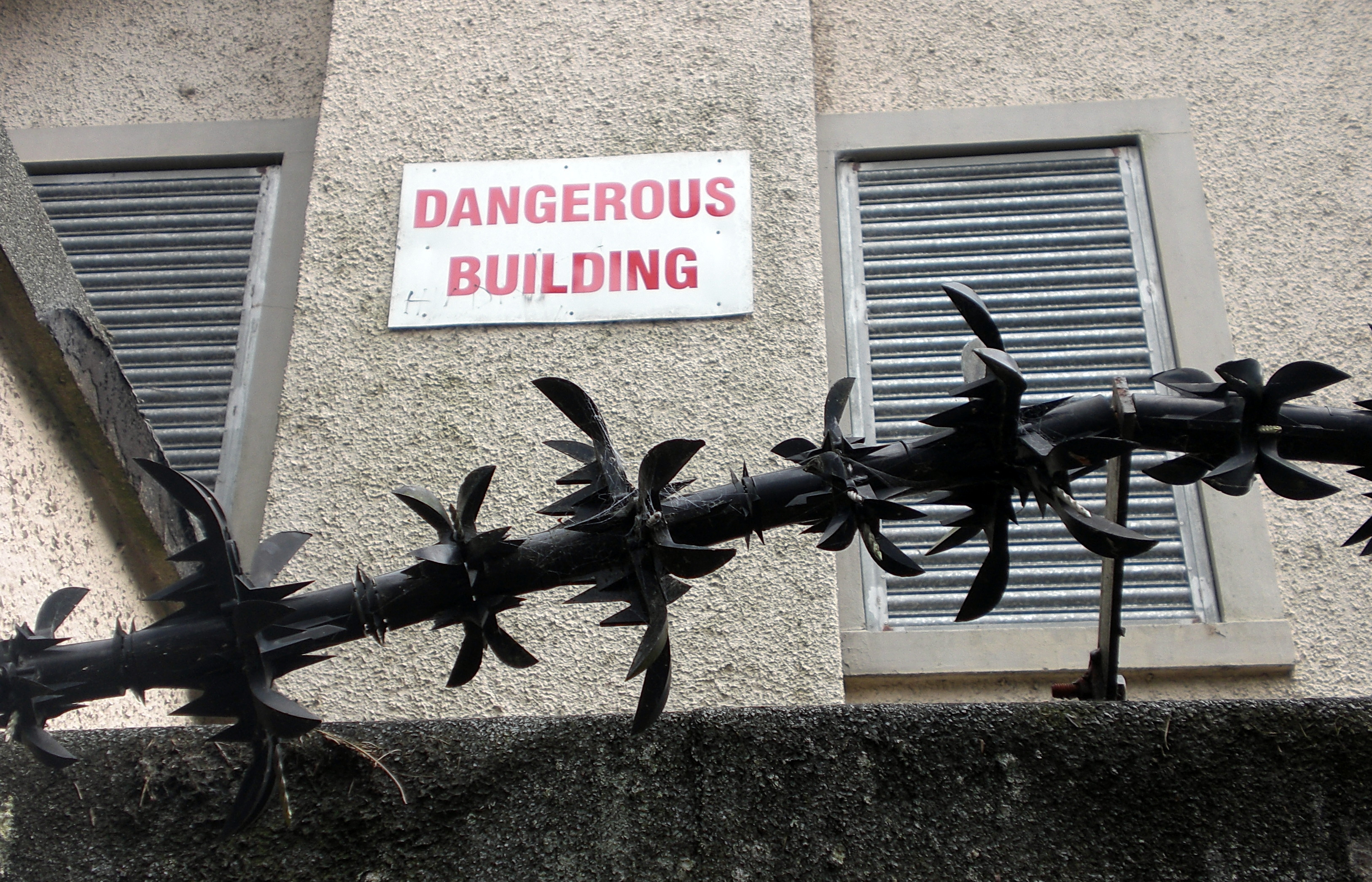
The house today is a crumbling ghost of a building. Buildings need capital, care and a purpose to thrive and Corriemar has had neither of these since the 1970s. Now officially classified as a dangerous building and on the Buildings at Risk register, nature is slowly restaking her claim.

CIMG2387

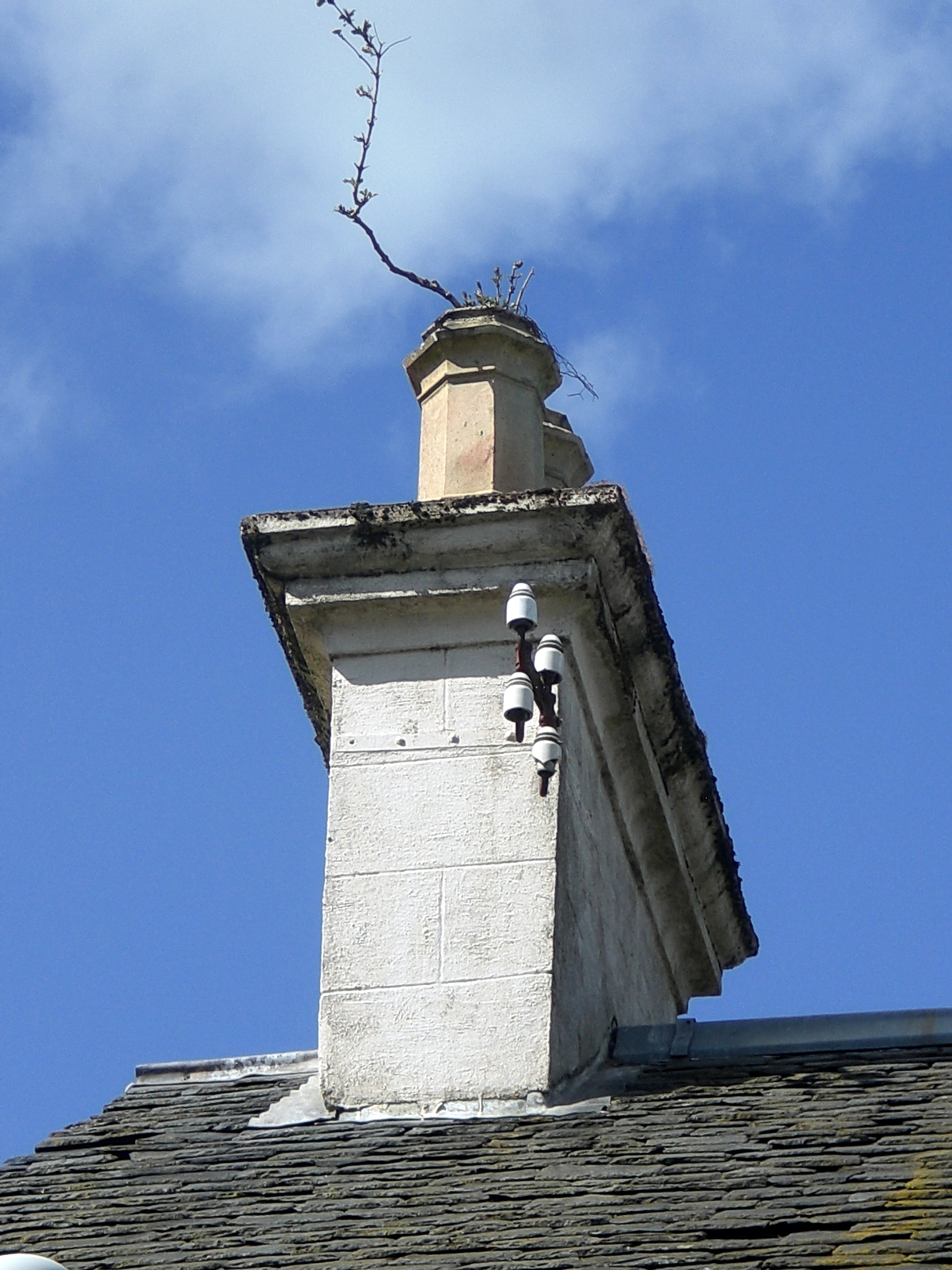
A pine tree grows out of the roof guttering. Many slate tiles have been lost to the elements, leaving the roof like a mouth full of smashed teeth.

CIMG2386

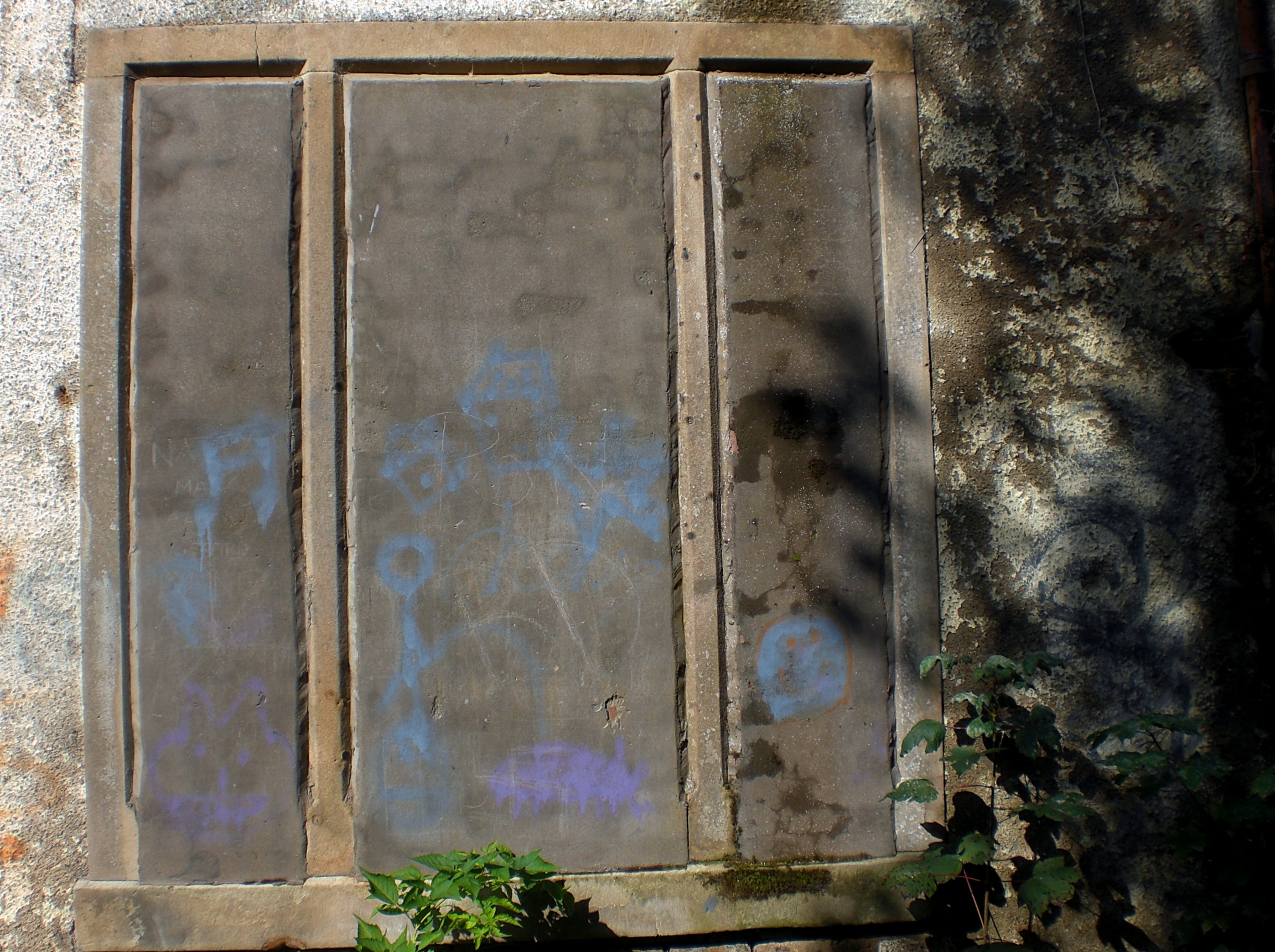
The building is not just boarded but sealed.

Mute.

All flow and circulation broken:

CIMG2828
Mute
CIMG2829
Broken Flow

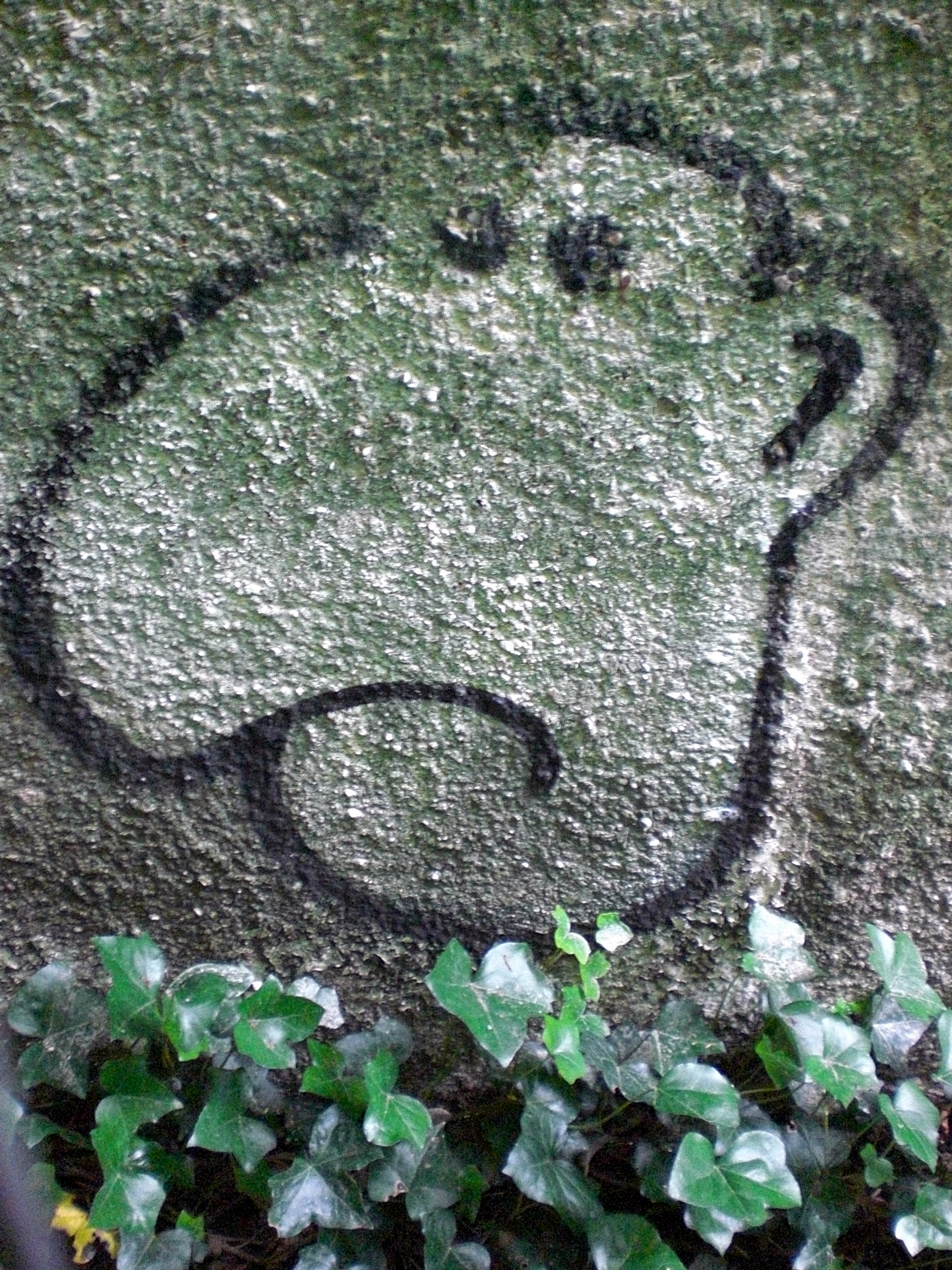
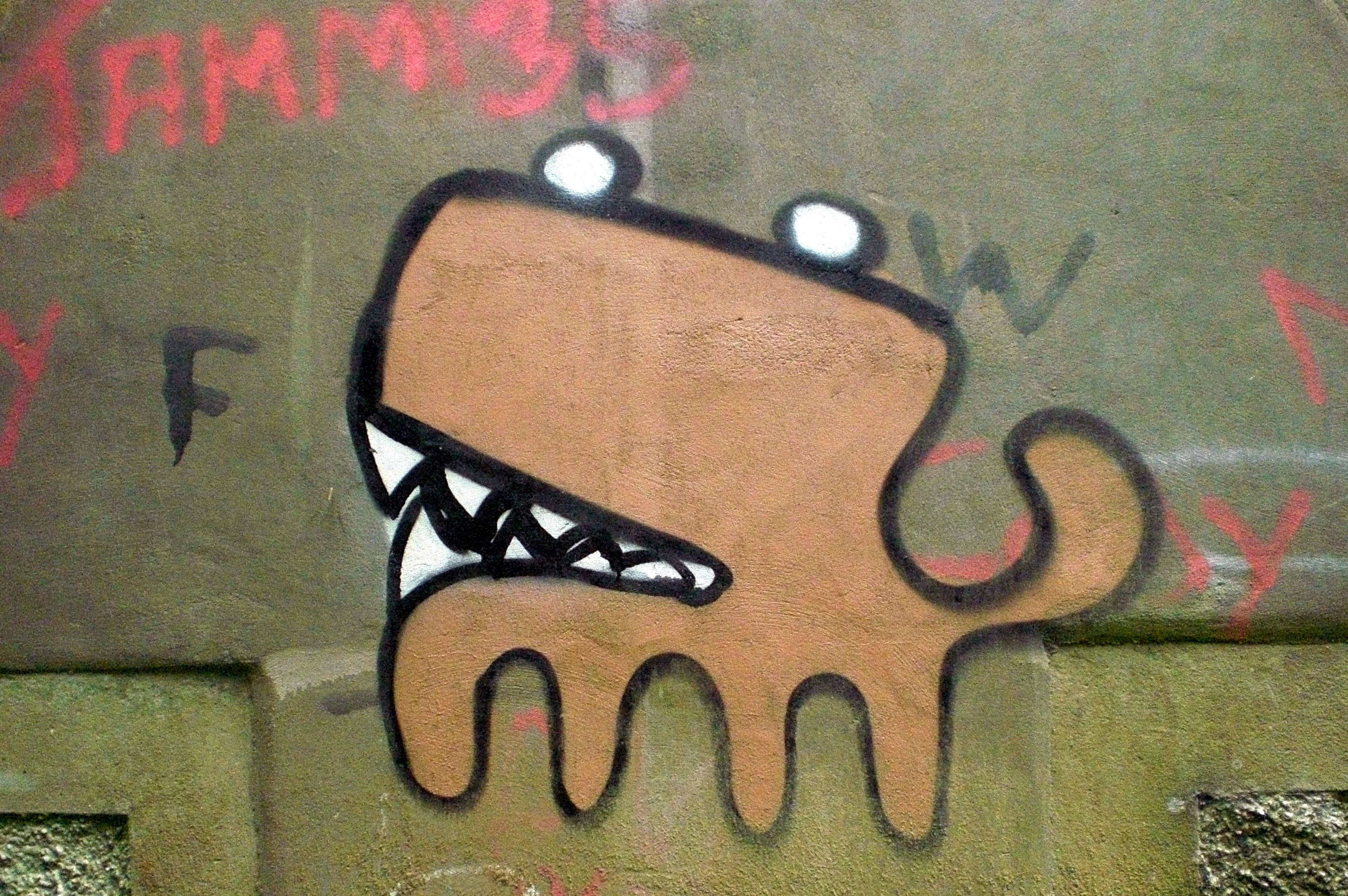
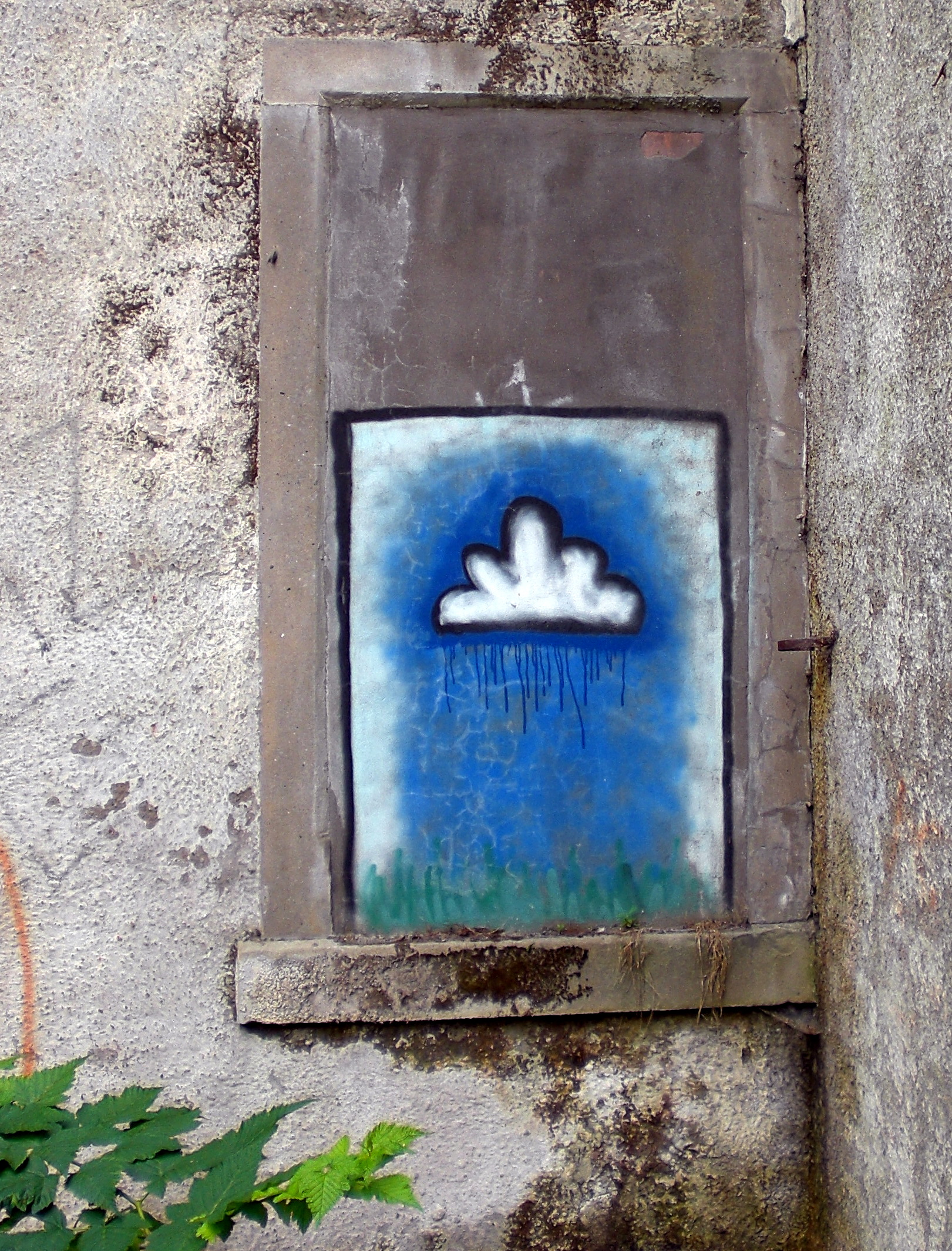
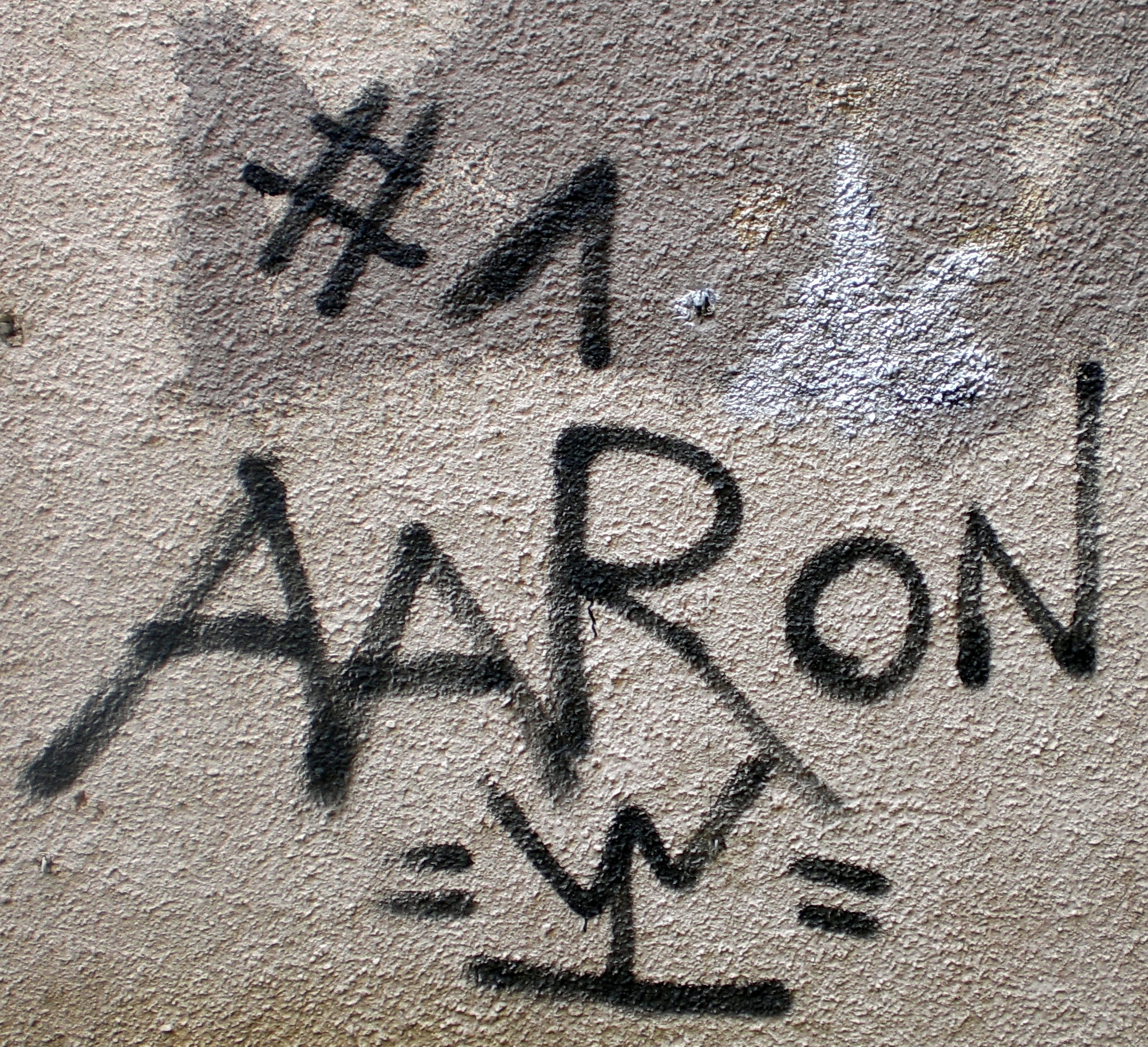
Graffiti abhors a blank surface and Corriemar has become a canvas for a surprisingly diverse display:

CIMG2670

CIMG2678CIMG2680
CIMG2677
CIMG2672CIMG2668

CIMG2669

Interesting in that all of these shots, the green leaves of nature always encroach into the frame.

Silverburn House

CIMG2839

Once a home to the Russell family. Old, super-8 film shows children playing and running around on the lawn in front of the house. Adults relax in deck chairs, smoking and chatting…

Now, like Corriemar, Silverburn House is sealed up and dangerous:

CIMG2377CIMG2687

Broken Flows:

CIMG2379CIMG2374

CIMG2378CIMG2380

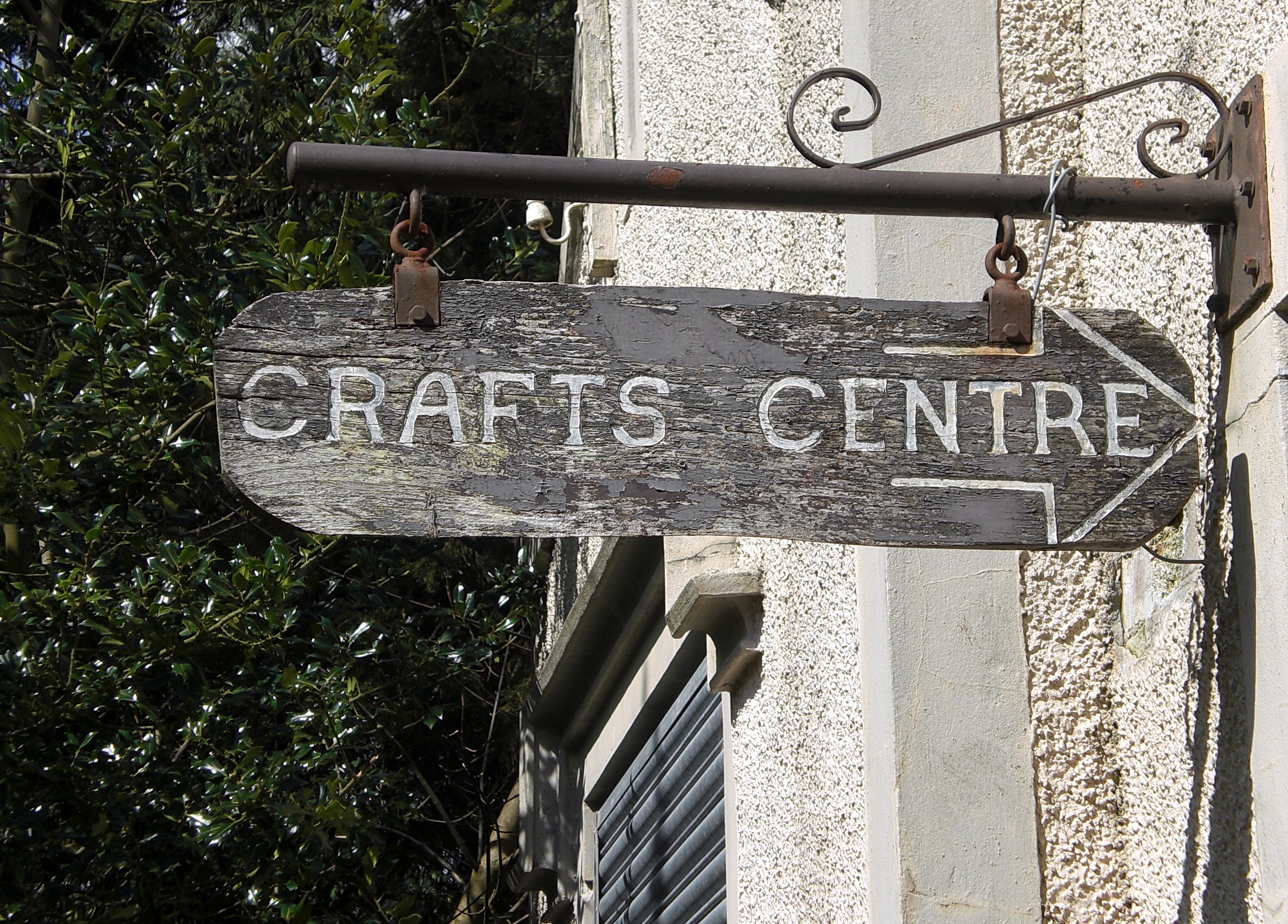
The entrance to the old crafts centre:

CIMG2383

Stretching for the sky:

CIMG2371

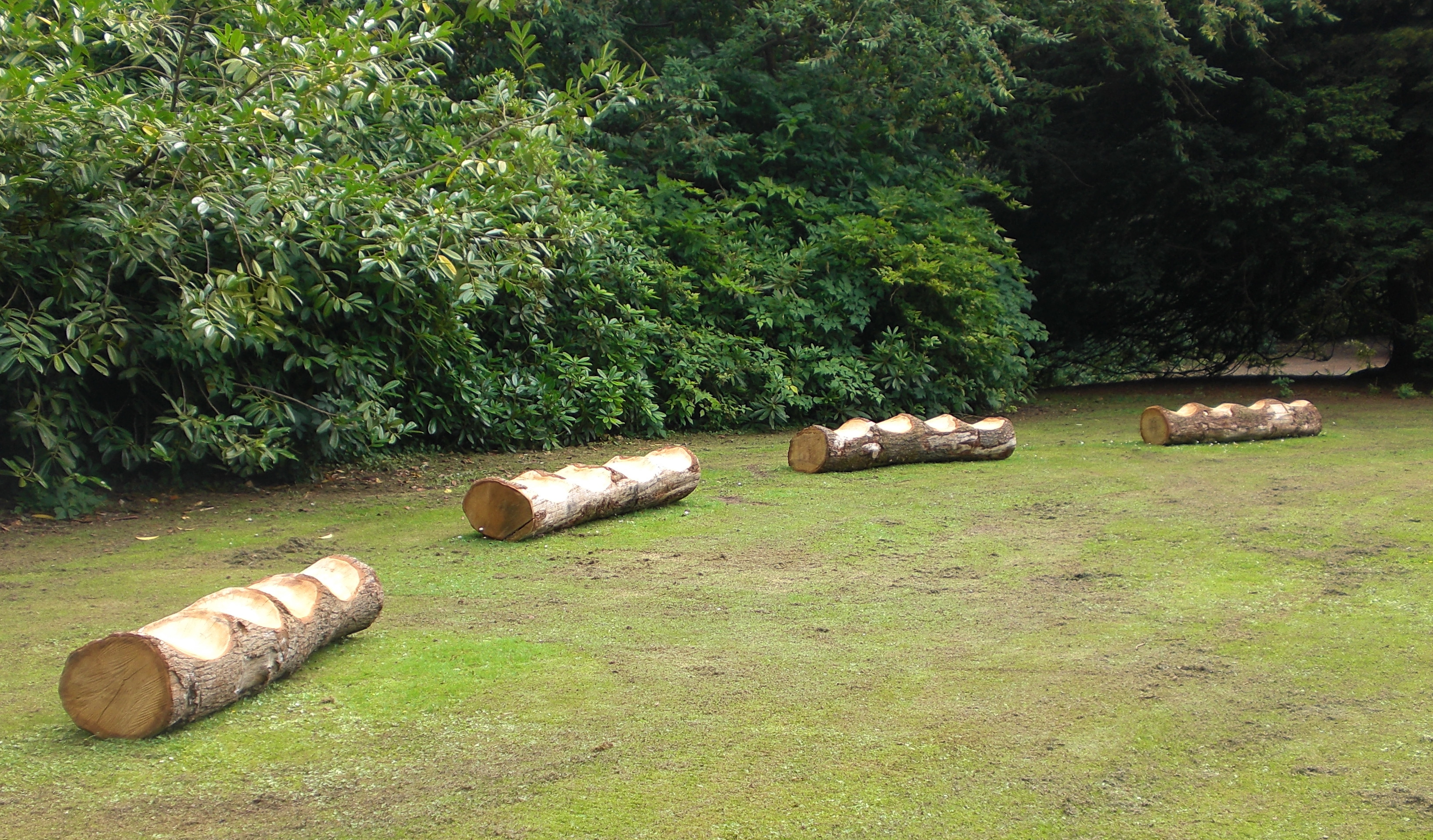
On our last visit, we noticed a new addition. Some outdoor seating has been added, fashioned out of tree trunks:

CIMG2694CIMG2691

CIMG2692

And at the opposite end of the lawn, a collection of shamanistic divining posts in the family sculpture area:

CIMG2834CIMG2836

As is common with any drift, with a little attention, a surreal world can reveal itself:

The shoe tree:

CIMG2413

The worm mound:

CIMG2406

One tries to wriggle free:

CIMG2408

The giant pencil:

CIMG2411

The stalled roundabout:

CIMG2445

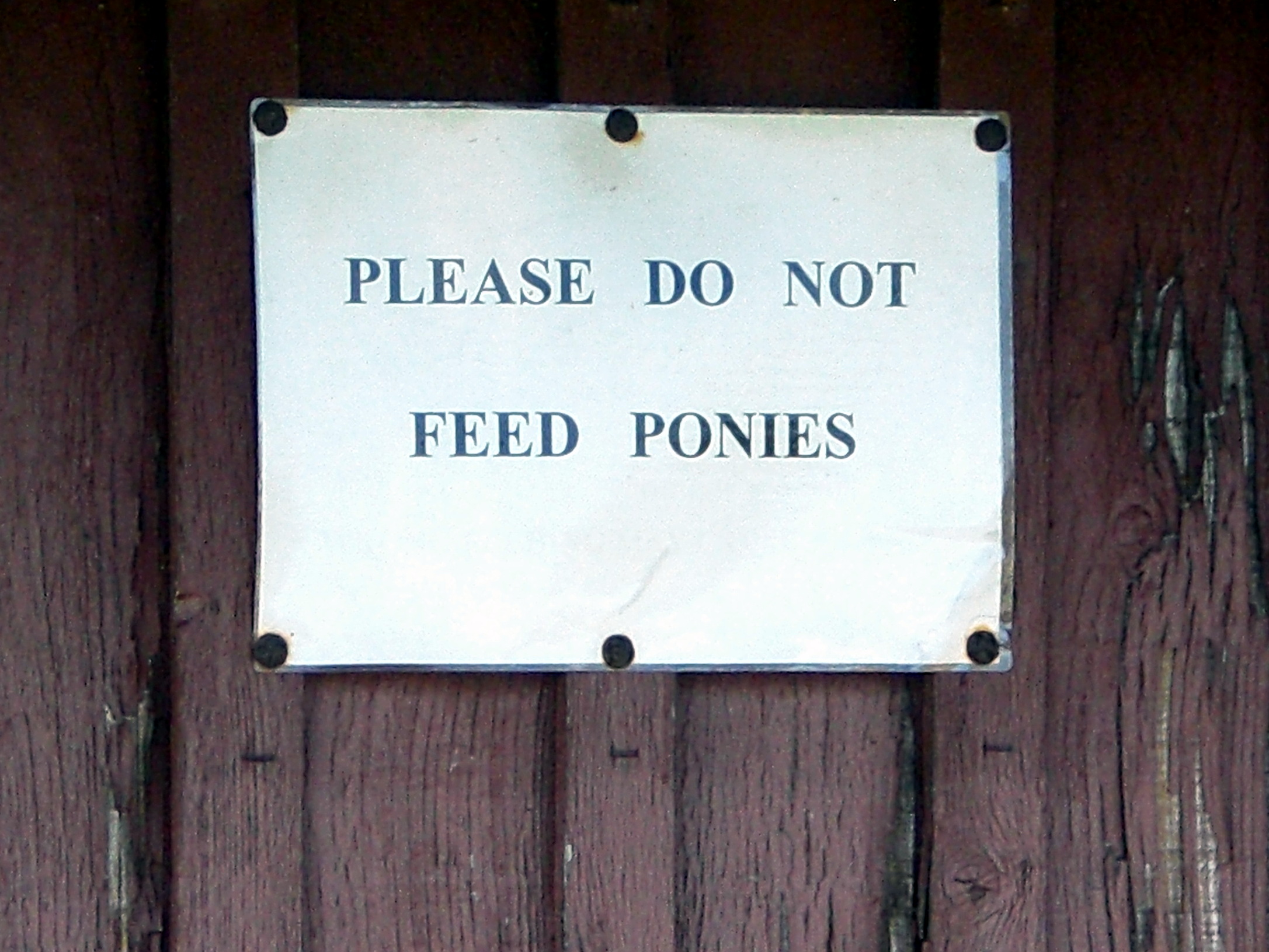
The unknown and undecipherable signs:

CIMG2410CIMG2409

.

.

One visit, late Saturday afternoon, a dull twilight. No other humans around and even the bird song is subdued. Only the rustle of leaves – hopping blackbird and scurrying rabbit.  The fungi radiate a pale light:

CIMG2662

A message from the trees:
CIMG2658-001CIMG2659

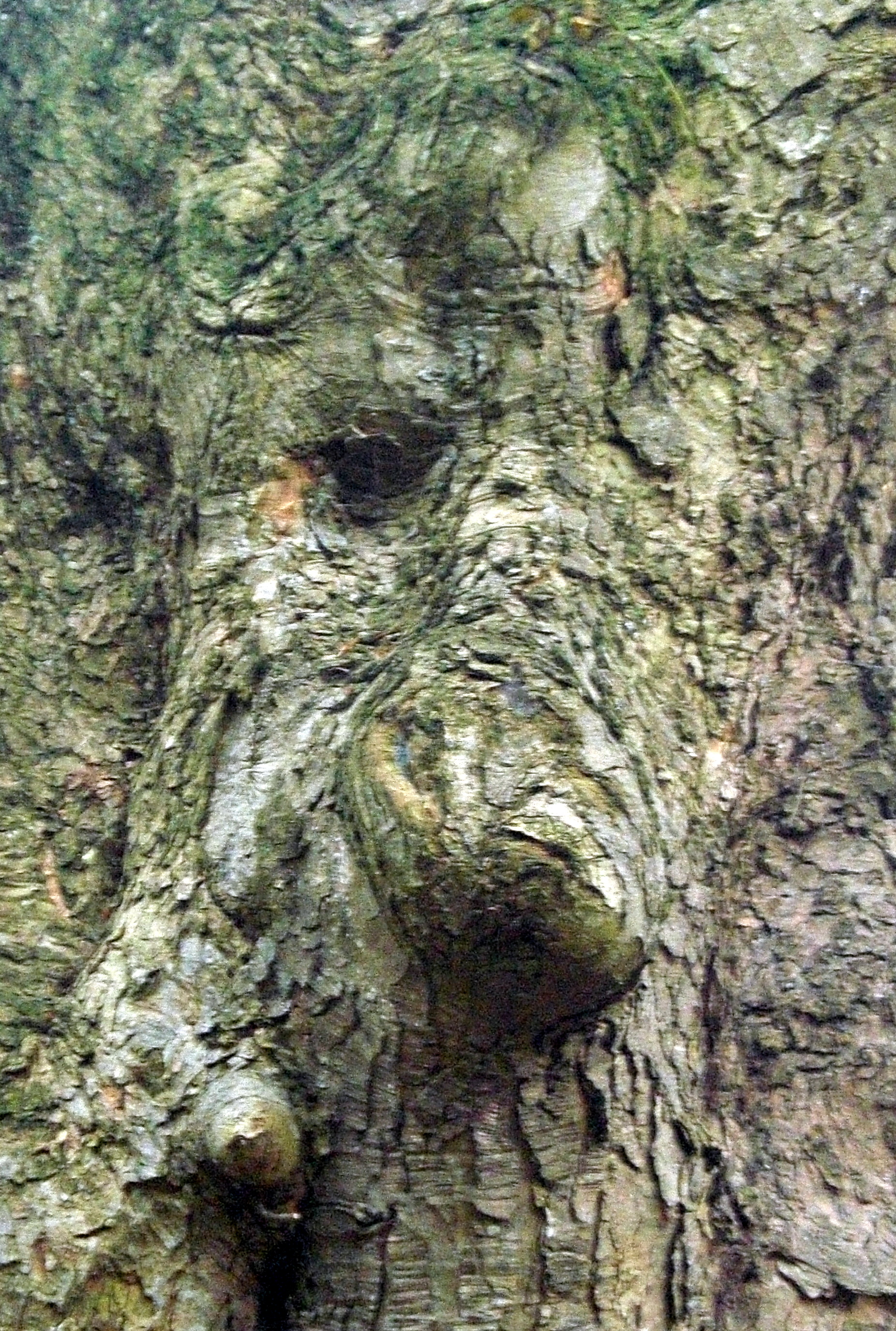
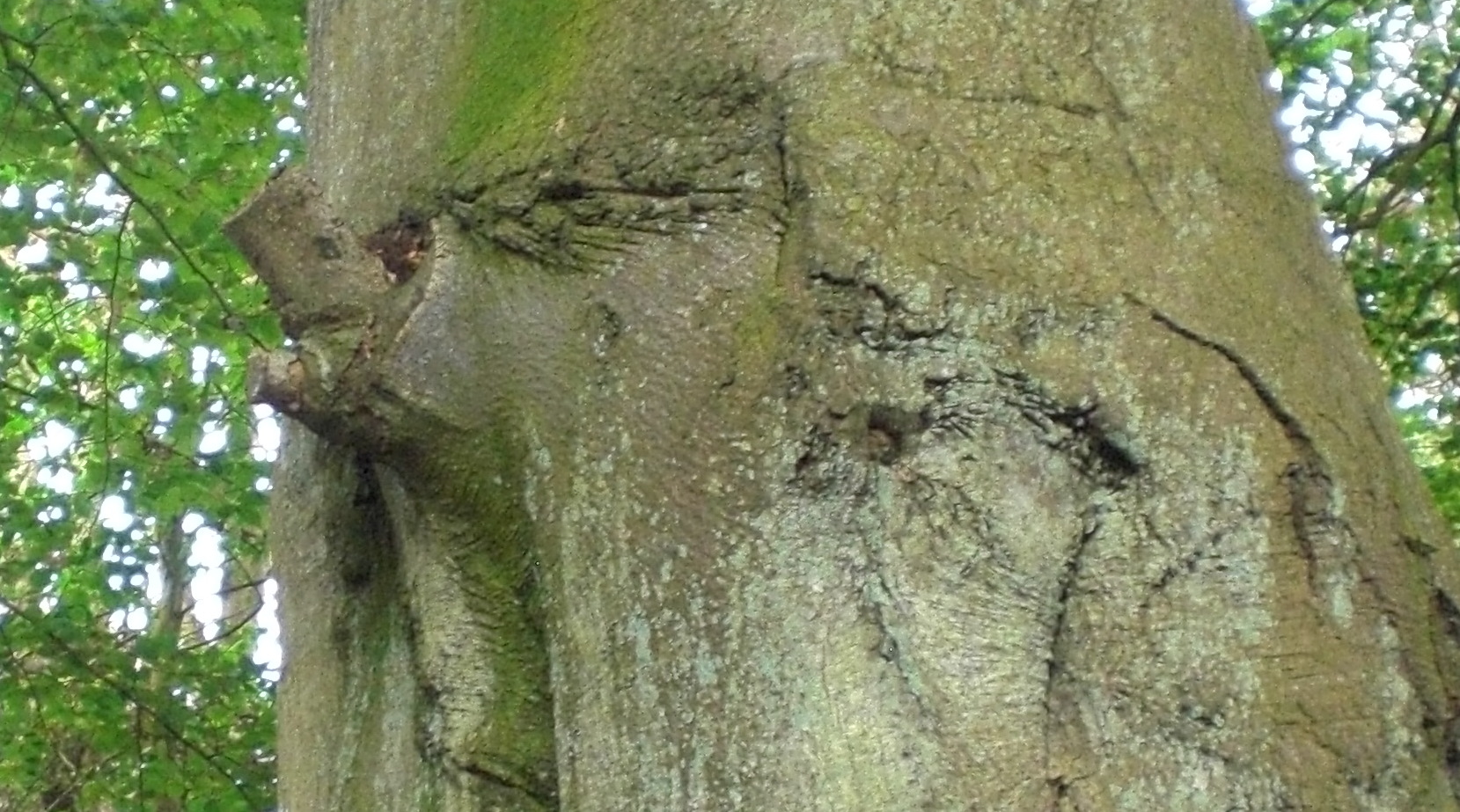
Stare for long enough and the tree spirits begin to reveal themselves:

dog-bear

CIMG2704

Tusked boar

CIMG2700

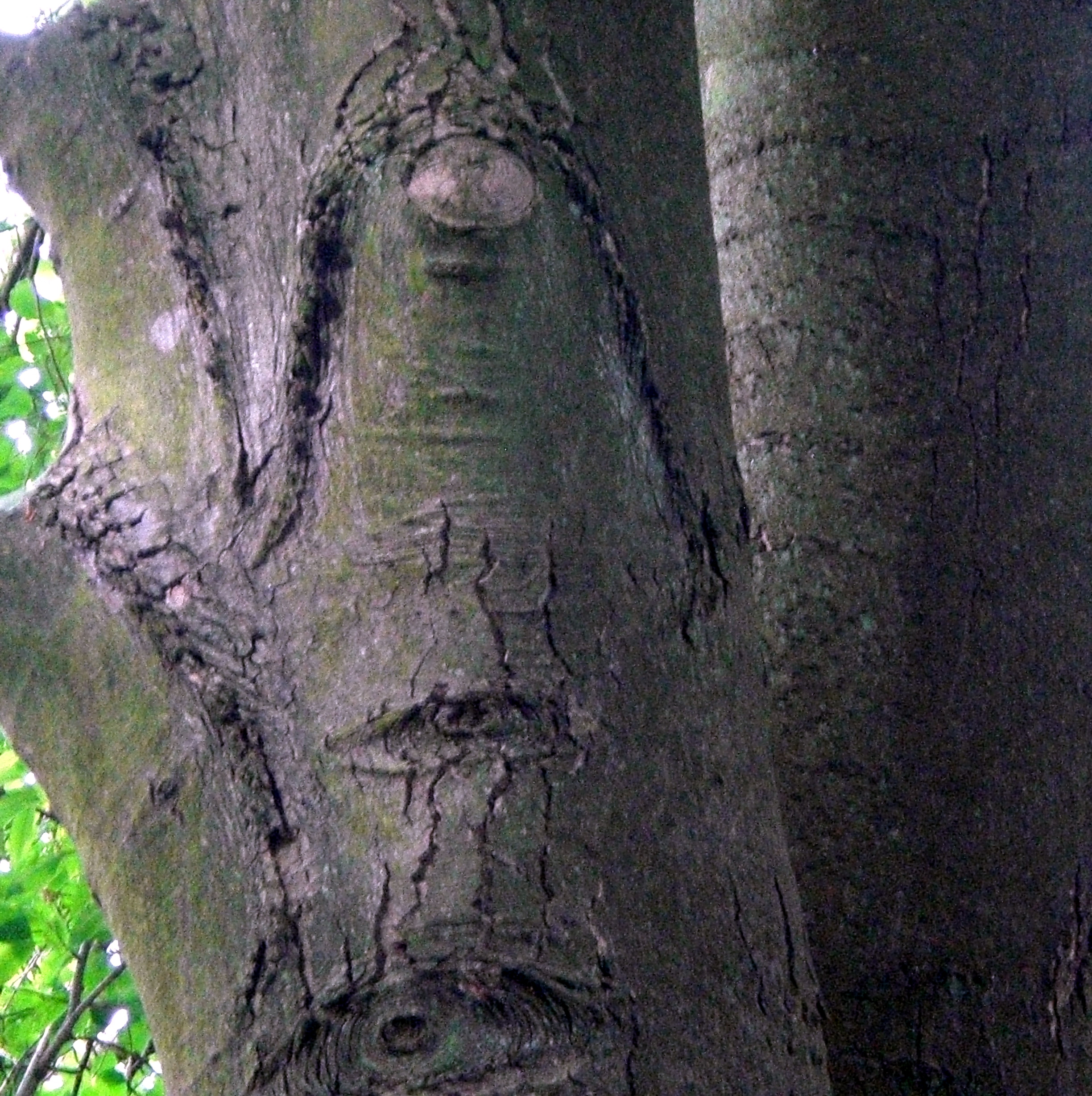
Cyclops

CIMG2682

Preying Mantis

CIMG2844tentacle clawed … ?

CIMG2711

The Flax Mill & Retting Pond

On the lower level of Silverburn sits the Flax Mill and its associated retting pond.

CIMG2801

Retting is a process which employs the action of micro-organisms and moisture on plants to dissolve or rot away much of the cellular tissues and pectins surrounding bast-fibre bundles. This process is used in the production of fibre from plant materials such as flax and hemp stalks and coir from coconut husks.

CIMG2640

The flax mill was built in the mid 1800s and was one of the first industrial buildings to be roofed with a ‘new material’ called corrugated iron.  Flax fibre was prepared for spinning at Silverburn and was soaked in the retting ponds for about 10 days, after which it was thrashed. Retting Ponds were brought into play after an Act in 1806 prohibited the use of local streams due to excessive pollution which occurred from the process. The flax mill itself was run on steam power. The mill closed in 1930, although, as previously mentioned, the outbuildings were used for the mini zoo during the 1990s.  Today, the brickwork is failing in some places, with over 50% of the brick turned to dust.  An adjacent row of cottages were probably built for the flax mill workers and remain used and in good condition today.

CIMG2652

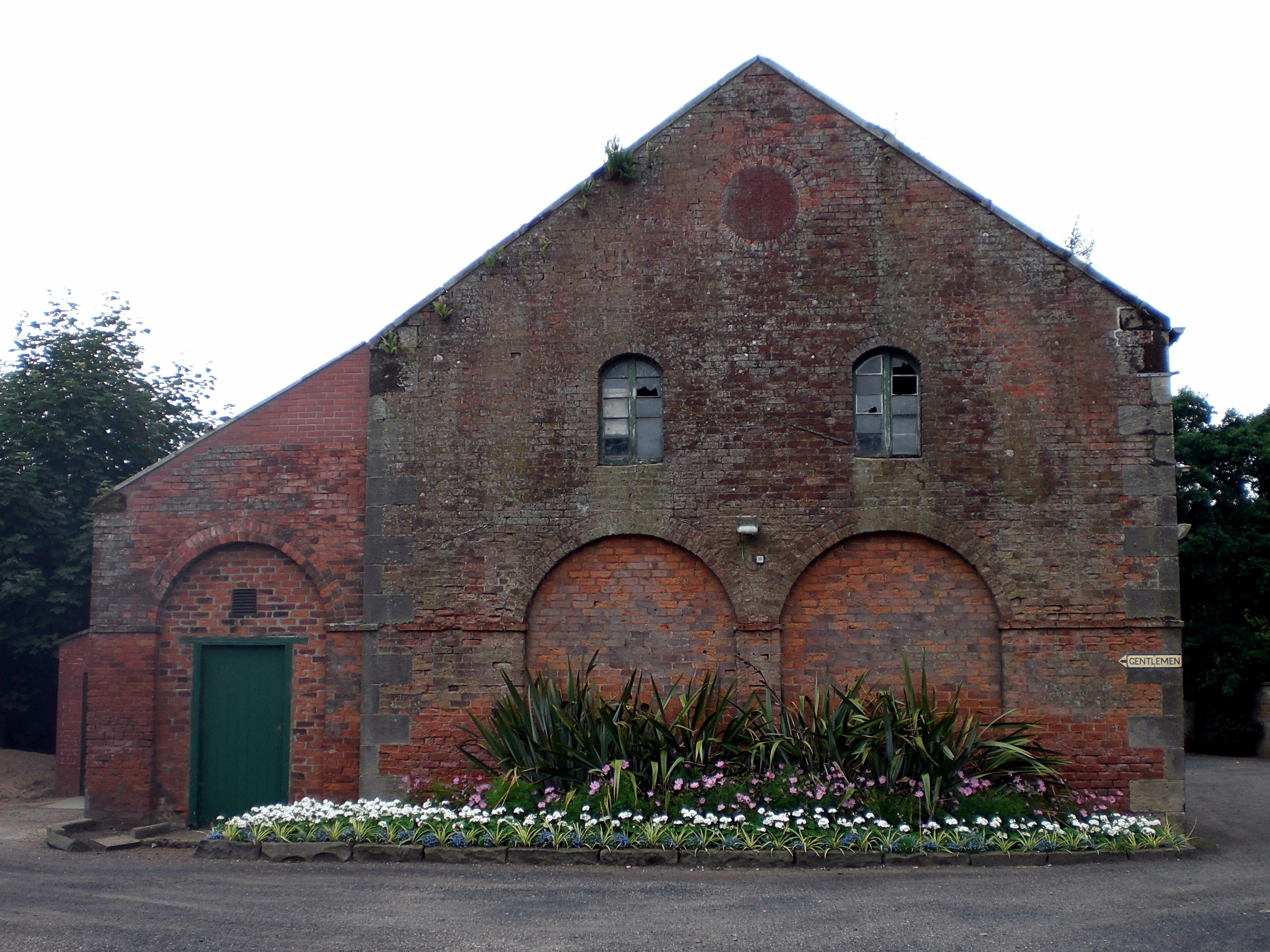
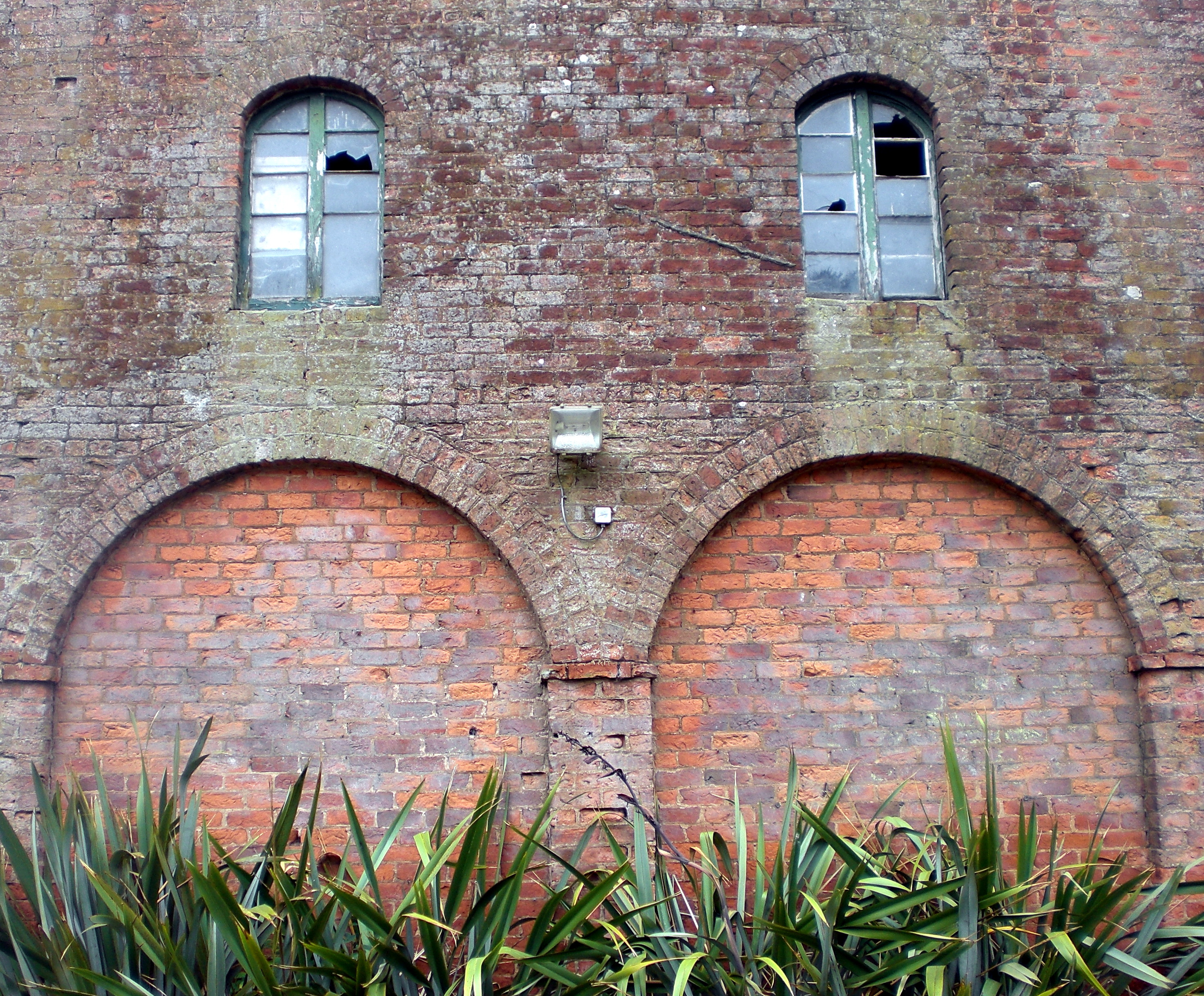
Look out for the face in the factory:

CIMG2642

and the quizzical ghost:

CIMG2655

CIMG2654CIMG2648

.

.

The outbuildings:

CIMG2644

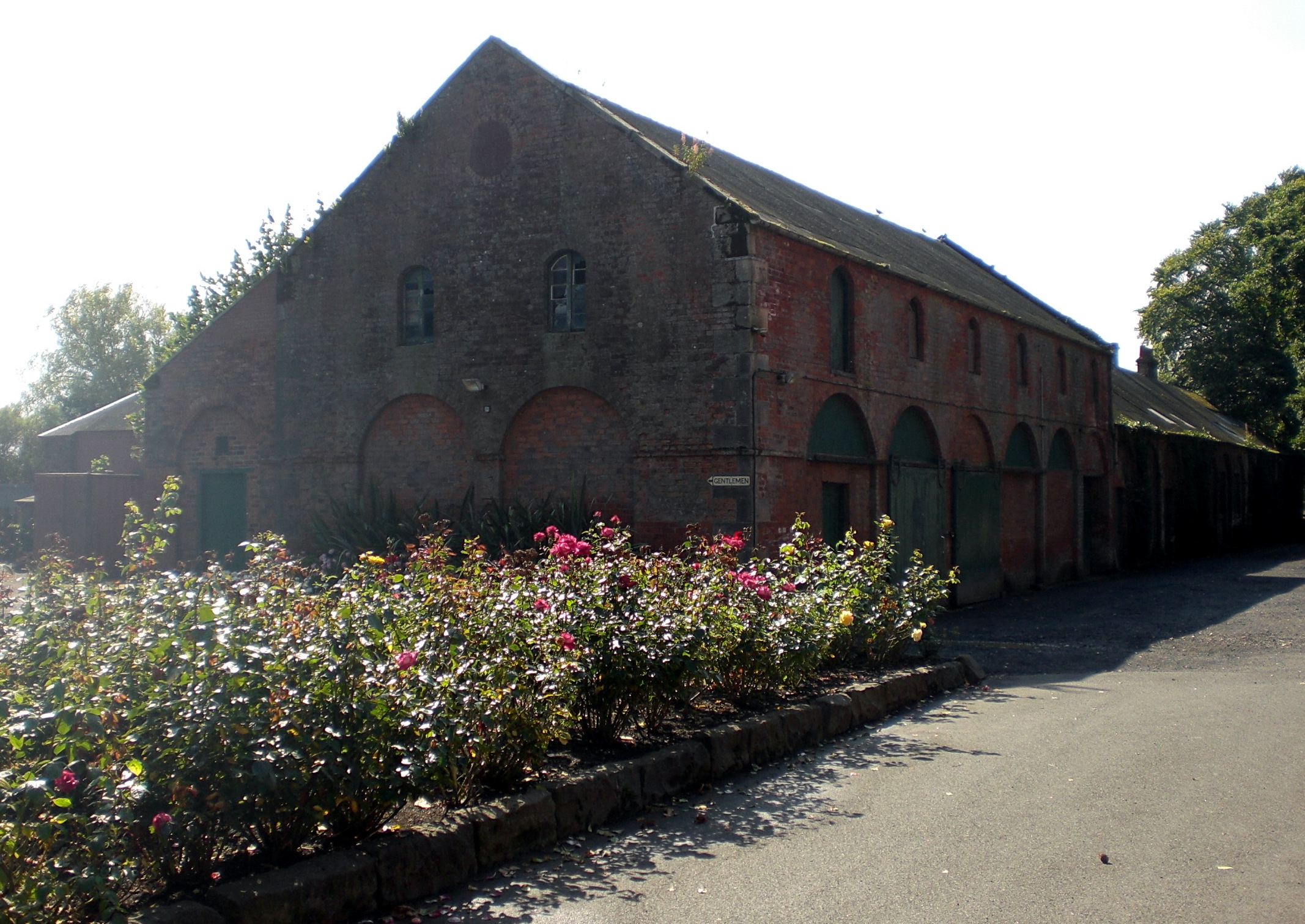
The old stables:

CIMG2441CIMG2442

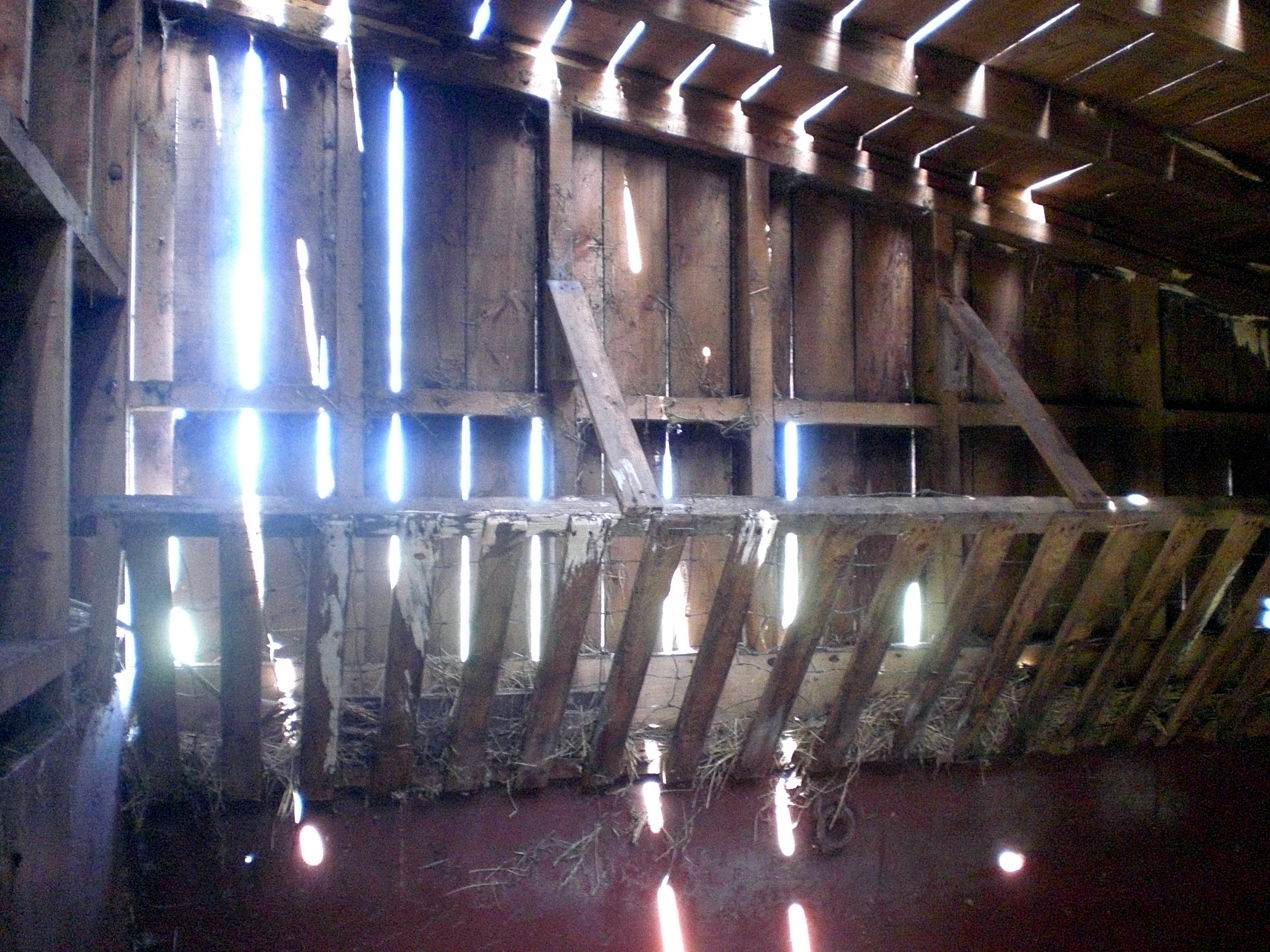
Inside the old stable

the darkest corners – bleed

in slatted sunlight

CIMG2440

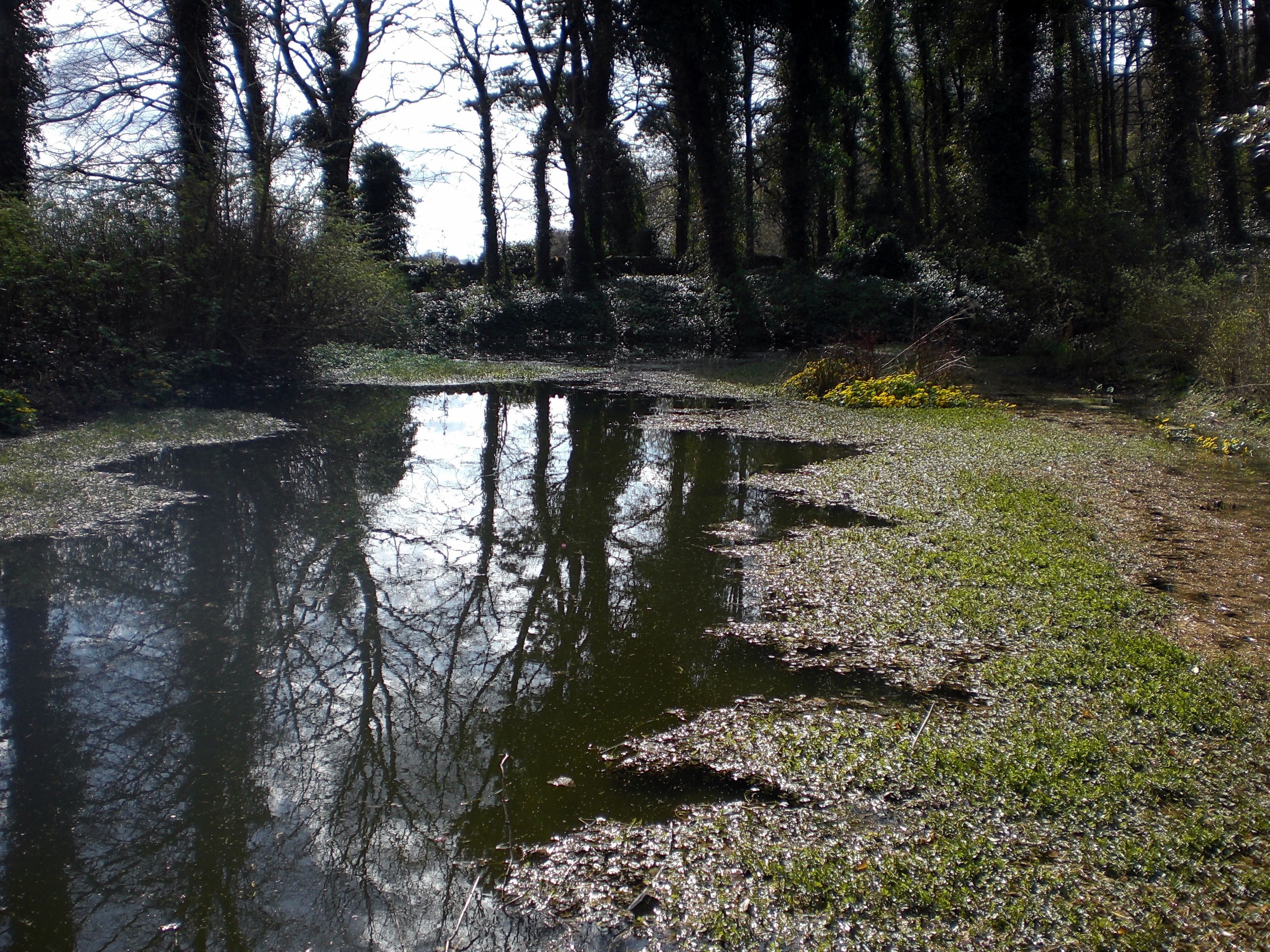
The retting pond where the flax was soaked is close by. Now heavily overgrown with vegetation, it is a meditative spot to watch the reflected trees in the water and the teeming pond life on the surface:

CIMG2396

CIMG2815

The Tree House and Formal Gardens

How could anyone not be captivated by the tree house? It looks as if it could walk away at any moment on its stilted legs:

CIMG2729

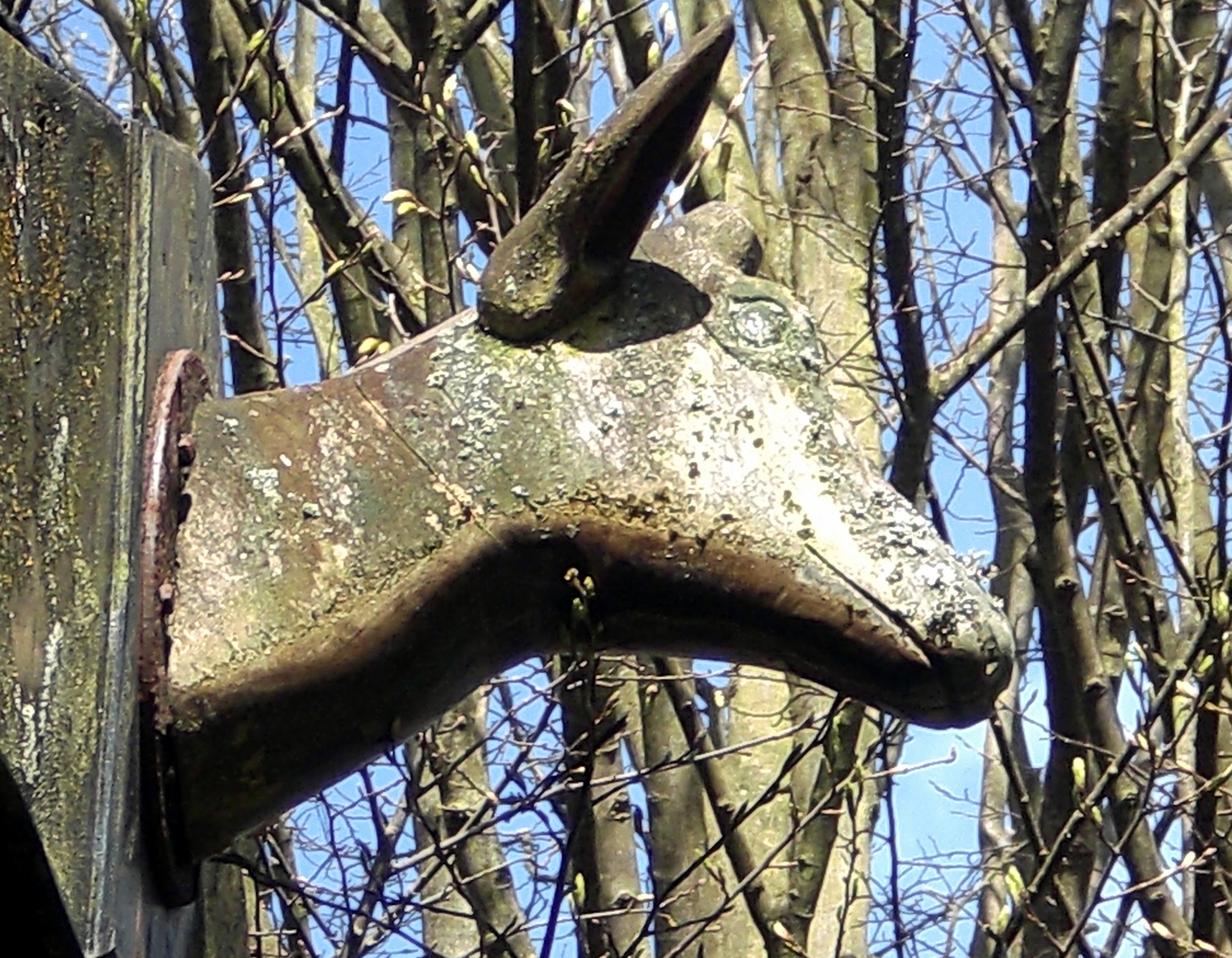
The sense of being watched by the animal heads on either side add a touch of the uncanny:

CIMG2421CIMG2425

.

.

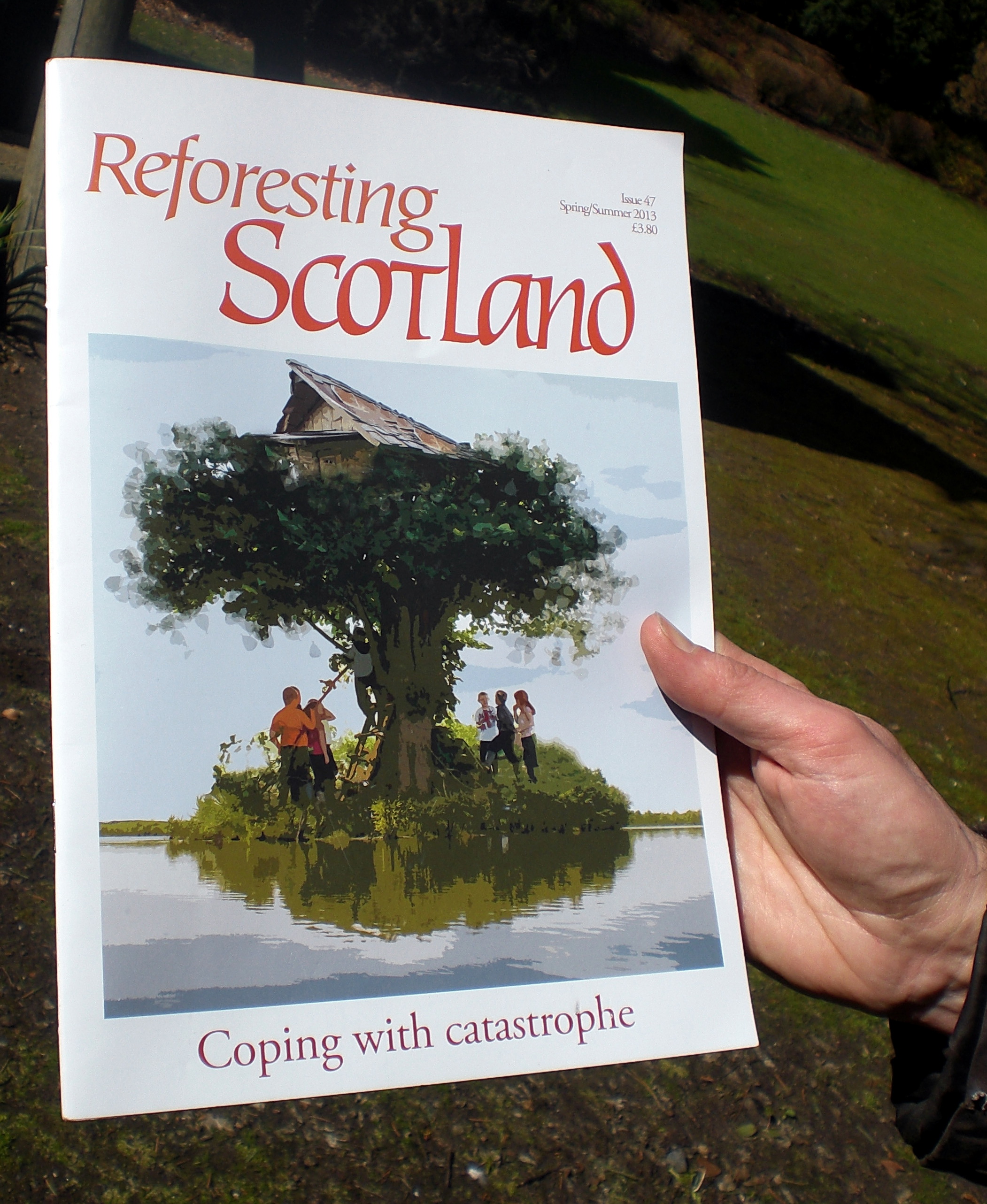
By complete coincidence, N has a copy of Reforesting Scotland in his bag. The cover illustration an echo of what we are standing underneath:

CIMG2424

The formal gardens, also comprise a sensory and walled garden. They are clearly places of meaning and memory. On our first visit, we find a wreath of knitted flowers:

CIMG2435 CIMG2434

By the time of our second visit they have gone. There are also the lives commemorated and remembered. Emotional linkages between people and place.

CIMG2717

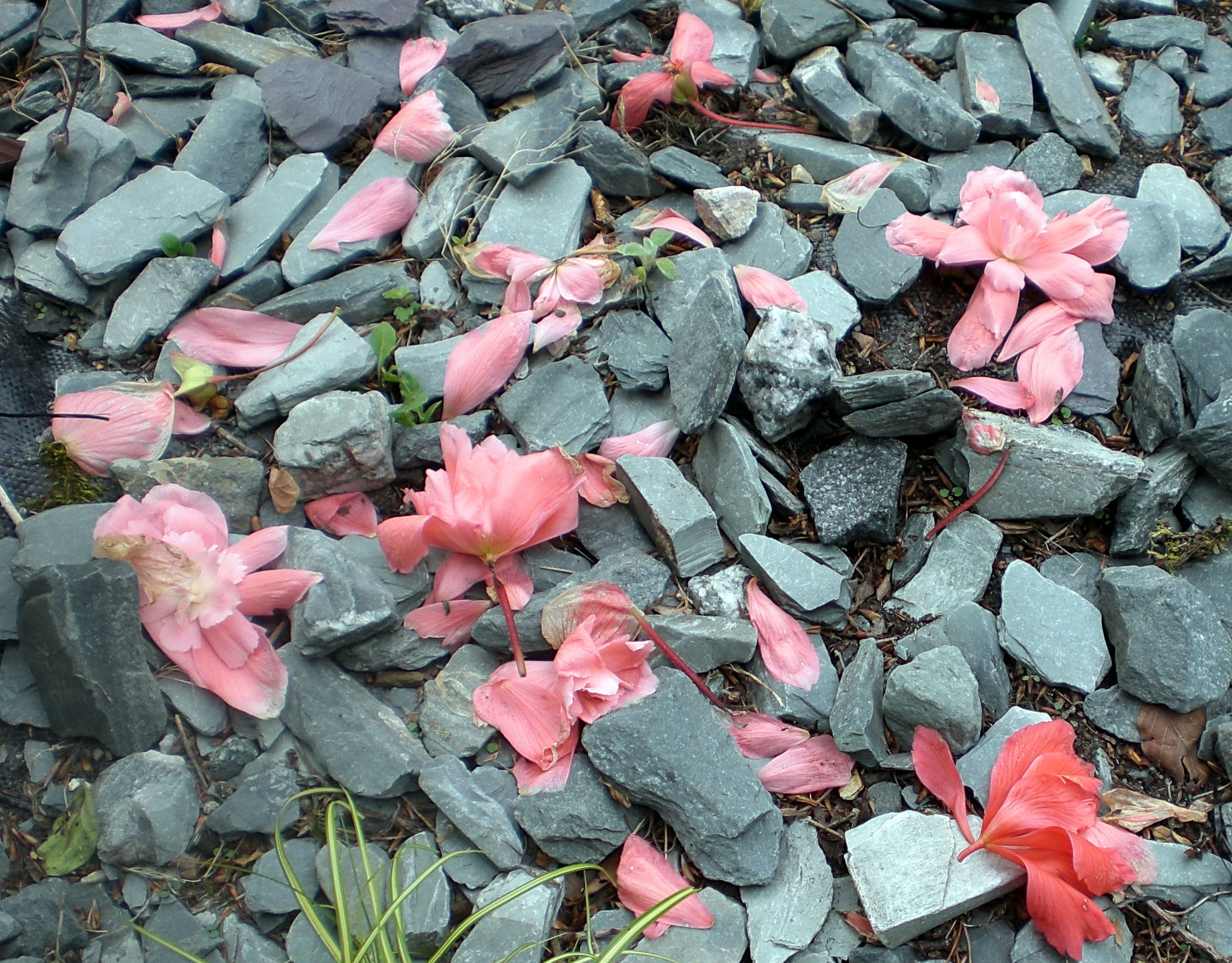
From the sensory garden, the gentle trickle of running water projects around the natural amphitheatre. Bees congregate upon yellow and pink petals shower down on grey.

CIMG2719CIMG2715

CIMG2720CIMG2722

Perhaps there is also evidence of the cunning folk at play. A small entrance through a hedge; a portal to another world?

CIMG2429

CIMG2430

What is in a Name?

We leave Silverburn to head for the coast once again. Following the flow of the burn back down Mile Dyke to where the silver stream meets the sea.

CIMG2792

We reflect on the name:

Silver – precious, with, the highest conductivity of any metal, allowing energy to flow.

Burn – always in flux/flow. As Heraclitus said, you never step in the same river twice and we know we will never visit the same Silverburn twice. There is also the idea of how prescribed burning of vegetation can recycle nutrients tied up in old plant growth to invigorate new growth.  With the current FEAT and community initiative ‘Heart Mind Soul Silverburn’ perhaps new possibilities for Silverburn are emerging.

And to end. A whispered message from a beach encounter:

CIMG2795

To end with a name and only the name. To end with only the letters of the name:

.

Silver sun sliver –

burrs liven us.

.

River veils runes

in blue siren lures.

.

Briers line ruins,

burn rises in

river lens.

.

Vein in burn

silver in vein

burn silver

S  i  l  v  e  r  b  u  r  n.

CIMG2790

Now playing: The Necks – Silverwater

References:

Buildings at Risk Register for Scotland

County Folk-Lore Vol VII. Examples of Printed Folk-Lore concerning Fife with some notes on Clackmannan and Kinross-Shires collected by John Ewart Simpkins (London: Sidgwick & Jackson for the Folk-Lore Society, 1914).

RCHAMS, Canmore

John Steinbeck, Travels with Charley: In Search of America.  (New York: Viking, 1962).

Marysia Lachowicz, Polish Army in Fife. (Work in Progress).

With very special thanks to Margaret and Aiveen for the invitation to “come and see what we make of it” and also Aiveen, Margaret, Graham and Ninian for inspiration and sharing that first visit.

Echoes of the Pioneers: Three Beehives in Leven

Recently, we have been visiting the area around the coastal town of Leven.  A fairly long piece is slowly coming to fruition.  Until then, here is a short post.

Walk up Durie Street in Leven and listen out for the bees singing. Perhaps, the sound of the skep is more of a muted murmur now, but raise your eyes from street level and you may hear them. 

The first hive is above what is now the town library. Our industrious and co-operative little bees swarm around their skep as they have done since 1887.

CIMG2848

This symbolic image on a former building of the Leven Reform Co-operative Society reminds us of the Rochdale Pioneers. In 1844, with an economy in decline, wage reductions and strikes, a group of unemployed weavers met at the Socialist Institute to debate the philosophies of Robert Owen and Chartism.  Whilst there are many examples of co-operative societies existing before 1844, The Rochdale Pioneers formulated a set of guiding principles, upon which, an expansive version of co-operation was founded.  Looking at these principles today, it is notable how well these stand up as a set of co-operative ideals:
1. Democratic control, one member one vote and equality of the sexes.

2. Open membership.

3. A fixed rate of interest payable on investment.

4. Pure, unadulterated goods with full weights and measures given.

5. No credit.

6. Profits to be divided pro-rata on the amount of purchase made (the dividend or divi).

7. A fixed percentage of profits to be devoted to educational purposes.
8. Political and religious neutrality.

The Rochdale Society of Equitable Pioneers raised money from 28 original subscribers to establish a shop at 31 Toad Lane, Rochdale which was equipped and stocked with basic goods and produce. The Pioneers chose the beehive as a symbol of co-operation and unity and the original stone skep stood on top of the, now demolished, central store at 45-51 Toad Lane, Rochdale.  The skep now sits preserved and incorporated into the outside wall of the Rochdale Pioneers museum. 
Rochdale Pioneeers museum4
(c) The Rochdale Pioneers Museum

Within ten years of the Pioneers founding efforts the co-operative movement in Britain had grown to nearly 1,000 co-operatives with many adopting the symbol of the beehive.

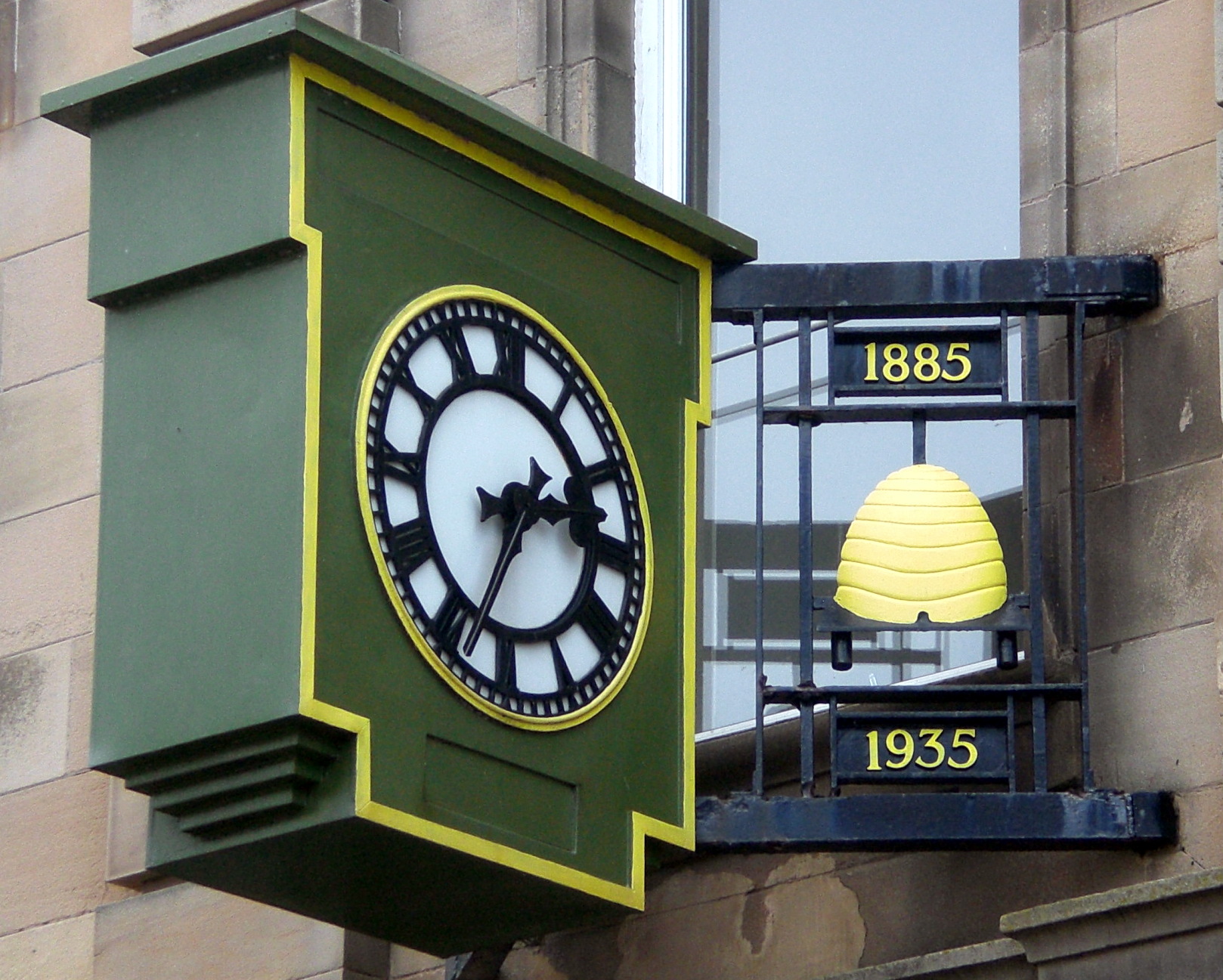
We are back in Leven. Follow the echoes and walk further up Durie Street. On the clock of the former Co-operative department store, a golden skep, clotting the fingers of weak, ebbing sunlight:

CIMG2852

Stand.  Raise your head and look to the sky.  Follow the thread of sibilant hum to the very top of the building.  A change of tone – to low dissonant drone. A sign that the bees are, once again, getting ready to swarm:

Leven

Underneath the skep

intimations of new life

still sounding – echoes

of the Pioneers.

Now Playing: Earth – The Bees Made Honey In The Lion’s Skull 

References:

The Rochdale Pioneers Museum

Manchester History

Three steps …

Three steps  may be all it takes to alter our perception of place

Dalgety Bay Looking out to Inchcolm & over to Arthur's Seat

A fairly idyllic view taken last weekend from the Fife Coastal Path at Dalgety Bay. An expansive sky animated by great dollops of scudding cloud, mirrored in the calm, glassy sea. Inchcolm Island lies straight ahead and over to the right, the contours of Edinburgh and Arthur’s Seat ink the horizon.

Waders and gulls amble and preen on the bay foreshore with divers, ducks and the occasional seal bobbing in the deeper water.

take three steps back

o

n

e

t

w

o

t

h

r

e

e

CIMG2614

You find out that you are actually standing on radioactive contaminated land.

The contamination is believed to originate from the residue of radium coated instrument panels that were used in military aircraft.  Between 1946 and 1959, over 800 planes were incinerated and the ash was land-filled in the area.

Radioactive material was first detected on a part of the foreshore in 1990 and, since then, more than 1000 radioactive items have been removed.

It has taken twenty-three years for the MoD to be ‘officially’ named as polluter of the site by the Scottish Environment Protection Agency (SEPA). However, the MoD continue to prevaricate in actually admitting responsibility and most importantly undertaking remediation options.  This week, the can has been kicked forward, once again, until September when another ‘discussion’ between SEPA and the MoD will take place.

There is a possibility that SEPA will be required to formally designate the beach at Dalgety Bay as a radiation-contaminated area.  If this happens, it will be the first such designated site in the UK.

“It would be extraordinary that in a Britain that has nuclear storage sites, nuclear processing sites, nuclear weapons and nuclear waste, the beautiful beach at Dalgety Bay would stand out as the first and only radiation-contaminated site in the country.”

(Gordon Brown, MP, Hansard, 9th July 2013)

The layered traces of human activity embedded in the land takes on another dimension when the presence of absence can be measured in half-lives.

Now playing: Sun Ra – Nuclear War.


A H a u n t i n g o f L e a v e s

A Haunting of Leaves

t h e r e    –    n o t    t h e r e

a n    x – r a y    o f    s i l e n c e

a    h a u n t i n g    o f    l e a v e s

CIMG2605-001

l u m e n    e t c h e d

f i l i g r e e    o f    s h a d o w p l a y

f a d i n g    f l u x    o f

e a r t h            r o o t            b r e a t h

a    f r a g i l e    g r o u n d i n g

a    p a s s i n g    c l o u d

h e r e    –    n o t    h e r e

From a walk in Wester Shore Woods, near Blackness Castle, south shore of the Firth of Forth.

Now playing: Jakob Ullmann – disappearing musics